The outfits range from white jeans under a dark blazer to an oxford shirt in crisp white with black trousers, and the gap between them is how formal your office expects you to be.
1. Jeans in Business Casual
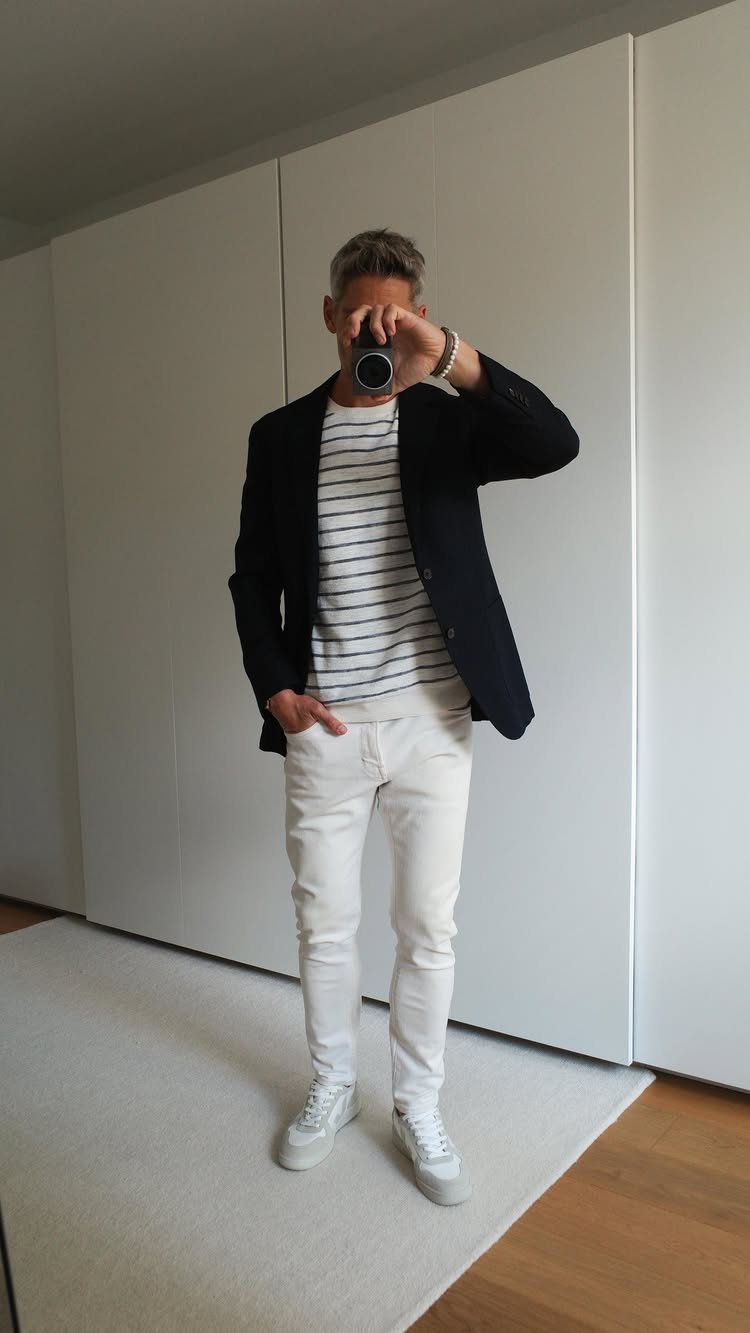
White jeans with a dark blazer work because the contrast reads as deliberate. Keep the jeans clean, plain and free of rips or fading, and let the blazer carry the dressy part.
A striped tee and white sneakers keep the outfit relaxed, so I’d save this version for offices that already allow denim. Where the dress code is unclear, a collared shirt in place of the tee is the safer call.
Dark indigo is the easier color to wear if white feels like too much upkeep.
2. Footwear Choices
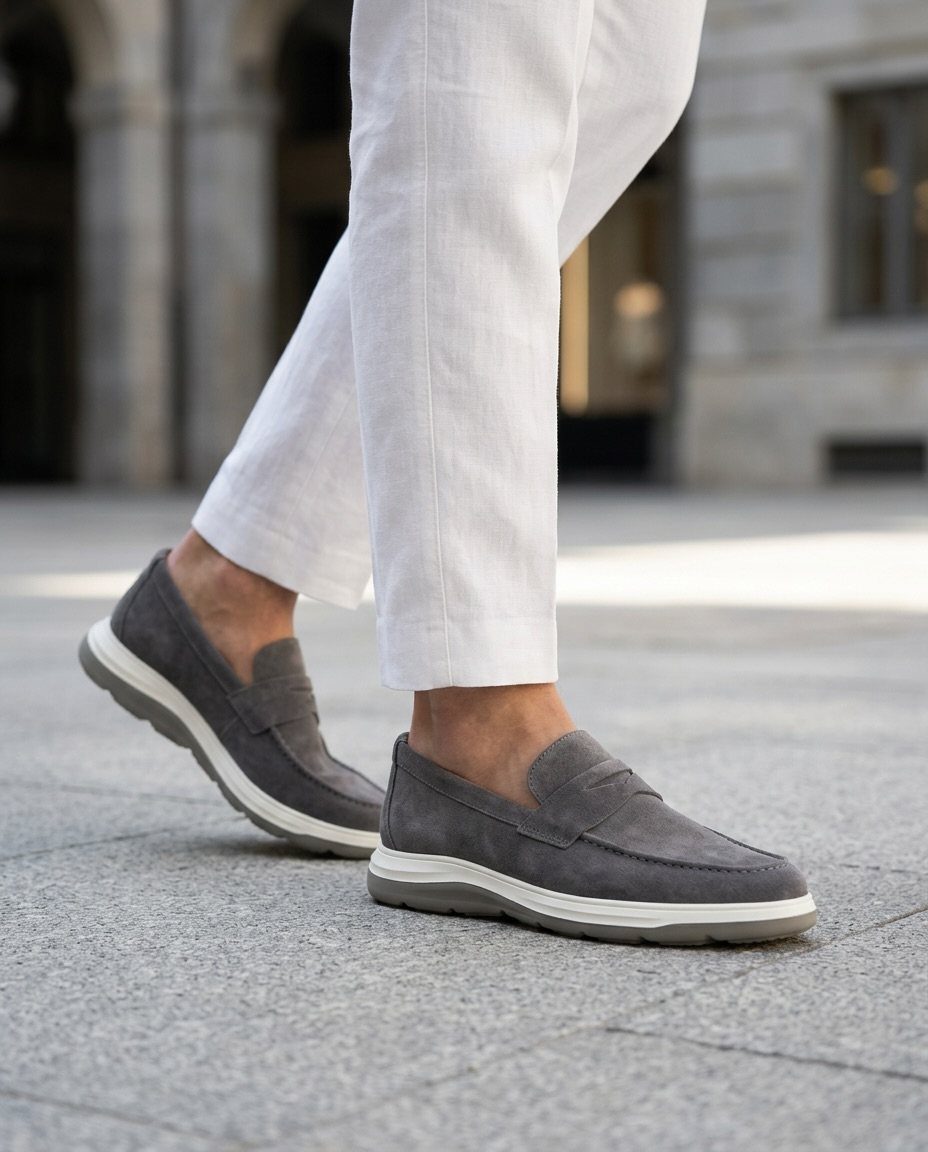
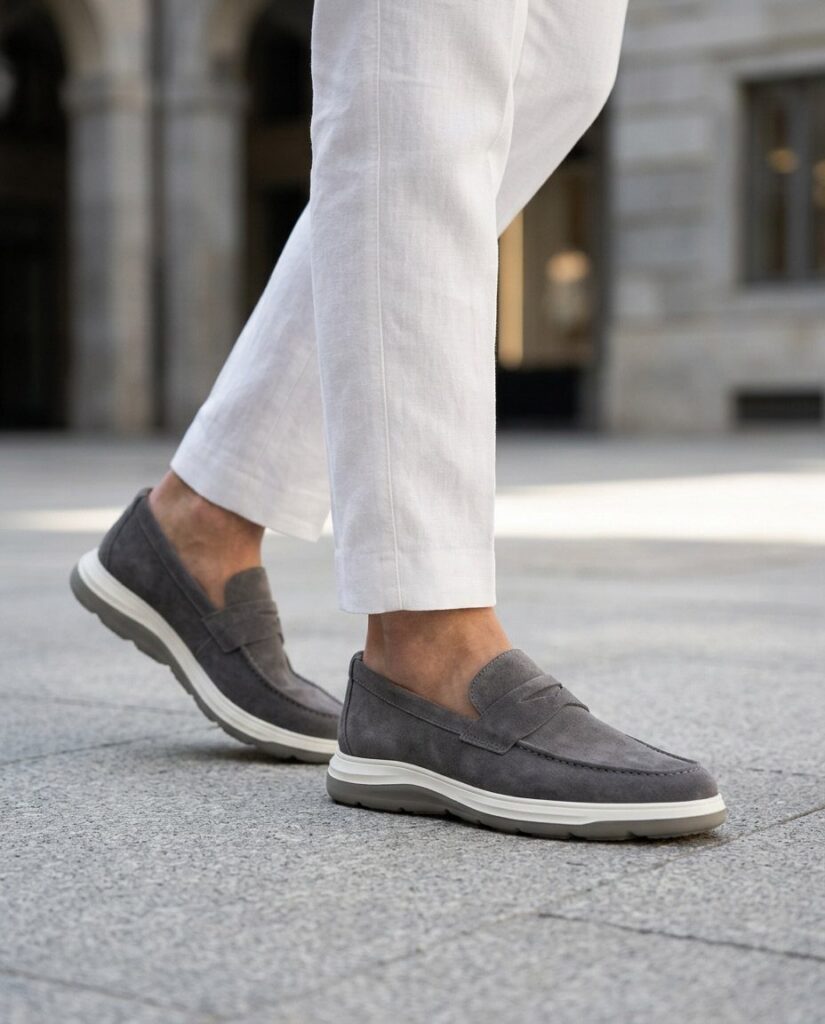
Grey suede penny loafers with white soles are my pick for a business casual office. They look dressier than sneakers but lose the stiffness of a lace-up oxford.
White trousers and grey suede stay in the same light color family, so the shoe looks chosen rather than added on. Suede does show wear, so brush it and keep it away from rain.
For darker trousers, brown or black loafers are the simpler match.
3. Quarter-Zip Sweater with Tie
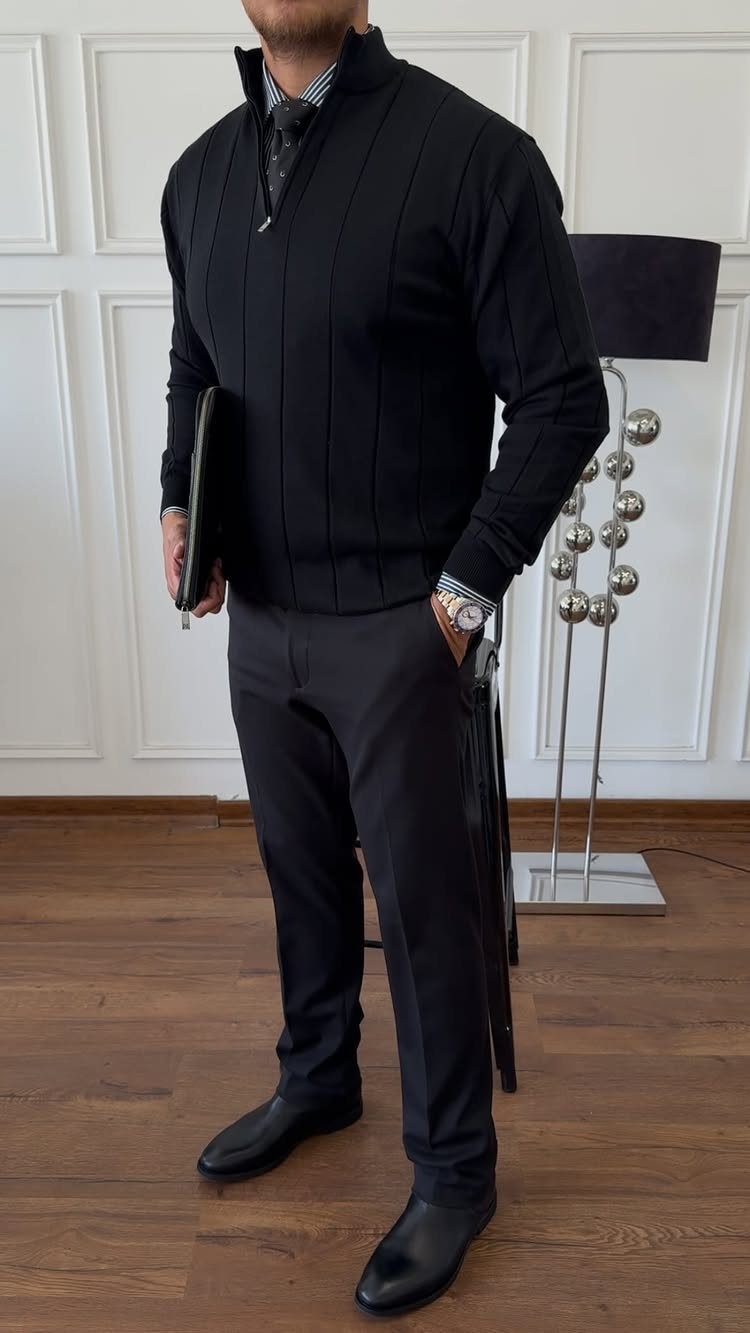
A black quarter-zip over a collared shirt and tie gives you a layer that looks sharp without a jacket. Zip it high enough that the knot and collar show cleanly above the neckline.
Busier shirt and tie, quieter sweater: a striped shirt with a patterned tie sits against the black quarter-zip here, and the sweater works as the calm frame around both. Black trousers and dress shoes finish the line.
I like this for cold offices, where a blazer feels like too much.
4. Button-Down Shirt with Slacks

Few outfits are as dependable as a crisp white button-down with black trousers and dress shoes. Sleeves rolled up take the formality down a notch while the outfit stays office-ready.
Press the shirt before you wear it, because a wrinkled white shirt looks worse than a colored one.
Fit matters more than price: shoulder seams should sit at the edge of your shoulders, and the trousers should be tailored to skim your shoes.
Roll the cuffs twice, neatly, past the elbow.
Defining Business Casual by Industry
Business casual shifts with the industry, so read your field before you buy anything.
Finance sits at the conservative end. Suits, or dress pants with a button-up shirt, are the baseline, and classic accessories like a watch and a tie fit right in.
Creative agencies, entertainment and fashion give you more room. A pop of color, a patterned shirt or tie, or bolder accessories all pass, and in fashion your own style is often the expectation.
In medical and service jobs, uniforms or scrubs often decide the outfit. Spend your effort on comfortable shoes you can stand in all day and keep accessories minimal.
Tech varies from one company to the next, so check what the people around you wear.
Communicating Dress Code Expectations
If you set the dress code, write it down in detail. A vague line like "dress casually" leaves everyone guessing, and the guesses will run from gym clothes to a full suit.
Give examples of what works: short- or long-sleeve button-downs, solid-color t-shirts of good quality, and clean footwear. Clean sneakers and open-toed shoes usually get a pass, though it depends on the office.
Then spell out what is off the table: ripped jeans (even the ones that come pre-torn), shorts in any length, and gym clothes or loungewear.
If you’re the one following the code, ask for the written version. When none exists, match the best-dressed person on your team and adjust from there.
Adapting to Remote Work
Remote work changed what men own. In spring 2020, 71% of employed adults suddenly worked from home, and a separate work wardrobe stopped feeling necessary.
My advice is to keep your office clothes distinct from your home clothes. Pieces that sit between the two, like a plain knit or a clean button-down, work in both places.
On video calls, only your top half shows. Put your best shirt there, and keep the rest of the outfit presentable in case you stand up.
Wrinkle-resistant fabrics and mix-and-match separates also make packing easy for business travel.
Frequently Asked Questions
What does corporate casual attire mean?
Corporate casual is simply business casual under another label: clothes that look easy but still read as put together.
Think slacks or khakis, a button-down shirt and smart shoes, with no gym clothes or loungewear. It sits below a full suit and above everyday weekend wear, and the exact line shifts with the industry.
What should I wear for corporate business casual attire?
A pressed button-down with real trousers and leather shoes is the safest bet, and it works in almost any office.
For something less stiff, suede penny loafers or a quarter-zip sweater over a collared shirt and tie both work. Finance leans conservative, while creative fields allow more color and pattern.
Does office-casual ever include jeans?
Yes, in offices that already allow denim. Choose a dark wash with no rips and no fading, and put a collared shirt or fine knit on top.
What is the difference between office wear and casual wear?
Office wear is the formal tier: suits, dress shirts, ties and dress shoes. Casual wear is built for comfort, such as jeans, t-shirts and hoodies.
Business casual sits in the middle, borrowing the structure of office wear with a looser feel. Plain, clean sneakers can pass in a relaxed office; open-toed shoes are a gamble, so check what your coworkers wear first.