The looks here run from tailored suits to a graphic tee and baseball cap, and which one fits your week depends on how much of it is spent at a desk and how much at a dinner table.
Pick the look that matches your occasion first: tailored suits and a heritage overcoat for work and formal evenings, plain tees, chinos, Chelsea boots and loafers for dates and weekends.
Every one of them depends on fit, so check where the shoulder seam lands before you buy anything else.
1. Tailored Suits
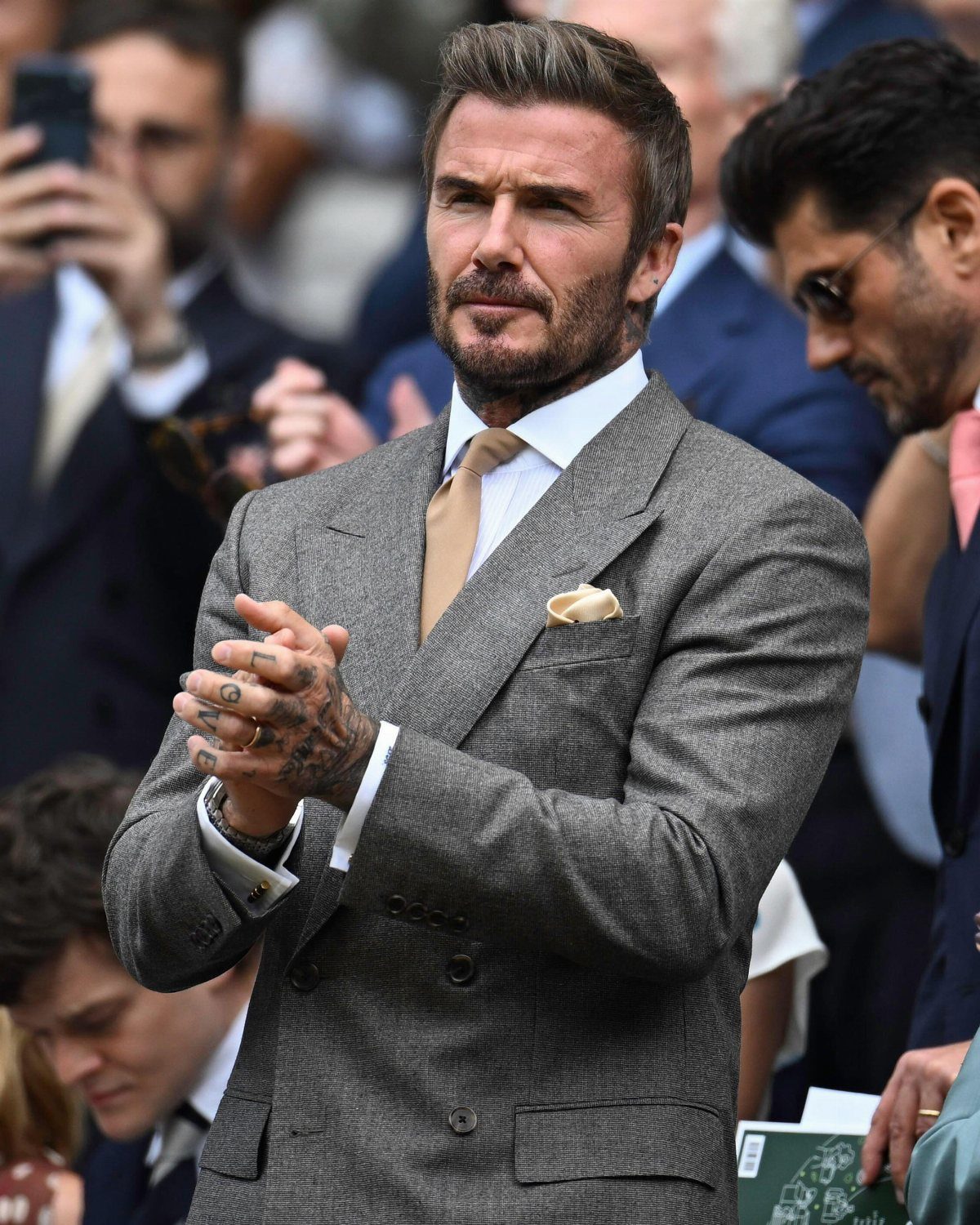
A double-breasted jacket in grey with a subtle pattern does more work than a plain single-breasted one, because the overlapping front gives your chest structure.
Fit decides how a suit looks more than any other choice.
The shoulder seam should end where your shoulder does, and the jacket should button without pulling into an X. If the budget allows only one alteration, spend it on the sleeves.
2. Plain T-shirts and Chinos
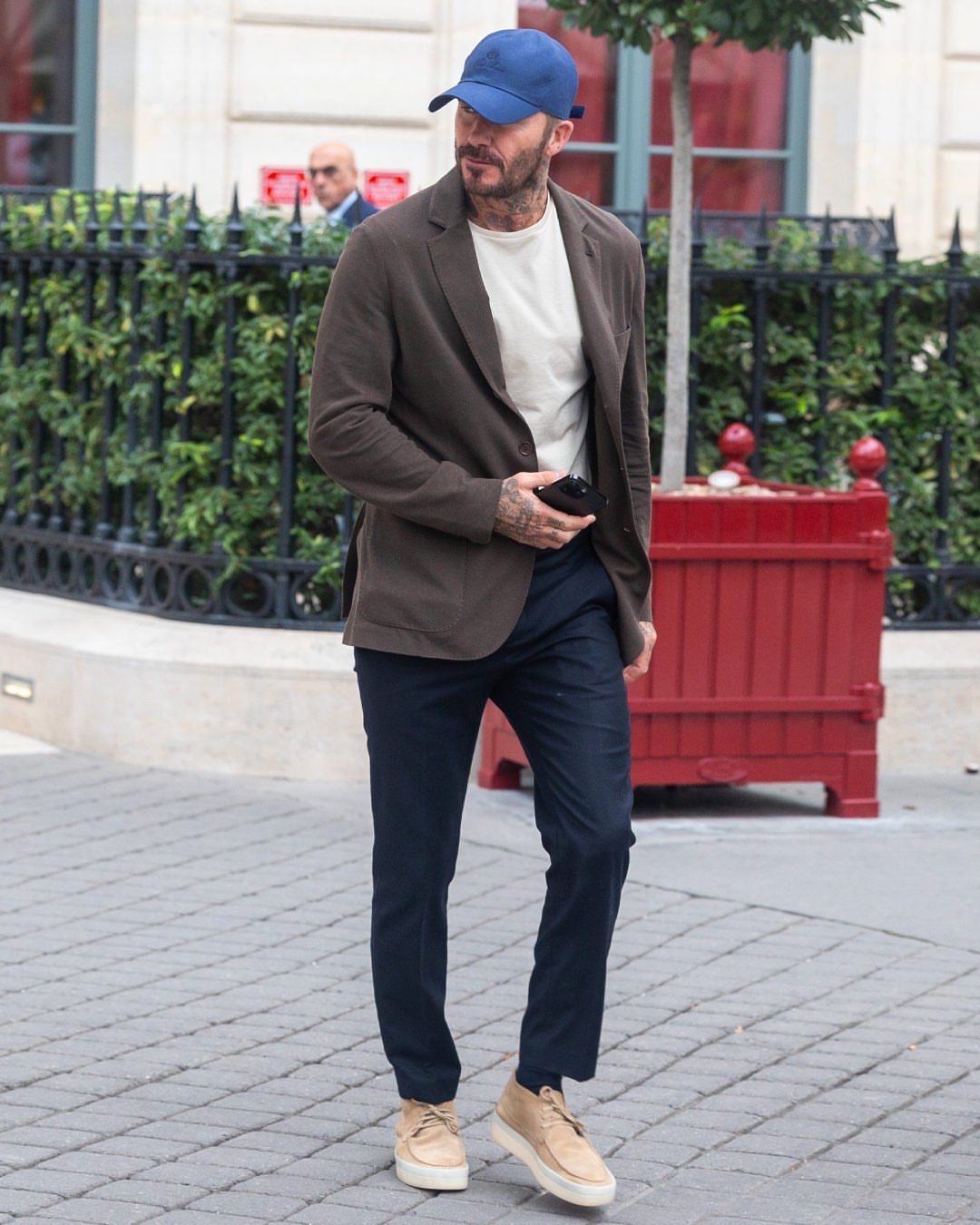
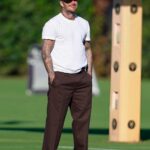
I like an unstructured brown jacket here because it has no stiff padding and sits easily over a tee.
Chinos in navy or another dark shade keep the outfit calm.
Choose a tee in a heavier cotton that hangs flat, not one that clings. A cap is optional, and it earns its place when it matches one color already in the outfit.
3. Chelsea Boots and Loafers
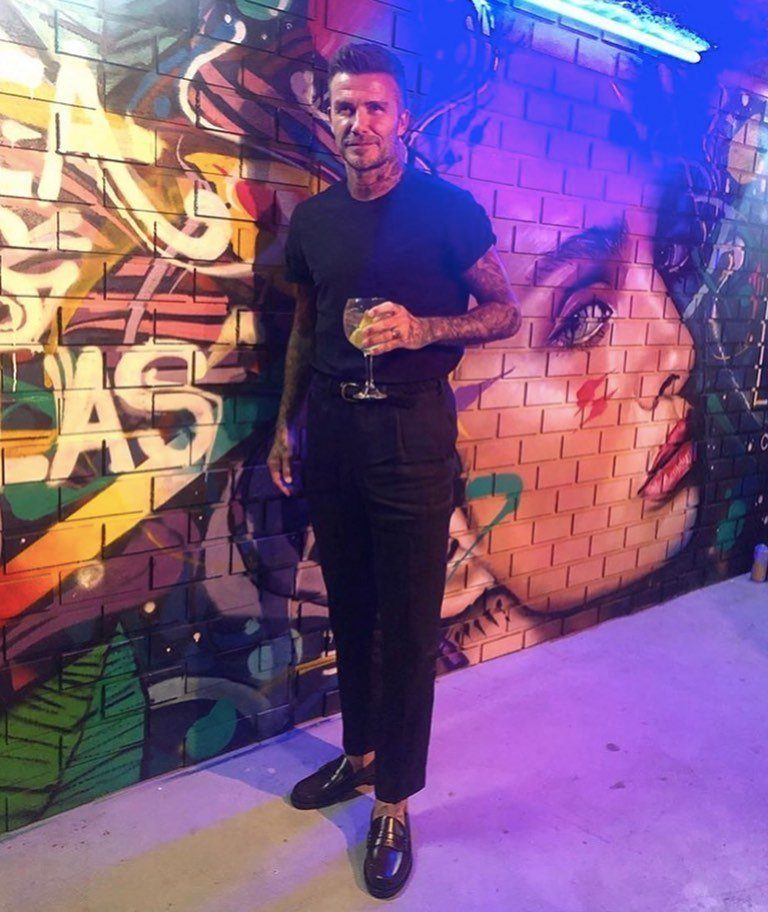
Shiny black loafers with black trousers and a black tee make a clean column of color, and the polish on the shoe becomes the one detail people notice. A belt in black leather keeps the line unbroken.
For dates and relaxed dinners I would pick loafers over sneakers, since they dress up a simple tee without effort.
Chelsea boots follow the same logic in cooler weather: slim, no laces, easy to wear with the same dark trousers. Buff the leather before you wear either pair.
4. Grooming and Hair
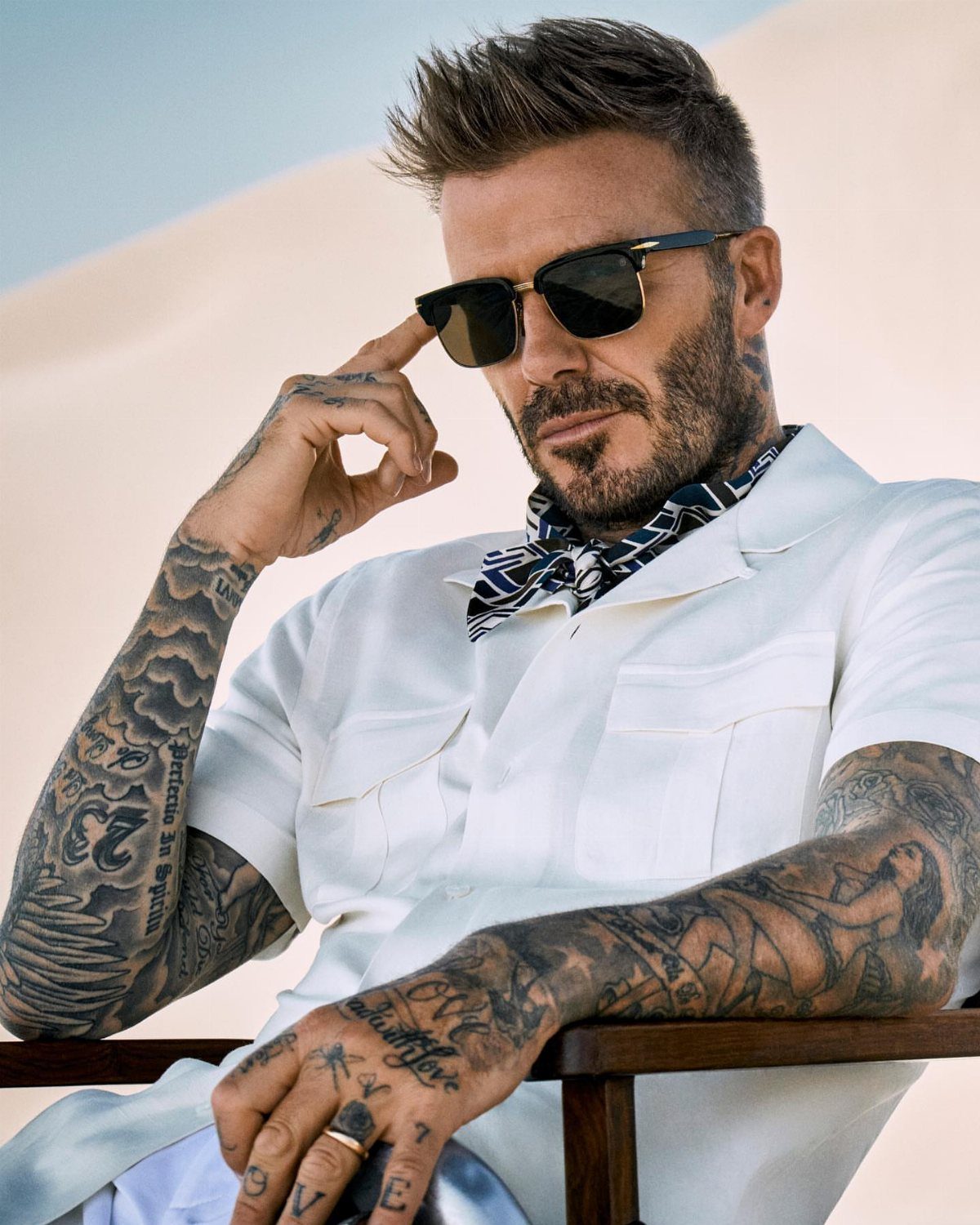
Hair that looks styled but not stiff, and a beard kept at an even length, frame everything else you wear. A short, textured top with some lift suits this look; a matte paste gives hold without shine.
Trim the beard edges along the cheeks and neck every week or so, since a neat outline is what separates groomed from scruffy.
Sunglasses and a patterned neckerchief are easy extras with a plain white short-sleeve shirt, though the neckerchief takes some nerve.
5. Heritage Overcoat and Flat Cap
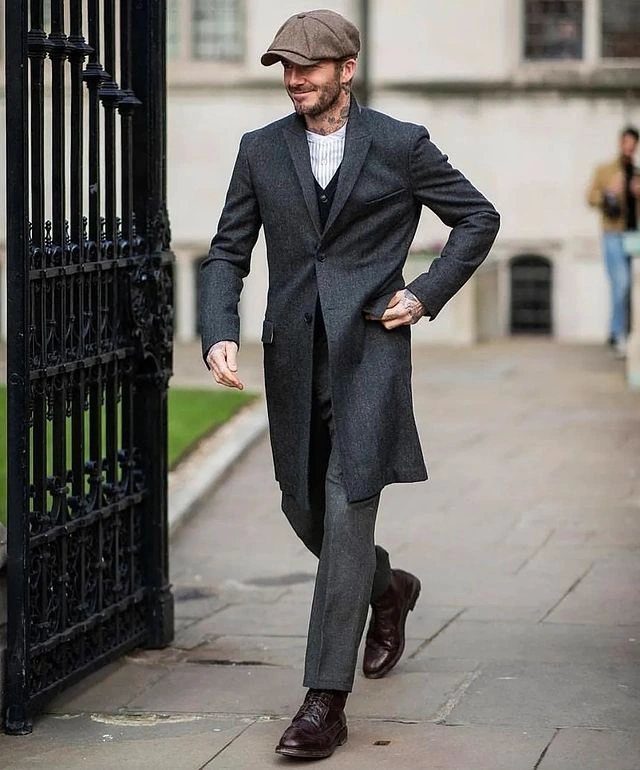
Charcoal is the safest color for a long overcoat, because it sits well over matching trousers and brown boots without clashing. Look for a textured wool that falls close to the knee or below.
A tweed flat cap finishes it, and I like one in a tone close to your boots.
Skip it if the coat is already busy, since 2 heavy textures compete. Try the cap on first: it should sit snug without pressing on your forehead.
6. Cardigan and Button-Down Shirt
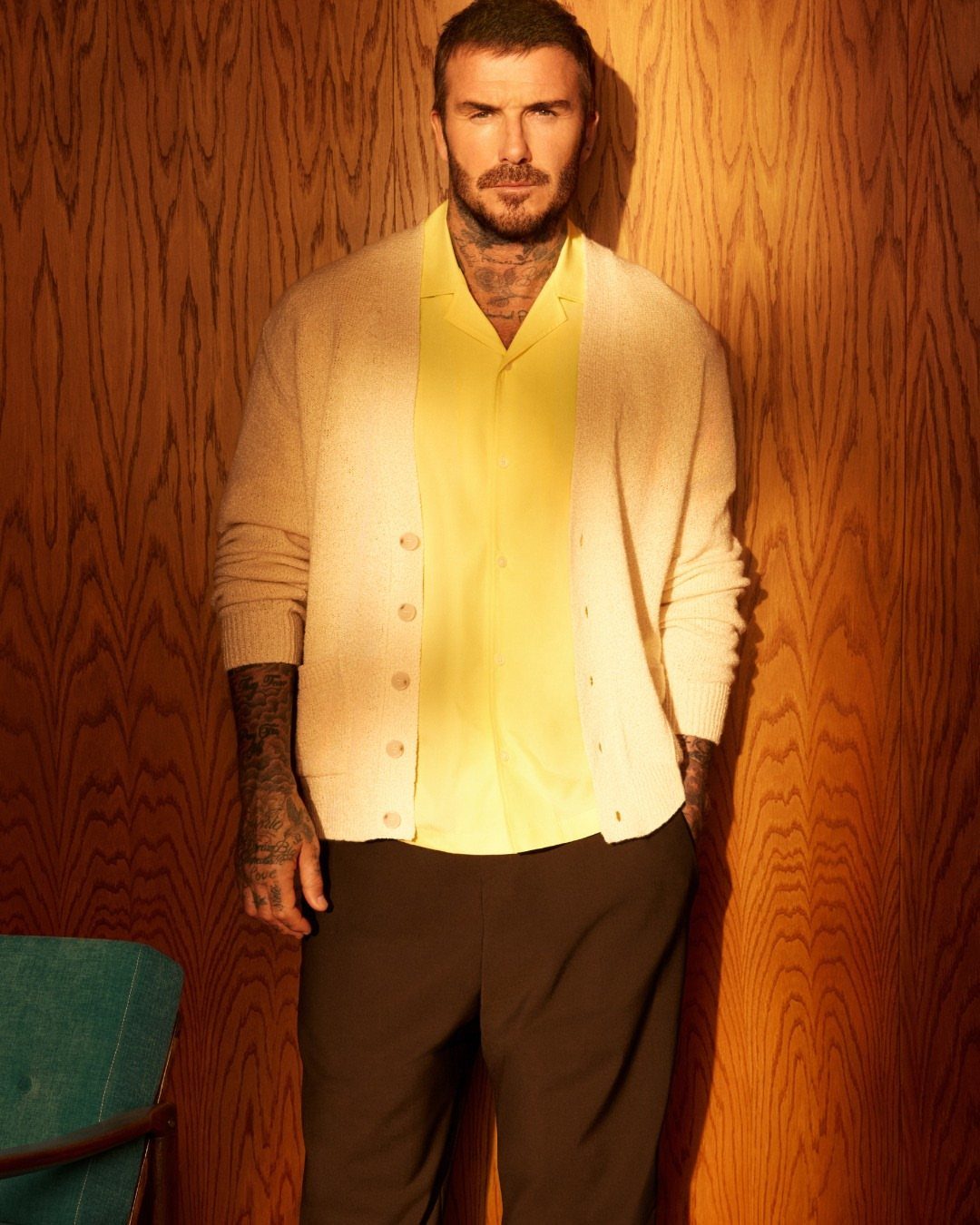
Layer a cream cardigan open over a pale yellow button-down, and dark trousers will hold the look together.
The softness of the knit takes the stiffness out of the collar, which makes it a good pick for casual Fridays at the office.
Keep the colors close in value so nothing fights: cream, soft yellow, then something dark below. A fine-gauge knit stays slim under the cardigan’s edge, while a chunky one adds bulk around the middle, so choose by your build.
7. Casual Jacket and Weekender Bag
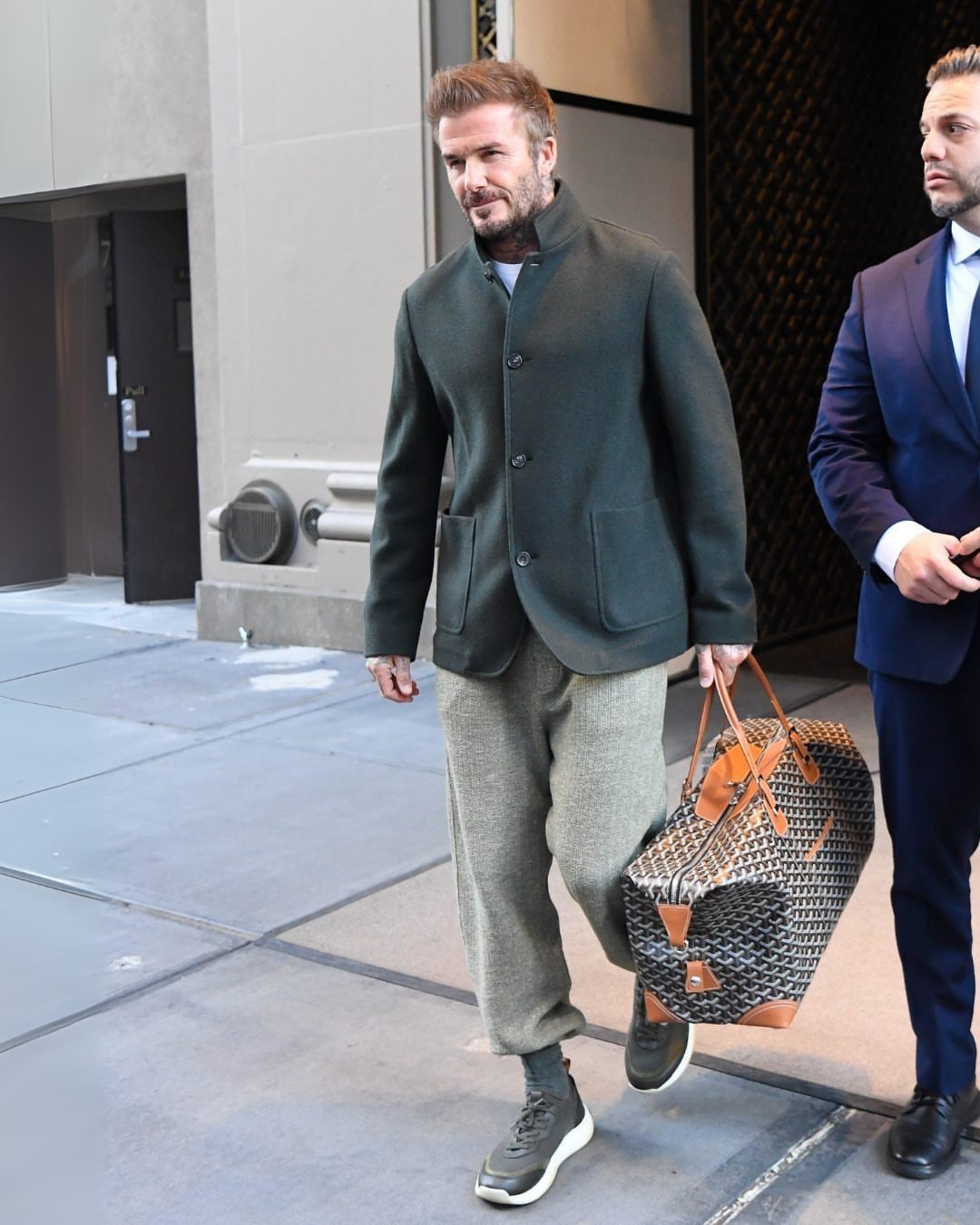
A dark green jacket in a plain, easy cut works as a neutral, and it sits well over light grey trousers with a textured weave.
Sneakers keep the whole outfit relaxed, so choose a clean, low pair in a quiet color.
A large patterned weekender is the loudest piece here, which means everything else should stay calm. I would carry one only when the jacket and trousers are this restrained; a busy bag over a busy outfit looks cluttered.
Button the jacket, and let the bag be the one thing people notice.
8. Graphic Tee and Baseball Cap
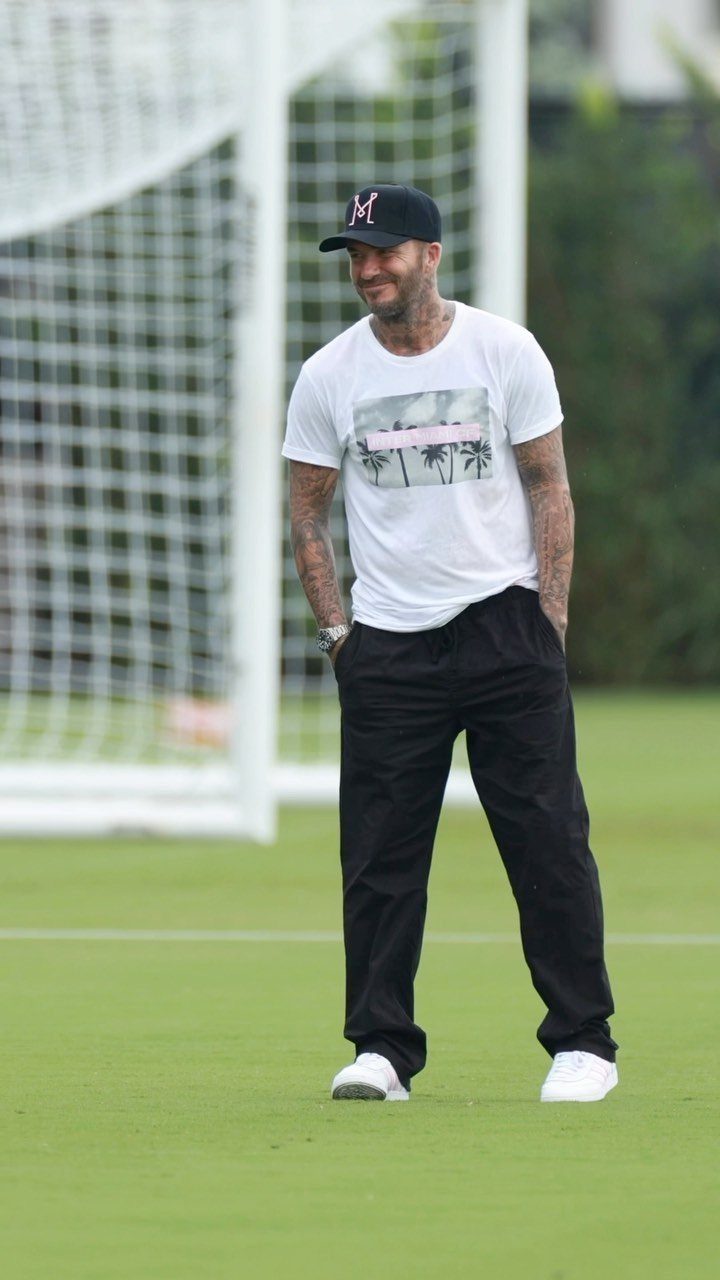
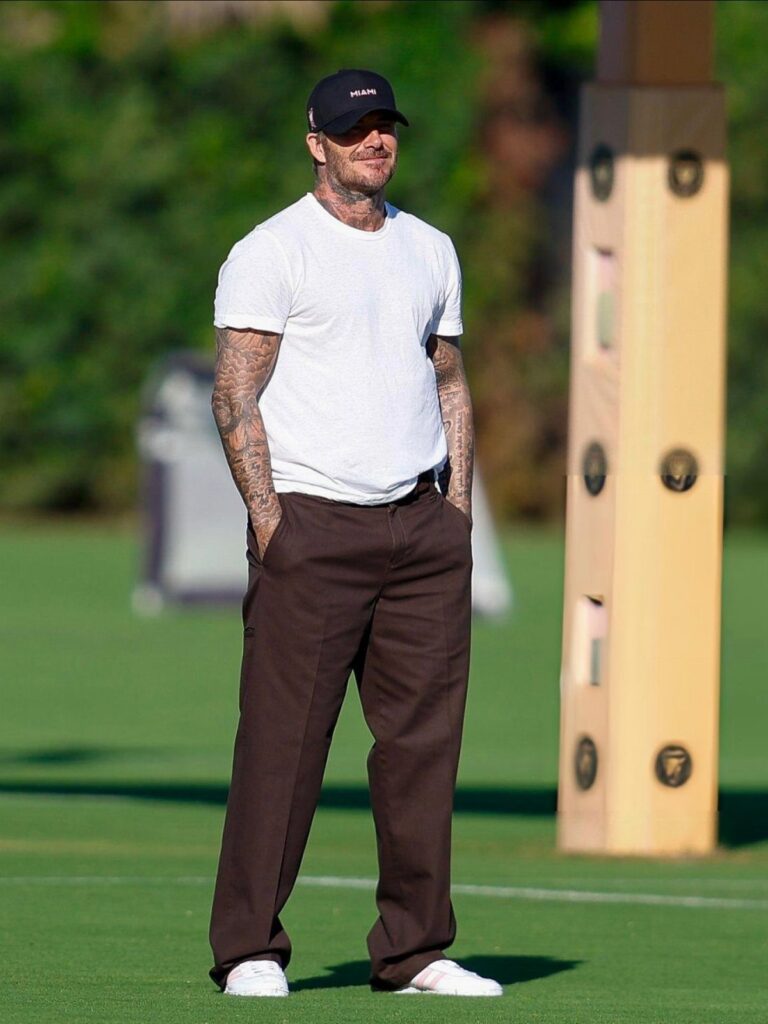
Black trousers make a graphic tee look deliberate. Pick a white tee with a design small and clear enough to read as a single detail, then add white sneakers so the colors repeat from top to bottom.
A black cap fits a weekend like this, though I would save it for casual settings and skip it at dinner.
Keep the cap’s color matched to the trousers, and the logo, if any, stays the only other mark on the outfit.
Wash the tee inside out so the print lasts.
Emphasizing Simplicity
Neutrals and earthy tones do most of the work here: stone, tan, olive, navy, charcoal. Pieces in those shades mix without effort, so a small wardrobe goes a long way.
Skip loud patterns and big logos. A plain surface lets the cut and the cloth carry the outfit, and that is why classic, heritage shapes age better than anything trendy.
Accessories follow the same rule.
Keep the watch, belt and sunglasses quiet enough that they back up the outfit instead of fighting it for attention. If you notice the accessory before the man, it is too much.
Confidence in Style
Basics are easier to wear well than most men think. Plain tees, simple chinos and unbranded knitwear all work, as long as the rest is in order.
For smarter events, loosen things up a little. Undo a top button or two on the shirt, and the outfit stops looking like it is wearing you.
Grooming does the quiet work underneath. A fresh haircut makes a plain outfit look intended, and it costs far less than new clothes.
Tattoos are optional and personal. If you have them, let them show on their own terms; if you don’t, nothing here depends on them.
Importance of Fit
Plain, neutral clothes leave nowhere to hide, so the fit has to be right. A simple tee or a pair of chinos looks sharp or sloppy based on a few inches of fabric.
Check 3 spots first: where the shoulder seam lands, how the sleeve ends near the wrist, and where the trouser hem meets the shoe. Those show up in every photo and every room.
Buy for your build, then tailor the rest. A tailor can take in a waist or shorten a hem for a modest fee, and it often does more than a pricier label would.
Skip any logo that stretches across the chest when you move. If the fabric pulls, size up.