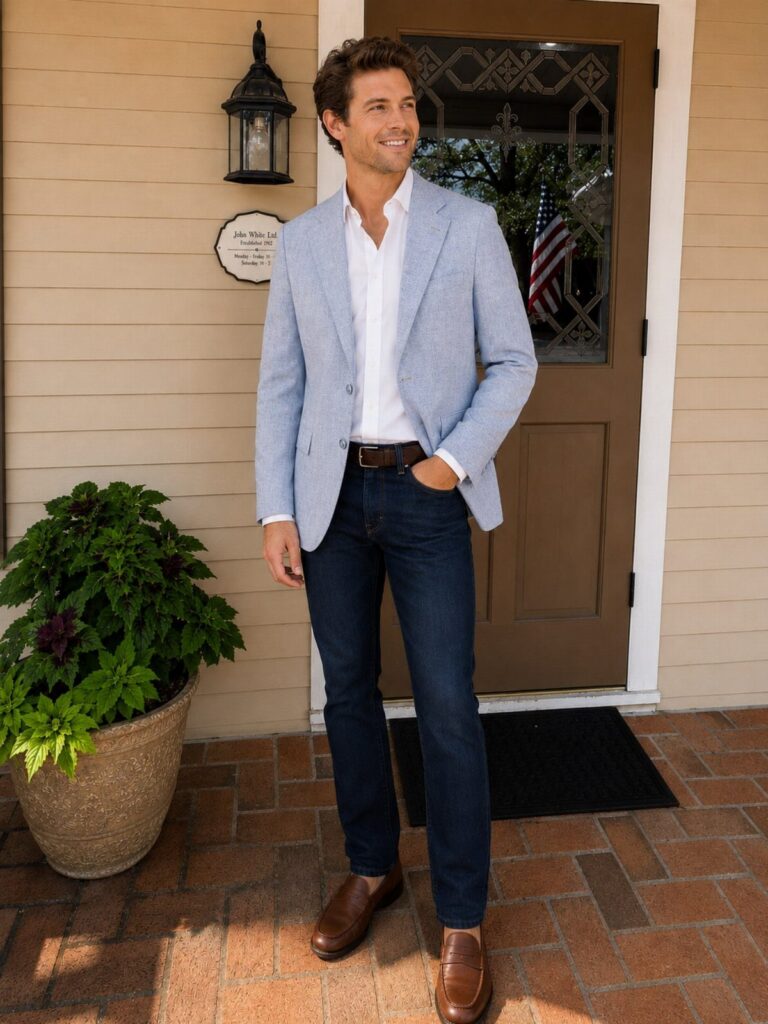
Your jacket matters more than your taste here: a textured coat wants smooth, plain trousers, a jacket with a pattern wants a quiet shirt and jeans, and a single dark color head to toe works best when the coat matches the rest.
These ideas run from jeans and a tee to a tie, a sweater and a scarf, so the jacket stays the same and the shirt, trousers and shoes decide how dressed up the look feels.
Before any of these outfits will work, the jacket has to fit, and that starts with the shoulder seam sitting right where your natural shoulder stops.
1. Sport Coat with Jeans
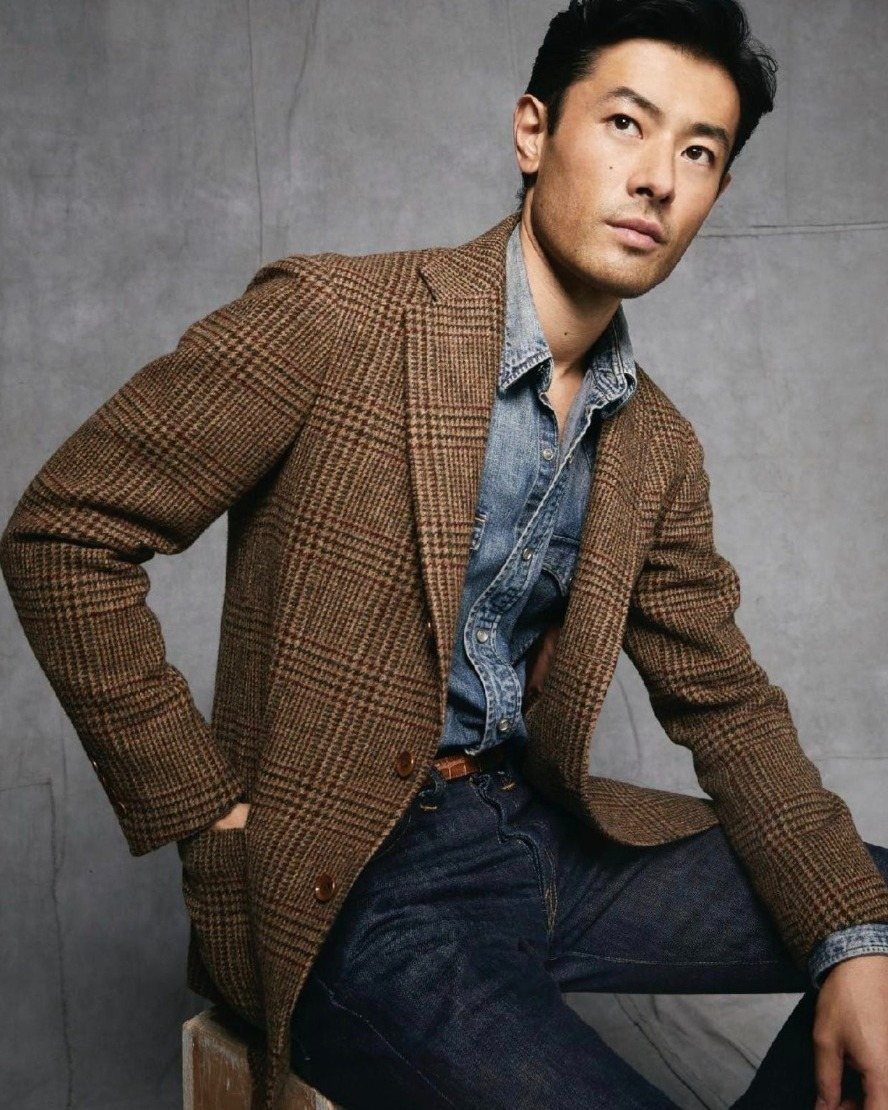
A denim shirt under a brown houndstooth jacket works because the pattern and the texture are both doing the talking, so everything else can stay plain.
Dark blue jeans with no fading or rips keep the outfit on the dressier side of casual.
I’d keep the shirt a shade lighter than the jeans so the two don’t merge into one blue block.
A sport coat over jeans looks best with an open collar and no tie, and if the jacket has 2 buttons, fasten only the top one.
Brown leather shoes or clean leather sneakers finish it.
2. Sport Coat with Loafers
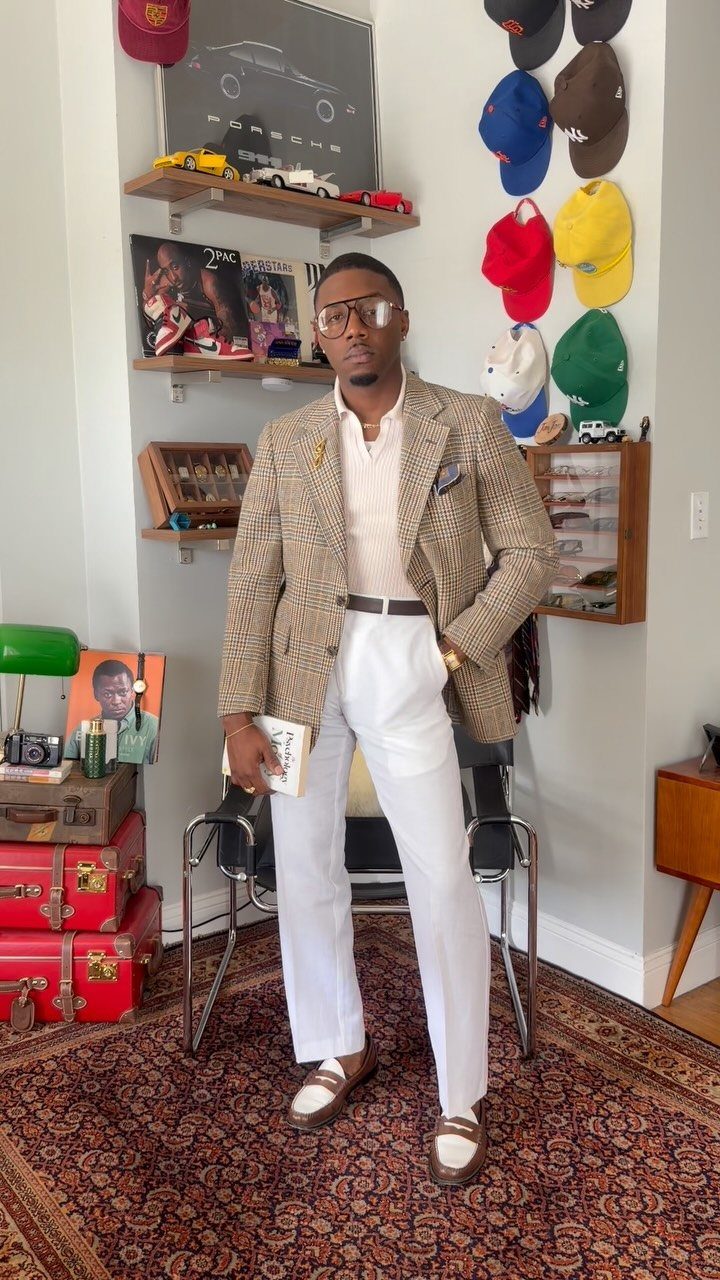
White trousers and a white knit shirt leave the plaid tweed jacket as the only pattern, and loafers then become the one place to add contrast.
Two-tone leather is a bold pick here, and I like it: it ties the brown in the jacket to the pale base.
A plain brown loafer is the safer choice if two-tone feels like too much. Either way, show a little ankle so the shoe has room to be seen.
3. Knit Polo
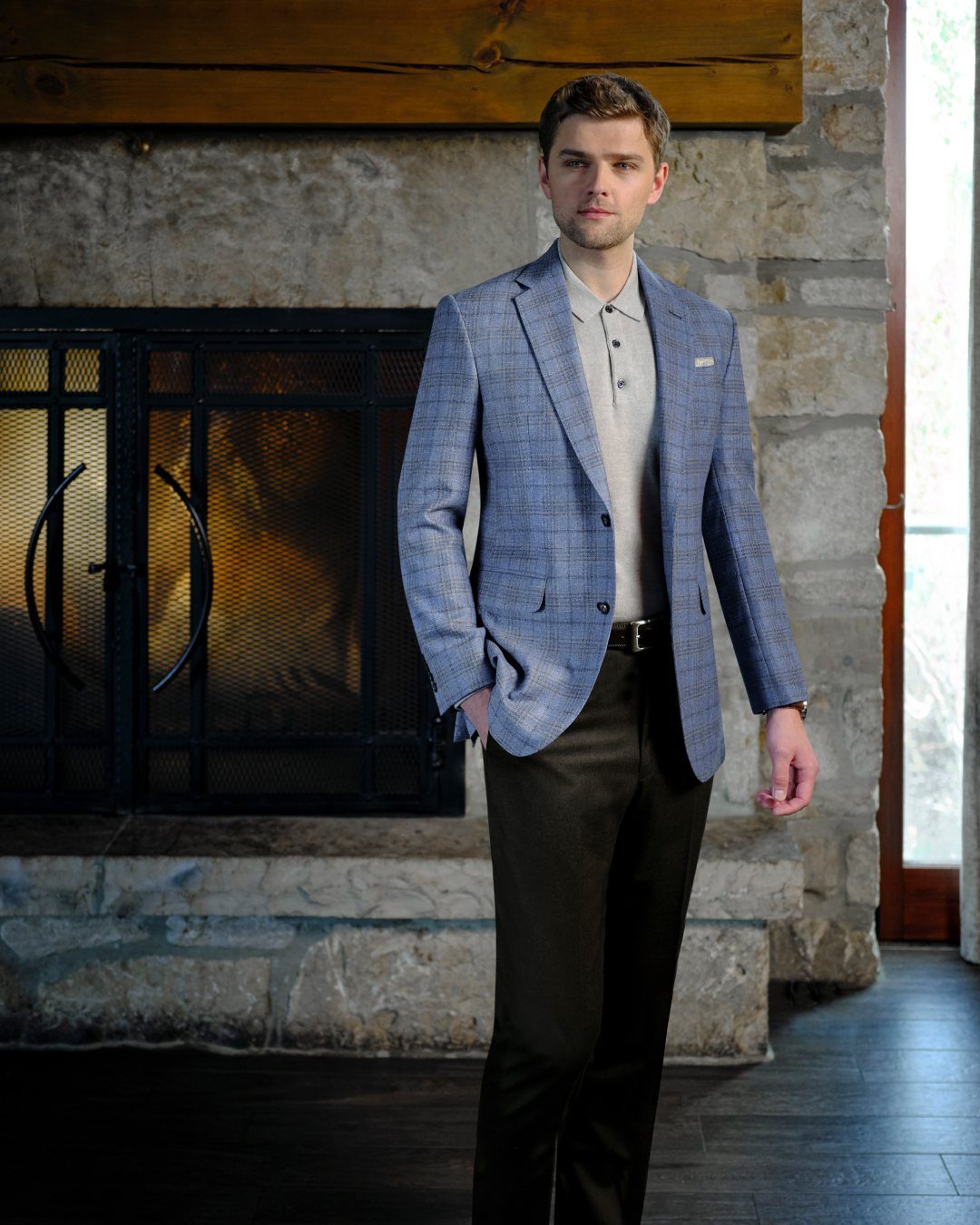
A knit polo tucked into dark trousers does the job of a dress shirt with less stiffness. Under a blue plaid jacket, a grey or beige polo keeps the palette quiet and lets the check lead.
Tucking matters.
Untucked, a polo under a jacket can look like weekend wear, while tucked with a belt it reads as intentional. I’d pick a fine-gauge knit that lies flat under the lapels, since a chunky one bunches at the chest.
4. Textured Sport Coat with Trousers
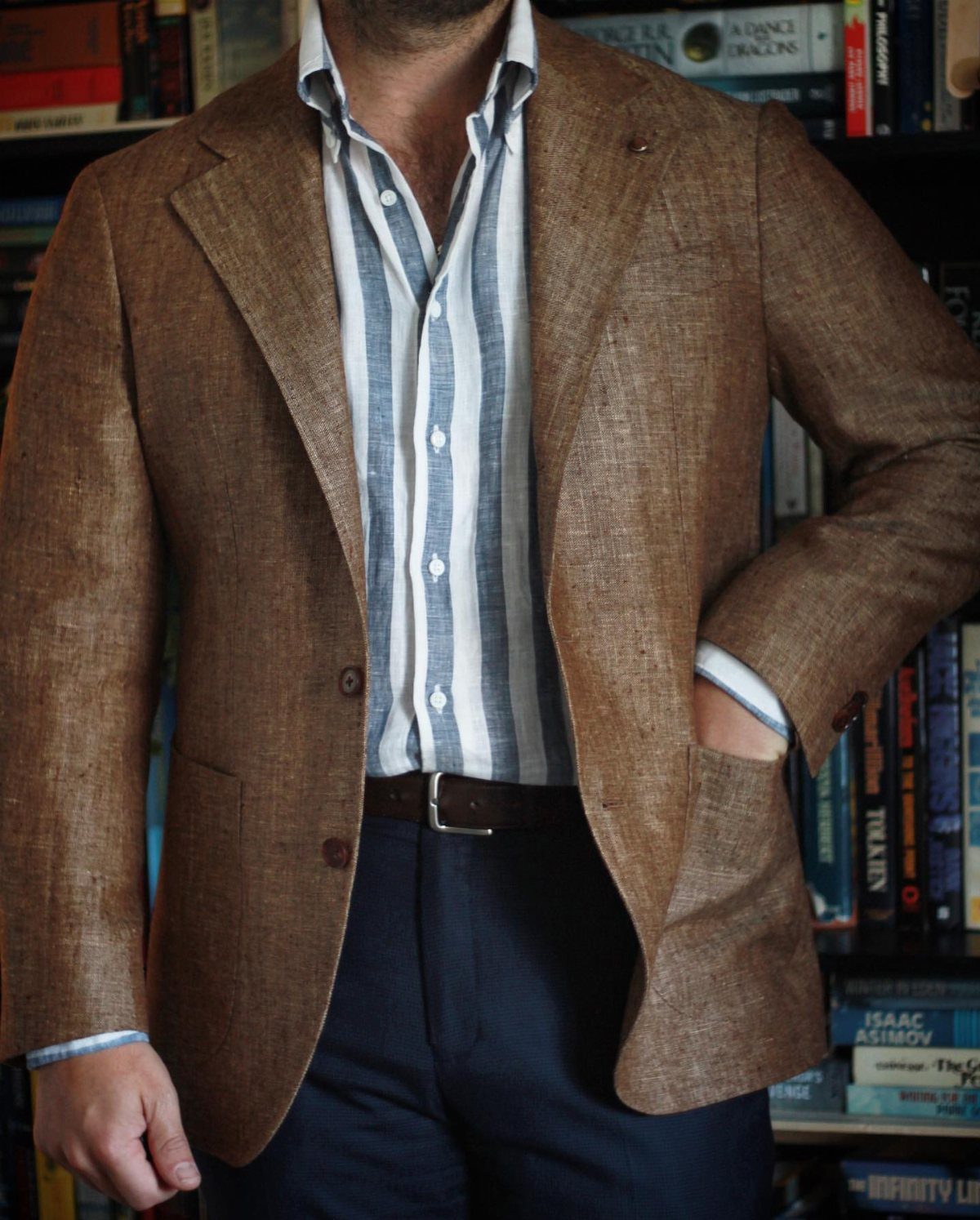
Texture does the work when the jacket is brown and nubby, so let the trousers stay smooth and plain. Navy is the easy partner: it sits beside brown without clashing and looks sharper than khaki.
A striped linen shirt adds a second texture, and the stripe should be fairly thin so it doesn’t fight the weave of the jacket. Linen wrinkles, and I’d accept that; the rumple suits a textured coat.
Keep one rule: only one loud element per outfit.
5. Lightweight Sweater Under a Sport Coat
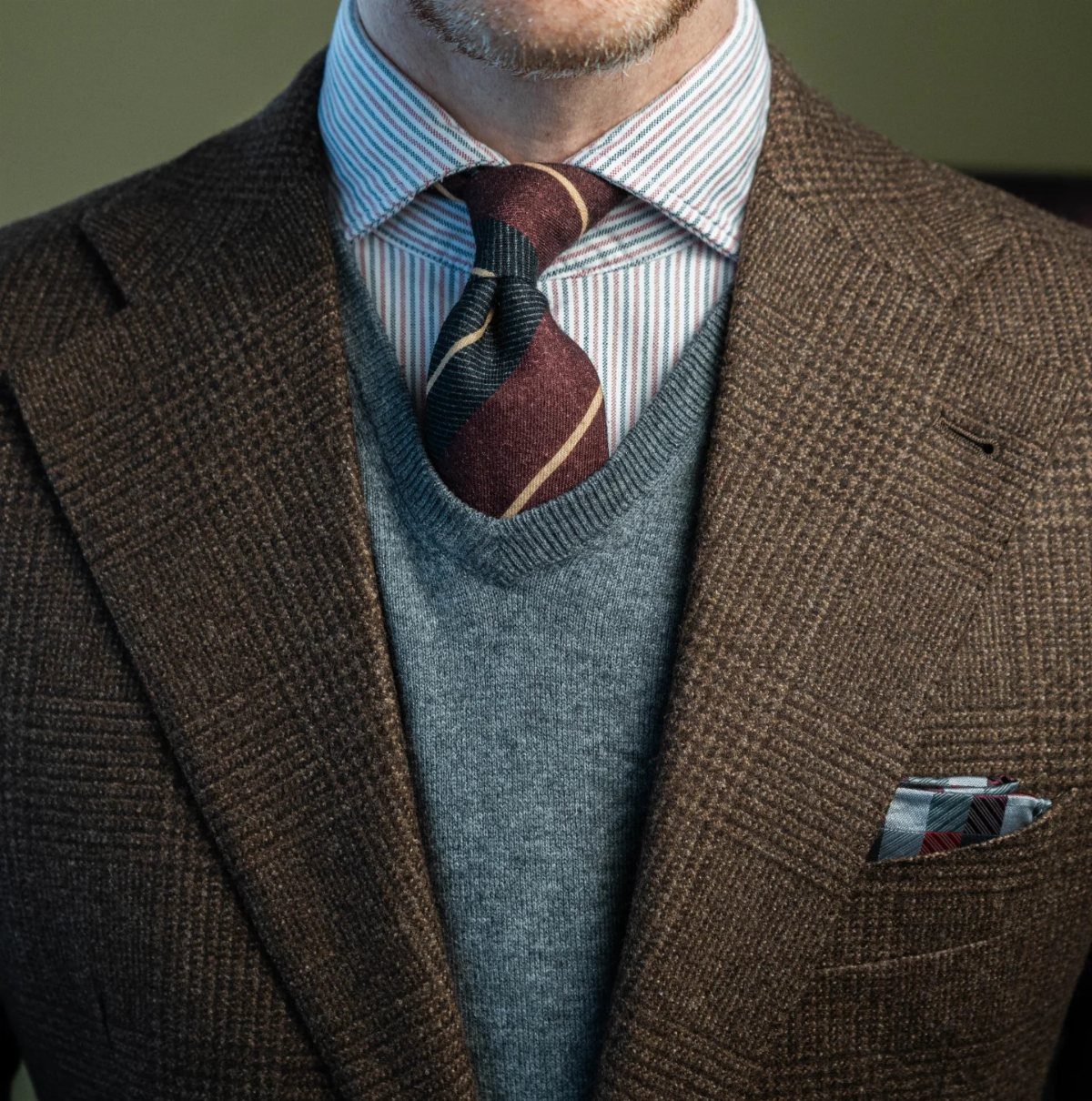
Slipping a grey V-neck sweater between a striped shirt and a brown textured jacket adds a layer without adding bulk, provided the knit is thin. A heavy sweater makes the jacket pull across the shoulders and chest.
The V-neck is the right cut because it leaves the collar and tie visible.
I’d keep the sweater a solid color and let the shirt, tie and pocket square carry the pattern. Pick a size that matches your usual one; going up to fit more layers only makes things sloppy.
6. Monochromatic Sport Coat Outfit
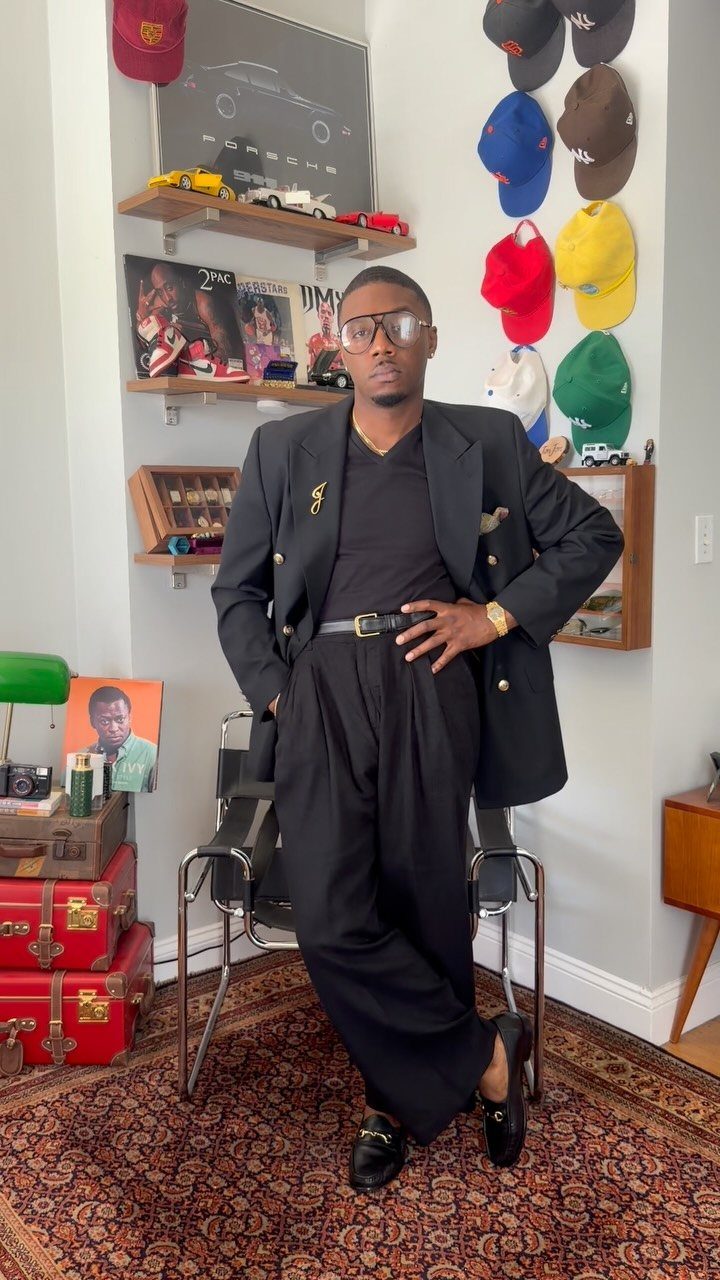
All black is the easiest way to look put together with the fewest decisions. A double-breasted jacket, a plain tee and pleated trousers, all in the same shade, make one long line from shoulder to shoe.
Texture keeps it from going flat, so mix finishes: matte cotton, a slightly sheened wool, polished leather loafers. The tee should be thick enough not to look thin against the tailoring.
Black fades unevenly, so wash pieces in cold water and wear them together.
7. Sport Coat with a Tie
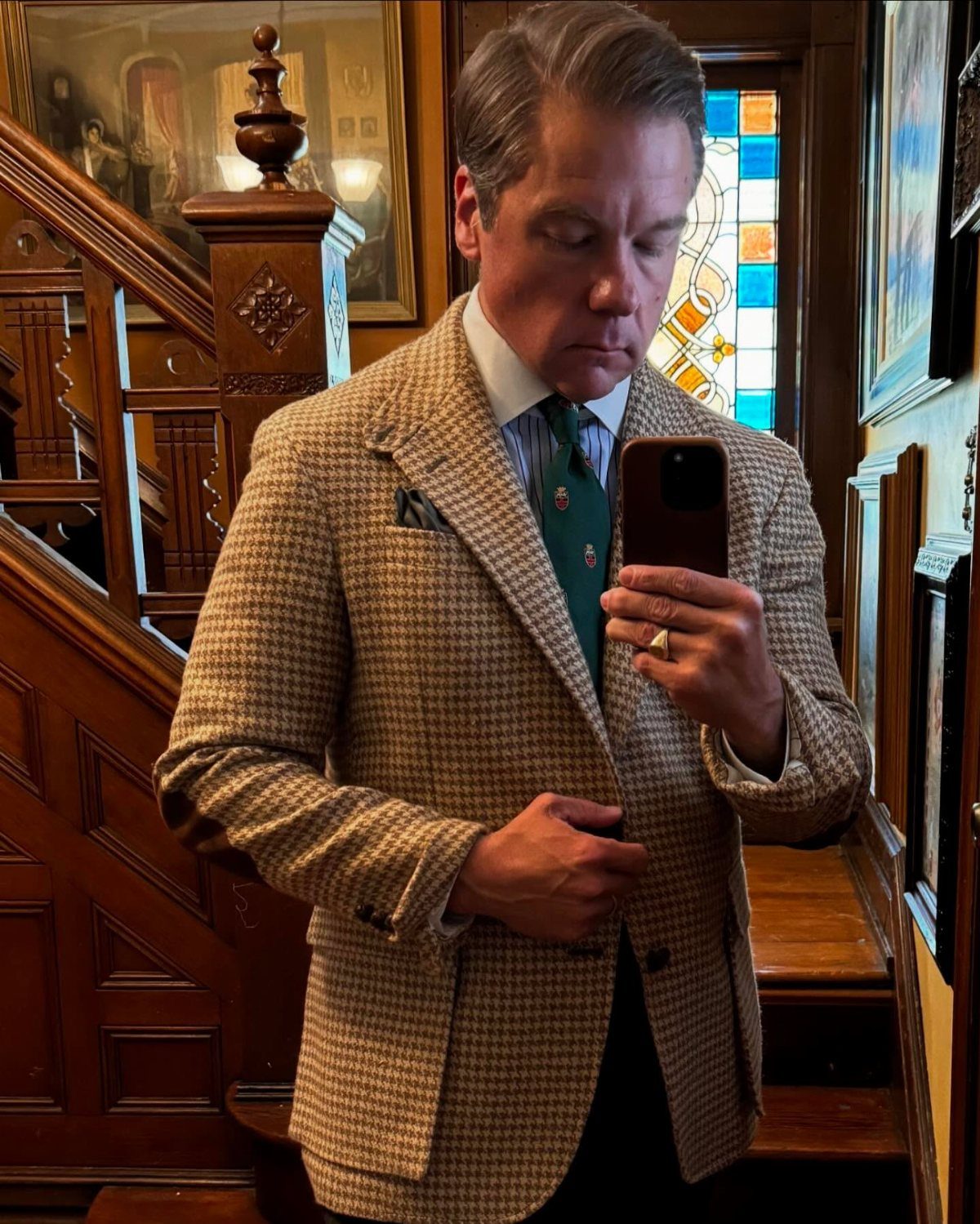
A green tie against a houndstooth jacket and a striped shirt gives you 3 patterns, and it only works if their scales differ.
Keep the shirt stripe thin, let the houndstooth be the largest pattern, and pick a tie in a solid or a very small weave.
Green is a good color for it because it sits calmly next to the brown and grey tones of most houndstooth.
I’d keep the knot simple and the shirt collar crisp, so the tie reads as a choice and not clutter.
8. Sport Coat with a T-shirt
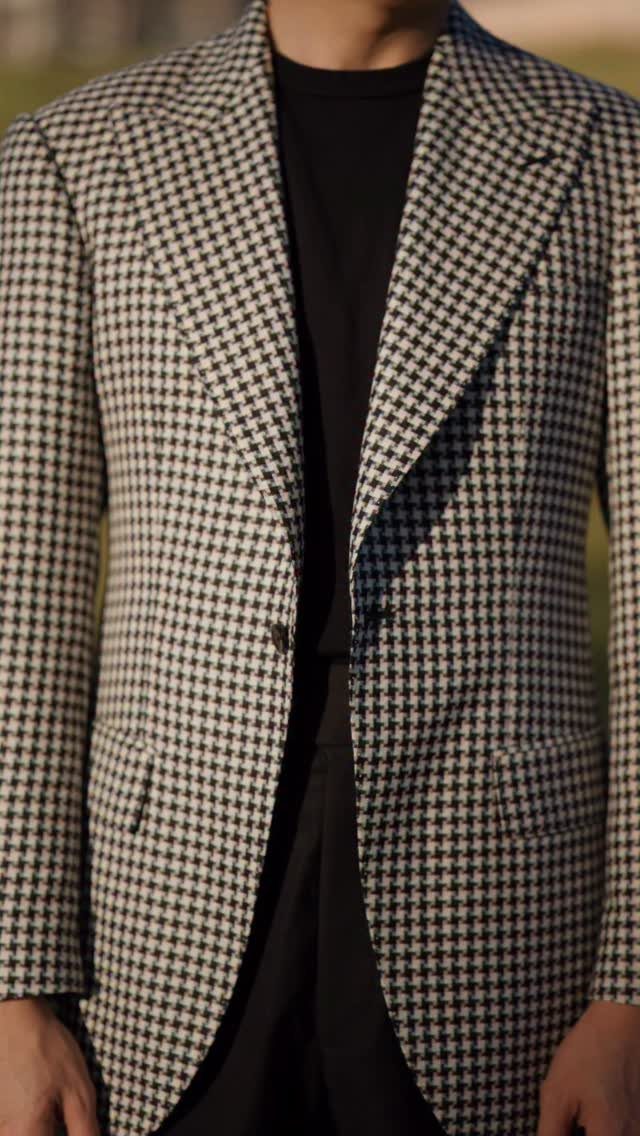
Black-and-white houndstooth over a plain black crew-neck tee works because the tee gives the pattern a dark, quiet background. Black trousers continue that line, so the jacket becomes the only thing with detail.
Choose a tee in a heavy enough cotton that it holds its shape under the lapels, with a neckline that sits flat against the collarbone.
Leave it untucked only if it ends near the belt line. Longer than that and the outfit starts to look like weekend wear with a blazer thrown on.
9. Layered with a Scarf
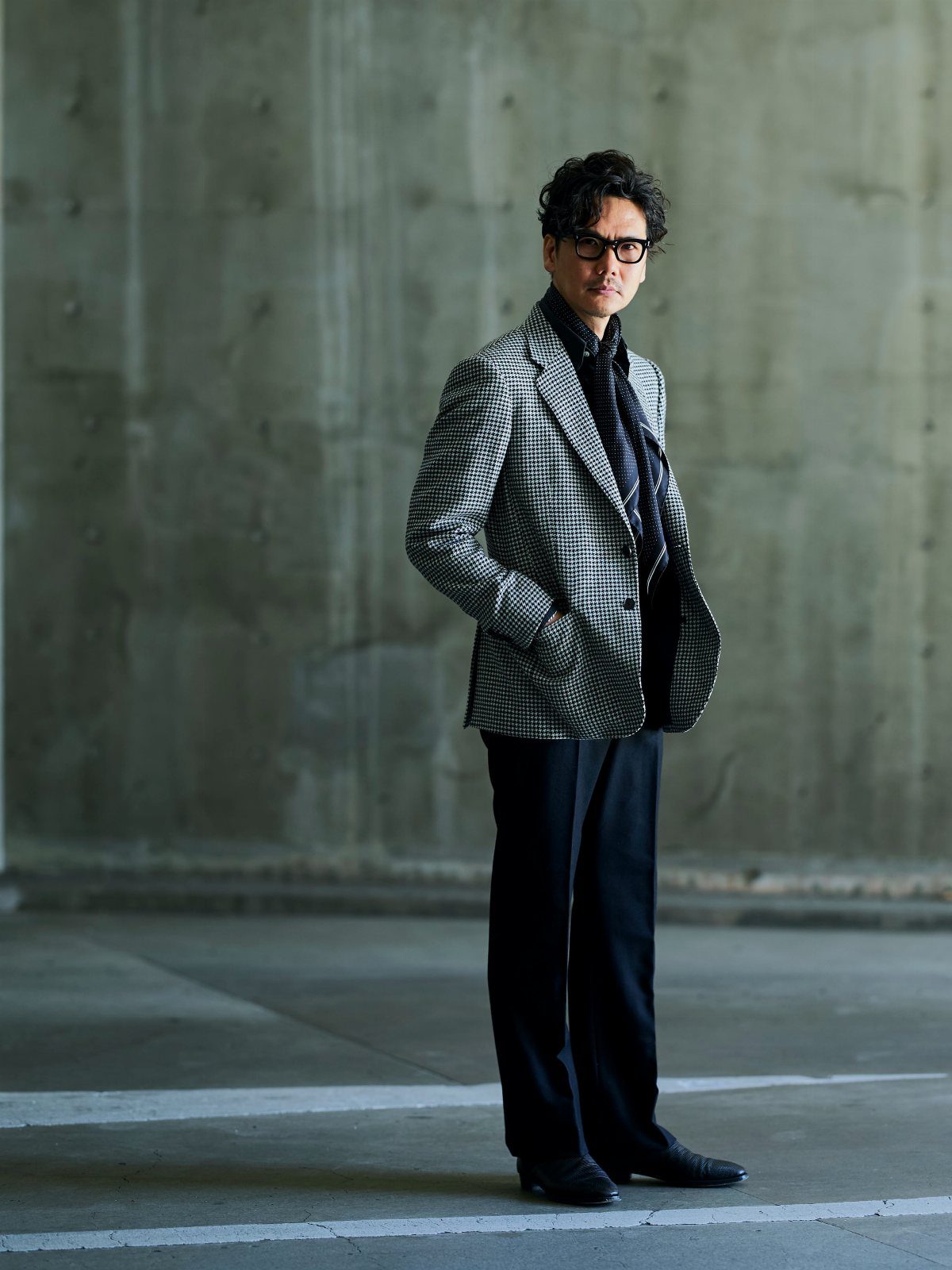
A dark scarf at the neck is the easiest way to add a layer to a grey patterned jacket without changing a single other piece.
Black trousers keep the lower half quiet, so the scarf and the jacket share the attention.
I’d keep the scarf in a dark print or solid and tuck it simply inside the lapels, rather than piling on loops that push the collar up.
A thin, soft fabric drapes better under a jacket than a thick one. It also pairs well with glasses, since both sit near the face and read as one considered detail.
Fit of Sport Coat
Poor fit sinks a good outfit faster than a wrong color does, so check the jacket before the pairing.
The shoulder seam should land where your natural shoulder ends. If it hangs past the bone or pinches in, no tailor can fix it cheaply, so pass on that jacket.
Check the back of the neck first: the jacket collar needs to sit against your shirt or sweater, with no gap or lifted edge.
The jacket should close without pulling at the button, and you should be able to reach forward and move your arms without feeling held in.
With a dress shirt, let about half an inch of cuff peek out past the jacket sleeve.
Pulling a suit jacket away from its pants rarely works, though a textured or muted one in a casual fabric can pass.
Shiny worsted wool is the first thing to rule out, because it looks like an orphaned suit piece next to jeans. Peak lapels also look awkward when you dress down; a notch lapel reads more neutral.
Occasions for Sport Coats
A sport coat sits between a suit and a casual jacket. It isn’t tied to matching trousers, so you can change the colors, textures and fabrics from one outfit to the next.
That range makes it useful across a week. For business casual, wear it with plain trousers and a collared shirt.
For a dinner, pair it with a darker base and let the jacket’s fabric or buttons add the interest. For social events, it gives you a sharper look than a sweater alone without looking as formal as a suit.
When you shop, look at the details that set a sport coat apart from a suit jacket: a more interesting fabric, a visible texture or pattern, distinctive buttons, a softer construction, or a seasonal material.
I’d buy one with some character, since that is what keeps it from looking like half a suit.
Frequently Asked Questions
Can you wear a sport coat with jeans?
Yes.
Wear an open collar with no tie, and keep the shirt a shade lighter than the denim so the two don’t blur into one blue block. On a 2-button jacket, fasten only the top button.
What shirt should you wear under a sport coat?
A collared dress shirt is the standard choice for business casual, and a fine-gauge knit polo is a good, less stiff alternative when tucked in with a belt.
A thin sweater works as an extra layer, and a plain heavy-cotton tee works with a darker, solid look.
A thin knit sits under the jacket cleanly; a chunky one bunches up and pulls the coat tight across the chest and shoulders.
What shoes should you wear with a sport coat?
Loafers are the best all-round pick, and a plain brown pair is the safe one.
Brown leather shoes work too, and so do clean leather sneakers, particularly with dark jeans or chinos. Let a bit of ankle show, so the shoe actually gets seen.
Can you wear a suit jacket as a sport coat?
Sometimes, but usually not. Start by ruling out anything shiny: smooth, glossy worsted wool looks like the leftover half of a suit next to denim.
A peak lapel looks stiff once the outfit is dressed down, and a notch lapel is the safer, more neutral choice. A muted color or a textured weave in a casual cloth can get away with it.
What are the etiquette rules for wearing a sport coat?
Make sure it fits first: the shoulder seam should end where your natural shoulder does, and the collar should sit flat against your shirt with no gap.
Keep only one loud element in the outfit, and leave the bottom button of a 2-button jacket undone.
Can you wear a sport coat casually?
Yes. Because a sport coat doesn’t have to match its trousers, it pairs easily with a tee, a knit polo, jeans or plain trousers.
Pick a heavy cotton tee with a flat neckline, and wear it untucked only when the hem stops around the belt line.