Your dress code decides which of these looks is yours, and the range is wide: business formal attire for board meetings and interviews at one end, a short-sleeve button-down with trousers for a casual office at the other.
Between them sit a textured blazer with trousers, a button-down shirt with trousers, a sweater layered over a tie, and a good pair of dress shoes or loafers to finish any of them.
Check what your day holds, then pick the most formal look that your calendar calls for.
1. The Jacket
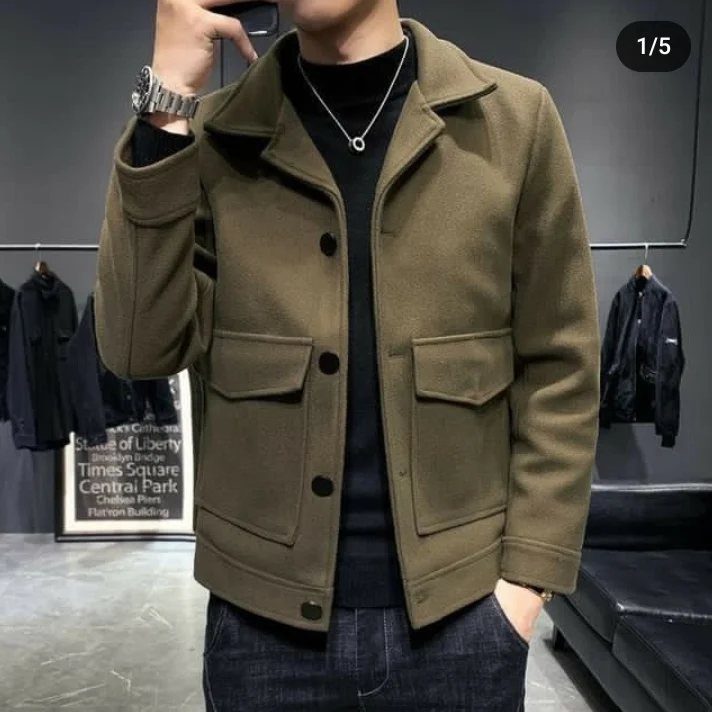
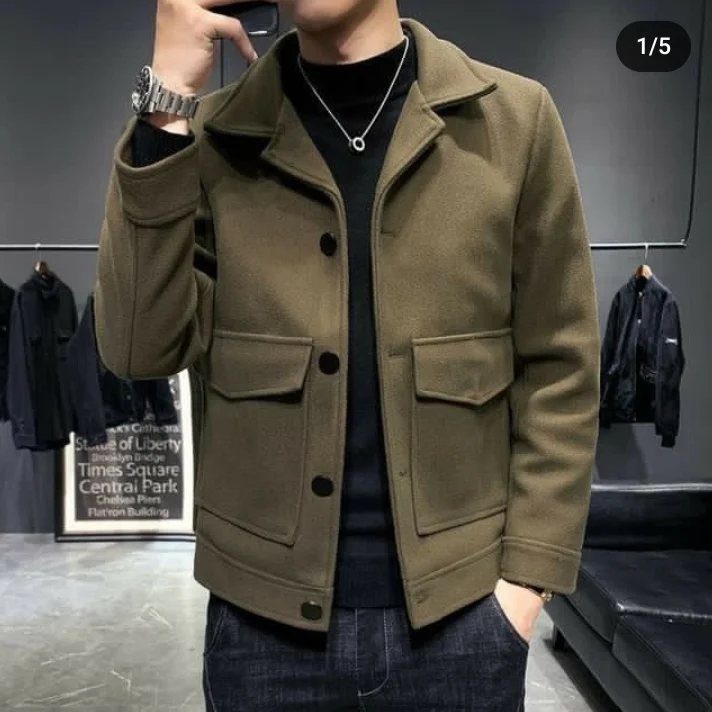
An olive wool jacket works like a sport coat that stopped trying so hard. Worn over a black turtleneck and dark jeans, it gives you the layered shape of a blazer without the stiffness.
I like it best when the jacket is the only color in the outfit.
For the office, swap the jeans for dark trousers and it holds up. It will always read more casual than a true sport coat, so skip it on days with clients.
2. Business Formal Attire

Business formal is the dress code for the days that count: board meetings, client presentations, interviews. A tailored grey suit, a white shirt and a tie is the whole formula.
Fit does most of the work here. Shoulders should sit flat, and the sleeve should end where the shirt cuff begins.
Purple is a fine tie color against grey, and it adds personality without breaking the code. Keep the shirt plain white so the tie is the only thing speaking.
Since this is an occasion look, I would not wear it daily. 2 well-fitted suits beat a closet of average ones.
3. Dress Shoes, Loafers
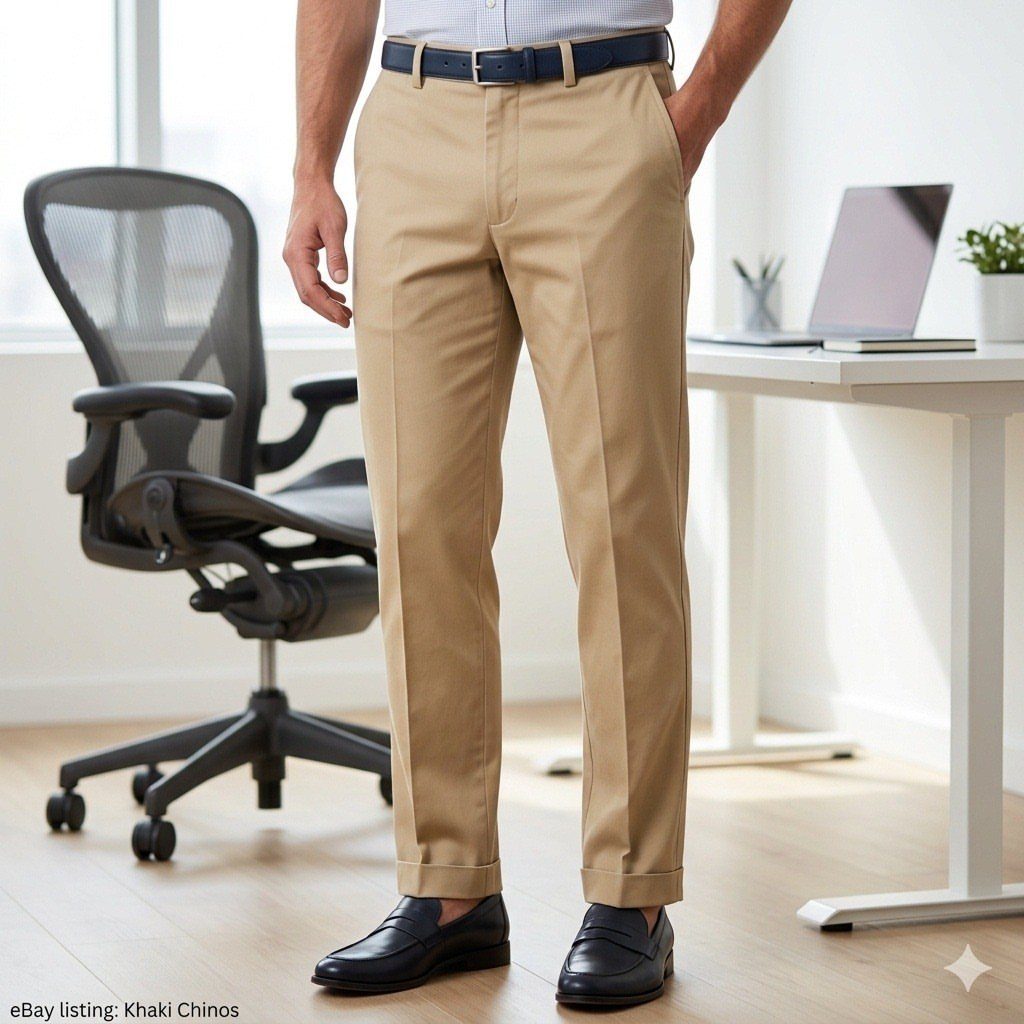
Loafers are the easiest way to dress up a pair of tan chinos.
Black loafers keep the look sharp and a little formal. Match your belt to the shoes for a quiet outfit, or pick a belt in a different color if you want a small pop.
Wear them with thin socks or none. Thick socks make a loafer look clumsy.
4. Textured Blazer with Trousers
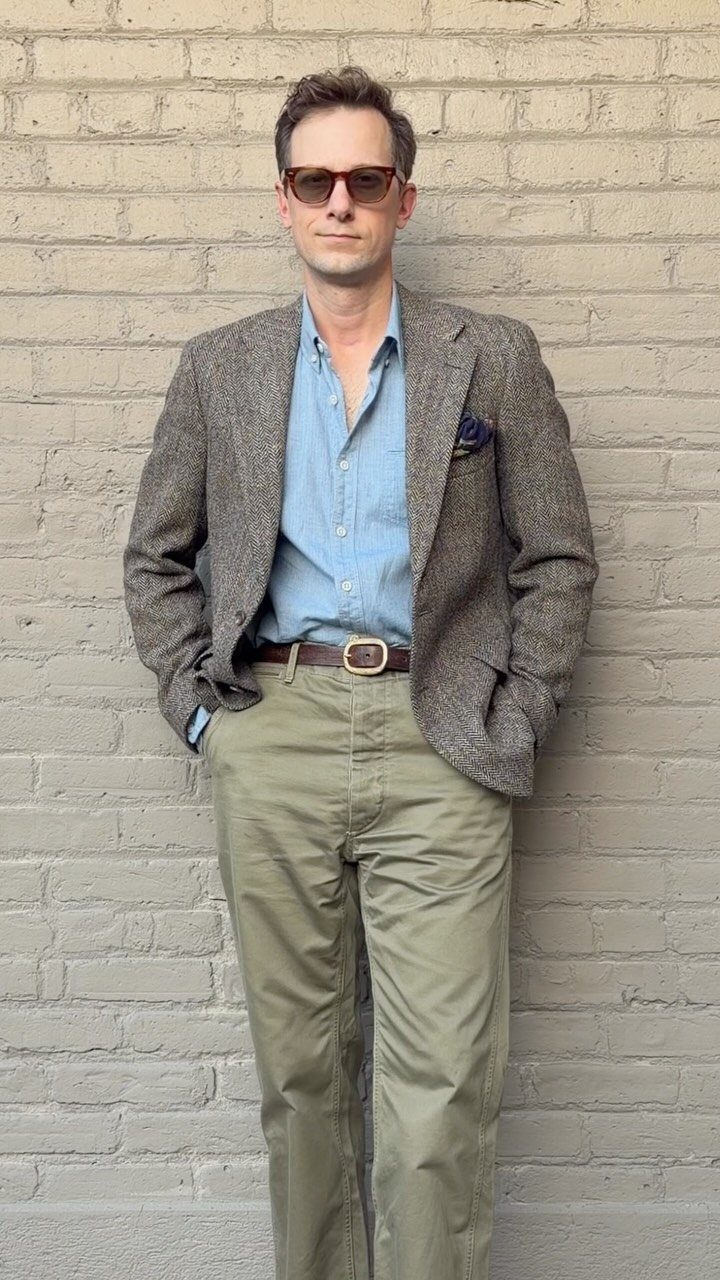
Texture is how a grey blazer stops looking like office filler. Herringbone tweed adds depth up close while still reading as a neutral from across the room.
A light blue button-down is the safest shirt underneath. Olive trousers are my pick over navy or charcoal, since the earthy tone suits the tweed and makes the outfit feel chosen rather than matched.
Keep the trousers tailored, with a clean break at the shoe. Skip the tie; this look is meant to be relaxed.
5. Short-Sleeve Button-Down with Trousers
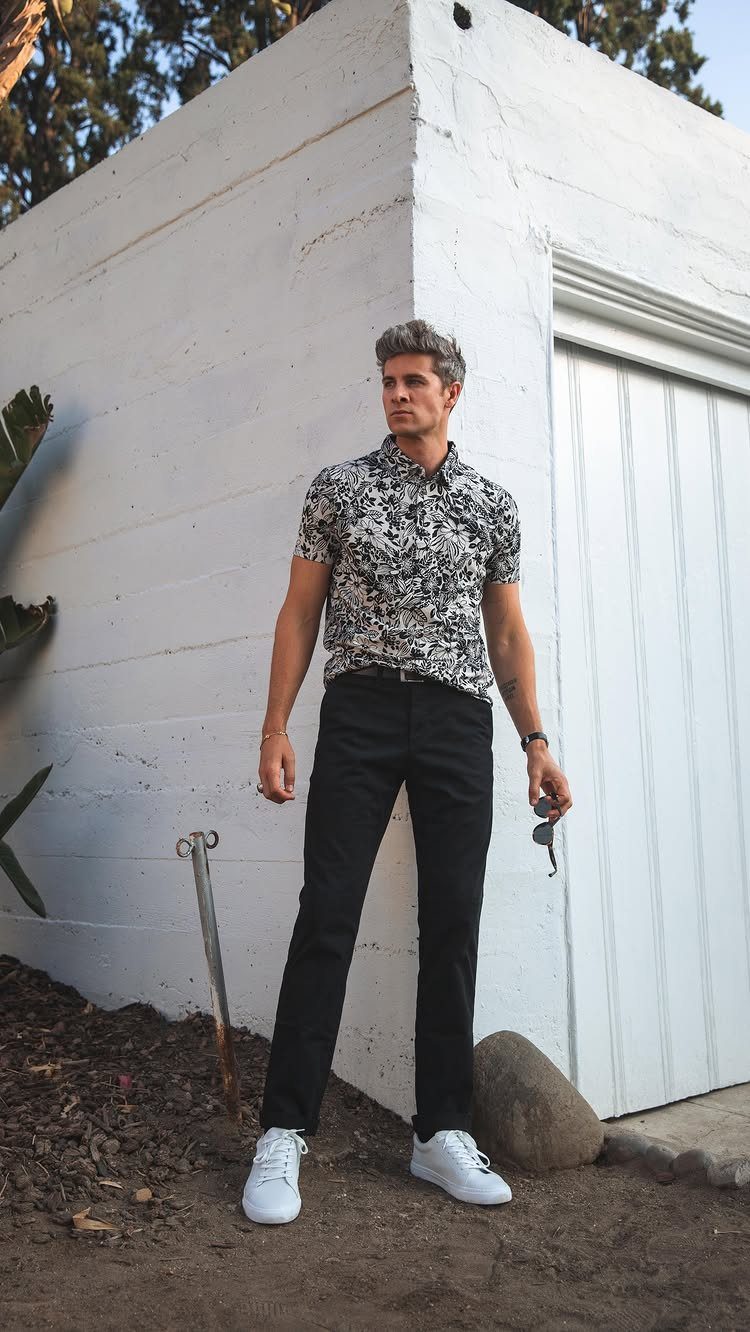
Short sleeves can work in an office if the shirt and trousers carry the polish. A black-and-white floral print is bold, so keep the rest quiet: black trousers, clean white sneakers.
Wear the shirt untucked only if the hem is cut straight and sits around mid-fly. Otherwise tuck it.
This is a warm-weather, casual-office outfit. A dress-code-strict workplace will want a plain solid instead, and the print should be saved for Fridays or off days.
6. Button-Down Shirt with Trousers
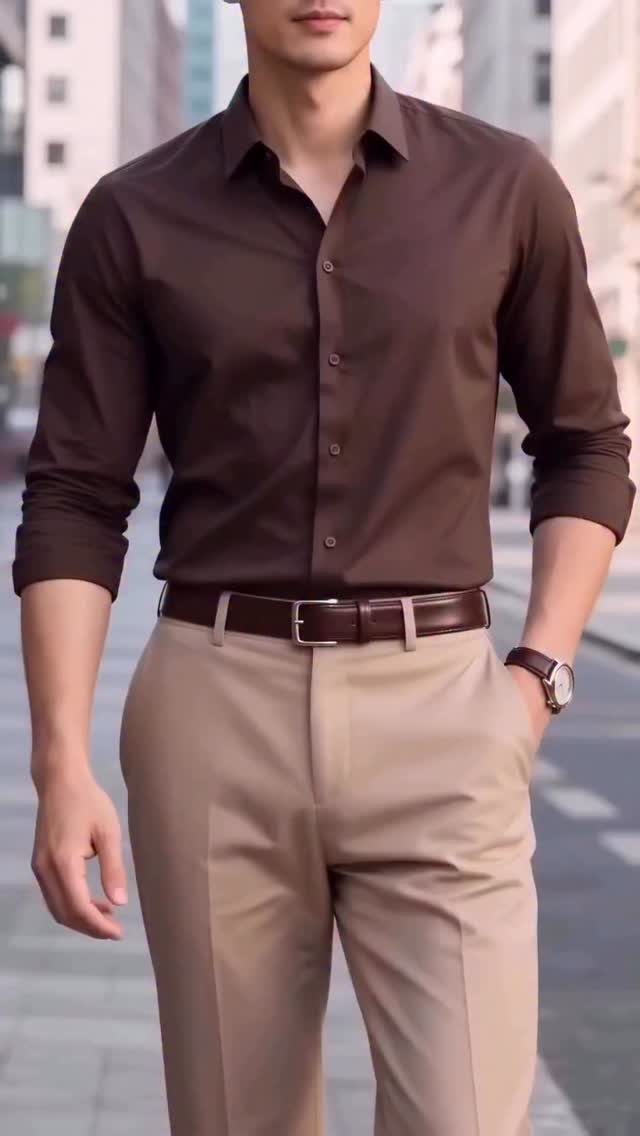
A brown long-sleeve shirt tucked into tan trousers is a tonal outfit, and tonal outfits look more expensive than they are. Both colors sit in the same warm family, so nothing clashes.
Tuck the shirt and add a brown leather belt, matched to your shoes. Roll the sleeves once or twice if the day warms up.
I would choose a shirt a shade or two darker than the trousers. Matching them exactly looks like a uniform.
7. Sweater Layered Over a Tie
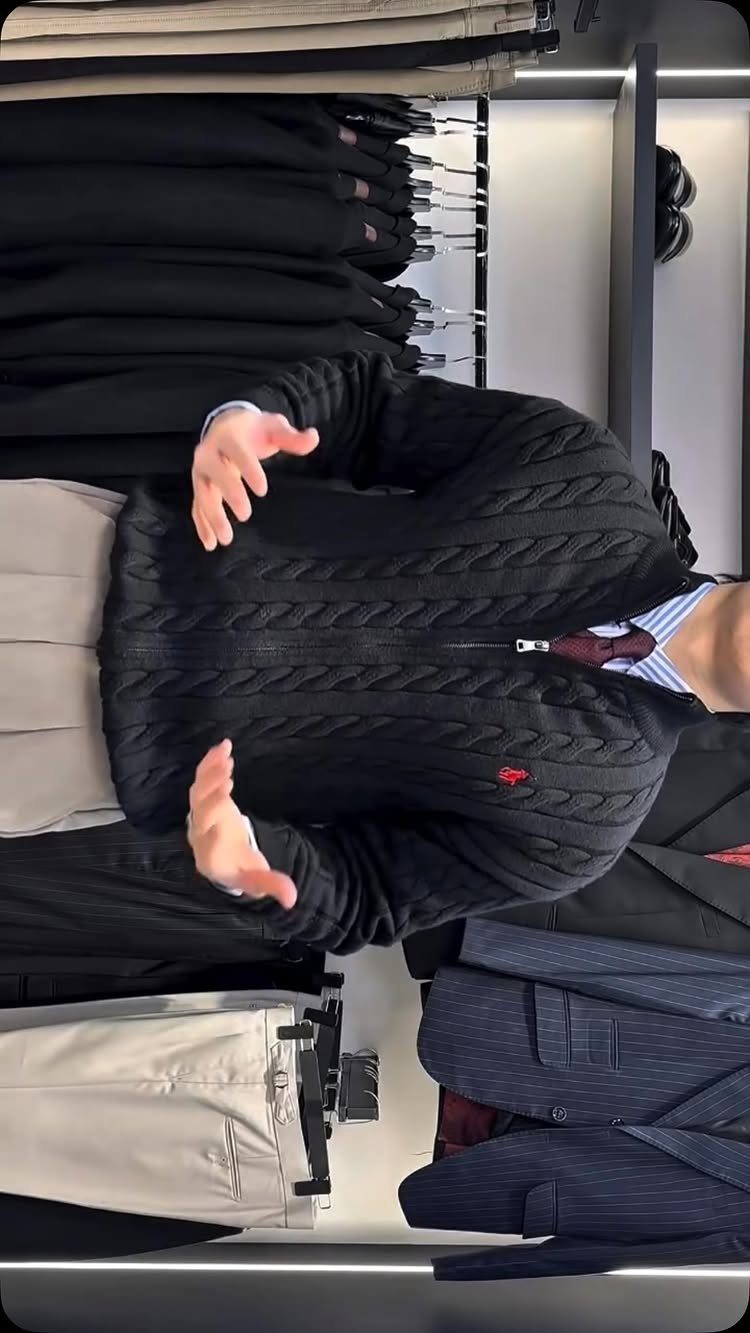
A fitted black cable-knit over a striped shirt and a red tie gives you a collar and knot with a sweater doing the work of a jacket.
For a man who finds blazers stiff, it is a quieter way to dress up.
Fit decides it.
A fitted knit sits flat over the shirt, while a loose one bunches at the tie and looks borrowed. A narrow tie stays tucked in the neckline of the sweater, and the shirt collar sits flat underneath it.
A black sweater leaves the tie as the single bright spot, so red works well here. I would keep the shirt stripe thin so the cable texture stays the main pattern.
This is a casual-office look, so save it for days without client meetings.
Dress Code Variability
Business casual has no single definition. A software startup, a bank and a design studio each draw the line in a different place, and your role moves it again.
A blazer earns its place on any day with client meetings or a presentation you’re leading. If your calendar is empty, jeans and a sweater can be enough.
Many offices now run on a "dress for your day" basis, even without saying so. Look at what your day holds and pick accordingly.
Ask HR for the written dress guidelines first, since a policy that says "business casual" can mean very different things from one office to the next. It takes one email, and it beats guessing wrong in your first week.
Mixing and Matching
Modern style lets you mix colors and textures, and the easiest way in is to change one thing at a time. Put a textured jacket over a smooth shirt, or a patterned tie against a solid jacket.
Shoes and belt no longer have to match exactly. 2 browns in the same general family look more relaxed than a pair cut from the same hide, and a strict match can read as trying too hard.
Keep the rule simple: the leathers should be close in tone and finish, not identical. Pair a dark brown shoe with a mid-brown belt and nobody will think twice.
If you’re unsure, keep the colors in one family and vary the texture.
Dressing for Occasions
Before you pick an outfit, check what the day holds. A client meeting, a presentation and a desk day call for different levels of polish, and the most formal event on your calendar sets the standard.
Interviews are the one place to dress above the room. Wear a button-down, chinos and a tie for business casual days, and save the suit for board meetings, client presentations and interviews.
Even when the interviewer comes in wearing a T-shirt, dress one level up, because it tells them you’re serious about the job.
Being underdressed hurts a first impression right away, and being slightly overdressed costs you nothing. If you’re torn between two options, take the sharper one.
Frequently Asked Questions
What should men avoid in business casual outfits?
Skip athletic shorts, graphic tees, ripped denim, sandals and overly casual sneakers.
Everything you wear should look clean and put together. Clothes that read as weekend gear are what make an office outfit look careless.
Can men wear jeans in business casual offices?
Only where the dress code or your manager says so; check before you wear a pair on a Tuesday.
Pick a dark, clean wash with no rips, fading, or whiskering, then put a button-down or knit polo above it so the whole outfit reads as work.
Dark jeans also work under an olive wool jacket and a black turtleneck, though trousers are the safer swap for the office.
Do men need a jacket for business casual?
Not strictly, though a sport coat or blazer is the quickest way to dress up an outfit.