Defining Business Casual by Industry is where I’d start, since the office decides the outfit: finance leans conservative with slacks and a blazer, while tech and education loosen up enough that a polo with wide-leg trousers barely gets a glance.
Whichever you choose, closed-toed shoes mark the line between business casual and just casual.
1. Slacks or Dress Pants
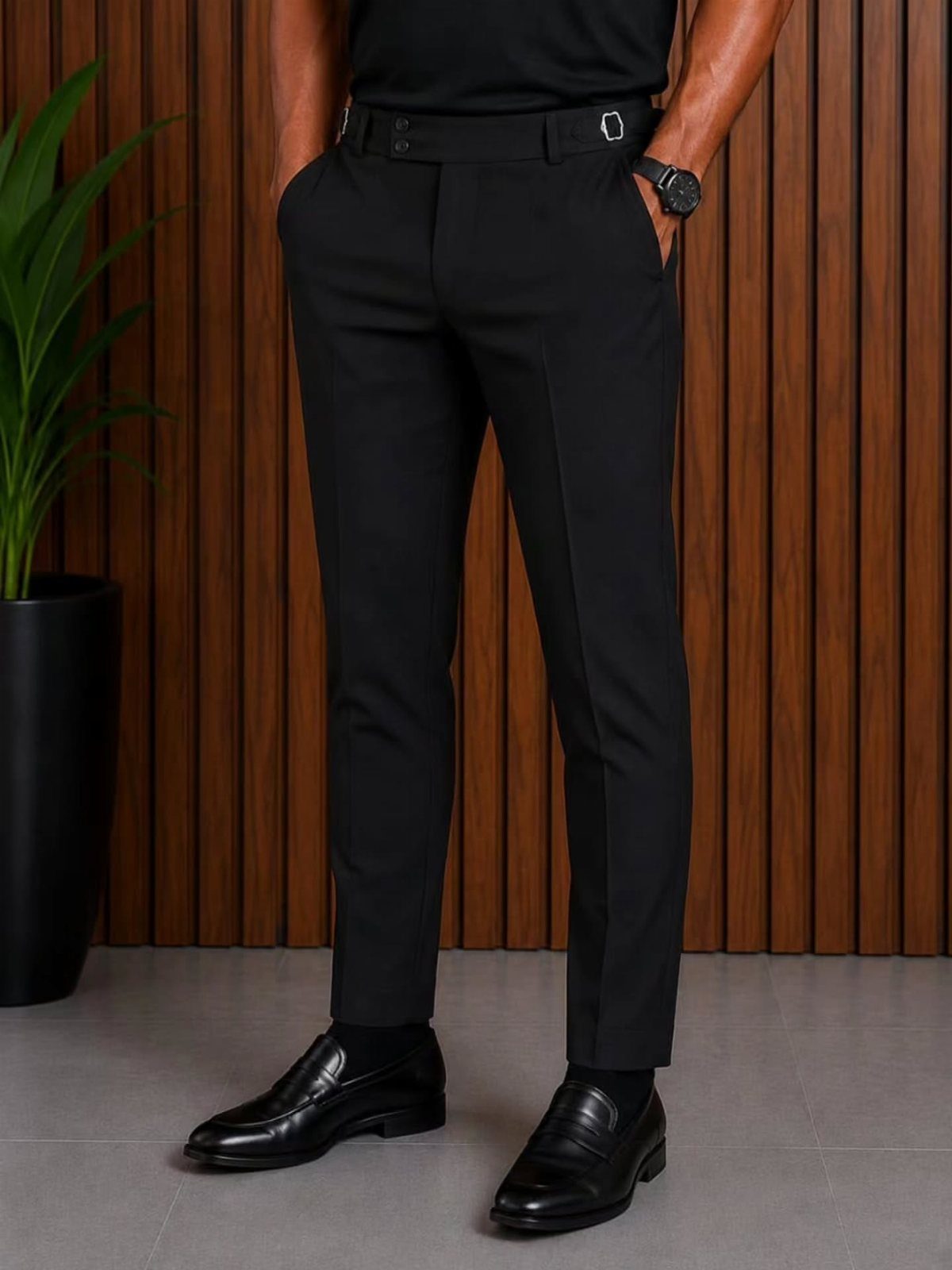
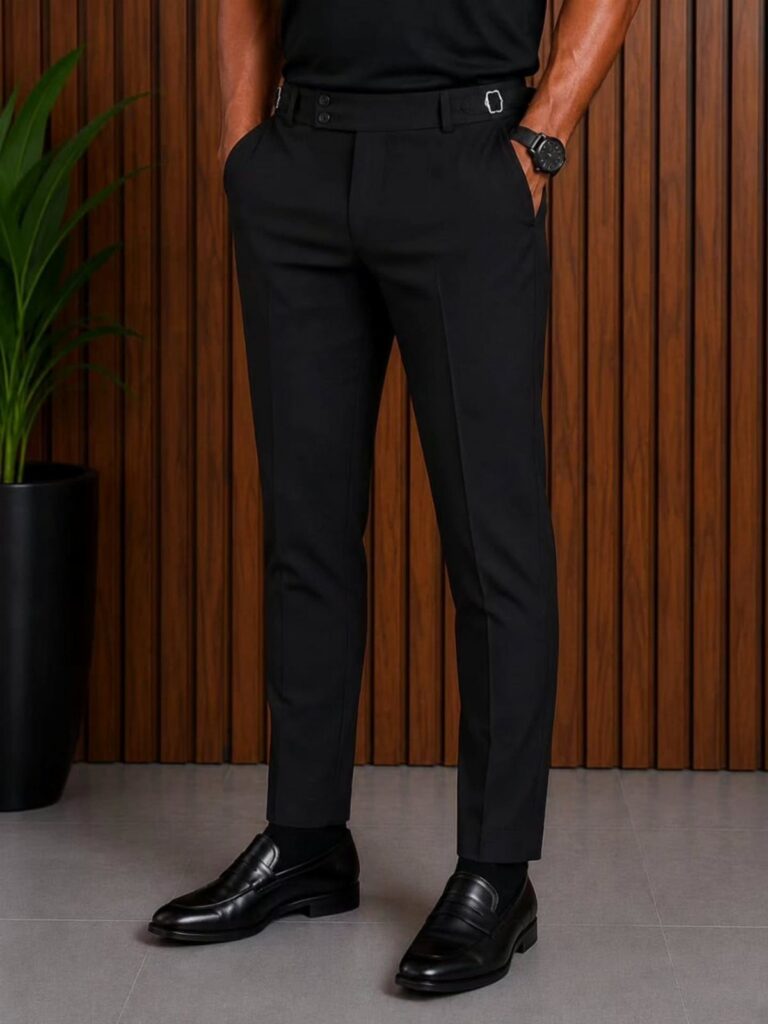
Black dress trousers with an extended waistband and side adjusters are the traditional base of business casual, and they earn the spot.
The adjusters let you dial in the waist without a belt, which keeps the line under a tucked shirt clean.
Black loafers finish the look.
An all-black outfit like this reads sharp but severe, so I’d swap the black shirt for white or light blue if the office leans conservative. Charcoal or navy trousers are the softer option for the same cut.
2. Blazers in Casual Materials
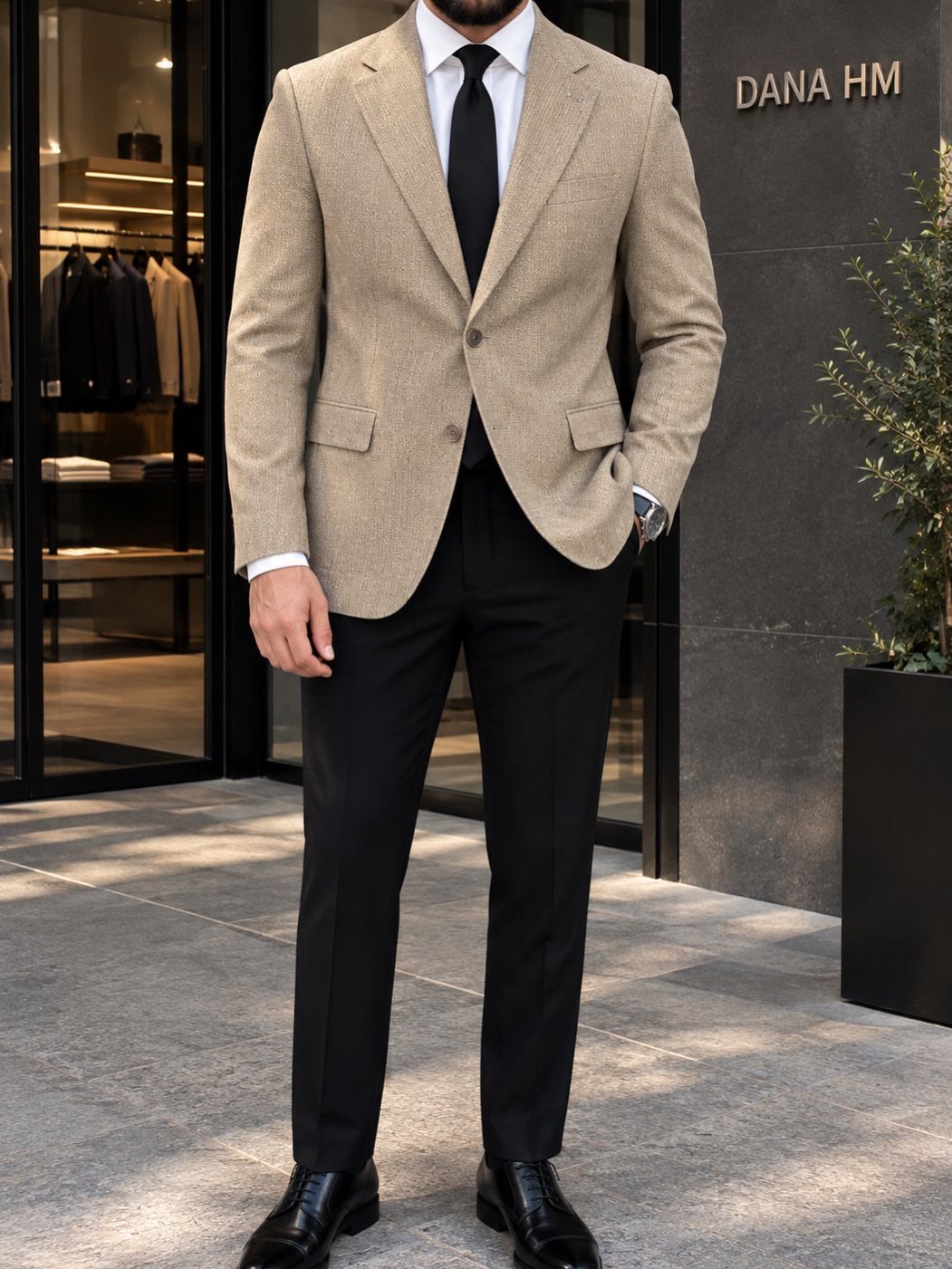
A textured tan blazer loosens a formal outfit without making it sloppy. A textured weave like linen, cotton or a slubby wool does the relaxing, so the rest can stay crisp: a white shirt, black trousers, dress shoes.
A black tie, as here, keeps the look closer to formal. For a more casual office, I’d drop the tie and open the collar one button.
Pick a blazer with some visible texture rather than a flat, shiny finish, and keep the trousers a solid dark color so the jacket is the only thing with character.
3. Blazer with Trousers
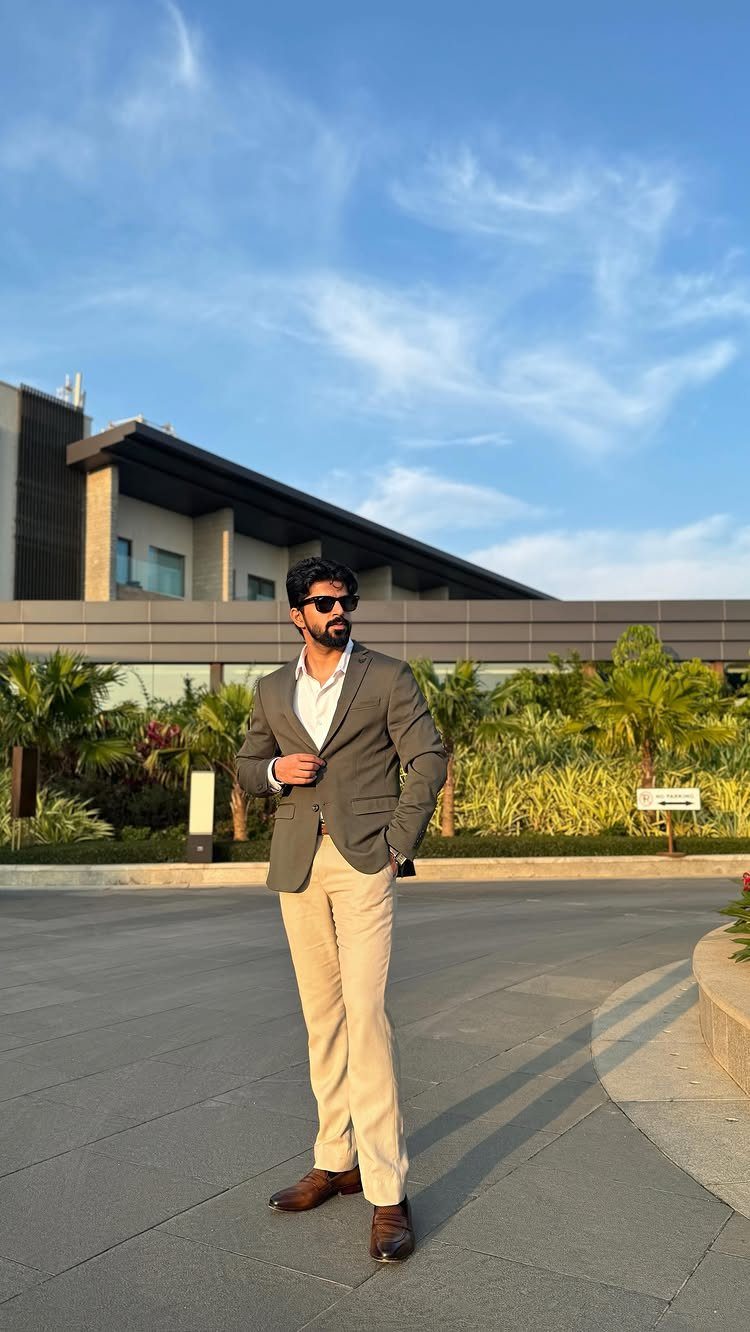
Gray blazer, beige trousers, white shirt: 3 quiet colors that never fight each other. That is why this pairing works as a refined office look without needing a matching suit.
Trousers a shade or two lighter than the jacket read as a deliberate pair, not a suit that lost its other half. Dress shoes finish it.
4. Closed-toed Shoes
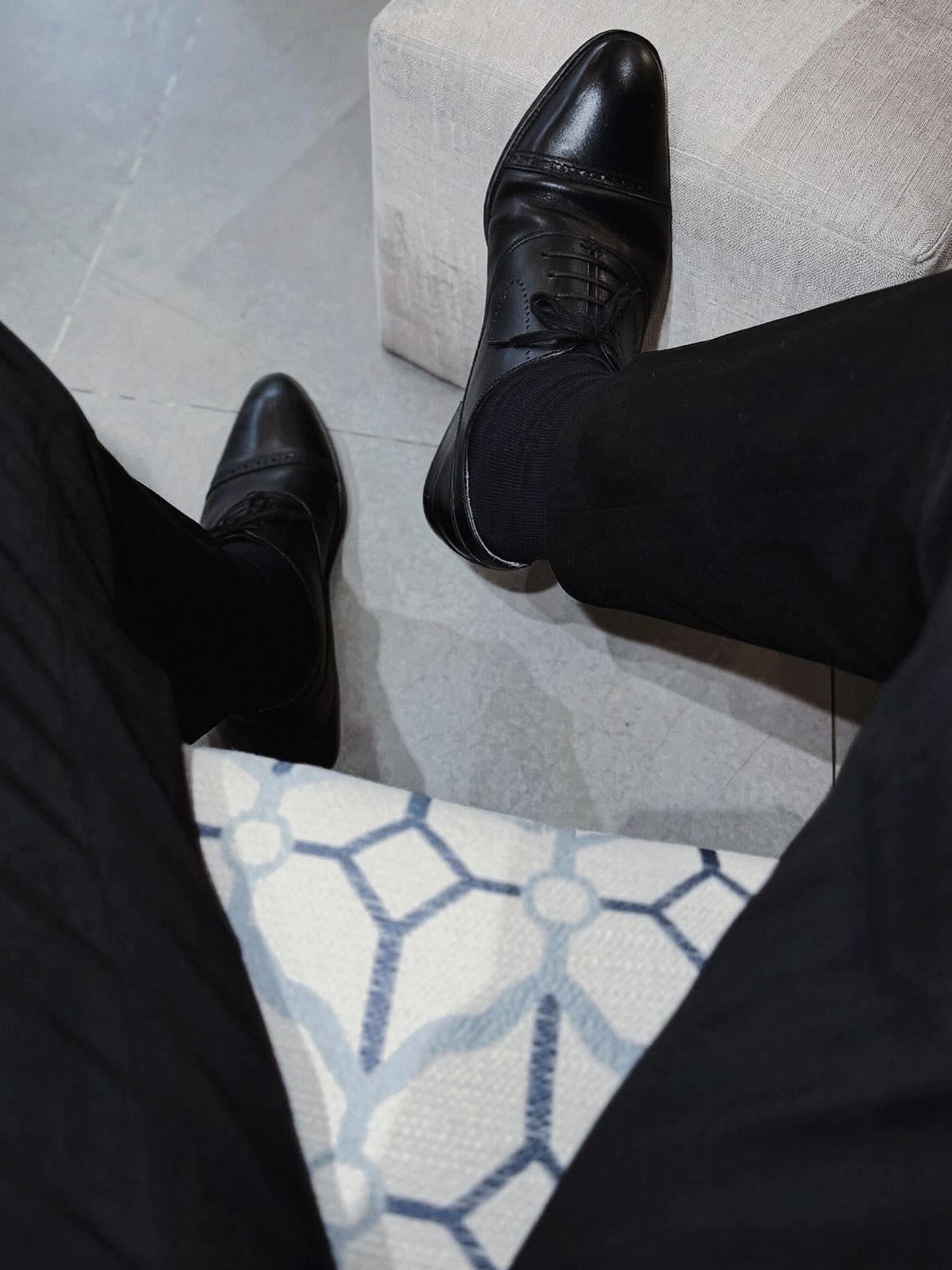
Closed-toed shoes are the line between business casual and just casual.
Match your sock to your trouser, not your shoe, and the leg stays one unbroken line even when you sit.
Keep the leather polished; scuffed shoes undo a good outfit faster than a wrinkled shirt does. If black feels too stiff, dark brown is my pick for a second pair.
5. Polo Shirt with Wide-leg Trousers
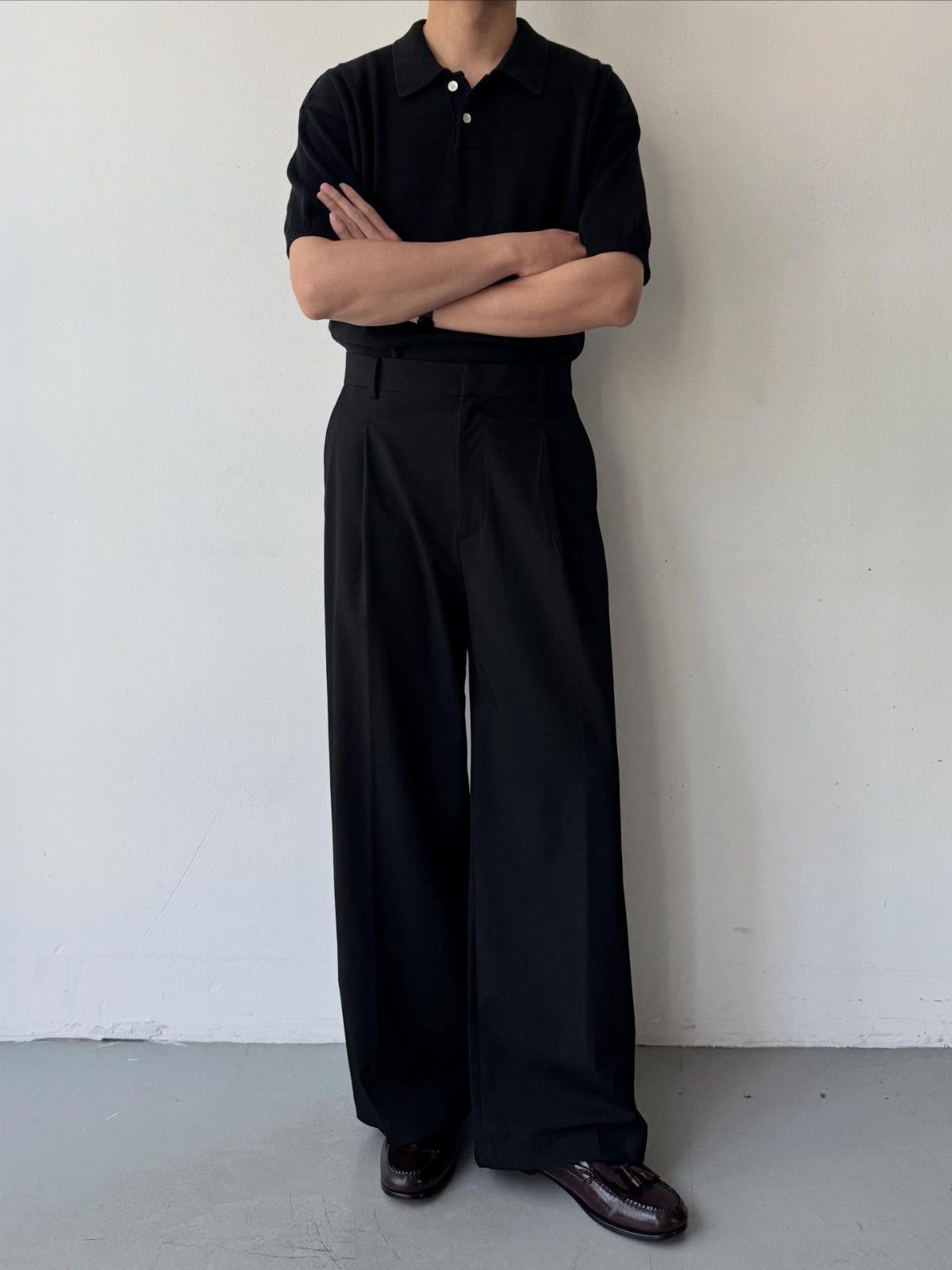
Wide-leg pleated trousers give a knit polo something to stand against. Tuck the polo into a high waist and the shirt stops looking like weekend wear, while the pleats add structure to the leg.
Black on black, as here, is a clean base, and brown tassel loafers break it up without shouting.
Choose a fine knit rather than a thick piqué so the shirt lies flat at the waist. Add a belt if the trousers sit loose.
6. Linen Suit with Open Collar
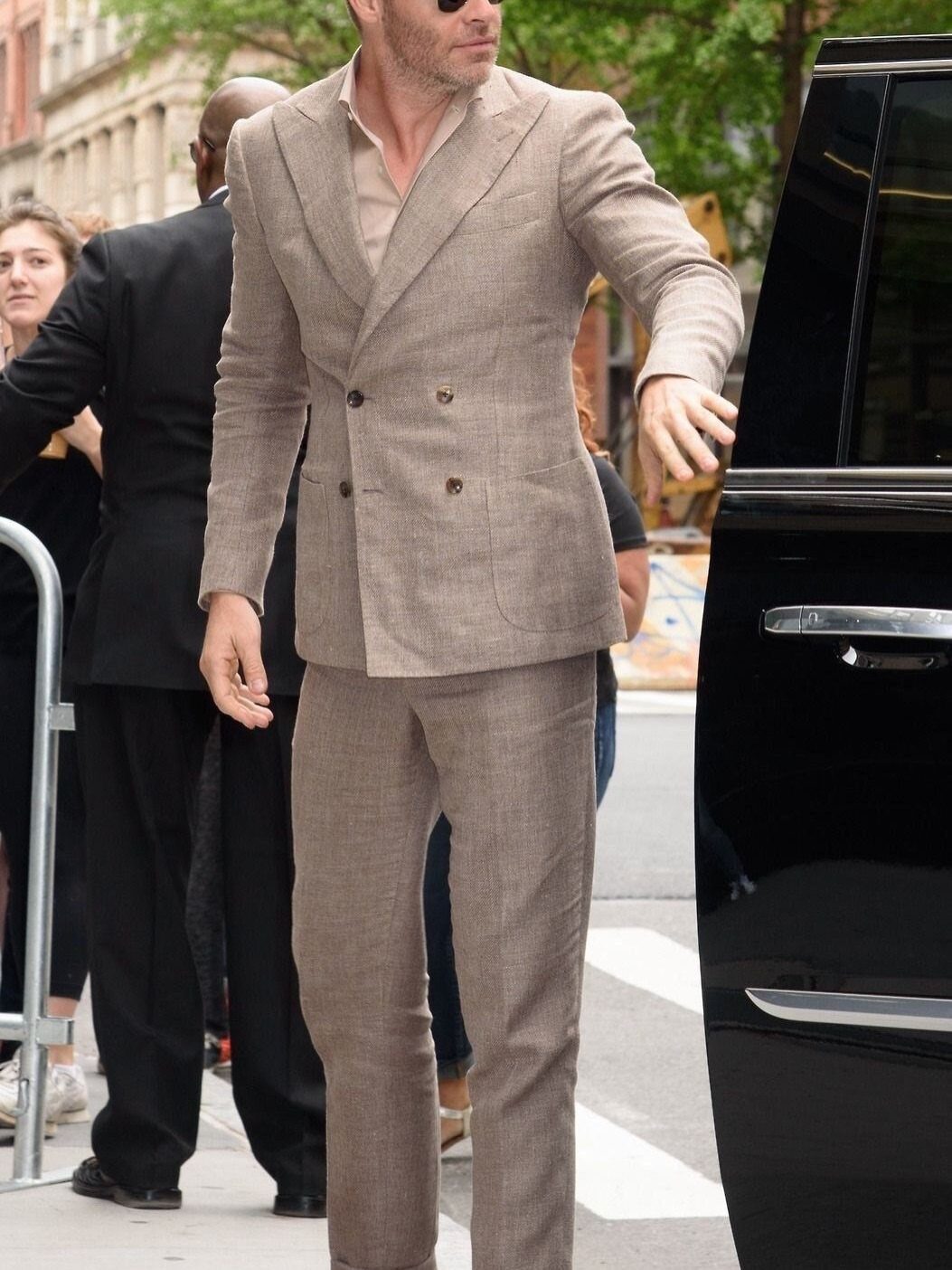
A double-breasted linen suit worn with an unbuttoned collar is business casual at its most relaxed, and the one I’d pick for heat. Linen is light and breathable, and the open shirt cuts out the tie entirely.
Expect wrinkles; they come with the cloth and are part of the look.
A quiet neutral like beige for the shirt lets the tan suit stay the focus. It suits warm weather and loose offices better than a formal one.
Defining Business Casual by Industry
Business casual changes with the building you walk into, so read the room before you read a rulebook.
Finance sits at the conservative end: suits, or dress pants with a button-up shirt, plus classic accessories like a watch and a tie.
An ad agency or design studio gives you more freedom, so a bolder tie, a patterned shirt or one bright accent will all pass without a second look.
Entertainment and fashion go further, and in fashion the usual rules mostly don’t apply.
Education is friendlier than people expect. Khakis with a polo and loafers is a safe pairing, and dark jeans with no rips, a crisp button-down and oxfords or loafers work just as well.
Tech often runs casual. Medical and service jobs lean on scrubs, lab coats or uniforms, so comfortable shoes and restrained accessories do most of the work there.
If you’re unsure, copy the best-dressed person in the room who isn’t the boss.
Dress Code Guidelines
Think of business casual as traditional office wear with the stiffness taken out, still professional. The edges are easier to see by what falls outside them.
Skip these tops:
- Hoodies and sweatshirts
- Thick, heavy sweaters
- Anything overly tight, oversized or see-through
- Tank tops
- Shirts with offensive words, logos, images or slogans
A plain T-shirt only works under a jacket or cardigan.
Polos, knit sweaters, turtlenecks and button-ups are all fair game.
A classic crewneck or V-neck in a solid color is the safe pick; if you want more interest, look for a visible texture like cable knit or a color like forest green or burgundy.
Prints and bold colors are allowed too. I’d limit them to a single piece and keep everything else you’re wearing classic, so the shirt reads as a choice and not a distraction.
Tips for Job Interviews
For an interview, overdress. You can always loosen up once you have the job, but you only get one first impression.
Business casual is a fine baseline for the fit and fabric of what you wear, and then you go one step sharper.
If the office wears polos, you wear a jacket and a collared shirt. If the dress code is already a jacket, add a tie.
Polished matters more than expensive. Press the shirt, polish the shoes, and make sure everything fits before the day, not that morning.
Frequently Asked Questions
What dress code is business casual?
Think of it as office dress with the starch removed: relaxed enough to breathe, still polished enough for a client meeting.
Knit polos, fine-gauge sweaters, turtlenecks and oxford shirts fit the brief, as do dress trousers, closed-toe shoes and a blazer with some texture.
Hoodies, sweatshirts and tank tops are out, and so is anything skin-tight, baggy or sheer. What counts also shifts by industry, with finance the most conservative and tech often the loosest.
Can I wear jeans for business casual?
Yes, if your office allows them, and only in a dark wash with no rips. Dark, plain jeans can work if the top half does the dressing up: a crisp button-down, then oxfords or loafers on your feet.
Some workplaces skip denim altogether, so check the culture first. Dress trousers are the safer choice.