A wedding, a business meeting and a black-tie dinner each call for a different suit, so the room should settle the choice before anything else does.
The list runs from a beige linen suit that is meant to wrinkle to a black dinner suit with satin lapels, and from a navy single-breasted suit with 1–3 buttons that I would tell any man to own first to a velvet shawl lapel jacket that belongs only at parties.
1. Linen Suits
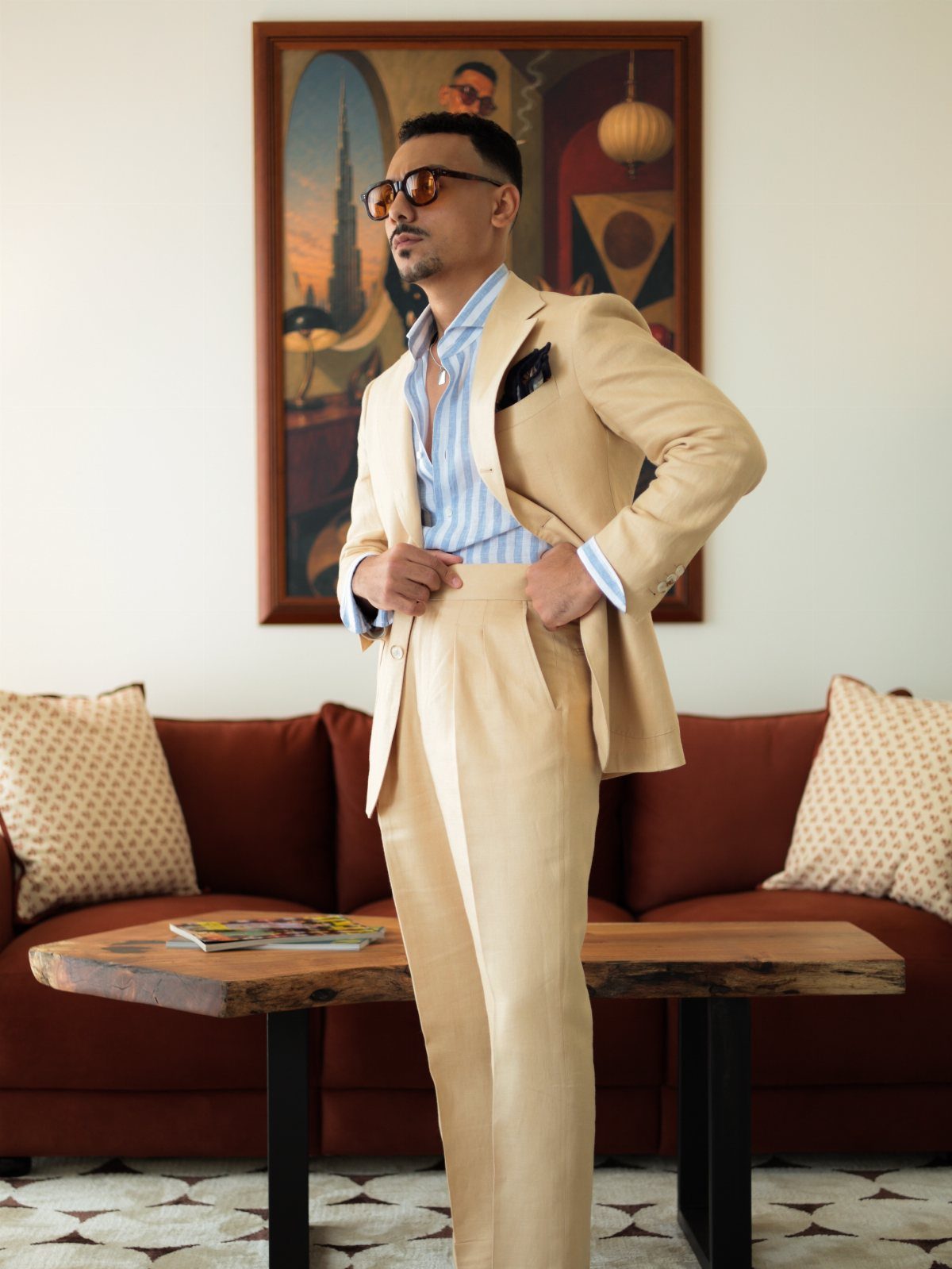
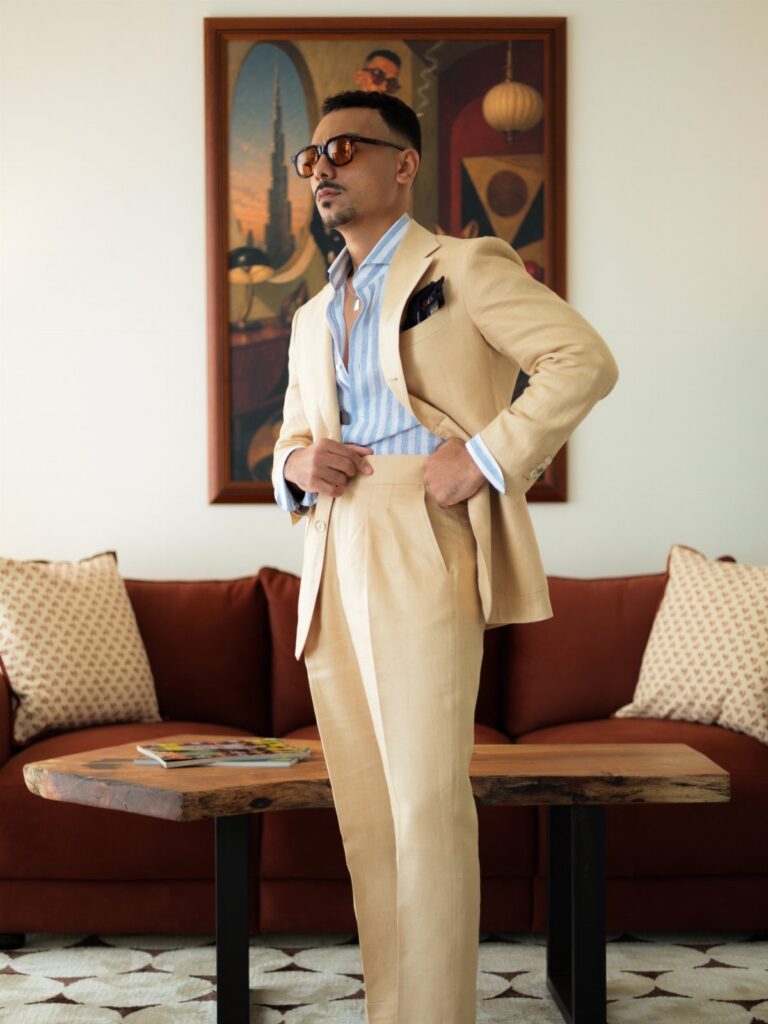
Linen wrinkles, and that is fine. A suit in light beige looks relaxed by design, so a crease at the elbow reads as the fabric doing what it does.
I like it with a striped shirt, since the pattern adds some structure to a soft suit.
Keep the rest simple: no heavy shoes, no dark tie. Linen is made for warm weather, and that is the only season I would wear it.
2. Single-Breasted Suits
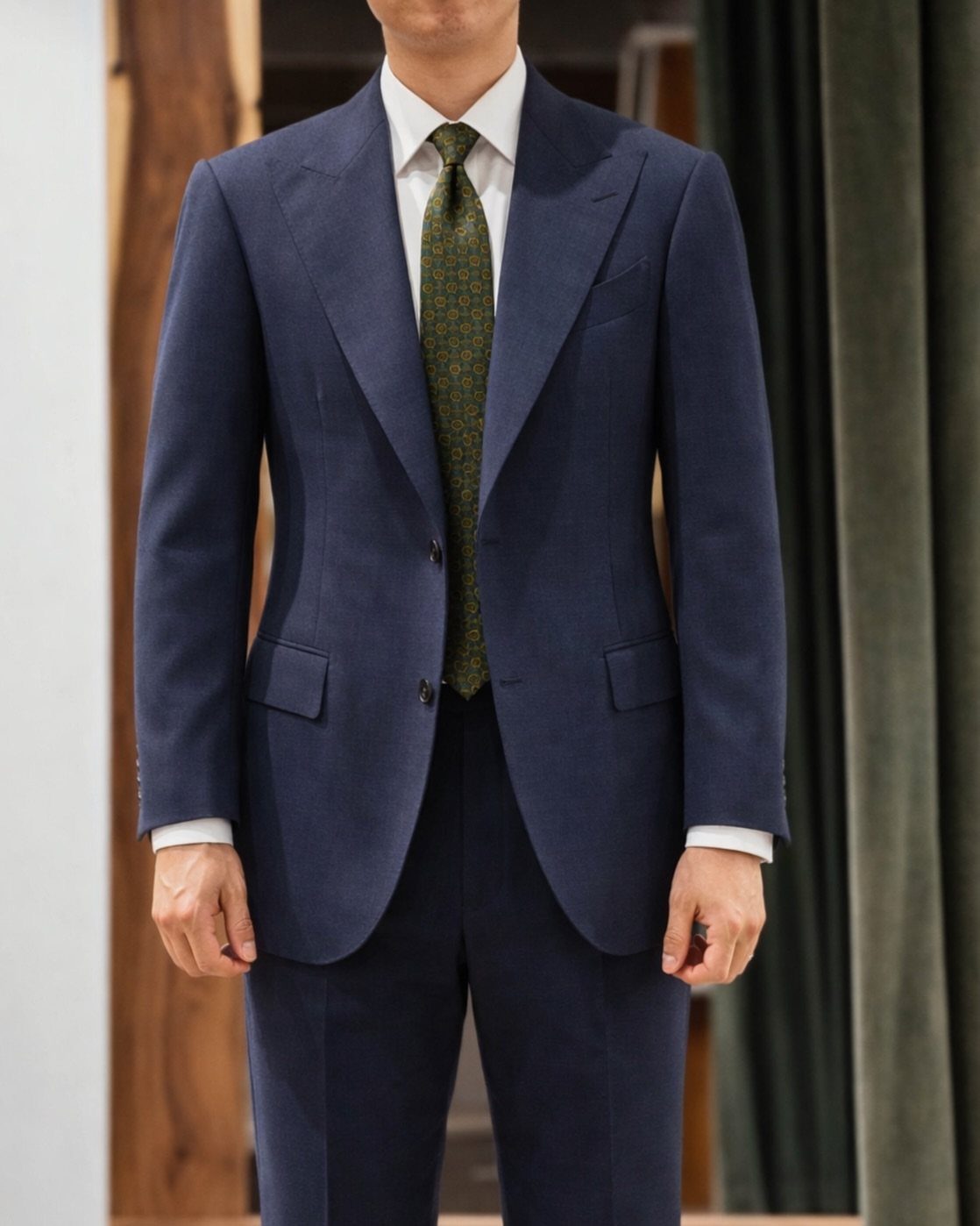
Navy, single-breasted, one to three buttons: this is the suit I would tell any man to own first. It works for interviews, offices and weddings without any argument.
Wide peak lapels, as on this jacket, give the shoulders more presence than a standard notch. A white shirt with a patterned tie in a deep color like forest green keeps a single-breasted suit sharp without making it stiff.
3. Double-Breasted Suits
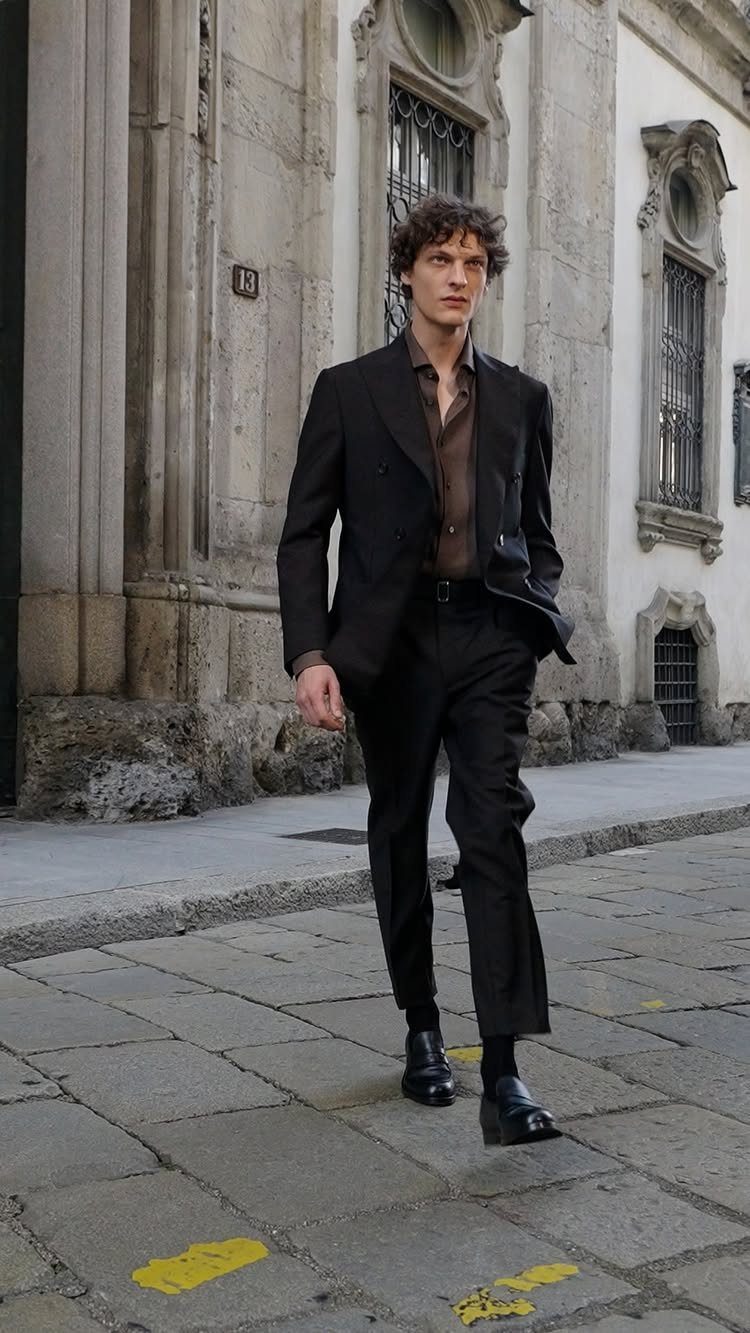
Overlapping front flaps are what give a double-breasted jacket its look, with two to three buttons on the front. It draws the eye to the chest and waist, so the cut matters more here than on a standard jacket.
Dark cloth, loafers and a brown shirt make it feel less formal than the usual white and tie. I prefer that approach for a man under 44 who wants the style without looking costumed.
4. Tweed Suits
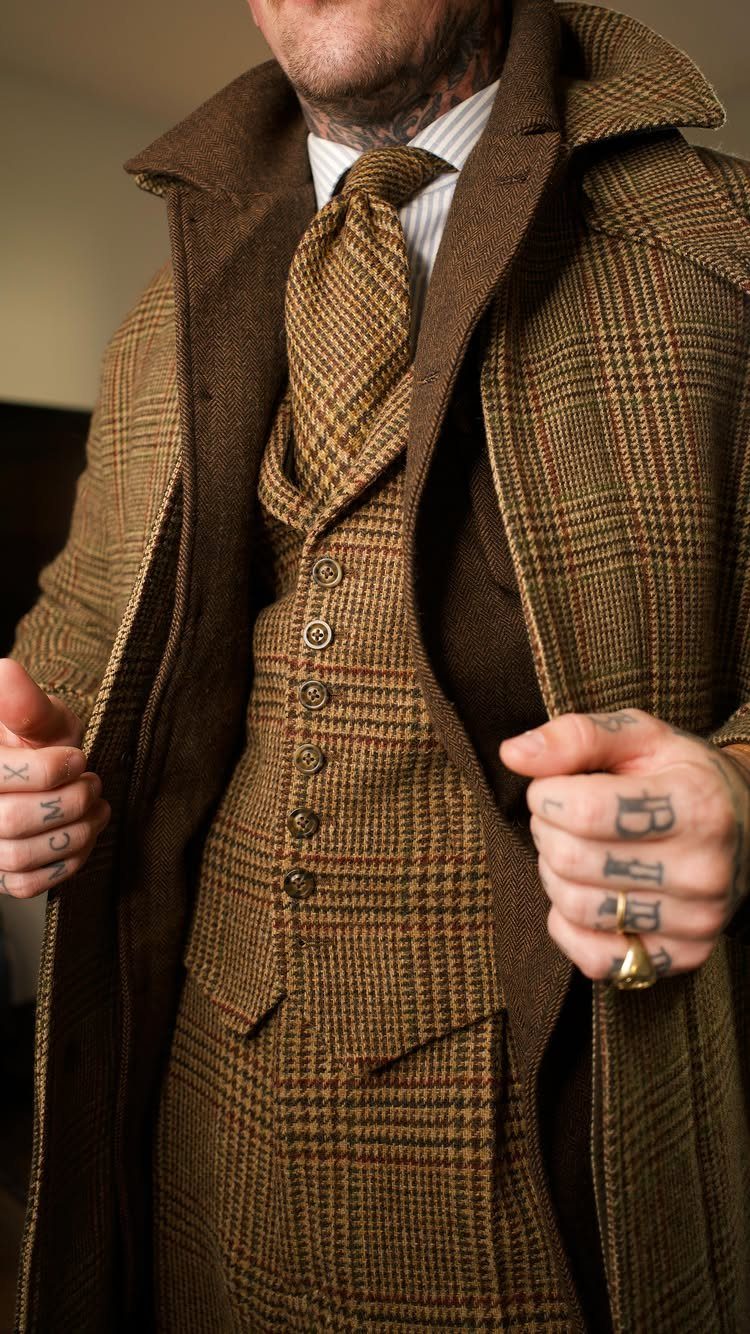
Tweed is thick and warm, which makes it a winter fabric first and a style choice second.
A three-piece tweed suit gives you layers that do real work in the cold, and a matching tie in a similar tone keeps the whole thing looking planned.
Adding a heavy overcoat in the same cloth is a bold move, and I like it. Tweed is heavy, so a warm office will wear on you; save it for outdoor commutes, cold rooms and weekends.
5. Plaid Suits
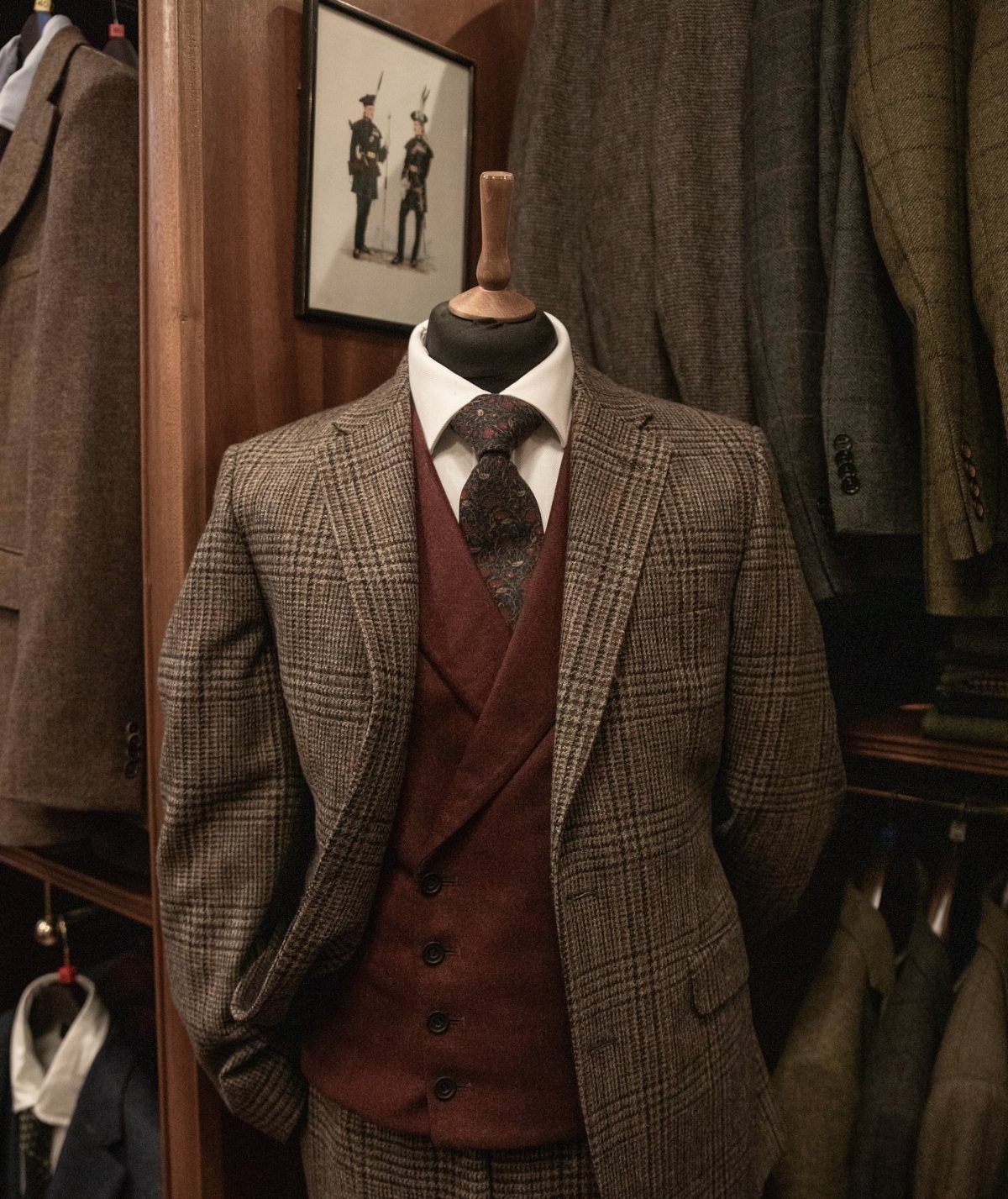
A checked pattern does the talking in a plaid suit, so everything around it should stay quiet.
A plaid suit works best with quiet partners: a white shirt, and a waistcoat in a deep solid like burgundy that pulls one color out of the check.
Keep the tie in a small pattern, as here, and skip any other bold piece.
One loud item is enough, and the suit is already it. Plaid is the stylish choice, but it is not the one for a first suit.
6. Dinner Suits

Black satin lapels, a white shirt and a dark bow tie: a dinner suit is the formal option for evening events. The satin catches the light against the plain black cloth, which is the whole effect.
A shawl lapel gives a smooth, rounded line down the chest that I find more elegant than a notch. Keep the shirt crisp and white and the bow tie dark, and the look holds up all night.
7. Mandarin Suits
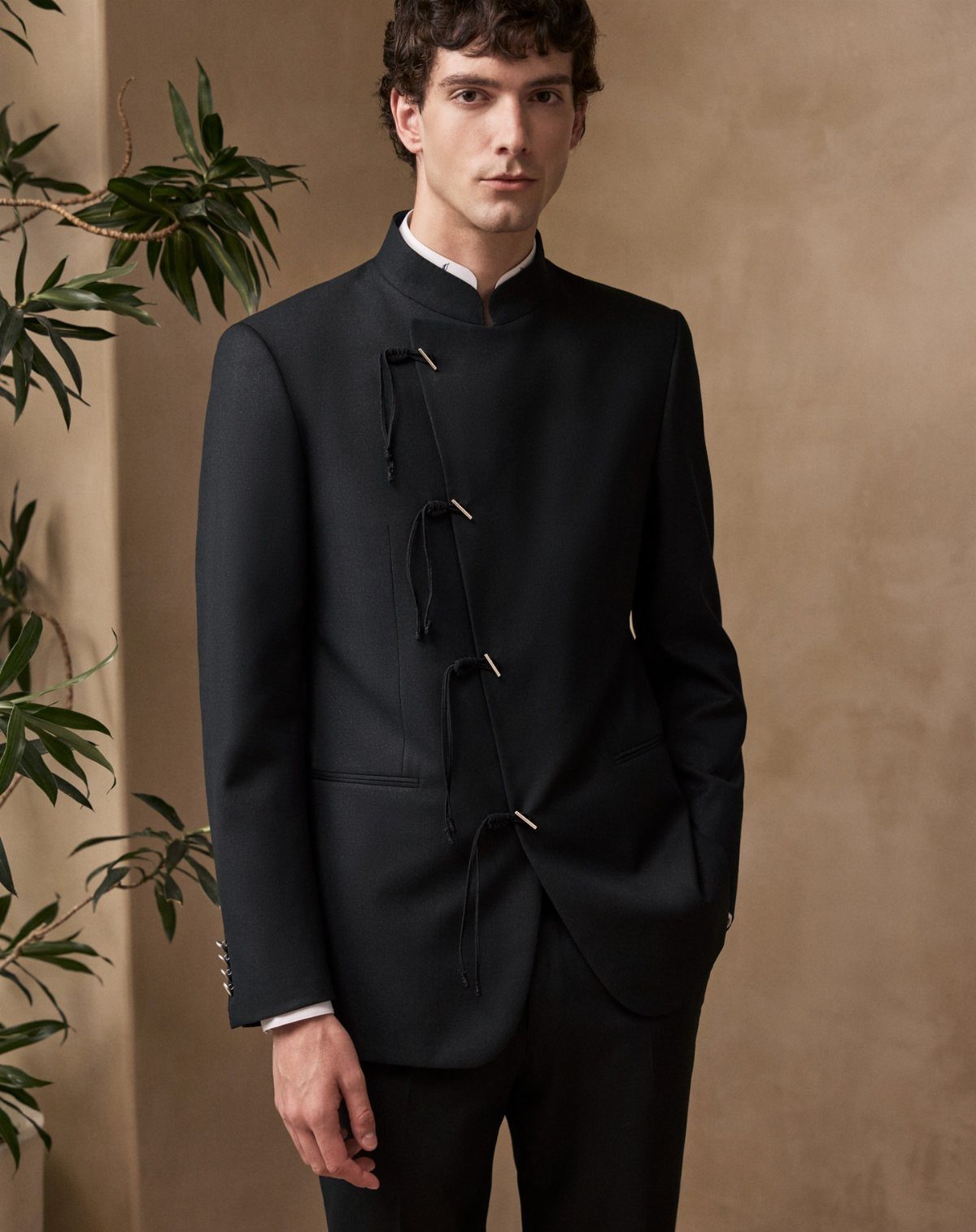
A mandarin suit drops the lapel and tie, leaving a short standing collar that sits close to the neck.
With side toggle fastenings, as on this dark jacket, it reads as a deliberate choice rather than a suit with something missing.
Wear it with nothing under the collar but a plain tee or a fine knit, and keep the trousers in the same dark cloth. It is a better pick for dinners and parties than for a conservative office.
8. Notch Lapel Suits
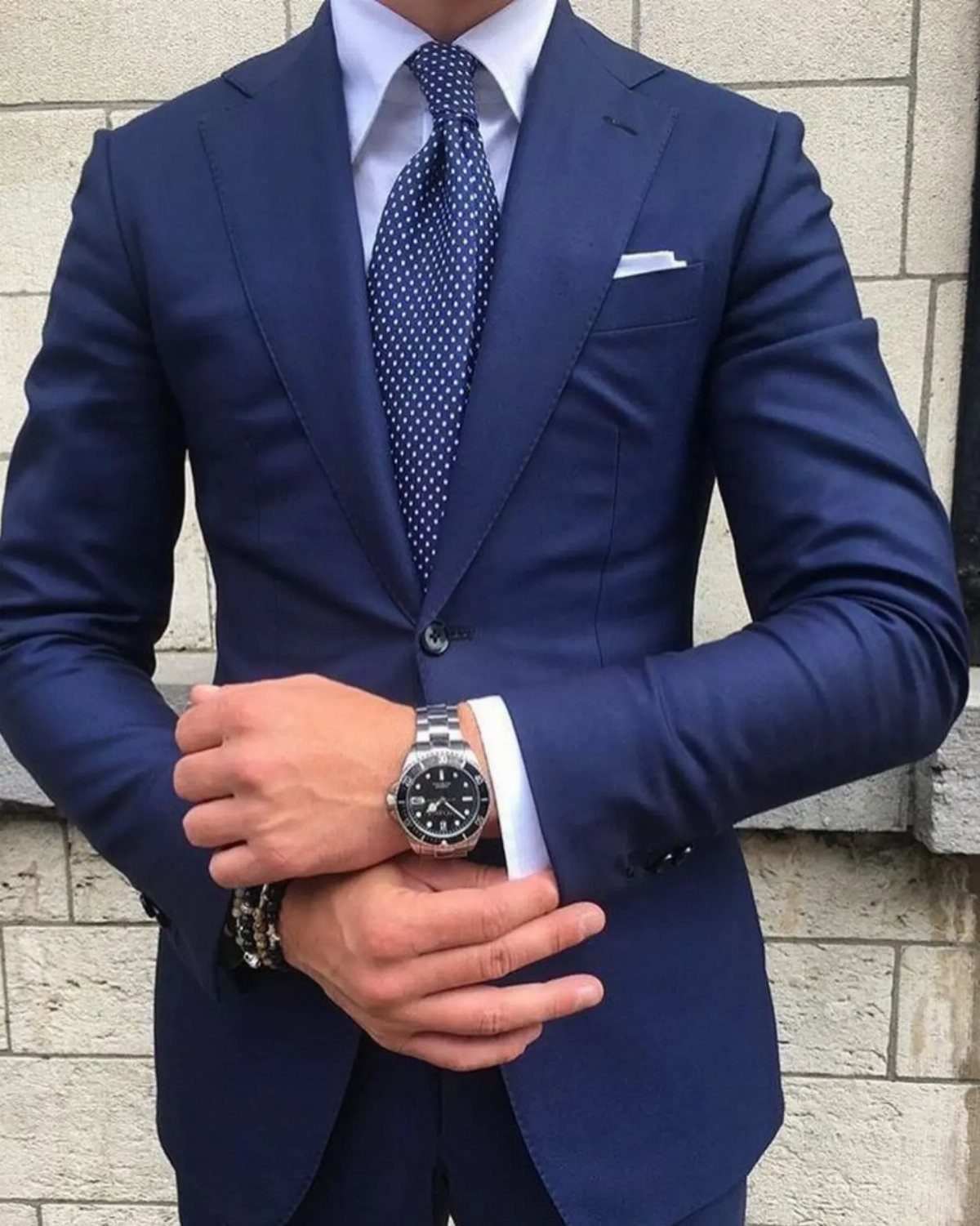
Royal blue is a bold color for a jacket, and the notch lapel keeps it grounded. The small step where collar meets lapel is the standard cut, and it is the one I would pick for daily wear.
Add a simple watch and stop there. Notch lapels are less dramatic than peak ones, which suits work and interviews.
9. Peak Lapel Suits
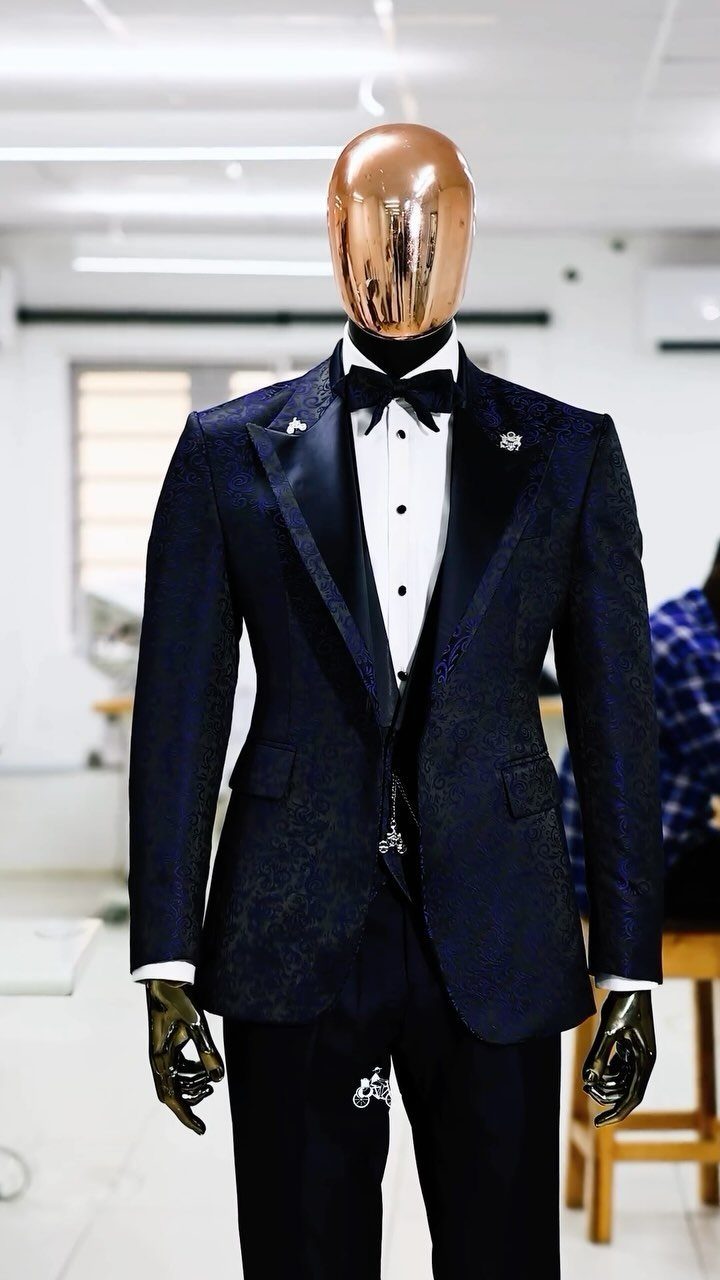
Lapel edges that point up toward the shoulder give a peak lapel suit its sharpness. The angle widens the chest and draws the eye upward, so it looks formal even in a patterned navy cloth.
A black bow tie and white shirt push it further toward evening wear.
For a lighter feel, swap in a standard tie. I prefer peak lapels on men who want more shoulder presence, and I would skip them if you want a soft, low-key look.
10. Three-Piece Suit with Waistcoat
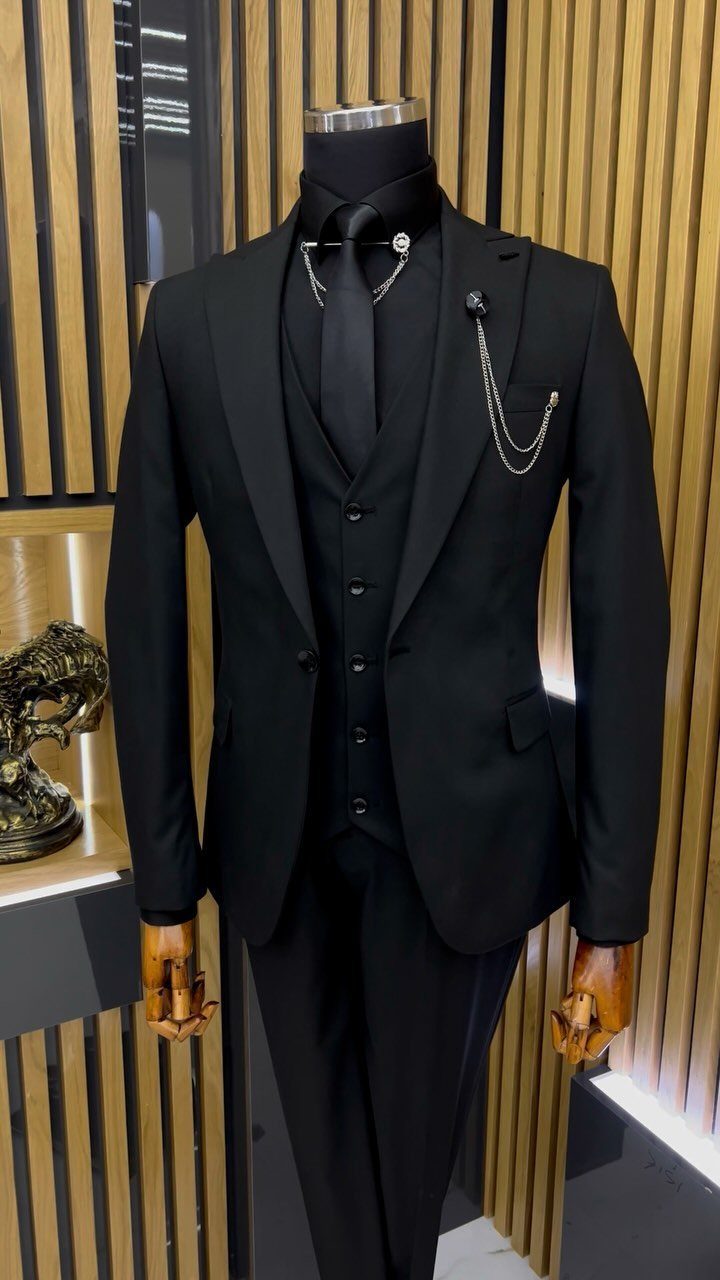
Matching vest, jacket and trousers make a three-piece suit one continuous block of color.
In all black, with a black shirt and tie, it looks severe in a good way, and a collar bar keeps the shirt neat under the vest.
Pocket chains add detail, but I would use one, not several.
Button the vest so it covers the waistband, and keep the whole outfit in one tone. It is a strong evening look and too heavy for a casual day.
11. Casual Suit with Sneakers
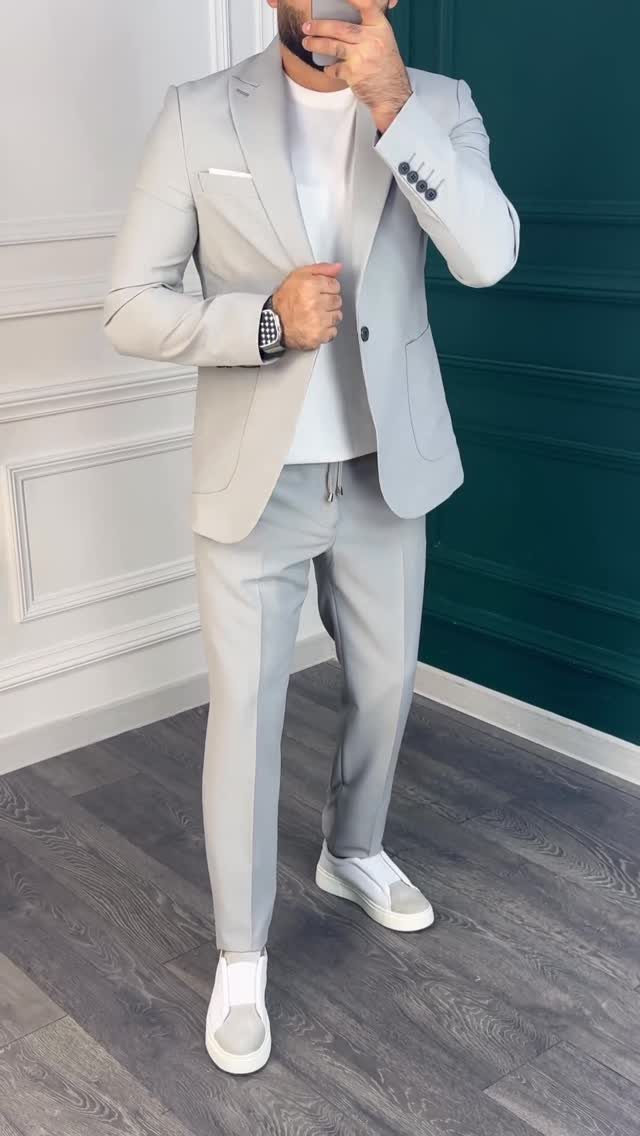
Light grey cloth with a white tee and white sneakers is the easiest way to wear a suit on a weekend. A drawstring waist makes the trousers closer to loungewear, which is what keeps the look relaxed.
Keep the sneakers clean and plain, since scuffed ones ruin it fast.
Pick a tee that fits through the chest and skip any logos. This works for casual dates and errands, but I would not wear it to an interview.
12. Shawl Lapel Suit Jacket
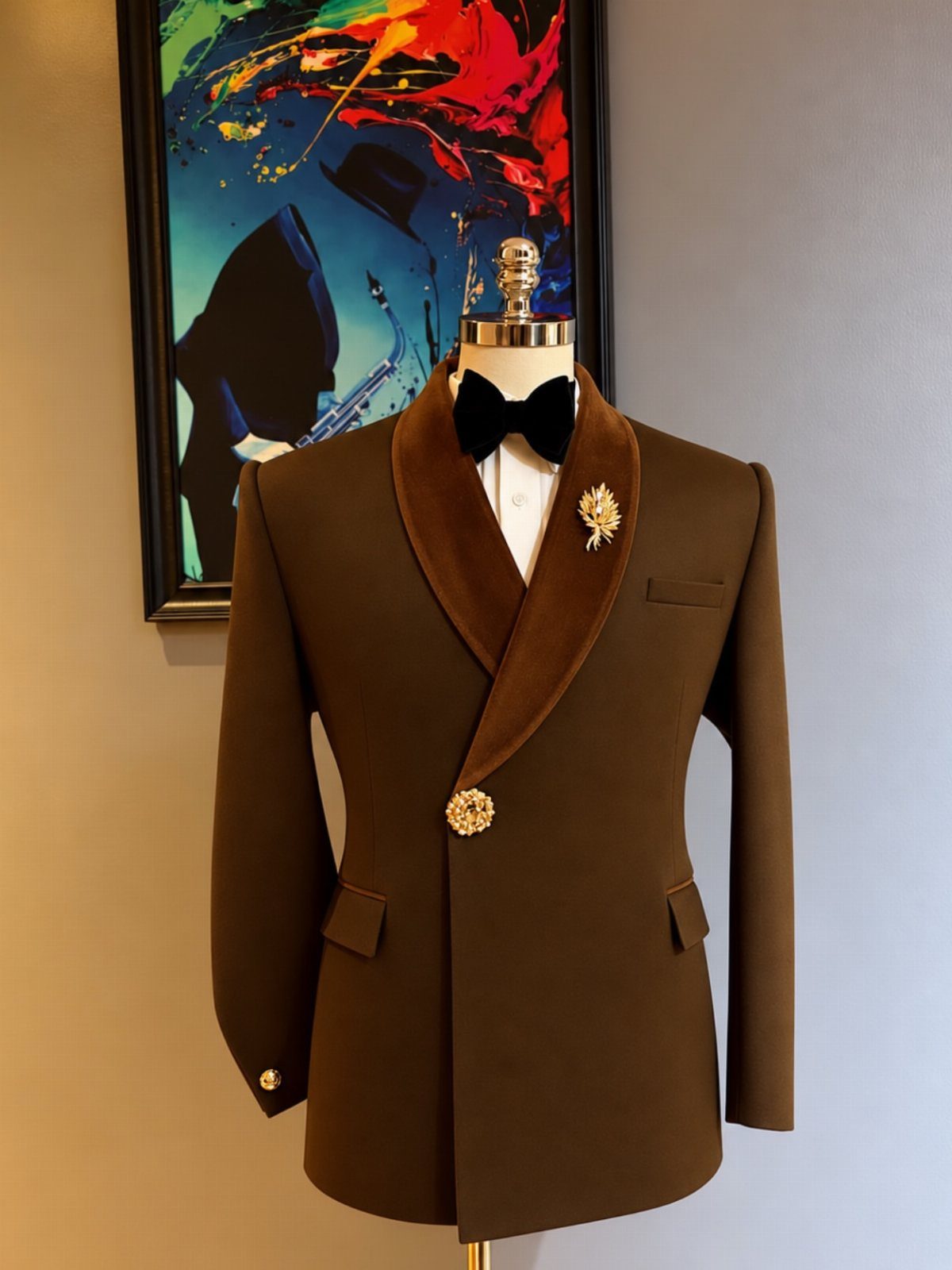
A shawl collar is one unbroken curve with no notch or peak, and in velvet it becomes the focus of the jacket. On brown cloth, the wide version looks warm and a little theatrical.
Pair it with a black bow tie and the jacket stays squarely in formal territory.
Gold brooches are an optional extra; I would add one at most unless the event is truly festive. Save this for parties and holiday evenings, where the exaggerated collar looks intended rather than odd.
13. Double-Breasted Blazer with Contrasting Trousers
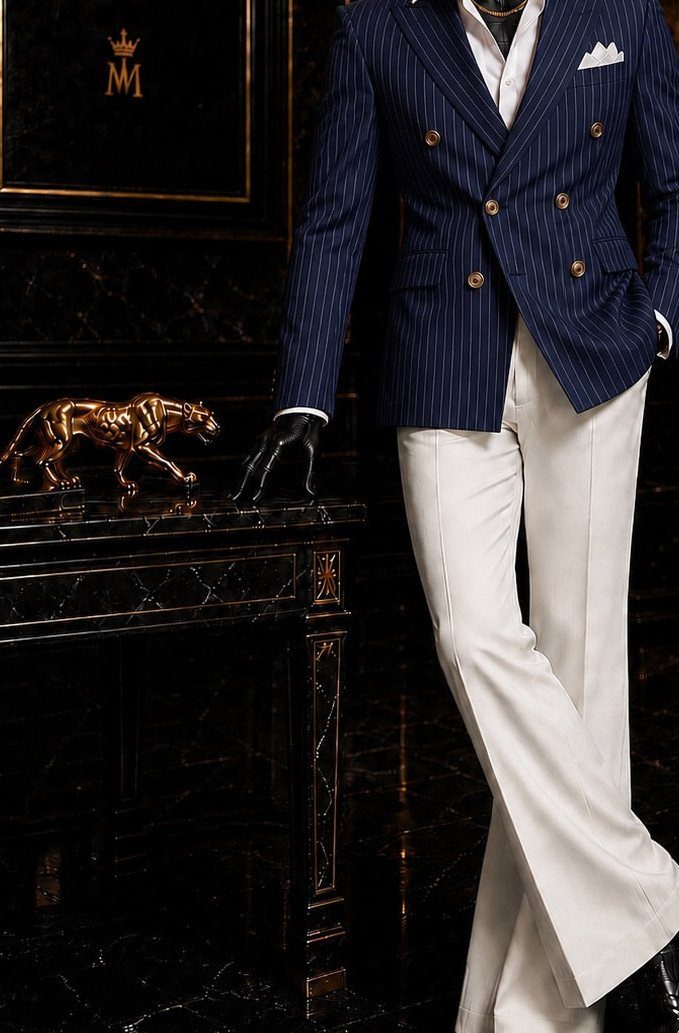
A navy pinstripe double-breasted blazer over crisp white trousers splits one suit into two outfits. The dark top half keeps the structure, and the white below makes it read as summer rather than office.
Keep the shirt white and add a white pocket square, as here, so the trousers don’t look like an accident.
I would stay with this single contrast and skip a colored tie or loud shoes. The flared leg looks best with a clean hem and a plain loafer.
White shows everything, so this is a dry-weather, daytime-to-dinner outfit, not a commute.
Occasions for Suits
Match the suit to the room before you look at anything else. Weddings, business meetings and formal events each ask for something different, and the same suit rarely does all three well.
Wool or a wool blend is the dependable fabric for office settings and dressier events, and I would start there before anything else.
Prom, black tie and everyday wear sit at different points on the formality scale. Decide which one you are dressing for first, then choose the cloth and cut.
Suit Matching Tips
A suit is only the foundation. The shirt, trousers and accessories decide whether the outfit looks finished or just assembled.
Start with the trousers: they should match the jacket and be tailored to your body, not just your waist size. A well-fitted pair keeps the line clean from shoulder to hem.
Then choose the shirt. A light-colored dress shirt is the most dependable pick under a formal jacket, and it lets the suit carry the color.
Add accessories last, and keep them few. If the suit and shirt already work, a tie and a watch are usually enough.
Suit Care Advice
Rotate your suits. Wearing the same suit on back-to-back days doesn’t let the fibers recover, so rotate at least two and give each one a rest between wears.
Hang the jacket on a wide, shaped hanger so the shoulders keep their form. Brush the cloth after wearing it to lift off dust and lint.
Dry clean only when the suit is actually dirty or stained. Frequent cleaning wears down the fabric, and a suit that is aired out and brushed rarely needs it more than a couple of times a year.
Store suits in breathable garment bags, not plastic, and keep cedar nearby to deter moths.
Frequently Asked Questions
What types of suits are essential for men?
Start with a navy single-breasted suit with one to three buttons.
A navy single-breasted suit handles interviews, office days and most weddings, which is why it comes first on my list. After that, a double-breasted jacket adds a sharper option, and a black dinner suit with satin lapels covers formal evenings.
How do I choose the right suit for an occasion?
Start with the room you’ll be standing in, then pick the suit. For offices and dressier events, I’d pick wool or a wool blend first; it holds a crease, breathes, and wears well year-round.
Then settle where the event sits on the formality scale, from everyday wear up to black tie, and pick the cloth and cut to fit.
What should I wear with a suit?
Under a formal jacket, a white or pale blue dress shirt works best because it leaves the color to the suit. Add a tie and a watch, and stop there, because a few accessories finish an outfit better than many.