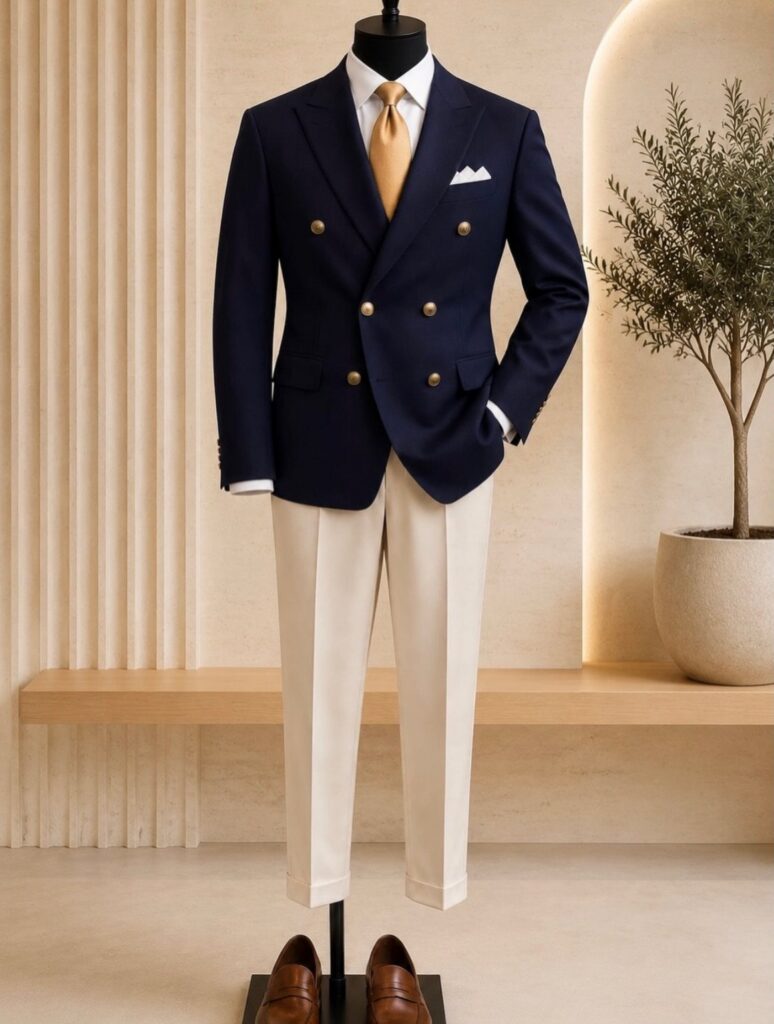
Graduation outfits in this list run from a gown over a collared shirt and dark trousers, the cheapest route since the gown is usually provided, to a well-fitted suit that carries you from the ceremony through the party.
Your own situation decides it: the gown covers everything above the knee, so what gets noticed is your collar, trouser hems and loafers, and the forecast sets how much you can wear under it.
1. Well-fitted Suit
A suit gives you the most formal base under a gown, and a matching jacket and trousers is the safest way to wear it. Separates work when the ceremony runs less formal: a navy jacket with grey trousers, for example.
Fit decides everything here.
The shoulder seam should end where your shoulder does, and the sleeve should show a sliver of shirt cuff. Since the gown covers most of the jacket anyway, shoulders and trouser length matter more than anything else.
If your budget is tight, spend on a tailor before a pricier suit.
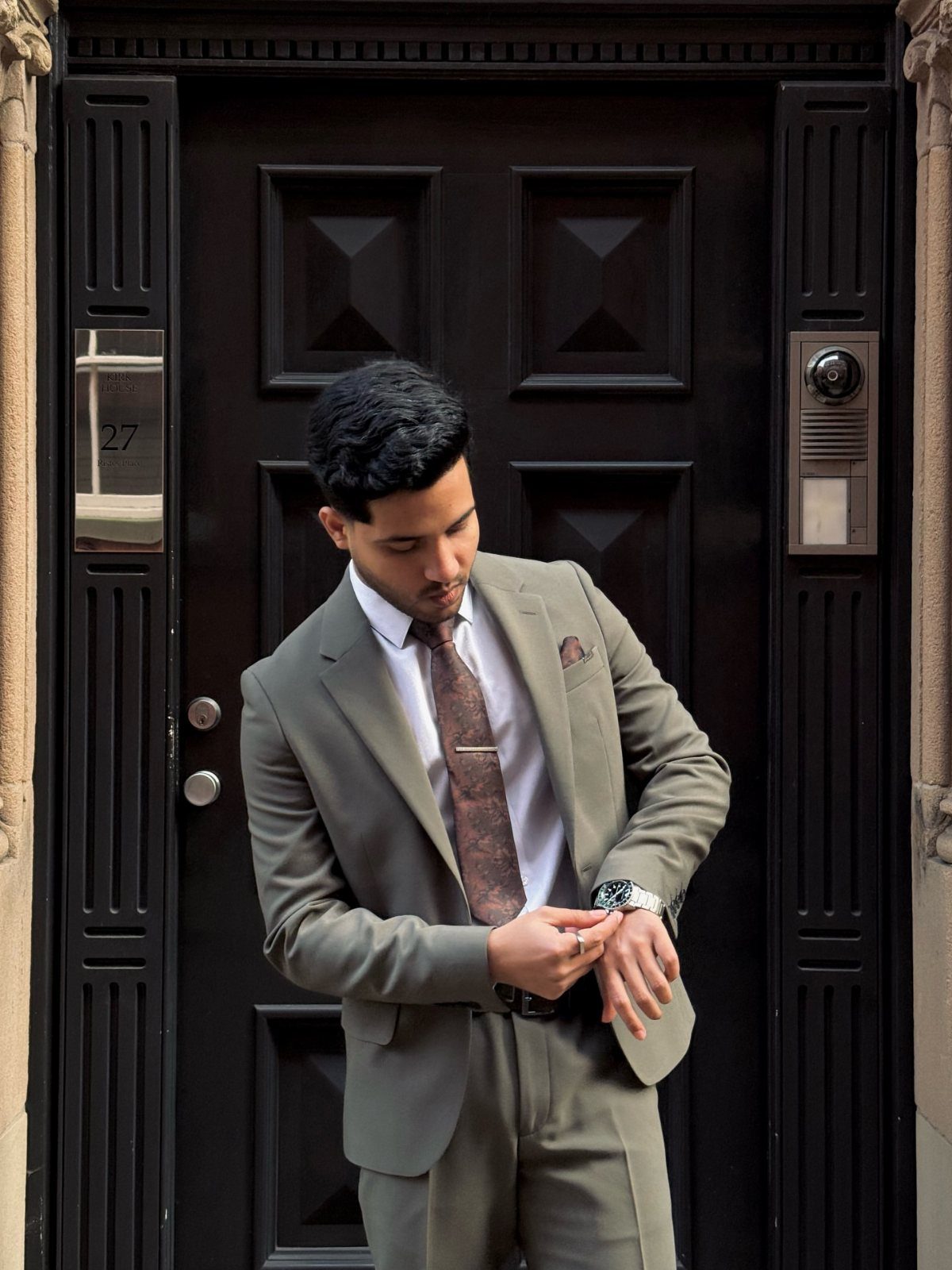
2. Collared Dress Shirt

Under a gown, the collar is the one part of your shirt that stays on show, so it has to be crisp.
A collared dress shirt in a light color, such as the lavender here, keeps things classic without looking stiff.
Button it to the top if you wear a tie, and iron the collar and placket even if you skip the rest.
Navy trousers pair easily with nearly any shirt color, from white and light blue to pink and pale stripes.
Choose a shirt you can breathe in; gowns run warm.
3. Navy, Charcoal, and Muted Pastels
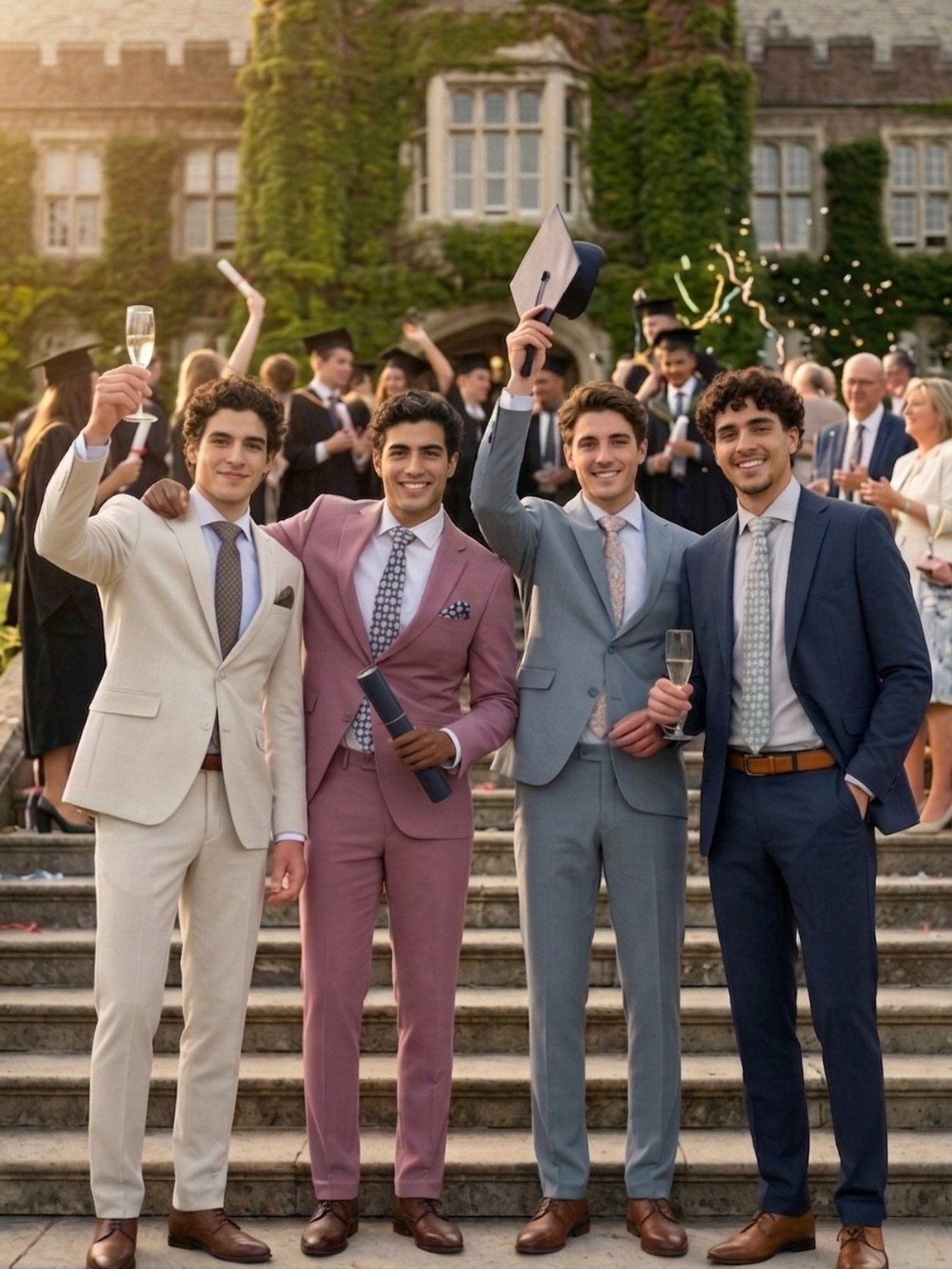
Navy and charcoal are the dependable picks: they flatter nearly everyone, and you can wear them again to interviews and weddings. Muted pastels, like dusty rose, cream or a light blue-grey, suit an outdoor celebration after the ceremony.
I would pick navy or charcoal if this is your only suit, and save the pastel for a group photo day when others are doing the same.
Keep shirt and tie quiet against a pastel suit; one color doing the talking is plenty.
4. Traditional Cap and Gown Look
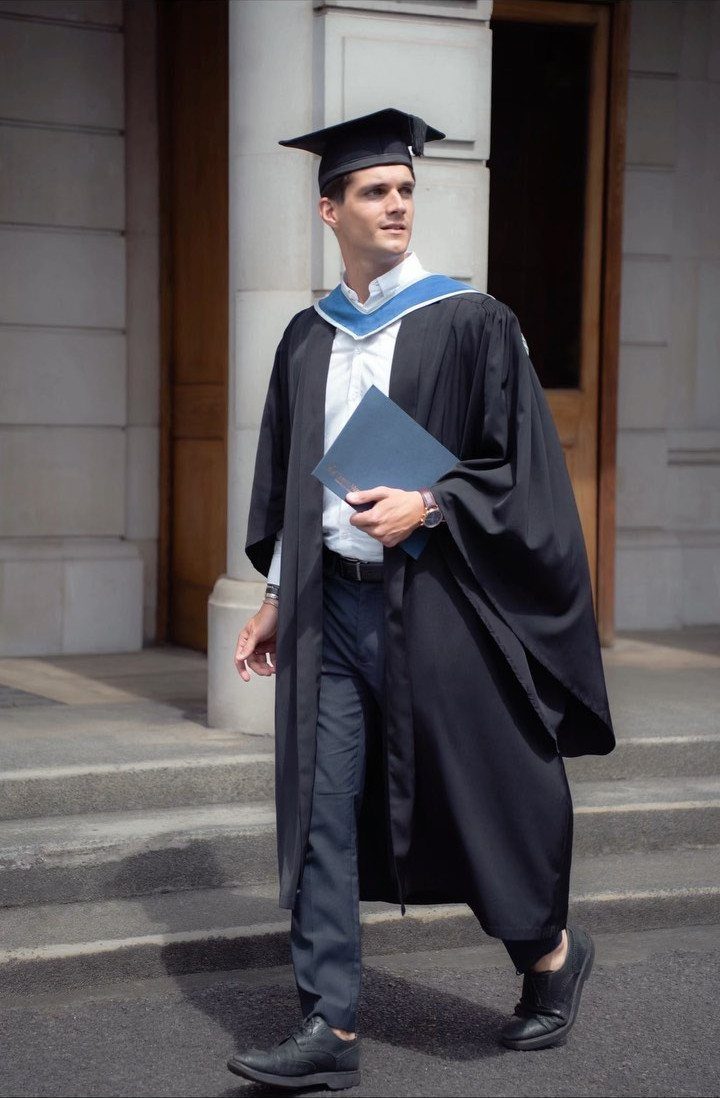
Cap, gown and hood sit on top of ordinary formal clothes, so what you wear beneath still counts.
A white dress shirt, dark trousers and dress shoes, as here, give the gown a clean backdrop and leave the hood trim as the only color.
Set the cap level on your head, with the board parallel to the ground and the front edge just above your eyebrows, so it doesn’t slide back on your crown.
Black shoes or dark brown both work, as long as they are polished.
This is the cheapest route to looking right, since the gown is usually provided.
5. Dress Loafers with Tailored Trousers
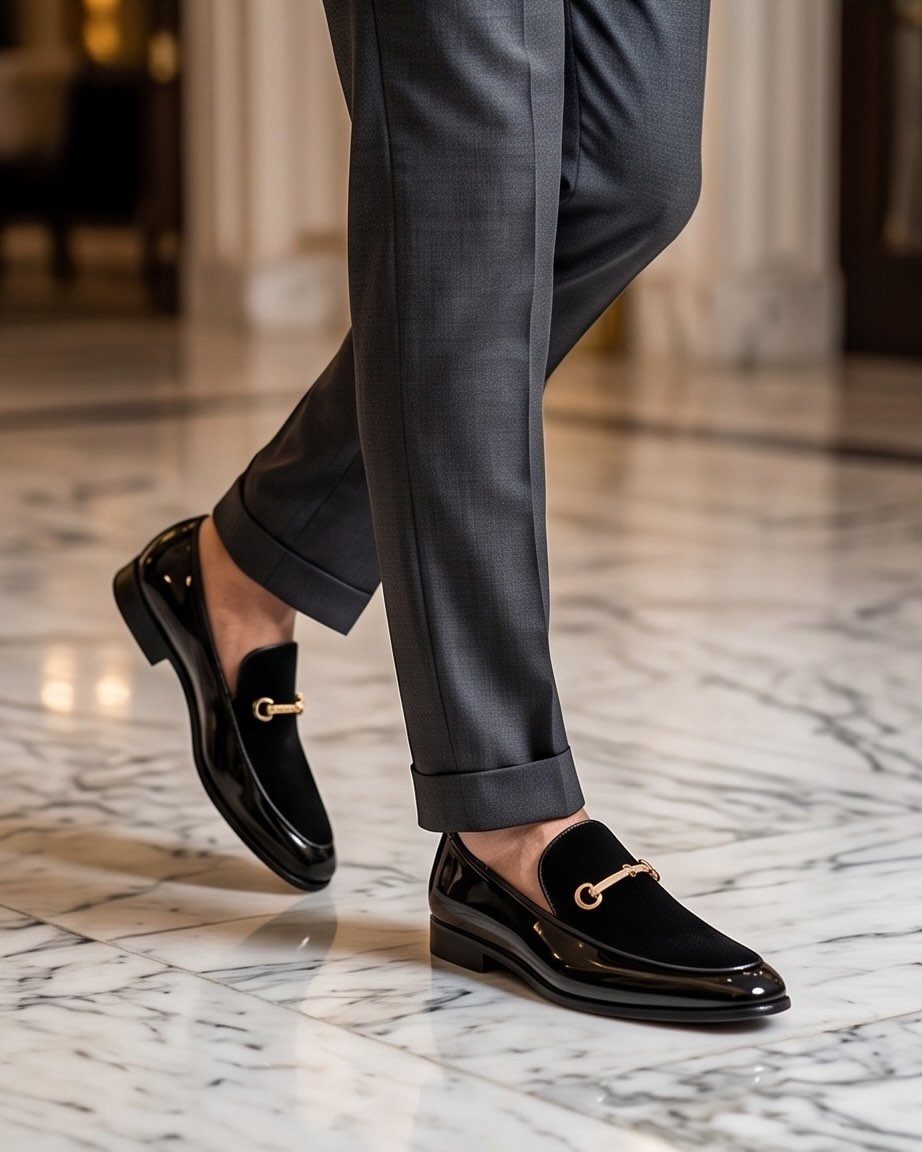
Grey tailored trousers with black patent horsebit loafers is a polished pairing that looks deliberate. The shoes catch light, so the trousers should stay plain and sit cleanly with a slight break at the shoe.
Loafers are easier than lace-ups on a long day of standing, and the gown hides everything above the knee, so your feet and trouser hems get noticed.
Wear thin dark socks, or none if you like the bare-ankle look. Patent leather reads dressy and shows every scuff; a loafer in smooth, unshined black calfskin is quieter and usually costs less.
6. Graduation Gown with Cultural Headwear

A black gown with a green stole and a white ghutra keeps the ceremony’s dress code while honoring where you come from. The ghutra replaces the cap, so check with your school beforehand that headwear is allowed.
Keep it neat: fold it evenly and make sure it stays put when you walk the stage. Stay with white or light clothes underneath so the stole stands out.
Ask early; some schools want approval for anything other than the standard cap.
Graduation regalia is the traditional academic dress worn by students and faculty during commencement ceremonies to symbolize their degree, academic field and achievement. It typically consists of a gown, a cap or tam with a tassel and sometimes, a decorative hood.
— Jostens
Choosing the Right Fit
Shoulders come first. The seam should sit at the edge of your shoulder and never droop, because a tailor can fix almost everything else but not that.
Aim for a jacket that just covers your seat, with 1/4–1/2 inch of shirt cuff peeking past the sleeve.
Slim fit gives cleaner lines in photos, while a classic cut is easier to live in through a long ceremony. I lean classic if you’ll be sitting for hours.
The shirt follows the same rule: it should fit through the shoulders, chest and waist, and look clean under a jacket. White or light blue is always safe for family events.
Try the full outfit at least a week early. Sit, stand and move around in it, so any pinch shows up while there’s still time to fix it.
Planning for Weather
Look at the forecast a few days out and dress for that temperature, because the gown adds a full layer over whatever you wear. For a spring ceremony, light fabrics like linen keep you from sweating through your shirt.
Outdoors, pick lighter colors that reflect heat. In warm weather I’d pick a lightweight polyester-viscose blend with some stretch over heavy wool; it holds its shape without the weight.
If you’re already damp before the processional starts, drop any extra layer. Take the blazer off under the gown and put it back on for photos.
Winter ceremonies are usually indoors, so a heavier shirt works, or a sweater under the gown with a tie underneath.
Post-ceremony Attire
Plan the day in 2 parts: the ceremony, then photos and the celebration. A well-fitted suit or a set of smart separates works for both the ceremony and the party, so you skip the outfit change.
Breathable fabric and a tailored cut let you move easily, which matters more by the third hour than at the start. Once the gown is off, ditch the tie and open the collar.
Keep accessories small but personal. A watch or a simple ring shows up in photos without getting in the way.
Muted sage green, dusty pink and beige are the colors I’d reach for now, and a shirt with a subtle check or micro-floral print gives a blazer some interest.
Frequently Asked Questions
What should men wear to graduation?
A suit is the safest base, and navy or charcoal works for almost everyone. For a casual commencement, a navy blazer, grey trousers and a collared dress shirt will look sharp and hold up under the gown.
Because the gown hides most of what you wear above the knee, the parts people actually see are the shoulders at the neckline and where your trouser hem lands over the shoe.
Can I wear jeans to my graduation?
Jeans are usually too casual for a ceremony, so tailored trousers or chinos are the better call.
They give you much of the same comfort and still look right under a gown. If you do wear jeans for the celebration afterward, keep them dark, clean and well fitted.
What are the different types of graduation gowns?
The standard look is a black gown with a cap and a hood, and the hood trim is often the only color on show.
Some schools also allow personal touches, such as a stole or cultural headwear like a white ghutra that replaces the cap.
A quick email to the registrar in the first few weeks is worth sending, because many schools require sign-off on any cap decoration or extra regalia.