The venue and the dress code on the invitation pick the suit before taste does: black tie calls for a tuxedo, while a beach or daytime wedding lets linen and cotton in.
The 11 ideas below cover groomsmen suits, linen and cotton, light colors, formality, beach weddings, personal touches, the classic black tuxedo, a green three-piece, embellished jackets, contrasting waistcoats and double-breasted blazers with separates.
1. Groomsmen Suits
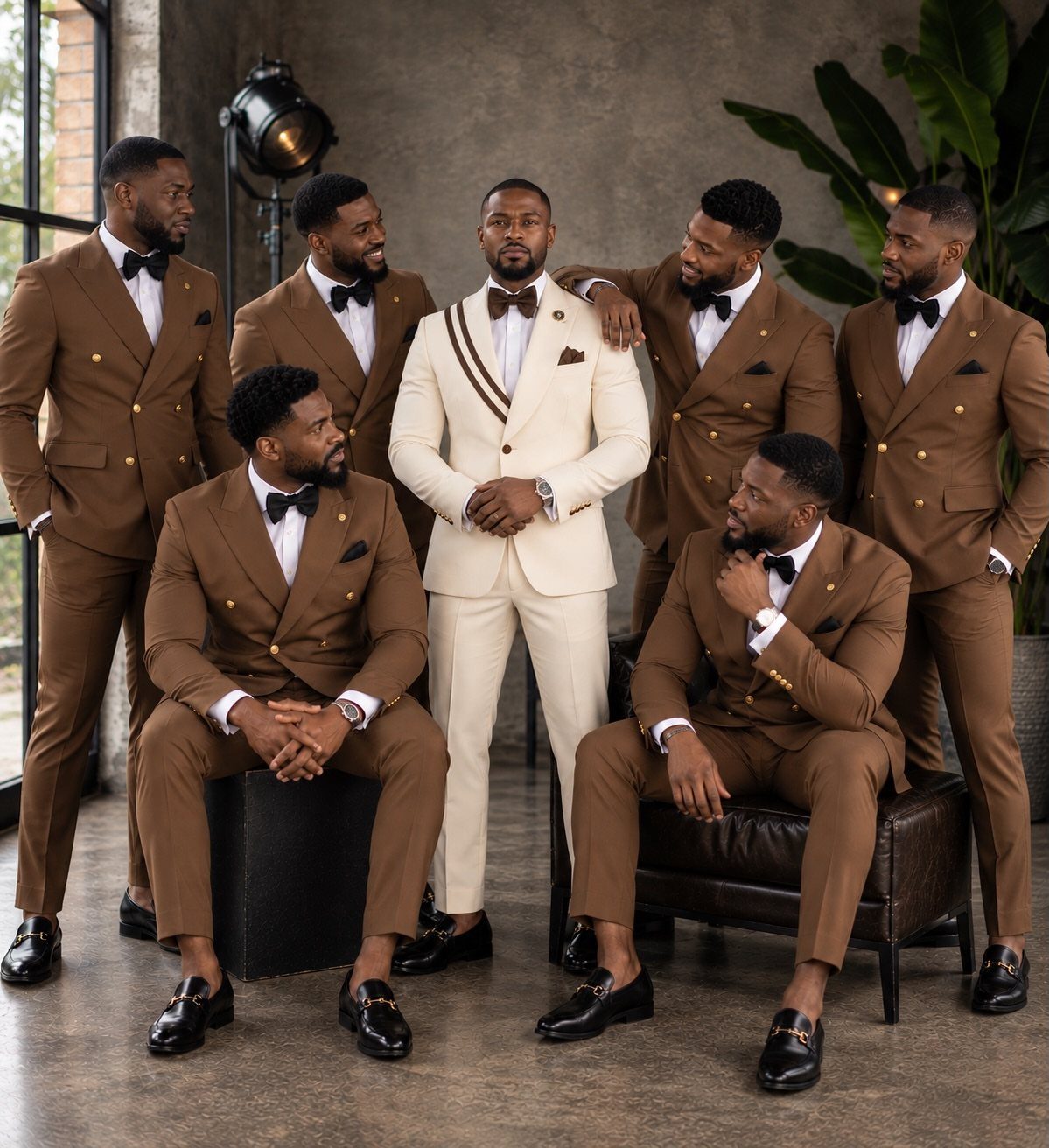
Matching groomsmen is easy; matching them to the groom is the real work.
An off-white suit for the groom with brown accents pairs well with brown double-breasted suits and bow ties on the groomsmen. The groom reads as the lead because his color is different, yet nothing clashes.
Pick one shared color between the groom and the group, then change the shade or the tone for him. Keep the cut and the tie style the same across all seven men so the photo looks planned.
2. Linen and Cotton Suits
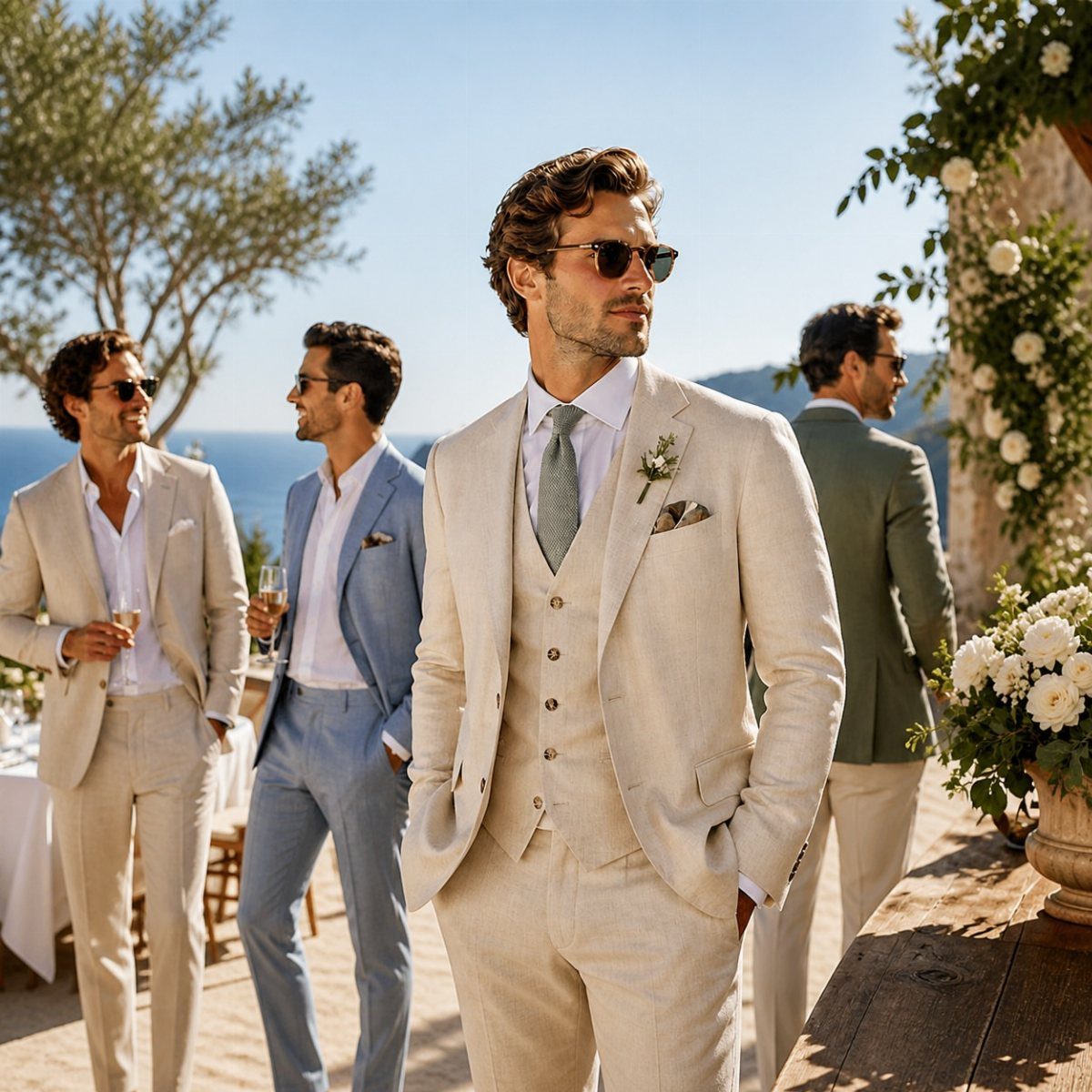
Linen and cotton make sense for a wedding held in sun and sea air, where a heavy wool suit turns into a chore by the first toast.
Light-colored versions, worn with sunglasses for the outdoor reception, look relaxed without looking careless.
Linen wrinkles, and I would accept that rather than fight it. Have the suit tailored so the shoulders and trouser length are right; a sharp fit keeps a creased fabric looking intentional.
3. Light Colors Suit
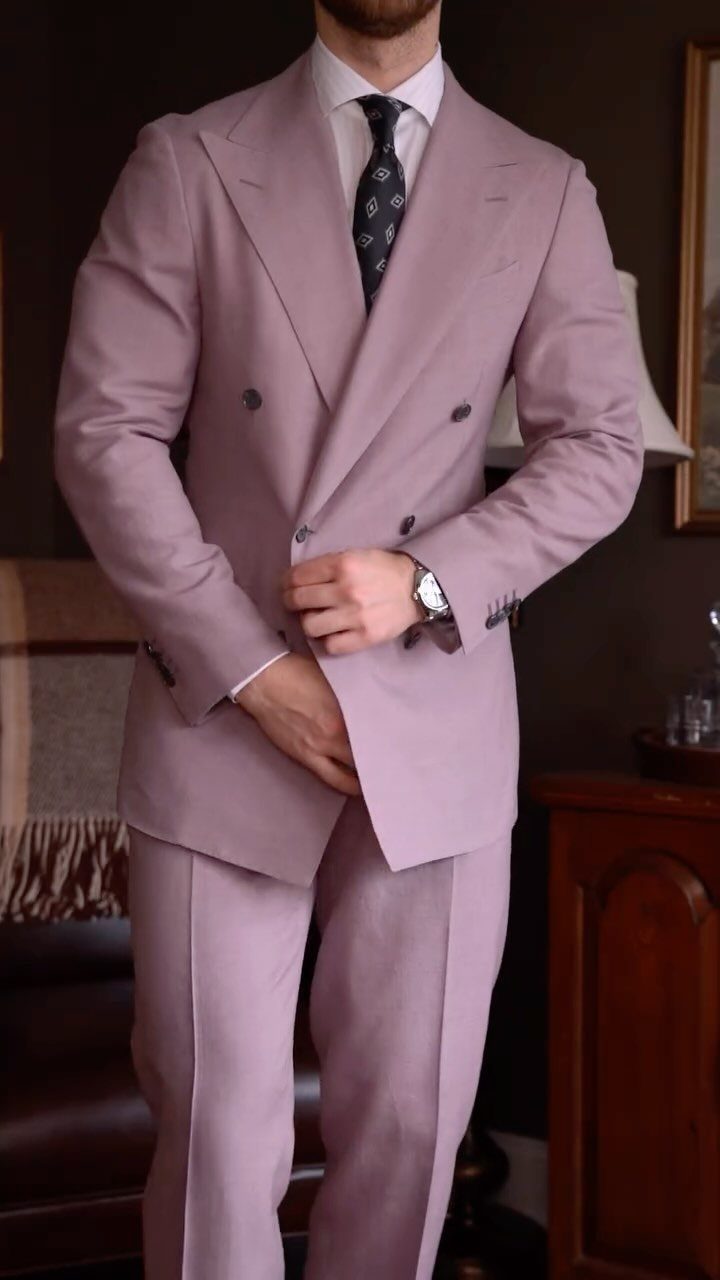
A light mauve double-breasted suit proves a groom can skip navy and charcoal and still look serious.
Let the season and the wedding theme choose the shade. Lavender and other soft tones suit spring and summer settings best, and I would let a white shirt and a quiet tie play support so the suit does the talking.
4. Consider the Wedding Formality
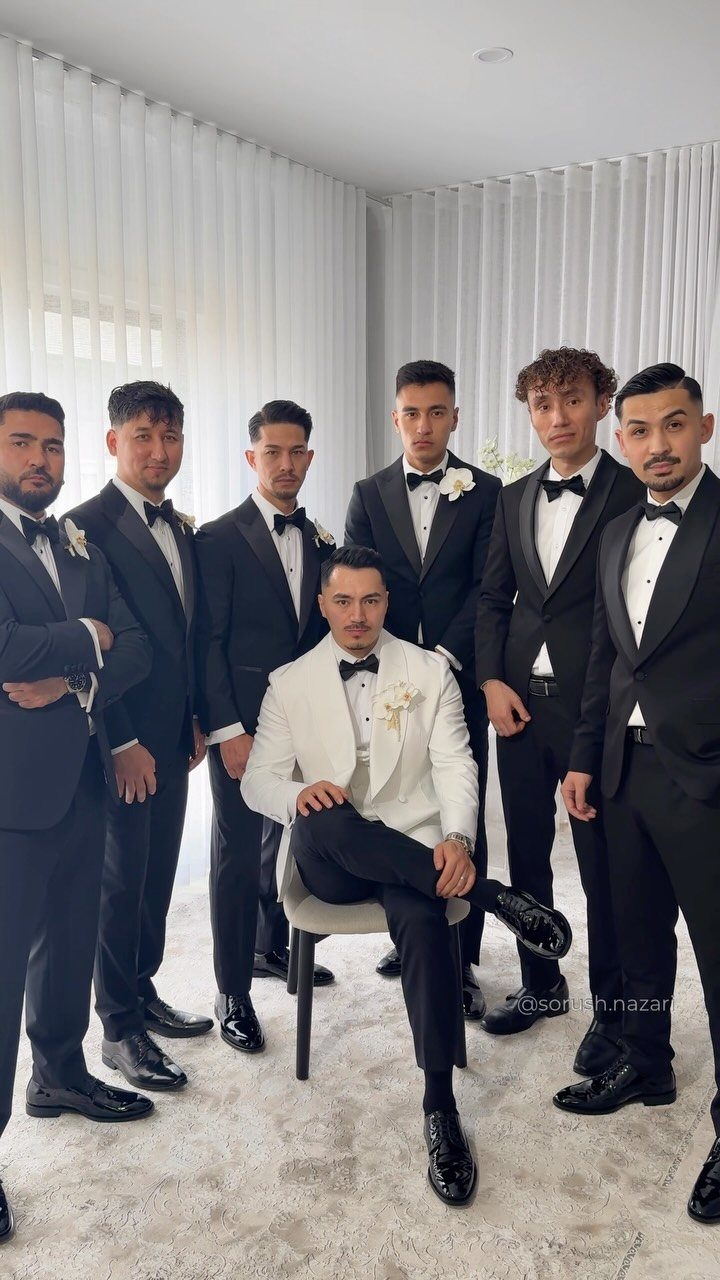
Formality sets the suit before taste does. Black tuxedos with a groom in a white dinner jacket and black trousers tell guests this is a black-tie evening, and nobody has to read the invitation twice.
Start with the dress code on the invitation, then work down: black tie calls for a tuxedo, while a daytime or casual venue lets you move to a suit.
Putting the groom in white against black tuxedos is a clean way to single him out.
Still, when the dress code calls for anything other than classic black tie, figuring out what’s considered appropriate wedding attire can be a headache.
— GQ
5. Beach Wedding Suits
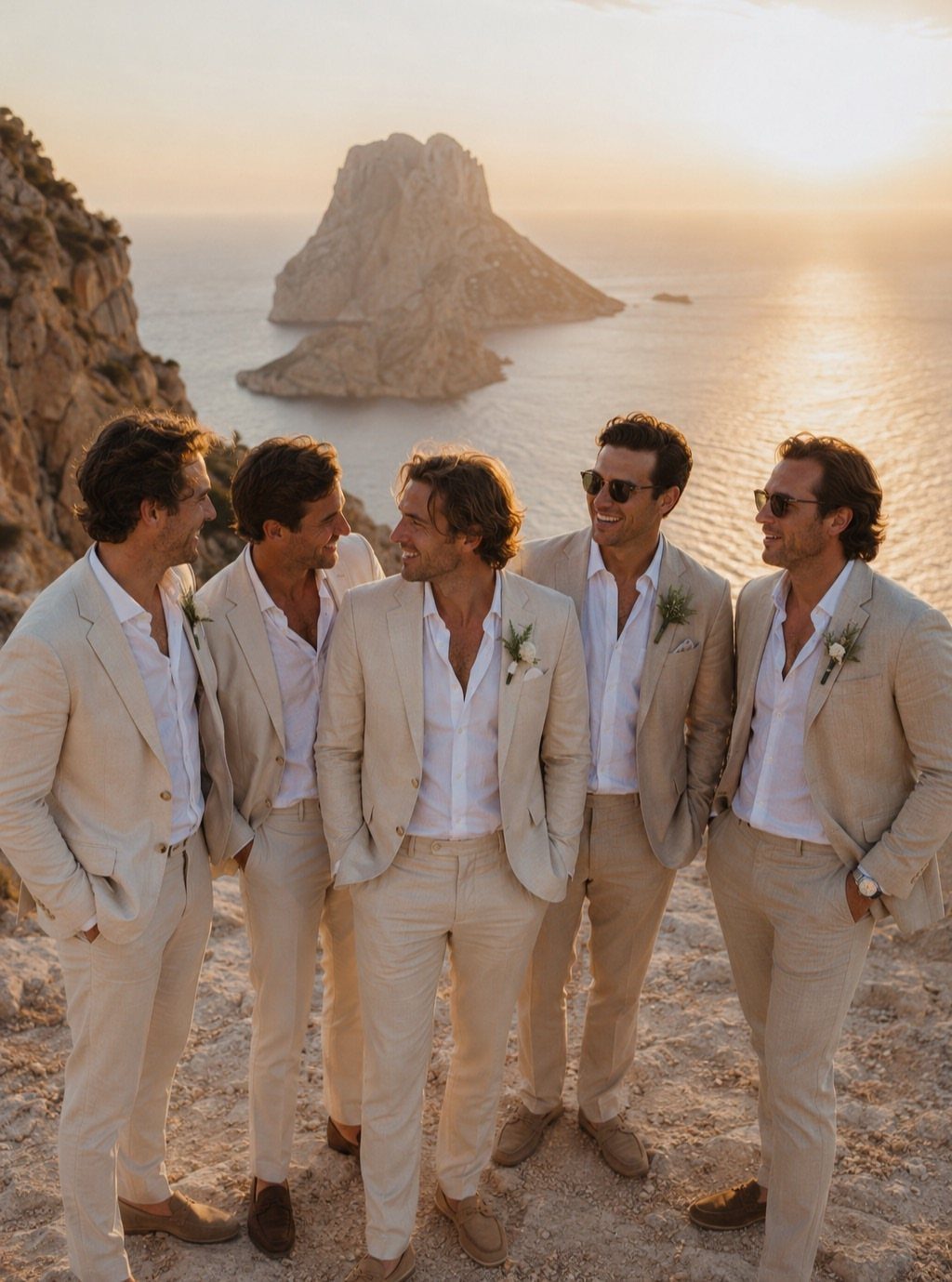
Beige linen suits with white shirts left unbuttoned at the collar are the right answer for a cliffside or beach ceremony. The pale color matches sand and sunset light, and the open collar keeps things loose.
Skip the tie and the heavy lining.
Linen breathes, and a suit in this tone looks good in warm evening light. Expect creases, and treat them as part of the look.
6. Personalized Wedding Suit
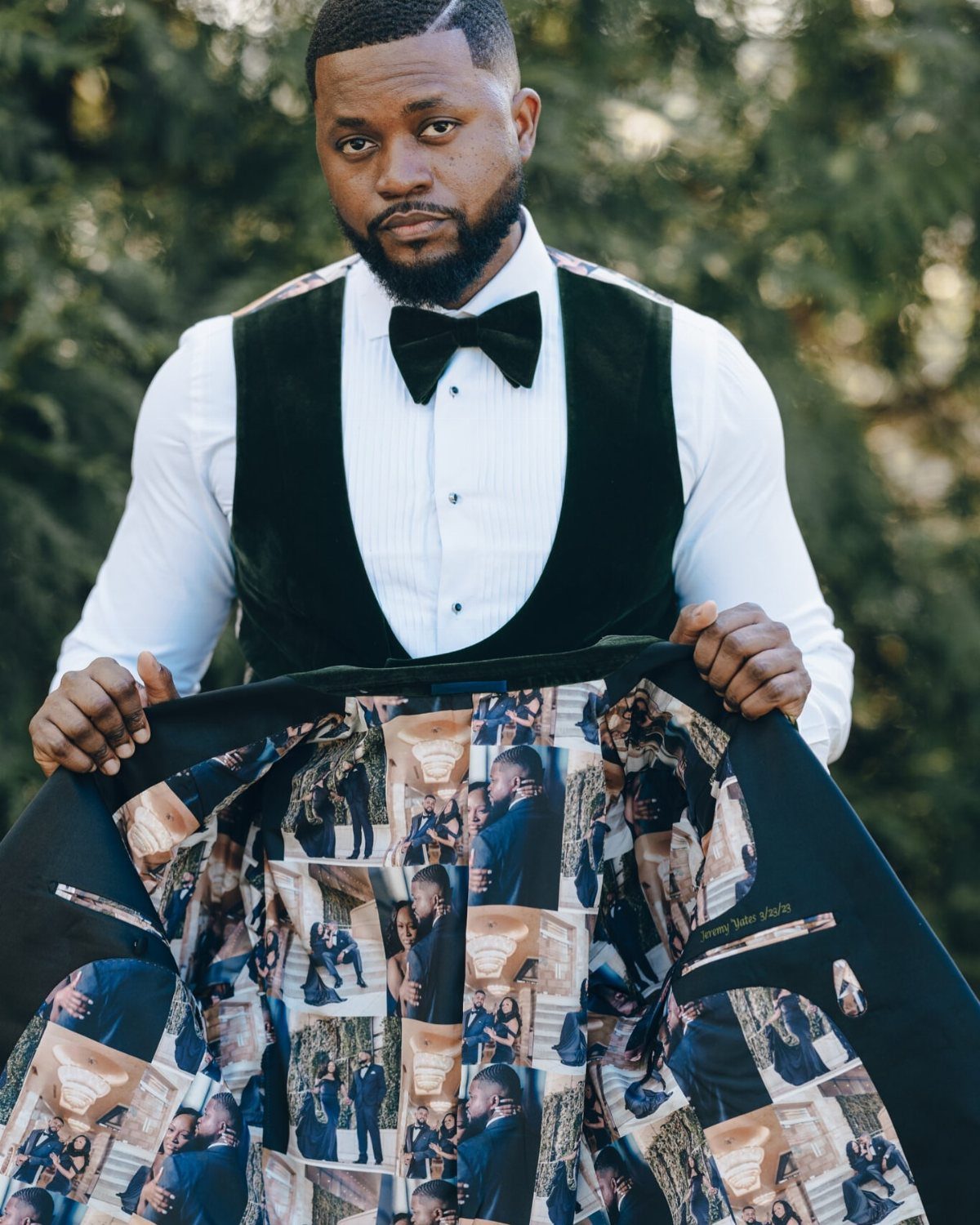
A custom lining can carry text such as the groom’s name and the wedding date, and it looks best with a simple vest and bow tie outside.
Order early, since custom work takes longer than off-the-rack, and pick photos that still read clearly when printed small.
7. Classic Black Tuxedo
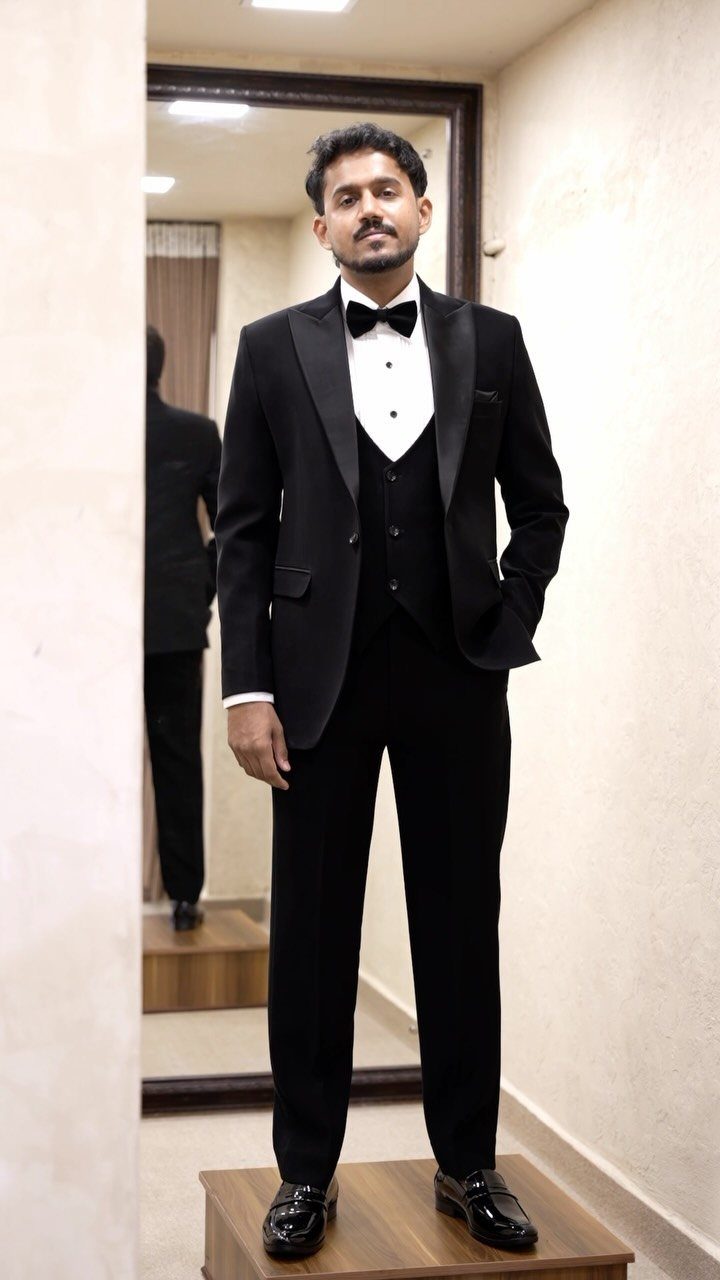
A black three-piece tuxedo is the safest formal choice a groom can make, and the vest is what sets it apart from the usual two-piece.
It covers the waist and keeps the shirt front clean if the jacket comes off for the dance floor.
Pair it with a black bow tie and polished patent leather shoes, as the loafers here show.
Stay with one black throughout, because two slightly different blacks look mismatched in photos. I would spend the money on the fit before anything else.
8. Green Three-Piece Suit
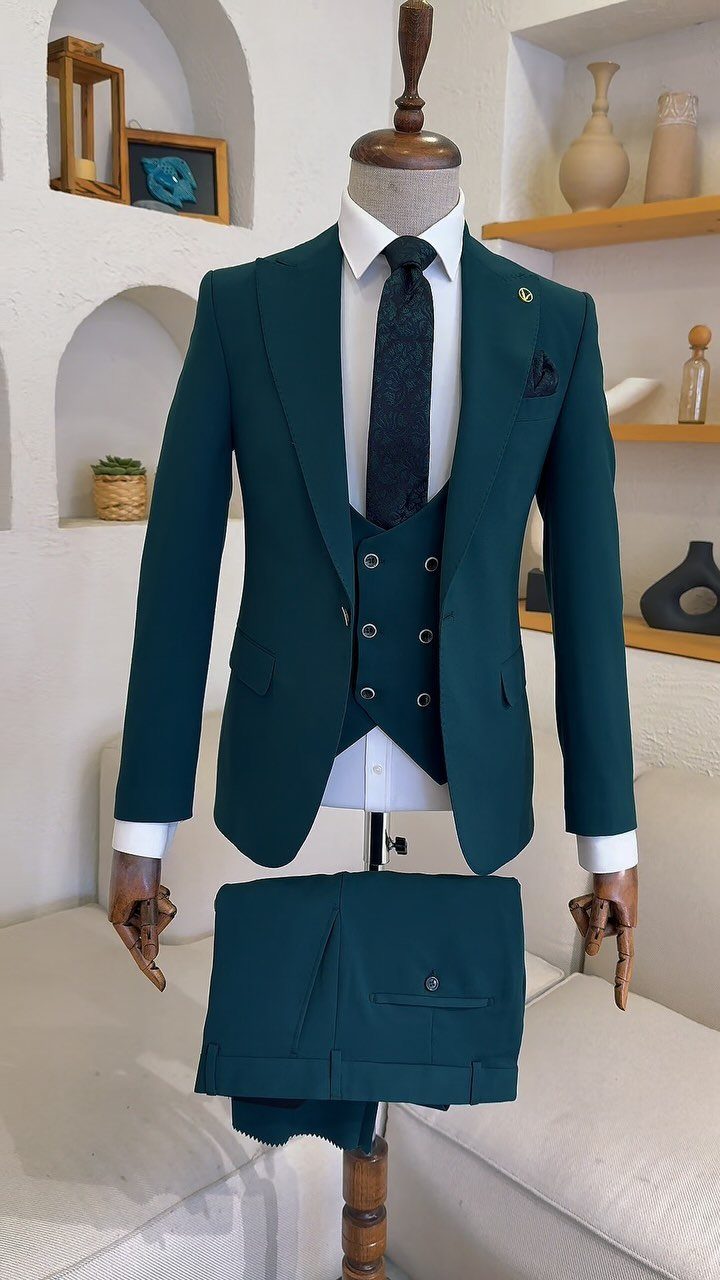
Dark green, or a deep teal like this one, lets a groom skip navy while still wearing something that reads as a proper suit. The three-piece cut keeps it formal.
Keep everything around it simple: a white shirt and a dark tie, ideally with a small pattern, so the color is the only loud thing.
I would pick the deeper shade over a bright one, since dark tones look serious in both daylight and evening light.
9. Embellished Wedding Suit
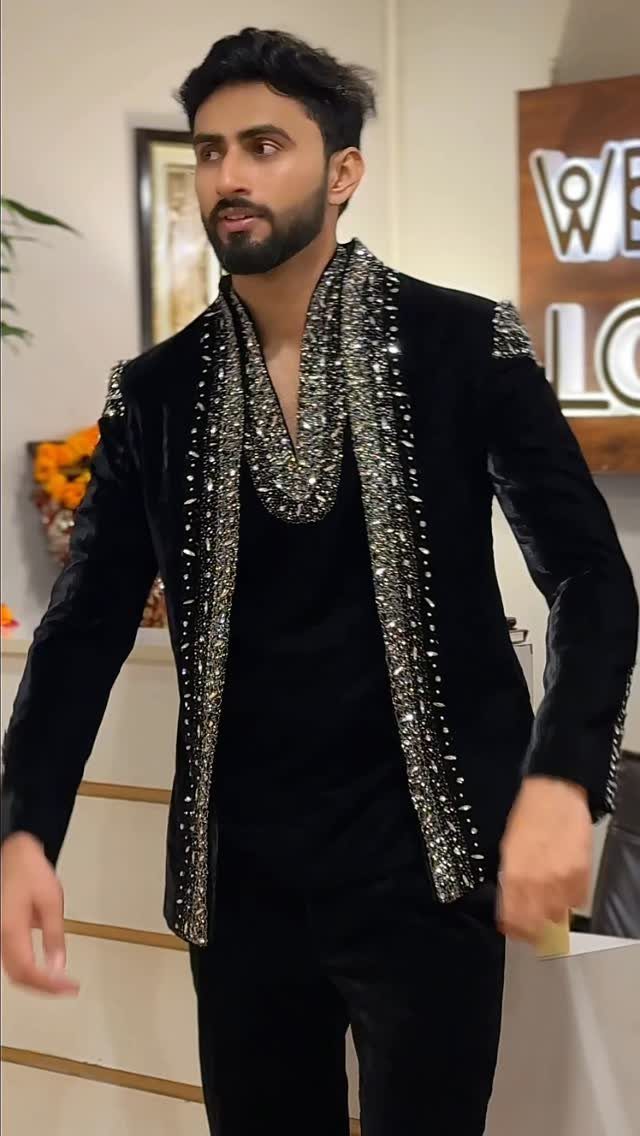
Silver sequins on black velvet is a look for a groom who wants the suit to be the event, not a background to it. Black velvet is the calm base that makes the shine feel deliberate.
Keep the embellishment to the lapels and borders, and match the shirt and trousers to the jacket in black.
Shoes, tie and pocket square should stay quiet. One loud element is plenty, and this suit already has it.
10. Contrasting Waistcoat Suit
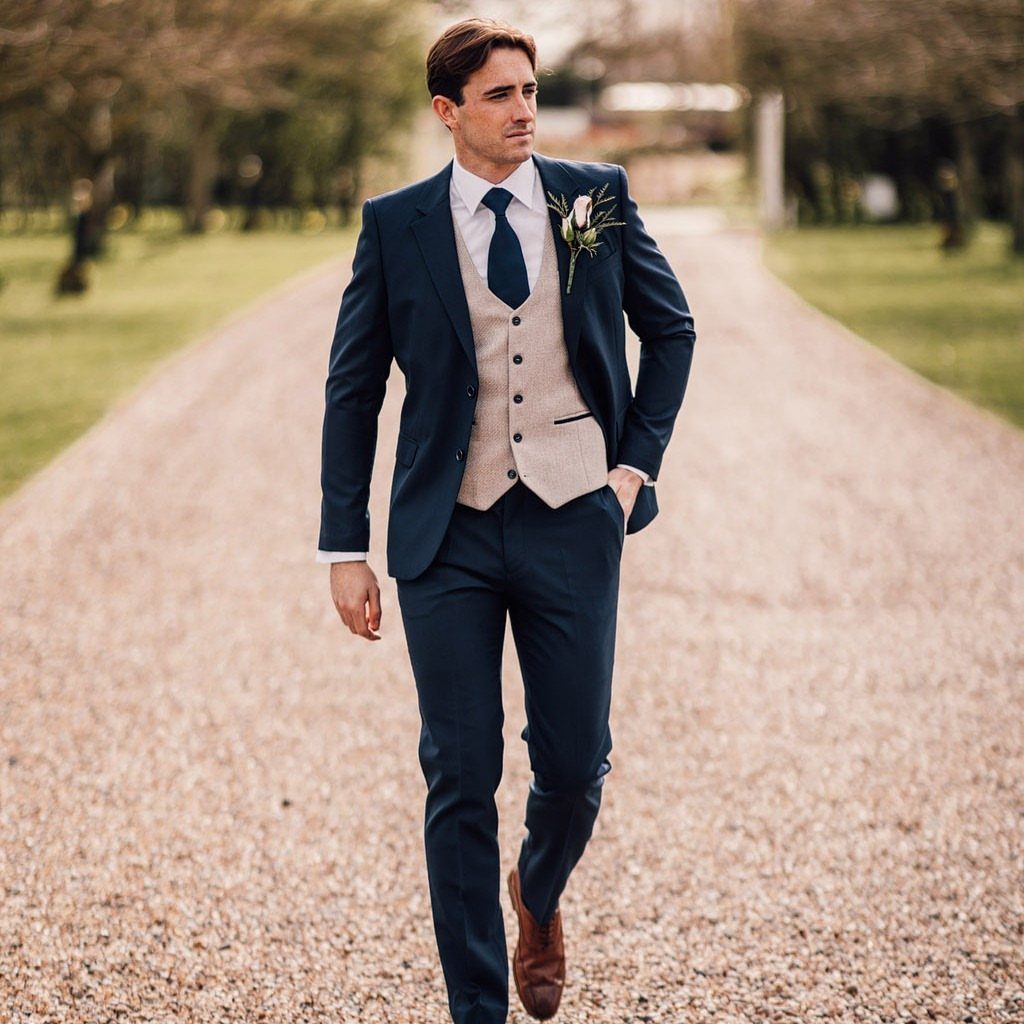
A light beige waistcoat under a navy suit gives the groom a second tone without adding a second suit. The contrast makes the outfit look layered and planned.
I would keep the tie dark, as here, so the vest stays the lighter note, and match a small boutonnière to the occasion.
Have the waistcoat fitted close, since a loose vest bunches under the jacket and ruins the line.
11. Double-Breasted Blazer with Separates
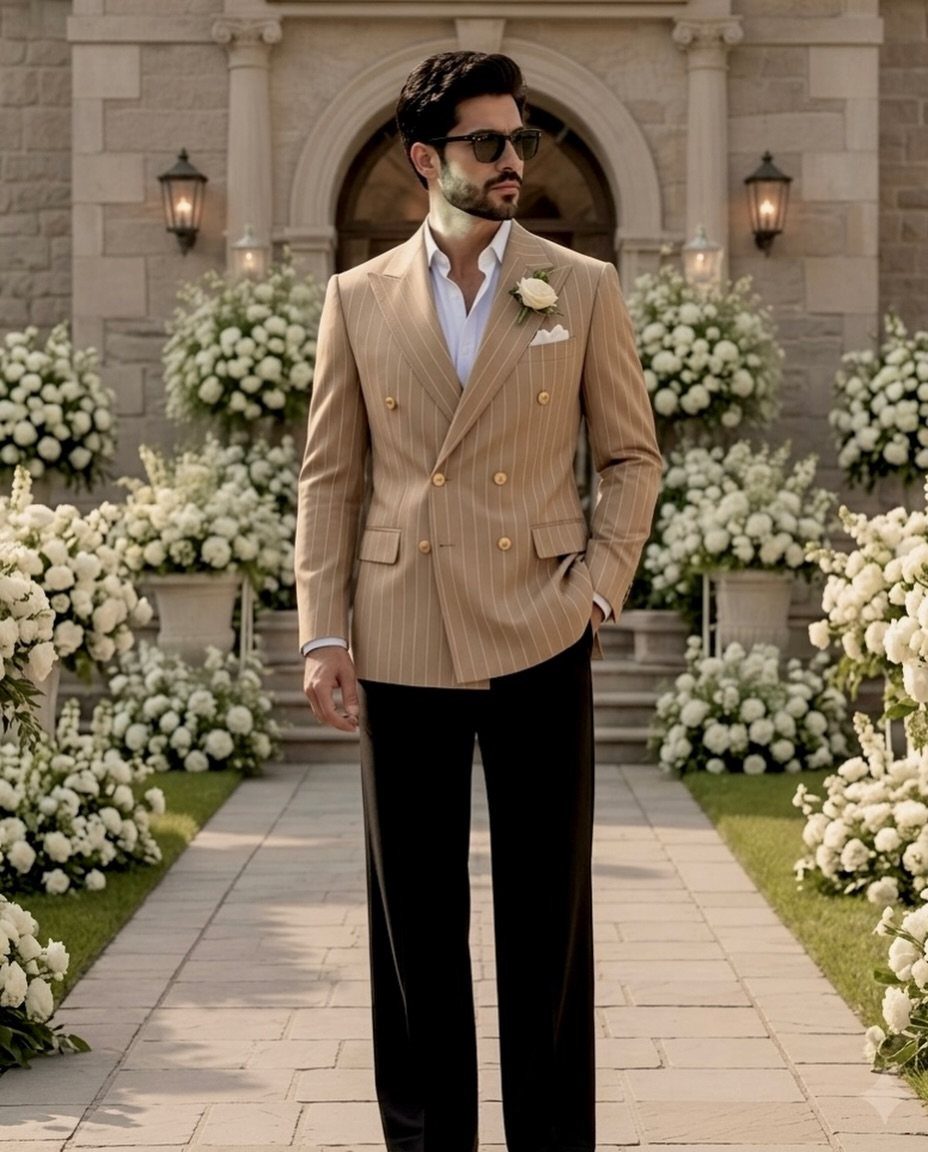
A tan or dark brown double-breasted jacket over contrasting trousers gives you a wedding outfit that is not a matched suit.
Pinstripes in a double-breasted jacket add visual interest, and black trousers keep the lower half formal, though a charcoal or navy trouser with the same jacket is easier to match.
Keep the jacket buttoned when standing, and wear a boutonniere on the lapel. Choose trousers in one solid color, because patterned jacket and patterned trousers fight each other.
Importance of Fit
Buying off the rack does not end the job. A tailor can take a budget suit and make it look like it cost far more, because fit shows up in photos before fabric does.
Spend on alterations before you spend on a pricier suit. Sleeve length, jacket waist and trouser hem are the usual fixes, and each one is cheap next to what it does for the line of the outfit.
Some suits give a tailor more to work with. A soft Neapolitan cut with wider lapels and softly shaped shoulders, for example, is a feature set you usually pay extra for.
A slim trouser can be widened later if the seams hold extra fabric, so check the seam allowance first; 1 inch or more inside the back seam gives a tailor room to work.
Timing for Suit Shopping
Start looking 6–7 months before the wedding. By then the date, season, venue and color scheme are settled, so you are not buying a suit for a wedding that keeps changing.
That window also leaves room for alterations, and for a custom suit if nothing off the rack feels right.
Book your consultation whenever you like, but hold the final fitting close to the day. Weight and fit can shift in the months between a fitting and the wedding, and a suit tailored too early may need to be redone.
Frequently Asked Questions
What type of suit is ideal for weddings?
It depends on the venue and the dress code. A tuxedo is for black tie; for a daytime or relaxed wedding, a good suit is the right call.
For sun and sea air, linen or cotton in a light color keeps you comfortable, and dark green, mauve or a navy suit with a lighter waistcoat all read as serious if the fit is right.
How far in advance should I start shopping for wedding suits?
Start about 6–7 months before the wedding. Schedule the first consultation early if you want, but leave the last fitting for the final weeks, because your weight and the way the jacket sits can shift over a few months.
What are the best materials for a summer wedding suit?
Linen, cotton and lightweight wool are the best choices.
Linen is the most breathable but wrinkles, so a sharp tailored fit keeps it looking intentional. Cotton holds a cleaner shape through the day, and lightweight wool resists wrinkles, which suits more formal events.