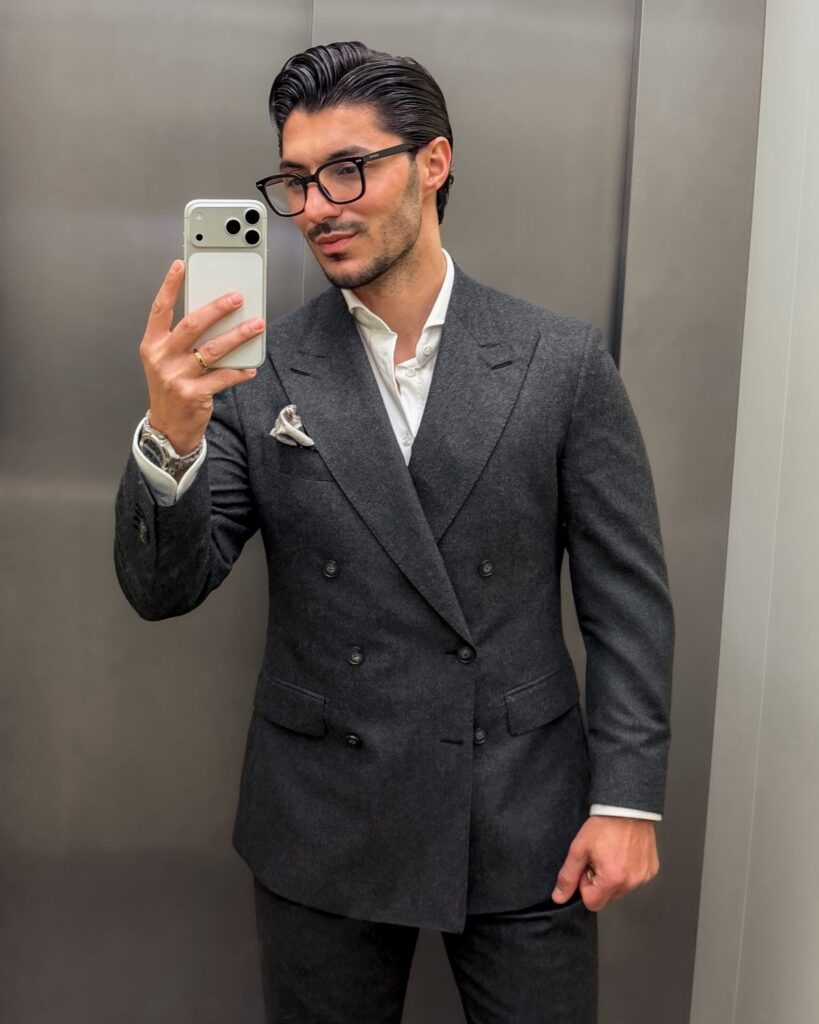
The range runs from a casual suit worn over a plain tee on a day off to a tuxedo for black tie.
1. Classic Suit
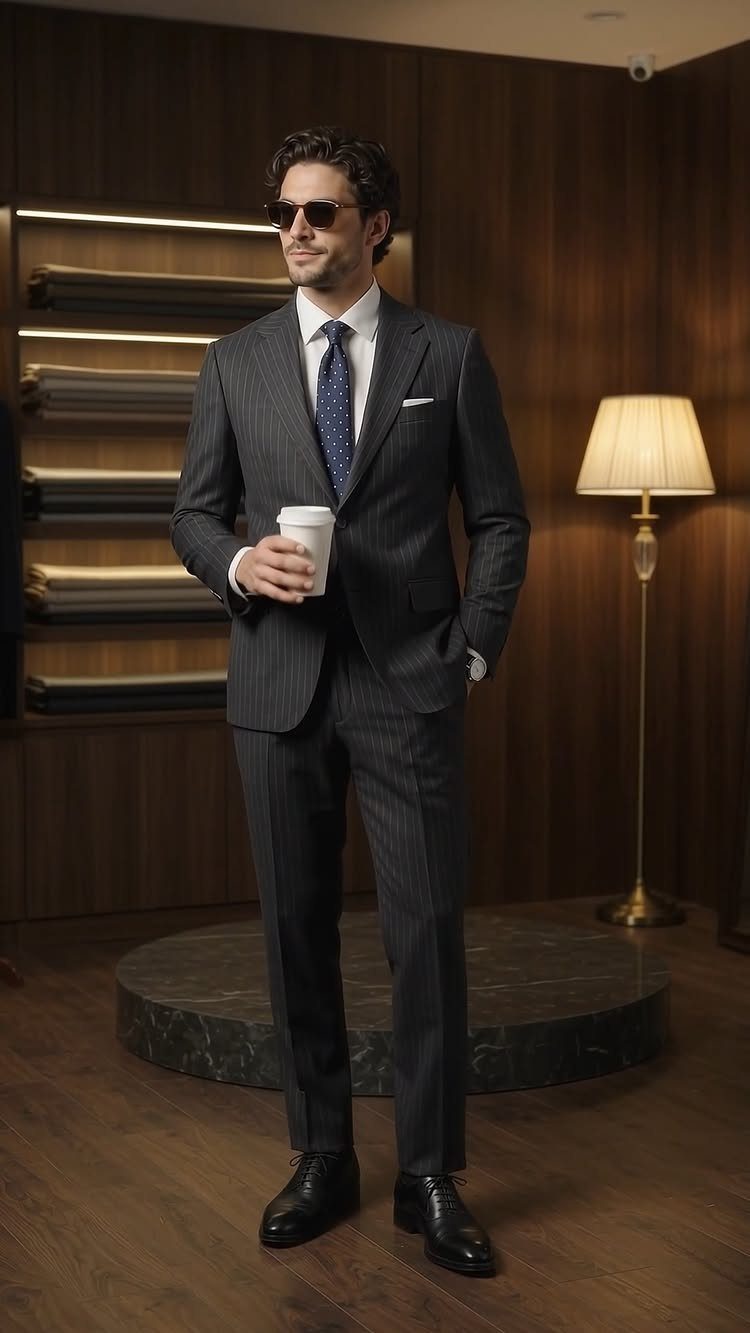
A navy or charcoal two-piece in a plain weave does more work than any other suit you can own. It handles an interview on Tuesday and a wedding on Saturday, and only the shirt and tie change.
Pinstripes lean more corporate, so a solid navy or charcoal is the safer first buy.
Spend the money on fit: shoulders that sit flat, sleeves that show a bit of shirt cuff, and trousers with a clean break over the shoe.
Add a dotted or knit tie and the same suit relaxes a notch.
2. Double-Breasted Suit
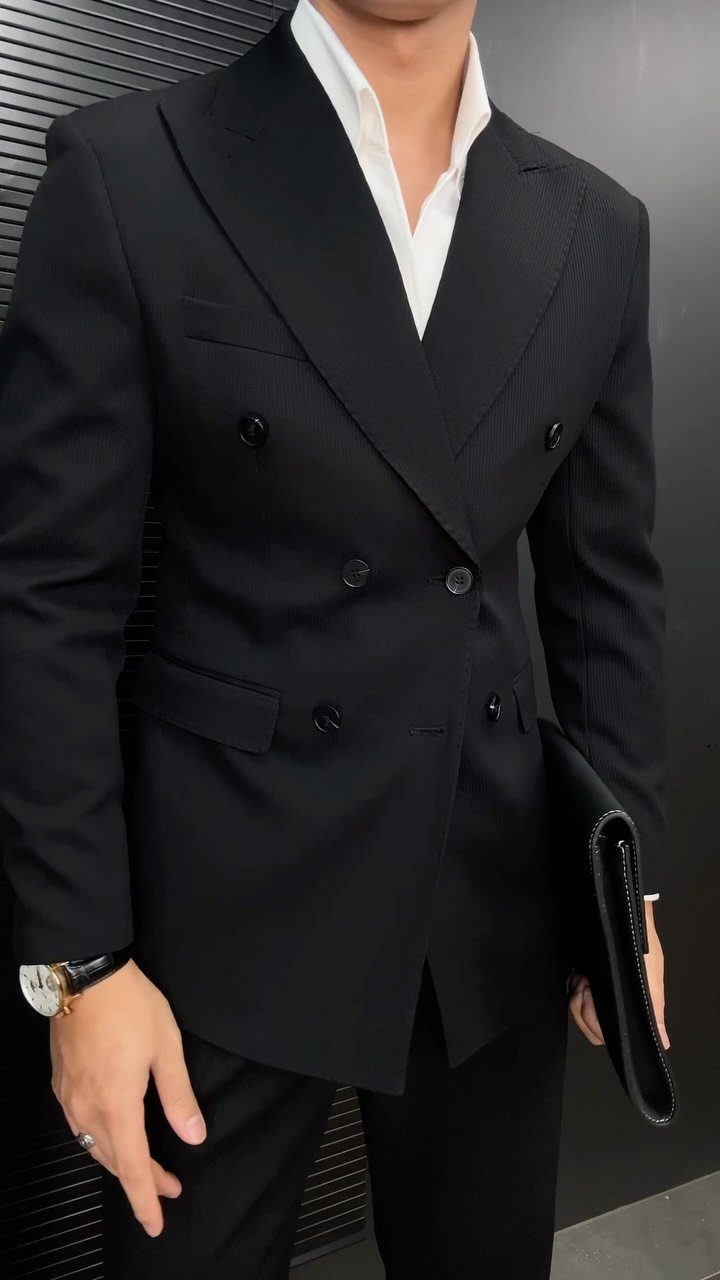
Overlapping front flaps and 2 rows of buttons give a double-breasted jacket its weight, and it looks best buttoned.
Worn unbuttoned, a double-breasted jacket lets the flaps hang loose and the shape gets sloppy, so keep it fastened for the cleanest fit.
I would start with a black or navy version and keep the trousers plain, since the jacket already supplies the interest.
Fit matters more here than on a single-breasted suit, because extra cloth across the chest shows every flaw in the shoulders.
Choose a shorter man’s cut if you are under 5’8".
3. Wedding Suit
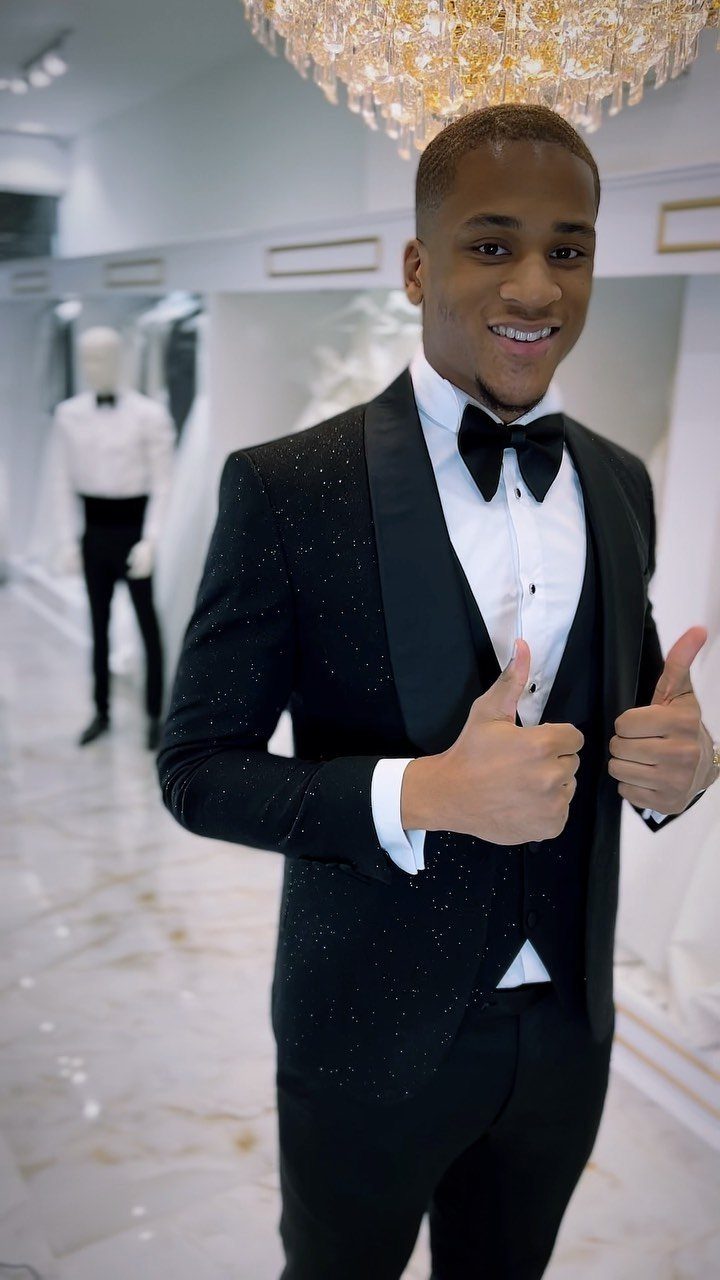
A wedding suit has to look right in photos that will hang on a wall for decades, so I lean toward restraint.
Get it fitted at least a month ahead. Sit, raise your arms, and hug someone in the fitting room; if the jacket pulls, it needs work.
Sparkle photographs differently under flash, so test any shiny fabric before you commit.
4. Slim Fit Suit
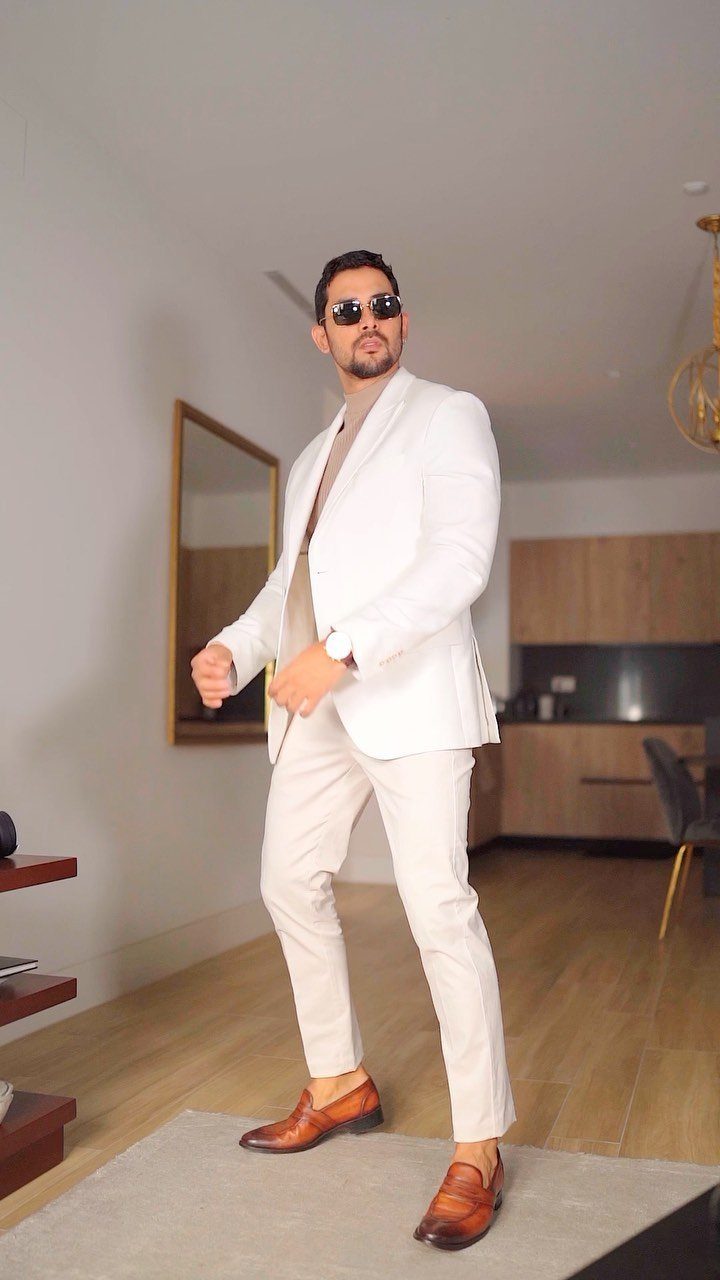
Close to the body is the whole idea: a slim jacket skims the torso and the trouser leg tapers toward the ankle.
Light colors like white show every wrinkle, so I would pick them only if you can keep the suit pressed.
Slim works best on lean to average builds. Broader men should ask for a trim cut, not the narrowest one, so the fabric doesn’t strain at the button.
The maker of this look calls the color a favorite, and a super slim cut in a pale shade suits warm weather well.
The best men’s suits of 2026 confirm without a doubt that tailoring is back.
— GQ
5. Shawl Lapel Suit
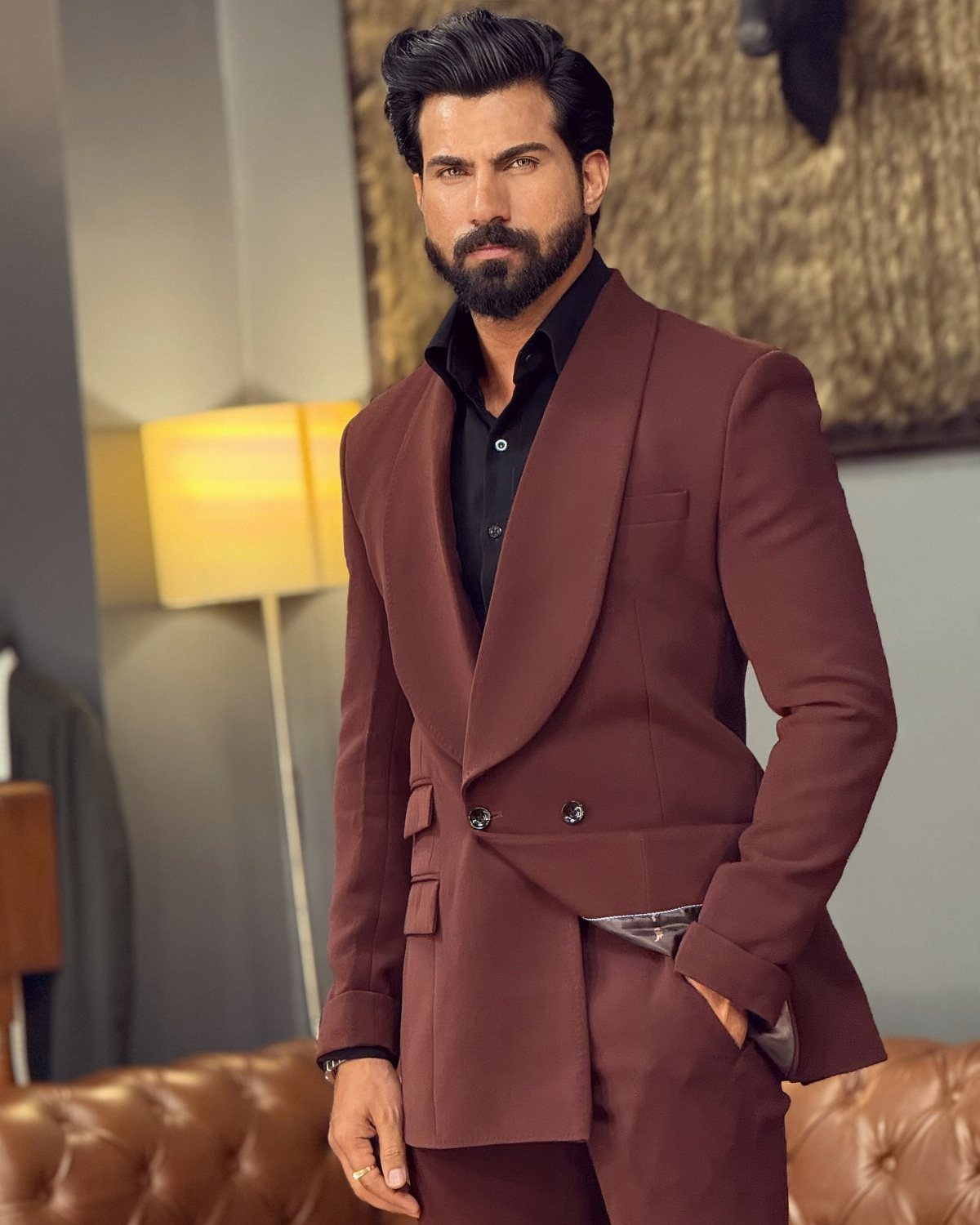
Seeing it on a rich maroon suit with a dark shirt, as here, is a bolder move than the usual black tuxedo.
I like it for parties and dinners, less so for the office. The curve is soft, so it flatters men with angular faces and can swamp a narrow chest if the lapels are too wide.
Dark shirt, dark shoes, and the lapel does the talking.
6. Tuxedo
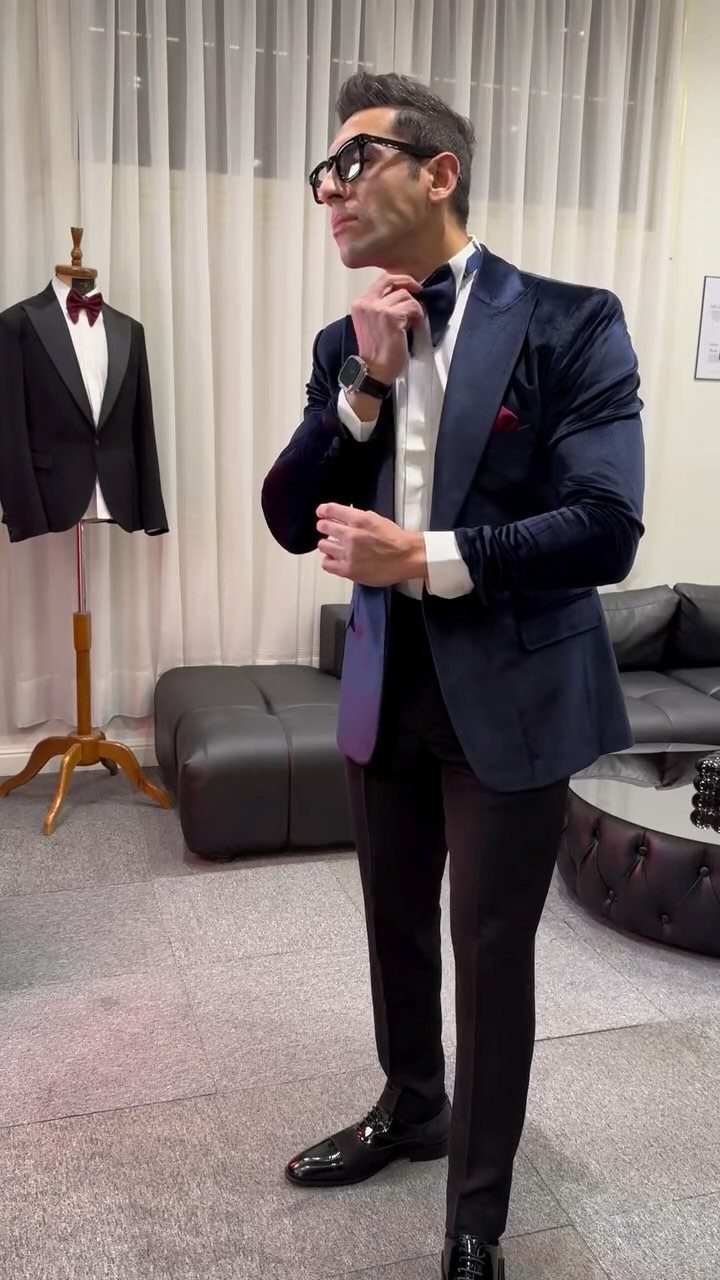
Black-tie means a tuxedo, and the bow tie is not optional.
Satin or grosgrain on the lapels is the traditional finish. Velvet is a richer variation that suits cooler months and winter events best.
White dress shirt, black trousers, and either patent shoes or polished black oxfords finish the outfit. Buy one that fits properly before anything else, since rental cuts rarely hold up in photos.
A midnight navy tuxedo looks nearly black indoors, which makes it an easy step beyond standard.
7. Casual Suit
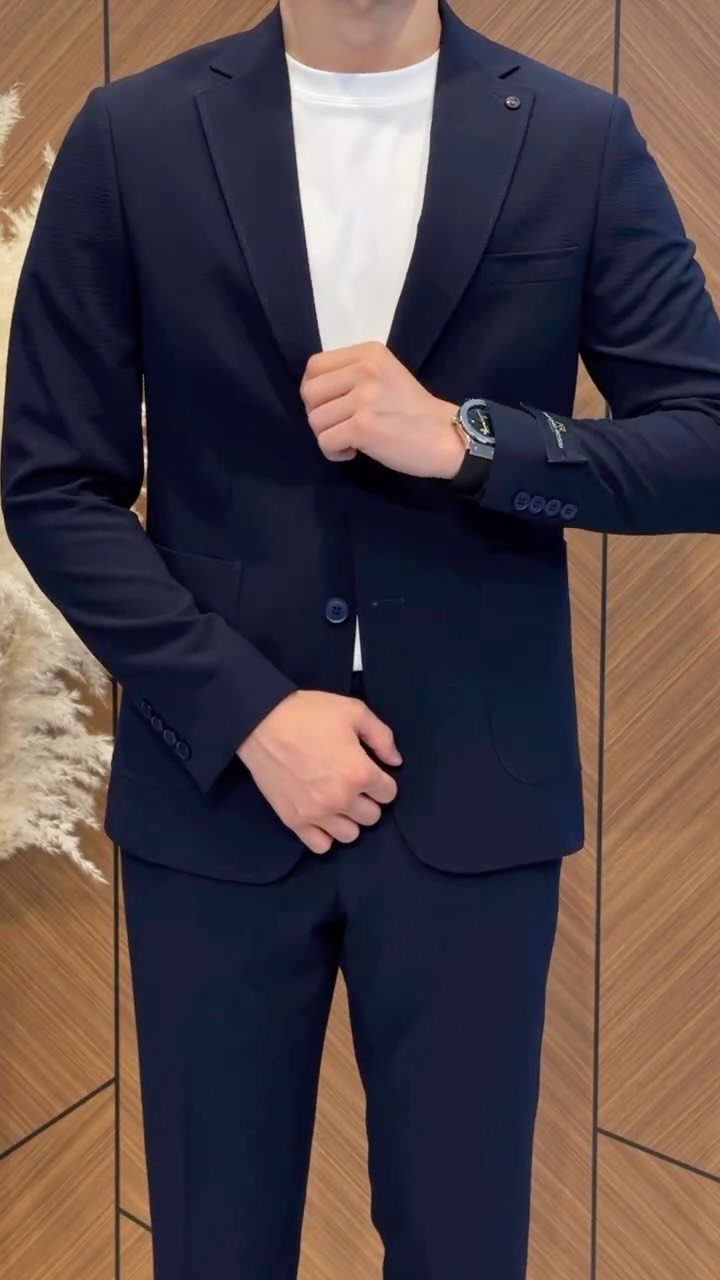
A navy suit over a plain white tee is the easiest way to wear a suit on a day off. The jacket and trousers still match, so the outfit holds together without a collared shirt or tie.
Keep the tee crisp: a clean crewneck, no logo, no stretched collar. Skip the pocket square, and let the navy do the work.
Clean white leather sneakers or loafers finish it.
8. Plaid Suits
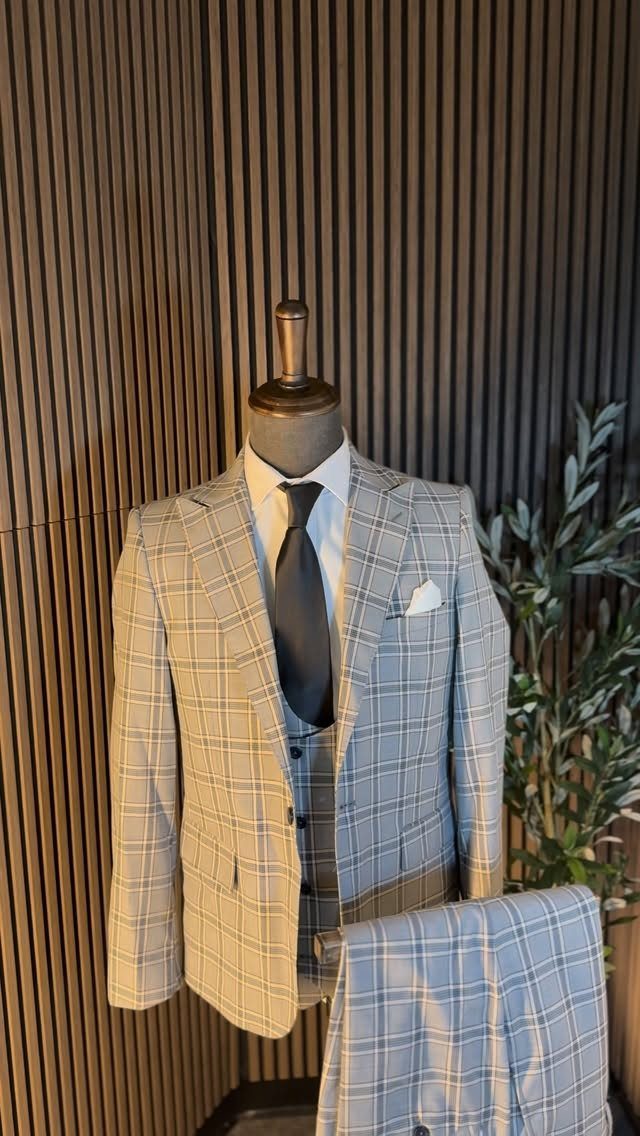
Plaid gives a suit pattern without going loud, and a light blue and grey check like this one reads softer than a dark tartan. The waistcoat is part of the look here, so it works as a three-piece.
With a plaid suit, keep everything else plain: a white shirt and a solid dark tie let the cloth be the only busy thing. I would avoid a patterned tie or pocket square with it.
Scale matters. A small check looks calmer than a big one, and the maker of this suit says it has 19 locations across the USA, so trying one on in person is realistic.
9. Linen Suit
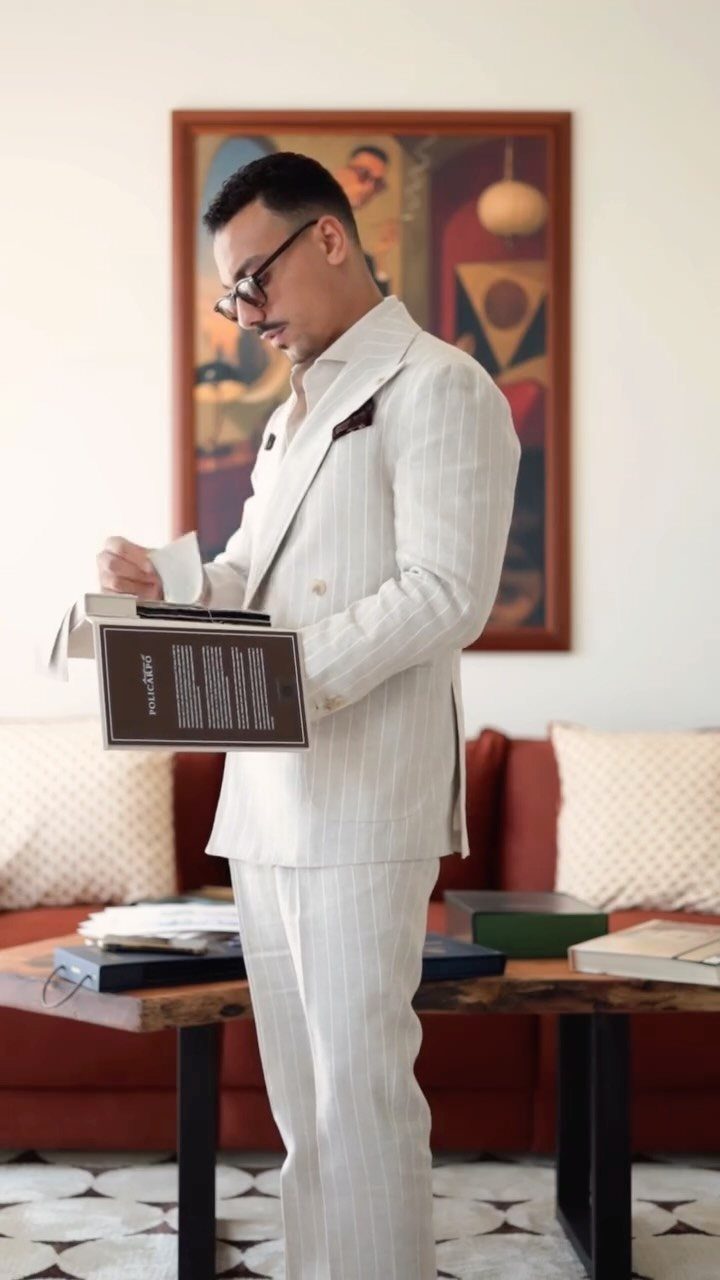
Linen is the suit for heat. It breathes, and it drapes loosely, which is why a cream double-breasted one looks relaxed rather than stiff.
It also wrinkles, and I think that is part of its charm. Accept the creases instead of fighting them, and steam it before you wear it.
Pale colors suit the cloth best. Pair cream with a light shirt, loafers, and no tie for a summer wedding or a long lunch.
10. Velvet Suit
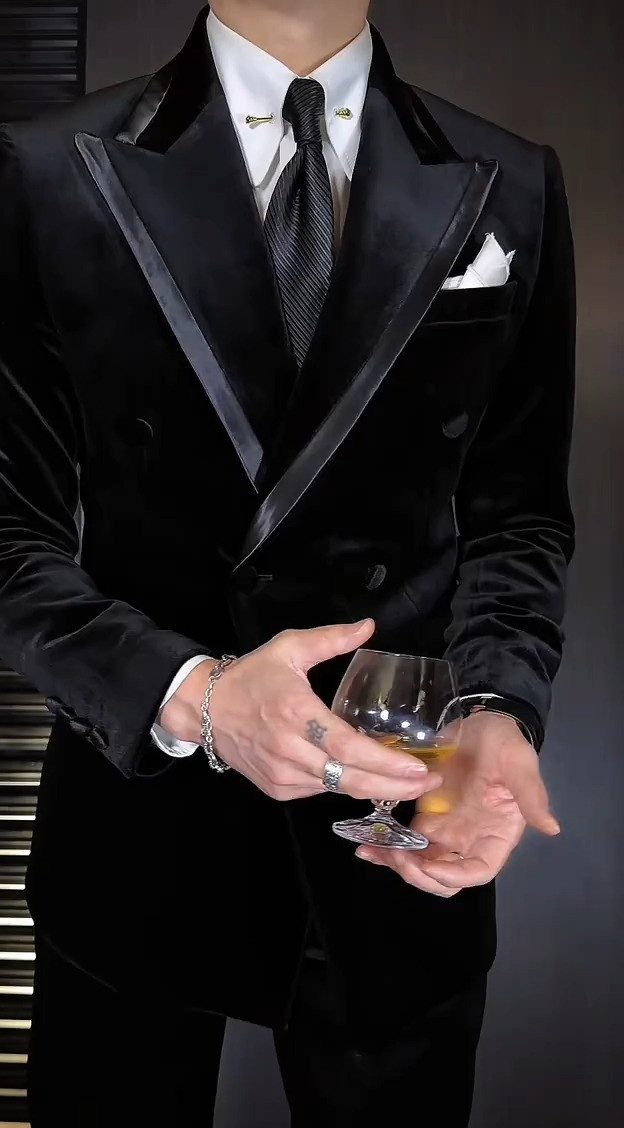
Black velvet turns a suit into evening wear. The nap catches light and deepens the color, and satin trim on the lapels, as here, pushes it toward dressy.
I would keep the rest quiet: white collared shirt, black tie, a white pocket square. The jacket supplies all the drama.
Velvet is heavy, so save it for cooler months and indoor events. Steam it from the inside and never press it flat, or you crush the pile.
11. Three-Piece Suit
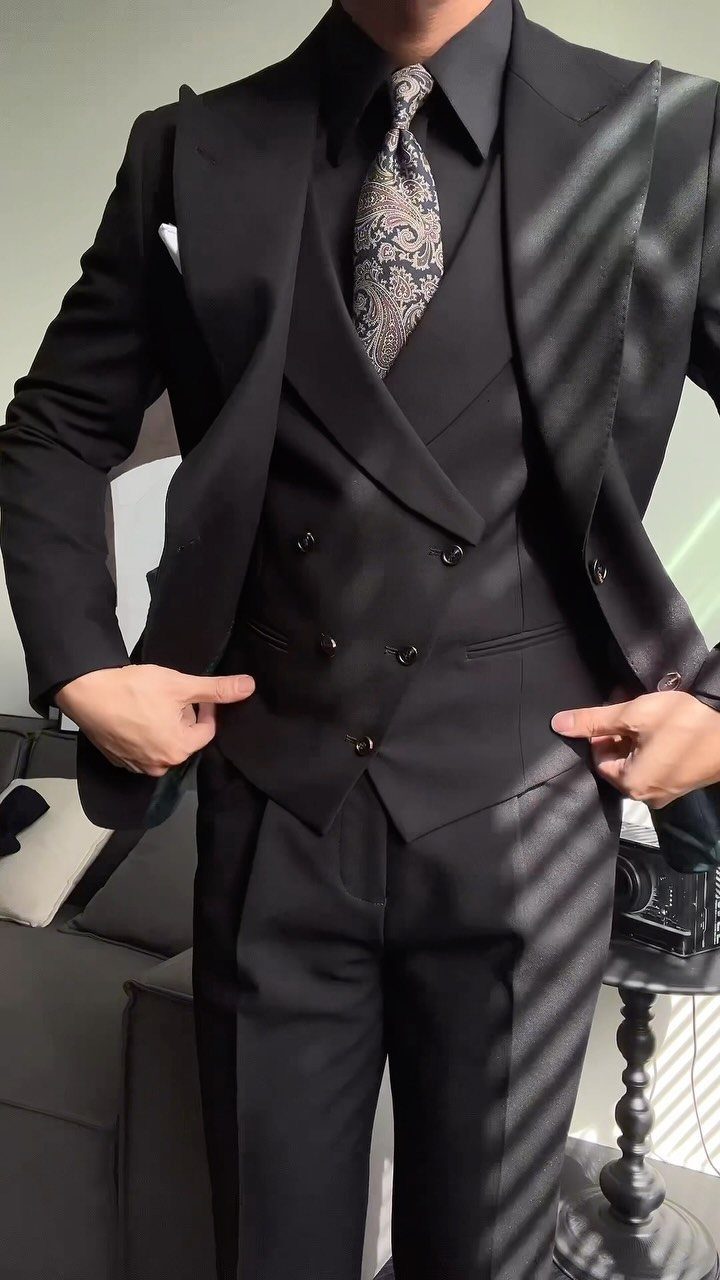
A vest adds a third layer and a lot of formality, and a double-breasted one like this sits higher and cleaner at the waist. It also hides the shirt and belt area, so the torso looks long and tidy.
A black suit with a black dress shirt and paisley tie is a confident choice, though I would pick a white or light shirt for work or a wedding.
Keep the vest snug, or it bunches when you sit.
12. Brown Two-Piece Suit
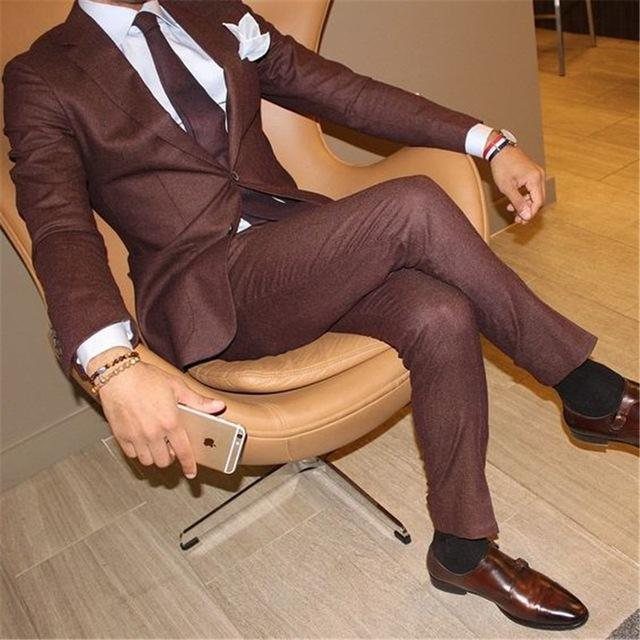
Brown is the suit for men who are tired of navy and grey. A rich, textured brown reads warm and a bit more individual, and a white shirt with a tie in the same brown family sits easily against it.
Brown leather shoes suit this suit, and monk straps are a good pick; match the belt to the shoes. Black shoes look wrong against it.
Brown reads less corporate than navy, so I like it for dinners, events, and offices with relaxed dress codes.
13. Pinstripe Suit
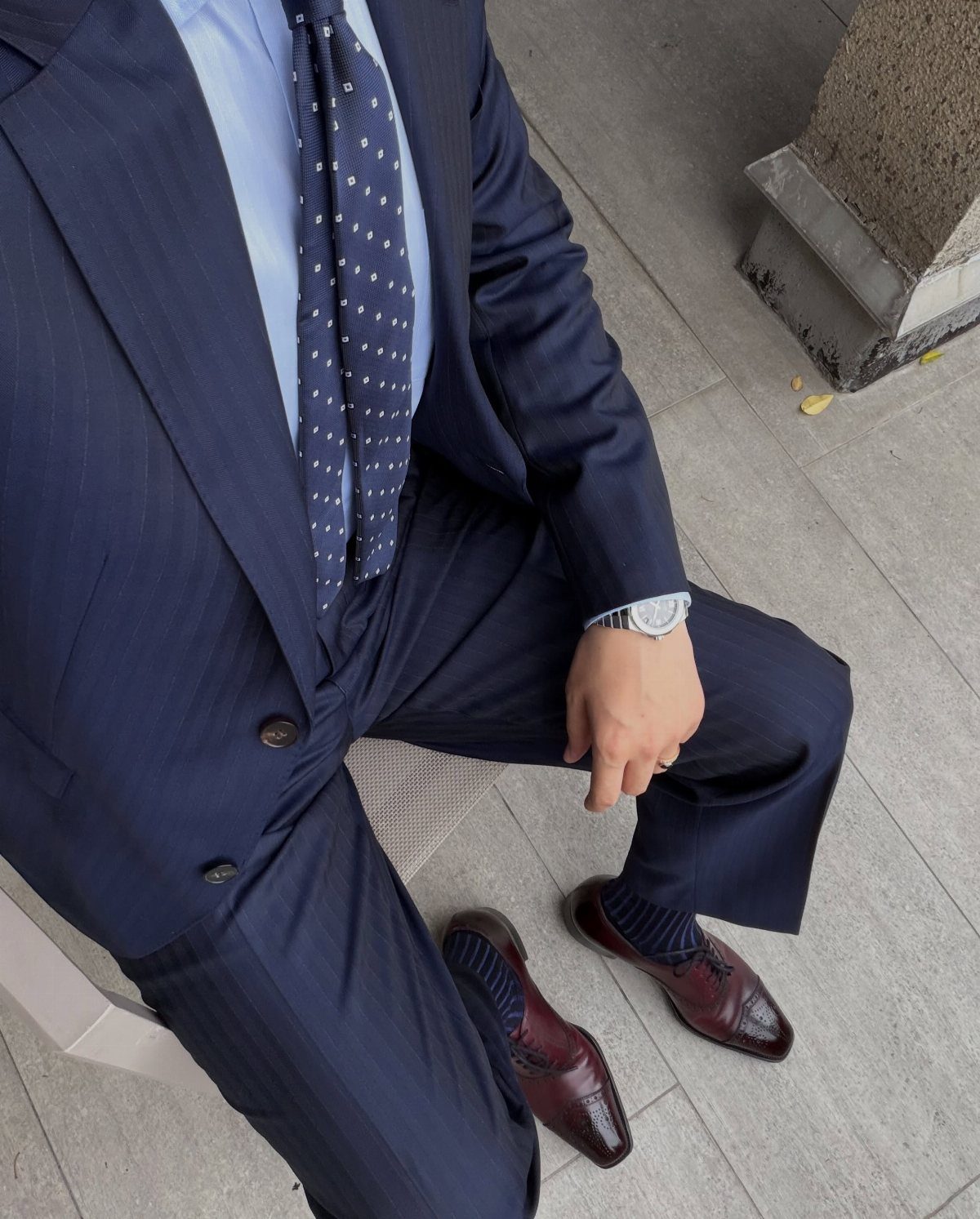
Navy with a thin pinstripe reads as business first, and the light blue shirt is the right partner: it keeps the stripe from fighting for attention.
Patterned ties work if the pattern is small, like a dot, and I would keep any stripe off the shirt.
Brown leather shoes soften the corporate edge a little, which suits a man who wants the suit to work outside the office too.
Match your belt to the shoes and let the stripe stay the only loud thing.
14. Tweed Suit
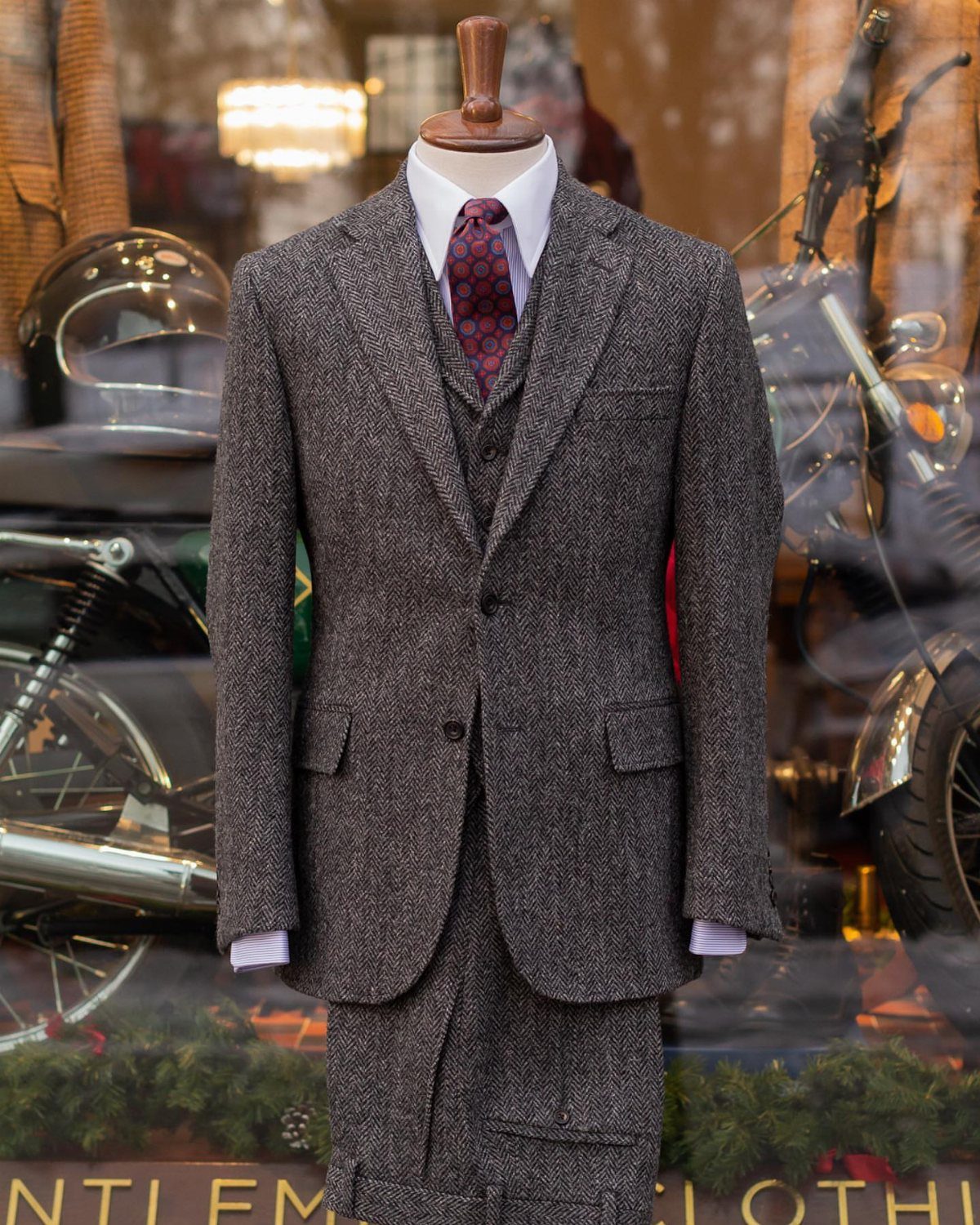
Herringbone tweed gives a grey suit texture you can see from across a room, and a vest makes it a proper three-piece. Tweed already carries plenty of pattern, so a plain white shirt is the right partner.
A burgundy tie is a good match: it adds warmth to the cool grey without competing with the weave. Pick a tie with a small pattern, not a bold one.
Tweed is a heavier cloth, so I wear it in cooler months and save it for days when the weather agrees.
15. Charcoal Grey Suit
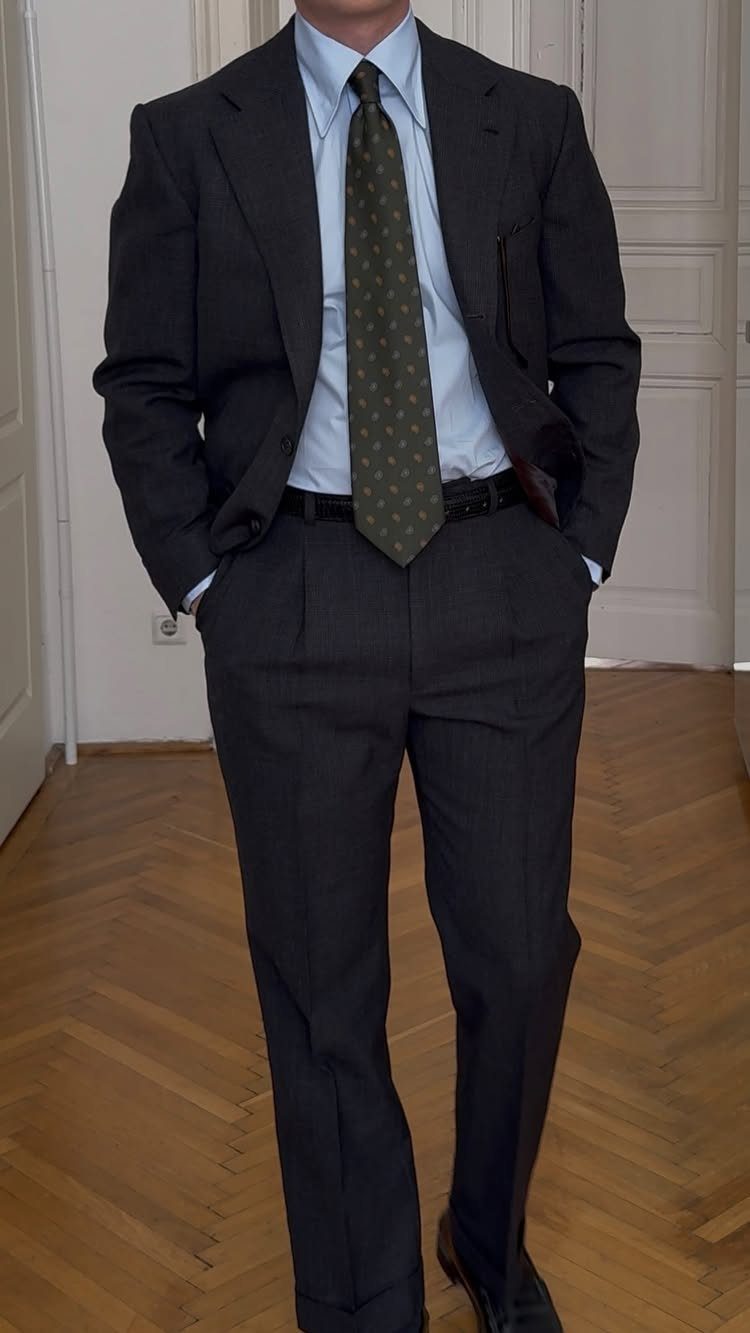
Charcoal is the grey I would buy first, because it looks sharper than mid-grey and forgives more than black. A light blue shirt is the easy partner, and a dark green patterned tie adds color without shouting.
A modest tie pattern and a plain shirt let the charcoal suit stay the main event. Black or dark brown shoes both work, though I lean toward black for the most formal days.
Fit is what makes charcoal look expensive, so spend there first.
16. Blazer and Contrasting Trousers

Splitting a jacket from its trousers gives you two outfits from one jacket. A light beige blazer over dark trousers is easy to wear because the contrast does the work a matching suit would.
The striped shirt and striped tie can clash, so vary the scale: a wide stripe on one, a thin stripe on the other. Navy in the tie ties it back to the dark trousers.
Beige suits warm weather best, and I would keep the trousers a shade or two darker than the shirt.
Choosing the Right Suit Fit
Fit describes how much extra fabric the cut leaves around your body, and that is a different question from tight versus loose. A suit that pulls or sags is simply badly fitted, whatever label it carries.
Suits come in 3 basic cuts: classic with a fuller drape, modern with a trimmer line, and slim, which sits closest to the body. Classic leaves the most room, modern sits closer, and slim sits closest.
Pick by your build and by how you move in a suit all day. If you sit at a desk or travel often, a little more room in the classic or modern cut will keep you comfortable and looking neat.
Whichever cut you choose, a good fit makes the outfit look polished and sets its tone, from timeless to sharply modern.
Suit Patterns and Textures
Pattern is a choice of its own, apart from the color you pick and the cut you wear. Take navy: in a solid, a pinstripe or a faint nailhead, it reads as 3 different suits, so decide on pattern separately.
Pattern also moves a suit along the formality scale. Windowpane and check suits suit business casual, social events, and relaxed workplaces, and they let you add personality without going bold.
Everything else you wear with it should stay quiet, so the weave and pattern of the cloth do the talking. A solid shirt and a simple tie or pocket square keep the look cohesive.
For a more casual finish, pair a patterned jacket with neutral trousers or even jeans. That works best when the pattern is quiet.
Suit Accessories
Details decide whether a suit looks bought or put together. Three matter most: the lapel, the shirt and tie combination, and the shoes.
The lapel draws the eye first. A slimmer one reads modern, while peak and shawl lapels dress a suit up or down depending on the occasion.
Choose the suit, shirt, and tie colors together so they look planned. They should blend, not match exactly, and that takes a minute of thought, not a big budget.
Shoes come last but count. Pick a pair that suits the occasion and keep them polished, because scuffed leather undoes a good fit.
Frequently Asked Questions
What types of suits should every man own?
Start with a navy or charcoal two-piece in a plain weave, since it works for interviews, weddings and everything between.
After that, add a patterned suit, such as a pinstripe or a windowpane check, and one statement suit like brown or tweed.
What is the best suit for a wedding?
A well-fitted navy or charcoal suit in a classic style is the safest pick, because it will look right in photos for decades.
Get it fitted at least 1 month ahead, then sit, raise your arms and hug someone in the fitting room.
What are some good suit colors for men?
Navy and charcoal come first, as dark neutral tones suit nearly every occasion.
Brown suits suit men who have worn navy and grey down to the thread, and they look a little more personal. Cream or beige works in warm weather, and black velvet or a midnight navy tuxedo covers evening events.
What is the current style for suits?
Single-breasted suits remain the most common and versatile choice, and a slimmer lapel reads modern. Textured cloth like tweed and soft checks lets you add personality without going loud.
What makes a good suit?
Fit comes first: shoulders that sit flat, sleeves that show a bit of shirt cuff, and trousers with a clean break over the shoe. After that, the cloth should suit the season and the occasion.