The list runs from short-sleeve polos that need no jacket to a smart casual blazer, with brown suede brogues and loafers, linen shirts and layered button-downs in between.
Your office decides which of these fits, so watch what your coworkers wear and dress one notch above them.
1. Smart Casual Blazer
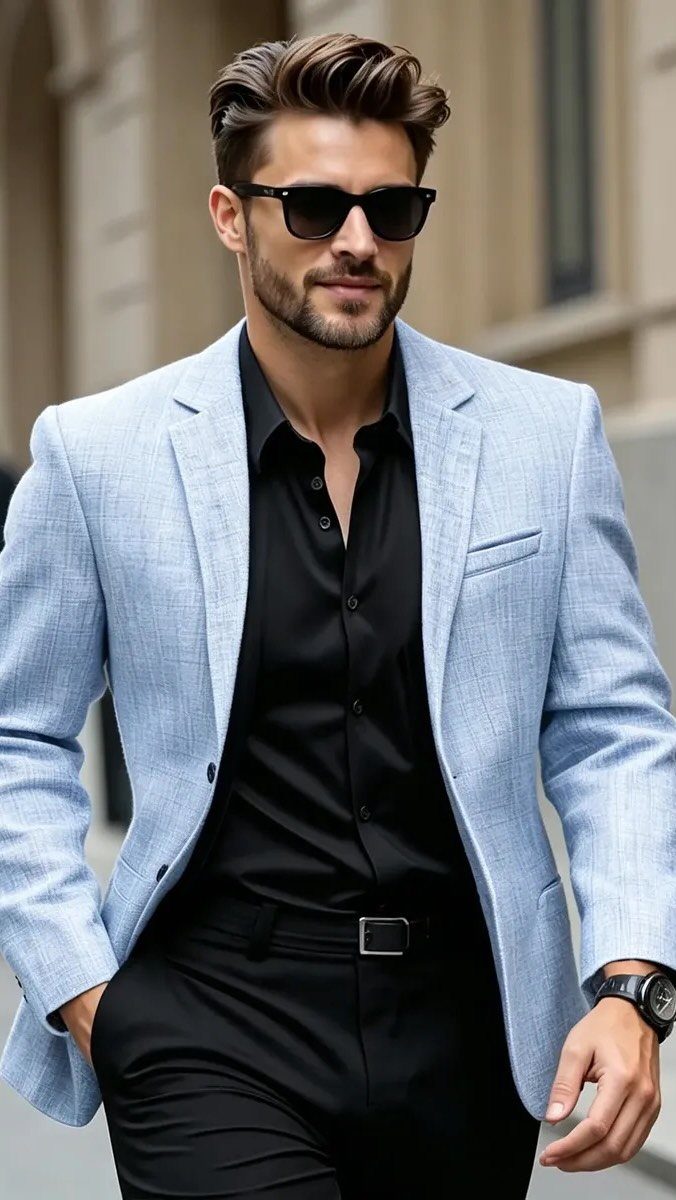
A light blue textured blazer is the easiest way to make a summer meeting look planned without sweating through it. Texture does the work a heavy fabric would, so the jacket reads as dressed while staying airy.
Pick one made from breathable material and skip the lining if you can. A black shirt and black trousers under a blue blazer make the jacket the only light piece in the outfit, so the eye goes straight to it.
Sunglasses stay on until you reach the door.
2. Brogues in Brown Suede
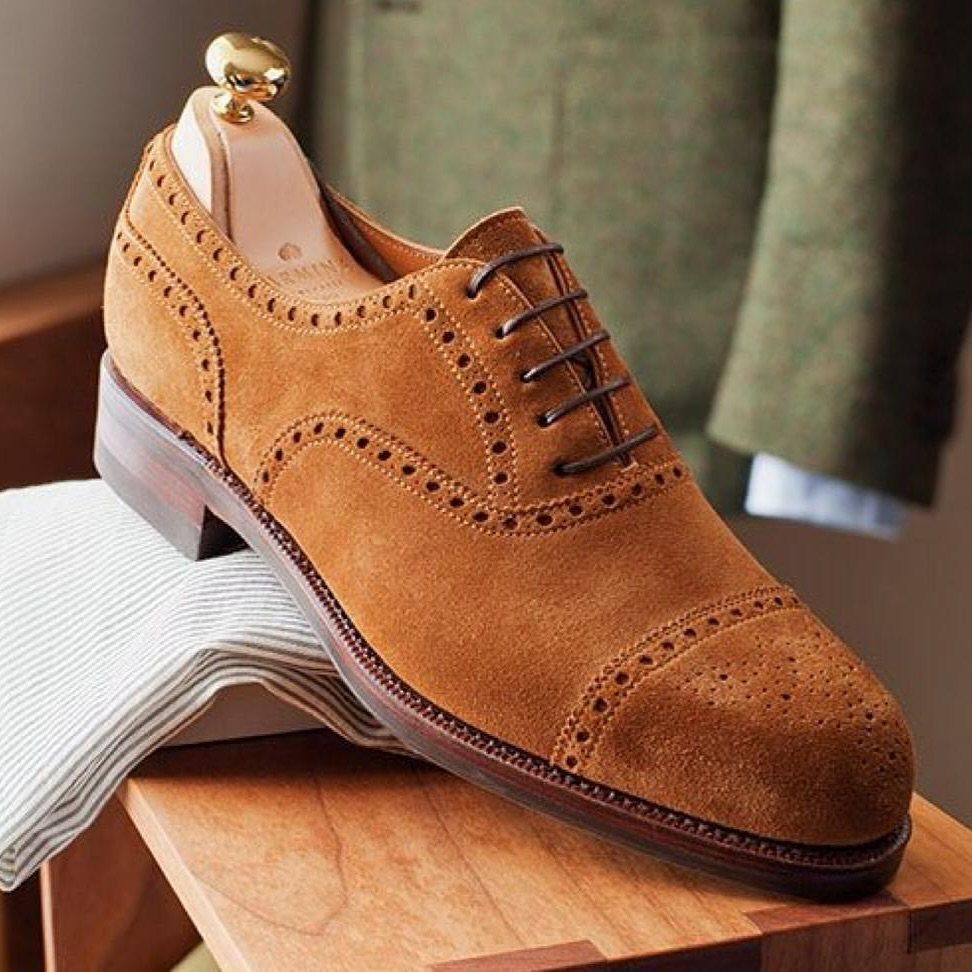
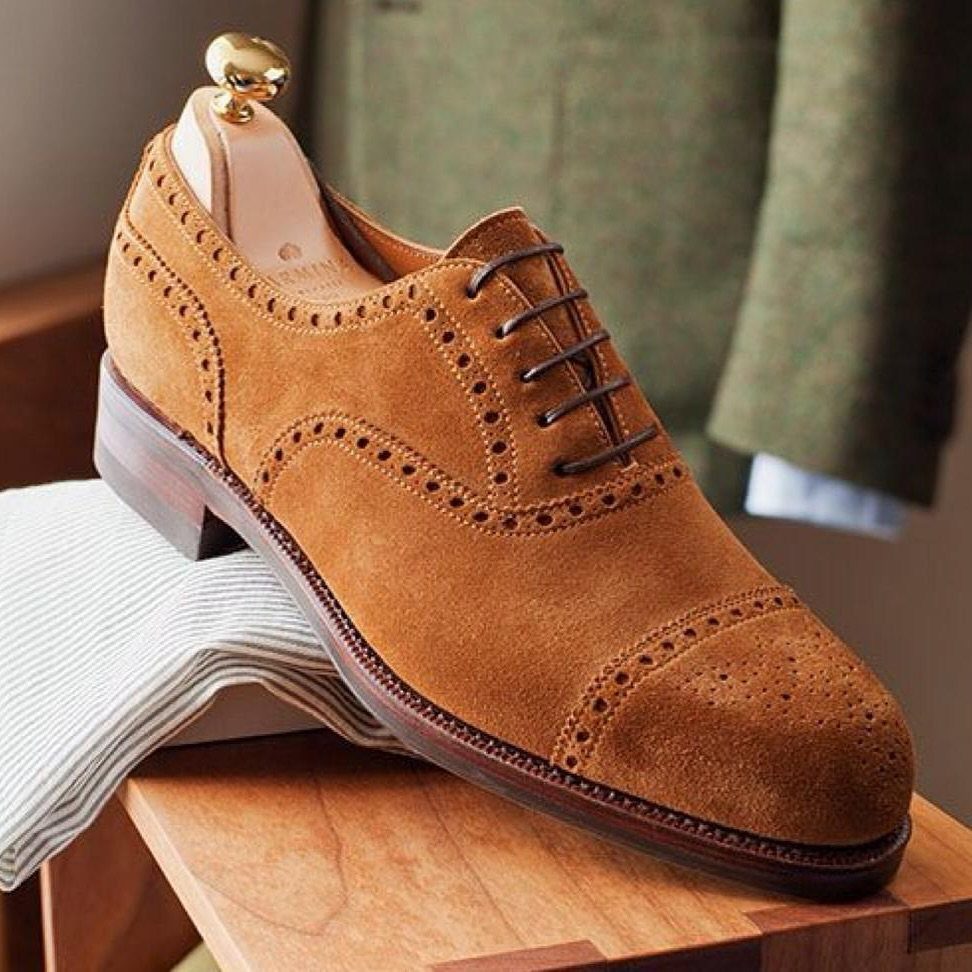
Brown suede brogues soften a business casual outfit more than any other shoe I know. The perforations add detail, and the napped surface keeps the color from looking stiff.
They pair best with chinos or jeans in navy, gray, or stone. Sneakers also work well with that same jeans-and-chinos formula, so keep the brogues for days with meetings and the sneakers for the quiet ones.
Suede and rain don’t mix. Check the forecast before you commit.
3. Short-Sleeve Polos
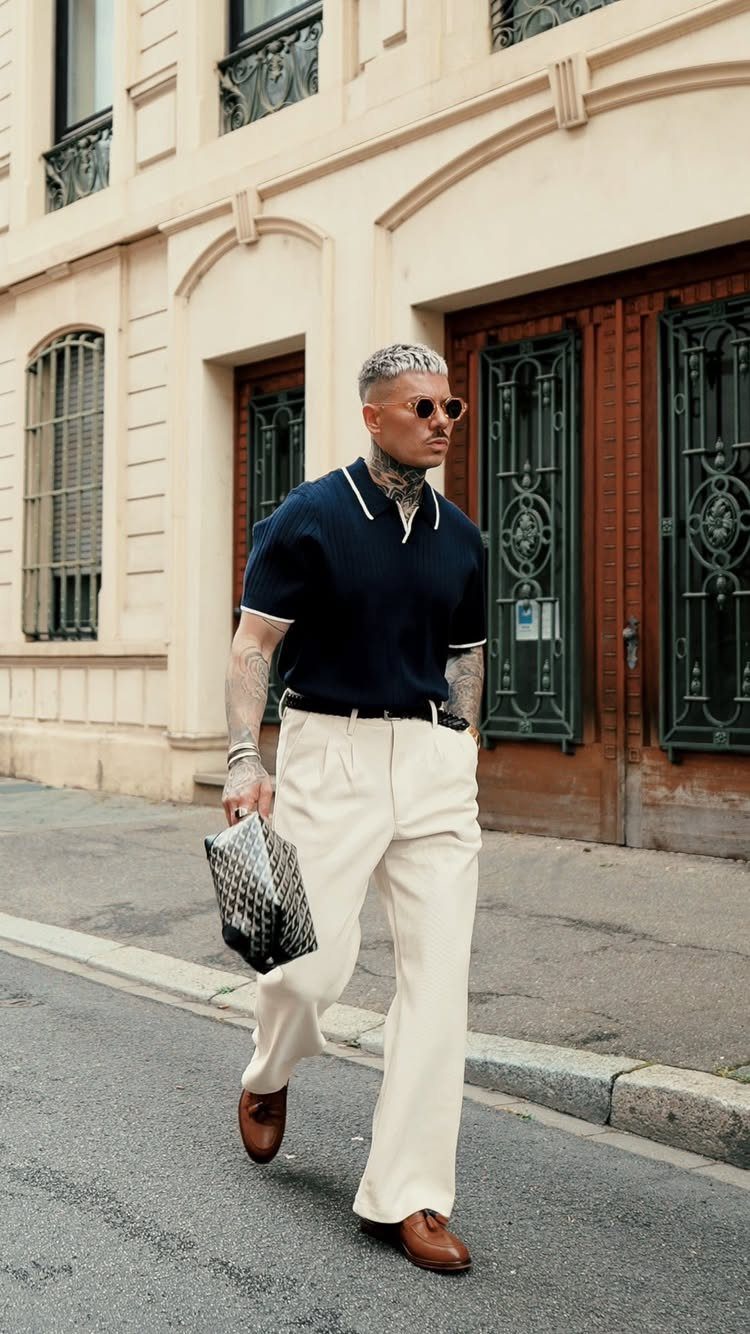
Office polos have a real advantage over T-shirts: a collar. A dark knit polo with white trim, like this navy one, gives the neckline structure without asking for a tie or a jacket.
I’d wear it with pleated trousers in cream and brown dress shoes, which pushes it well past weekend territory. Keep the fit clean through the chest and let the sleeve end mid-bicep.
Comfortable and professional, with one button fewer to manage in July.
4. Striped Long-Sleeve Shirt and Trousers
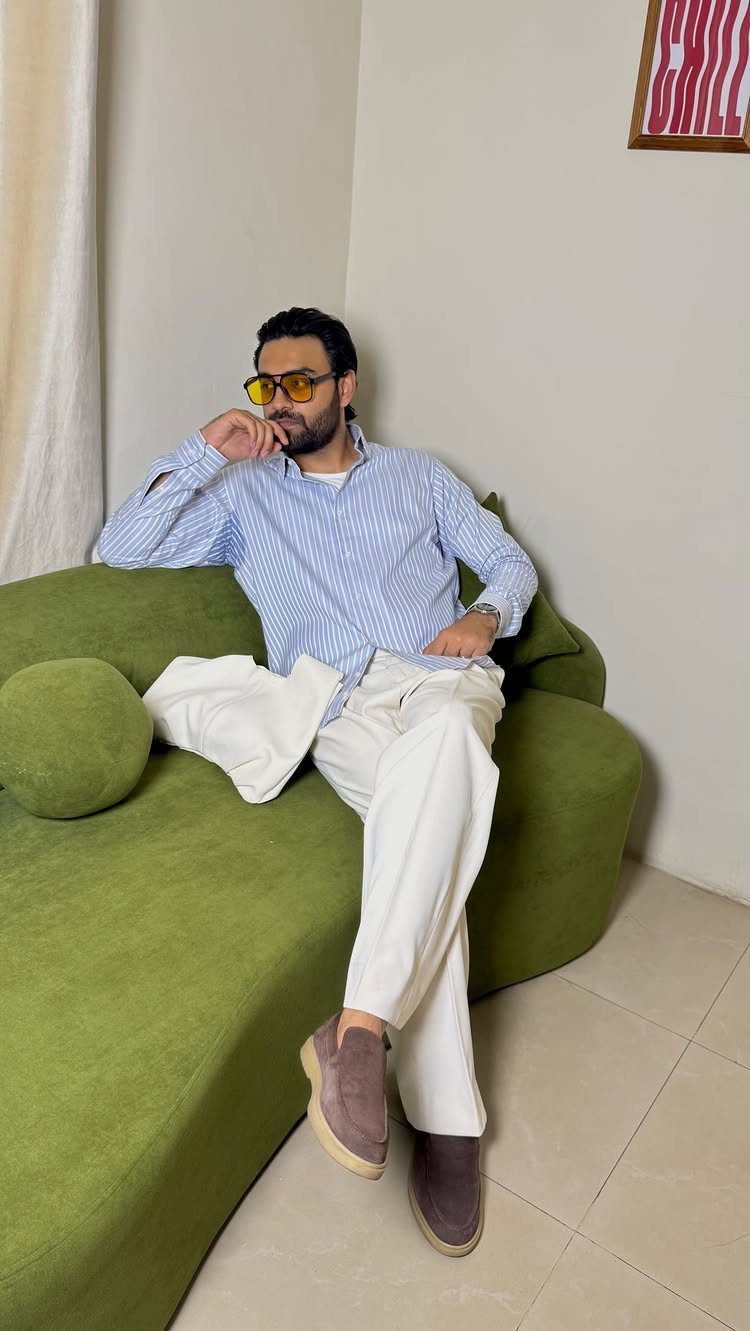
Pale stripes on a light blue shirt read as cooler than a solid, and white trousers sharpen the whole picture.
Choose a lightweight long-sleeve shirt so you can roll the cuffs twice on the walk in and button them down for meetings.
Slip-on loafers finish the outfit without laces. Mauve is a bolder pick than most men try; brown or tan is the safer route.
White trousers show everything, so buy a pair that is fully opaque and wear skin-tone underwear.
5. Layered Button-Down with Linen Trousers
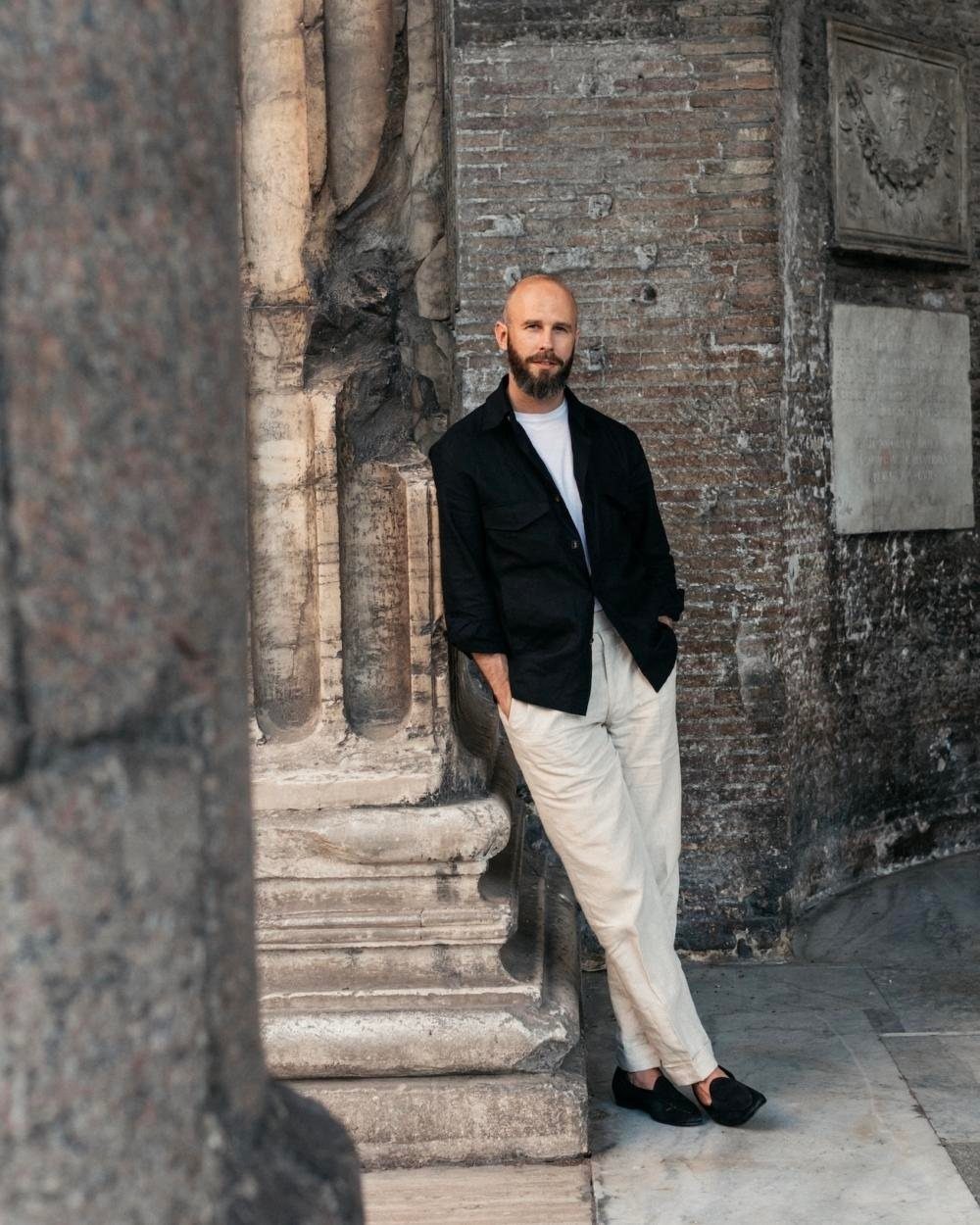
An open black shirt over a white tee is a layer built for looks more than warmth, and in summer that’s the right trade. The white undershirt brightens the dark shirt, and the open front adds length to your frame.
Pair it with off-white linen trousers and black loafers. Let the shirt hang loose and untucked, so air moves through it.
This leans casual, so keep it for offices that allow it. Where a collared shirt buttoned up is expected, button up.
6. Monochromatic Neutral Button-Down and Slacks
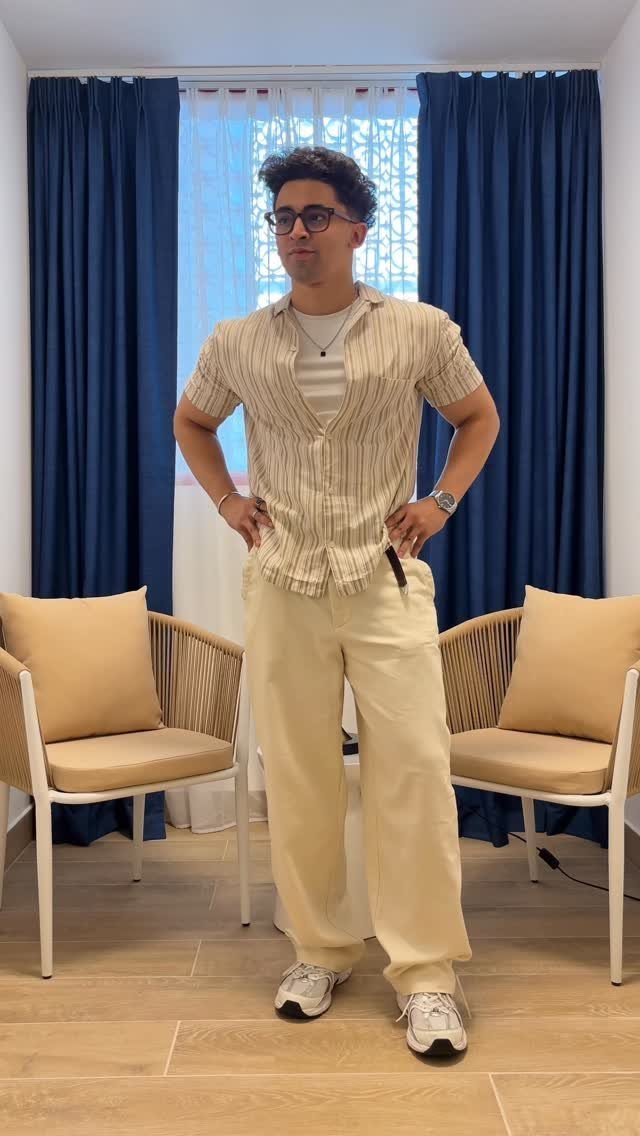
Matching cream from shirt to trousers makes you look taller and tidier with very little effort. A short-sleeve striped button-down in cream, worn over a white undershirt, adds enough pattern that the outfit doesn’t go flat.
Keep the 2 creams close in tone; a visible mismatch looks like an accident. Clean white sneakers fit the mood, and glasses finish it.
I like this best for relaxed offices. Dress it up with loafers if the day includes clients.
7. Linen Shirt with Olive Trousers
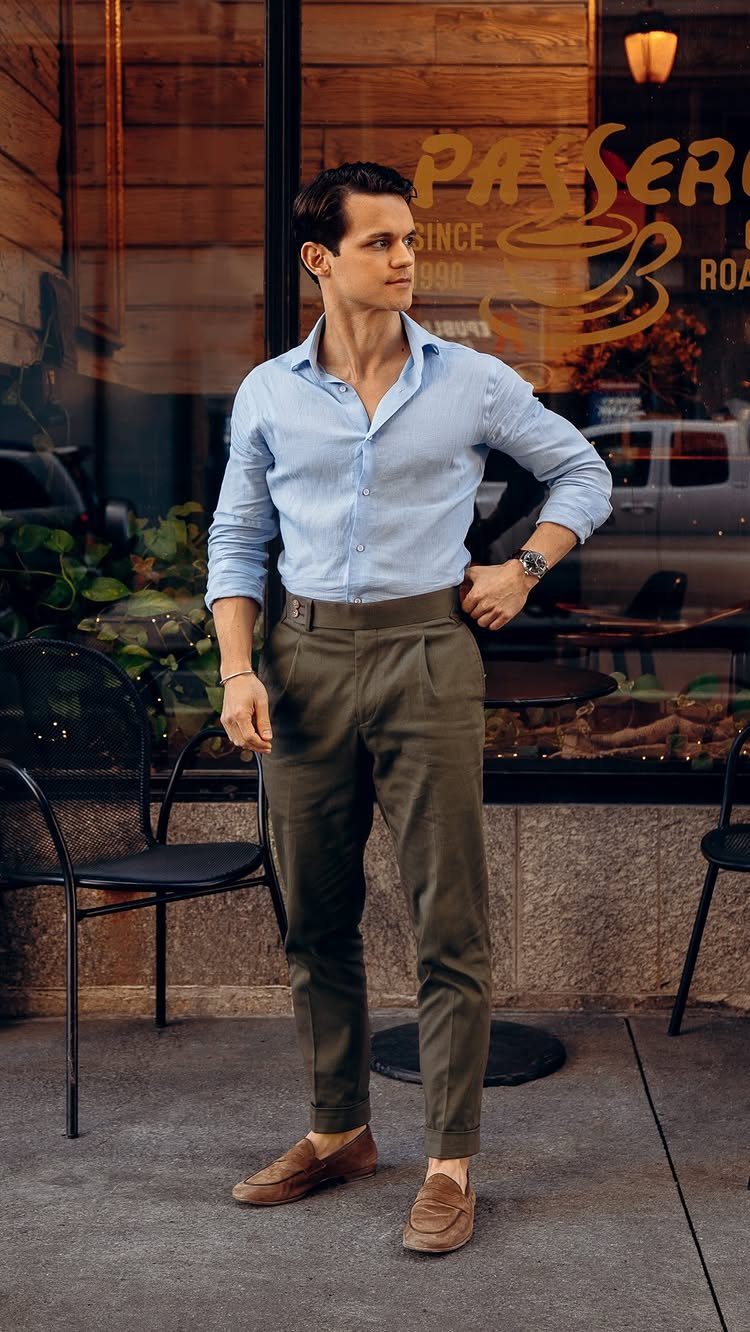
Olive trousers are a quiet way to get out of navy and gray, and a light blue shirt is the easiest partner for them.
The 2 colors sit close enough to look planned, but far enough apart that neither fades into the other.
Tuck the shirt in and finish with brown loafers; the tuck keeps a long-sleeve shirt looking office-ready.
Linen suits the heat, but expect creases by lunch. I’d treat that as part of the look.
Roll the sleeves once if the afternoon runs warm.
8. Brown Suede Loafers
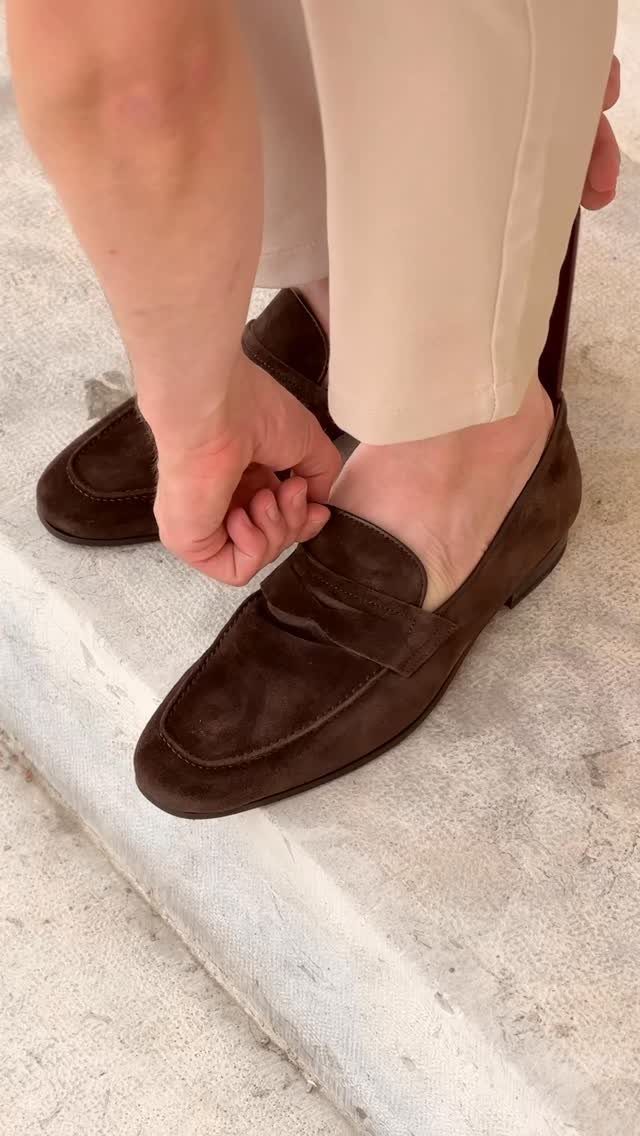
Dark brown suede loafers against cream trousers is a contrast I like more every summer. The dark shoe anchors a pale outfit, and the suede keeps it soft instead of stiff.
Choose a tailored trouser with a clean break at the ankle so the loafer shows. Skip socks, or wear liners that stay hidden, since a visible sock interrupts the line between shoe and cuff.
Cream marks easily, and suede hates rain. Watch the sky and the sidewalk before you leave.
Understanding Business Casual
Business casual has no single definition, and that is why it confuses people. It sits between a full suit and weekend wear, and where it lands depends on your industry and your company’s culture.
Your coworkers are the best guide.
If they wear suits, you work in a formal office, so dress up a notch. If they wear jeans, T-shirts, sneakers, or sandals, the dress code is casual, and business casual puts you a little ahead of the room.
A jacket is not required every day. Some offices allow jeans on Fridays, which is worth confirming before you try it.
Color Choices
In summer, I stick with light shades of core colors: beige, gray, cream, and baby blue.
Once the base is set, an accent color is the easy way to keep things from going flat. Add it in one piece, like a shirt or a tie, and leave the rest neutral.
Fabric counts as much as color. Seersucker is a smart choice for a warm-weather blazer because the puckered surface lets air move across your skin.
If you wear a linen sweater, match it to your shoes. That tonal link makes separate pieces look like one outfit.
Layering Techniques
Air conditioning can turn a hot commute into a cold desk, so carry a light layer instead of dressing for the street alone.
A simple seersucker blazer is the layer I’d pick, since it breathes outdoors and still looks professional indoors.
Swap in a linen sweater if the day is cool, and pick a shade close to your shoes so the whole outfit looks put together on purpose.
Choose pieces you can drop onto a chair without worry. If the layer is too heavy to take off, you’ll end up wearing it in the heat.
Hot days are the great equaliser: forget complicated layering, tricky fabrics, or trying to make a fit work with that ill-advised buy from a sample sale. Instead, usher in a welcome return to simplicity.
— GQ
Frequently Asked Questions
What to wear to the office in hot weather for men?
Choose light, breathable pieces: linen or seersucker, short-sleeve polos, and loafers with no socks or hidden liners.
A linen shirt in light blue with olive or cream trousers looks office-ready, and linen creases by lunch, which I treat as part of the look.
Carry a light layer, since air conditioning can make a cold desk out of a hot commute.
What colors to wear for summer business casual?
Light, muted versions of the basics hold up best in heat: sand, stone gray, cream, and a pale sky blue.
One accent in a single item, a shirt or a tie, is plenty, and the rest can stay quiet so the whole thing keeps some depth.
What is men’s business casual?
Business casual sits between a full suit and weekend wear. Industry and office culture set the exact line, so look at what your coworkers wear and match that.
In a suit office, go one step sharper than the baseline; where jeans and sneakers are normal, business casual still reads as a little more put together.
What should I wear on casual Fridays?
Leave the shorts at home and pair a T-shirt with some structure, meaning a heavier cotton that holds its shape, with chinos or pleated trousers. Confirm that your office allows jeans on Fridays before you try them.
What is the 3-3-3 rule for men’s business casual outfits?
I don’t rely on a 3-3-3 rule, and none is set out here.
A simpler method is to keep the base in light neutrals, add one accent color in a single piece, and match a layer such as a linen sweater to your shoes so separate pieces read as one outfit.