The 7 shirts here run from a structured tee to a guayabera, and what separates them is how formal your workday is.
A button-down Oxford or a chambray shirt with khaki chinos holds up in an office that expects collars, while linen, short sleeves and the untucked guayabera belong to weekends, dinners and warm-weather events.
Whichever you choose, fit decides more than the shirt: the shoulder seam should land at the edge of your shoulder, and the buttons should not pull across the chest.
1. Oxford Button-Down Shirt
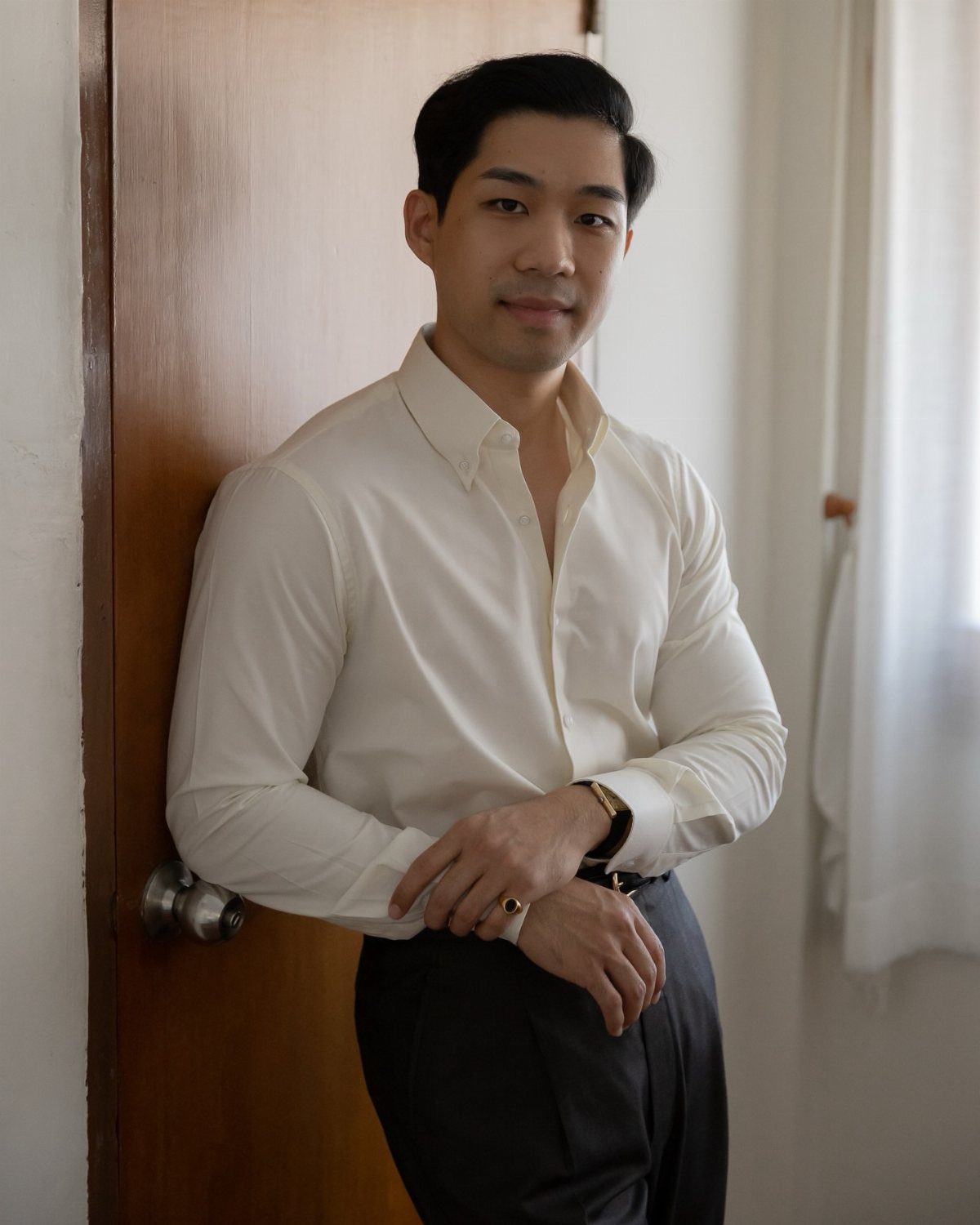
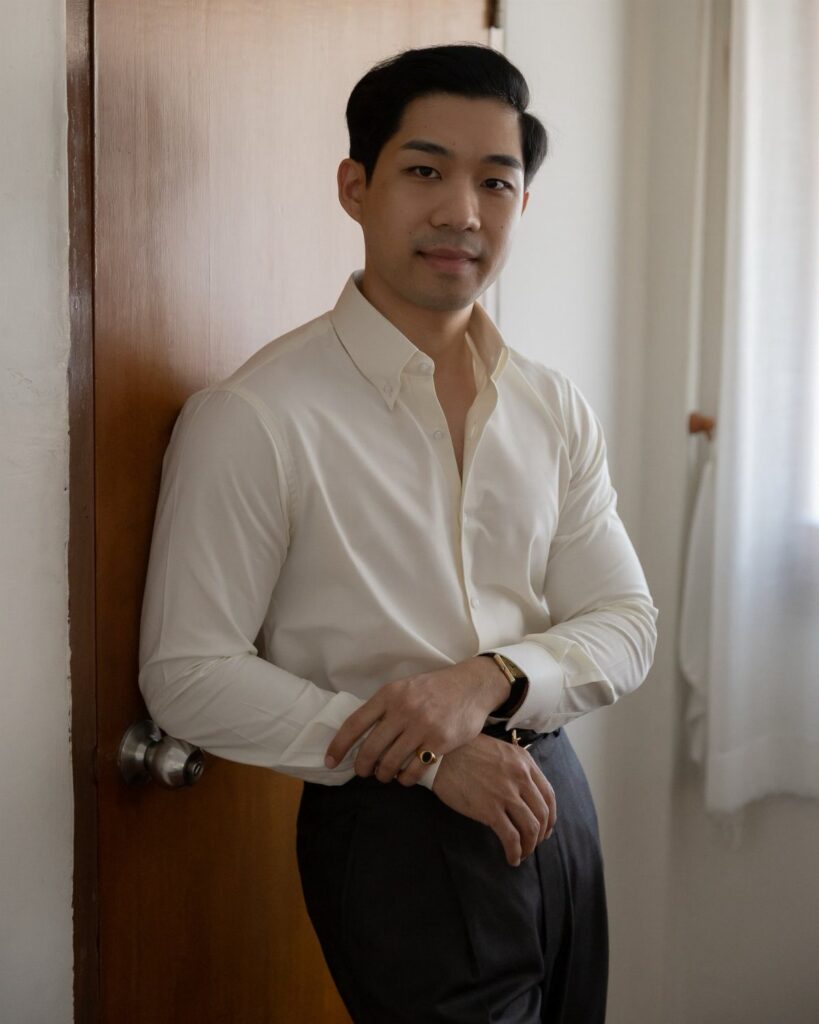
Cream is a softer choice than the usual white or blue, and it pairs well with dark trousers because the contrast is clean without being stark. Tuck it in, wear a belt, and the shirt looks finished.
A button-down collar earns its place here.
It sits flat without a tie, so the shirt looks deliberate on its own. Roll the sleeves once or twice past the cuff if the day is warm.
Oxford cloth has a slightly coarse weave, which keeps a plain shirt from looking flat.
2. Linen Shirt with Beige Trousers
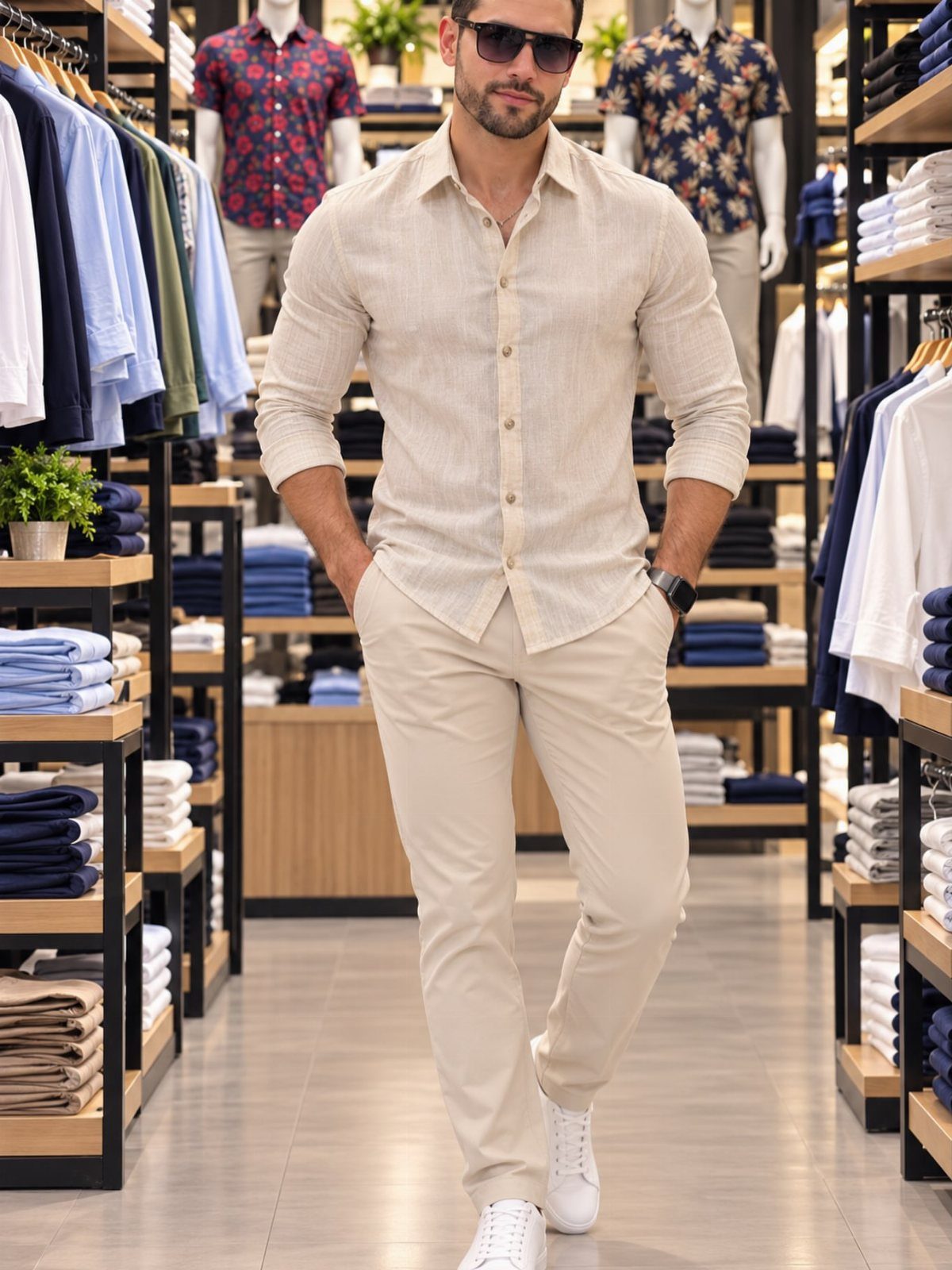
Linen and beige trousers work as a pair because they stay in the same warm family. Keep the shirt a shade lighter than the trousers, and the outfit has depth without a single pattern.
Wear the shirt untucked only if the hem ends around mid-fly; anything longer reads sloppy. White sneakers keep the look easy and cheap to pull off.
Linen wrinkles, and I would let it. Steaming it flat defeats the point.
3. Short-Sleeved Casual Shirt
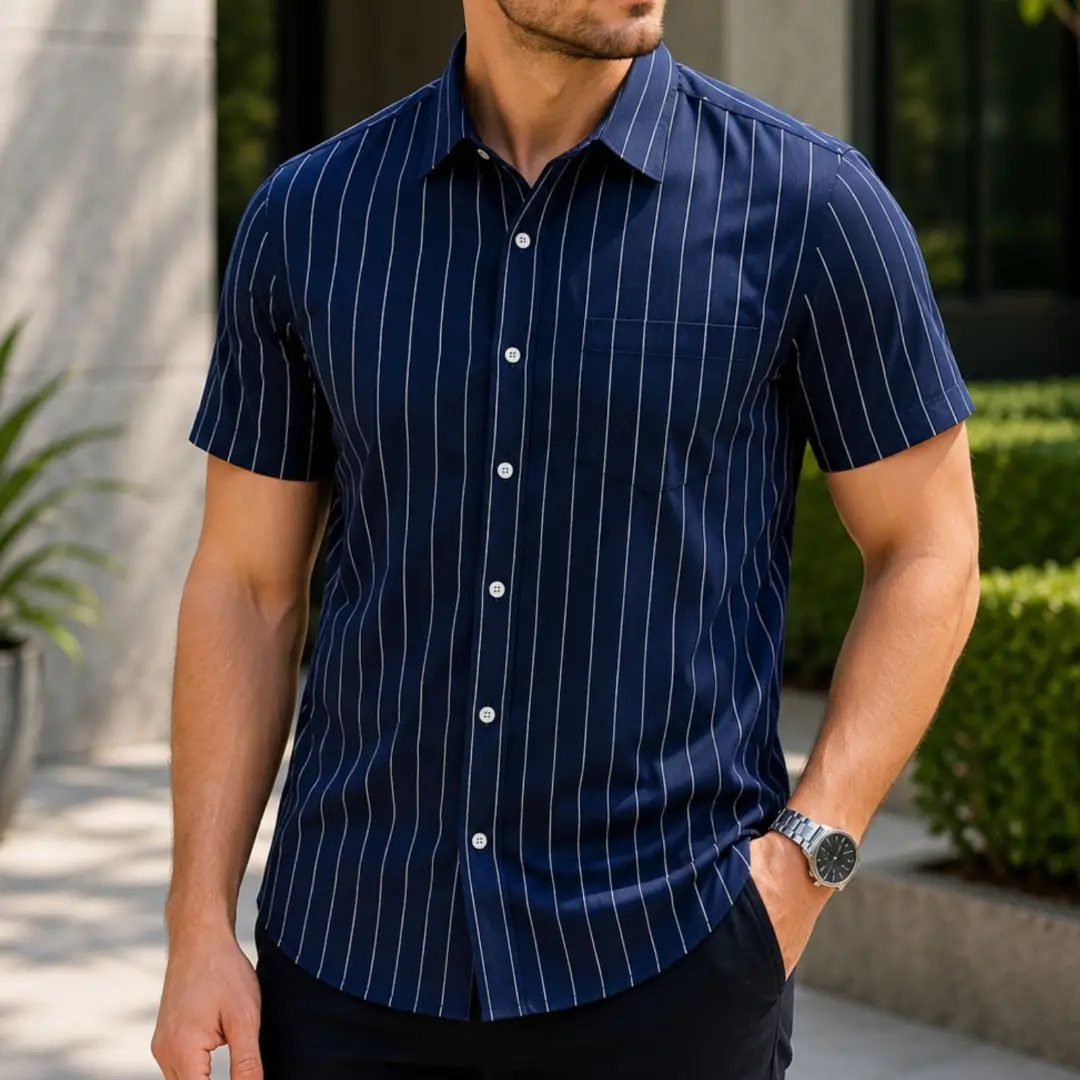
A short-sleeved shirt only looks sharp when the sleeve hits mid-bicep and fits close without pulling. Anything flapping near the elbow drags the whole outfit down.
Thin stripes in navy or another dark color are the easiest way in, since they read dressier than a loud print. Pair the shirt with dark trousers and a simple watch, and it passes for office-adjacent on a warm day.
Tuck it in for work or dinner. Leave it out only if the hem is cut straight.
4. Chambray Shirt with Khaki Chinos
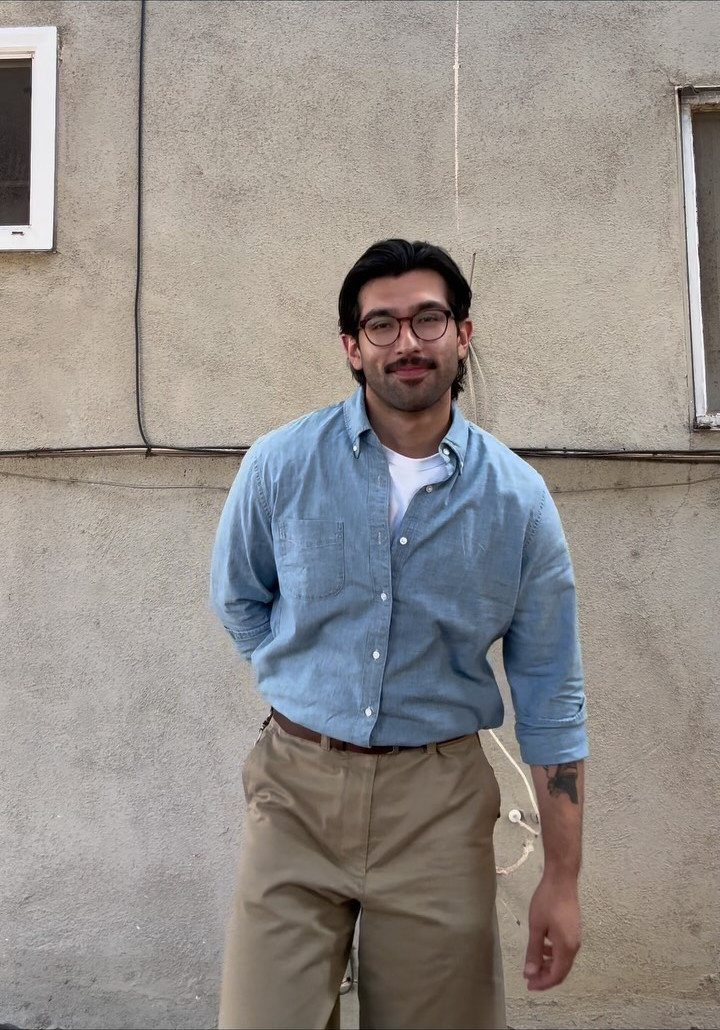
Light blue chambray looks like denim’s polite cousin, and khaki chinos are the plainest partner for it. Neither piece asks for attention, which is why the combination is so hard to get wrong.
Match your belt to your shoes, and brown is the natural pick with khaki. Tuck the shirt in, and leave the top button open.
If the chinos have pleats, make sure they sit flat when you stand. Pleats that gape make the whole look feel dated rather than relaxed.
5. Patterned Shirt with Solid-Colored Trousers
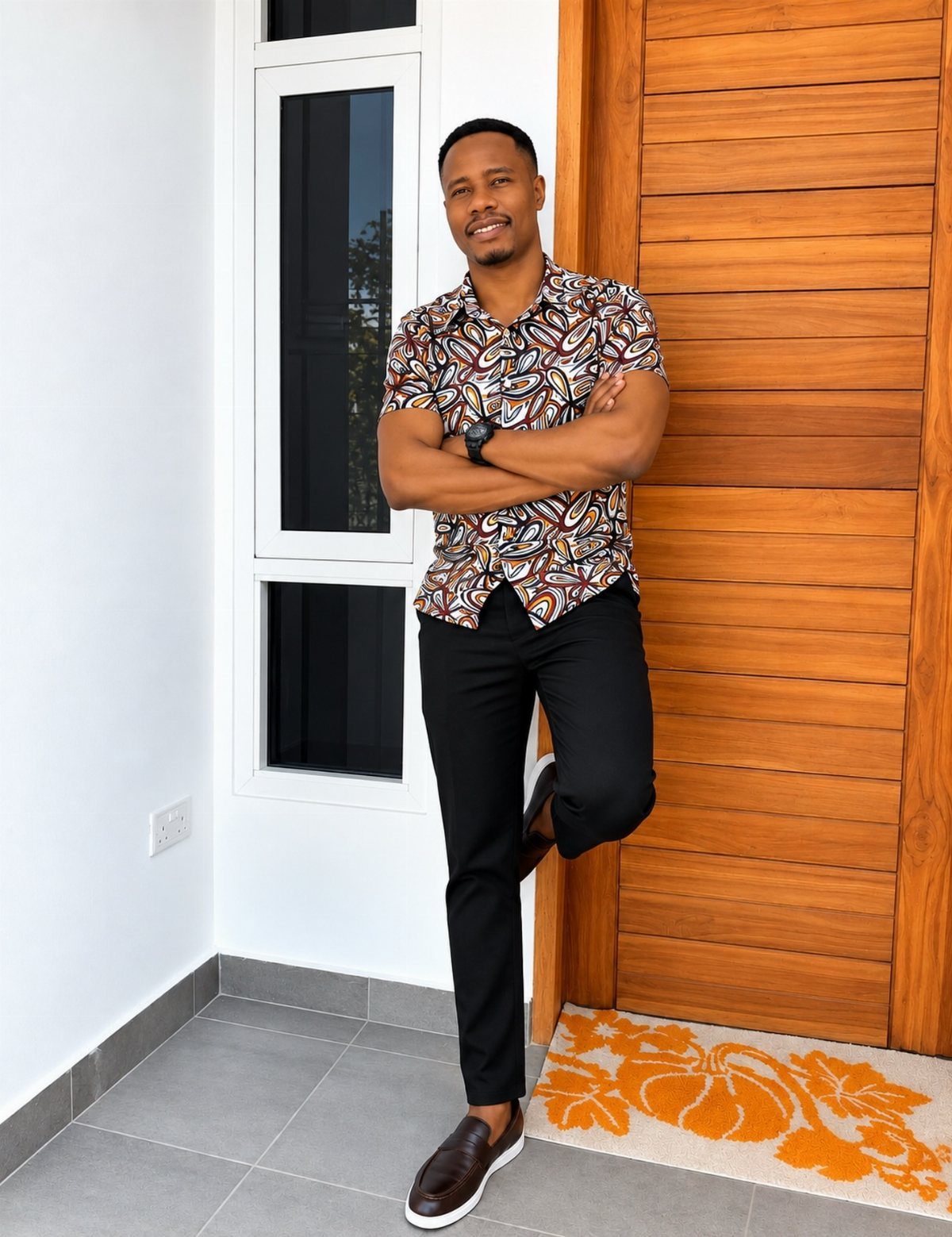
Let the shirt do all the talking: when the pattern is busy, the trousers should say nothing. Black trousers are the simplest backdrop, and brown loafers add warmth without competing.
Short sleeves suit a bold print because the look stays casual. Choose a pattern with one or two colors rather than five, and it will mix with more of what you own.
Skip a patterned belt or socks here. One pattern per outfit is enough.
6. Structured T-Shirt
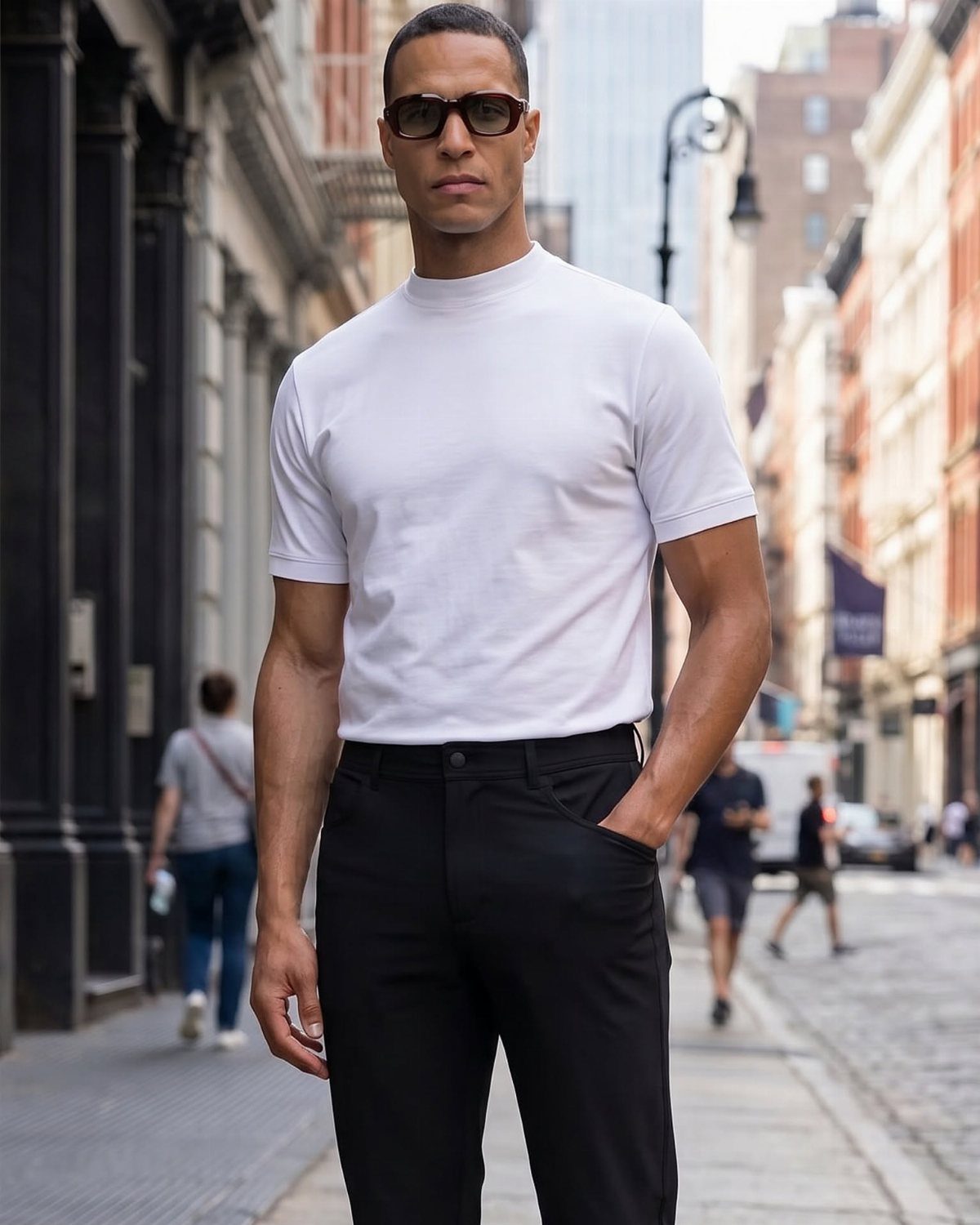
A mock-neck t-shirt has a stiffer collar band, so it holds its shape where a regular tee slumps.
Pick a heavier cotton that does not cling or show through.
The fit should skim the chest and stop at the bicep. Tucking is not optional; an untucked version loses the point.
It suits men who want something simpler than a button-up. It will not replace a collared shirt in a stricter office.
A choice linen shirt makes you exponentially more stylish than the tee-wearing masses.
— GQ
7. Guayabera
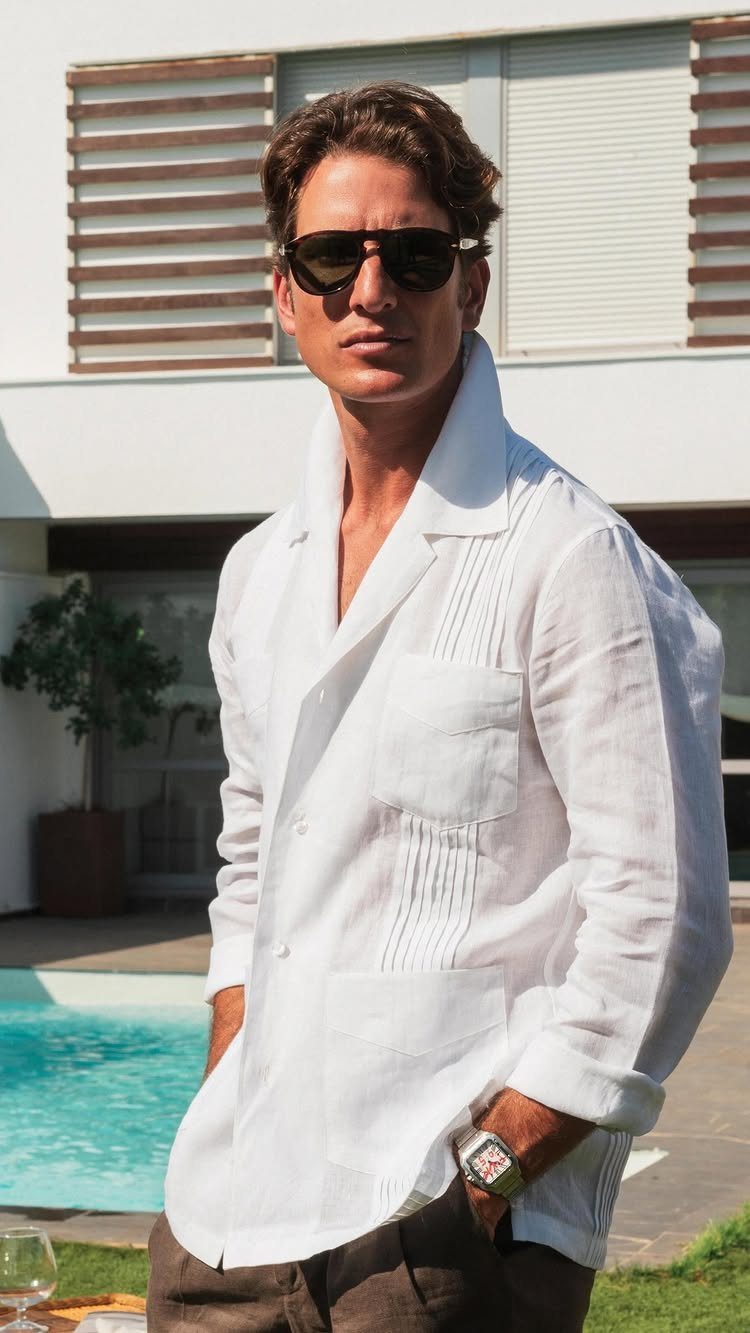
A guayabera is a summer shirt with vertical pleats down the front, and it needs no jacket, tie or tucked hem to look dressed.
White linen with brown trousers, as here, is the classic pairing, light on top and grounded below.
Wear it untucked. The straight hem is cut for that, and tucking it in fights the shirt’s loose, airy shape.
Keep everything else plain: leather loafers or clean sneakers, a simple watch, no pattern on the trousers. The pleats already supply the detail.
Linen will crease, and that suits a shirt made for heat. It reads more relaxed than a suit-and-tie office allows, so save it for weekends, dinners and warm-weather events.
Choosing the Right Fit
Fit decides whether a smart-casual shirt looks chosen or just worn. A slim or tailored cut gives the cleanest line, and it is what I reach for first.
A regular fit still works if you want room to move. Pick it for a long day at a desk, but check that the fabric does not balloon at the waist once you tuck.
Slim does not mean tight. If the buttons pull across the chest or the shoulder seam sits past the edge of your shoulder, go up a size or try a different cut.
Fabric Choices
Cotton is the dependable base. It is light, it handles year-round wear, and it suits the office.
Cotton with a little elastane or spandex moves more easily and feels less rigid, which helps if you sit or commute a lot.
Linen is the summer fabric. For winter, wool or cashmere is the better call.
Avoid overly thin fabrics. They cling, show what is underneath and lose their shape quickly, so they look cheap even on a good fit.
Styling Tips
Chinos and dark jeans are the 2 easiest trousers to pair with a smart-casual shirt. Chinos lean toward the office, and dark jeans toward evenings and weekends.
A blazer finishes either one. Throw it over a plain shirt and the outfit reads polished with almost no extra effort.
For warm days, a short-sleeve button-up works if the sleeve opening is tailored, not wide. Choose a solid color or subtle texture and a button-down or structured collar.
Slim chinos and clean, low-profile sneakers finish the look; save a boxy resort shirt for a beach bar or a backyard, because it swallows the rest of the outfit anywhere more polished.
Frequently Asked Questions
Can I wear a t-shirt for a smart-casual look?
Yes, if it is a structured one. The collar band on a mock-neck tee is firmer than a standard crew, which keeps the neckline upright instead of stretching and sagging by lunchtime.
Pick a midweight cotton, around 6 ounces or more, that won’t cling or turn see-through, keep the body trim through the chest with sleeves ending at the bicep, and tuck it in.
A stricter dress code won’t allow it, so skip it there.
Are short-sleeve shirts acceptable for smart casual?
Yes, on warm days, as long as the fit is right. Mid-bicep is where the sleeve should land, snug but not tight, since fabric flapping near the elbow makes the whole outfit look sloppy.
A thin navy or other dark stripe looks sharper than a bold print, and with dark trousers and a plain watch it works fine at the office.
Should I tuck in my shirt?
For work or dinner I tuck, because a tucked shirt is what looks finished. The guayabera breaks the rule: its straight hem is designed to hang free, and tucking it works against the loose cut.