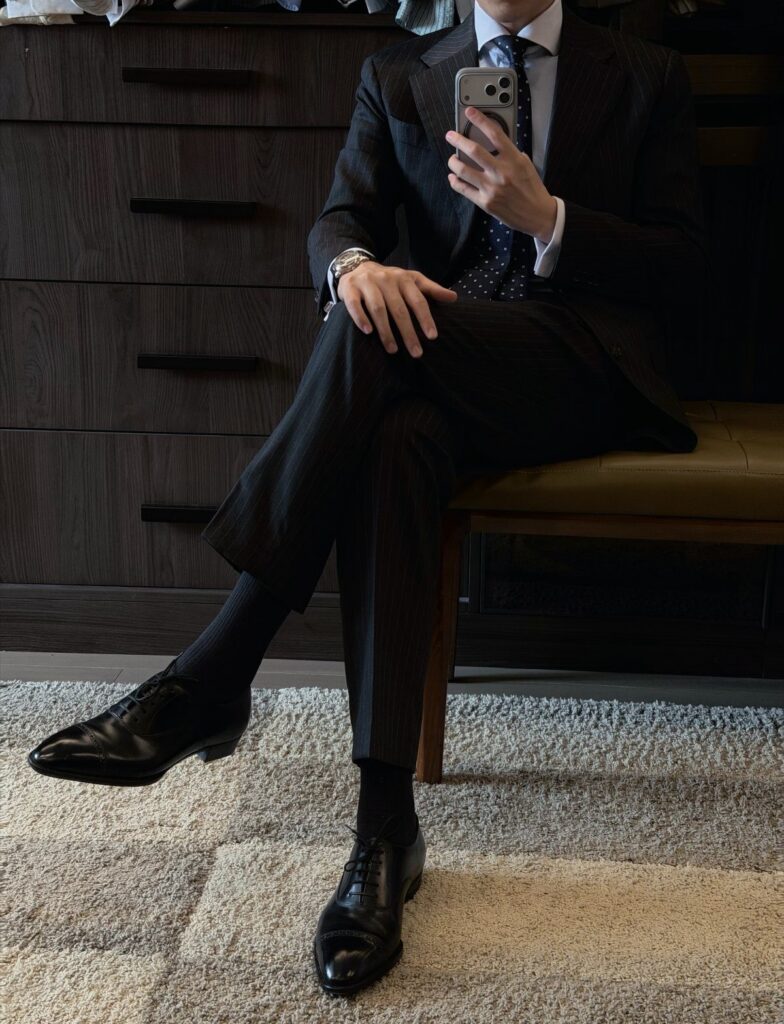
The ideas here run from business formal for the office to white tie with its tailcoat and white gloves, and on to an embellished formal suit that only makes sense at a party.
1. Business Formal Attire
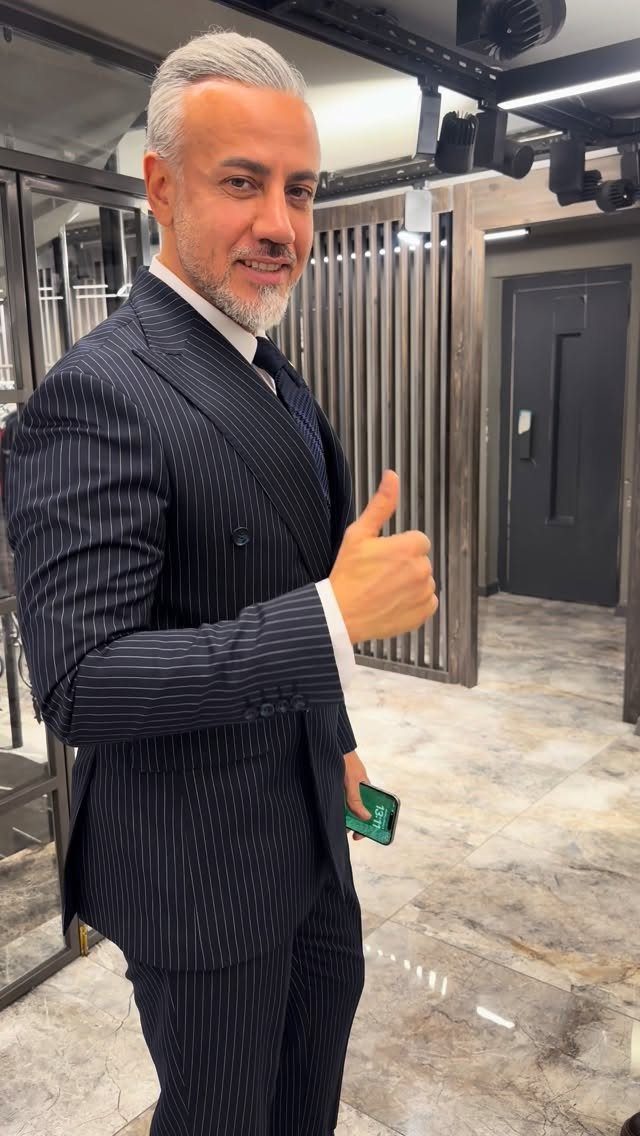
A navy pinstripe in a double-breasted cut is about as authoritative as office clothing gets, and I’d pick it for any room where the stakes are high.
Pair it with a white dress shirt and a tie in a dark, quiet color.
Keep the stripe subtle and the fit clean. Double-breasted jackets look best buttoned, so have the tailor check that they close without pulling.
2. Semi-formal Attire
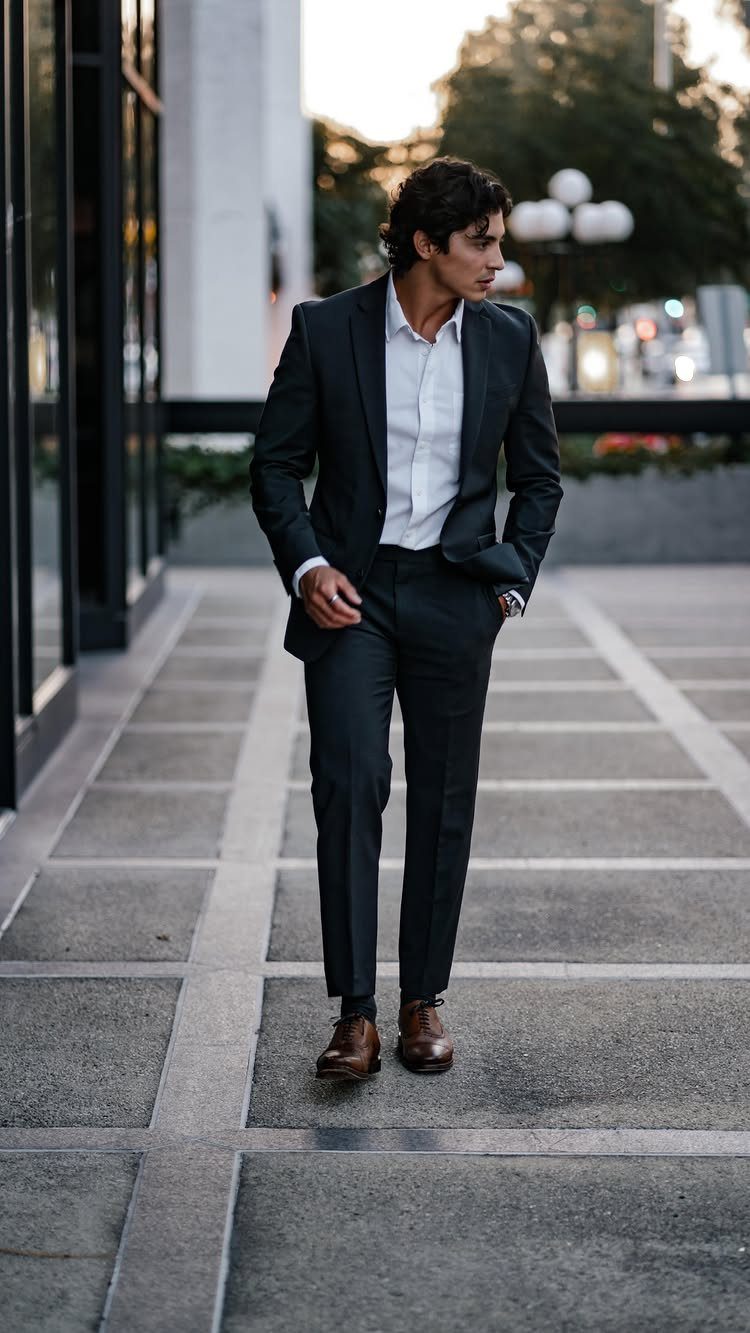
A dark tailored suit with a tie is the standard answer for semi-formal, and it sits a step above a regular office day. Here the collar is open, which keeps the look relaxed without losing polish.
Dark brown leather shoes, especially in a derby or a plain cap toe, give a semi-formal outfit a softer look than black oxfords do.
Go with a white shirt and a clean, slim cut so the open collar looks chosen rather than careless.
Skip the tie, but not the tailoring.
3. Classic Suit
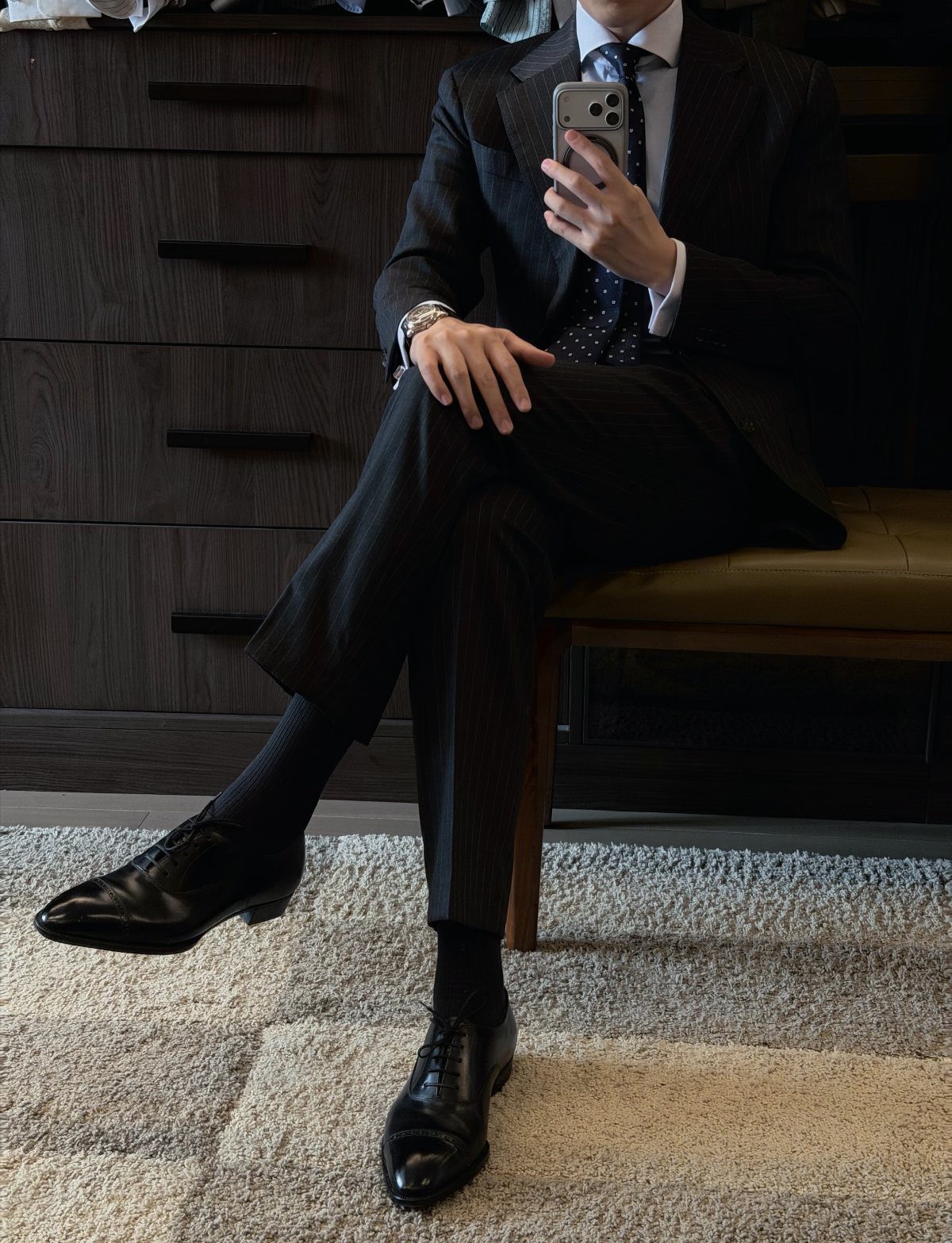
Dark pinstripe, patterned tie, black Oxfords: that is the classic suit, and it works because every piece agrees with the others. Black Oxfords with dark socks keep the line from ankle to hem unbroken.
If you buy only one suit for formal occasions, make it a dark one like this. Keep the tie pattern calmer than the stripe, and polish the shoes before anything else, since people notice them.
4. White Tie Attire
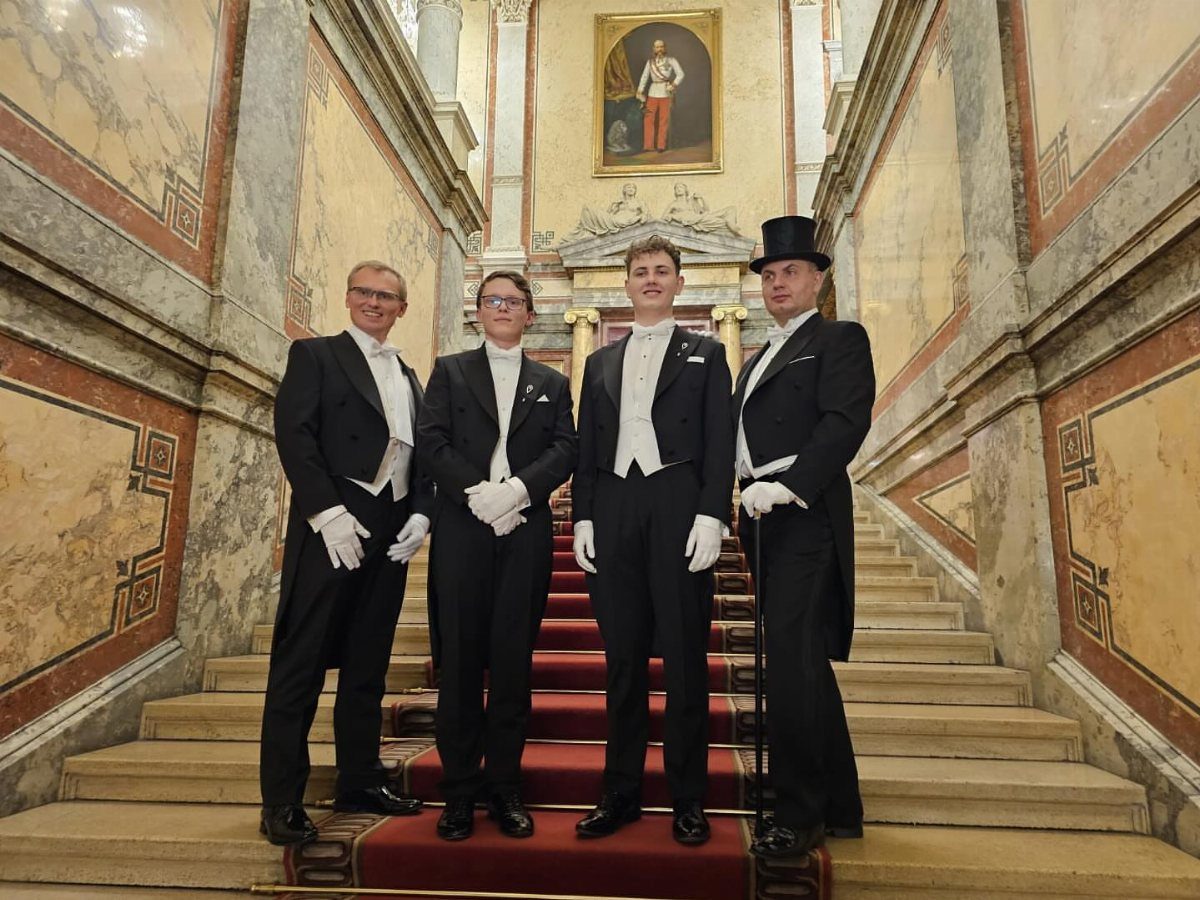
White tie is the strictest code there is, and it demands specific pieces: a black tailcoat, a white waistcoat, a white bow tie and white gloves. Nothing here is optional, and substitutions show immediately.
Most men will rent rather than buy, given how rarely the occasion comes up. Rent early, get the fit checked, and tie the bow tie yourself; a pre-tied one looks flat beside the real thing.
5. Black Tie Attire
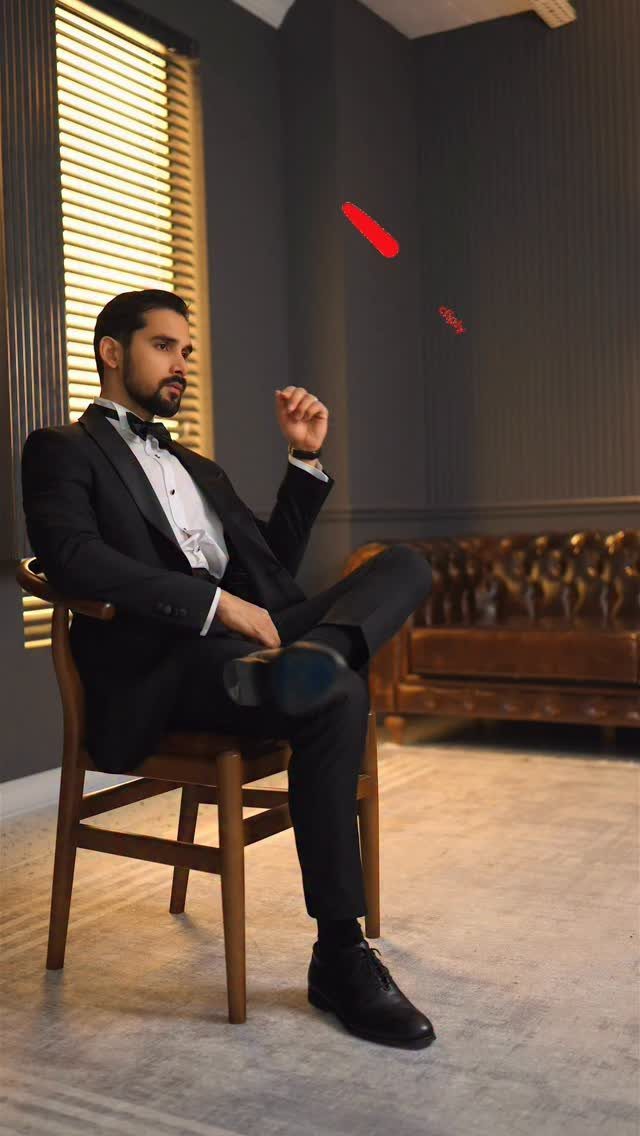
A black tuxedo, white dress shirt and black bow tie make up black tie, and the simplicity is the appeal. Few decisions, hard to get wrong.
I’d choose a bow tie you tie yourself over a clip-on, since the slight imperfection reads as real. Buy a tuxedo if you attend several events a year; otherwise renting is the cheaper route.
Fit matters more than brand, so tailor the sleeves and trouser length.
6. Accessories for Formal Wear
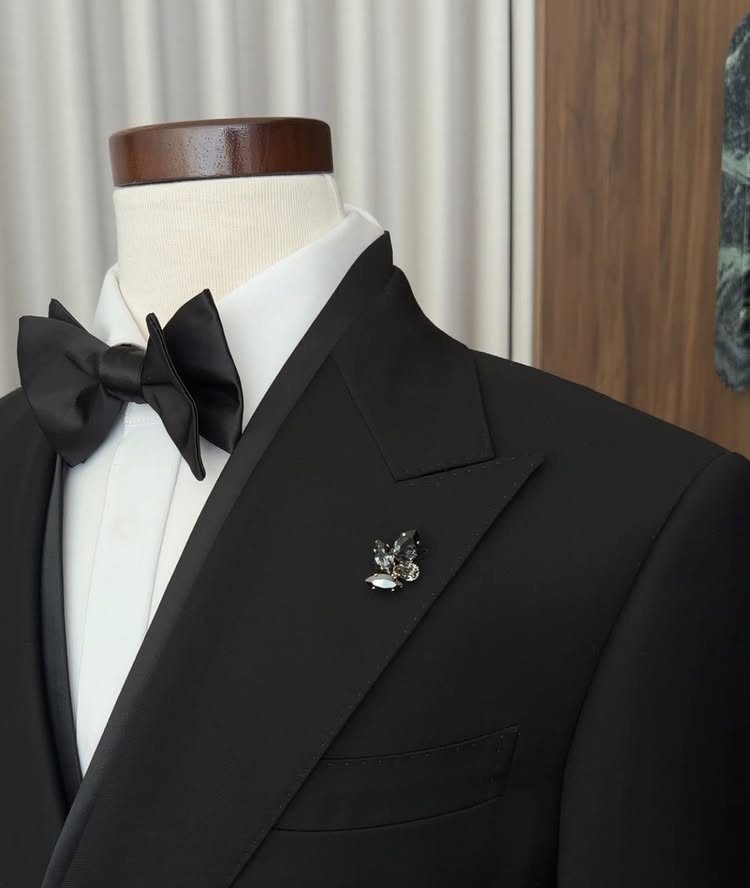
A lapel pin is a small finishing touch on a tuxedo, and I’d keep it modest: a thin silver pin about 1 inch long, with or without a small stone, is enough.
Keep it to one piece so it reads as a detail rather than a display.
Black bow tie, white shirt and the pin are plenty. Place the pin on the lapel, and keep it modest enough that the jacket stays the focus.
Extra accessories tend to compete with each other.
7. Checkered Suit
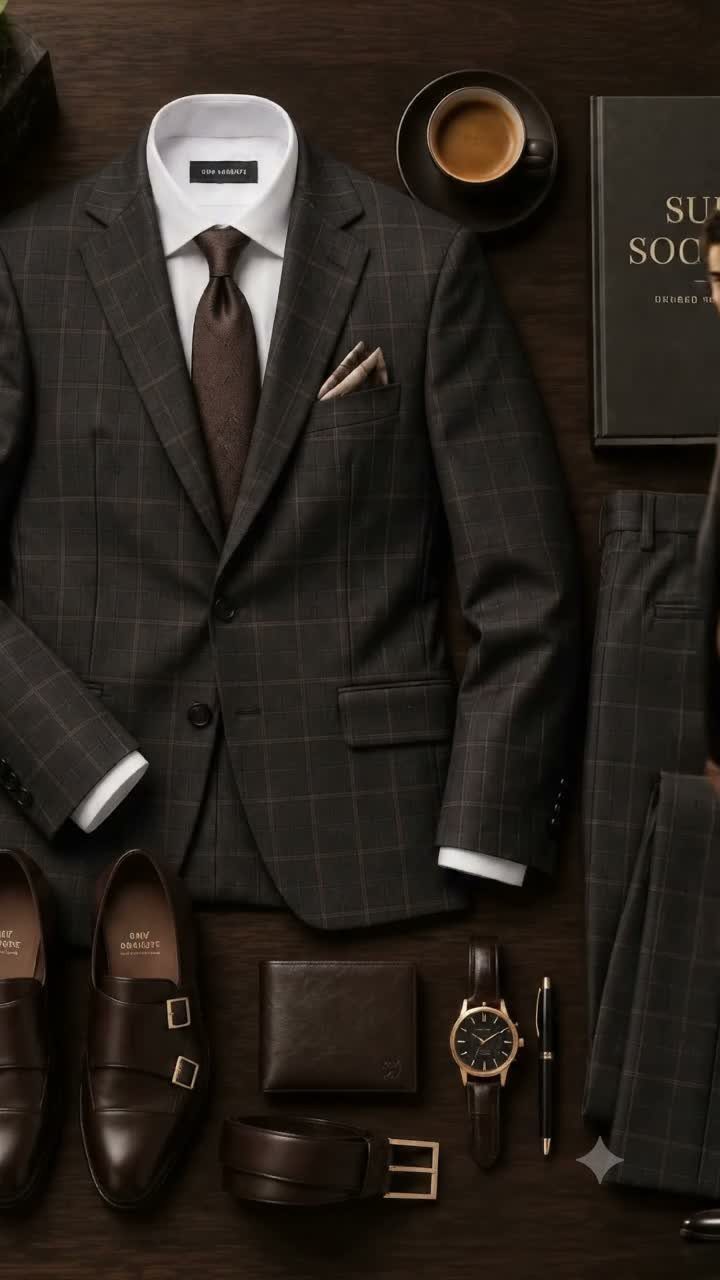
A checkered suit is the quiet way to stand out in a formal room, and dark grey is the version I’d pick. The check gives the cloth depth without shouting, so it still reads as a suit first.
Keep everything else plain: a white shirt, a solid brown tie and brown monk strap shoes. Match the belt to the shoes, and let the pattern be the only loud thing.
8. White Dinner Jacket Tuxedo
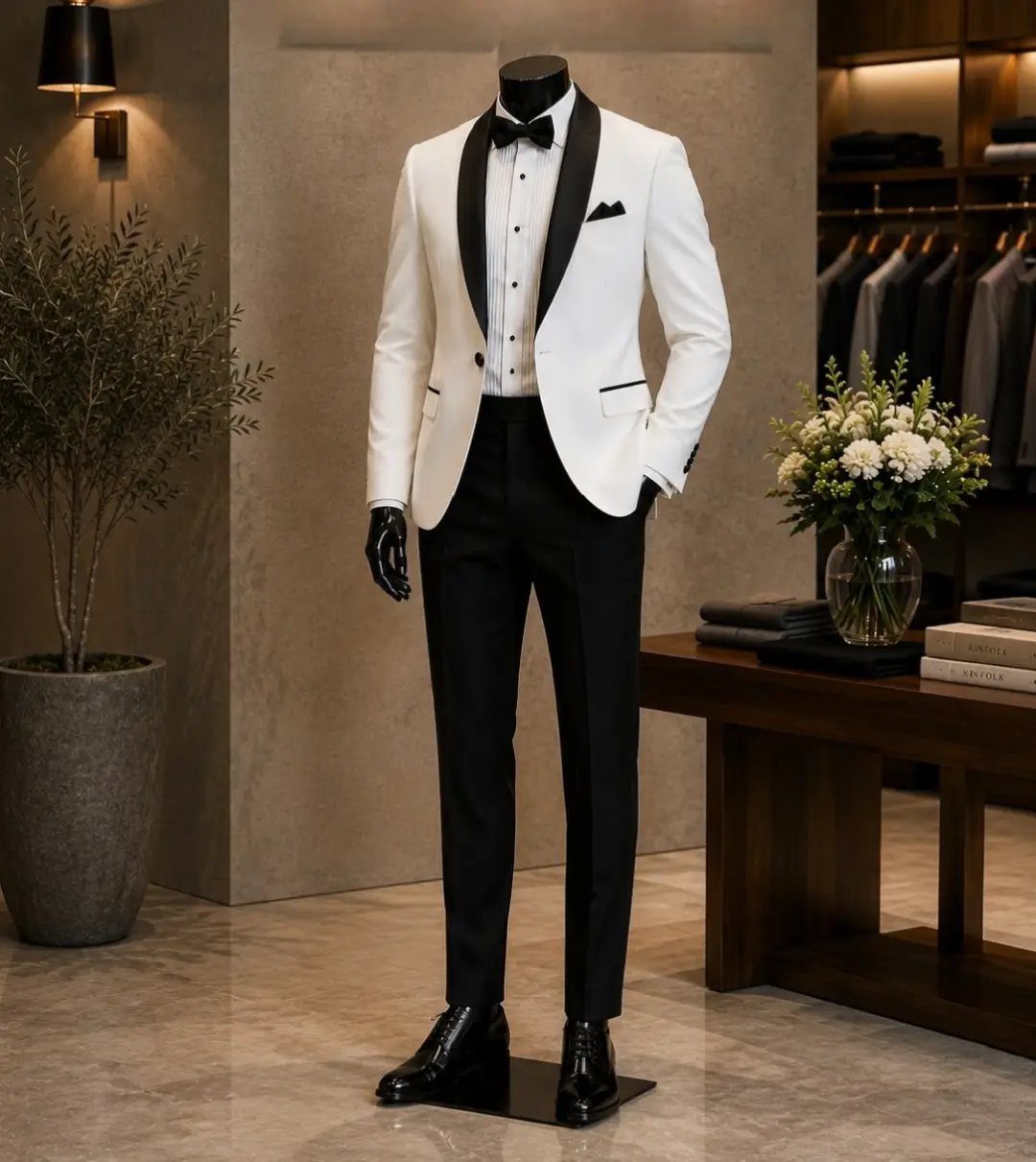
Black shawl lapels on a white dinner jacket do the contrasting for you, so the rest of the outfit can stay strict. Black trousers, a black bow tie and a white pleated shirt are all it needs.
I’d tie the bow yourself, same as with any tuxedo. Choose ivory or white and stick with it; mixing the 2 shades across jacket and shirt looks like a mistake.
A white jacket shows every mark, so keep it in a garment bag.
9. Three-piece Formal Suit
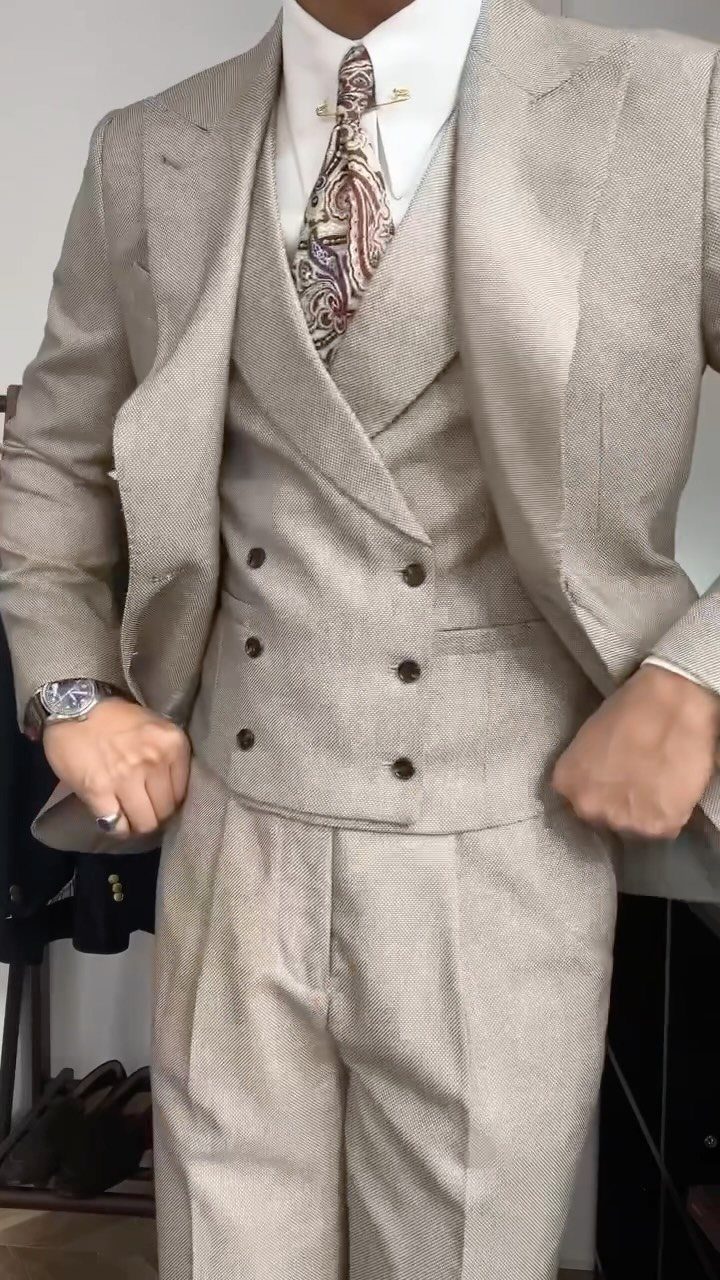
In a light beige textured cloth, the three-piece suit looks warm and polished instead of stiff. A double-breasted waistcoat adds a second layer of structure under the jacket.
A white shirt and a paisley tie finish it; add a collar pin if you want the knot to stand up off the shirt front. I’d keep the tie pattern small, since the texture of the suit already supplies interest.
Have the waistcoat fitted closely; loose, it bunches under the jacket.
10. Embellished Formal Suit
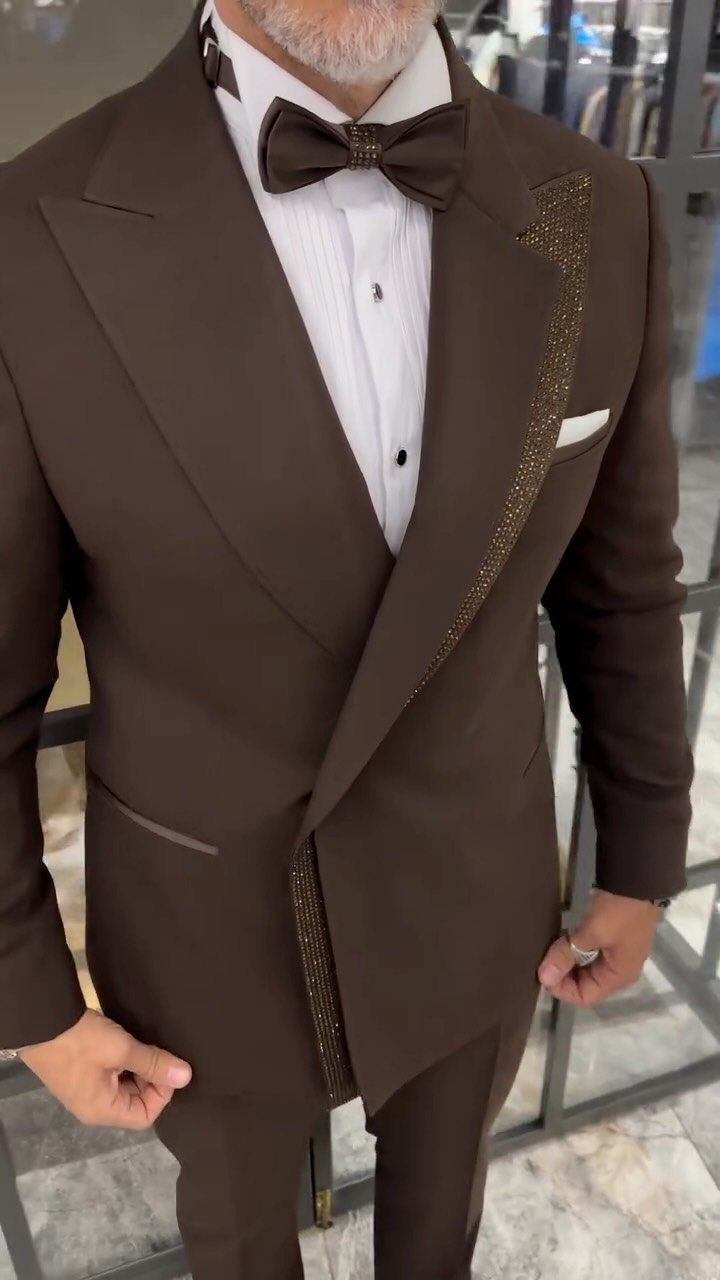
Gold glitter on the lapels of a brown tuxedo-style suit is a party choice, not an office one. Matching the bow tie to the trim ties the whole look together.
Wear a pleated white shirt and keep everything else quiet. The shine on the wide lapels is plenty, so skip pins and pocket squares that compete with it.
I’d save this for celebrations where a standard black tuxedo would blend into the crowd.
11. Waistcoat and Trouser Combination
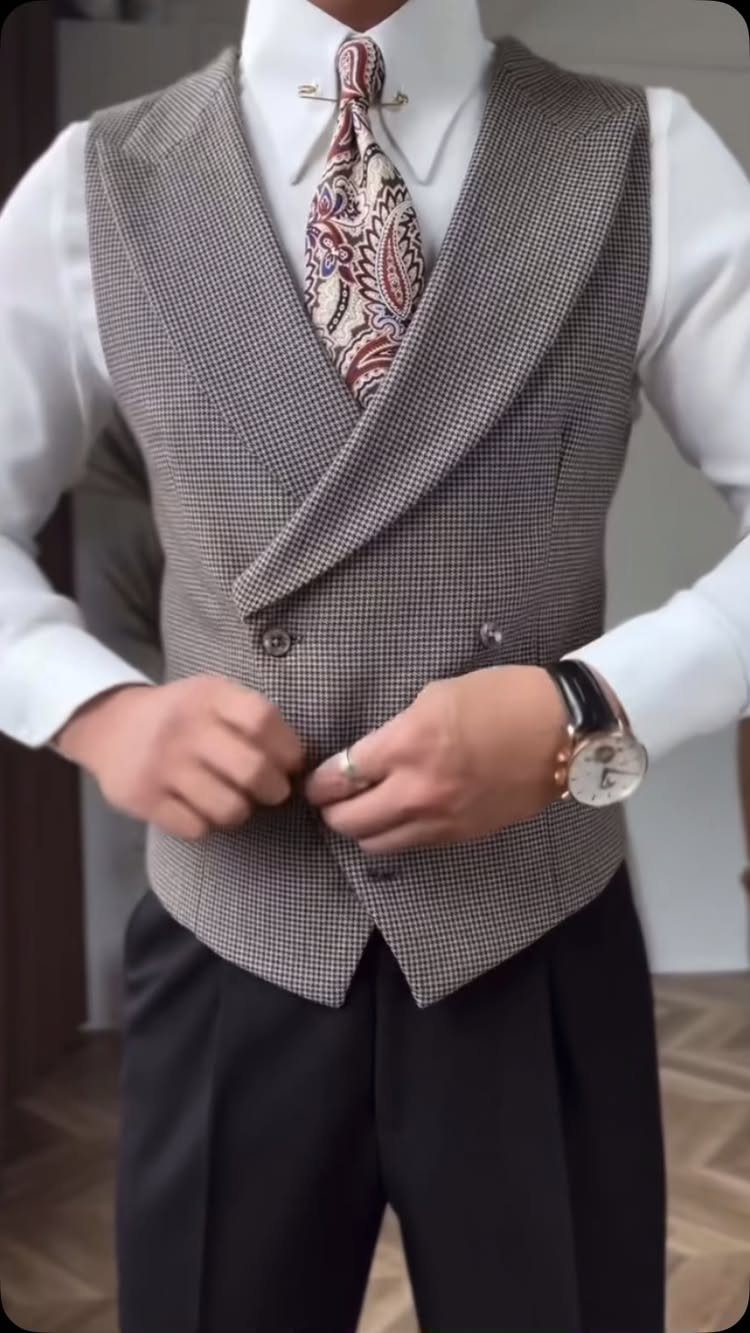
A patterned grey double-breasted waistcoat worn with plain black trousers is a clever way to dress up without a full suit. The waistcoat becomes the focus, so let it carry the pattern.
Button it fully and check that the hem covers the trouser waistband.
It’s cheaper than a three-piece, and the waistcoat can be reused with other trousers.
Choosing the Right Attire
Start with the invitation.
The dress code printed on it, the time of day and the venue tell you which level of formality is expected, and that decides everything else. If the wording is unclear, ask the host.
Then settle rent versus buy. Count how many formal events you attend in a year: if it’s only a rare one, renting makes sense, while a steady run of weddings, galas and dinners makes owning cheaper.
Your build matters as much as the calendar. If standard sizing fits your shoulders, chest and waist without much adjustment, a rental can look sharp.
If it never quite does, a bought piece that a tailor can adjust will serve you better than a rental in a size that is close but wrong.
Frequently Asked Questions
What does formal attire mean for men?
Formal attire is a range of dress codes, running from white tie at the strictest end down to a dark suit and tie. Below those sit dark suits worn with or without a tie.
How do I choose the right formal attire for my event?
The invitation’s dress code comes first; after that, look at the hour and the venue, because an evening ceremony in a ballroom asks for more than an afternoon one in a garden.
When the wording is vague, a quick text to the host settles it. Then comes rent or buy, which depends on how often formal events land on your calendar and whether off-the-rack sizing works across your shoulders, chest and waist.
Should I rent or buy formal wear?
Rarely dressing up means renting makes sense; several events a year means buying pays off, since a tuxedo you own costs less per wearing after a few weddings, galas and dinners.
Fit can override all of that. If off-the-rack sizes never sit right on you, a tuxedo you own and can have tailored beats a rental that is nearly right.
White tie almost always calls for a rental, because most men will wear it once or twice in their lives.