Which of these outfits suits you depends on how warm your office runs and how far you walk to reach it, and that is why layering, footwear and the basics of business casual sit alongside the 3 outfits below.
Corduroy trousers and a burgundy cable-knit hold up on cool mornings, while white trousers with a light blue sweater are made for a desk and a heated room, and they show every coffee drop.
All 3 stay on the dressier side of business casual, with a knit doing the work a shirt and tie would do elsewhere.
1. Turtlenecks Under Blazers
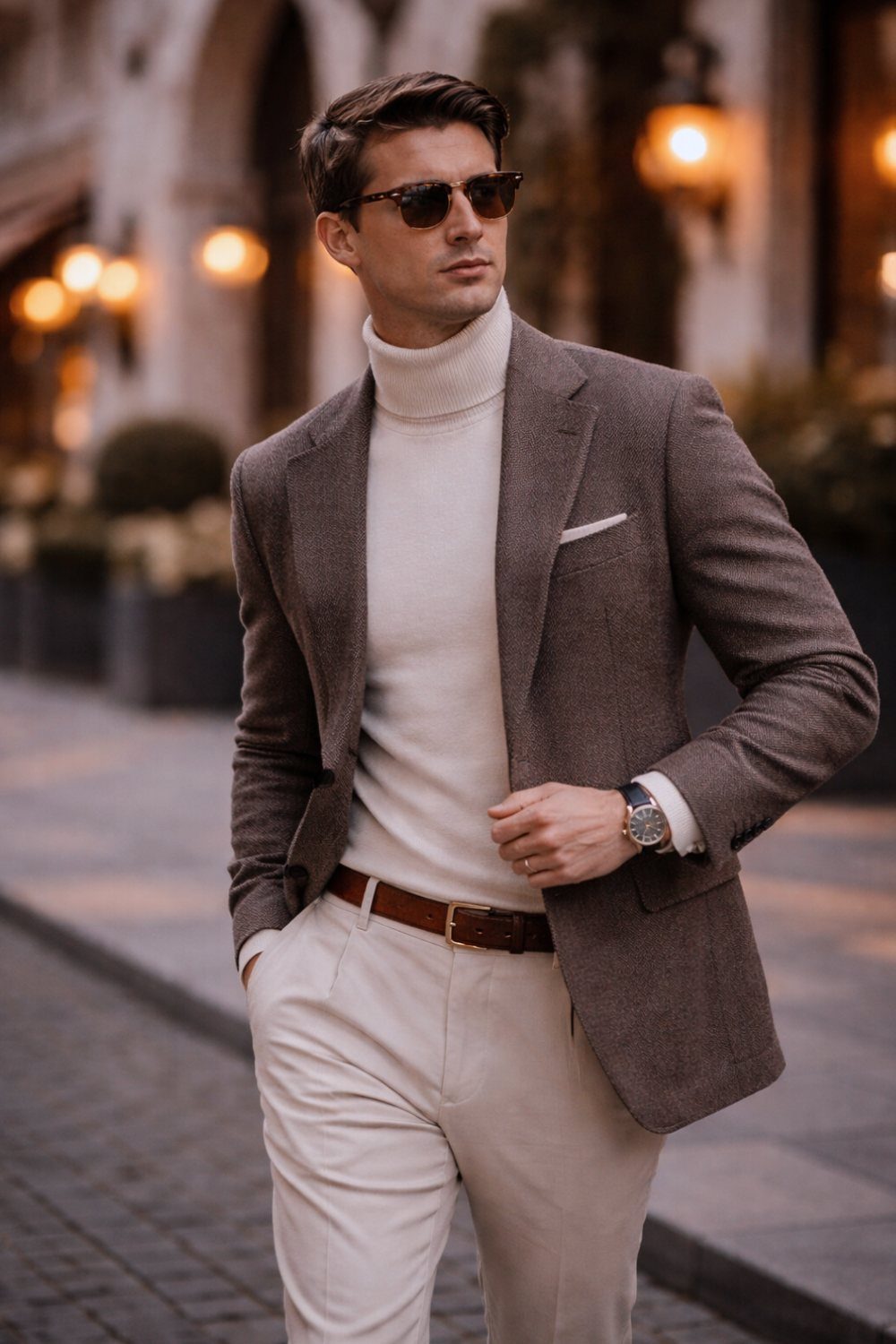
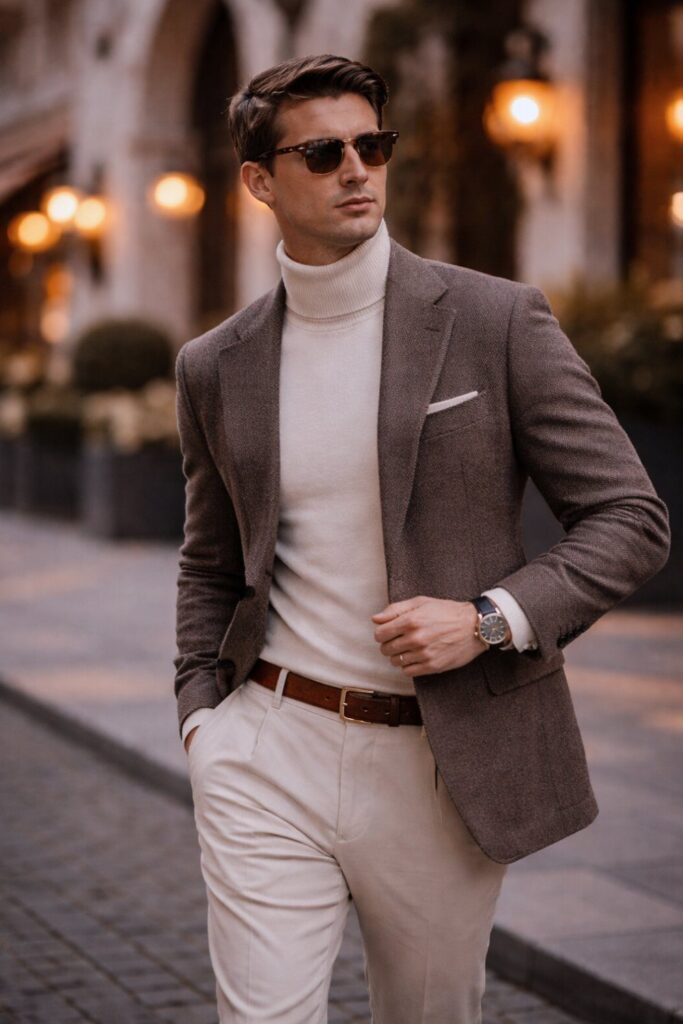
A fine-gauge turtleneck does the job of a shirt and tie in one layer, and under a brown blazer it reads as deliberate rather than casual.
Off-white against brown is a soft pairing, and cream trousers keep every piece in one warm family.
Keep the knit thin so the blazer sits flat across the chest and shoulders. A bulky roll neck bunches under the collar and ruins the line.
I’d pick a blazer with a little texture over a flat weave, and brown leather shoes in a darker shade than the jacket. Light trousers show every coffee drop, so they suit desk days better than commute-heavy ones.
2. Light Blue Knit and White Trousers
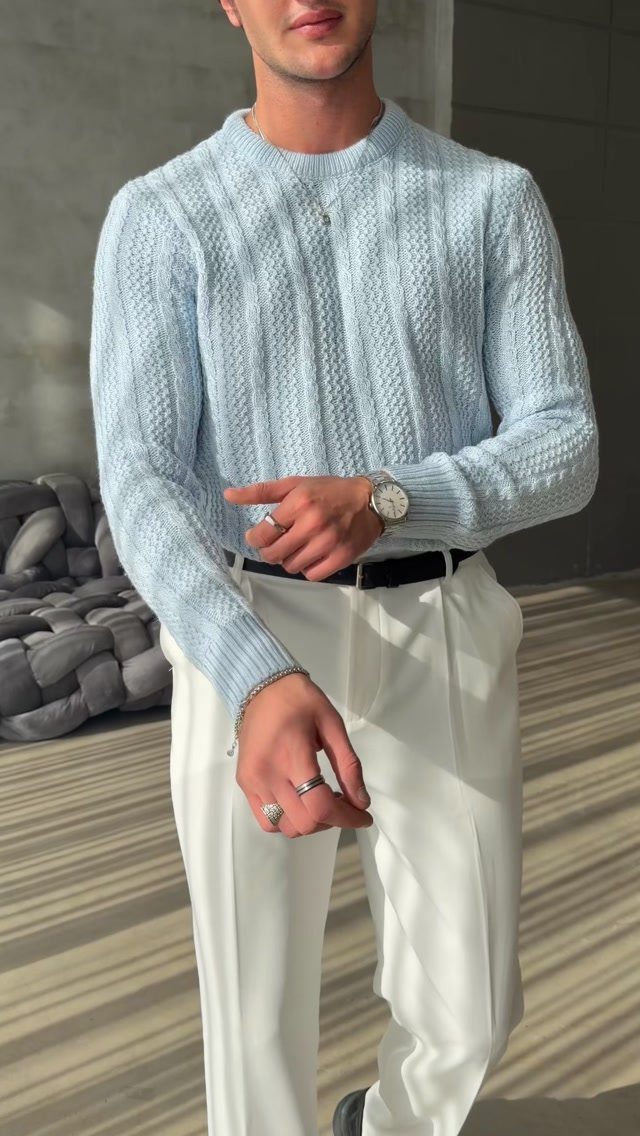
Crisp white trousers can look stark, and a soft, textured light blue sweater is what calms them down. The cable texture adds interest, so the pairing needs nothing else loud.
A black leather belt keeps the waist sharp and ties in with dark shoes. Pleats give the trousers room through the hip, which I like for sitting at a desk all day.
Wear them when you won’t be near mud or spilled coffee. If it’s cold, a navy overcoat on top fits the palette.
3. Burgundy Cable-Knit and Corduroy Trousers
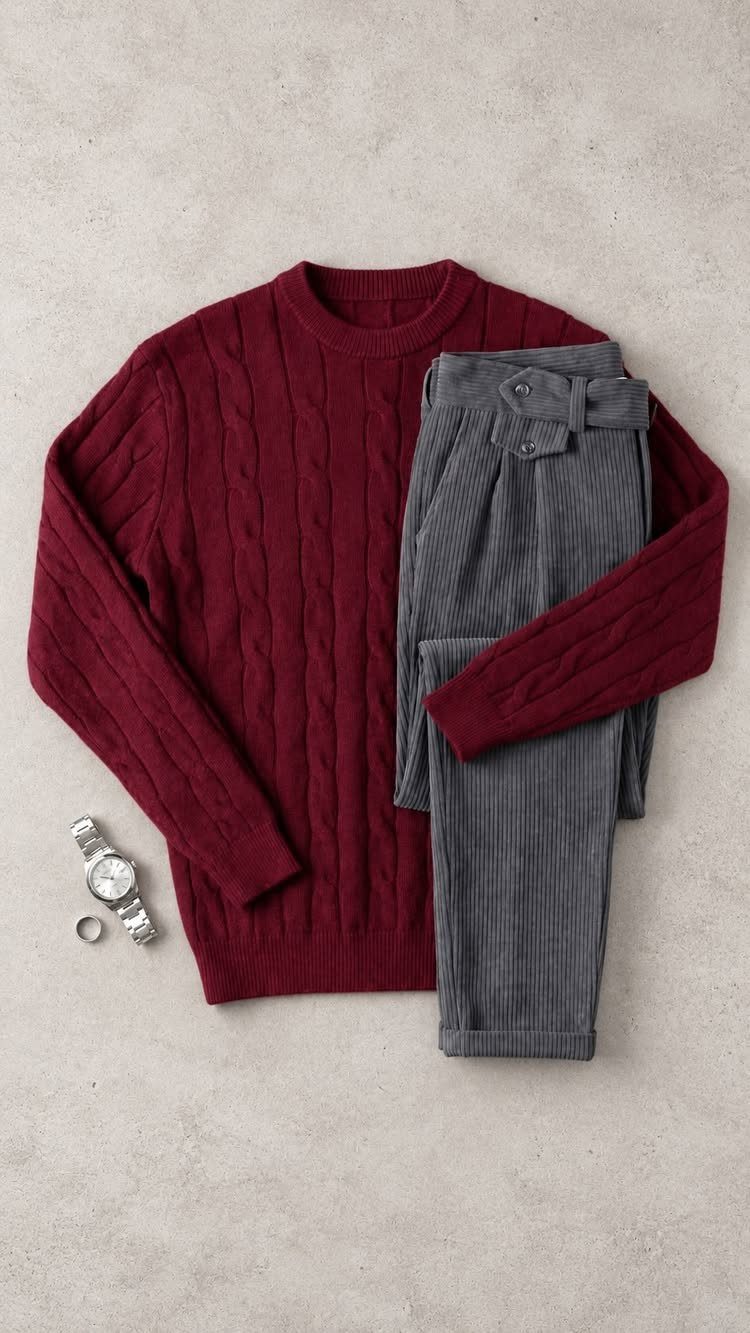
Burgundy and grey is one of the easiest fall color pairings, and it works because the grey lets a rich sweater stand alone.
Cable-knit gives the top weight and texture, while corduroy adds a second surface without adding a second color.
Wear the sweater over a collared shirt if your office leans formal, or on its own if it doesn’t.
Brown or black leather shoes both work. Pick a plain silver watch, as in the flat-lay, and skip anything flashy.
Corduroy is warm and sturdy, so it suits cool mornings better than heated offices.
Layering Techniques
Fall mornings and heated offices rarely agree, so build your outfit in layers you can shed. A cardigan over a shirt is the easiest start, and a blazer on top adds polish for the commute or a meeting.
A scarf is the quickest layer to add or drop. It keeps you warm on the walk in, then goes in a bag once you’re at your desk.
For more depth, mix textures and thicknesses. Stack a button-down, a cardigan and a knit vest and you get a polished look with a sporty edge, plus 3 layers of warmth for a cold morning commute.
Stack thin layers over one thick one, because each piece can come off on its own as the day warms up.
The bottom line: Cooler temps mean cooler ‘fits—statement jackets, richer textures, and unlimited accessorizing potential (hello, scarves!). Whoever said workwear has to be boring was seriously wrong, and clearly never met a suede jacket, balloon trouser, or leather skirt.
Choosing Appropriate Footwear
Ankle boots and riding boots are the two I’d reach for. Both look sleek and work with most office dress codes.
Skip over-the-knee boots at work. Save them for the weekend.
Sneakers are the gray area. If your office allows them, they can dress down trousers, but pair them with a more casual third piece instead of a blazer, such as a denim jacket.
Remove one formal piece and swap in one casual piece, so the outfit stays balanced.
Understanding Business Casual
Business casual sits below a suit and above weekend wear. The line is blurry and shifts by office, but some things are clear: sweatpants don’t count, even nice cashmere ones.
Jeans work if you pick the wash carefully.
Dark wash or black is the safest choice, and ecru reads like a cream trouser. A lighter wash is fine in a more casual office, as long as there’s no heavy fading and no rips.
A collared shirt is my floor for business casual, with one exception: a fine-gauge turtleneck under a blazer, which I accept because it still reads as dressed.
An oxford cloth button-down in blue, white or off-white is excellent, and I’d skip plain white poplin, which runs a little formal.
A long-sleeved white polo in a good heavy piqué cotton makes a fine stand-in when you want to skip the dress shirt.
A tie is optional. If you wear one, choose wool or knit, and never pair it with jeans.
Frequently Asked Questions
What is a fall business casual outfit?
Think of it as the middle ground: dressier than weekend clothes, a step short of a full suit.
A collared shirt or a thin turtleneck, a sweater or blazer, and trousers or dark jeans fit that description. Where exactly that line falls depends on the office, but sweats are out everywhere, cashmere or not.
What shoes work for fall business casual?
Ankle boots and riding boots are my first picks, since both look sleek and suit most office dress codes. Plain brown or black leather shoes are a safe backup that goes with almost everything in your closet.
Over-the-knee boots belong off the clock, and sneakers only make sense where the dress code permits them, worn with a casual jacket rather than a blazer.
Can I wear jeans for business casual in fall?
Yes, if you choose the wash with care. In a relaxed office, a mid-blue wash is fine if the denim is free of whiskering, heavy fading and holes.
Do I need a collar for business casual?
I treat a collared shirt as the minimum, because an outfit without a collar stops being business casual. A fine-gauge turtleneck under a blazer is the one collarless option I accept, since it stands in for both shirt and tie.
Should I wear a tie with fall business casual?
A tie is optional. I’d keep a tie off any outfit with jeans; the two clash in formality.