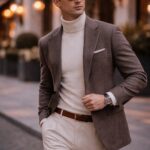
The ideas here run from leather loafers and cream cable-knit sweaters to a tweed blazer, a neutral long overcoat and a vintage gold wristwatch, so the spread is wide in price and in how much care each piece asks for.
Your climate and how often you dress up decide which ones are yours: a neutral long overcoat earns its cost only if you face real winters, while a striped shirt with white trousers suits warm months.
1. Leather Loafers
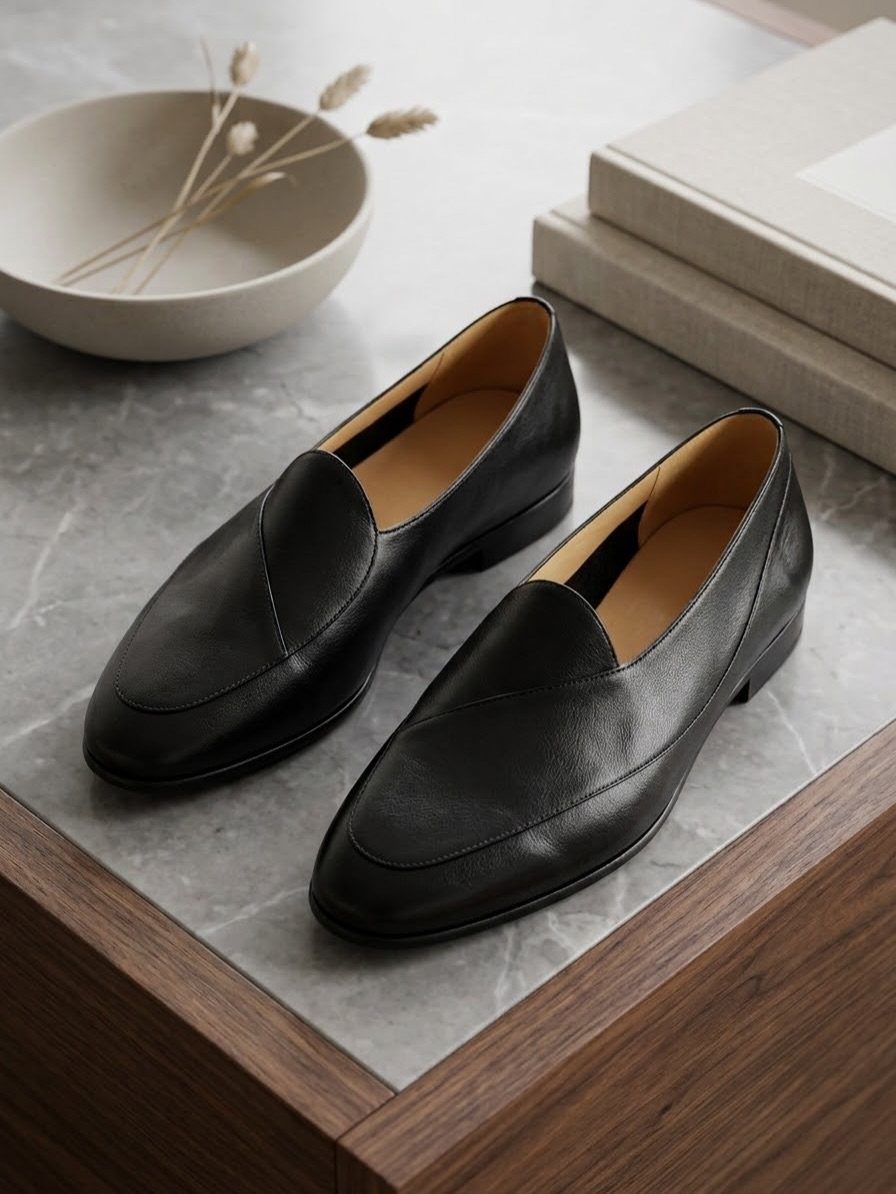
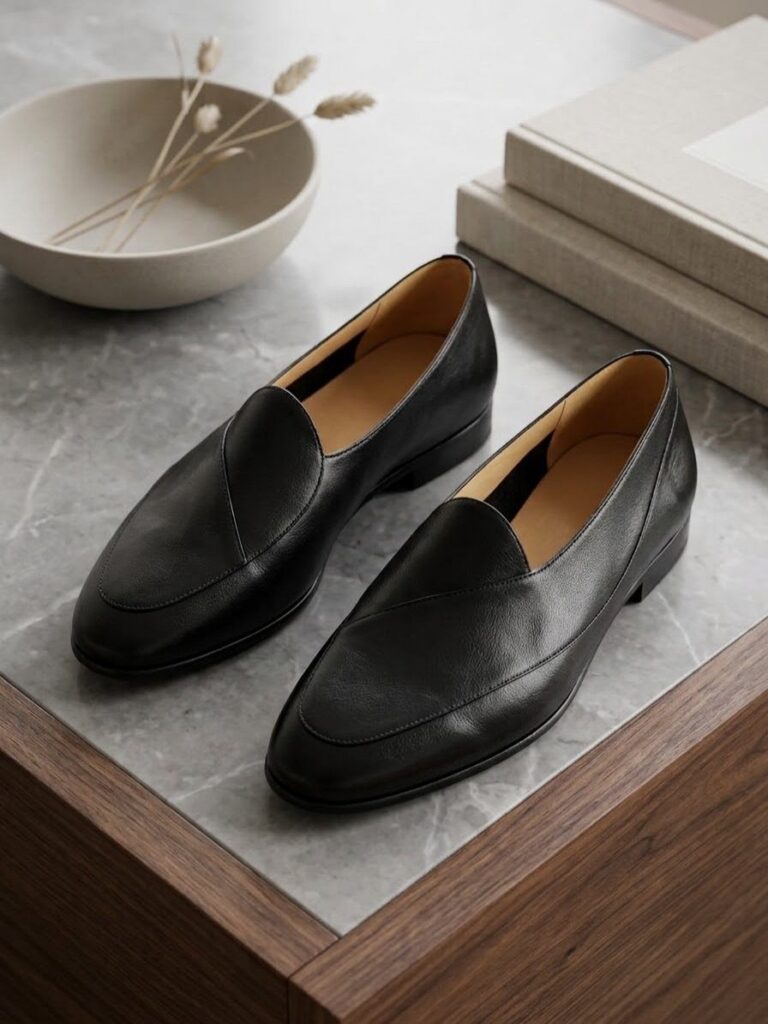
Black leather slip-on loafers are the quietest way to look like you own a good suit even when you’re wearing neither. No laces, no logos, just a clean line that works with trousers in any neutral shade.
Keep the leather polished and the soles in good repair.
Scuffed black loafers read careless, while a well-kept pair looks like it has been in the family for years. If you only buy one pair, I would take black over trendier colors.
2. Well-Fitted Clothing
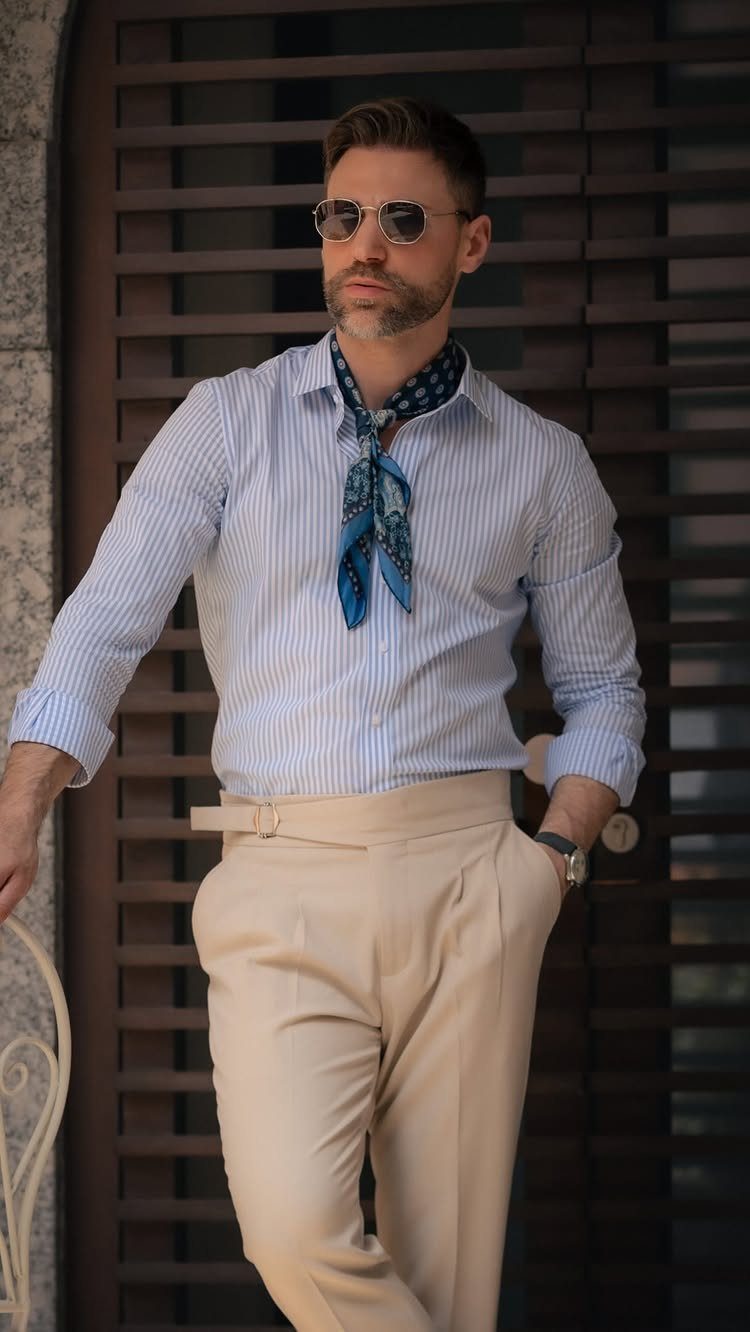
Fit does more for an old money look than any label. Pleated, high-waisted trousers should sit at the natural waist and hang straight, with no pulling at the hips and no pooling at the shoe.
A striped shirt works best when the shoulder seam lands at the edge of your shoulder and the collar lies flat.
A tailor for hems and waist adjustments should be the first line in your budget, since cheap clothes that fit beat expensive ones that don’t.
3. Tailored Chino
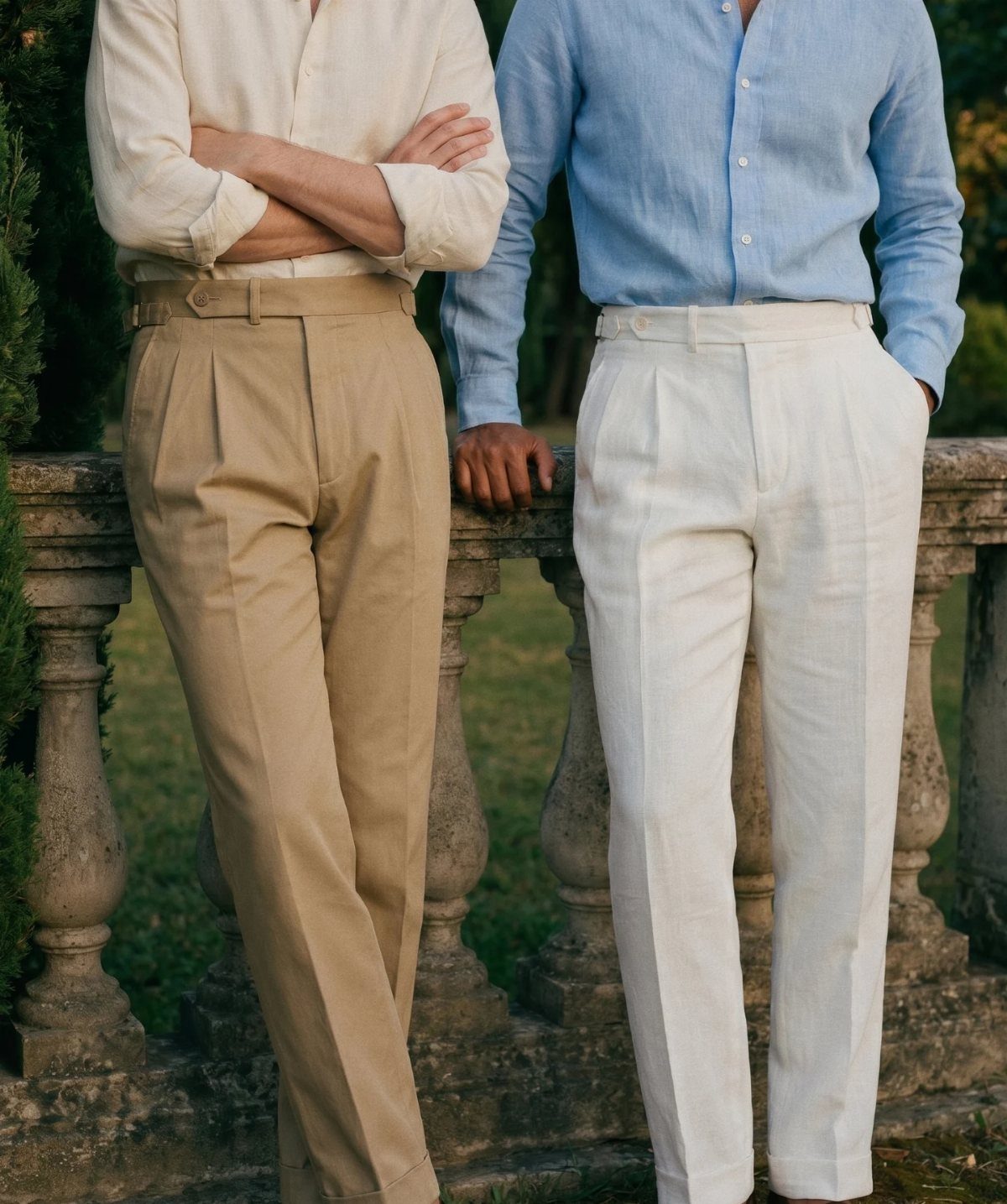
Tailored trousers in tan or off-white, cut with a high waist and pleats, are smarter than jeans and easier than wool slacks. Pair them with a tucked-in linen shirt and you have an outfit for lunches, weddings and the office.
I like the pleats for the extra room in the thigh, which keeps the line clean when you sit.
Tuck the shirt in and add a belt that matches your shoes. Light colors show dirt, so keep a spare pair nearby.
4. Classic Country Field Jacket
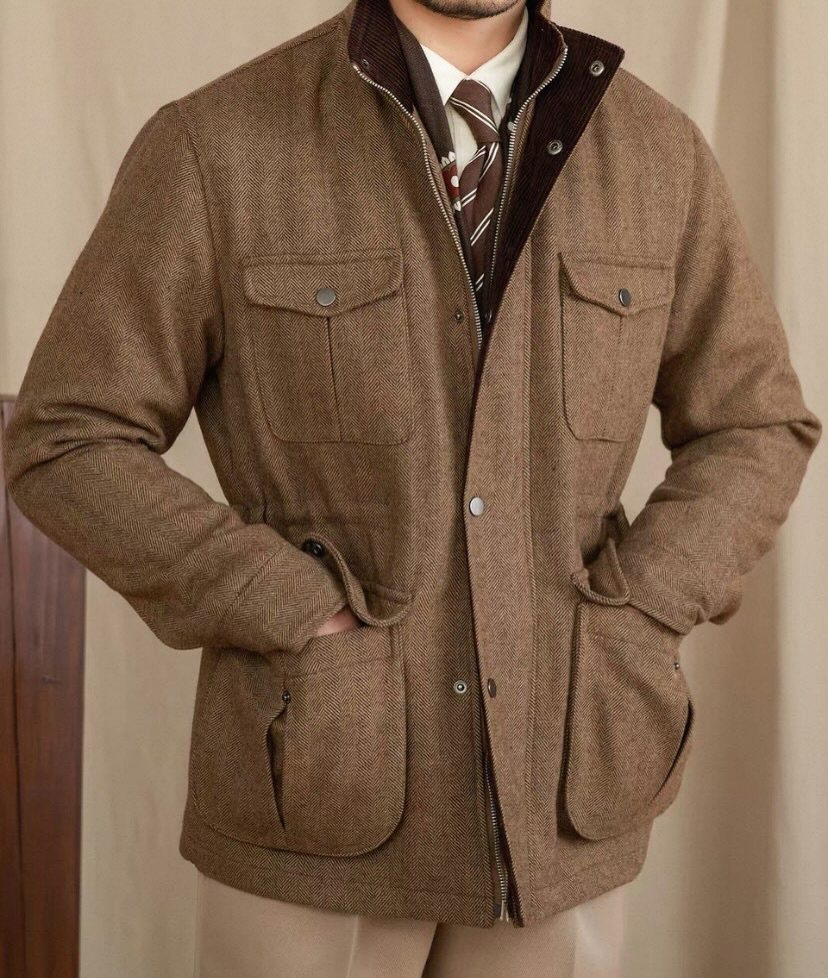
A brown herringbone field jacket with a dark corduroy collar gives a tie and sweater a rugged outer layer, and that contrast is exactly the point.
Large pockets and a textured cloth give it a relaxed, outdoor character that a stiff blazer never has.
Pair it with a collared shirt and a striped tie, and pick a length that covers the hem of your jacket or sweater. For weather protection, a waxed version is the one to choose.
5. Polo Shirt with Pleated Trousers
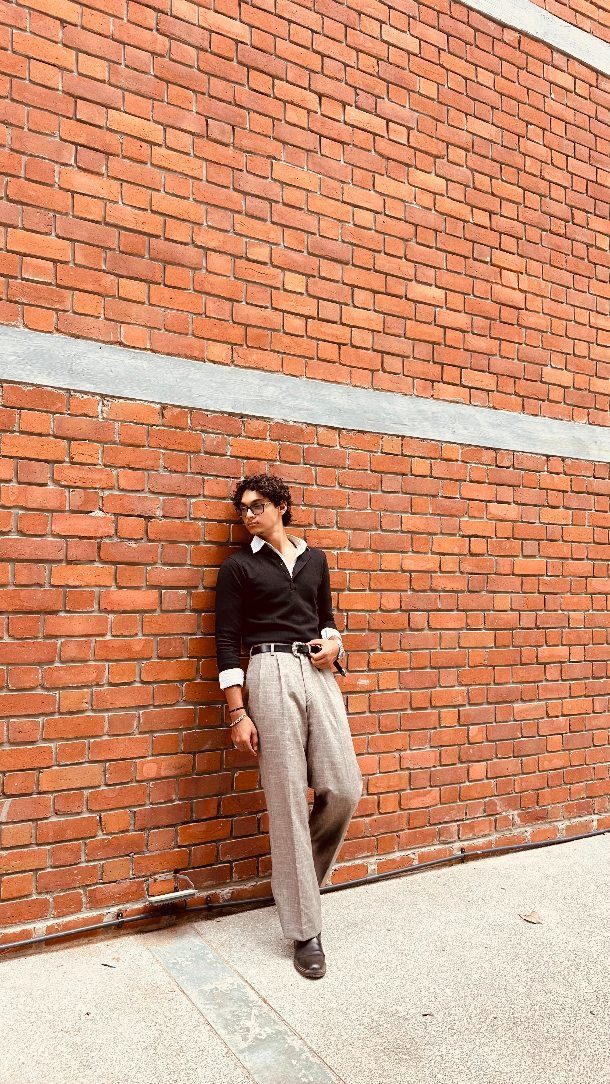
Long-sleeved polos tucked into grey pleated trousers are a smarter move than most men expect. A fine knit in black or navy swaps the dress shirt and tie for something softer without losing the sharp line.
Untucked, the high-waisted trousers lose their purpose.
Finish with leather shoes, not sneakers, so the outfit stays dressy. A glasses frame in a simple shape suits this look well.
6. Neutral Long Overcoat
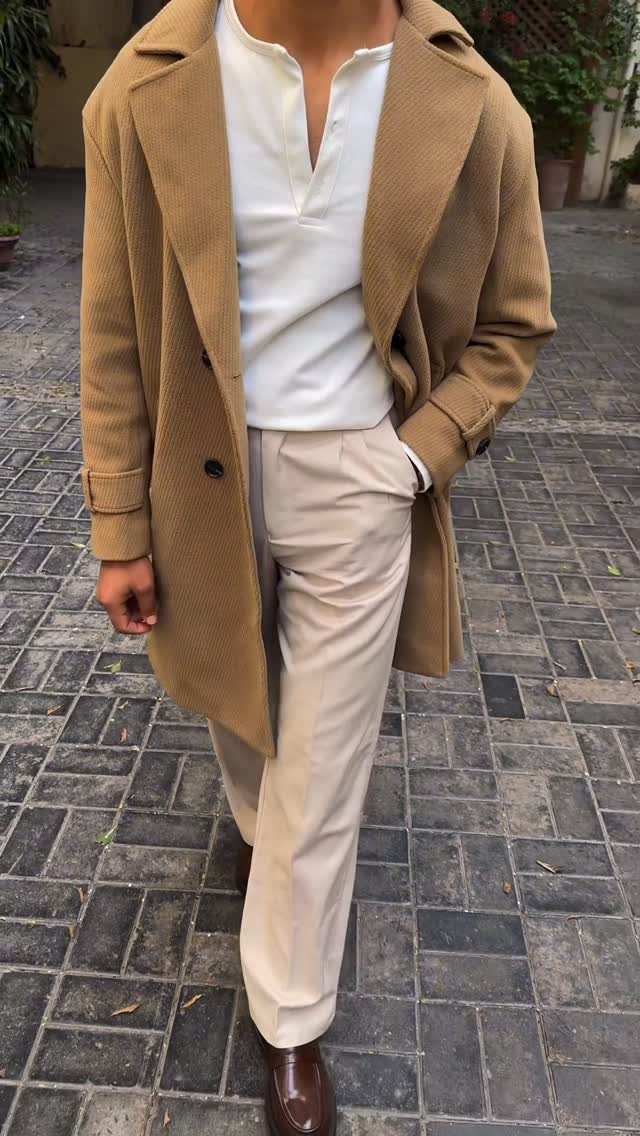
A tan overcoat that falls past the knee is the one coat I would buy before any other neutral. Camel goes over cream trousers, a white henley or a full suit without any fuss.
Pick a cut that closes over a sweater without tightening across the back.
Keep the colors close together, say light trousers with brown leather shoes, and everything reads as planned. Expect to spend real money on the coat, since it will be worn for many winters.
7. Classic Tweed Blazer
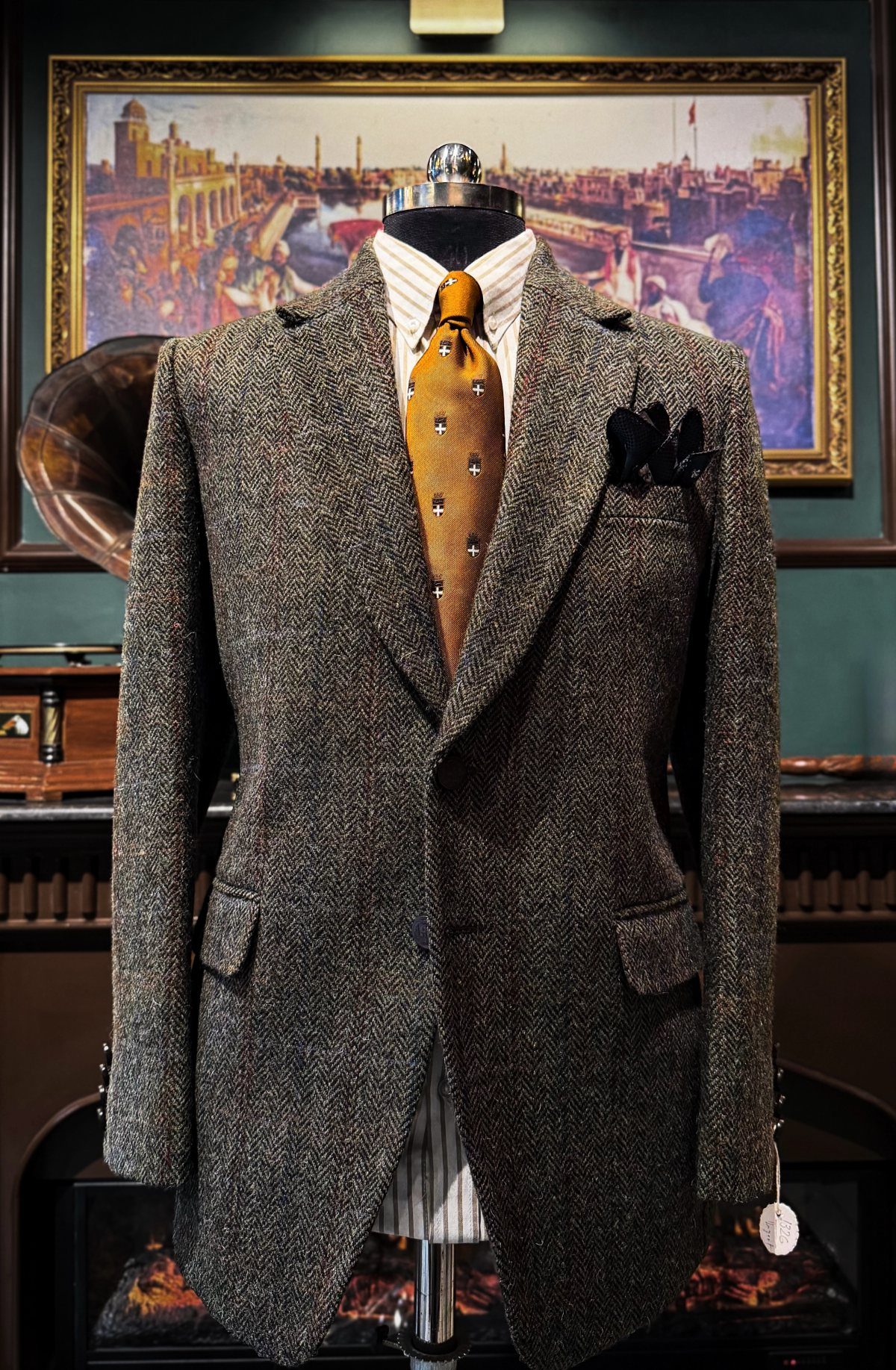
Brown tweed gives a blazer the texture a plain wool jacket lacks, and texture is what makes an old money look read as inherited rather than bought.
A striped shirt, a patterned tie and a pocket square all sit comfortably against it.
Keep one pattern in charge.
If the tie is busy, let the shirt stripe stay thin and the pocket square stay quiet. Yellow in the tie picks up the warmth of the brown without matching it.
8. Tailored Brown Suit
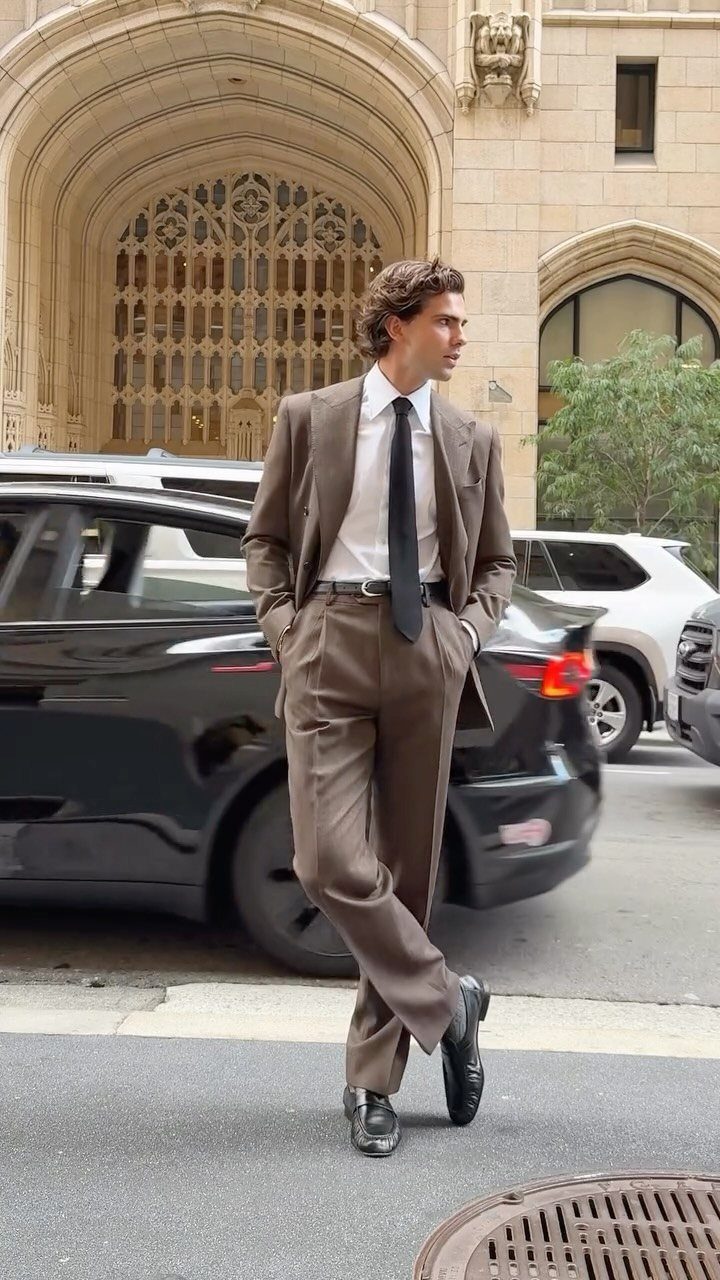
Brown is the suit color that tells people you skipped the navy and charcoal default. A crisp white shirt keeps it clean, and a black tie sharpens it into something close to formal.
Black loafers work here, though I would try dark brown shoes first, since they sit closer to the cloth.
Brown is less forgiving than navy, since the color shows every pull at the shoulder and every break at the hem. Press it before each wear.
9. Cream Cable-Knit Sweaters
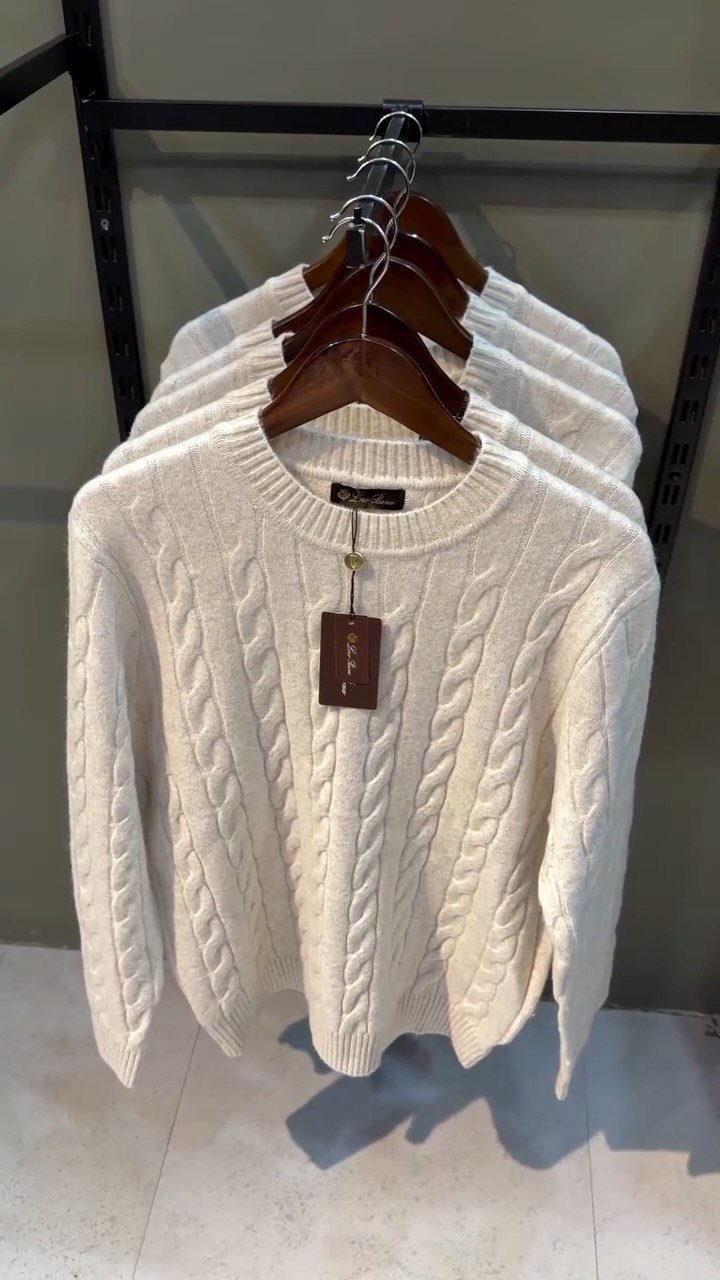
Chunky cable knit in cream is the sweater I would pick for weekends: heavy, textured and warm in color. Over a collared shirt it looks deliberate, and over a plain tee it still holds up.
Wooden hangers are fine for storing the shop’s stock, but at home fold knits flat in a drawer, since hanging stretches the shoulders over time.
Cream shows stains quickly, so wash it gently and dry it flat. Wear it with navy or grey trousers.
10. Striped Shirt and White Trousers
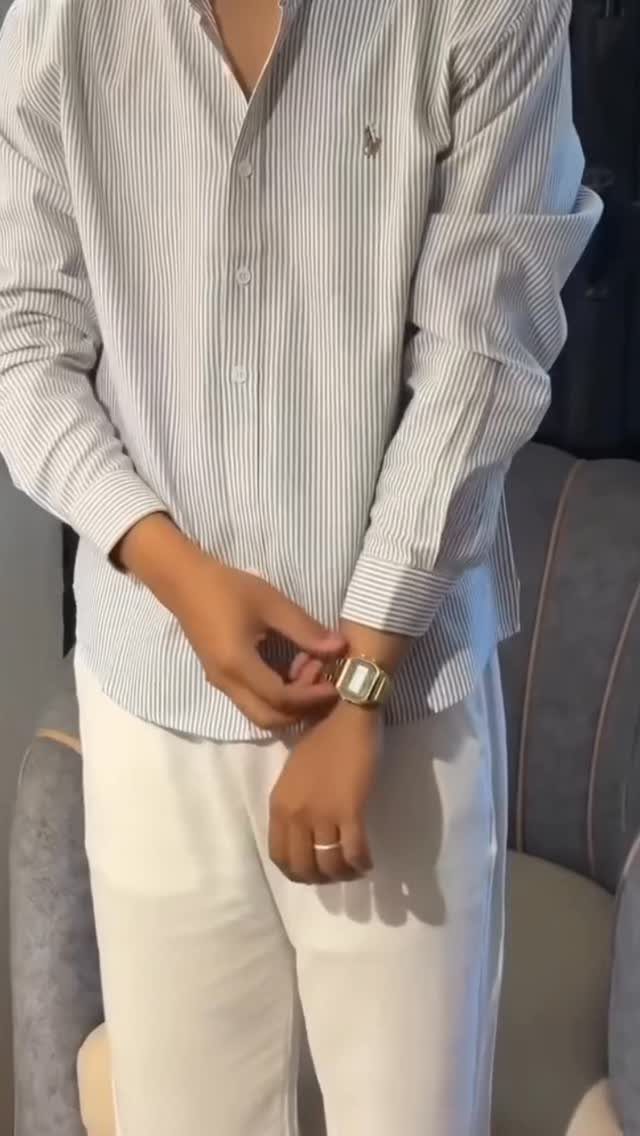
Blue-and-white stripes against white trousers make the simplest summer outfit I know. The shirt supplies the pattern, the trousers stay quiet, and nothing needs matching.
Button-down collars keep the shirt tidy without a tie.
White trousers can look see-through in thin cloth, so choose a heavier weave. A thin gold watch on a leather strap finishes the outfit without any extra effort.
11. Vintage Gold Wristwatch
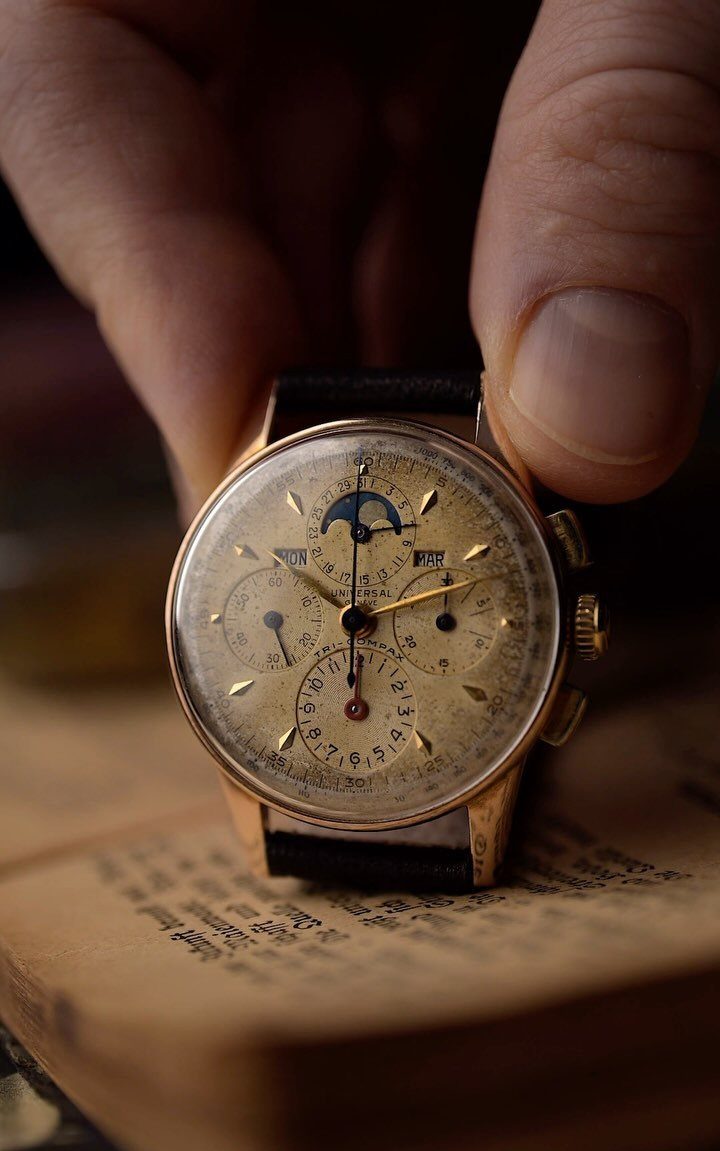
A small gold watch on a black leather strap does the work of a good accessory: it is noticed by few and remembered by those who do. A weathered dial adds age that no new watch can fake.
Mechanical movements need winding or regular wear, and vintage pieces usually need servicing, so budget for a watchmaker before you buy.
Keep the strap clean and replace it when it cracks. Gold suits a sleeve cuff better than a bulky steel sports watch.
Common Style Mistakes
Oversized clothing is the fastest way to lose this look. Old money dressing runs on cloth that follows the body without clinging, so a baggy shirt or a jacket with sagging shoulders undoes everything else you got right.
Logos work against it too. Visible branding says the opposite of understated, so choose pieces where the only signature is the cut.
Read the fabric tag in the store: wool, cotton, linen and cashmere hold up, and a shiny polyester blend gives itself away under store lights.
Cheap, shiny cloth ruins an otherwise good outfit, and wool, cashmere and cotton are the safer bets. They cost more up front, but they last long enough to make up the difference.
Stick to two or three quiet colors per outfit, like navy, gray and a shade of tan or olive. Skip the belt or the watch and the outfit looks half dressed, so wear both.
Wrinkles belong on the list as well.
Building an Old Money Wardrobe
You don’t have to buy everything at once. Buy 5 or 6 pieces that mix easily with each other, then grow the closet slowly.
My starting order is a blazer, a pair of chinos and a pair of loafers.
A blazer changes an outfit more than any other piece, and chinos look sharper than jeans at the office and on weekends alike. Loafers are a better call than sneakers when you want to look put together.
Next come polo shirts in neutral tones for smart-casual days, then a leather belt, which signals attention to detail. A thin dress watch on a leather strap adds polish without calling attention to itself.
Sunglasses finish the kit. Classic frames like aviators or tortoiseshell hold up for years.
Spend on fit and quality before quantity. Wait on a wax jacket until the basics are covered; once they are, it layers over nearly everything else you own.
Frequently Asked Questions
What are some classic old money clothes?
Start with a blazer, chinos and black loafers, then add polo shirts in neutral tones, a leather belt and a thin dress watch on a leather strap.
For cold weather, I’d add a brown tweed jacket, a camel overcoat cut to fall below the knee and a cream cable-knit sweater.
What is a classic clothing style?
A classic style is built on quiet, well-made pieces that don’t date: wool, cotton, linen and cashmere cut to follow the body without clinging.
Logos and shiny fabrics work against it. Fit counts for more than any label, so a good tailor matters as much as the clothes.