The ideas run from a white polo tucked into black trousers up to a grey suit with a solid polo underneath, and what separates them is how strict your office is.
A relaxed office suits a casual blazer and tee, while a stricter one calls for a patterned blazer with a necktie or a lightweight sweater over a button-up.
Check what people wear on a normal Tuesday before you pick, because that unwritten code decides which of these works for you.
1. Lightweight Sweater Over a Button-up
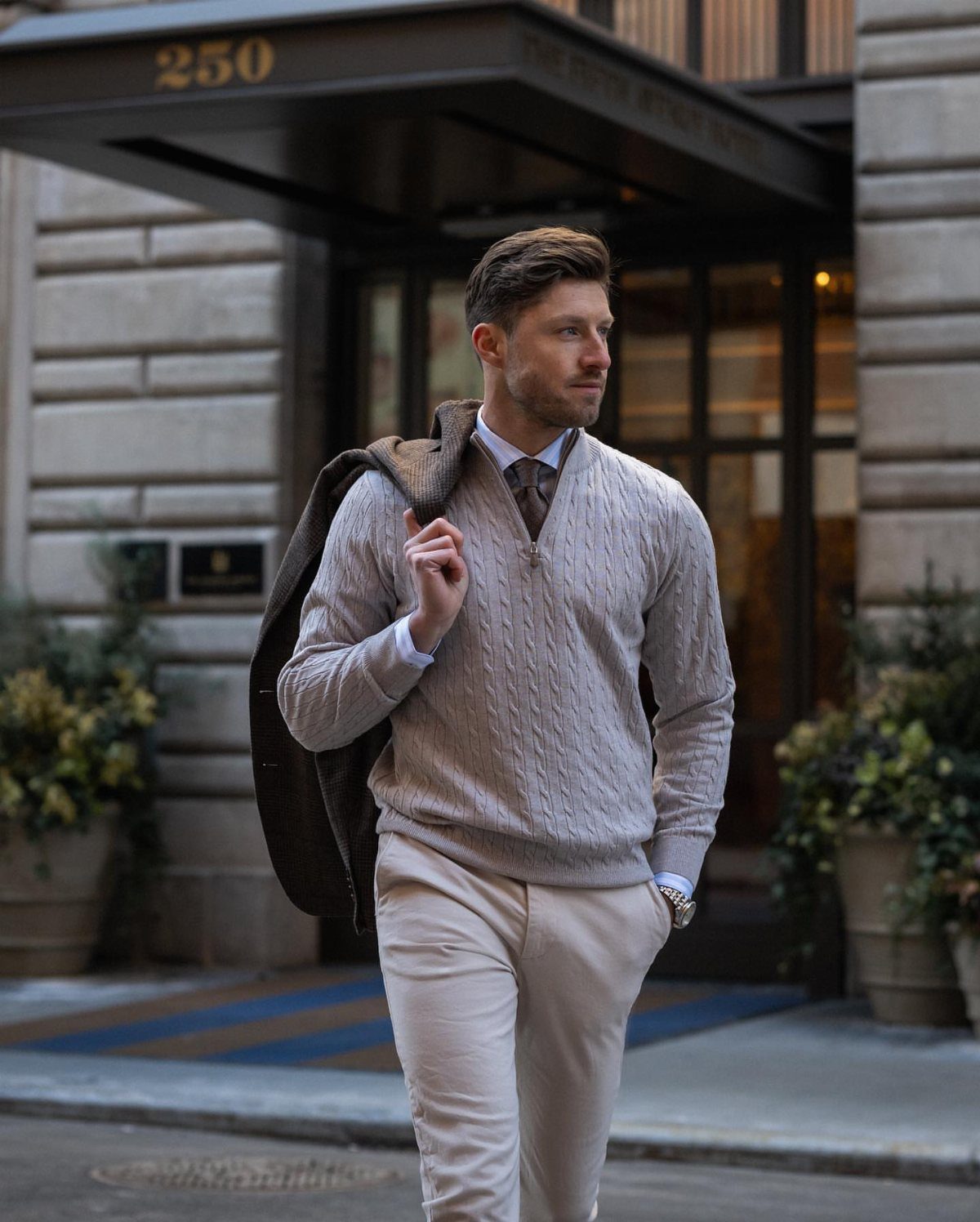
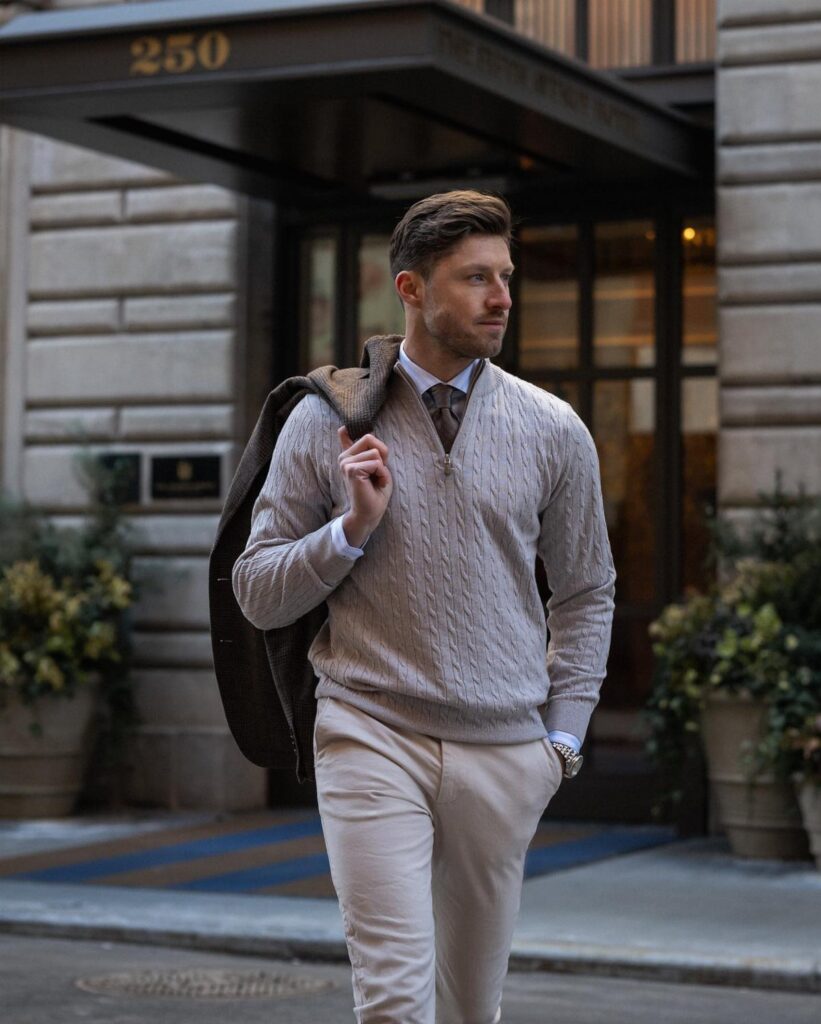
Cable knit gives a sweater enough texture that it stops looking like an afterthought over a shirt and tie. Beige or grey both work here, and a quarter-zip keeps the collar and knot visible.
Keep the knit lightweight so the shirt collar lies flat beneath it. A thick sweater bunches at the neck and makes the tie look squeezed.
On a cool morning, carry a jacket and add it only if the room calls for it.
2. The Polo
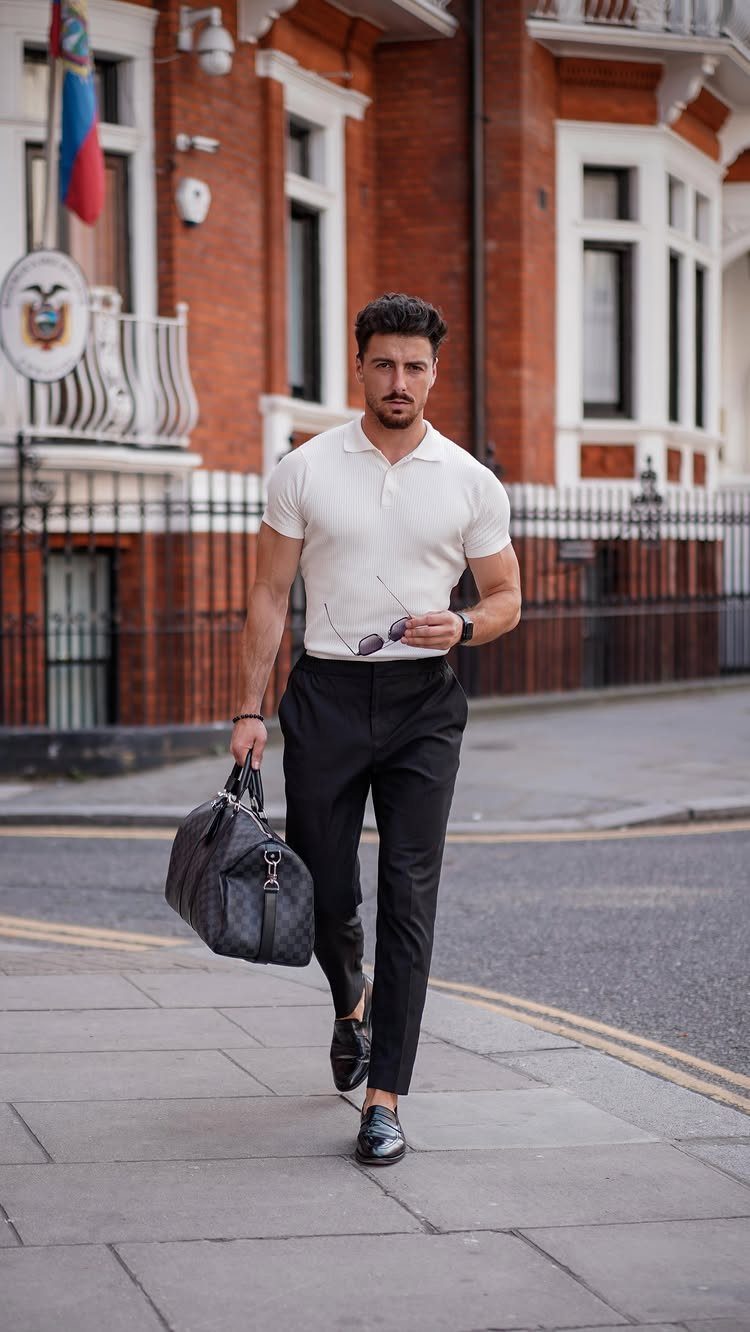
A white polo tucked into black trousers is the cleanest way I know to wear a knit shirt to work. Black loafers finish it without any fuss.
Fit decides everything. The body should sit close without pulling, and the sleeves should hug the upper arm instead of flapping.
Tuck it in, every time. Untucked, a polo reads as weekend wear; tucked, it reads as a decision.
Warm weather and relaxed offices suit it best. A strict dress code may rule it out.
3. Tailored Clothing

Tailoring is the difference between a blazer that hangs on you and one that looks bought for you.
If budget is tight, spend on alterations before spending on labels. A well-fitting jacket at a modest price will look better than an expensive one that hangs off your shoulders.
A pocket square isn’t required, though a simple white or navy one in the breast pocket finishes a jacket quickly.
4. Chinos
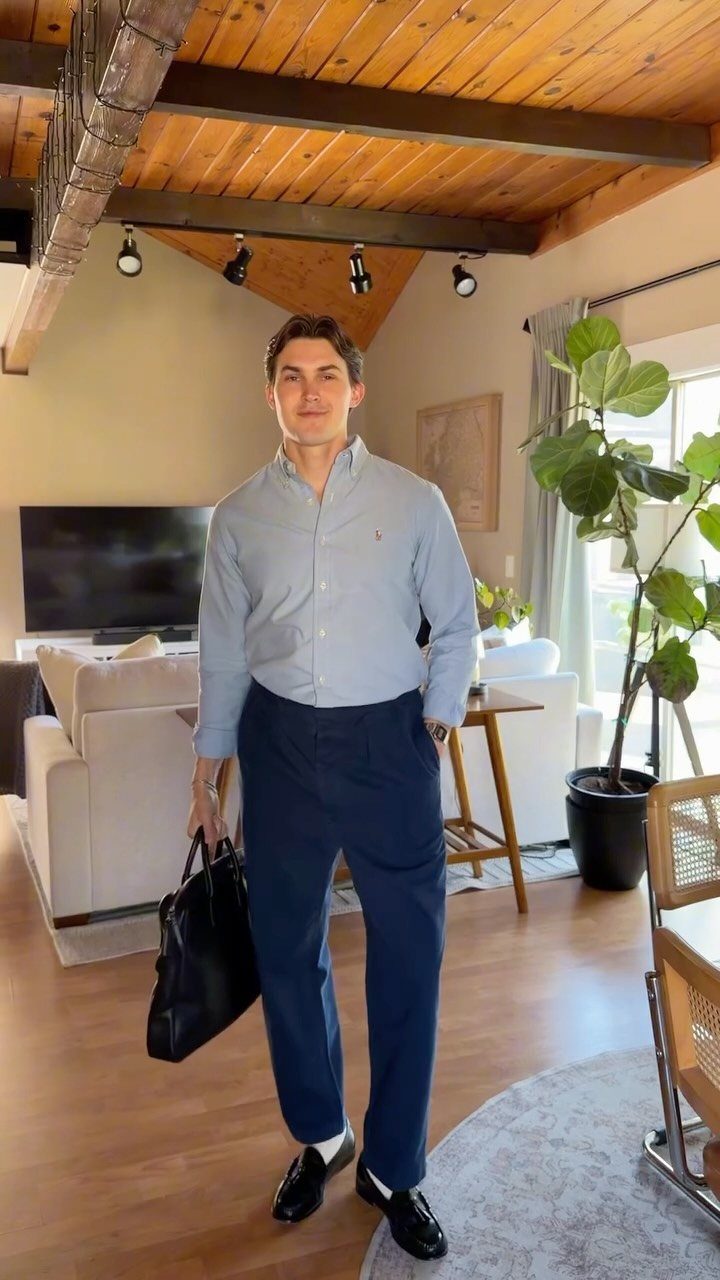
Little can go wrong with that pairing, and both pieces are inexpensive to replace.
Shoes carry the message.
Black tassel loafers sharpen things up. If a relaxed outfit might read as too casual around certain colleagues, a good pair of shoes signals that you take the job seriously.
I’d pick leather over canvas here, and a leather briefcase finishes it.
5. Casual Blazer and T-Shirt
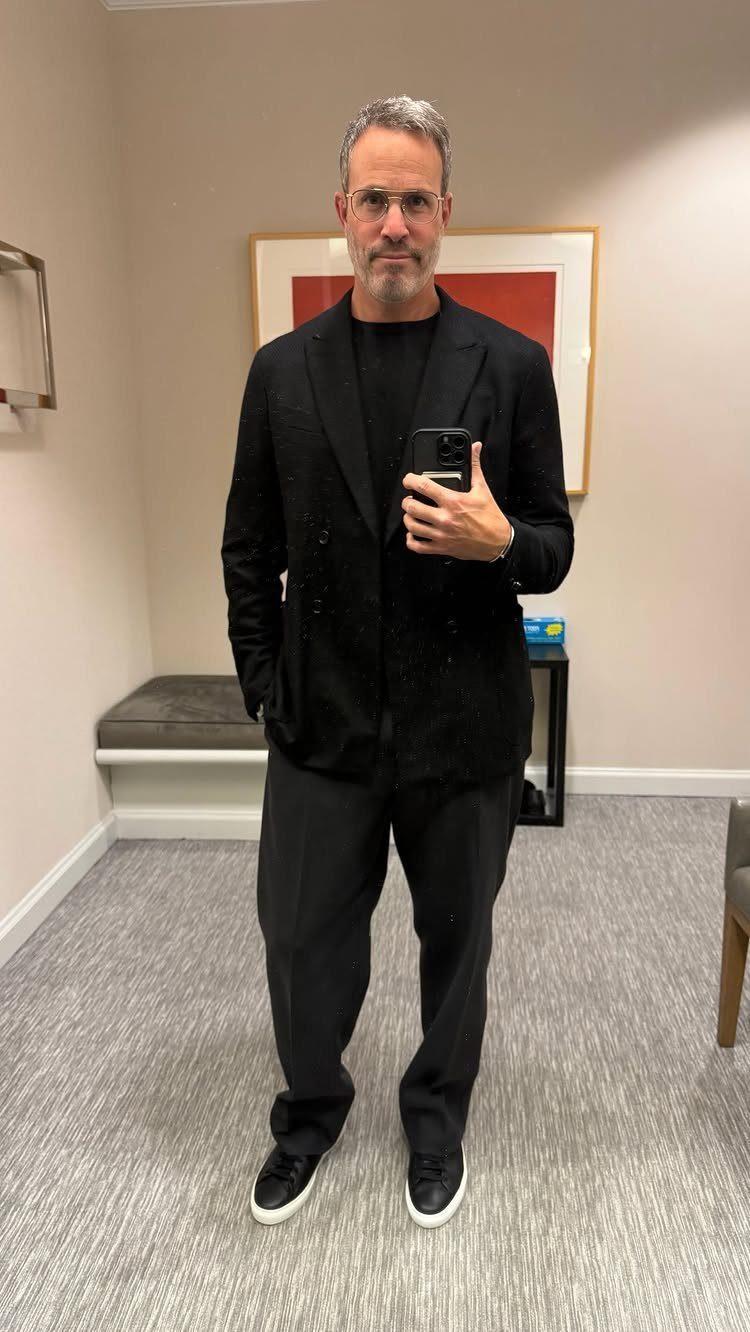
An all-black blazer, tee and trousers is the quietest version of this look, and I like it for that. Matching tones make the outfit read as one piece, so the casual shirt looks intended.
Choose a blazer with soft shoulders, not a stiff suit jacket. The tee should be plain, with no logos, and trousers should skim the shoe.
Sneakers need to be clean and low-profile. Scuffed, worn-out shoes will drag down everything else you have on.
This suits creative or relaxed offices, not formal ones.
6. Patterned Blazer with Necktie
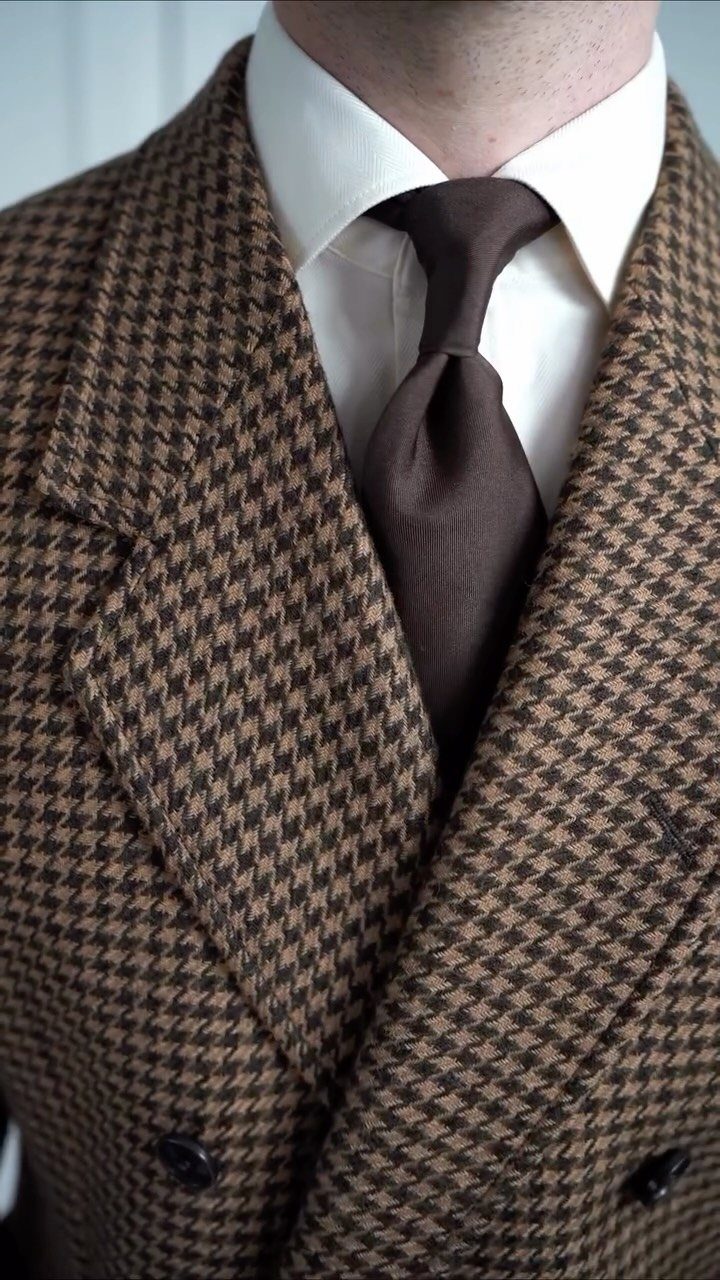
Houndstooth does the talking, so everything else should stay quiet. A brown houndstooth blazer over a white shirt keeps the pattern as the only loud element.
The solid dark brown tie works because it picks up the jacket’s color without repeating its pattern. Pairing a patterned jacket with a patterned tie is where this look goes wrong for most men.
Keep the tie knit or silk with a plain finish. A simple knot is enough.
7. Button-Down Shirt with Trousers
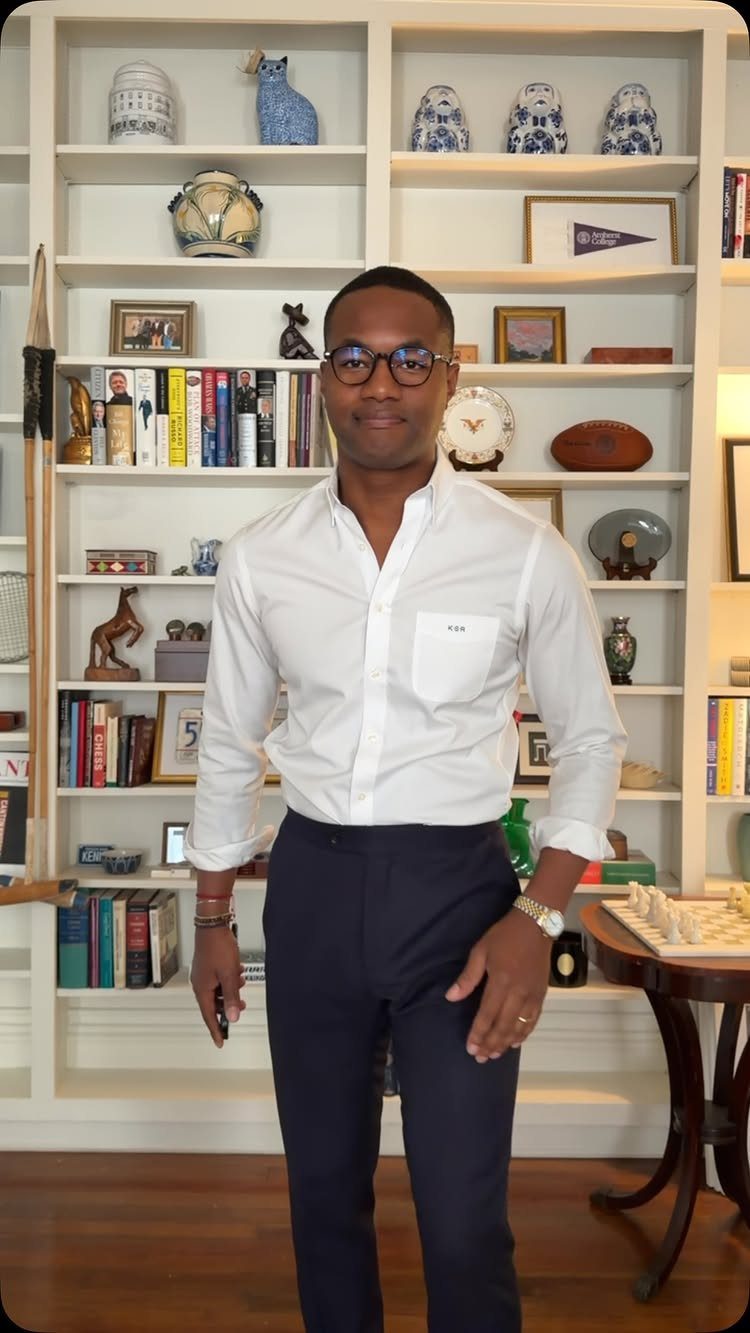
A white button-down with navy trousers is the simplest business casual outfit I can name, and it rarely misses. 2 colors, no pattern, nothing to argue with.
A monogrammed pocket is optional, but it adds a personal detail without adding noise. Keep the collar crisp and the sleeves fully buttoned at the wrist.
Dark navy hides wear better than black, and a white shirt needs only a quick press to look sharp. Add a belt that matches your shoes and you’re done.
8. Blazer with Polo Shirt and Trousers

Navy on navy up top is what makes this blazer and polo pairing work. A polo in the same dark family as the jacket reads as one long line instead of two competing pieces.
Beige trousers lighten the bottom half, and white sneakers keep it relaxed. Keep those sneakers clean, because scuffed white leather drags a good blazer and polo down with it.
Pick a blazer with soft shoulders so it sits easily over knit. Tuck the polo in, as with any polo at work.
This leans casual, so a relaxed office suits it better than a strict one.
9. Suit with a Polo Shirt
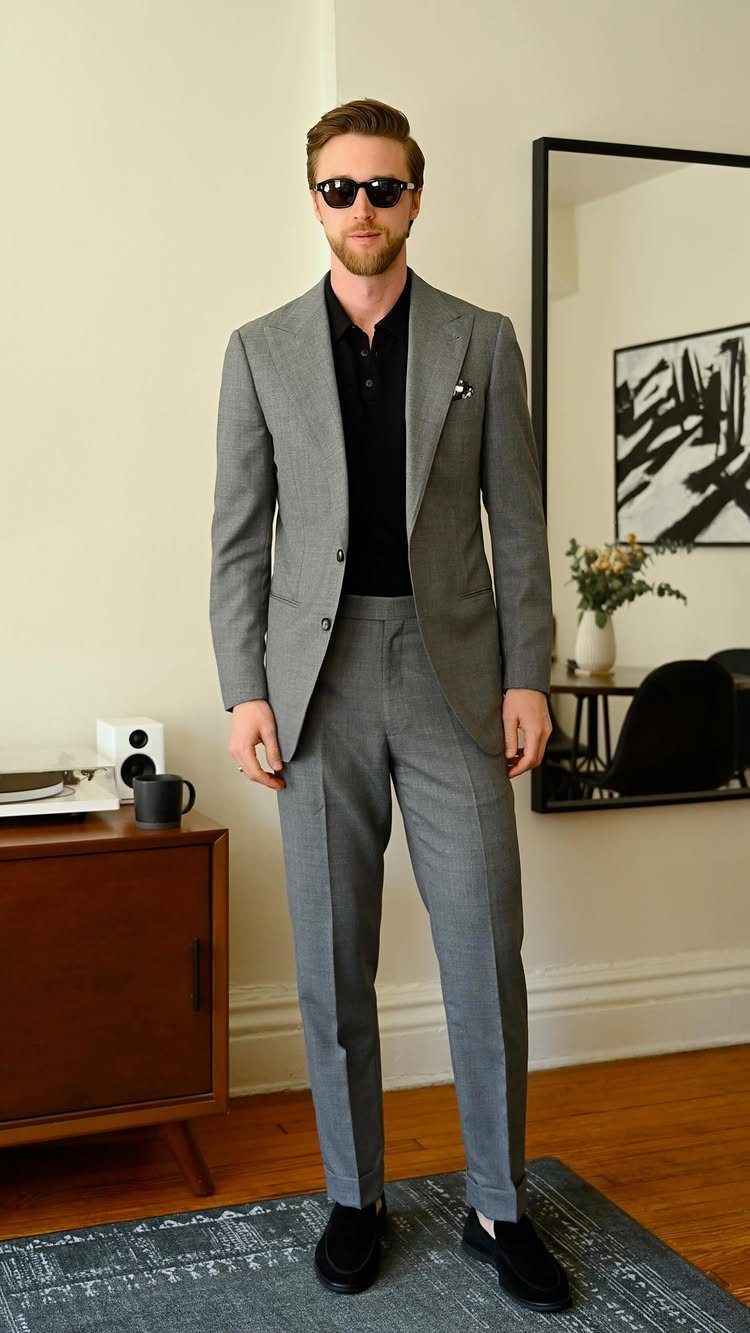
A grey suit with a solid polo underneath trades the shirt and tie for something looser, while the suit still does the serious work. I like a dark polo here because it stays quiet against the grey.
With no tie to cover a sloppy collar, a polo has to sit right at the neck and shoulders, and that gets less forgiving once the jacket is on.
The polo should lie flat under the jacket lapels, and the trousers should skim the shoes.
Slip-on loafers keep the look clean. Leave the sunglasses for outside.
Skip this for formal meetings; a shirt and tie are safer there.
10. Classic Blazer with Striped Shirt and Trousers
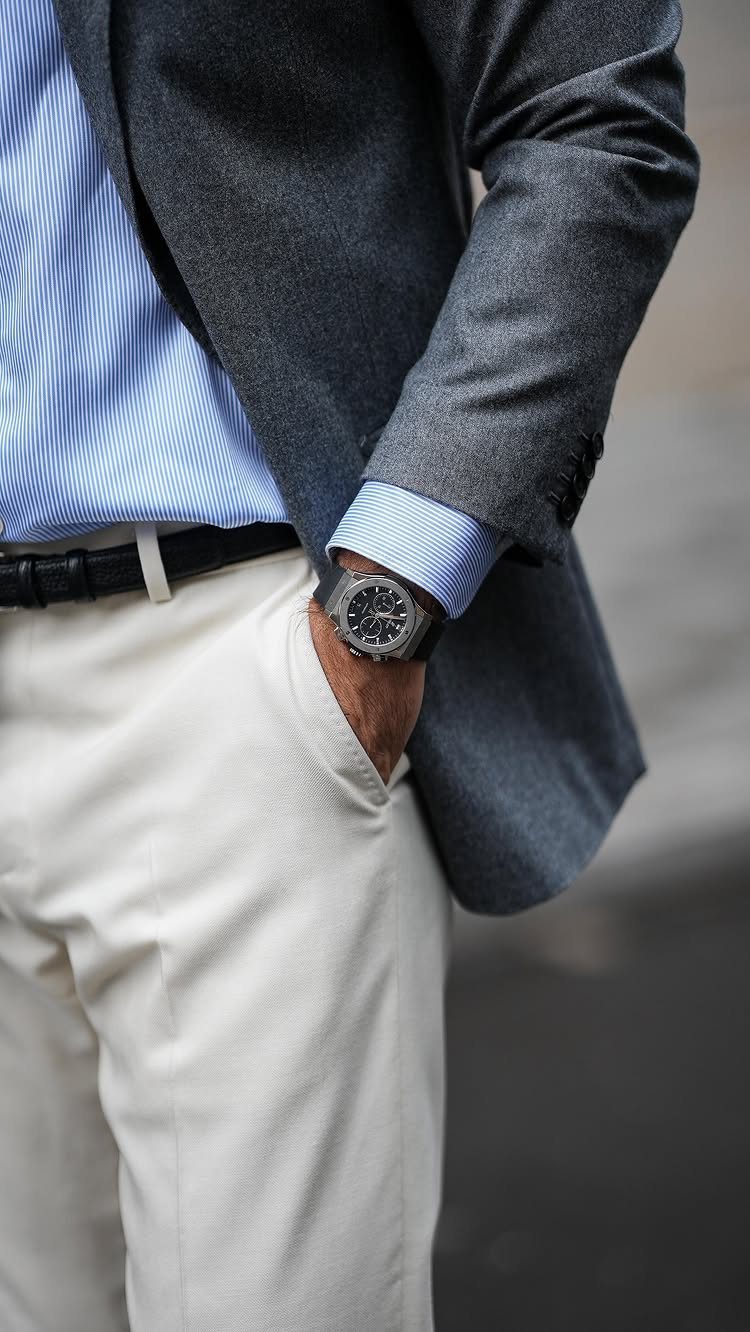
Pale blue stripes on white give a grey blazer something to play against without turning loud. The stripe stays fine and even, so the shirt reads as a dressed-up solid from a few feet away.
Cream trousers soften the grey and suit warm weather. They show dirt easily, so I’d keep them for days you won’t be eating at your desk.
Match the black belt to your shoes. A plain wristwatch is enough extra.
Wear the shirt tucked, with the top button open if you skip the tie.
Understanding Office Culture
Every office has a dress code nobody wrote down, and it matters more than any outfit rule.
Dress codes vary a lot by office: at one, chinos and a button-up are the baseline, and at another nobody blinks at dark jeans and a polo.
Spend a week looking at what people wear.
Watch which jackets show up on a normal Tuesday, and whether a well-pressed shirt gets by without one. That tells you where the line between too formal and too casual sits.
Study how the senior people, the colleagues others respect, and whoever signs off on decisions actually dress.
Dress at their level, or at the level of the job you want next. If you work for yourself, look to what your clients wear.
Don’t copy anyone outright, though. A vintage watch or a pair of colorful socks gives the outfit a personal note, so it reads as yours rather than a uniform, and it still stays inside the unwritten rules.
Because business casual doesn’t have to be boring. You should still look like you: Your job is just to find which pieces land on the bullseye in the Venn diagram featuring your job and your sartorial vibe.
— GQ
Frequently Asked Questions
Can I wear jeans as business casual?
Sometimes, if your office allows denim at all. Jeans can work if they’re dark indigo or black and clean-faced, with no rips, whiskering or sun-faded patches, worn with an ironed oxford shirt or a polo that has a real collar.
A pair of leather loafers or plain derbies in dark brown or black reads as office-ready, and it stops the denim from dragging everything down. In finance-type offices, skip denim entirely.
What not to wear for business casual as a man?
Skip athletic shorts, graphic tees, ripped denim, sandals and chunky casual sneakers.
Hoodies, sweatpants and anything with holes belong to your time off too. A plain tee can work under a soft-shouldered blazer in a relaxed office, but only with no logos and clean, low-profile sneakers.
What does business casual attire mean for a man?
Think of business casual as the middle ground: dressier than what you’d wear on a Saturday, looser than a suit and tie.
Navy trousers with a white oxford shirt is one version; khaki chinos under an unstructured navy blazer is another.
Each office sets its own line, so watch what the senior people wear on an ordinary Tuesday and dress at their level.
Can men wear a polo in a business casual office?
Usually, if the office runs warm and relaxed; a stricter dress code can still rule it out, so check before you try it.
Choose a polo that sits close without pulling, with sleeves that hug the upper arm, and always tuck it in. Tucked into black trousers with black loafers, it looks deliberate rather than like weekend wear.