The 14 outfits here run from a navy blazer over a white shirt and grey trousers to a black-on-black look and a suit with the tie dropped, and the dress code decides between them more than taste does.
If your office expects a jacket, start with the unstructured blazer, the plaid waistcoat, or either of the tie-and-cardigan looks; if collars and ties are optional, the tan cardigan over a turtleneck, the quarter-zip, and the blazer with a t-shirt will fit better.
Fit is the common thread: a jacket that sits right through the shoulders and sleeves that end at the wrist matter more than any single piece.
1. Business Casual Definition

Business casual sits between a suit and weekend clothes, and a navy blazer over a white shirt with grey trousers is the simplest version of it.
Every piece is a color that goes with the others, so nothing needs thinking about.
Black belt, black shoes, and you’re dressed. I’d button the shirt to the collar for meetings and leave it open when the day relaxes.
You are not expected to be able to afford the same clothing as a corporate CEO. However, do invest in quality that will look appropriate during your first two or three years on the job for a business casual environment or occasions.
2. Unstructured Blazer

A navy blazer over a striped shirt with a pocket square gets you looking put together without a full suit.
Navy is the safe pick because it works over almost any shirt, and stripes add interest while the jacket stays quiet.
I like the pocket square here.
It’s one small detail that makes the outfit look chosen, not just assembled. Keep it simple, and don’t match it exactly to the shirt.
3. The Polo
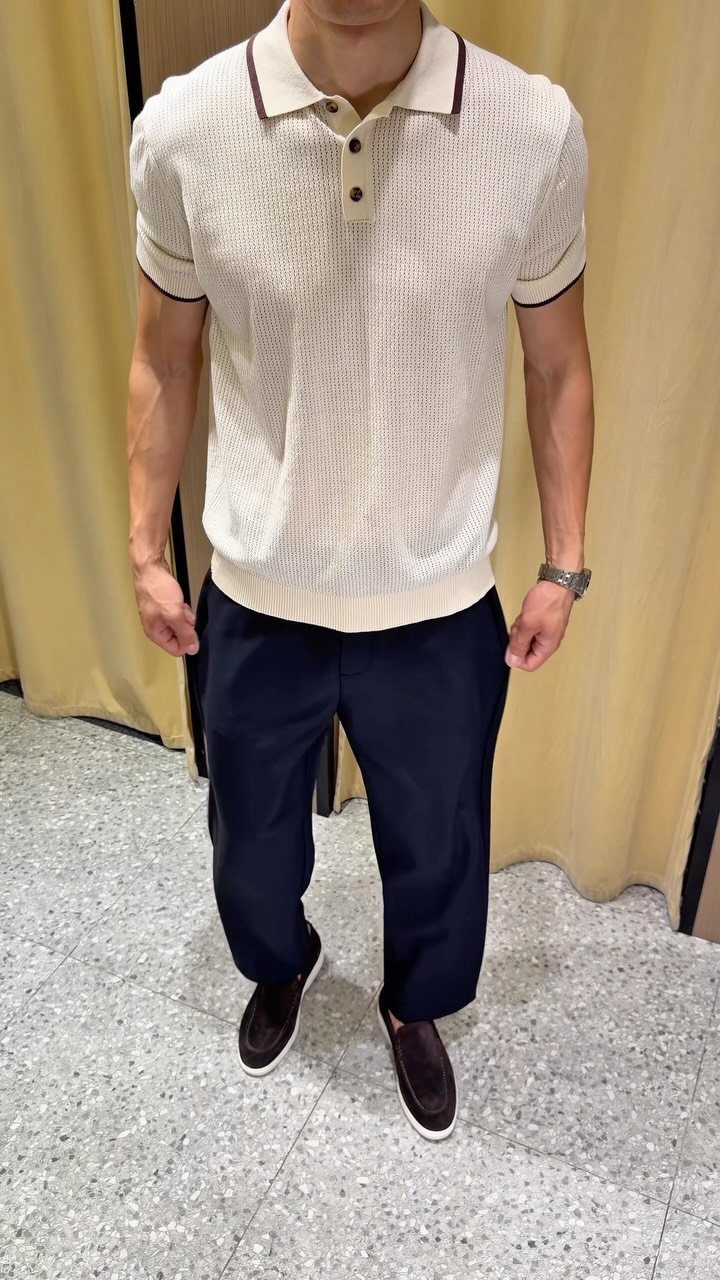
Cream, navy, and suede: a knit polo in a textured weave looks far more finished than the piqué shirts most men own. The dark trim adds definition, and navy trousers keep the palette calm.
Tuck it in, and pair it with loafers instead of sneakers.
I’d choose a polo with a flat knit collar that sits neatly on its own. A floppy collar ruins the whole look.
4. Vintage Watch
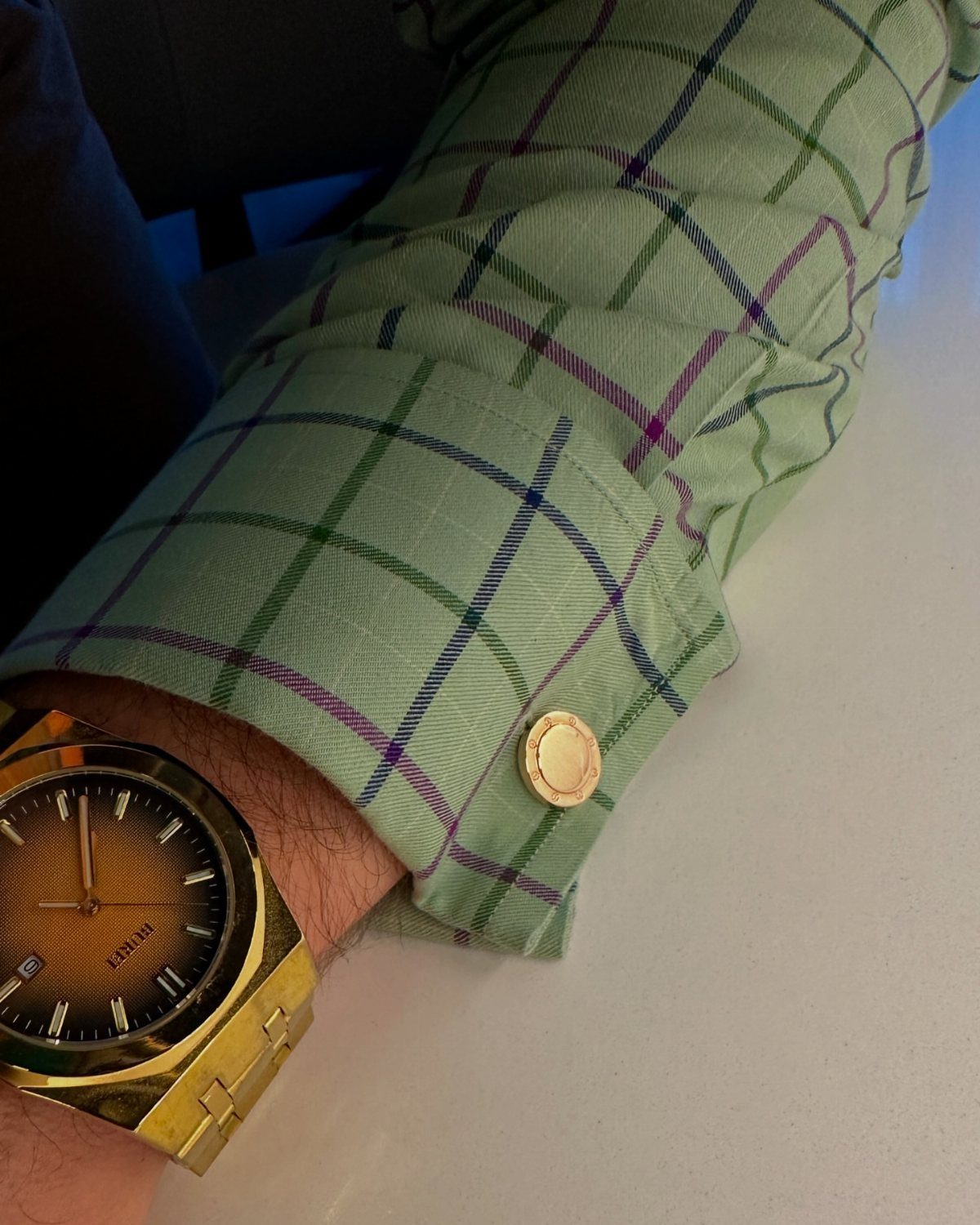
A vintage watch gives a plain outfit some history. Matching your metals helps: a gold watch case repeats a gold cufflink, and the pairing reads as quiet and deliberate.
Pick one metal and stay with it across watch, cufflinks, and belt buckle. I’d choose a slim case that slides under a cuff, since a bulky watch catches on sleeves all day.
5. Quarter-zip Sweater Outfit
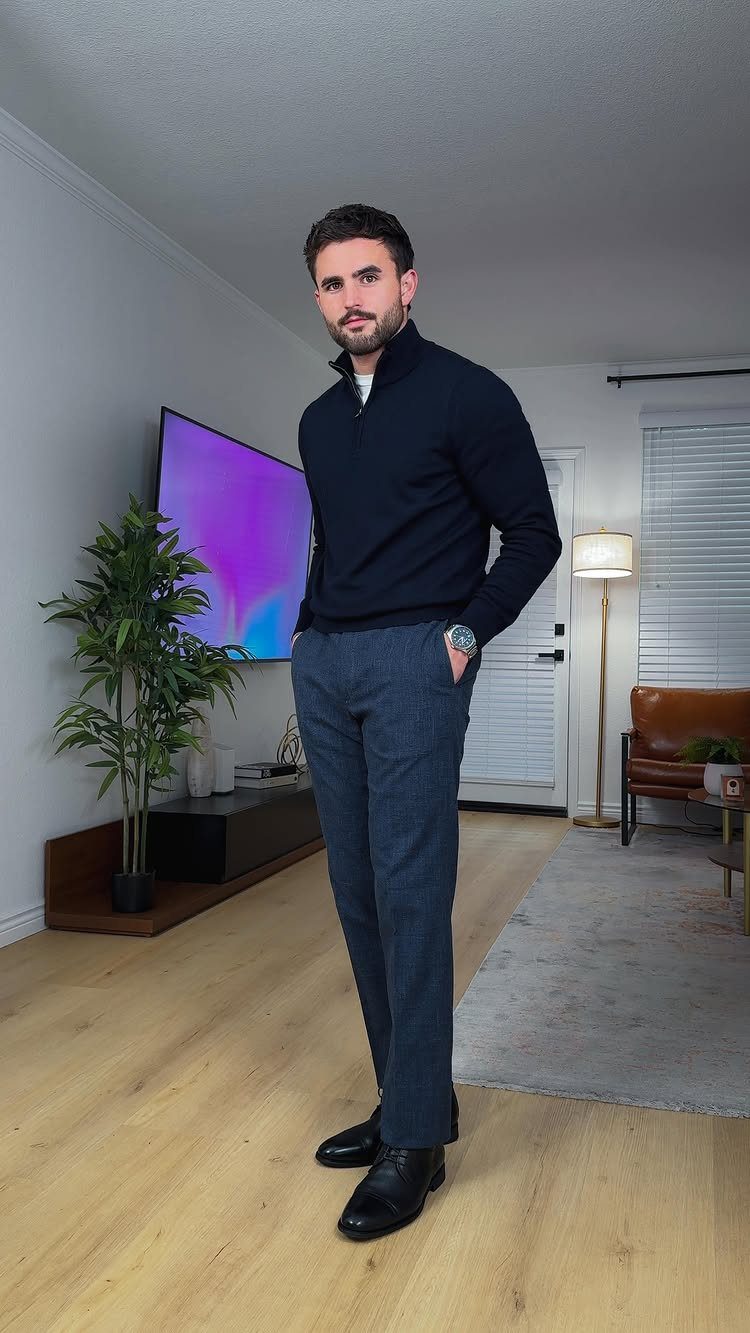
Swap the blazer for a navy quarter-zip, and you get a warmer, softer version of business casual. Worn over an undershirt with dark textured trousers, it looks neat and takes no effort.
Black dress shoes keep it formal enough for the office. I’d zip it only partway and keep the fit trim through the chest, because a baggy pullover reads as sloppy fast.
6. Button-down Shirt and Trousers

A white button-down with grey trousers is the plainest office outfit there is, and it works because nothing fights for attention. Glasses and a coffee mug are all the personality it needs.
Spend your money on fit: sleeves ending at the wrist, trousers hemmed so they just touch the shoe.
Match your belt to your shoes. This combination is dull only when it fits badly.
7. Crewneck Sweater Over Collared Shirt

A dark crewneck over a collared shirt with beige chinos is the easiest cold-weather office outfit I know. Only the collar shows above the neckline, so the shirt stays crisp while the sweater does the layering.
Keep the shirt collar flat and small, and let it sit inside the crewneck instead of folding over it.
Dark sweater, light chinos, and dress shoes keep the contrast clear. I’d pick a fine knit over a chunky one, which bunches under the arms.
8. Monochrome All-black Outfit
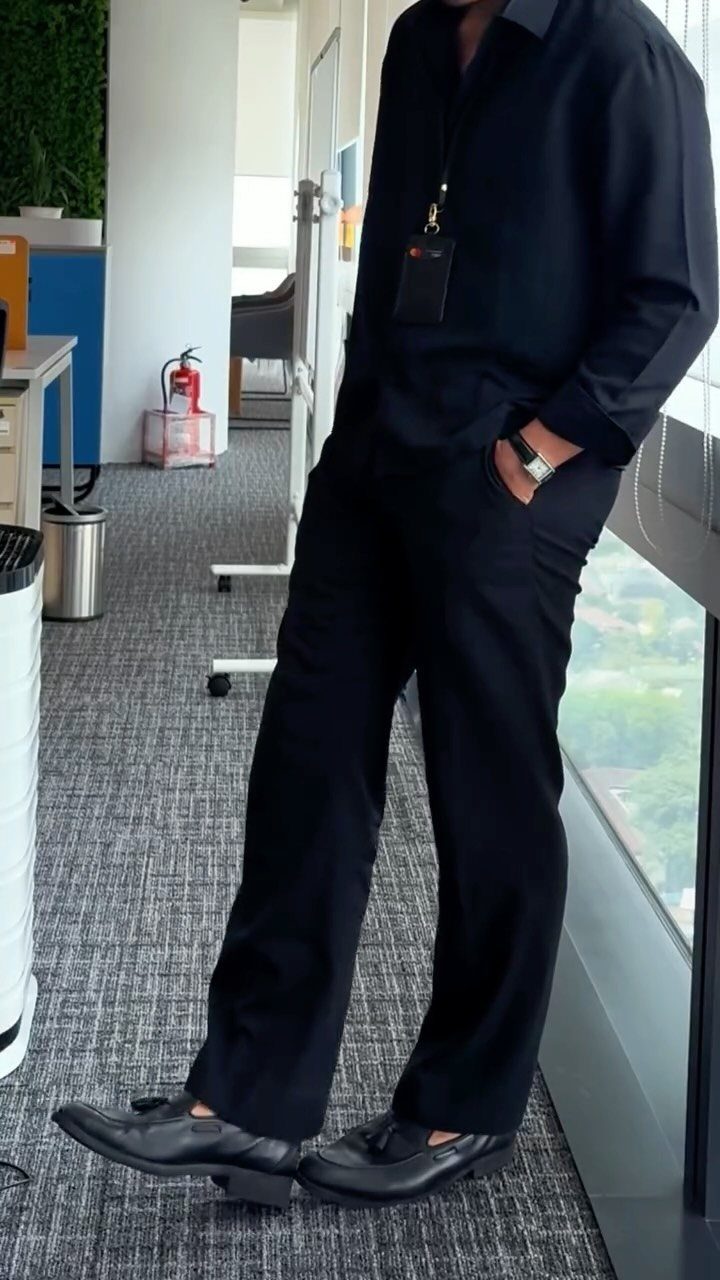
Black shirt, black trousers, black leather loafers: one color from collar to shoe makes a tidy, serious look with no matching to think about.
I like it best when the fabrics differ slightly, say a matte cotton shirt against a smoother trouser, so the outfit has some depth.
Tuck the shirt in and keep the trousers hemmed clean over the loafers. Fading is the weak spot, since a washed-out black shirt beside black trousers looks mismatched fast.
9. Plaid Waistcoat with Dress Shirt
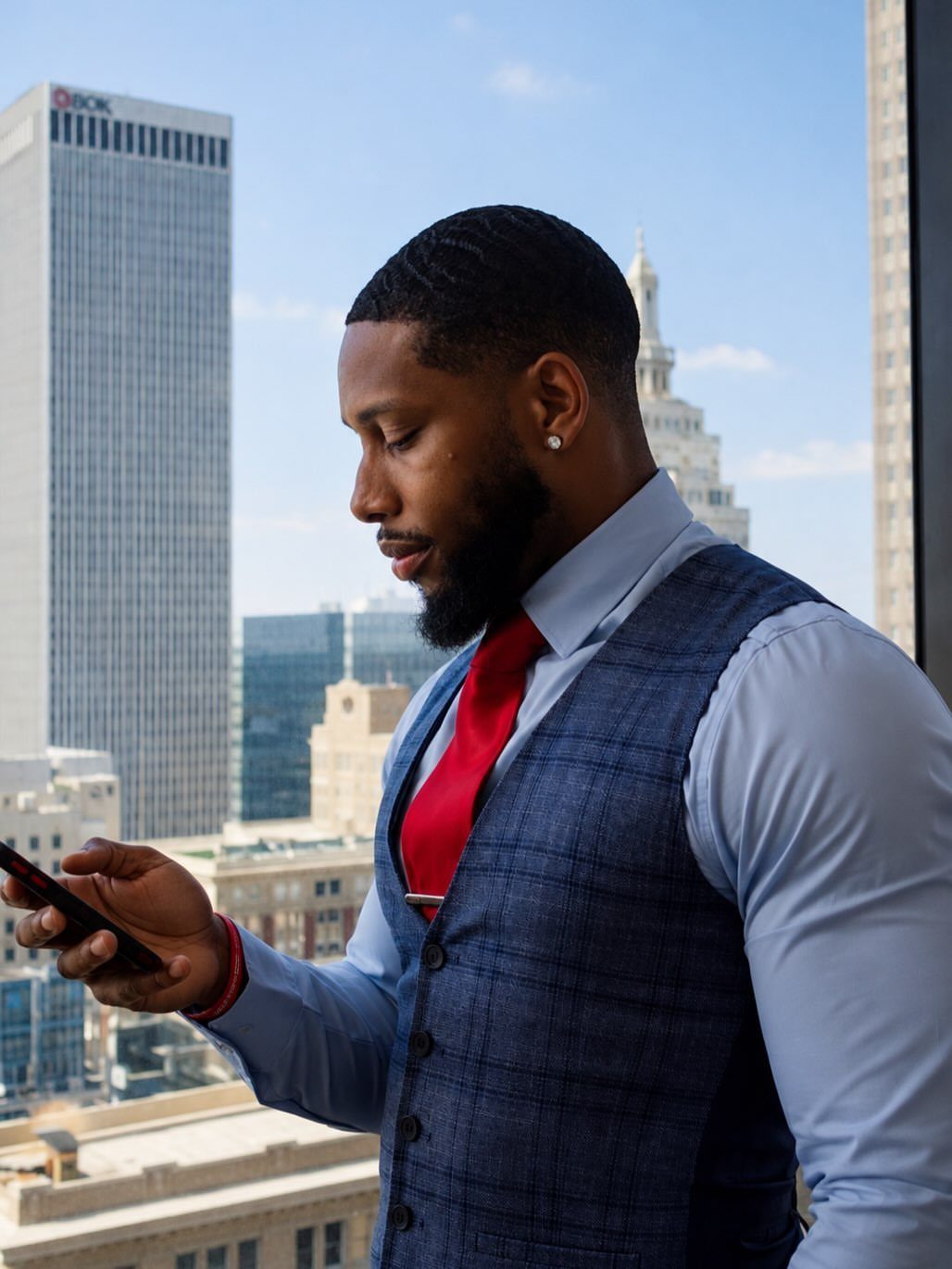
A plaid waistcoat over a dress shirt and tie gives you a jacket-free way to dress up.
A light blue shirt and red tie against a blue plaid is a strong trio, because the vest carries the pattern while the shirt stays plain.
Pick a vest that is snug at the waist and long enough to cover your belt.
Leave the last button undone, as is traditional. A solid tie works better than a patterned one here.
10. Casual Zip Jacket with Tie
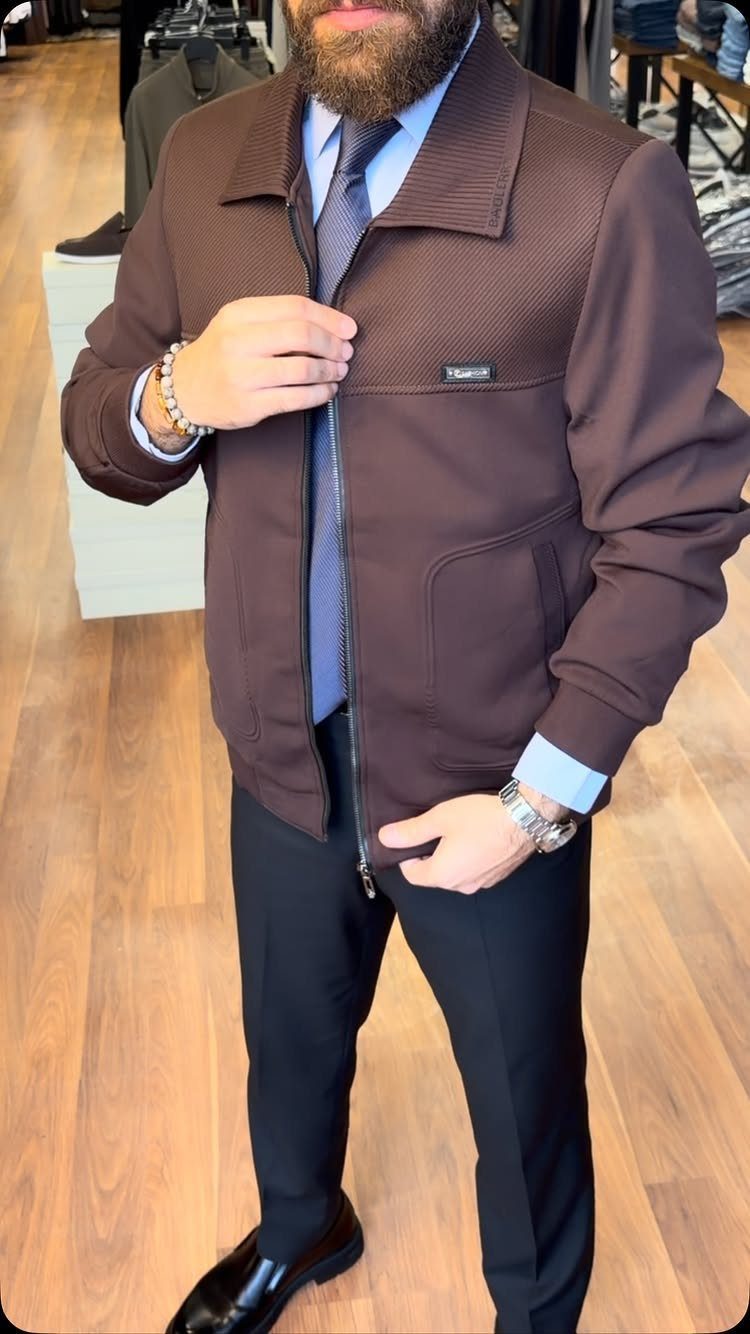
A textured zip-up jacket in brown, worn over a blue shirt and dark tie, swaps the blazer for something softer. Texture is the reason it works: the jacket looks interesting without needing a pattern, so the tie can stay plain.
I’d keep the tie narrow and tucked inside the jacket, with the zip stopping a few inches below the knot. Black trousers and polished shoes pull the casual jacket back toward the office.
11. Button-up Cardigan with Tie
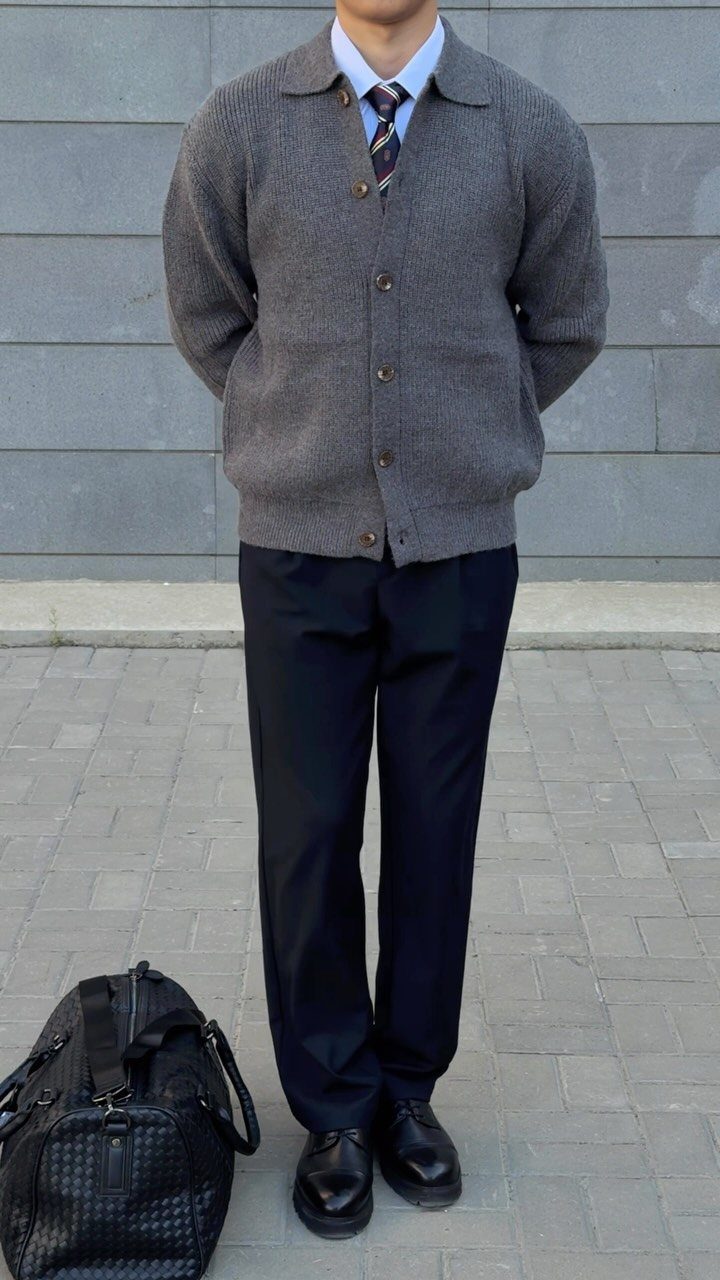
A grey button-up cardigan over a white shirt and tie reads as a gentler alternative to a suit jacket. Navy trousers and black leather shoes keep the colors cool and the outfit orderly.
Button it fully or leave the bottom button open; either way, the tie should sit neatly at the collar.
I’d choose a cardigan in a fine knit that lies flat across the stomach. A stretched-out one looks like a weekend sweater.
12. Tan Cardigan Over Turtleneck
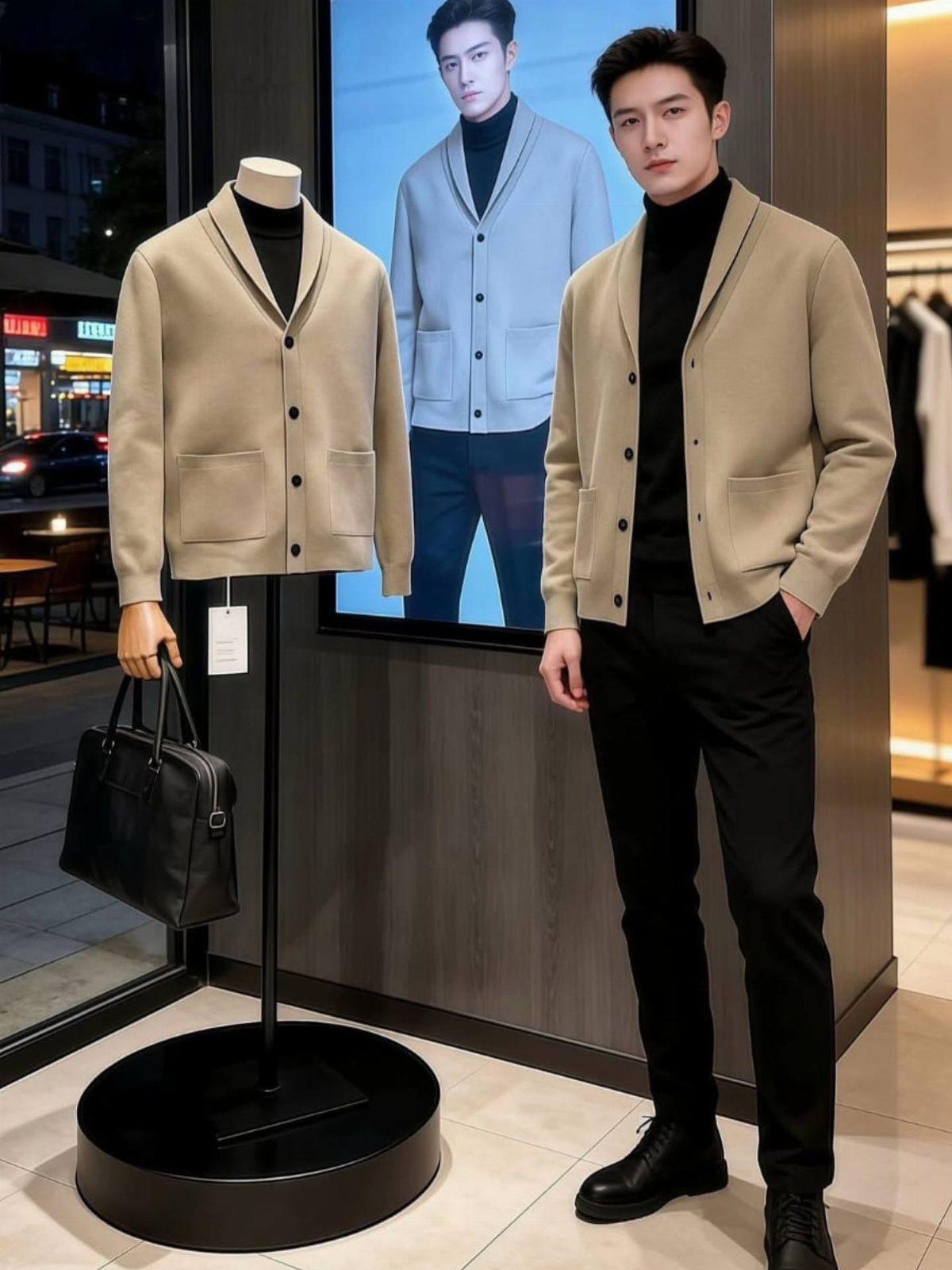
Tan knit cardigan, fitted black turtleneck, black trousers: the warm neutral breaks up the black without adding a loud color. It’s a good option for men who skip collars and ties but still want to look composed.
Keep the turtleneck thin and close to the body so the cardigan drapes over it cleanly.
I’d leave the cardigan open or buttoned only at the middle. Dark trousers and plain dark shoes finish it.
13. Blazer with T-shirt
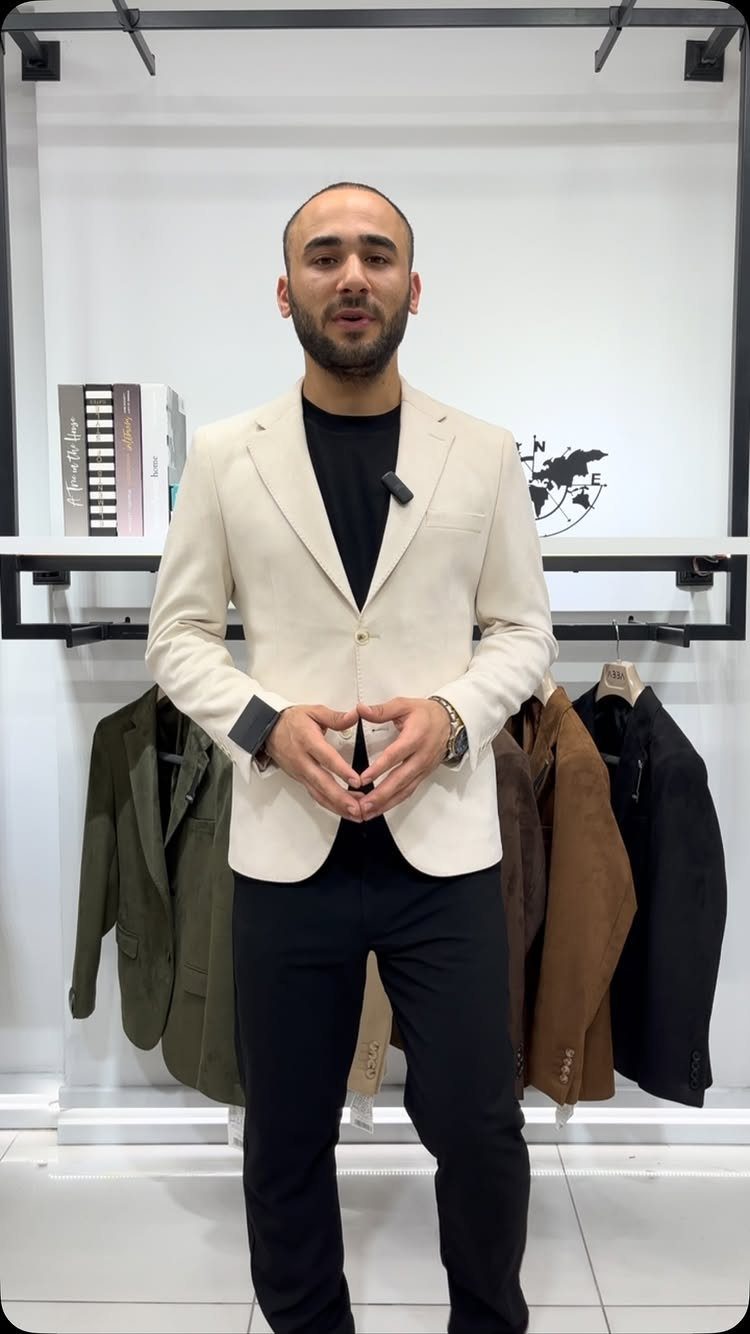
A cream blazer over a plain black t-shirt with black trousers is the loosest way to wear a jacket at work. The light jacket against all that black gives the outfit contrast without a single pattern.
Choose a t-shirt in a heavy, opaque cotton with a clean crewneck, and tuck it in so the trousers stay tidy.
I’d skip anything with a logo. Black shoes keep it consistent, and a jacket that fits through the shoulders matters more than anything else here.
14. Suit Without a Tie
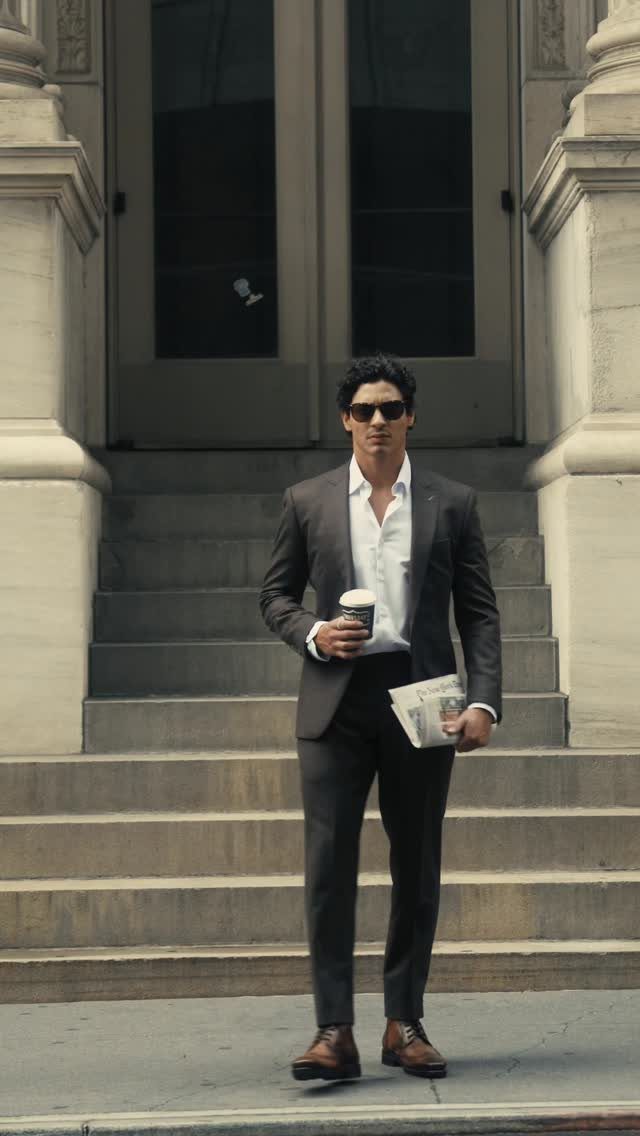
Sunglasses, a dark grey suit, and a white shirt open at the collar make a suit look like a day off. Dropping the tie is the whole change, so the rest has to be sharp.
Leave the top button undone, or two at most, and keep the collar crisp so it lies flat against the lapels.
I’d pick a shirt with a soft collar that doesn’t need a tie to hold its shape. A suit that fits well is what keeps this from looking like you forgot something.
Grooming and Presentation
Even a well-chosen outfit falls apart if the basics are off. Wrinkled shirts, unkempt hair and scuffed shoes are the first things people notice, and they cancel out the effort in everything else.
Press or steam your shirt and trousers the night before, so a wrinkled collar never decides how the day starts.
Check shoes for scuffs and run a brush or cloth over them; a quick polish takes less time than finding a clean pair of socks.
Keep hair trimmed and neat, and shave or tidy your beard so the edges look deliberate. Clean, short nails count too, since people see your hands in every meeting.
Go easy on scent.
Cologne should be barely noticeable, a spray or two at most, and strong fragrance in a small office wears on everyone around you. Fresh deodorant and clean clothes do more than any bottle will.
Frequently Asked Questions
What is business casual?
Think of it as the middle rung: dressier than what you wear on a Saturday, looser than a full suit and tie.
How formal to go depends on your industry: finance leans toward a suit, while tech and creative fields allow more casual pieces.
Can I wear jeans for business casual?
Jeans pass only where the office is relaxed, and then only in a dark wash with a clean, close fit and no fading or rips.
Skip any rips, fading, or distressing. A written dress code usually rules jeans out, so check it before you try them.
What shoes are appropriate for business casual?
Leather loafers, oxfords, and Chelsea boots are the dependable choices, in black or brown.
A polo looks better with loafers than with sneakers, and black dress shoes keep a quarter-zip or suit-without-a-tie look formal enough for work. Whatever you pick, brush off scuffs first, since worn shoes undo the rest of the outfit.
How should I accessorize for business casual?
Keep it minimal: a good watch and a leather belt that matches your shoes are enough.
Pick one metal, silver or gold, and let the watch, cufflinks, and belt buckle all match it; that repetition makes the look read as planned.
Slim cases tuck under a cuff, while a thick one catches on the sleeve every time you reach for something.