The list runs from chinos, blazers and quality shoes down to a striped quarter-zip with jeans, and the dress code of the room you’re walking into decides which row you pick.
If everyone wears open collars, a quarter-zip or knit polo with trousers works; a more formal room calls for the blazer, chinos and a crisp shirt. Nearly every look rests on the same short list: 6 or 7 pieces that mix well.
1. Smart Casual Definition
Smart casual sits between a suit and a weekend tee, and the easiest way to hit it is to keep one foot in each camp.
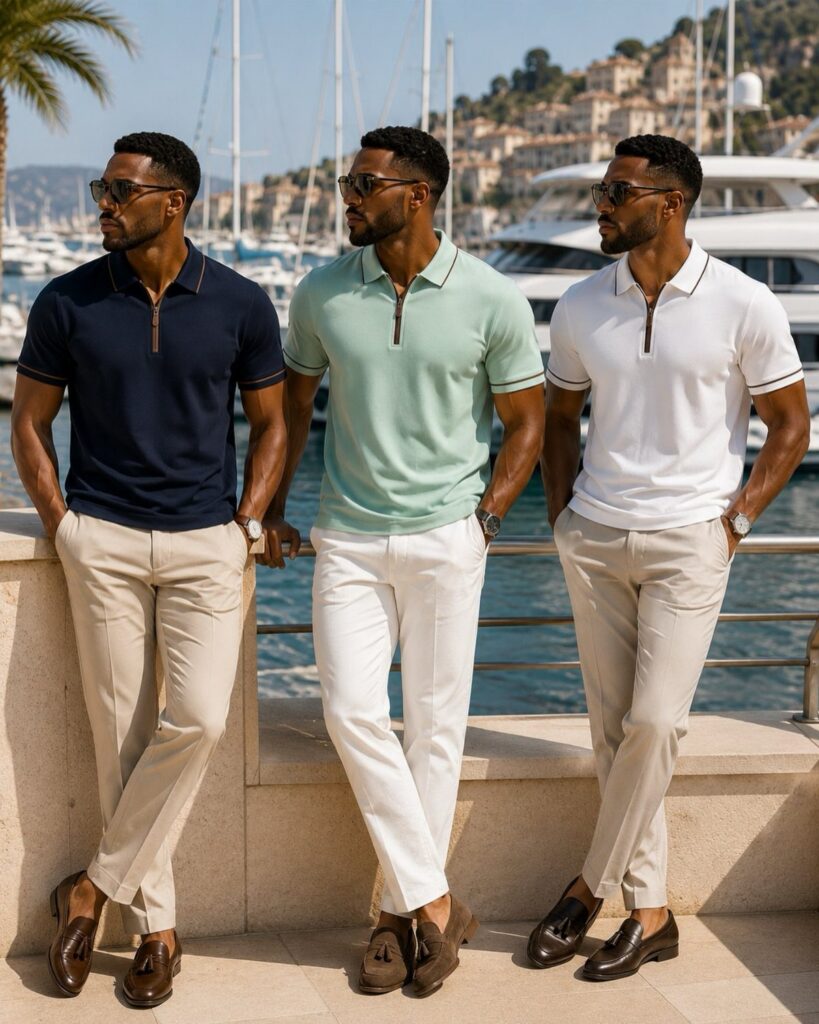
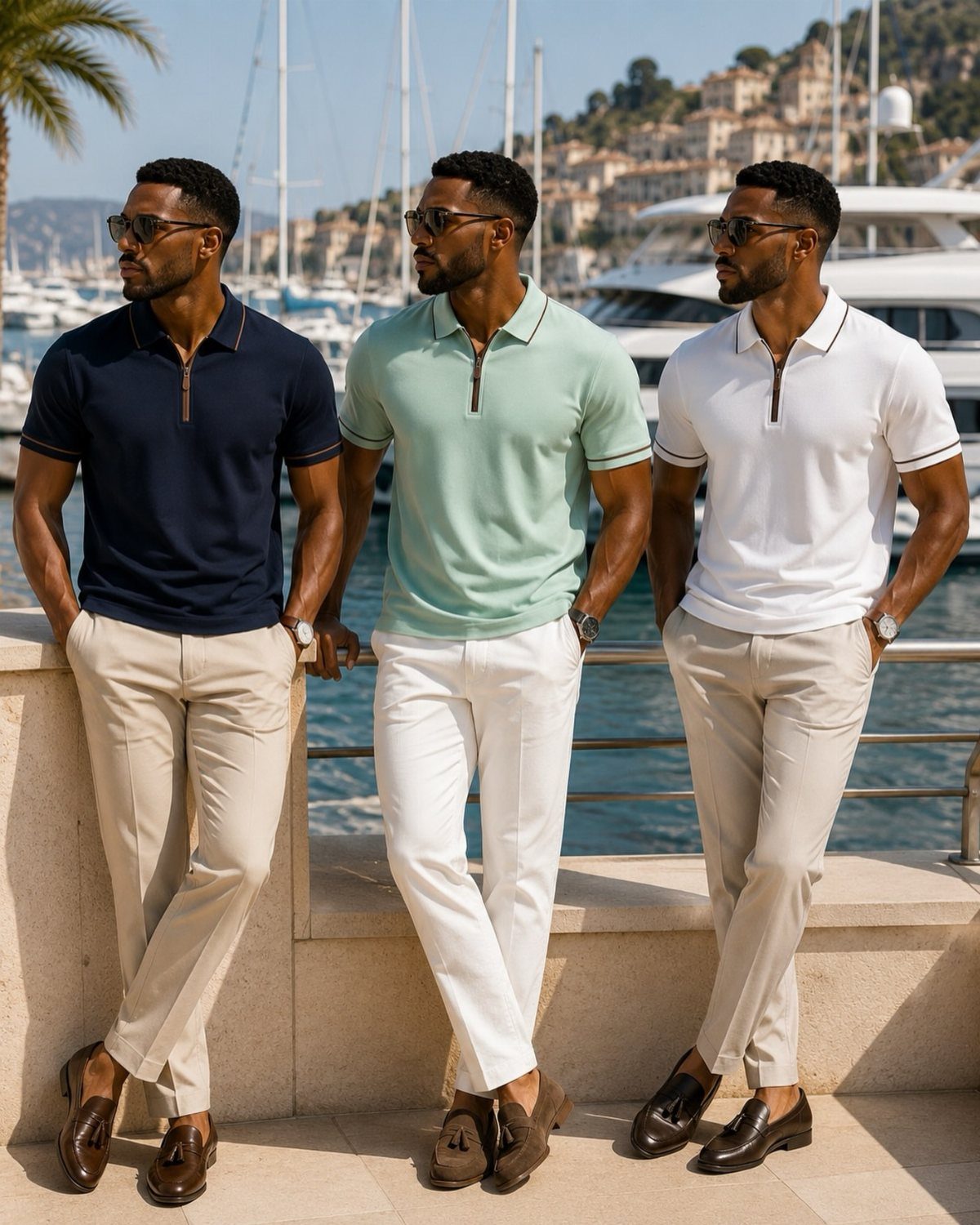
Swap the dress shirt for a knit polo and you have the relaxed side of smart casual. Tailored trousers and loafers are the dressy half.
I like the formula because it needs only 3 pieces, and they repeat well. Keep the colors light and quiet, and the outfit reads as sharp without looking like you dressed up for anyone.
2. Chinos, Blazers, Crisp Shirts, and Quality Shoes
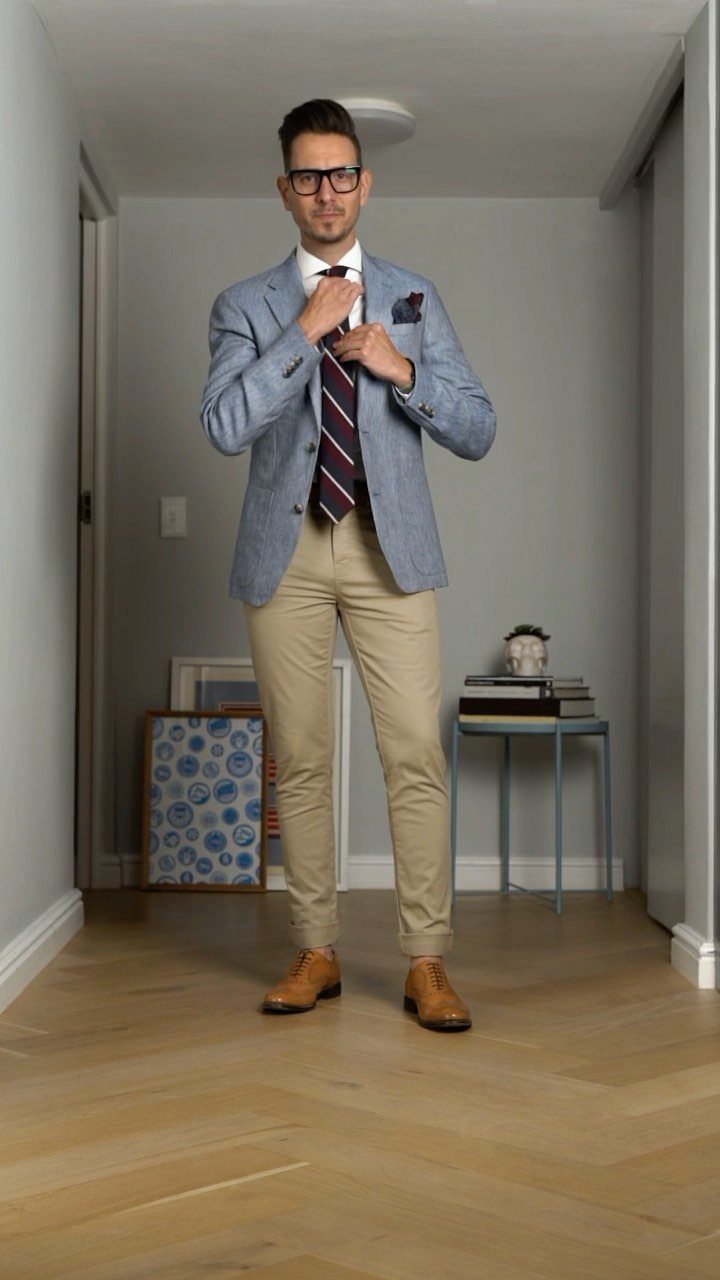
A blazer over chinos is the closest thing smart casual has to a uniform, and I’d choose it over most alternatives. Chinos soften the jacket, while a crisp shirt and a tie keep the look from sliding into weekend territory.
Keep the shoes in leather. Brown dress shoes with tan chinos make a safe pairing, and they save you from rethinking the outfit each morning.
Drop the tie and the same pieces work for a more relaxed day.
3. Loafers, Clean Brogues
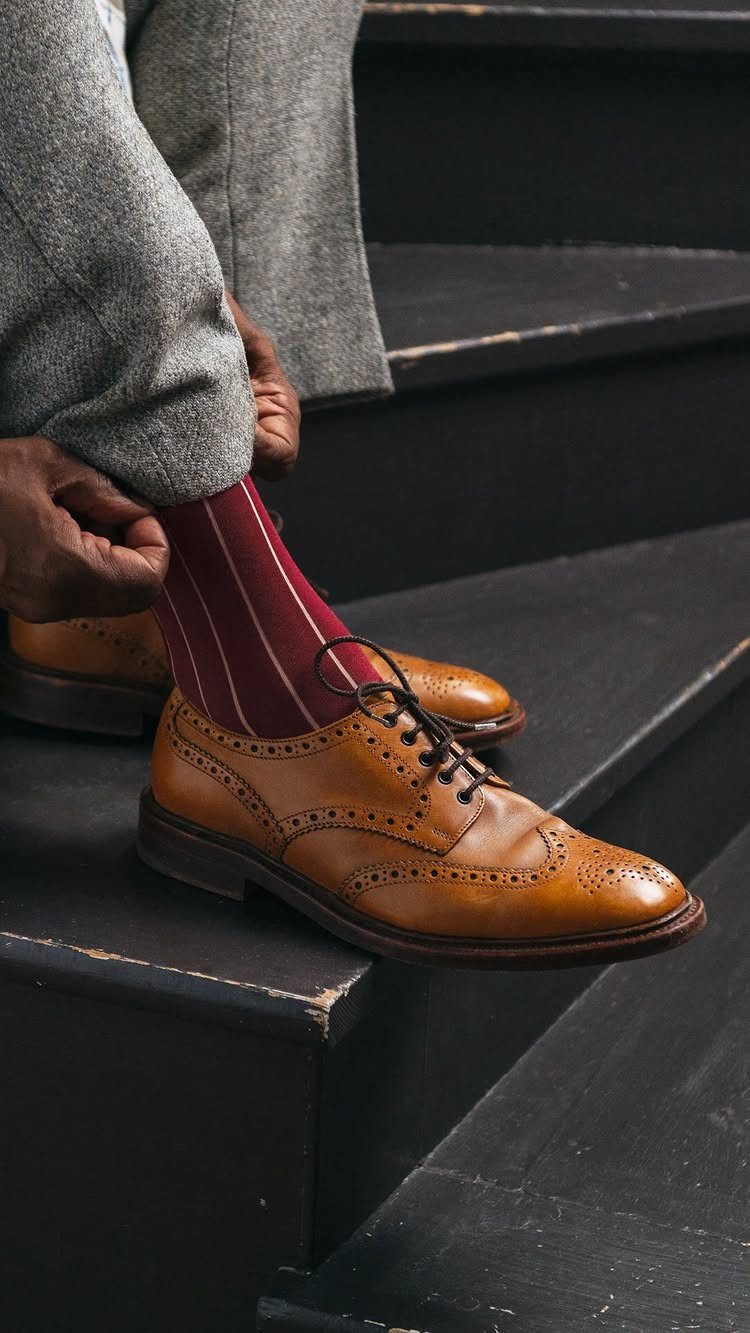
Shoes decide more of a smart casual outfit than most men expect. Loafers and clean brogues both land in the middle ground: dressier than sneakers, easier than oxfords.
I lean toward brogues in tan leather when the trousers have some texture, such as grey wool. The sock is a cheap place to add personality, and a burgundy stripe does that without shouting.
Keep the leather clean and the look holds together.
4. Well-fitted Collared Shirts
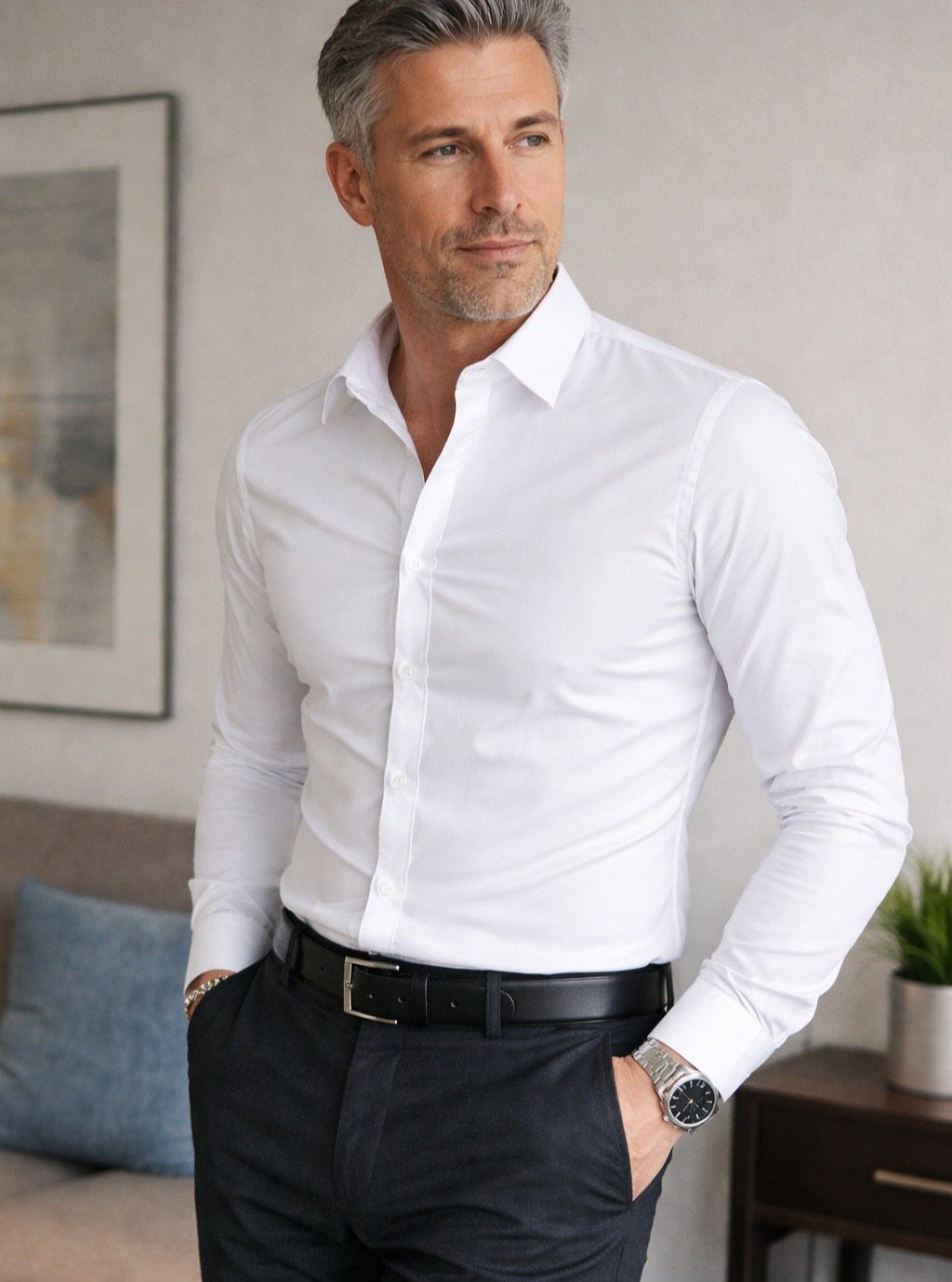
Fit does the work in a white collared shirt with no pattern, so spend your effort there. The collar should sit snug at the neck, and the body should skim your torso rather than balloon over the belt.
Tucked into dark trousers with a belt, a white shirt looks sharp with nothing added. A watch is plenty of finishing detail.
If a shirt fits you everywhere except the waist, a tailor can take it in for a modest fee.
5. Tailored Trousers
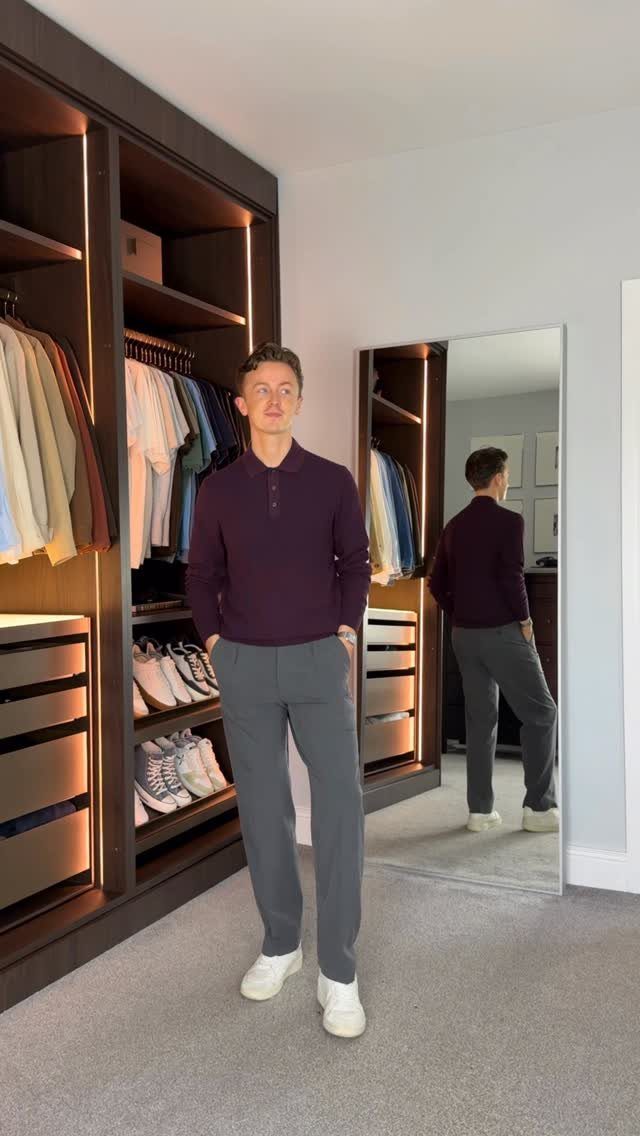
Grey tailored trousers change how everything above them reads. Pair them with a polo and white sneakers, and a casual outfit suddenly looks intentional.
Tailored means the leg is cut clean and hemmed to your shoes, not left to pool at the ankle. That single detail separates smart from sloppy.
A long-sleeve polo in a deeper color, like maroon, gives you a fresh option beyond the usual shirt. Grey goes with nearly any shade you pick.
6. Dark Wash, Slim Cut Jeans
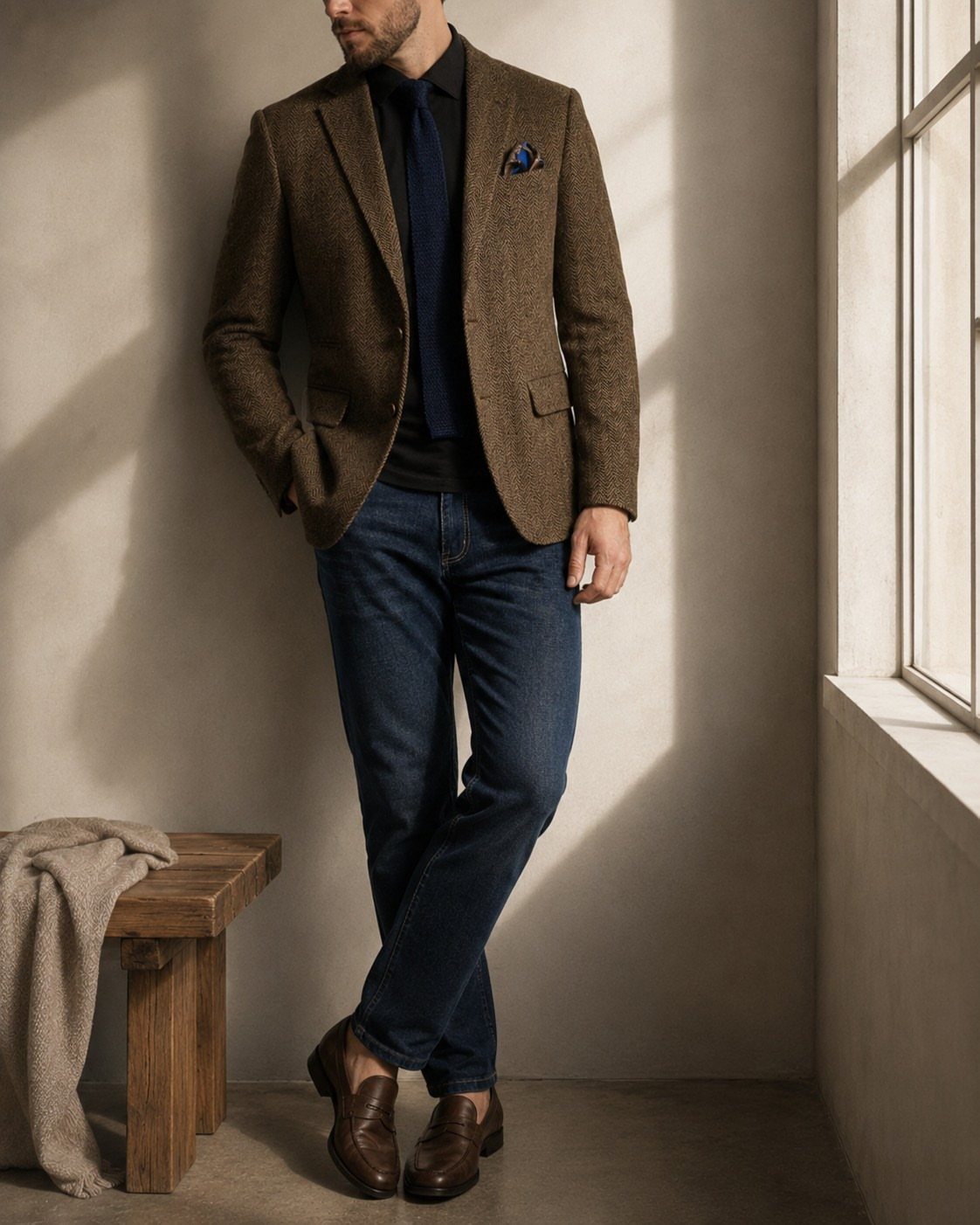
Jeans can sit inside a smart outfit if they are dark, slim and free of rips or fading. Anything lighter drags the look down.
A tweed blazer is a good partner, and brown loafers tie it together. I’d pick a dark shirt and tie here for contrast, since the textured jacket already supplies the interest.
Keep the cut slim, not tight, and the denim passes as trousers.
7. Formal Smart Casual
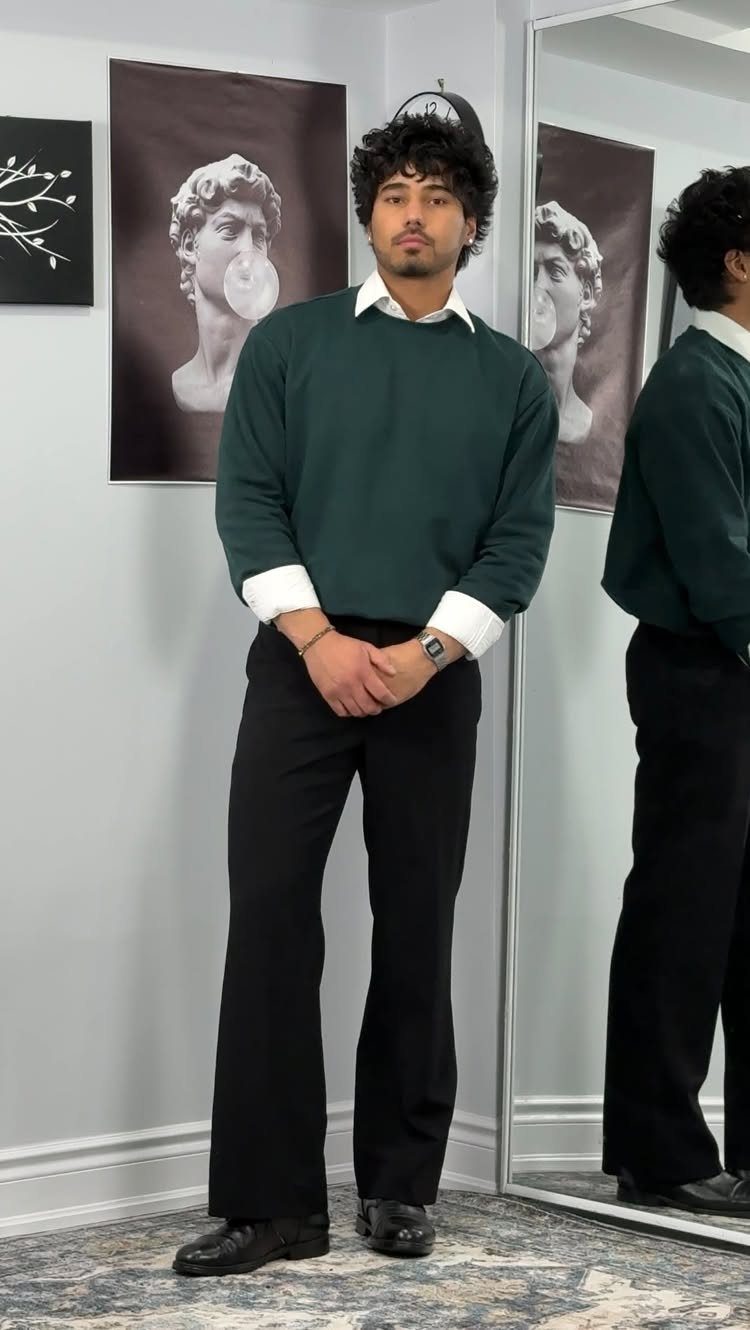
A crewneck sweater over a white collared shirt is the easiest way to dress down formal pieces without losing the polish. Black trousers and black dress shoes stay in the formal camp, and the green knit softens them.
The maker admits wearing the same trousers because they are the only formal pair owned. That is a fair way to start: one pair of black trousers carries a lot of outfits.
A flat collar under the sweater neckline is what makes the layer look deliberate.
8. Color Coordination
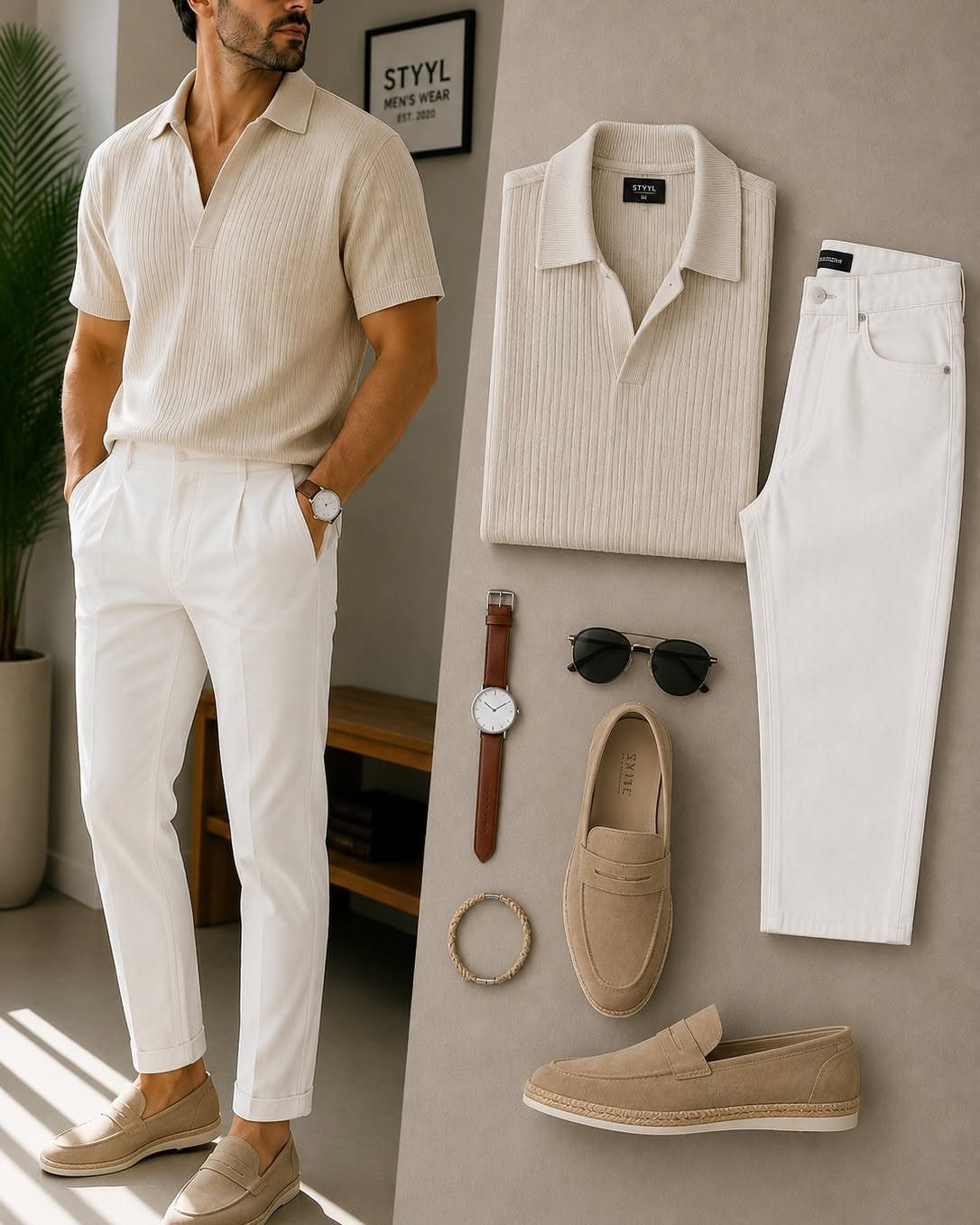
Beige on top, white trousers and beige loafers below: three light, close tones make an outfit look planned. A ribbed polo adds texture, so the palette never feels flat.
I’d stay with two or three colors at most and let the accessories, a watch and a bracelet, do the small work.
Laying everything out the night before, as in the flat lay, shows a clash before you leave the house.
White trousers show every mark, so they suit dry, clean days.
9. Quarter-zip Sweater Layered Over Tie
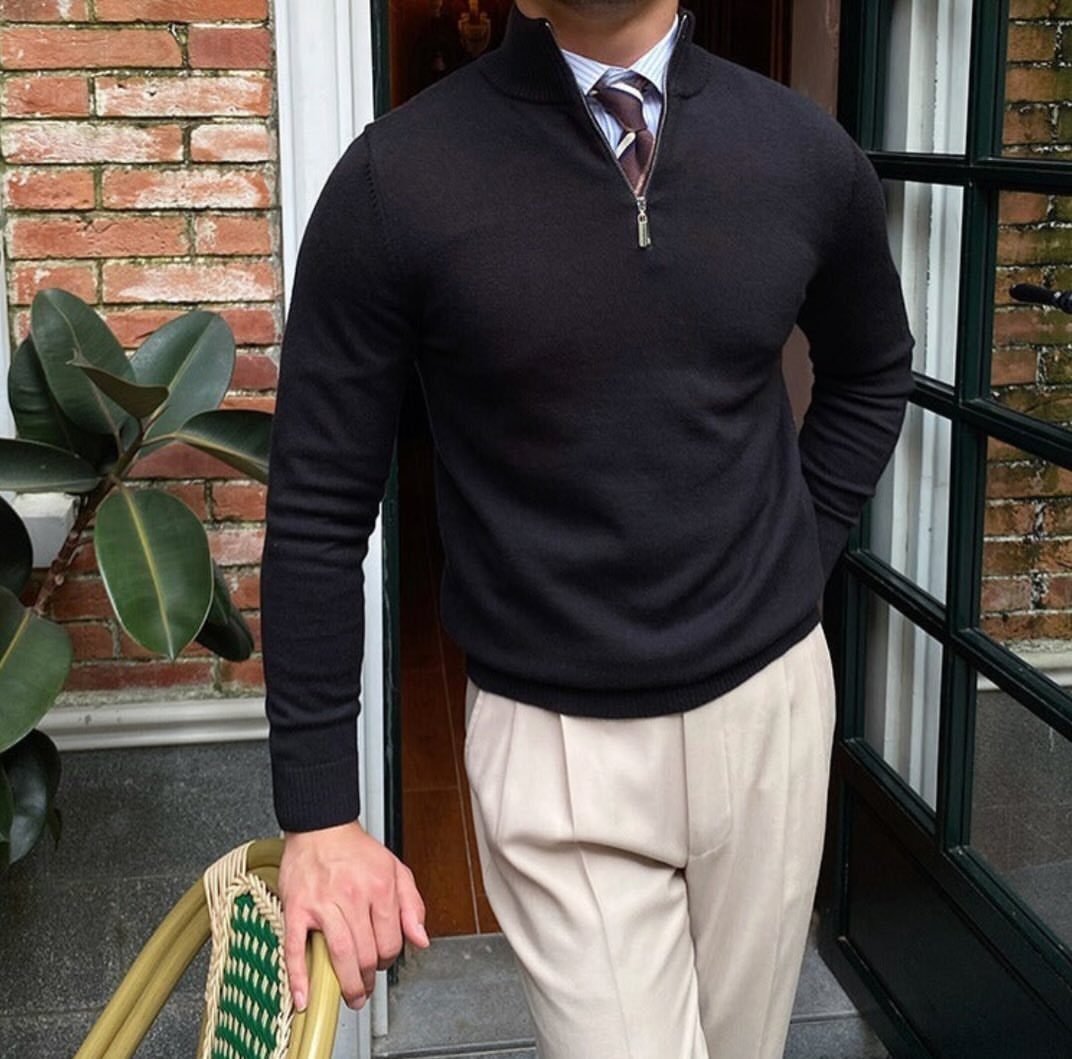
A black quarter-zip pulled over a striped shirt and patterned tie keeps the collar and knot visible while adding a warm layer. Cream pleated trousers lighten the whole outfit, so the black sweater does not feel heavy.
I like this for an office with a cold air conditioner. Choose a thin knit so the shirt collar lies flat, and zip only partway so the tie shows.
Two patterns work when one is quiet: keep the stripe fine.
10. Black Crewneck Sweater with Trousers
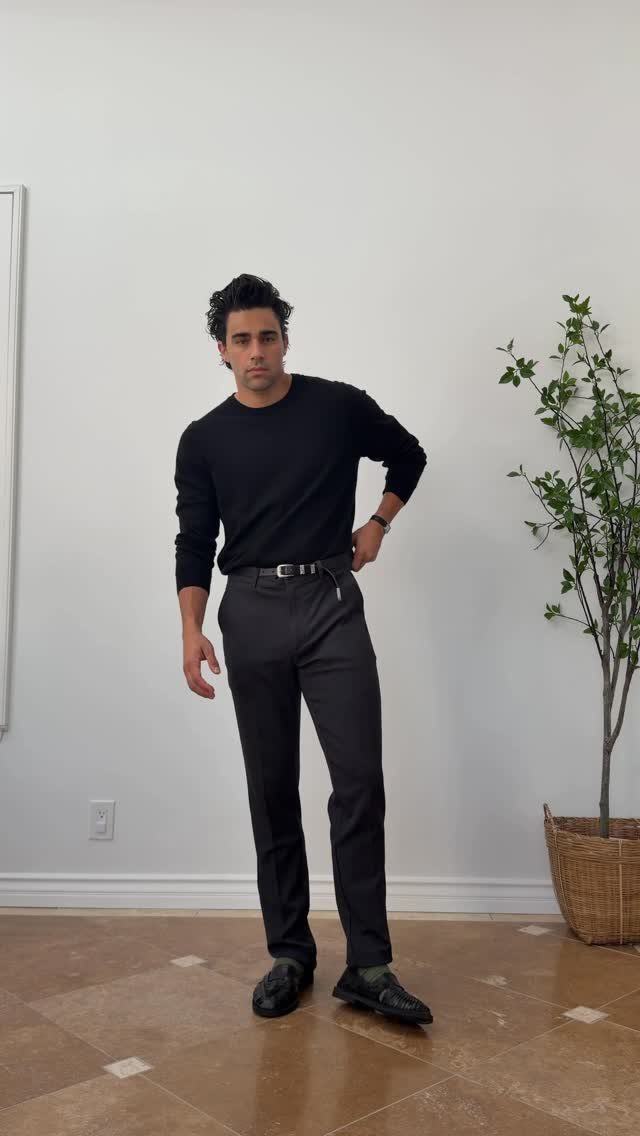
A fitted black crewneck tucked into dark grey trousers gives you a clean, narrow line from chest to ankle. Black loafers finish it in the same dark family, so nothing breaks the outfit.
I’d tuck the sweater only if it’s thin enough to lie smooth under a belt. Tonal dark outfits can look flat, so a watch or a lighter sock adds relief.
It takes 3 pieces and almost no thought.
11. Knit Polo with Trousers and Sneakers
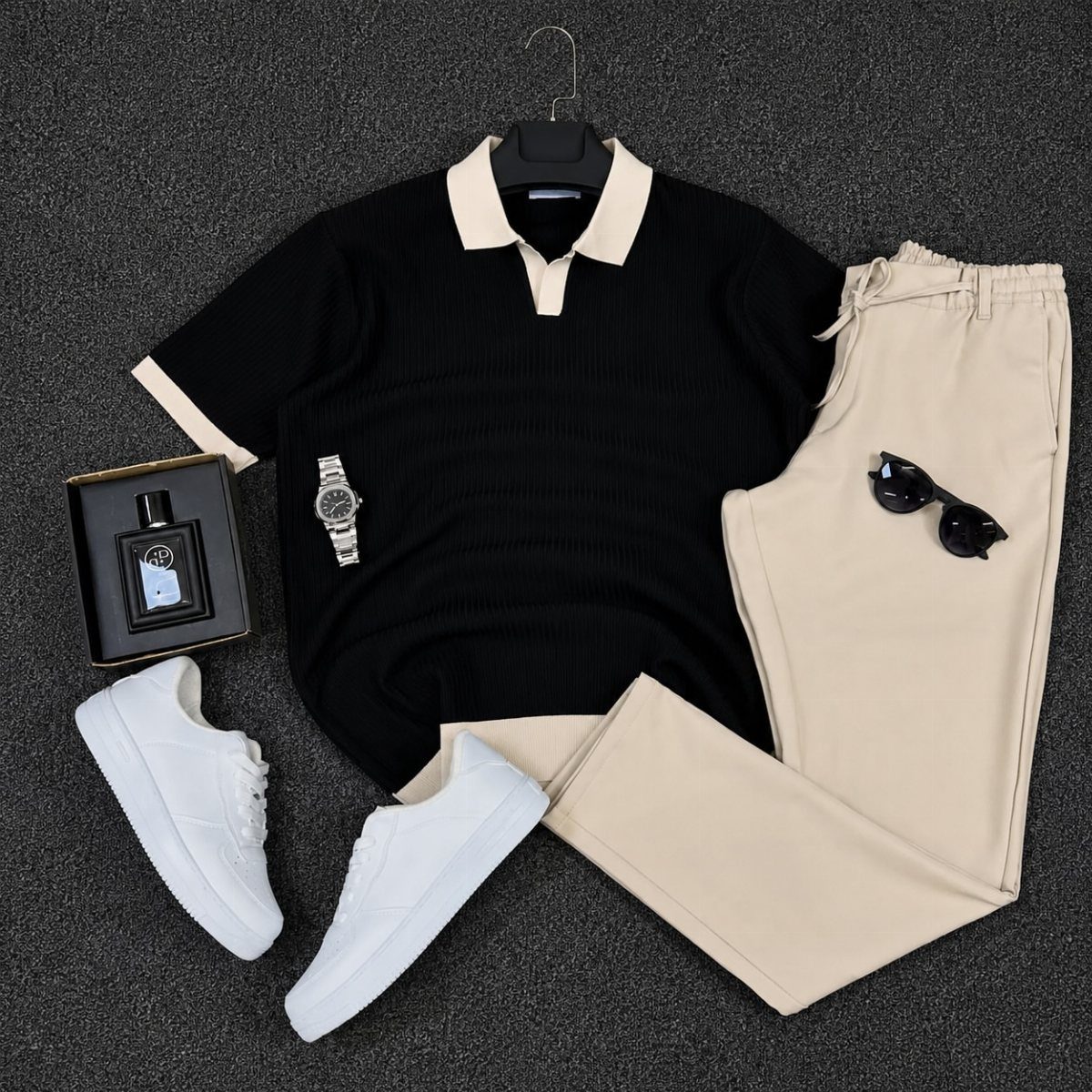
A black knit polo ties directly to cream trousers, so the outfit looks matched without being a set. White sneakers keep it light.
I’d pick this over a plain polo when the trousers are a pale shade, since the cream trim repeats them.
Cream trousers need a quick check for marks before you wear them.
12. Striped Quarter-Zip with Jeans
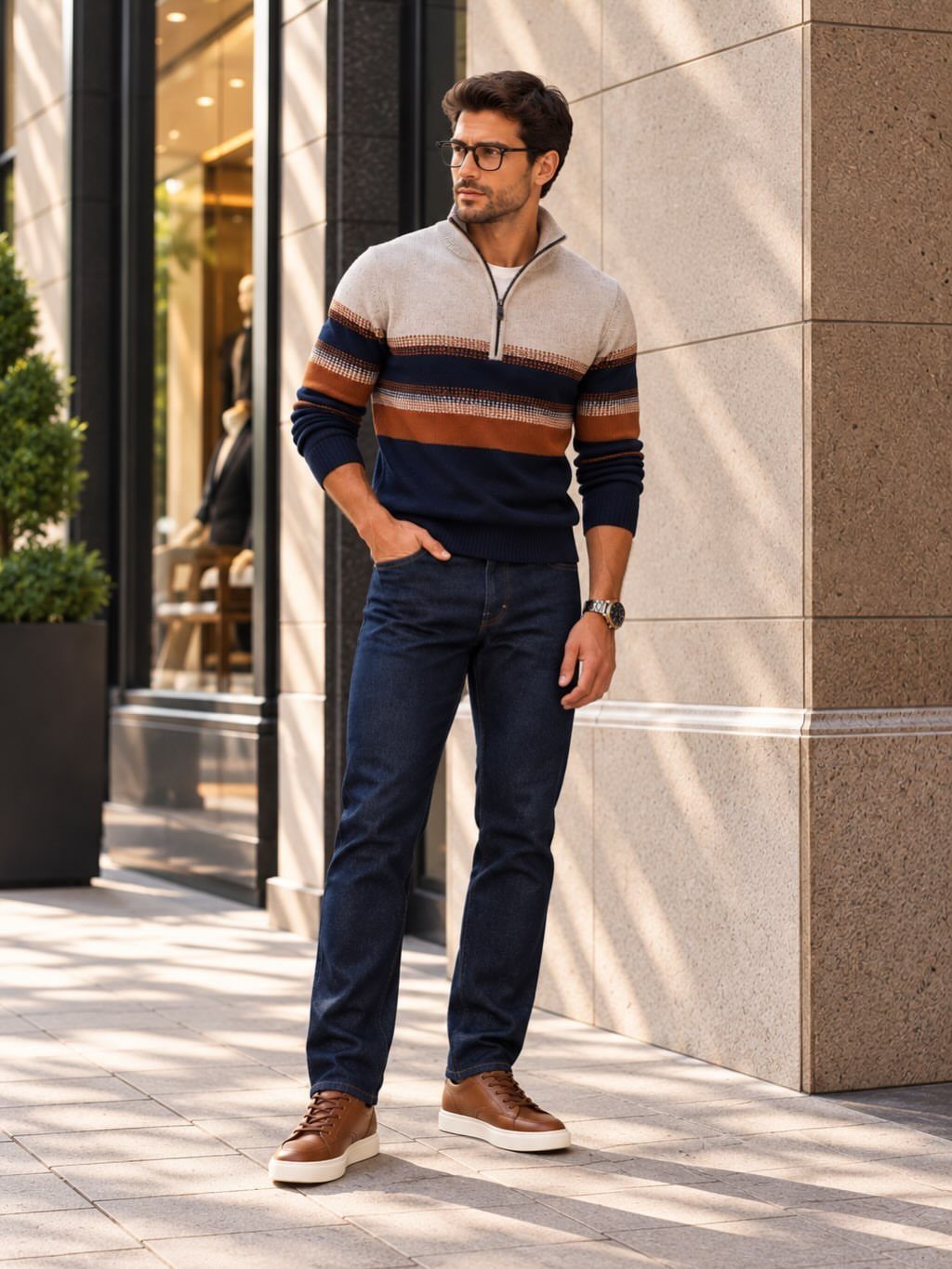
A striped, color-block quarter-zip gives a plain pair of dark blue jeans some pattern in a single layer. Brown sneakers in a clean, simple shape keep the look a step above beat-up canvas ones.
Choose stripes in muted tones, so the sweater reads smart rather than sporty. Dark jeans are the right partner here, since lighter or faded denim pulls the outfit down.
Wear it unzipped to the collarbone for a relaxed finish.
Common Smart Casual Mistakes
Running shoes are the fastest way to wreck a smart casual outfit. Minimal sneakers, loafers, or boots do the same job without the gym association.
Fit matters more than any single piece. Baggy shirts and sloppy jeans push everything toward careless, so a clean cut beats an expensive label.
Go too far the other direction and you have a different problem.
A full suit reads as boardroom, which is the wrong signal when the dress code asks you to look relaxed. At the other extreme, basketball shorts, hoodies, and beat-up sneakers read as unplanned, not smart.
Before you leave, ask whether each piece looks chosen. If one item looks like it was grabbed on the way out, swap it.
Showing up in a tie when everyone else wore open collars is a miss too, so check the room before you pick the outfit.
But, things are not so easy with casual dress. A suit is a uniform that complements itself, but there is no such copout with casual dress – you have to mix and match different garments on your own, and there is no tailor to hide behind.
Building a Smart Casual Wardrobe
You don’t need 20 outfits. Six or seven pieces that mix well cover it: a blazer with a clean shoulder, dark jeans, khaki or stone chinos, white leather sneakers, and 3 or 4 shirts that all go with each of those.
An unstructured blazer is easier to wear with dark denim or tailored chinos than a stiff, padded one.
For shirts, a crisp button-down is the safe choice.
Buy the basics first, then think about extras. One good watch, a leather belt that matches your shoes, or a pair of sunglasses with a solid frame can shift an outfit a notch sharper while the clothes stay the same.
Frequently Asked Questions
What is considered a smart casual dress code for men?
Think of smart casual as a split decision: one sharper piece, like a blazer or leather shoes, balanced by something loose, like a knit polo or dark denim.
A blazer over dark jeans, a button-down with chinos, or tailored trousers with clean sneakers all qualify. I like it because 3 pieces that repeat well are enough, and light, quiet colors keep it looking sharp without looking dressed up.
What are some good business casual clothes ideas for men?
My default for the office is a pair of navy or gray trousers, an oxford shirt with a collar that holds its shape, and an unstructured blazer on top. Add brown leather dress shoes, loafers, or clean brogues.
Wear a tie for a more formal office, or drop it when the room is relaxed. Check what your coworkers wear before choosing, since a tie in a room of open collars is a miss.
What is the 3-3-3 rule for men’s fashion?
The 3-3-3 rule means owning three types of shirts, three pairs of pants, and three pairs of shoes. The idea is a small set of pieces that mix well, so you can build many outfits without a big closet.
Counting pieces matters far less than how each one fits, whether the colors sit well together, and whether the outfit suits the room you’re walking into.