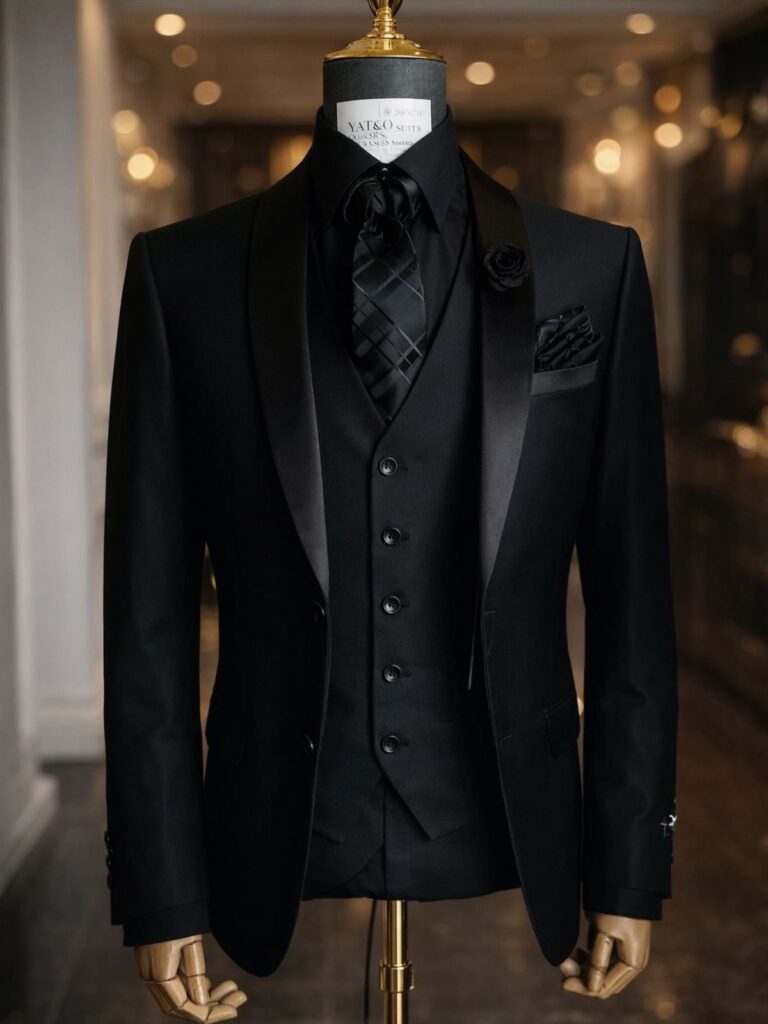
The list runs from a Black Tuxedo through a Three-Piece Suit, a Double-Breasted Suit, a Black Suit with White Shirt, an Embellished Lapel Jacket, an All-Black Monochrome Suit, a Black Pinstripe Suit, a Suit with Lapel Chains, a Black Velvet Tuxedo and a Patterned Black Tuxedo Jacket.
What picks one is whether the groom will wear it again: a plain black suit moves into the work wardrobe, while a tuxedo belongs to an evening ceremony or a black-tie invitation.
Season narrows it further, since velvet runs heavy and warm and suits fall and winter, so I cover wedding season considerations at the end of the list.
1. Black Tuxedo
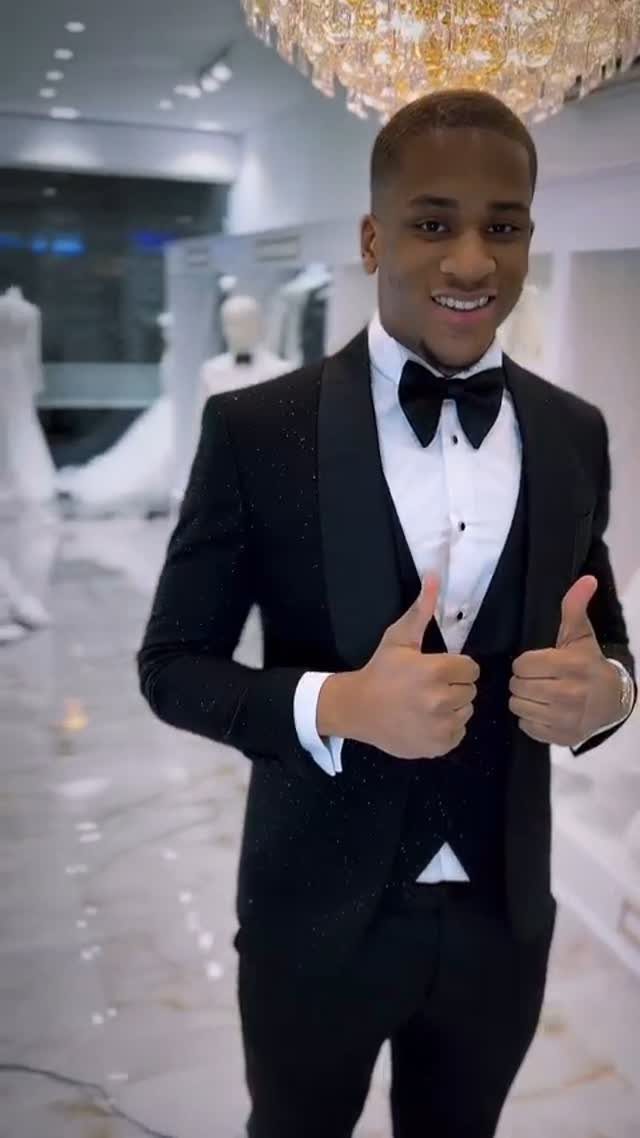
A black tuxedo with a matching vest and a black bow tie is the plainest answer to "what does a groom wear," and plain is the point of it.
The satin-faced details, the pleat-free white shirt and the bow tie all agree with each other, so nothing needs defending when the photos come out of the album later.
Skip a rental that hangs off the shoulders. If you rent, ask for the jacket to be fitted at the shoulders and sleeves first, since those are the hardest places to fix.
“The biggest mistake a groom can make in their choice of suit is one that isn’t true to their personality.”
— Vogue
2. Three-Piece Suit
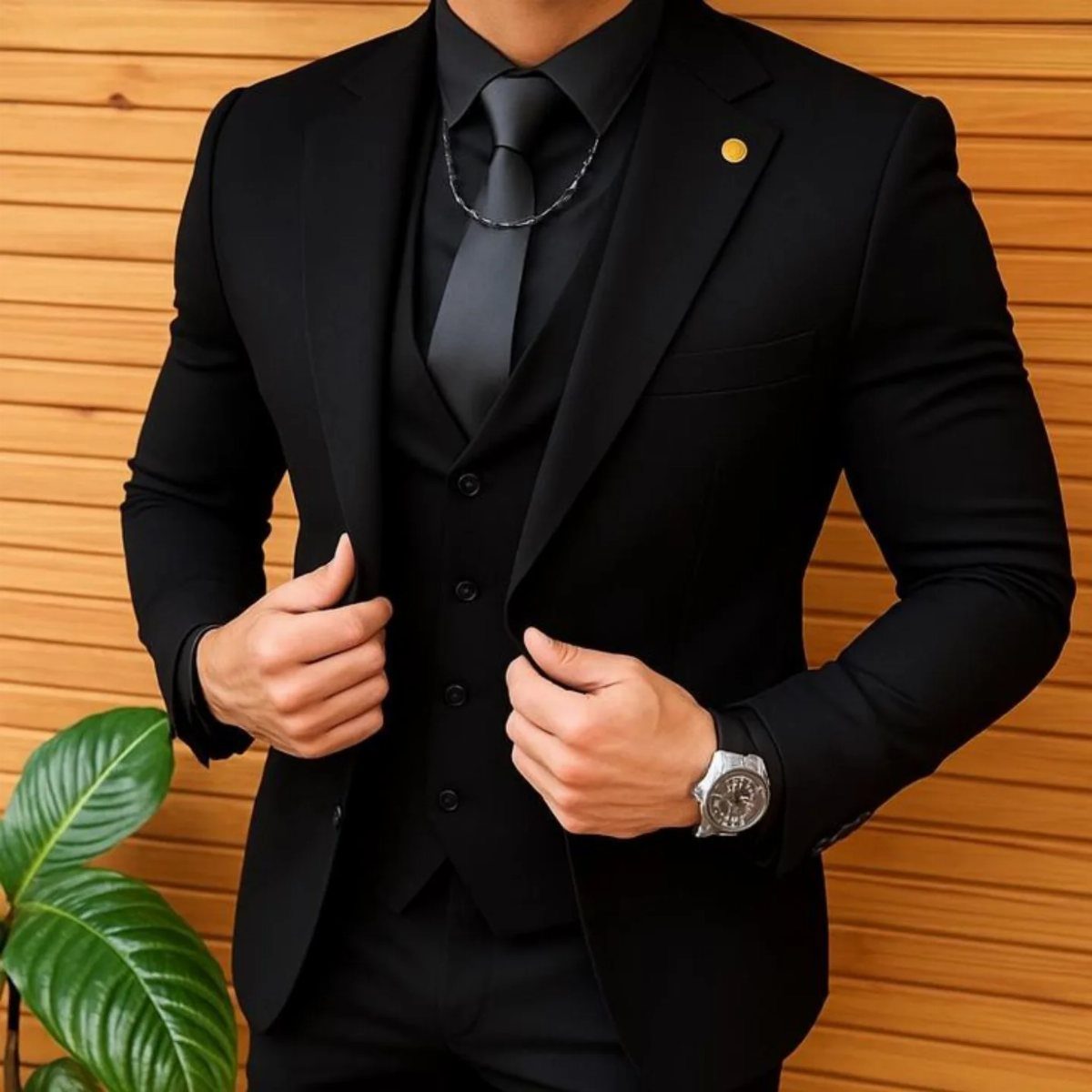
Black on black on black, in a three-piece, reads as deliberate rather than dark for its own sake. The vest closes the gap between shirt and jacket, so the whole torso looks like one clean column.
The extra piece buys you options.
Lose the jacket after the ceremony and the vest and tie still look dressed. I would keep the vest hem just covering the trouser waistband, and the bottom button undone.
3. Double-Breasted Suit
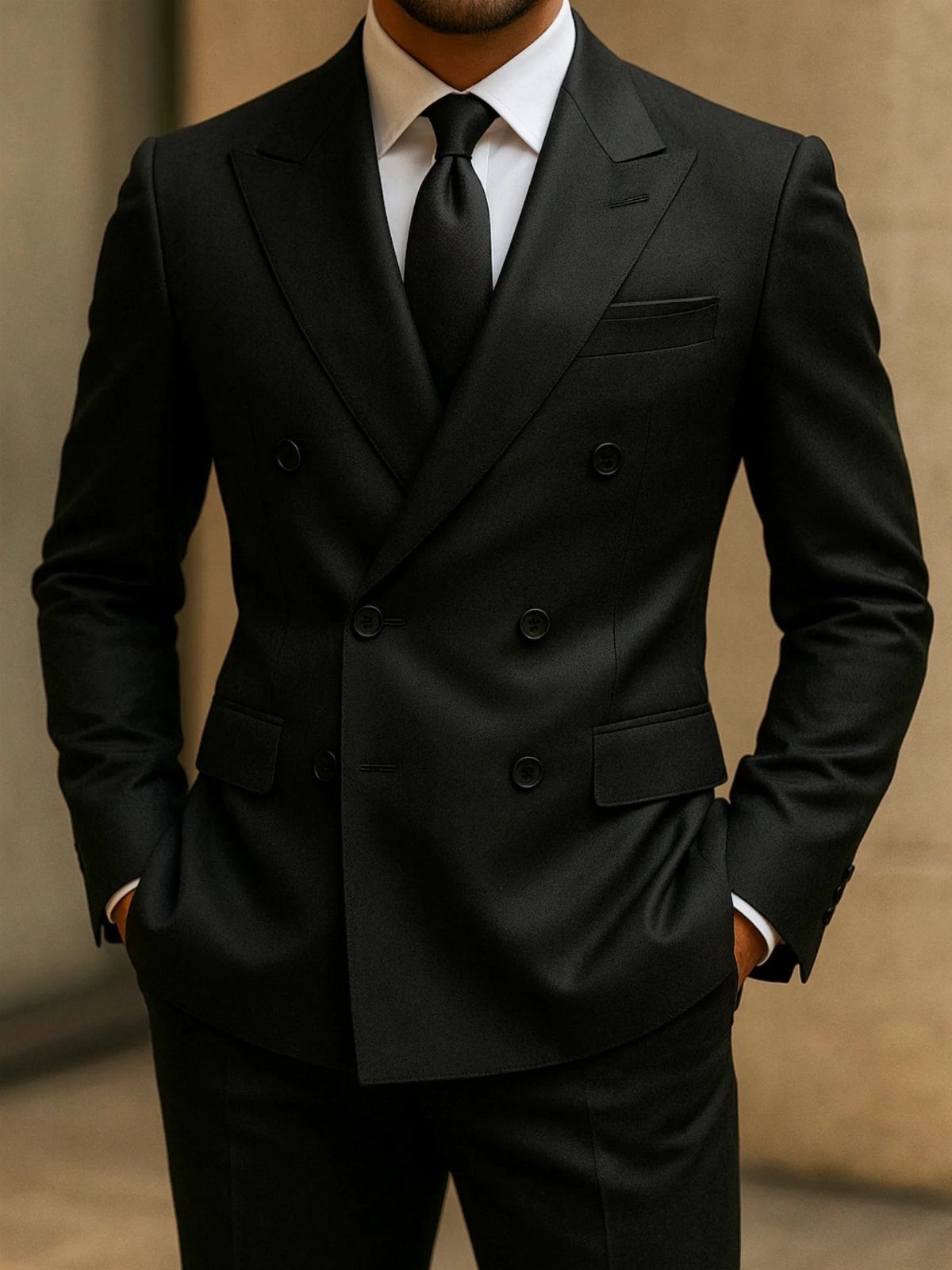
Double-breasted jackets have overlapping fronts, and that overlap adds structure across the chest. In black with a white shirt and a solid black tie, it looks sharp without needing any extras.
Fit matters more here than on a single-breasted jacket.
Keep the jacket buttoned when standing, because it hangs wrong open. Slimmer men tend to wear it best, since the extra fabric across the front adds bulk on a broader frame.
4. Black Suit with White Shirt
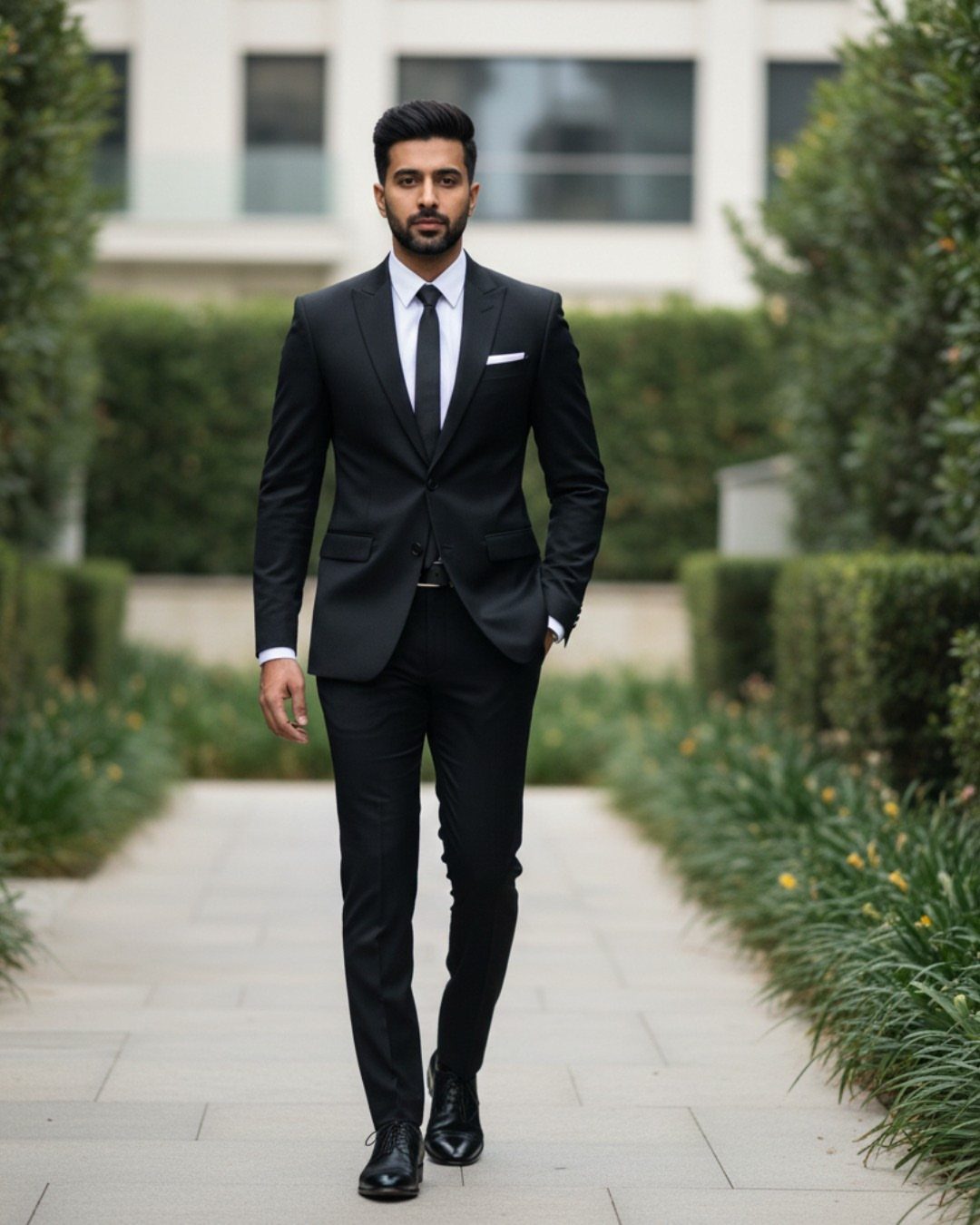
White is the safest shirt under a black suit, and the contrast does the work: crisp collar, dark jacket, a clear line at the neck. A black tie and black dress shoes finish it without any fuss.
Press the shirt the morning of the wedding.
A wrinkled white shirt shows more against black than almost anything else. If white feels too stark, a pale gray or soft ivory shirt is a quieter choice, though I prefer true white here.
5. Embellished Lapel Jacket
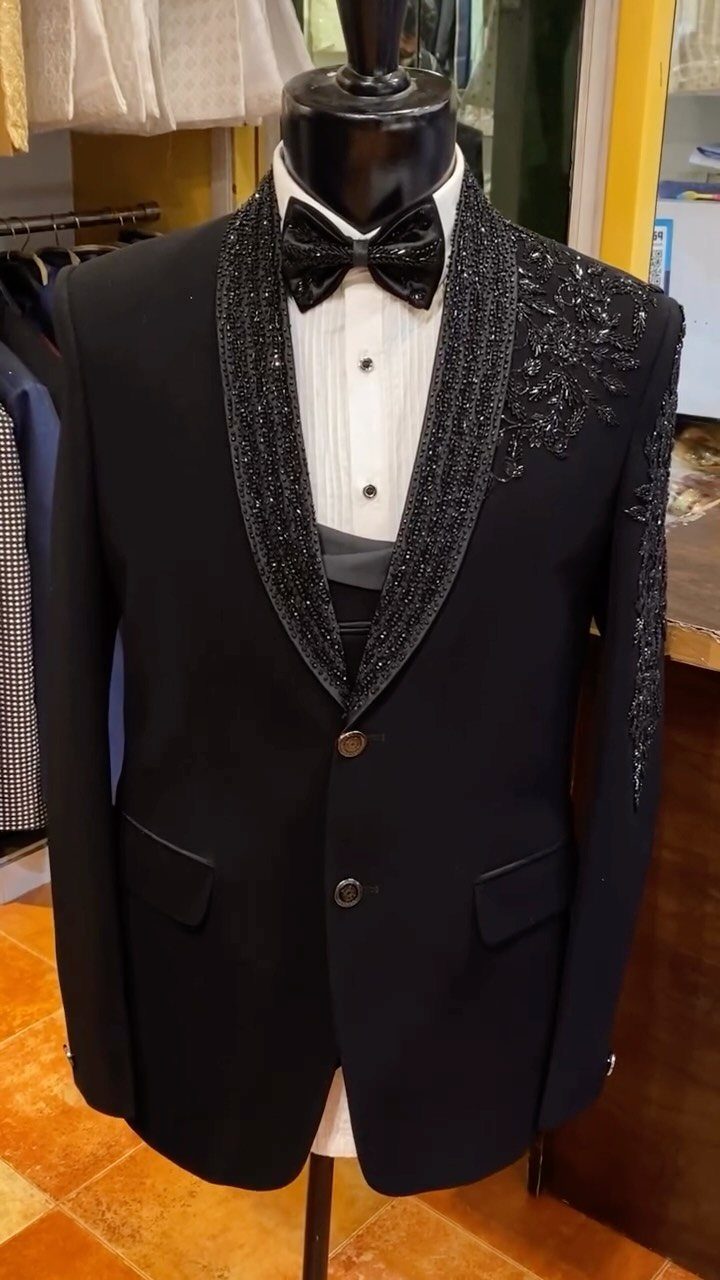
Beading on a shawl lapel turns a standard black tuxedo into the loudest thing in the room, quietly. The rest should stay simple: a white pleated shirt and a black bow tie, so the lapel is the only decoration.
Check how heavy the beading is before you commit, since it adds weight across the shoulders.
It also limits reuse, because this jacket suits a wedding far better than the office. Pick it only if you want that look once and mean it.
6. All-Black Monochrome Suit
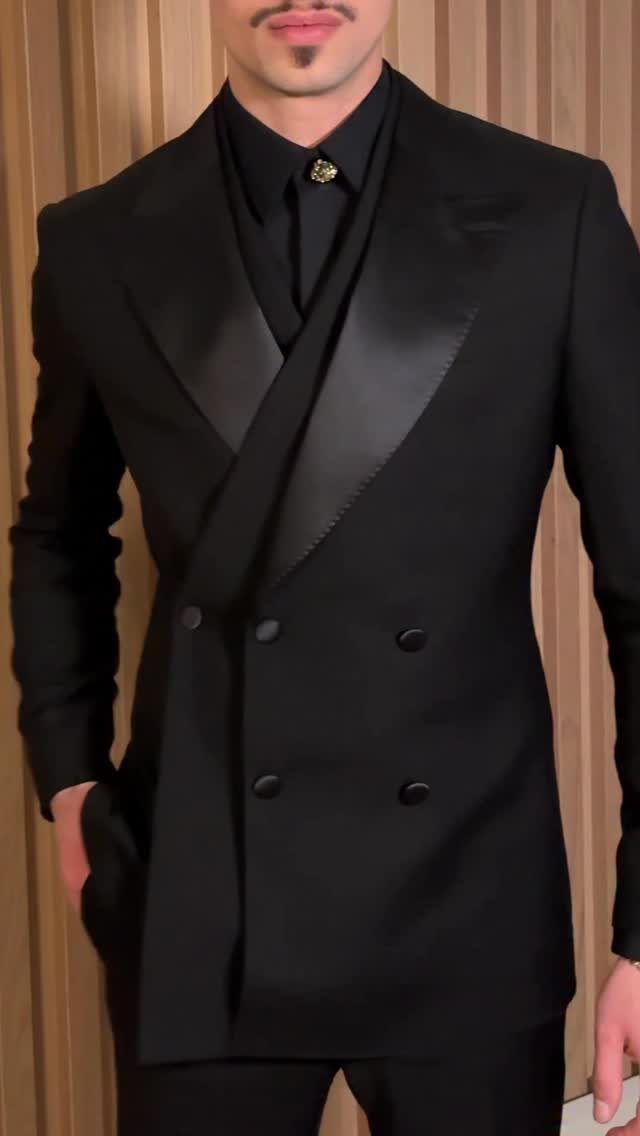
Satin lapels are what keep an all-black suit from going flat. With a black shirt, they catch the light and give the outline some shape, and a gold collar pin adds one small point of warmth.
This is a bolder choice than white under black, and I like it for evening ceremonies.
Keep the tie out of it. Wear the shirt buttoned to the top with the pin, and leave everything else plain so the suit does the talking.
7. Black Pinstripe Suit
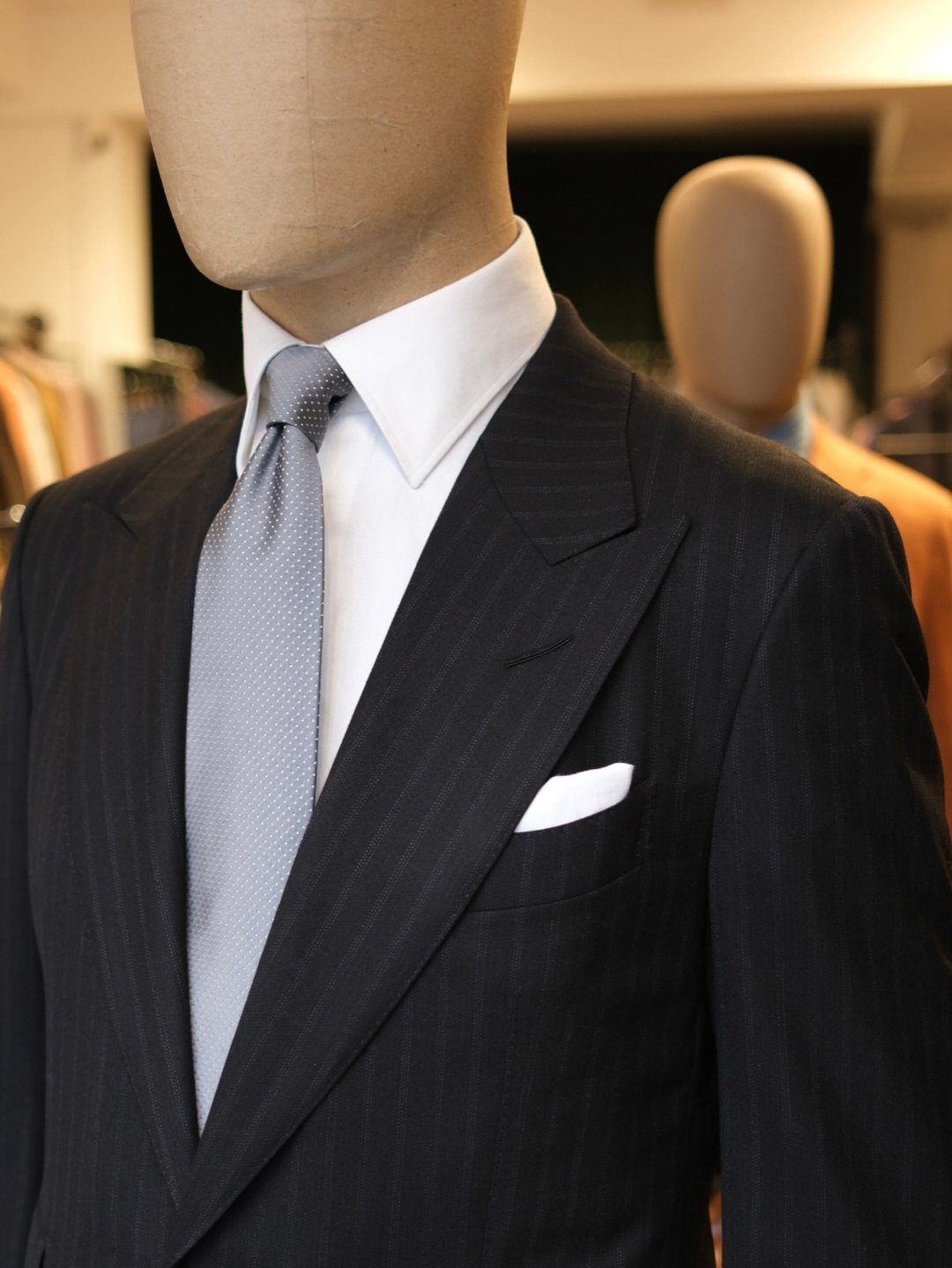
Pinstripes give a black suit some quiet motion, and a white shirt keeps the stripes from competing with anything. The silver-grey dotted tie and white pocket square do the rest, so I would add nothing else.
Keep the tie’s pattern small and the color soft.
A busy tie fights the stripes, while a dotted one reads as texture from a few feet away. Fold the pocket square flat, not puffed.
8. Suit with Lapel Chains
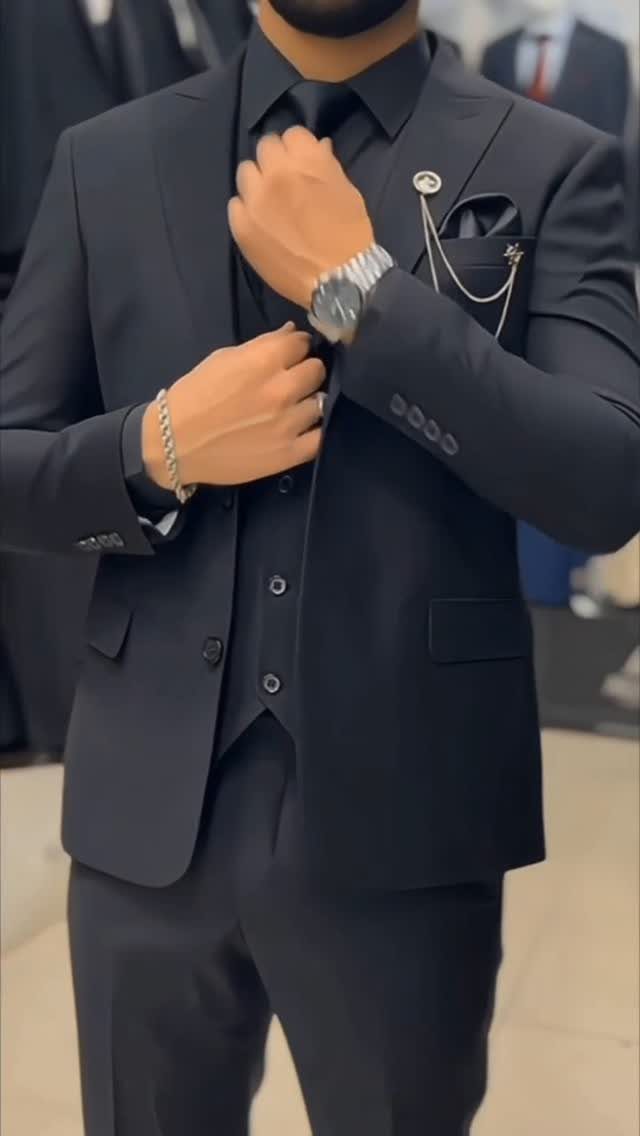
A silver chain pinned across the lapel is the one accessory that makes a black three-piece look chosen rather than rented. Everything around it stays dark and plain: black shirt, black tie, nothing patterned.
Match your metals.
A silver watch and bracelet echo the chain, and a gold piece would split the eye. Pin the chain before you dress fully, since a loose drape is easy to snag on a buttonhole.
Wear one chain only. Two start to look like costume.
9. Black Velvet Tuxedo
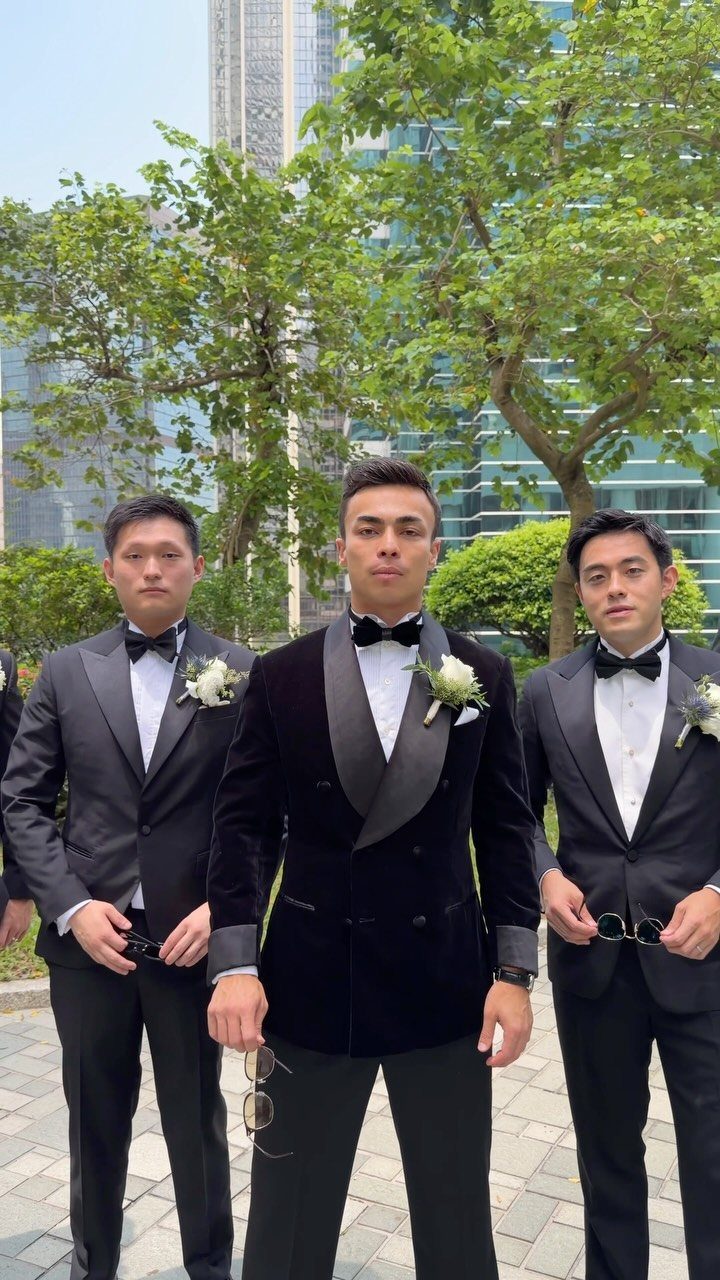
Velvet is the black jacket for a groom who wants texture without changing the color. It soaks up light where satin reflects it, so the jacket looks deeper and richer, especially in evening light.
Pair it with a black bow tie, as here, and a plain white shirt. Velvet already supplies the drama, so skip patterned ties and loud pocket squares.
Velvet runs heavy and warm, so it suits fall and winter weddings and gets stuffy fast in a summer ceremony. Velvet suits a cooler-weather wedding better than a hot afternoon outdoors, and I would choose it for fall or winter.
10. Patterned Black Tuxedo Jacket
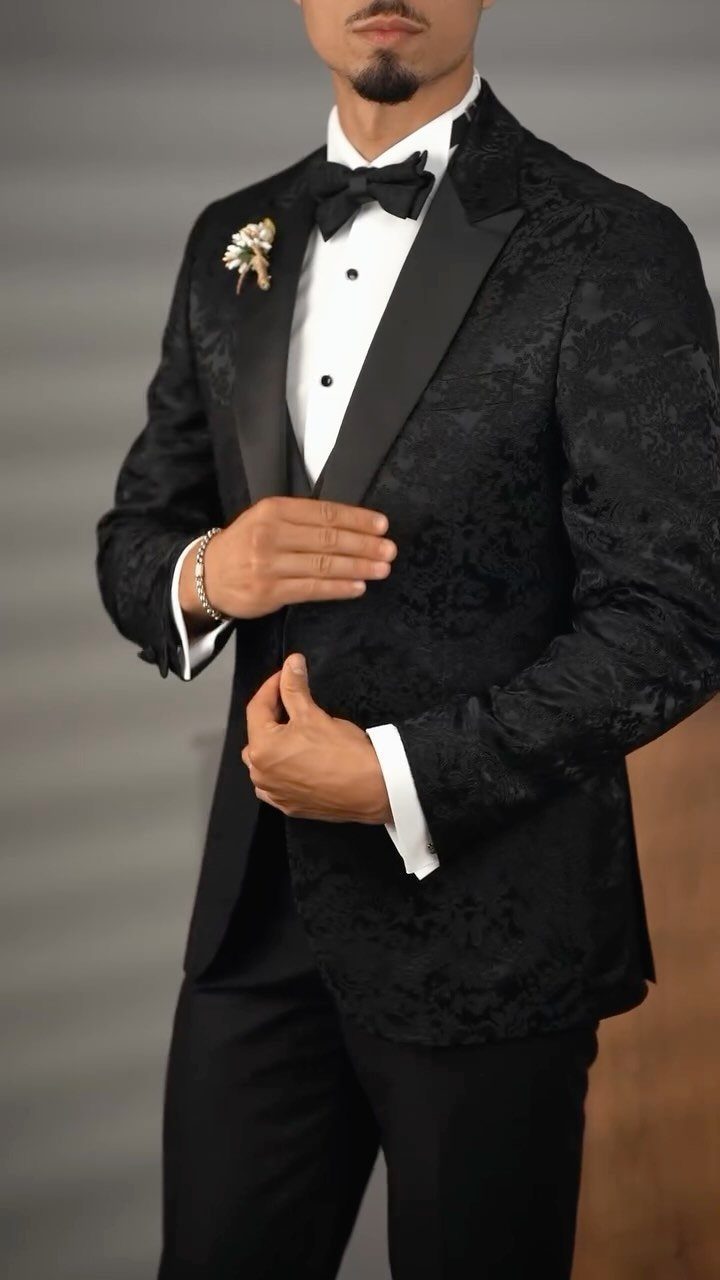
A jacquard jacket weaves its pattern into the cloth itself, so black stays black while the surface catches light in a subtle design. Smooth satin lapels give the eye a calm place to rest against all that texture.
Let the jacket carry the pattern and stay traditional below it: a white dress shirt, a black bow tie, and a small floral boutonnière. The jacket is the statement, so the supporting pieces should be quiet.
I would choose this over a beaded lapel if you want something less heavy but still distinctive in photos.
Suit Purchasing Advice
Buying beats renting for most grooms, mainly because a bought suit keeps working after the wedding. Business meetings, formal events and other special occasions all become second and third wears, and a rental gives you one.
Purchase also means better fit. Rentals come in limited sizes and generic cuts, while a suit you own can be tailored to your frame.
A black suit and a black tuxedo are different purchases, and three things settle which one you need: what the invitation says about dress code, what time the ceremony starts, and whether you’ll wear it again after the wedding.
If black tie is specified or the ceremony is in the evening, a tuxedo fits. If you want something that moves into your work wardrobe, a well-cut black suit is the more practical buy.
Wedding Season Considerations
Match the cloth to the season.
Warm-weather weddings call for lightweight wool, a wool-silk blend, or any open weave that lets heat escape. In winter, a heavier wool is the better call, since it keeps its shape through a long day and holds more warmth.
Black shows lint, wrinkles and fit problems more than lighter colors, so tailoring matters more than usual.
Check the shoulders first: the seam should sit right at the edge of your natural shoulder, and the fabric should lie flat with no dimples or overhang.
Lapels ought to lie flat against your chest instead of bowing outward, and about a quarter to half an inch of shirt cuff should peek out past the sleeve. Trousers should fall cleanly, with no fabric bunching at the ankle.
Buying online, I’d measure yourself and match the numbers to the brand’s size chart rather than assuming your usual S, M or L will fit, because sizing differs from one label to the next.
Frequently Asked Questions
Is a black suit ok for grooms?
Yes. Black has been a groom’s color for generations, and since it is neutral it sits comfortably next to whatever palette the wedding uses.
A black suit that fits properly also does duty at other events, from funerals to formal work functions.
Is a $500 suit considered cheap?
Quality and brand set the answer, and plenty of men would call that price reasonable rather than cheap. A suit that is tailored to your frame beats a pricier one that hangs off the shoulders.
What is the best suit for a groom?
The best one fits well and matches the formality of the wedding. For a black-tie or evening ceremony, that means a tuxedo.