The ideas here run from a blazer worn with a crisp button-up to a polo and trousers with nothing on top, and the right one depends on what your office already wears.
Whichever you choose, dress one notch above what you see.
1. Blazers
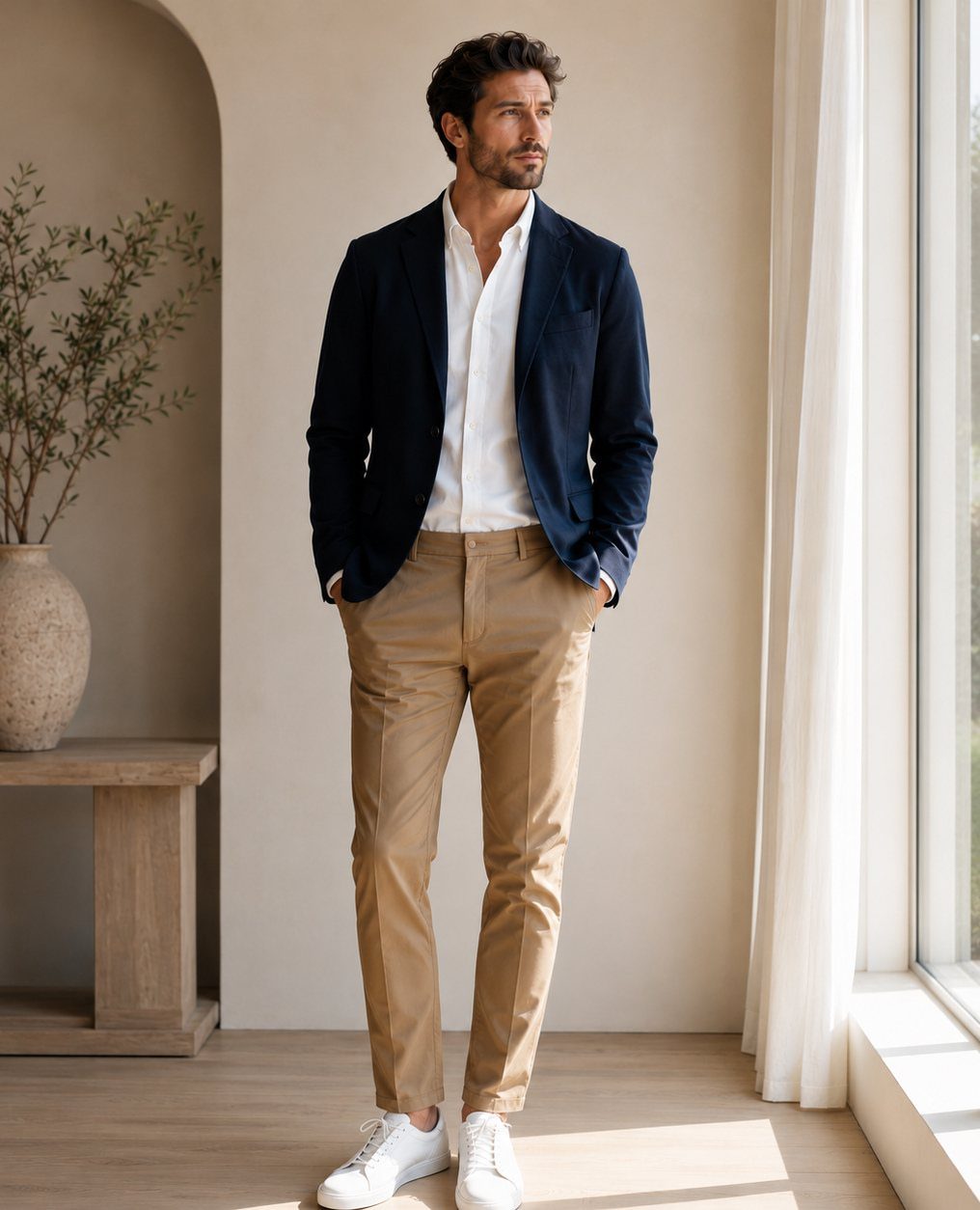
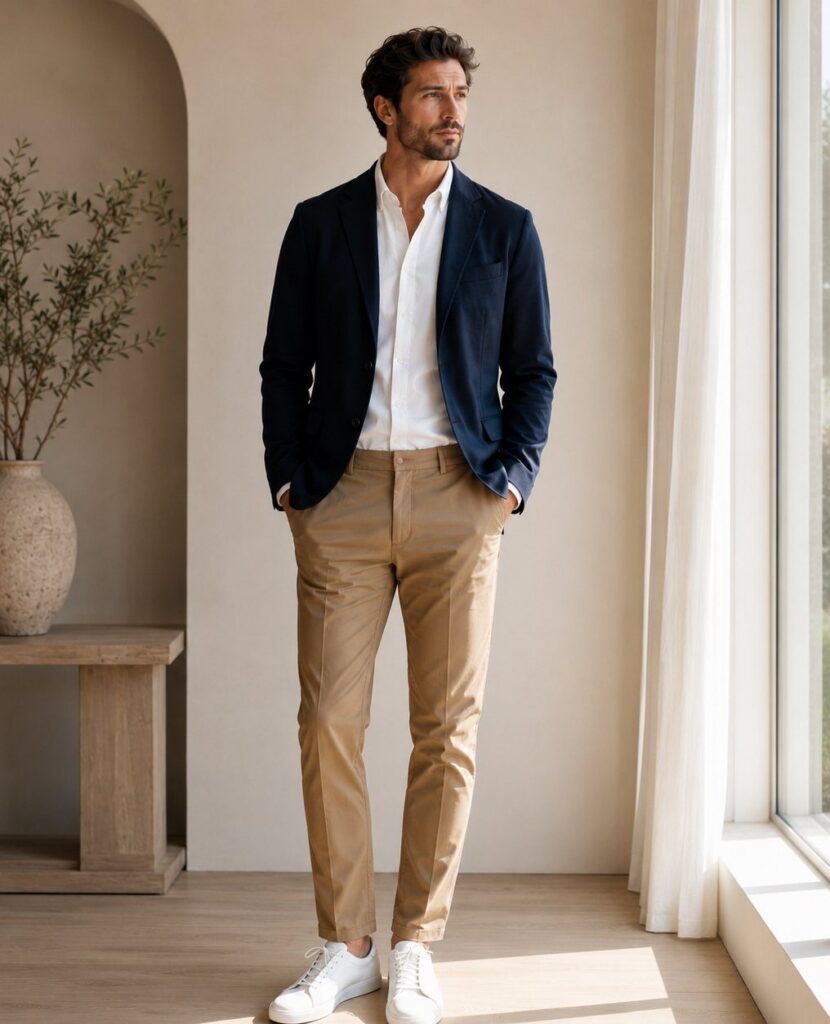
A navy blazer does the work of a full jacket without the weight of a suit. Over a white open-collar shirt and khaki chinos, it gives the outfit shoulders and a clean line, and the white sneakers keep it relaxed.
Pick one that sits flat across the shoulders and lets the sleeve end near the wrist bone. I like navy because it works with nearly every trouser color you own.
2. Button-up Shirts
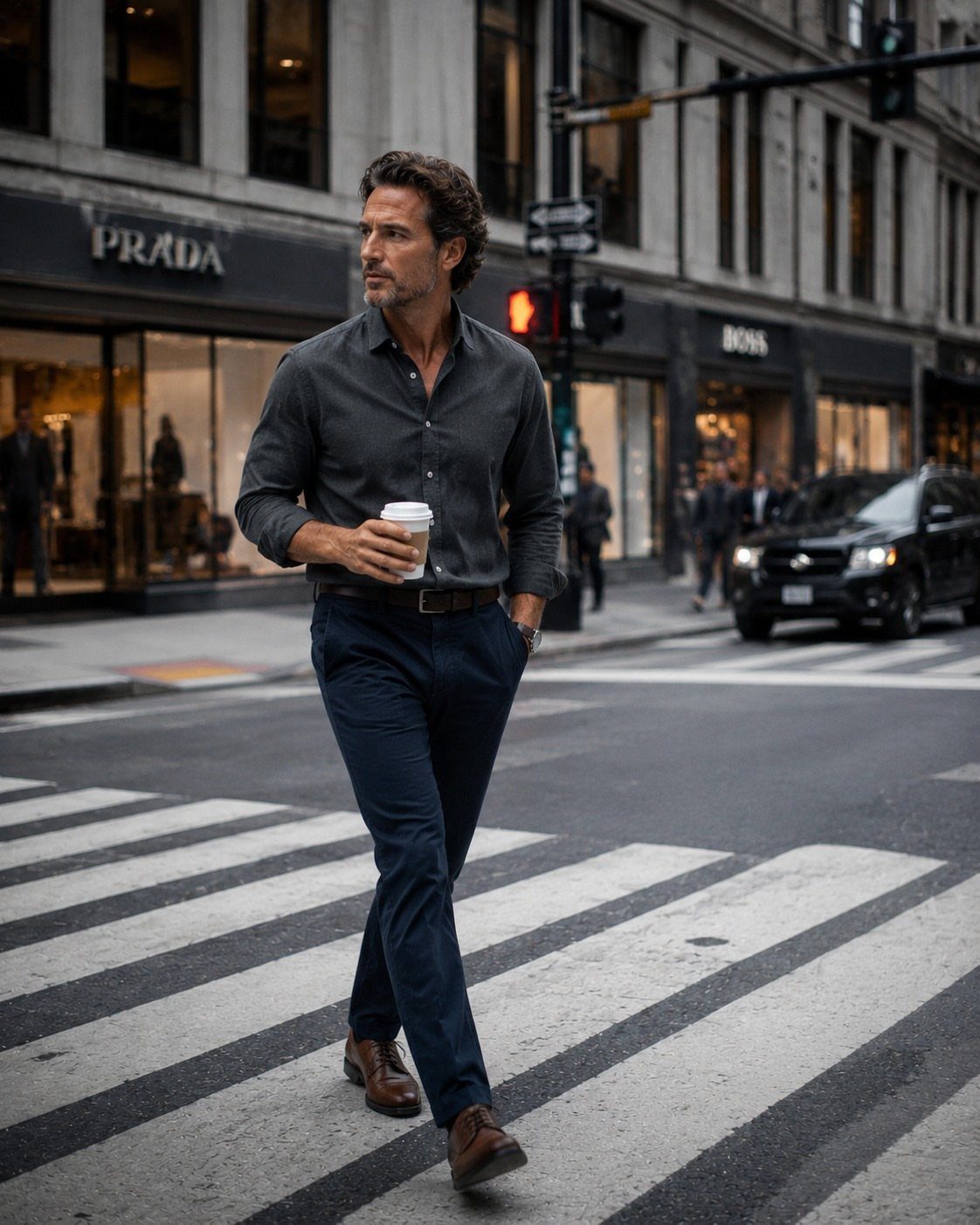
Most business casual outfits start with one plain button-up, and a dark gray one like this is easy to repeat through a work week. It pairs with navy trousers and brown shoes without any effort.
Look for a collar that holds its shape with the top button open, and tuck the shirt in if you wear a belt. Solid colors mix best, so buy those before stripes.
3. Footwear
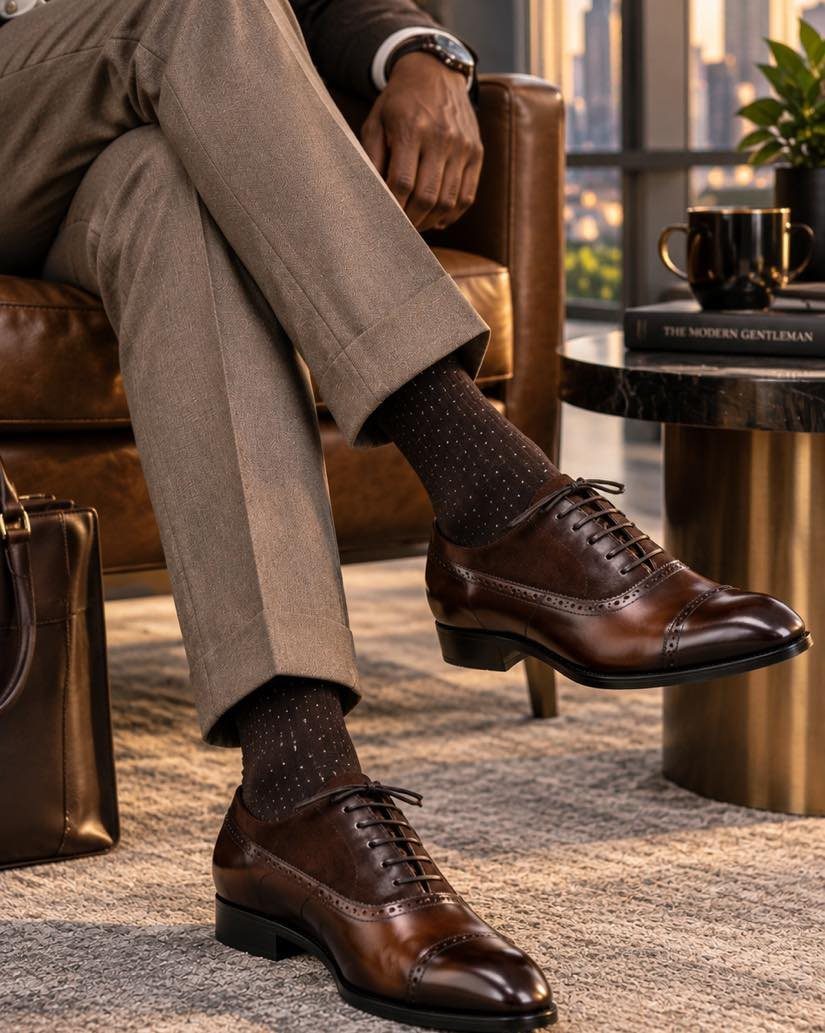
Brown leather brogues are the shoe I would buy first for an office that sits between suits and sneakers. Polished, they look serious; with cuffed tan trousers, they stay friendly.
Dark socks keep the line from ankle to shoe quiet, though a subtle pattern adds some personality.
Comfort matters here, so wear a new pair around the house before a full workday. Leather soles look best but give less cushioning than rubber.
4. Layering with Sweaters
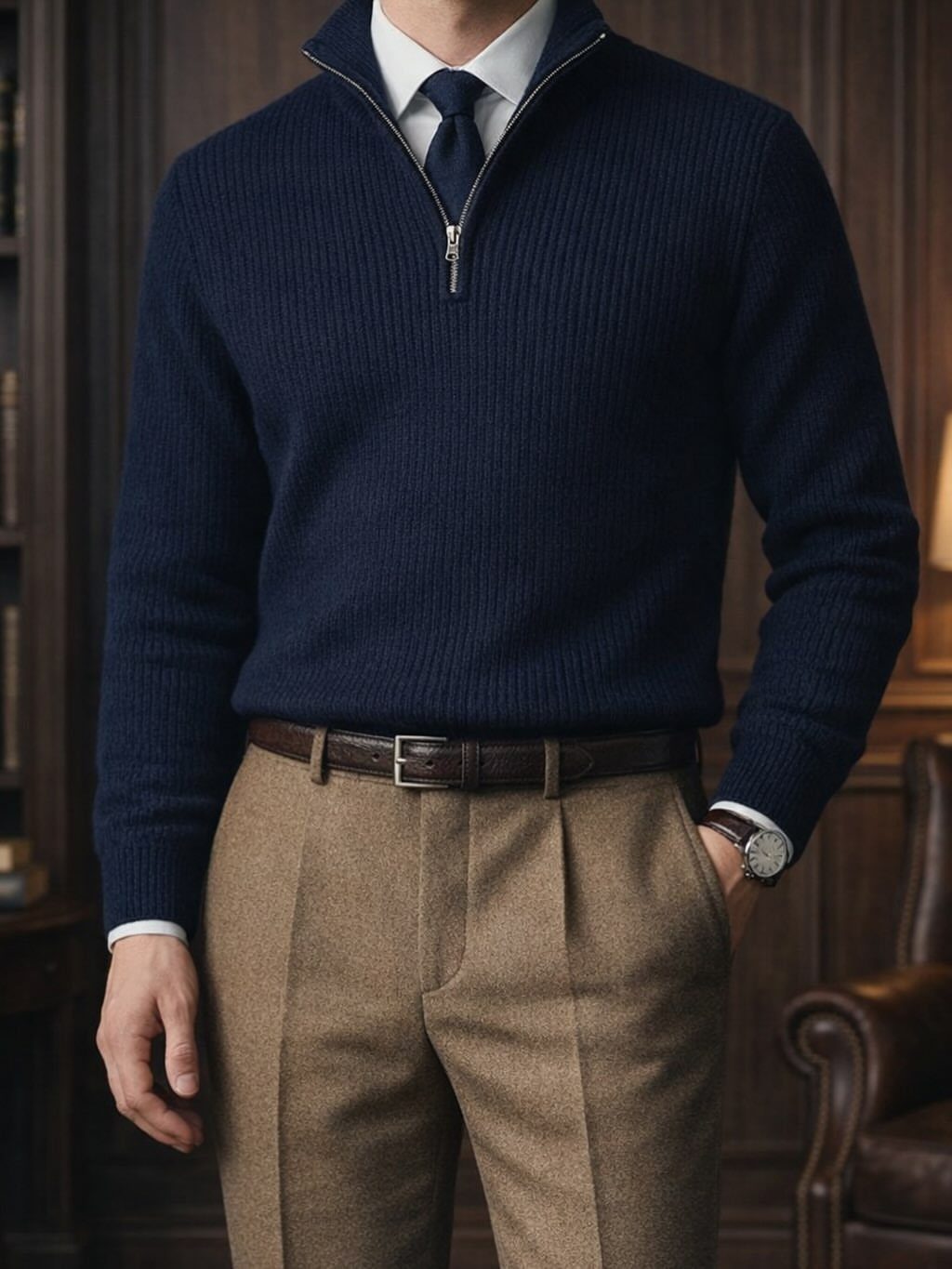
A navy quarter-zip knit worn over a white collared shirt and tie is the easy answer to a cold office. The ribbed texture adds interest to a smooth shirt, and the tie stays visible at the neck.
Choose a fine knit so the collar lies flat beneath it, and keep the zip pulled low enough to show the knot. With tan pleated trousers and a leather belt, the look reads neat without feeling stiff.
5. Tailored Jacket and Crisp Shirt
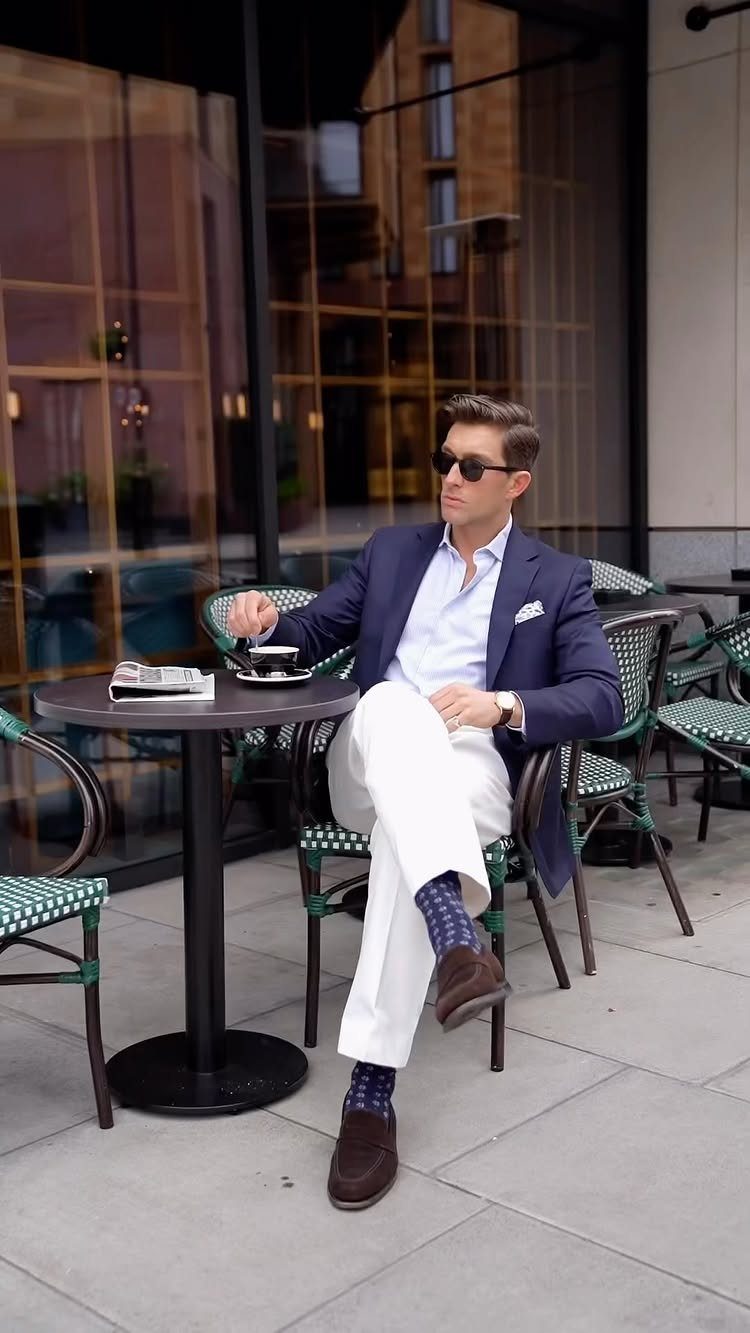
Pairing a tailored navy jacket with a crisp light blue shirt is about as dependable as menswear gets.
I would skip a tie here. Press the shirt well, because a crisp collar and flat placket are what make a tailored jacket look sharp instead of rumpled.
6. Polo Shirt and Trousers
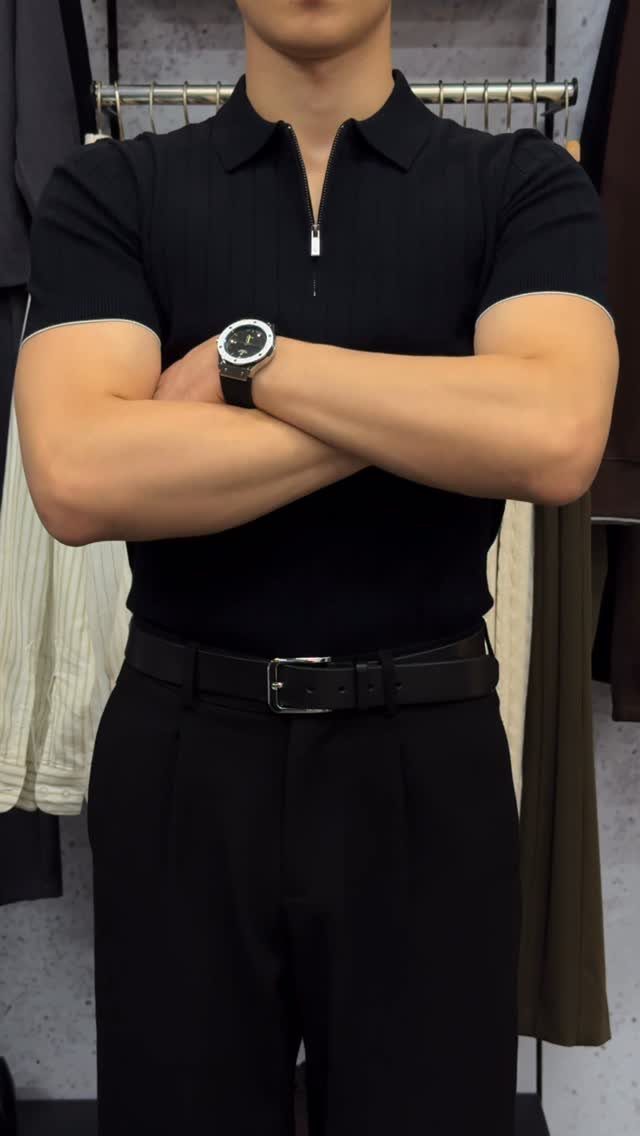
A black zip polo tucked into black trousers is the simplest head-to-toe outfit you can build, since there is nothing to match.
One color removes any decision about matching, and the tuck and belt keep it from looking like gym wear.
Pick a polo with a structured collar that stays put, and a trouser with a clean drape rather than a stretchy jogger shape.
A watch finishes it. Black shows lint and fading fast, so wash it cold, turn it inside out, and skip the dryer when you can.
7. Field Jacket Over Shirt and Tie
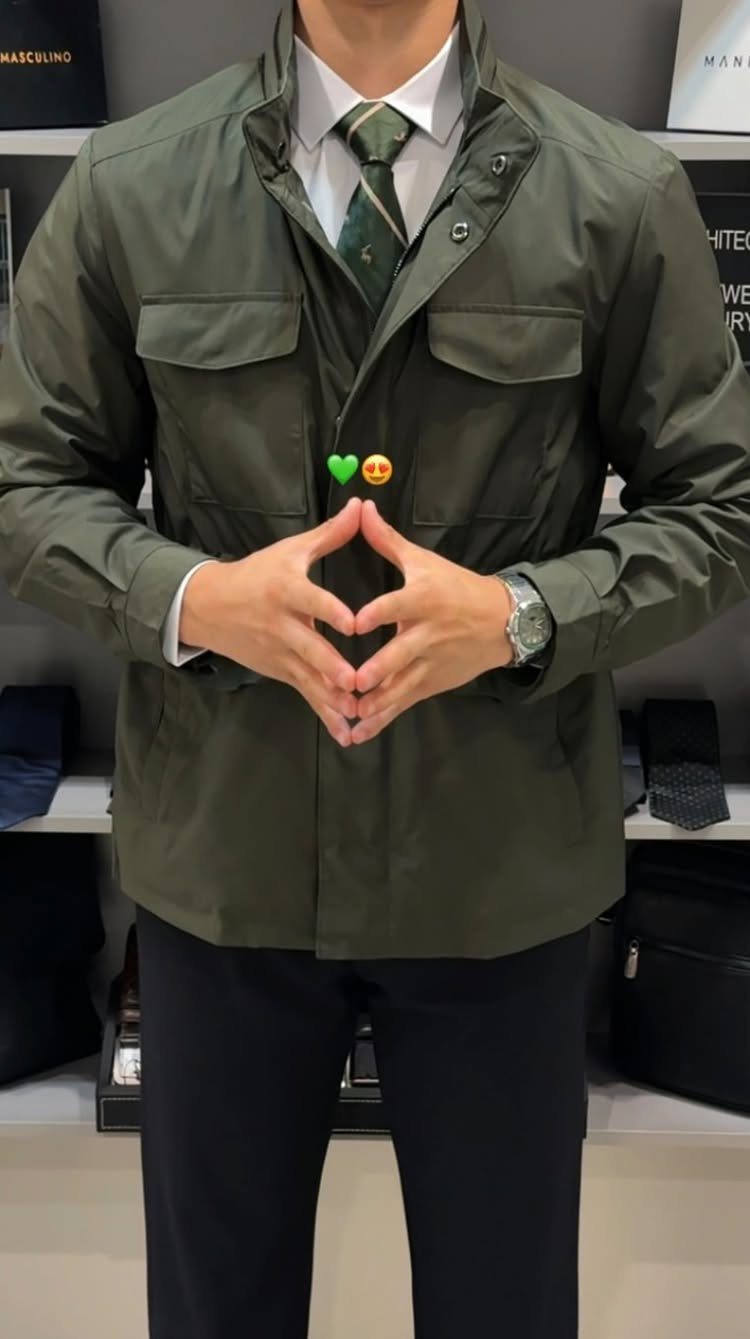
An olive field jacket over a white shirt and a dark green patterned tie turns the tie into something relaxed. The green stays in one family, so the outfit looks planned rather than thrown together.
Keep the tie narrow enough to sit flat under the jacket, and wear dark trousers so the olive does the talking. Leave the jacket open; zipped, it hides the tie you came to show.
8. Zip-up Jacket Over Collared Shirt
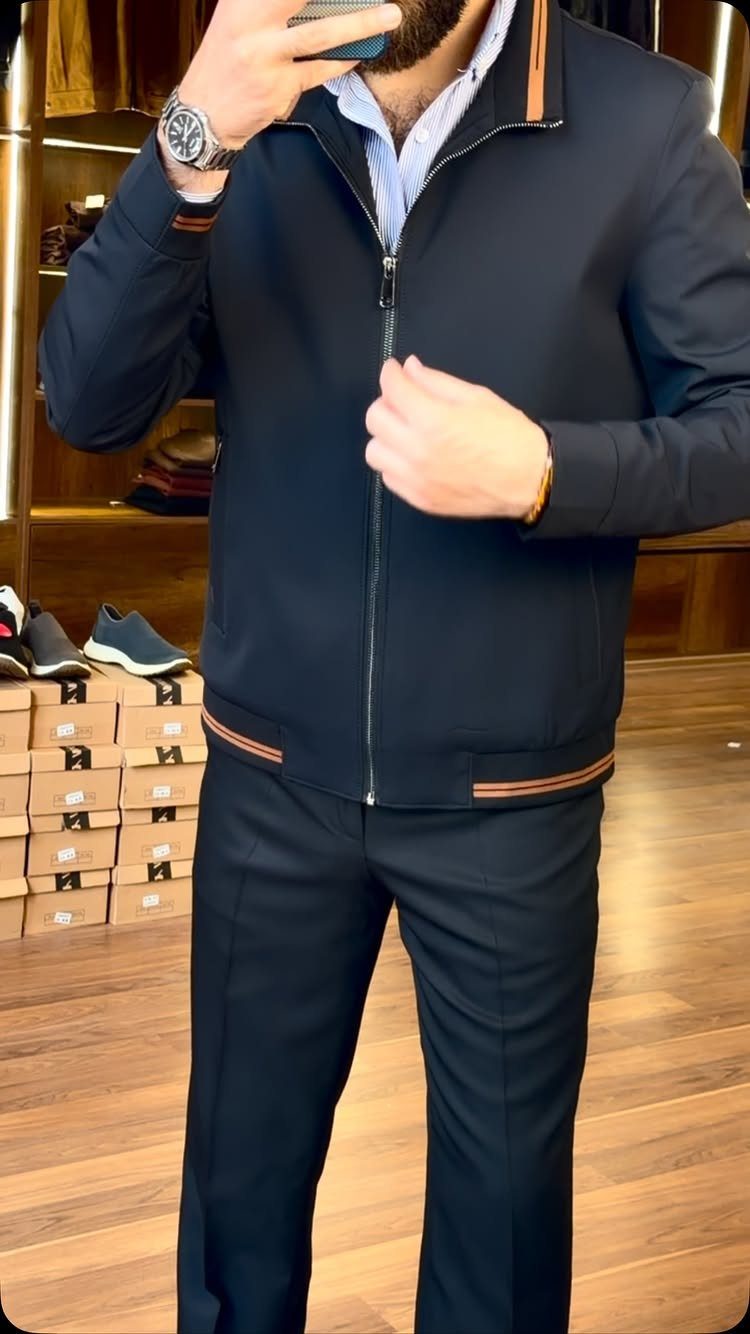
Smart navy zip-up jackets suit men who find a blazer too formal and a hoodie too sloppy. Worn over a light blue striped dress shirt with matching navy trousers, the look stays tonal and tidy.
Pick a jacket with a clean collar and a trim that doesn’t shout; brown is a good accent. Let the shirt collar sit outside the jacket, where it frames your face instead of disappearing under the zipper.
Zip it halfway for a day at the desk.
9. Shirt and Tie Without Blazer
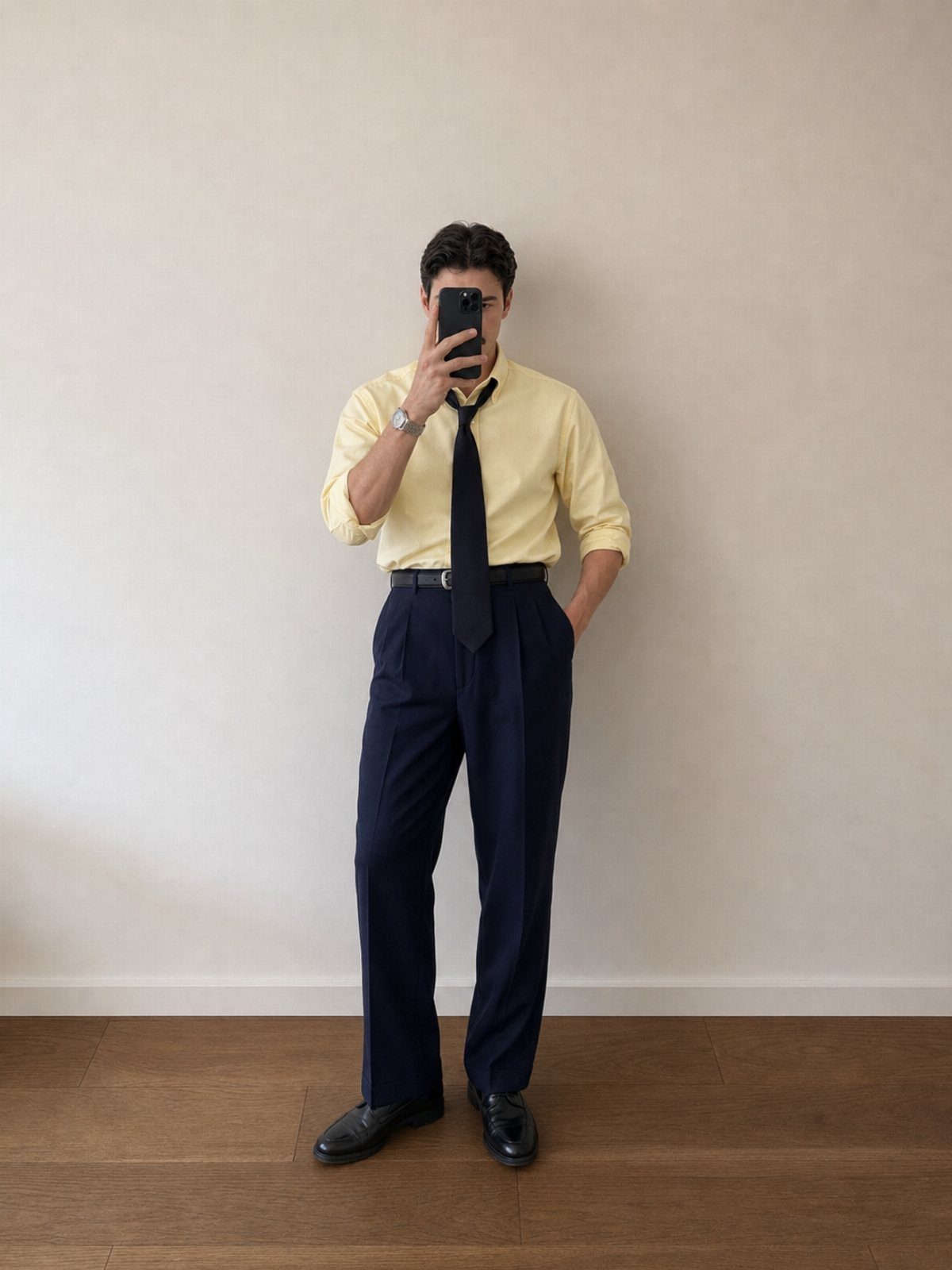
A pale yellow button-down tucked into navy pleated trousers is a good way to wear a tie with no jacket at all. Matching the tie to the trousers keeps the yellow as the only bright note.
I like the knot loosened a little by afternoon, but start the day with it snug. Wear a belt, since the tuck is what keeps it from looking half-dressed, and finish with dark dress shoes.
Jacketless, the shirt has to fit well through the chest and waist.
Understanding Office Culture
Most offices run on a dress code nobody wrote down, and learning it from what the senior people wear counts for more than how good any one outfit is.
Spend your first week watching what people actually wear, not what the handbook implies.
Count the jackets. If most men wear sport coats and button-ups, your office leans toward the business side.
If the room is full of jeans, boots, and sweaters, it leans casual. Take an average of what you see, then dress one notch above it.
Ask HR too. A short question about appropriate attire costs nothing and settles any gray areas, such as whether jeans are ever allowed or whether client days call for something sharper.
Blazers dominating the floor is one signal; a crisp shirt being enough is another. Neither is wrong, but landing between too formal and too casual is how you fit in while still looking like yourself.
Because business casual doesn’t have to be boring. You should still look like you: Your job is just to find which pieces land on the bullseye in the Venn diagram featuring your job and your sartorial vibe.
— GQ
Frequently Asked Questions
What is considered business casual for a male?
Business casual for men means a button-up shirt, chinos or dress trousers, and leather shoes such as brogues or loafers, often with a navy blazer on top.
It sits between a suit and sneakers, so the outfit looks clean and put together without a full jacket and tie. Offices differ, so watch what the senior people wear and dress one notch above the average.
What should men avoid in business casual outfits?
Skip athletic shorts, graphic tees, ripped denim, sandals, and overly casual sneakers.
Also leave out joggers, hoodies, and sweatpants. All of these read as weekend clothes, and they undercut the neat look that business casual depends on.
Can men wear jeans in business casual offices?
Yes, if the company allows them. Choose a dark, clean wash with no fading, rips, or frayed hems, then top it with an oxford shirt, a knit polo, or a sport coat.
Not sure about your office? Ask HR a quick question about attire, since it costs nothing and settles the gray area.