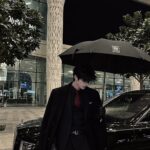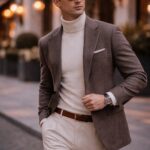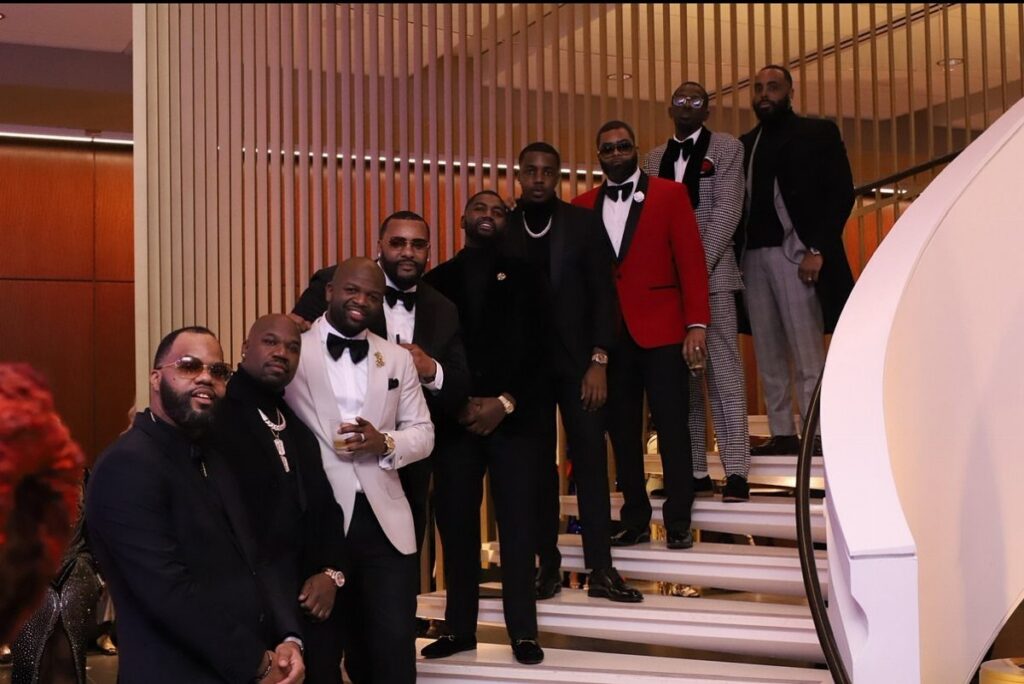
The ideas here run from a classic tuxedo with a solid black bow tie to a white tuxedo jacket, a velvet jacket, a shawl collar, and a cropped cut that stops above the usual hem.
Check the invitation first, then choose the loudest piece you can get away with and let black and white handle the rest.
1. Classic Tuxedo
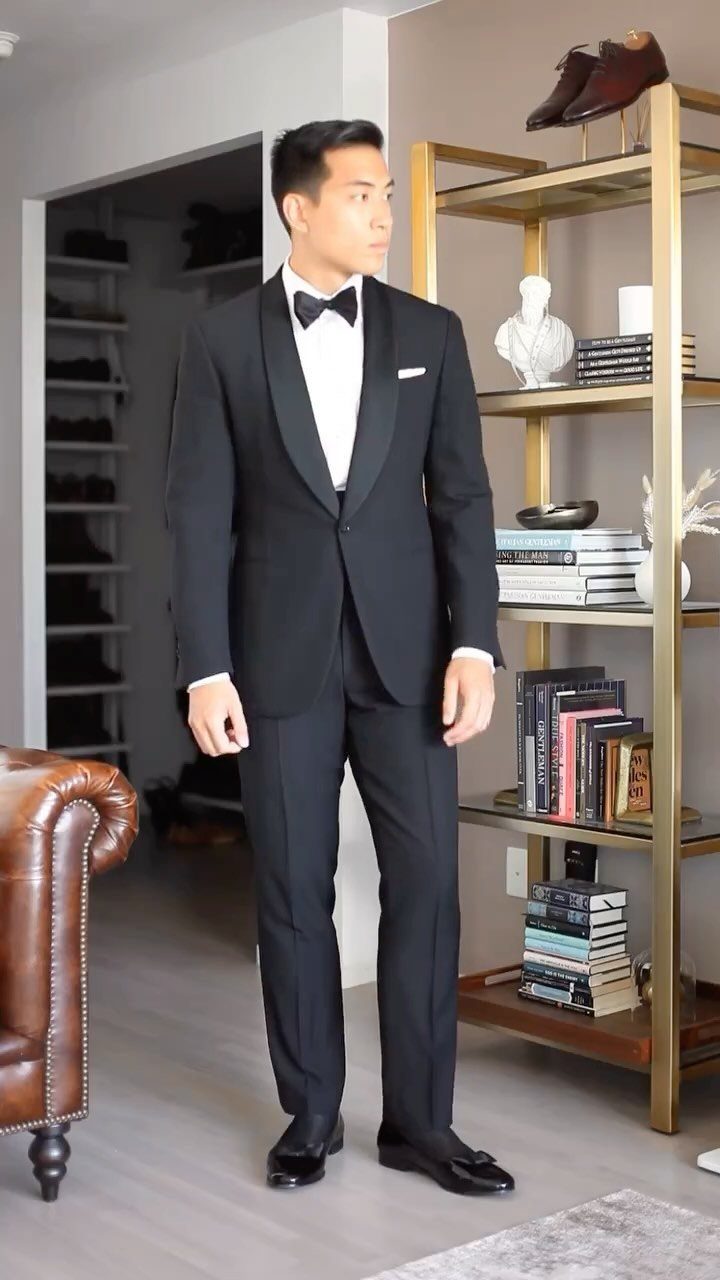
A black tuxedo with a shawl lapel, a white shirt and a black bow tie is the one outfit no invitation can argue with. If the card says black tie and you own nothing else formal, this is the answer.
The maker of this look links it to 007, and that is a fair reference point: nothing loud, everything dark and clean, with the white shirt as the only contrast.
I would rather see a plain version that fits than a fancy one that doesn’t.
Fit decides how it looks more than any detail.
Check that the jacket sits flat across the shoulders and that the trousers break cleanly over the shoes. Renting is a reasonable route on a tight budget, but a tailored hem on a rental still beats an untouched one.
2. Shawl Collar Jacket
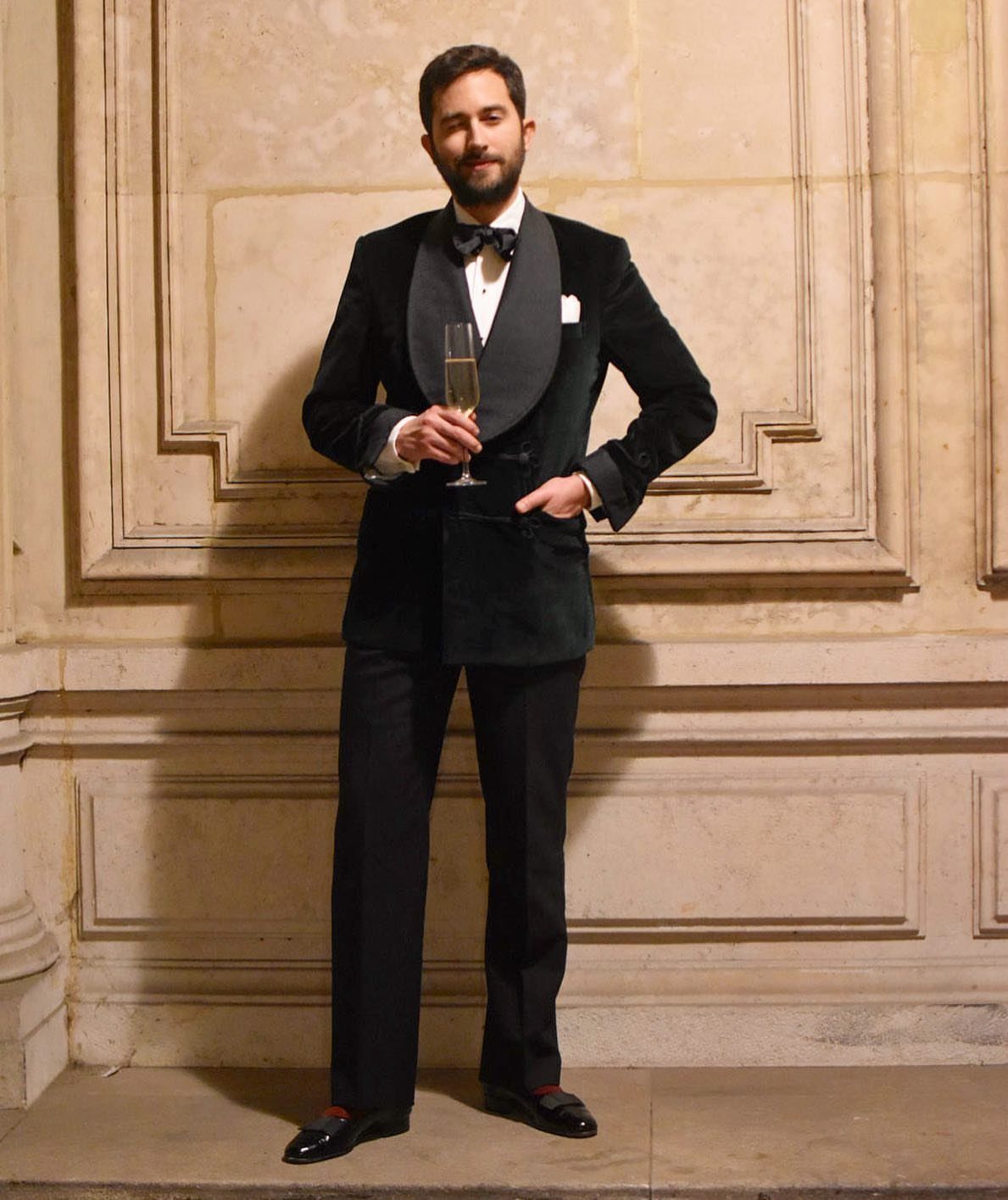
A shawl collar rolls in one unbroken curve around the neck, with no notch where lapel meets collar. That soft line is why it reads as a little more relaxed than a standard tuxedo.
A black velvet jacket with a grey shawl collar works well with a bow tie, and the contrast between the soft velvet and the smooth collar facing is what makes it look dressed up.
It suits a host, a dinner party or a winter evening better than a stiff corporate gala.
Traditional trousers, a white formal shirt, a black bow tie and plain patent or polished black shoes let the collar be the one thing people notice.
3. Velvet Jacket
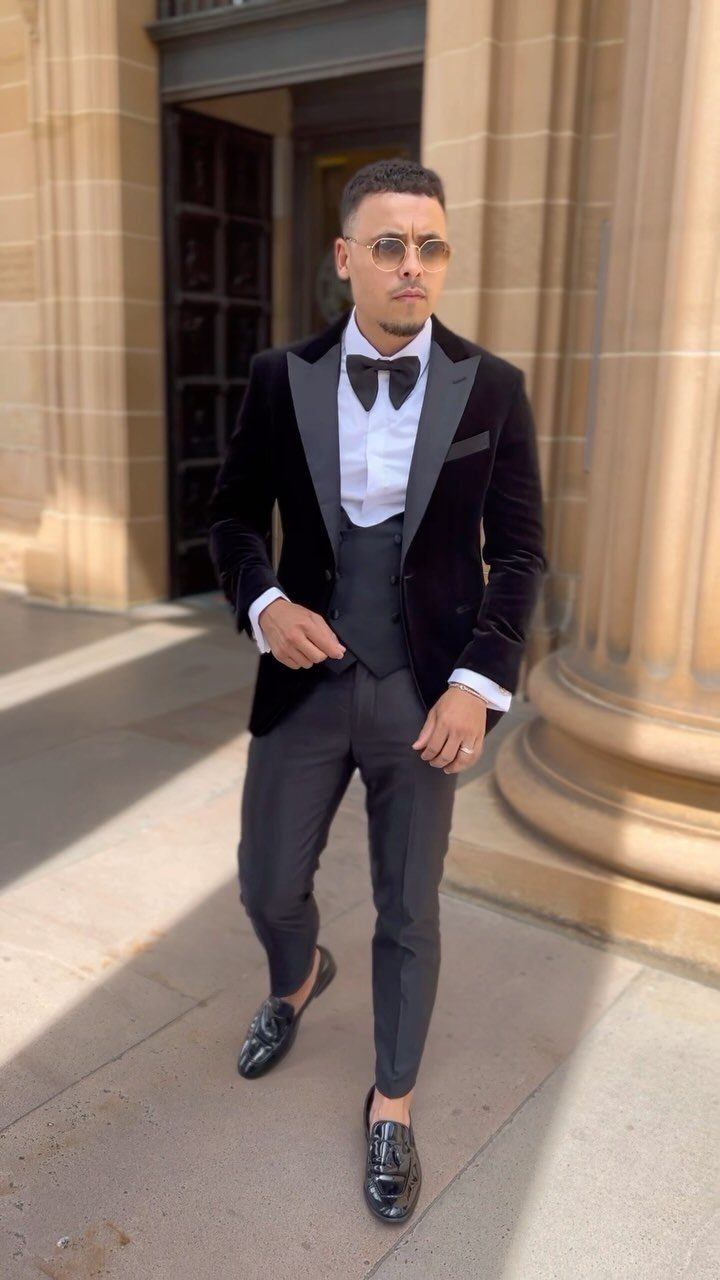
Velvet takes a dinner jacket from sharp to a bit theatrical, and I like it for exactly that reason.
Black velvet with wide lapels, a vest and a bow tie is the dandy move: still black tie in spirit, but with a surface that catches the light.
Stay with black if this is your first one, since it passes more easily at a traditional event. Cropped trousers and patent loafers, as worn here, add attitude; plain full-length trousers and oxfords are the quieter choice.
4. Statement Dinner Jacket
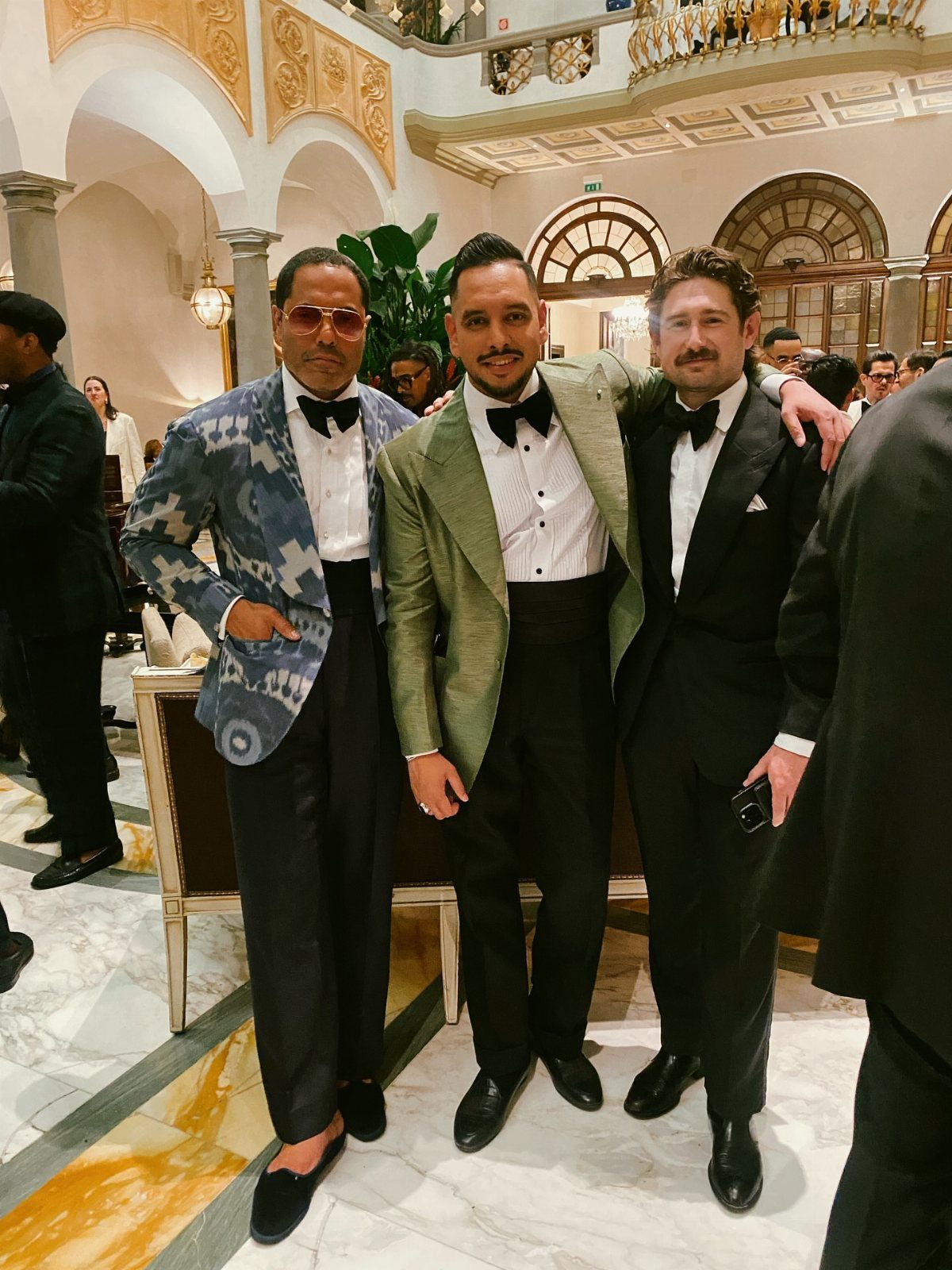
The jacket becomes the one loud piece, so let it be the only one.
Pair it with black trousers, a white shirt and a black bow tie, and the outfit still holds together as black tie.
Pick a color you would actually wear again, and ask the host or read the invitation before you buy. A conservative gala may not welcome it; a party with friends will.
5. Solid Black Bow Tie
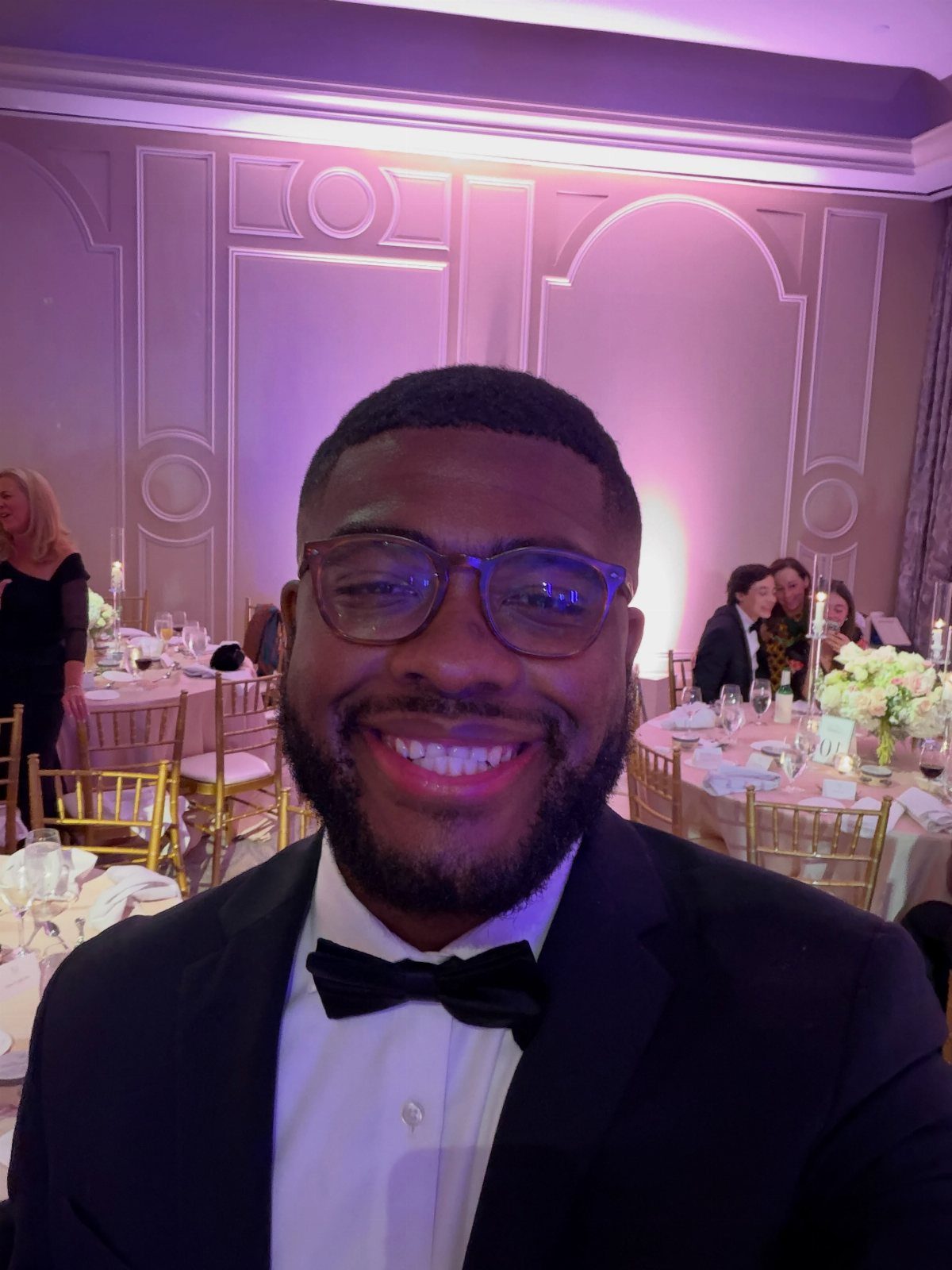
Every black tie outfit I trust has a plain black bow tie, and it is the cheapest piece to get right.
A solid one in a matte or silk finish sits cleanly against a white shirt and never competes with the jacket.
Skip patterns, bright colors and pre-made clip-ons that sit crooked at the collar.
A self-tied bow is slightly uneven, and that small imperfection looks better than a perfect factory shape. Practice the knot a few times before the night.
The classic neckwear for a black tie function is a solid black bow-tie that is self-tied.
6. Double-breasted Tuxedo
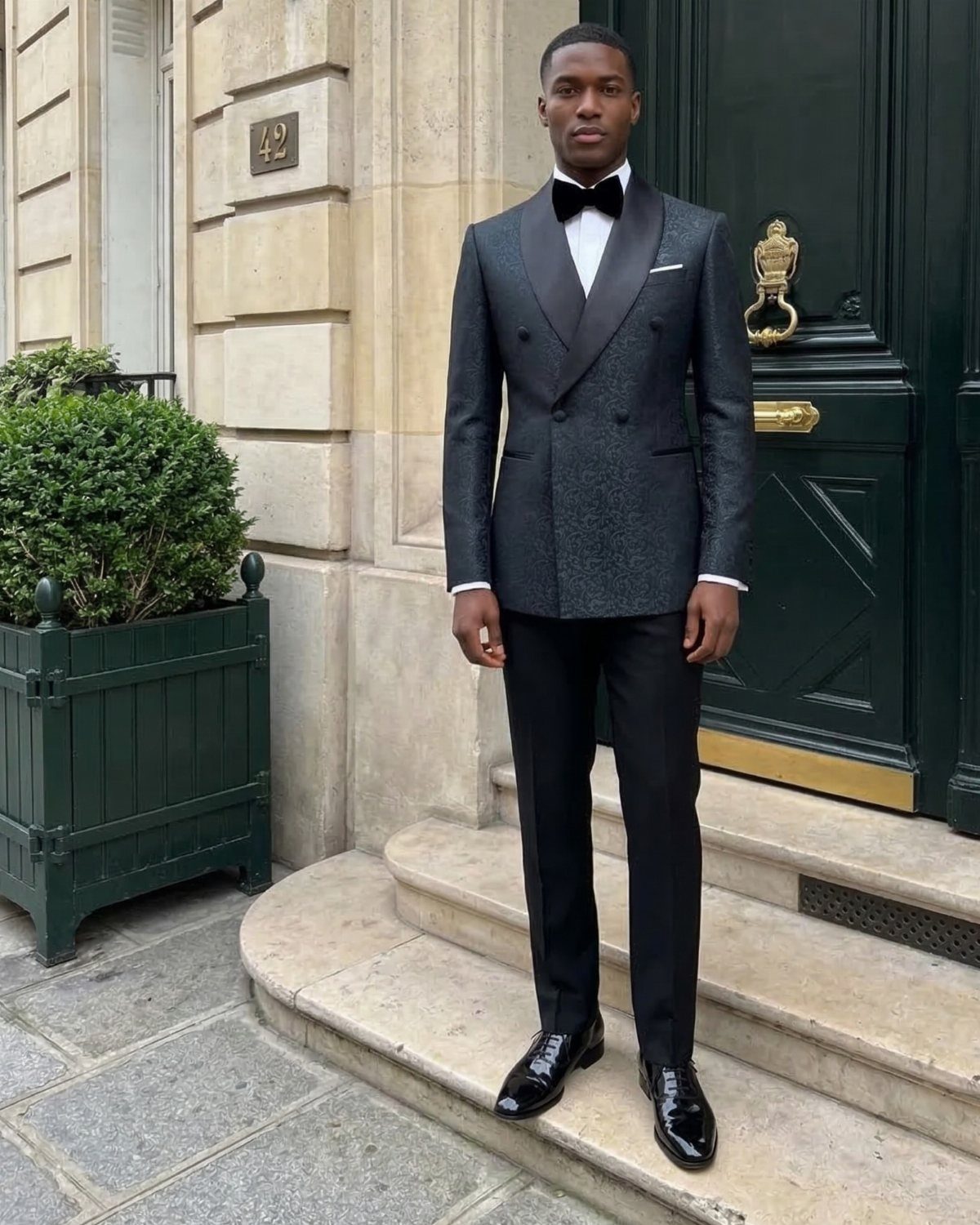
Double-breasted tuxedos overlap at the front and fasten with buttons set in 2 columns, which gives a stronger, more formal chest than a single-breasted cut. Satin lapels, a black bow tie, trousers and patent dress shoes complete it.
Keep the jacket buttoned when standing; that is how the cut is meant to look. It also hides the waist area, so there is no need for a waistcoat or cummerbund.
Fit matters even more here, since extra fabric in front shows quickly. For a man who wants to stand out without adding color, this is my pick.
7. White Tuxedo Jacket
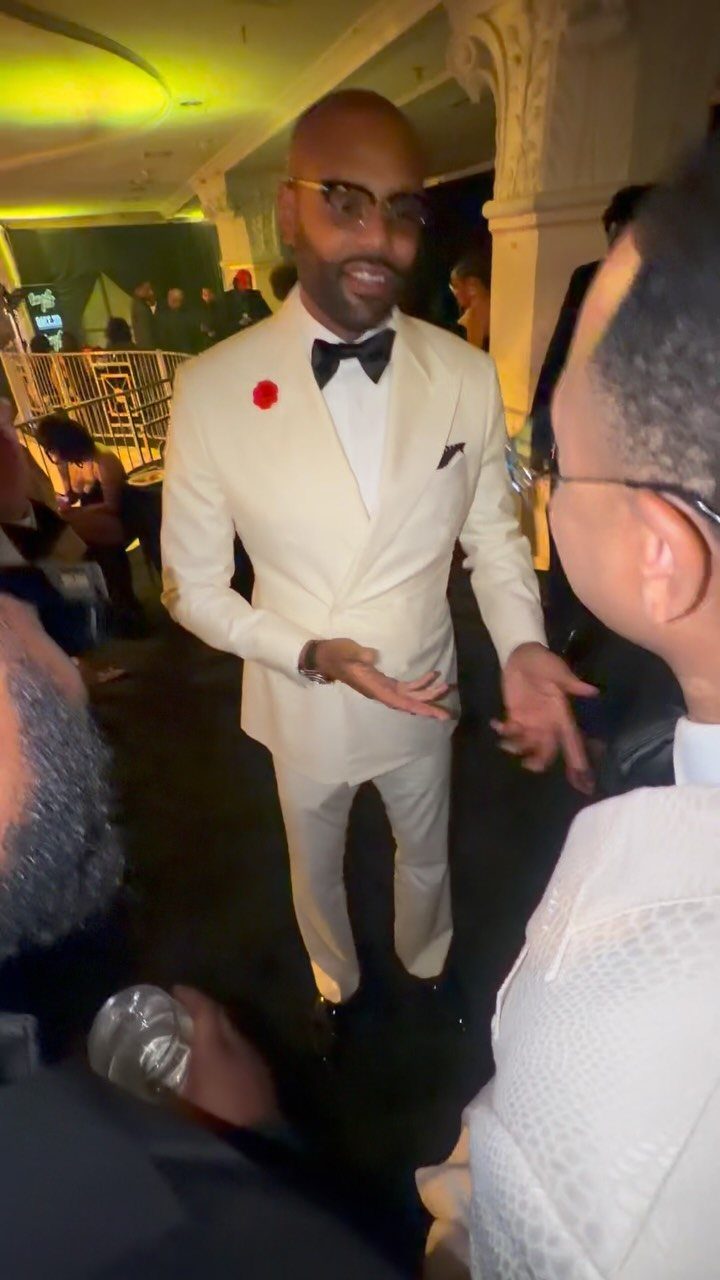
White after dark is a confident move, and an off-white dinner jacket with a black bow tie keeps it formal instead of costumey.
The black tie anchors the look, and a small touch like a boutonniere or a lapel pin adds a point of color without clutter.
Black trousers, black shoes and a black bow tie should finish the look, so the white jacket is the only light piece. Plain black against a pale jacket gives the outfit its structure.
A light jacket shows every mark, so it suits a dressier party better than a crowded night where drinks get spilled.
Before you commit, ask the host what they expect, since a traditional black tie event may call for a dark jacket.
8. Tuxedo with Waistcoat
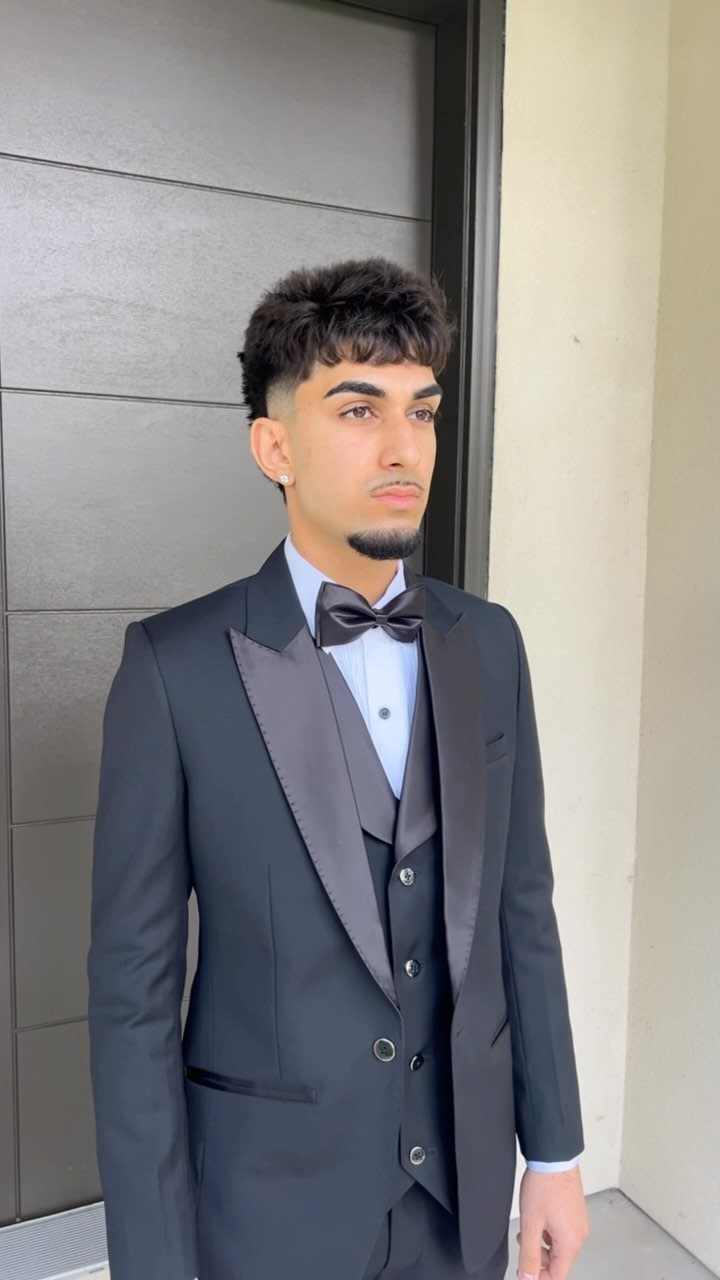
A matching black waistcoat gives a tuxedo a cleaner, longer line through the middle of the body. With satin lapels, a white shirt and a black bow tie, it reads as complete before the jacket is even buttoned.
I like it for men who want a sharper look than a basic tuxedo without adding any color. It also means the jacket can come off at a warm dinner and you still look finished.
Keep the waistcoat the same black as the suit, and make sure it sits snug at the waist so no shirt shows below it. Choose it only if you will wear it; a loose one looks worse than none.
9. Cropped Tuxedo Jacket
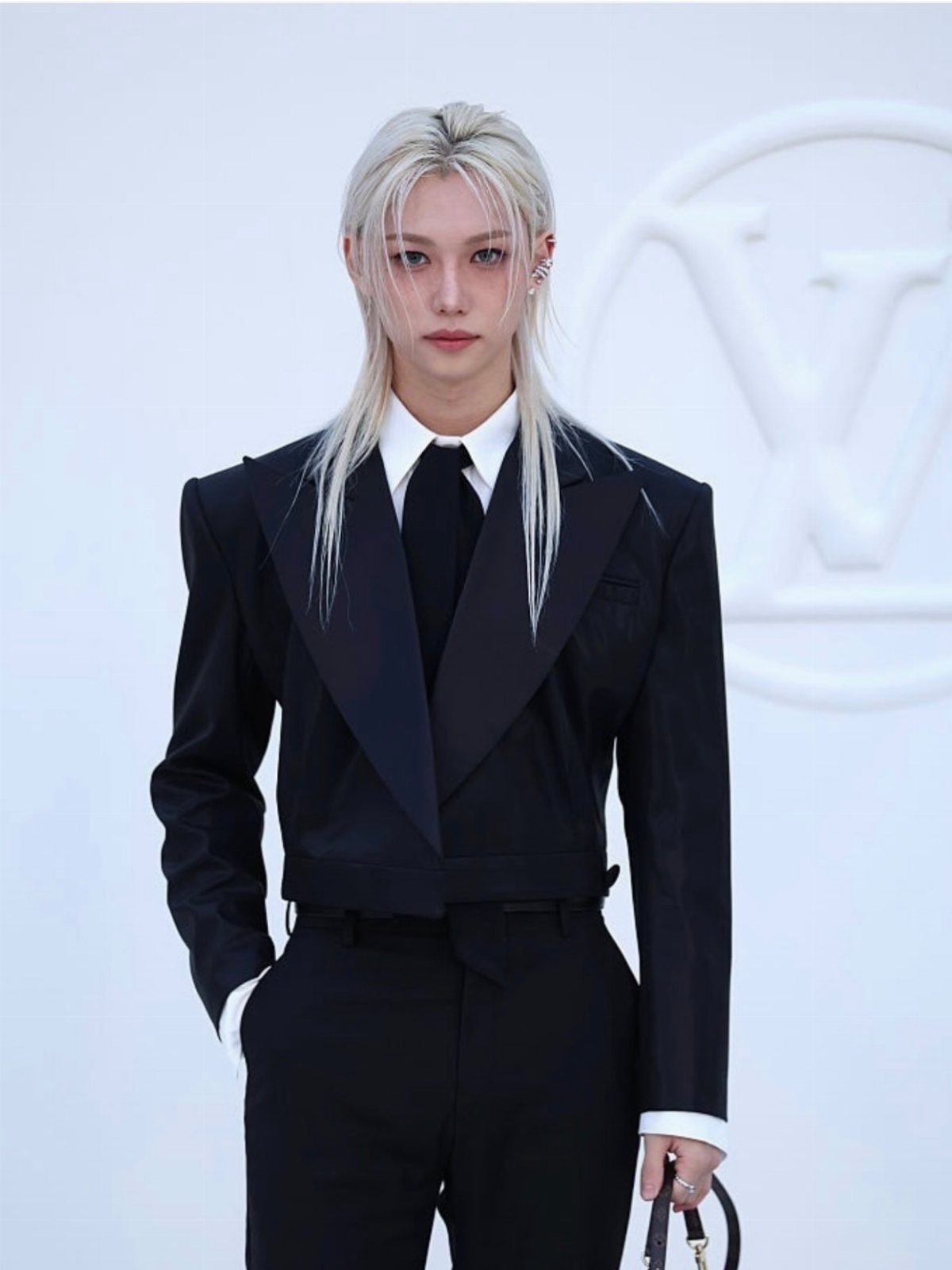
A cropped tuxedo jacket stops higher than a standard cut, which makes the proportions feel younger and sharper. Worn with a crisp white shirt and a black tie, it keeps the tuxedo’s formality while shifting the shape.
Pick it for a modern event or a creative crowd, not a conservative gala. A traditional black tie host may expect a full-length jacket, so check the invitation first.
High-waisted trousers help the short jacket look intentional instead of ill-fitting. A plain white shirt and a simple tie let the cut be the one unusual thing in the outfit.
10. Patent Leather Dress Shoes
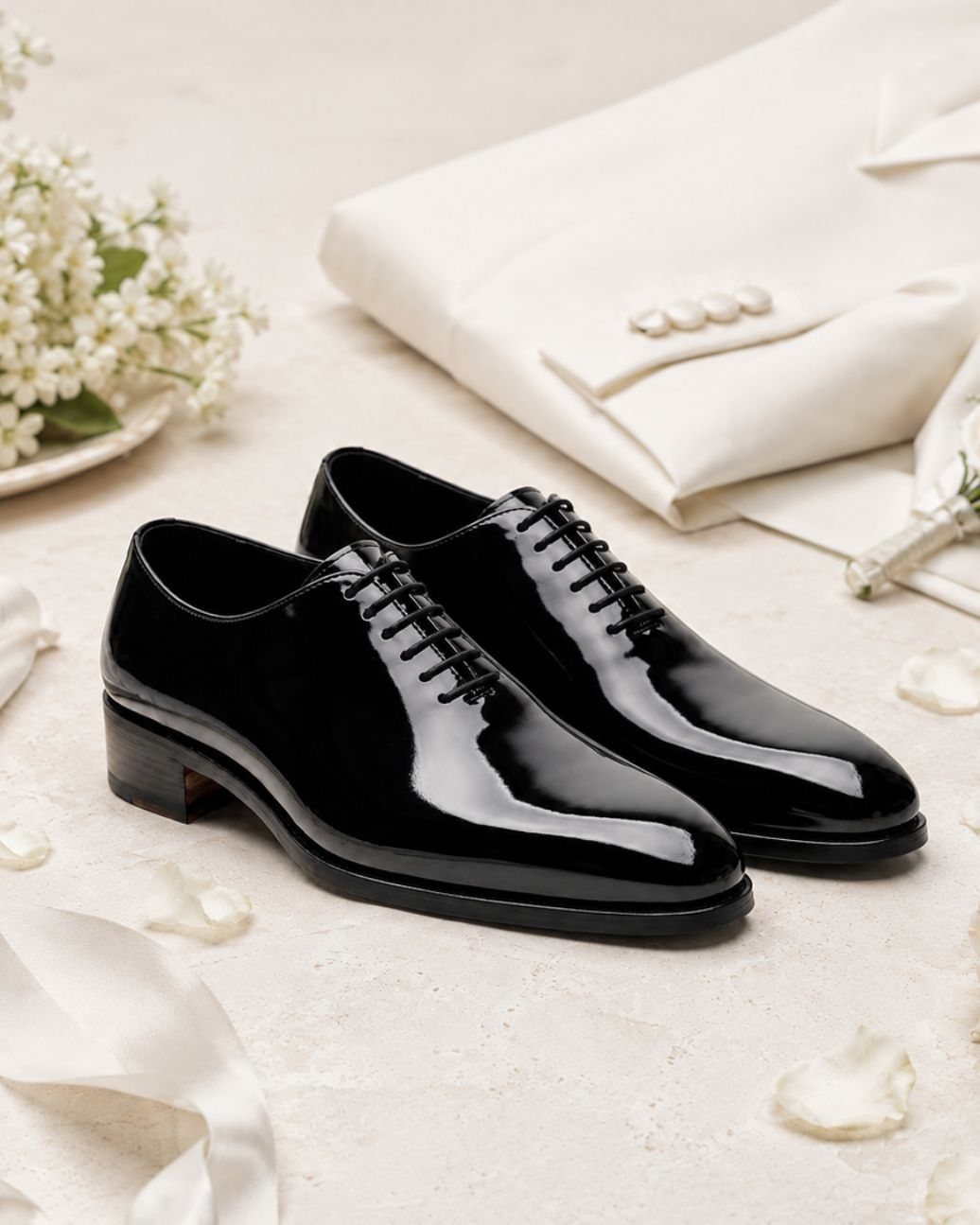
Black patent leather oxfords are the shoe that finishes a tuxedo, and the high shine is exactly what formal wear calls for.
Next to a white shirt and a black suit, the gloss gives a quiet sparkle that regular calf leather can’t match.
Choose a plain oxford with no brogueing and no extra hardware. On a tight budget, a simple pair that you can wear to several events is a better buy than a fancy pair you wear once.
Wipe patent leather with a soft damp cloth after wearing. Lay the shoes out with the rest of your outfit the day before, so nothing is missing when you dress.
Planning and Preparation Tips
Seating belongs on the calendar early, because it is the task that gets harder the closer the night comes.
Changes to the guest list, late RSVPs and dietary notes all land on the chart, and a rushed chart is where stress comes from.
Digital tools make sense here. Online RSVPs, digital seating charts and QR-code check-in usually run well under the price of printed paper, and moving a guest to a different table takes seconds with no reprint.
Budget shapes every plan, though the choices that change an event most tend to be the cheap ones. Smart allocation beats total spend, so put money where guests will notice it and let software replace the printed pieces.
Frequently Asked Questions
What is considered a black tie event?
A black tie event is a formal occasion where the invitation calls for a tuxedo for men and formal gowns or structured outfits for women.
For a man, the classic answer is a black tuxedo with a white shirt and a black bow tie. Nothing in that outfit can be argued with, which is why it works when you own nothing else formal.
What is the most common black tie mistake?
Wearing something that ignores the formal dress code is the biggest one, and poor fit is a close second.
Fit decides more than price here: a basic tuxedo cut to your shoulders and waist will look better than a flashy one hanging off you.
Clip-on bow ties are the other giveaway, because they sit flat and slightly crooked at the collar, while a self-tied bow has the small irregularities that make it look right.
What not to wear to a black tie event?
Skip casual pieces and bright colors that clash with the formality of the night. For a bow tie, that means no patterns, no bright colors and no clip-ons.
For shoes, avoid brogueing and extra hardware; a plain black patent oxford is the right choice. A loud jacket or a white one can also miss at a conservative gala, so check with the host first.