The list runs from a pale blue suit you can wear to a warm office to a white three-piece you save for a summer wedding, and the occasion decides which one you buy.
A daytime wedding or garden party suits a sage green or cream double-breasted look, and both are covered below. Grey is the one that survives an office day and dinner afterward.
A light suit shows every flaw, so fit through the shoulders matters more here than it does in navy or charcoal, and the Choosing the Right Suit Color section covers how to get it right.
1. Light Blue Suit

Light blue reads as a neutral in summer, which is why it works for a wedding, a daytime party or a warm office. A white shirt and white pocket square keep it clean, and an open collar suits hot weather.
Pick a blue that stays pale. Go much deeper and you lose the airy feel that makes the suit worth buying.
Brown or tan shoes look right with it. Black feels heavier than the suit wants.
While some light summer suits are more casual (like linen or seersucker), many modern options in tropical wool or lightweight cotton blends are perfectly suitable for formal business settings and even summer weddings.
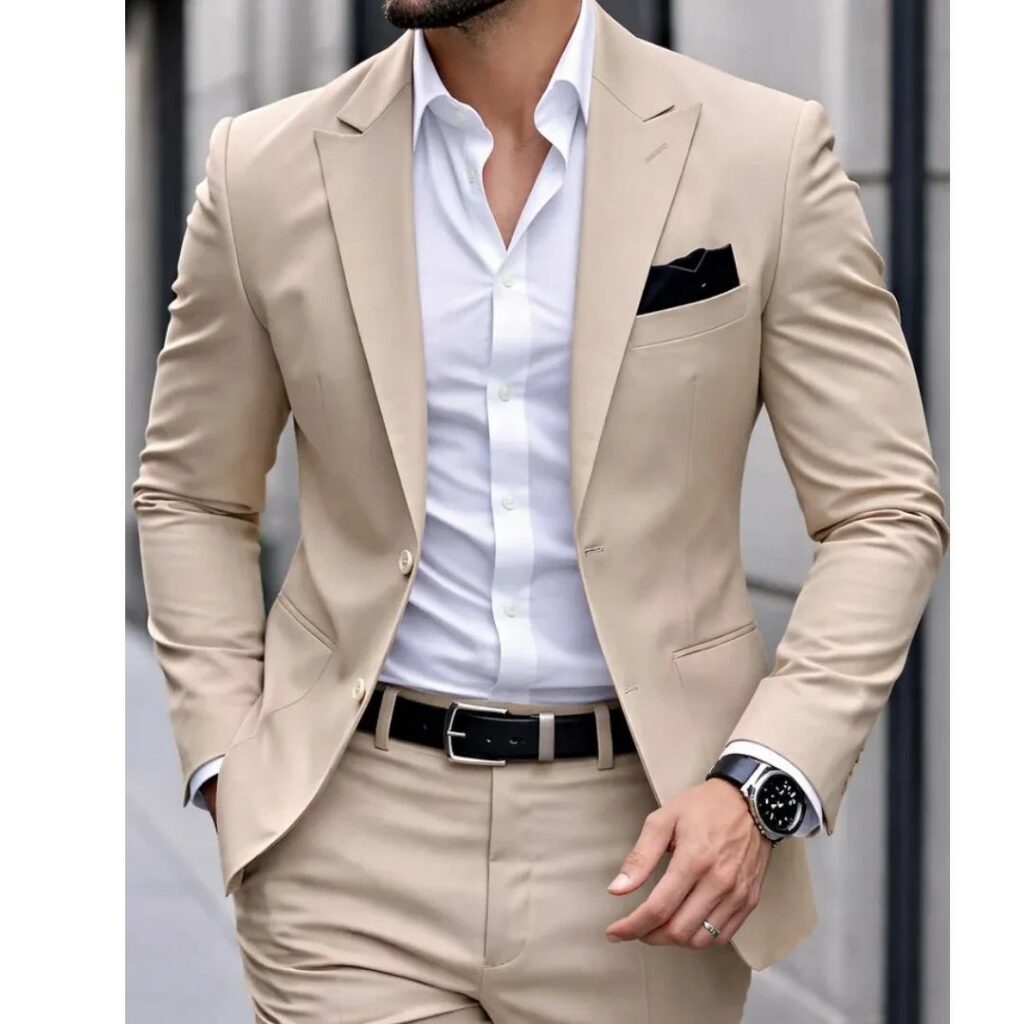
2. Beige Suit

Beige is the warm-weather suit in its plainest form, and it costs less to wear well than most light colors. Because it is a soft neutral, a pale blue striped shirt does most of the styling for you.
Add a pocket square and the outfit is finished. I would skip a loud tie here; the suit already has a quiet color, and a busy shirt-and-tie pairing fights it.
Breathable fabric matters more than anything else on a hot day.
3. Light Grey Suit

Light grey is the easiest of these suits to wear to an office and then straight to dinner. It handles more than one season, which makes it a better buy than a pastel if you only want one light suit.
The hard part is the tie. With a striped shirt, I would choose a solid or a quiet pattern in blue, and let one piece carry the pattern.
A double-breasted cut gives the grey more presence, but it asks for a good fit through the shoulders.
4. Linen Suit
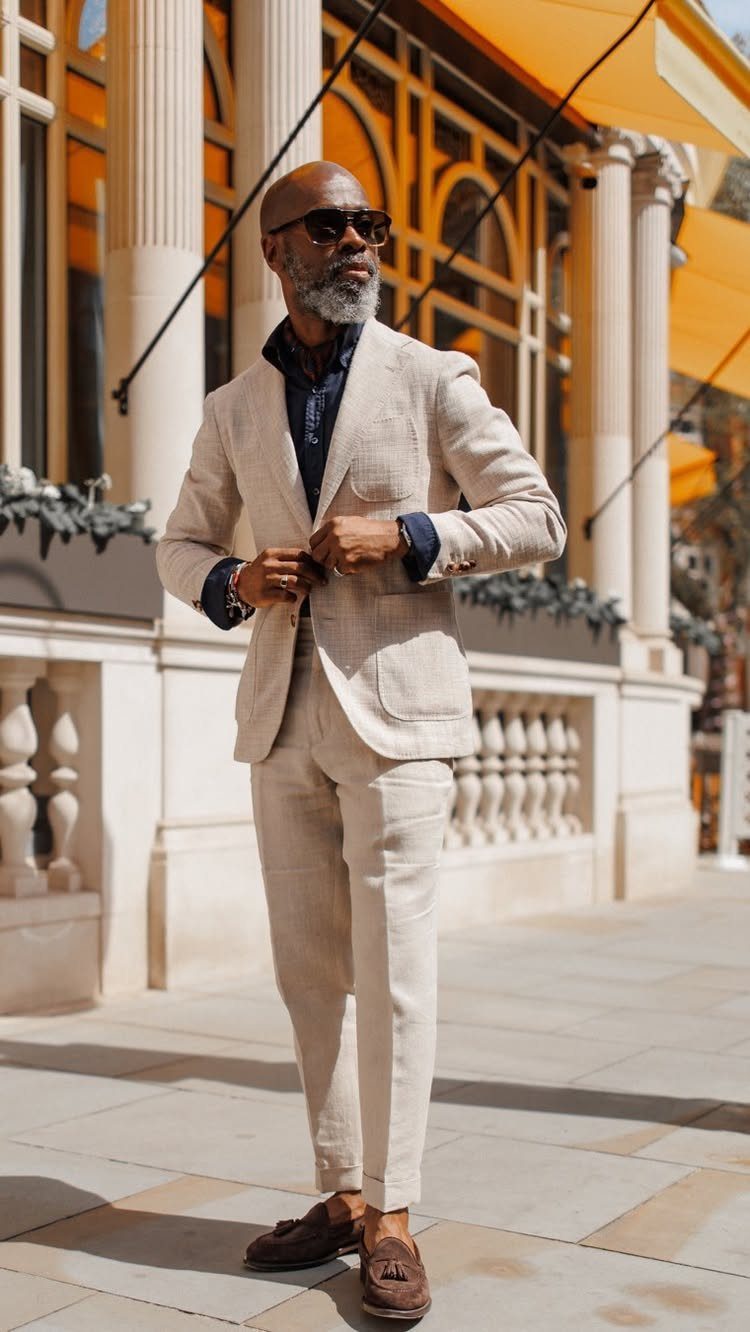
Linen is a fabric before it is a color, and the creases are part of the deal. Wear it knowing it will wrinkle by lunch; that rumpled look is what makes it read as relaxed rather than sloppy.
A navy shirt against beige gives strong contrast, and brown loafers keep the outfit casual. Sunglasses fit right in.
Choose linen for weddings outdoors, vacations and heat. For a formal office, I would pick wool instead.
5. White Three-Piece Suit
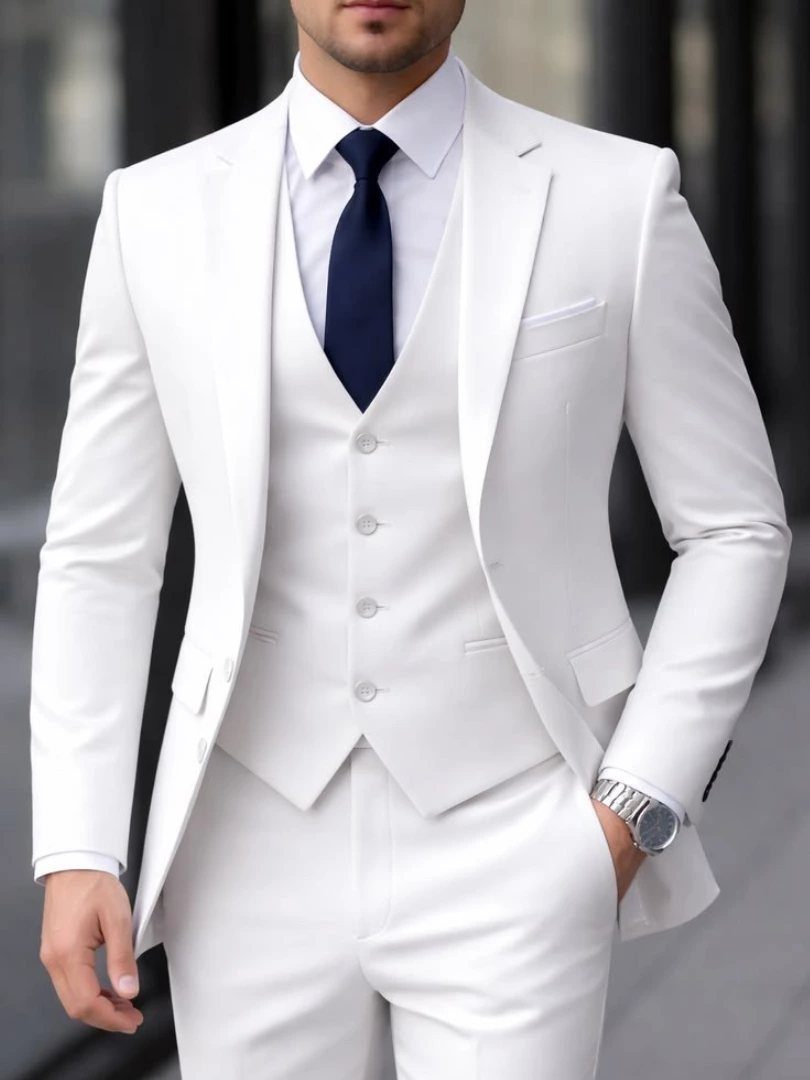
A white three-piece suit is a statement, so build everything else around restraint. A white shirt and a dark navy tie give it just enough contrast to look sharp rather than costume-like.
The vest is the piece that does the work. It makes the outfit look finished even with the jacket off.
Best for summer weddings and big events, not an ordinary day. White shows every mark, so keep a stain pen close.
6. Sage Green Suit
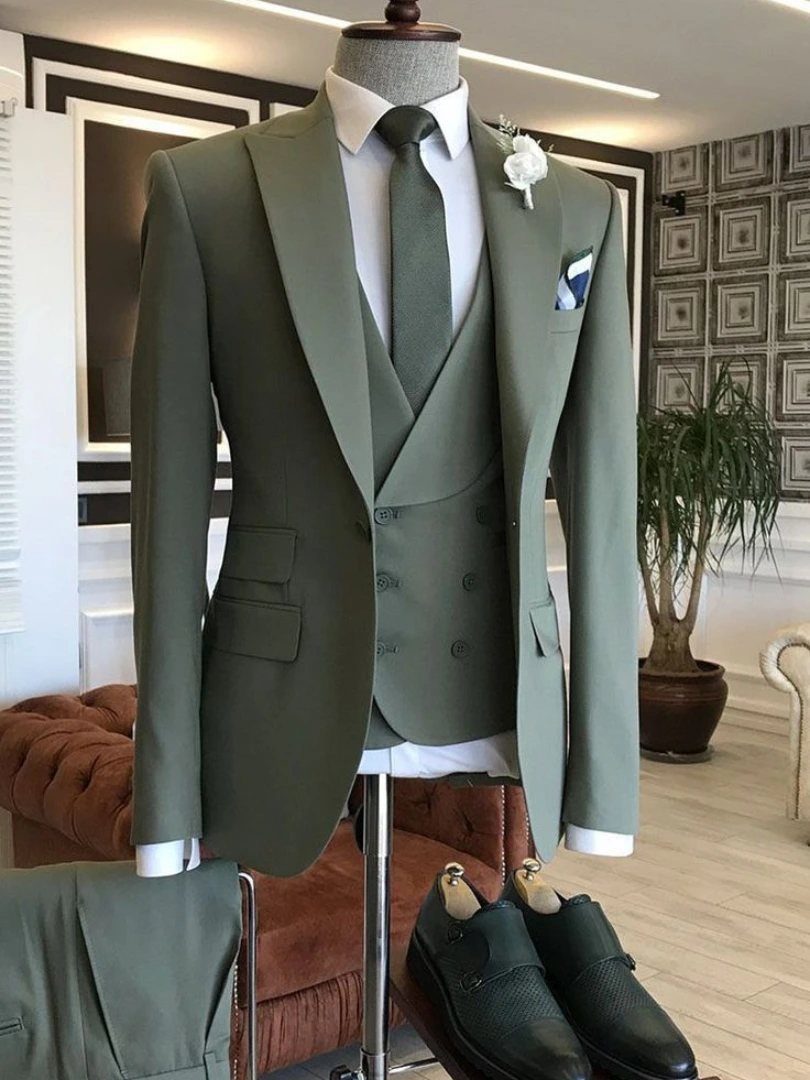
Sage green is the pick if you want a light suit that nobody else at the wedding owns.
Matching the tie and vest to the suit gives a clean, tonal look, with a white shirt and pocket square to brighten it.
Black monk strap shoes work with a sage green suit because the dark leather anchors the pale, muted cloth, and the buckle adds a little interest without turning the look formal. Dark brown would be a softer option.
Stay with a muted green. The more saturated it gets, the less it behaves like a neutral.
7. Cream Double-Breasted Suit
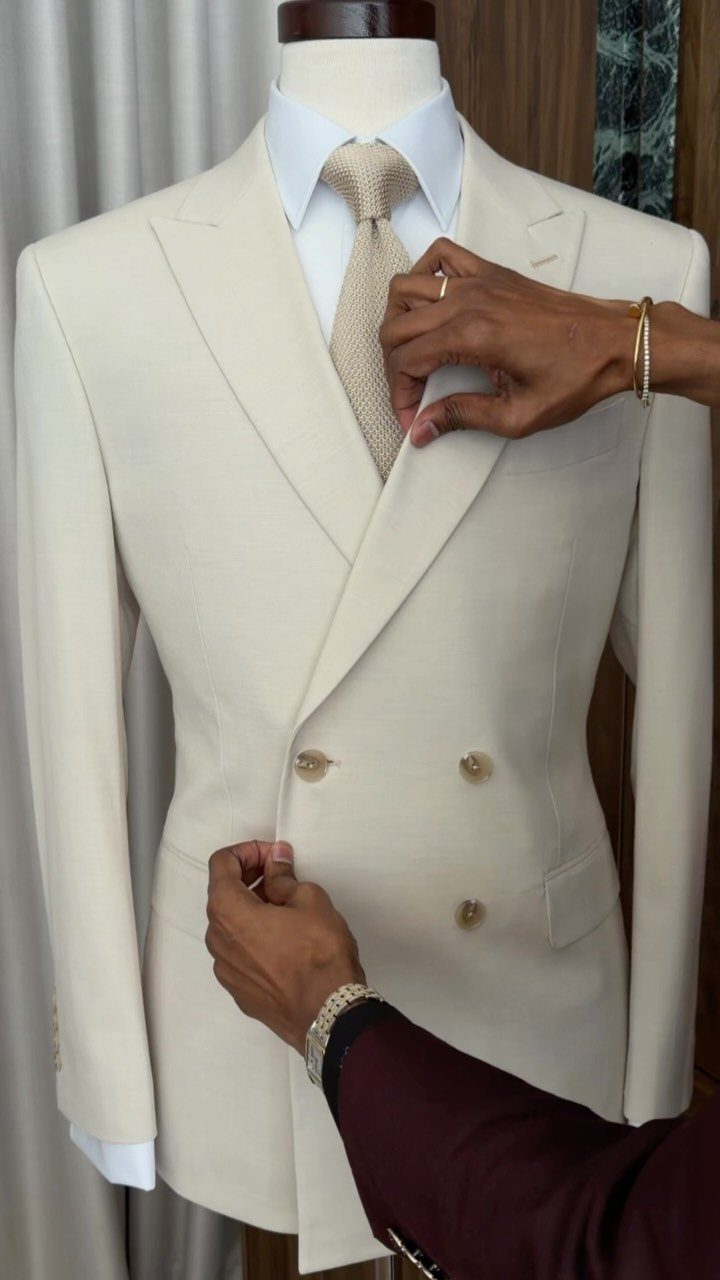
Double-breasted cuts in cream look dressier than the same color in a single-breasted jacket, and the overlapping front gives the pale cloth real structure.
A white shirt keeps the outfit bright, and a textured beige tie adds depth without adding color.
I like a knit or woven tie here because the texture does the work a pattern would. Keep the tie close to the suit’s tone so the jacket stays the focus.
Fit matters more than usual. Double-breasted jackets show a poor fit through the shoulders and chest, so try it on before you buy.
A cream double-breasted suit suits a daytime wedding or a garden party best, where the light is bright and a dark suit would feel heavy.
Choosing the Right Suit Color
Body shape, skin tone and occasion should decide the shade before you look at a single suit.
Dark cloth tends to narrow a frame, while pale cloth reflects light and makes the same body look broader, so a lighter suit rewards a precise fit.
That is why light suits tend to flatter slim men, but a broader build can still wear one. A shade slightly deeper than the palest options, such as grey, keeps the proportions in check.
Skin tone works as a loose guide.
Contrast with your skin tone does most of the work: a deeper complexion holds pale stone or cream well, and a fair one looks better in navy or charcoal than in something close to its own shade.
Treat that as a starting point, since plenty of men break it and look great.
Personality counts too.
A white suit draws every eye in the room, so it suits a man who likes that. If you would rather blend in, beige or grey is the calmer choice.
Footwear for Light Suits
Pick shoes a shade or two deeper than the trousers, because a pair lighter than the suit looks like it’s floating at the hem. With a light suit, that means dark leather almost every time.
Black oxfords or derbies are the formal choice and work with grey, beige or white. Brown is a step less formal, and it suits summer weddings and garden parties.
Match the brown to the cloth. Warm browns go with warm beige suits, and cooler browns go with cool greys.
Leather quality matters more than the color. Well-made shoes last for years if you clean and condition them regularly.
Fit matters as well. A beautiful pair that rubs your heel by the second hour will ruin the whole outfit.
Suit Maintenance
Light cloth shows marks faster than dark, so build a routine before the first wear. Brush the suit after each outing and hang it on a proper hanger so the shoulders hold their shape.
White needs the most attention. Check it in daylight before you leave the house, because small marks that vanish indoors show up outside.
One upside of a light suit is that patterns read more clearly on it. Checks and herringbone are easier to see on pale cloth than on dark, so a light suit is a good place to try them.
Frequently Asked Questions
What are some good suit colors for men?
Light blue, beige, light grey and white are the best light options, and they suit summer and a range of occasions.
Light grey is the easiest to wear across seasons, so it is the best pick if you only want one light suit. Sage green and cream are good choices for a wedding if you want something fewer guests will own.
What to wear with a light grey suit for men?
A striped shirt with a solid tie works, as does a quiet blue pattern, as long as only one of the three pieces is busy.
Go with dark leather shoes, such as dark brown or oxblood, because a pale suit looks grounded when the shoes sit a shade or two deeper than the trousers.
Light grey also shows checks and herringbone clearly, which makes it a good suit for trying a pattern.
What fabric is best for summer suits?
For most men I’d pick tropical wool, a lightweight open weave that breathes in heat and still holds a crease better than linen.
It breathes, wicks moisture and resists wrinkles. Linen is the most breathable but wrinkles heavily, cotton is more casual, and a cotton-linen blend gives linen’s comfort with a bit more structure.
Is light blue a good suit color?
Yes, and I’d call it one of the easiest summer colors to wear: it works like a neutral, and the pale shade keeps you cooler in the sun.
It works for weddings, daytime parties and warm offices. Keep the shade pale, since a deeper blue loses the airy feel, and wear it with a white shirt and brown or tan shoes.