The ideas here run from tuxedos to a polo or a pair of chinos, and the right pick usually depends on how formal your week is.
If you work in a suit or attend black-tie events, the tailored suits, tuxedos, and overcoat layering are yours; if your days are casual, the polos, chinos, and linen shirts do the same job.
1. Tailored Suits
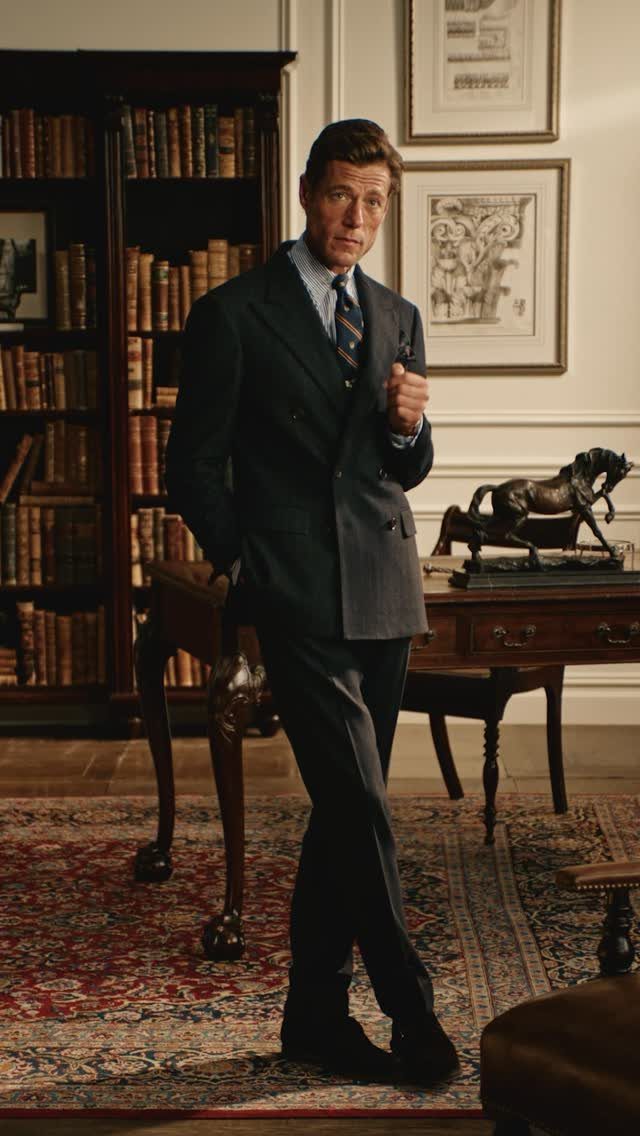
A double-breasted suit in a dark cloth is the most direct way to look like you inherited a good tailor. The peak lapels and the overlapping front give the chest structure that a single-breasted jacket can’t match.
Keep the rest quiet.
A striped shirt and a patterned tie work together only when one of them is clearly bolder than the other, so pick which one leads. I’d keep the button stance snug and the jacket buttoned when standing.
Fit matters more than price here, so budget for alterations.
2. Polo T-Shirts
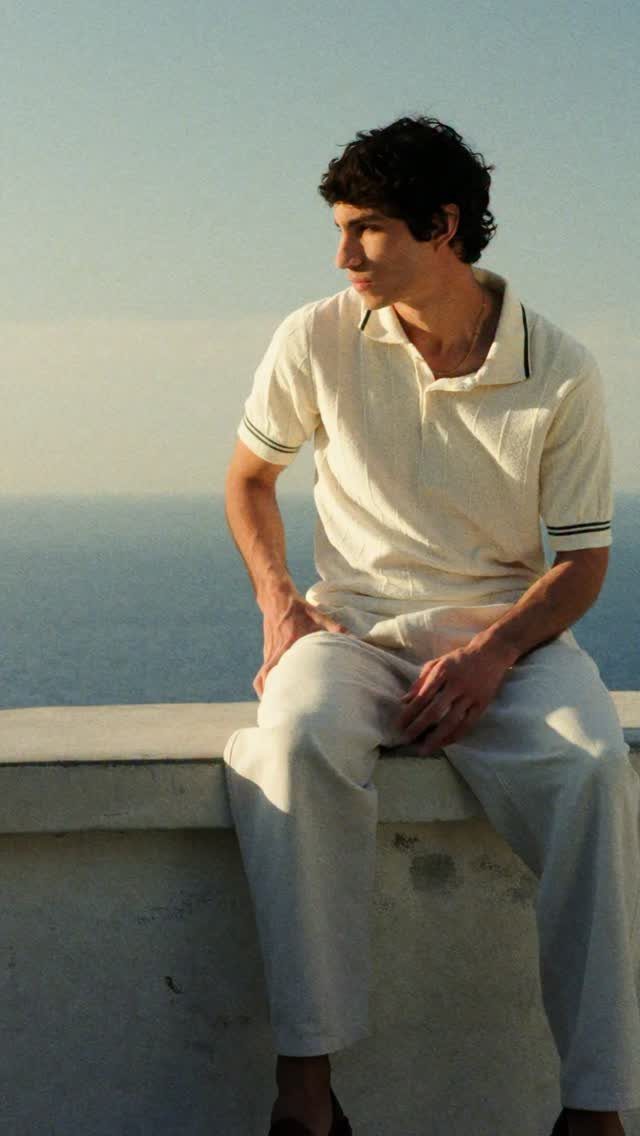
Off-white polos with a little striped trim read as club wear rather than gym wear, and that is the whole appeal. Pair one with trousers in a matching light tone and the outfit looks planned without looking dressed up.
Choose a collar that stands on its own and a body that skims the waist instead of billowing. Low-contrast color keeps it calm: cream, stone, and pale sand all work together.
Cotton breathes best in summer heat. Skip big logos.
3. Tailored Trousers
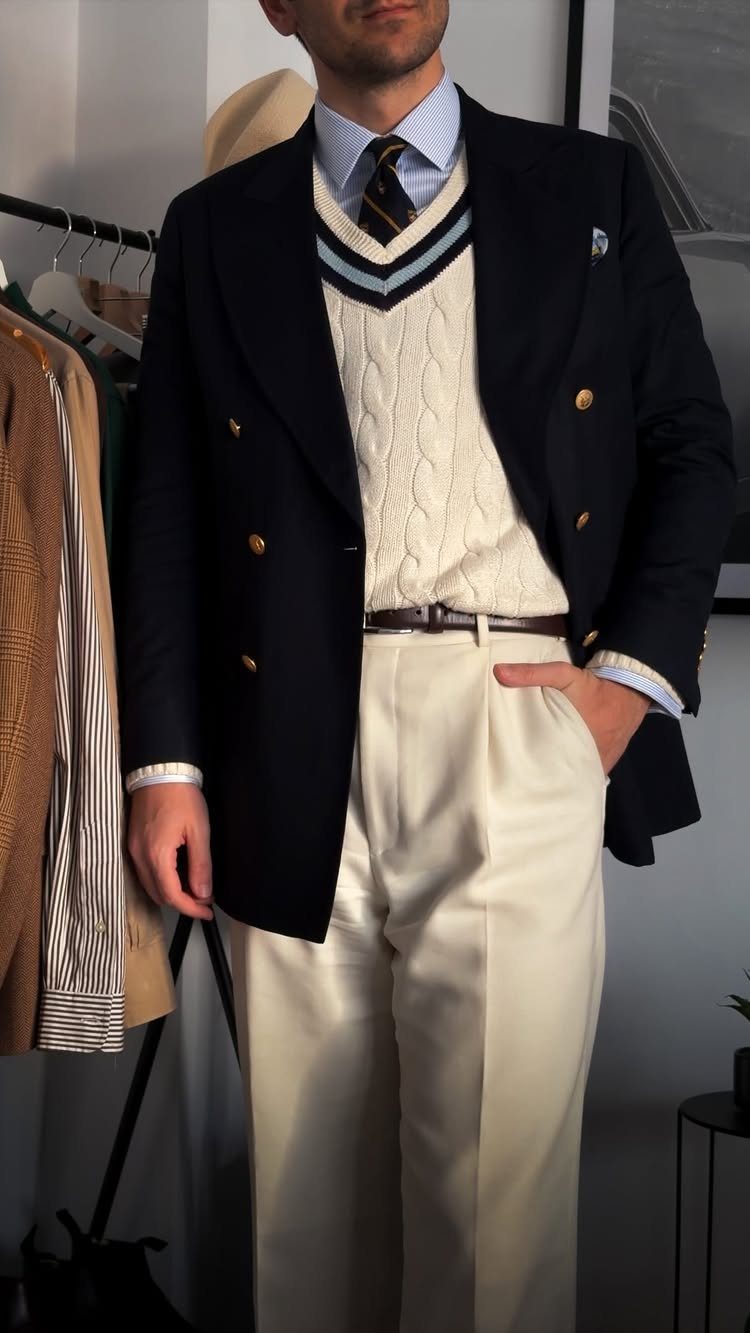
Pleated trousers in cream do more for an outfit than most jackets. The pleats give room through the hip and thigh, so the leg falls straight instead of pulling across the lap when you sit.
Layered under a navy double-breasted blazer with a cricket sweater vest, they hold the whole look together. I’d keep the rise high enough to sit at the navel, so the shirt and tie stay tucked cleanly.
Cream shows dirt, so take them to a cleaner promptly after wearing them in the city.
4. Modern Chinos
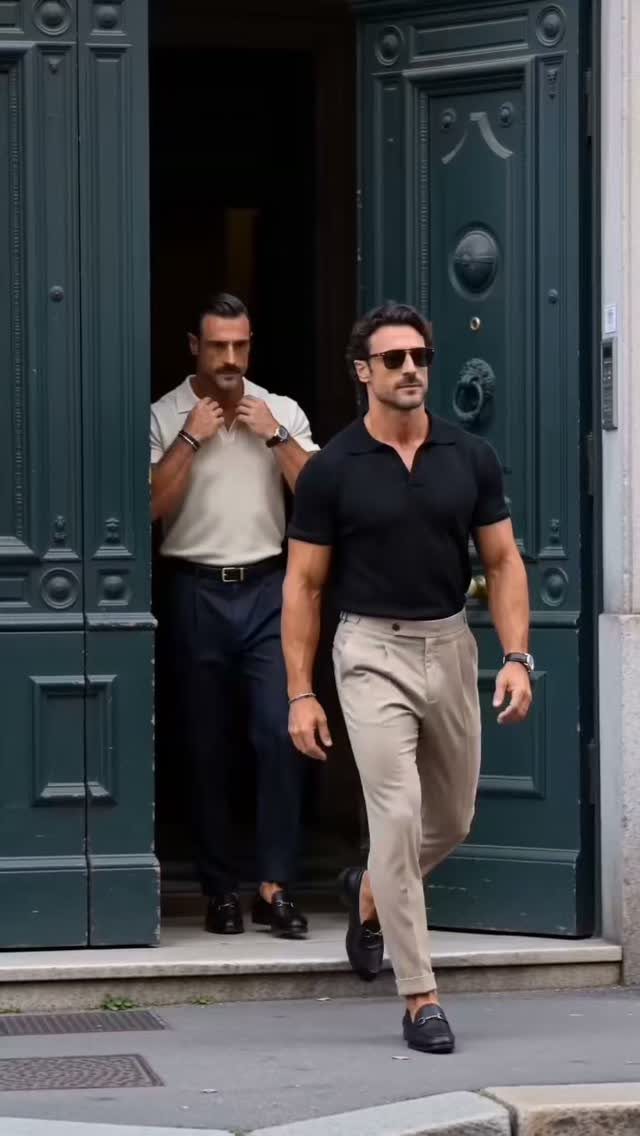
Beige chinos are the easiest way to dress up a polo without reaching for a suit. A black polo against a light beige trouser gives clean contrast, and loafers finish the line.
Look for a straight leg with a slight taper, not a skinny cut. The hem should land at the top of the shoe, with at most a small break.
Chinos cost far less than wool trousers, which makes them the budget-friendly choice for a man building his first old money outfits. Press them before wearing.
5. Leather Loafers
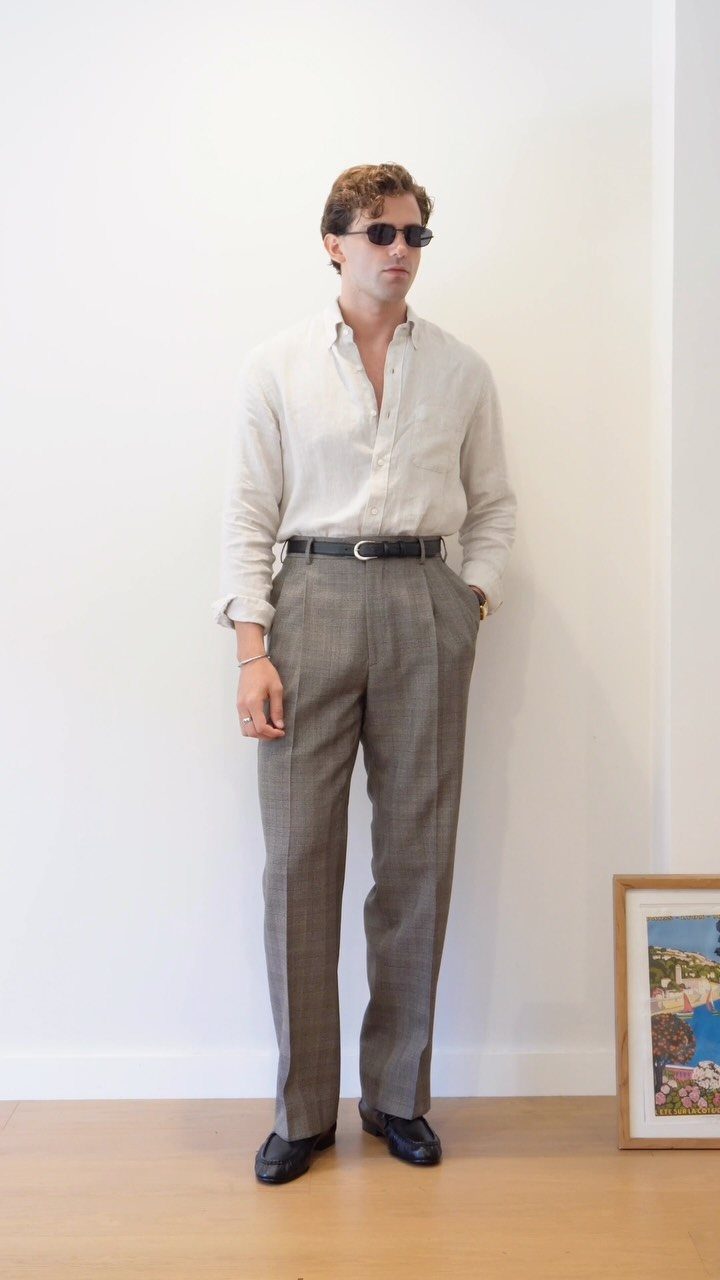
Black leather loafers look best with the ankle showing, and that’s how I’d wear them. With belted pleated trousers and an open linen shirt, they bring a bit of polish to a relaxed outfit.
Pick a plain, smooth leather with a thin sole, and avoid heavy hardware that draws the eye. Black is dressier than brown, so it carries into evening easily.
A cheap pair can still look good if you polish them regularly and replace worn heels early.
6. Tuxedos

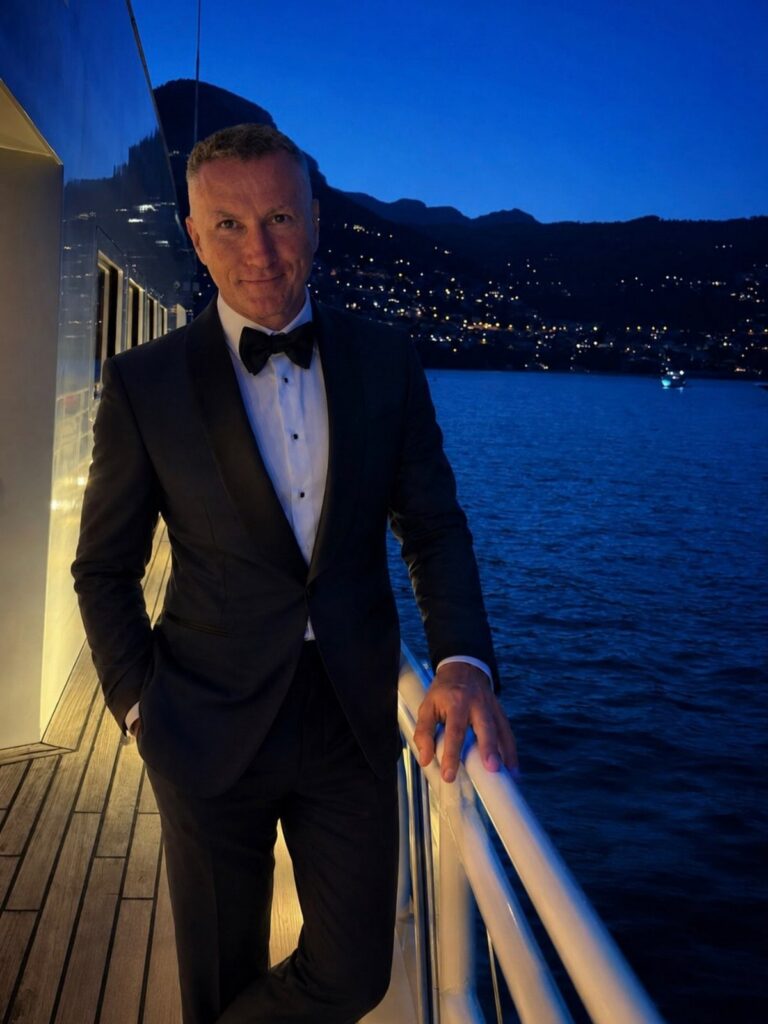
A fitted tuxedo with a white shirt, black studs, and a bow tie is formal wear at its simplest, and on a yacht deck at night it needs nothing added.
Dark navy is a modern twist on black that reads richer in low light.
Tie the bow yourself if you can, since a slightly imperfect knot looks better than a pre-tied one. Keep the shirt crisp and the studs plain.
Rent if you attend only a couple of events a year; buy if you attend more, and have it tailored.
7. Old Money Dress Shirts
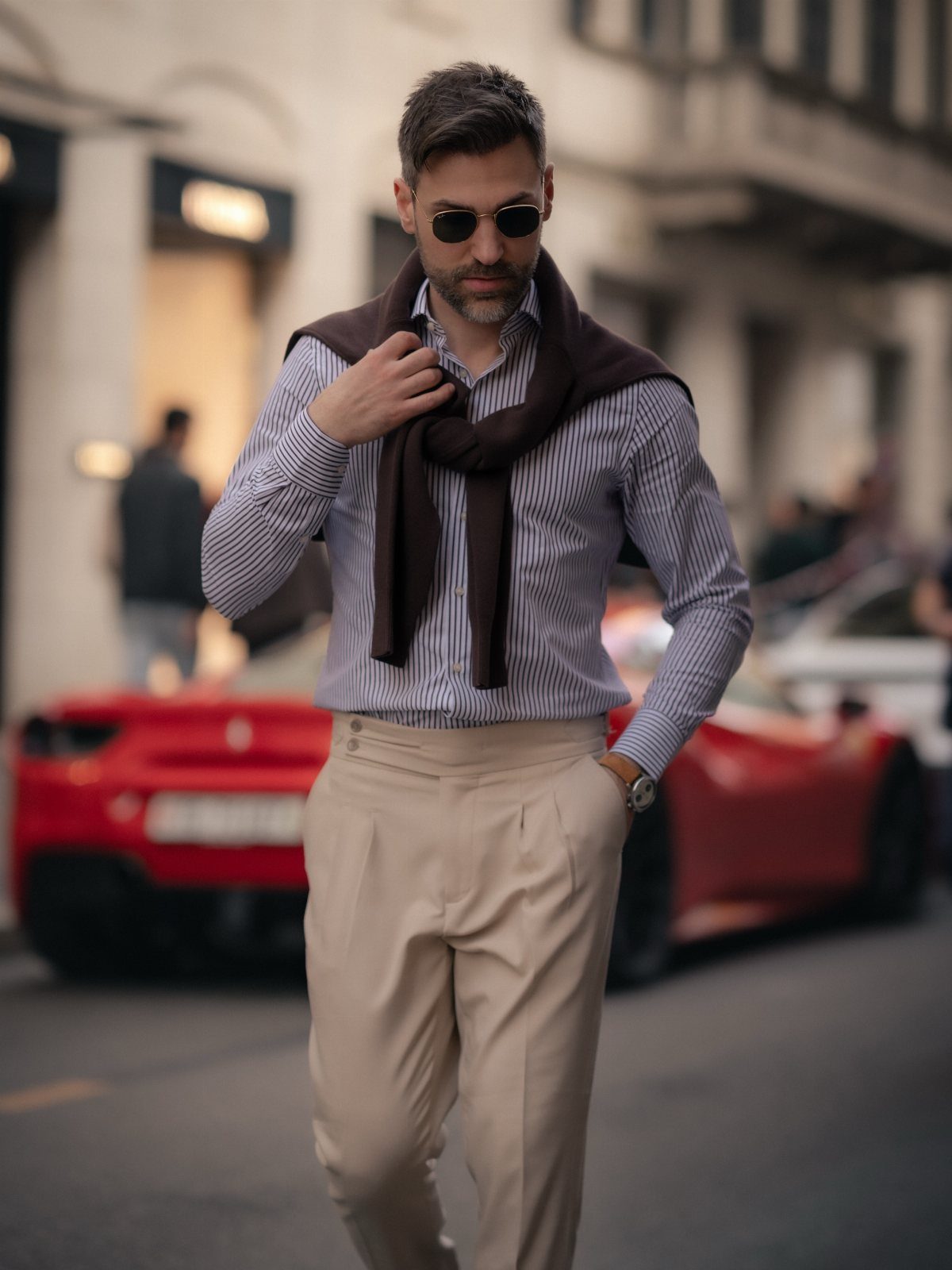
A striped dress shirt with pleated cream trousers is the old money shirt look in its easiest form. The stripe adds interest, and the cream keeps it from getting loud.
Pick a stripe that is thin and evenly spaced, in a soft blue or a muted tone, so it reads from across a street without shouting.
Leave the collar open and the shirt untucked or half-tucked if the trousers sit high.
A brown knit over the shoulders adds a layer without adding bulk. Sunglasses finish it.
8. Stylish Linen Shirts
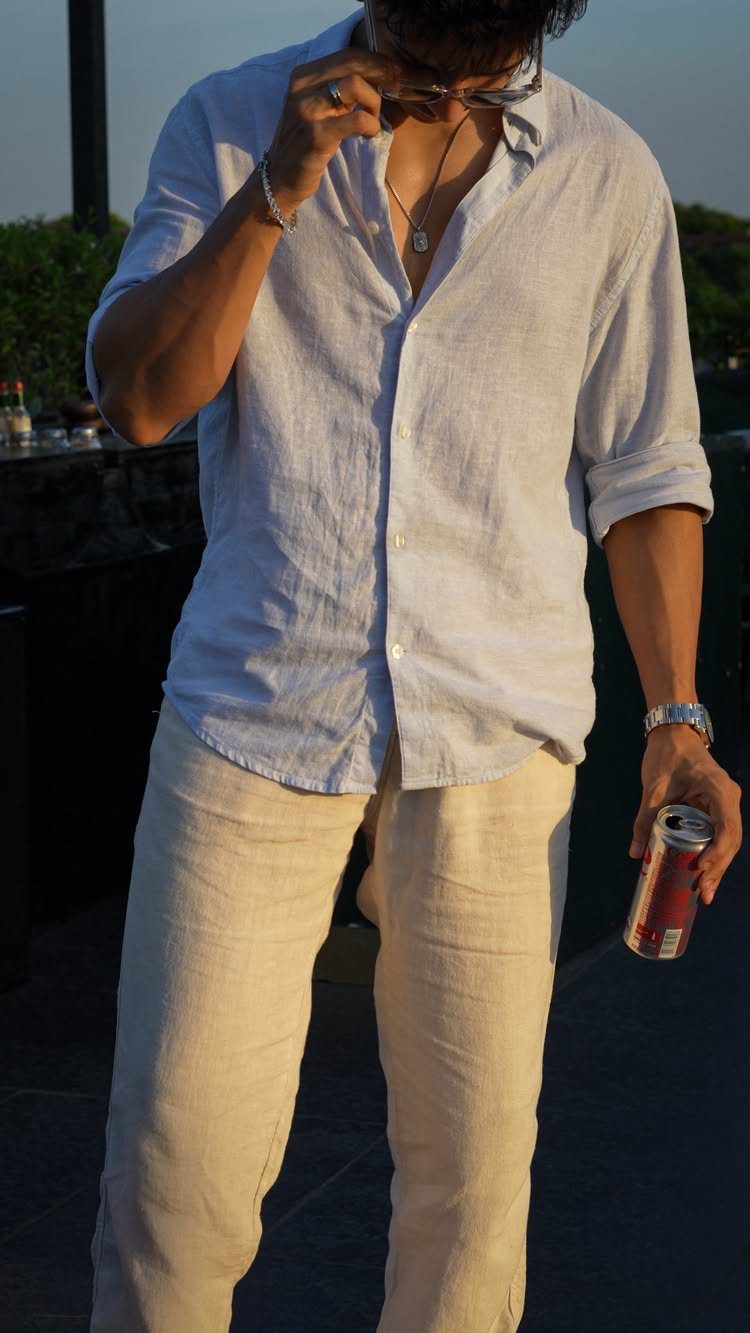
Linen is the summer shirt, and light blue is the shade I’d start with. Worn open over a plain tee or bare skin, it looks relaxed, and cream linen trousers keep the whole outfit in one cool, pale range.
Linen wrinkles, and that’s part of its look. Don’t fight it with heavy starch; a quick steam is enough.
Buy it a little roomy through the body so air moves. Match the trousers to the shirt’s fabric, since linen next to a stiff cotton looks mismatched.
9. Classic Watch
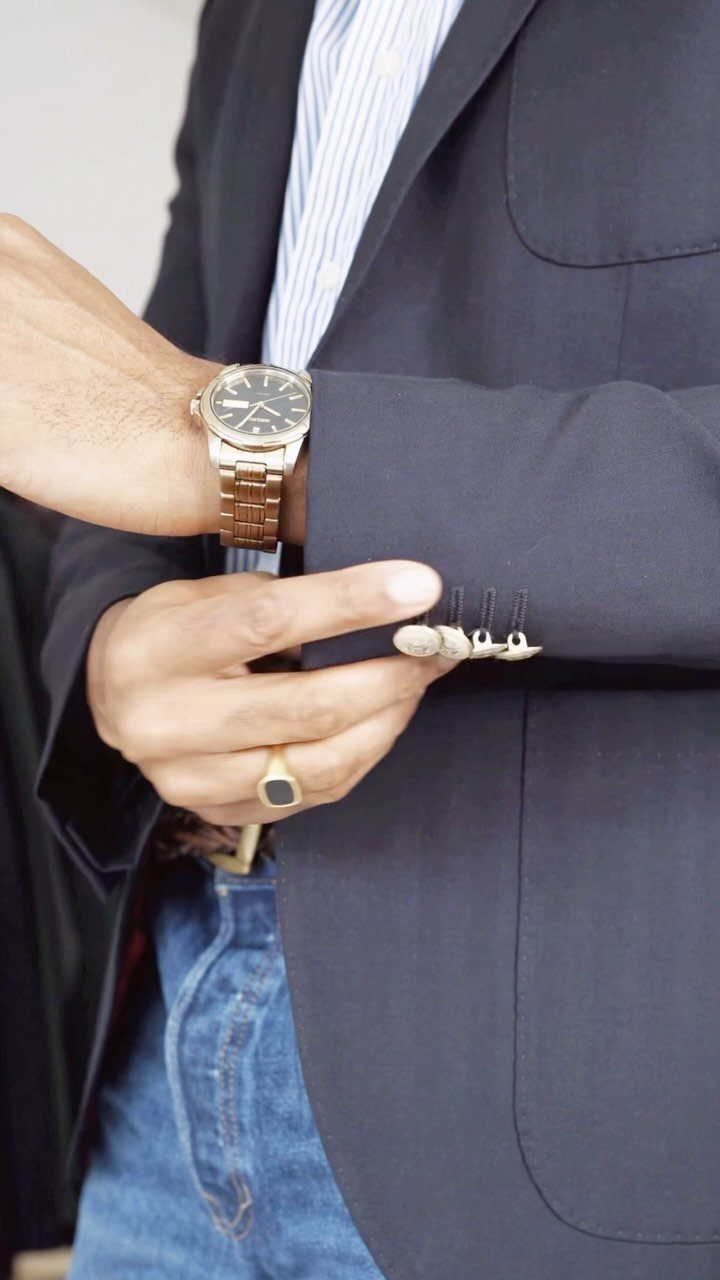
A gold-tone bracelet watch with a navy blazer is about as quiet as a flashy metal gets. Against a striped shirt and jeans, it ties the dressed and casual halves together.
Choose a simple dial with no extra dials or loud branding, and let the metal link do the talking. Let the shirt cuff sit just under the blazer sleeve so the watch shows when you move your arm.
One signet ring is plenty alongside it. Stacking more metal starts to look like display.
10. Overcoat and Blazer Layering
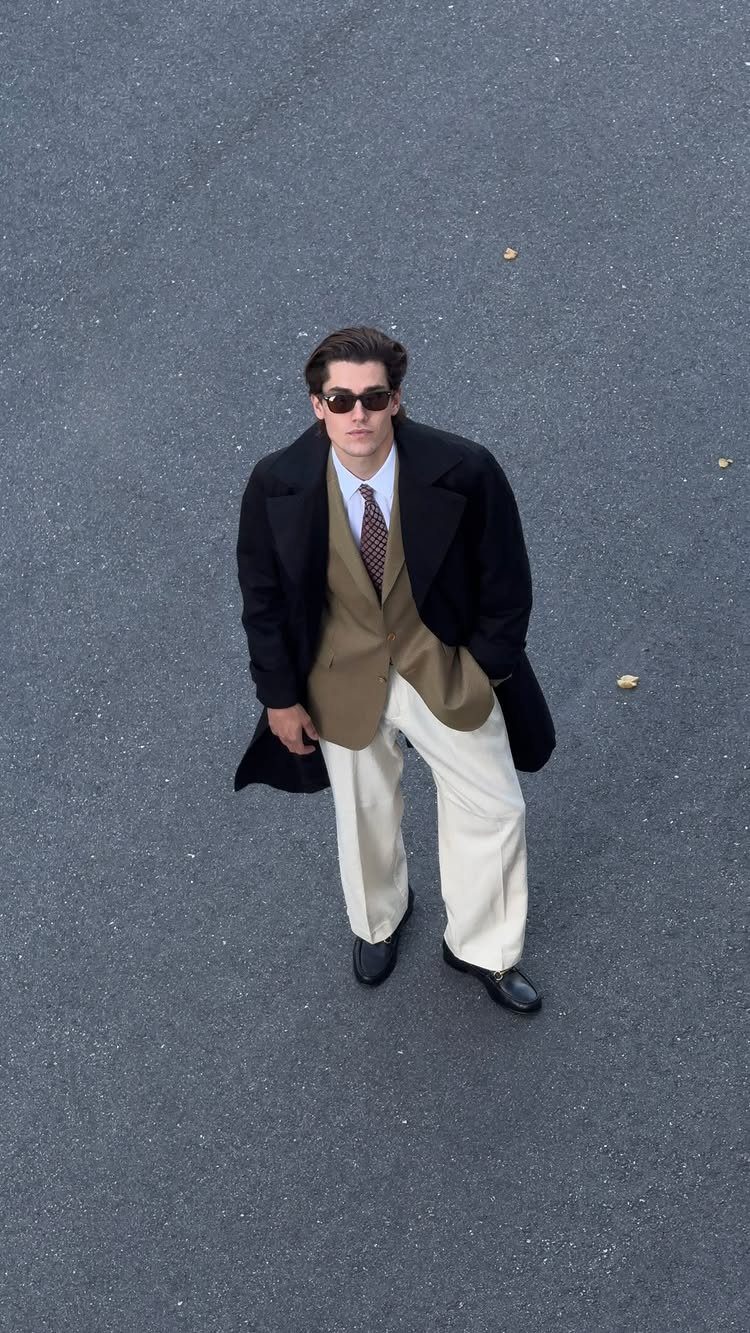
A tan blazer under a black overcoat gives you 2 layers that disagree on purpose: the light jacket warms up the dark coat.
Add a white shirt, a tie, cream trousers, and loafers, and the outfit stays in a tight palette.
I’d pick an overcoat cut slightly longer than the blazer so the jacket hem never peeks out below it. Keep the tie plain.
The coat should fit over the blazer without pulling across the back, so try it on with the jacket underneath.
11. Overcoat Over a Turtleneck
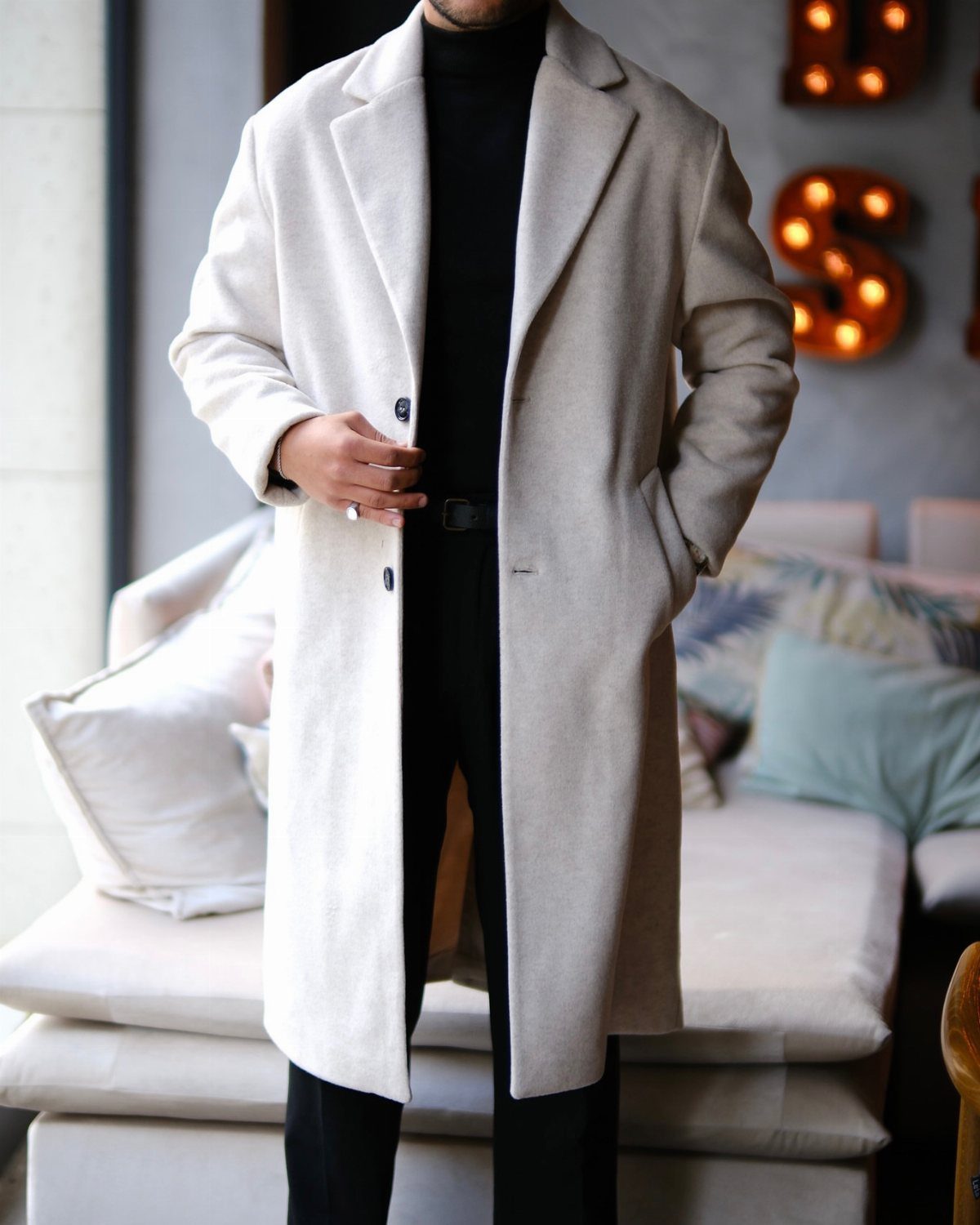
A long cream wool overcoat over an all-black turtleneck and black trousers is a high-contrast outfit with almost nothing in it. The black base makes the pale coat look expensive.
Wool drapes better than synthetic blends, and a coat that reaches the knee or lower gives the long, clean line. Keep the turtleneck fine-knit so it sits smoothly under the coat collar.
Cream marks easily, so store it on a wide hanger and brush it after wearing. Skip a scarf; the neckline already does the work.
12. Quarter-Zip Sweater and Pleated Trousers
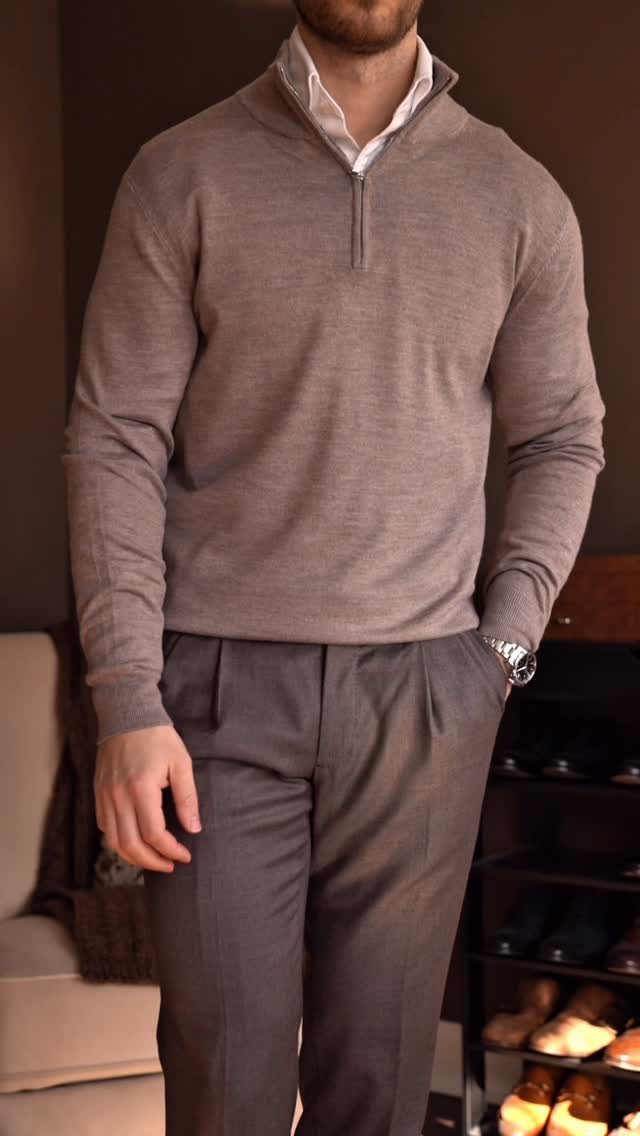
A taupe quarter-zip worn over an open white dress shirt is the version I’d choose for an office that isn’t strict. The collar sits out over the sweater neck, which keeps the look sharper than a plain pullover.
Pair it with grey pleated trousers for a soft tonal match. Pick a fine-gauge knit so the collar lies flat, and zip it only partway.
It won’t replace a jacket for formal meetings, but it handles most ordinary workdays and dinners.
Mistakes to Avoid
Logos are the fastest way to break the look.
A visible logo turns the clothes into the headline, and old money works the other way: the man should be noticed first, and the label should be something only he knows is there.
Pick pieces with no lettering at all, or with marks small enough that nobody reads them across a table.
Fit is the next failure.
Baggy clothing never reads as old money, because the look depends on tailored cut. If a shoulder seam slides off yours or a sleeve swallows your wrist, fix it before buying anything new.
Check the fabric too. Shiny, thin cloth undoes a good silhouette, and you can spot it under store lights by its sheen.
Keep each outfit to two or 3 neutral tones, and leave bright colors for another day.
Leave off the belt or the watch and the outfit looks half dressed, so add one plain, quiet piece like a thin leather belt or a simple steel watch.
Wrinkles count as well; the whole style depends on clothes that look cared for.
Grooming Tips
Grooming finishes the outfit, and this style rewards attention to detail more than most. Keep the haircut fresh, the beard or stubble trimmed close, and the shoes brushed and polished, since those three do most of the work.
Book a trim before the cut grows out, not after. A clean neckline and tidy sides do more than any styling product.
If you wear a beard, keep the edges sharp and the length even. Stubble left to run wild looks careless next to a good jacket.
Shoes get noticed last and judged hardest. Wipe them down after wearing, and polish them before an event, not the morning of, so the shine settles.
Color Palette
Build the wardrobe around navy, beige, cream, white, and forest green. These muted, neutral shades look polished and timeless because none of them competes with the others.
Pick one as the base and let a second carry the rest. Navy with cream is the easiest pairing, and forest green works well as a single piece, such as a knit, against lighter trousers.
Because the tones sit close together, almost any piece you own should mix with the others. That is what lets a small wardrobe produce a week of outfits.
When in doubt, choose the quieter shade. A color that makes you look twice at the clothes is the wrong one here.
Frequently Asked Questions
What are old money clothes for men?
They are quiet, well-tailored pieces in natural fabrics: double-breasted suits, polos, pleated trousers, chinos, leather loafers, linen shirts and wool overcoats.
Old money clothing sticks to quiet colors, natural fabrics like wool, cotton and linen, and nothing with a visible brand on it.
The look depends on cut and care, so a clothes that fits well and looks cared for counts for more than the price tag.
What colors work best for the old money look?
Navy, beige, cream, white and forest green.
Navy with cream is the simplest pairing, and forest green works best as one piece, like a knit, against lighter trousers. If two shades are close, I’d go with the calmer one.
Can I mix old money style with streetwear?
Yes, as long as the result stays polished.
Keep the base classic: tailored fit, muted tones, no big logos. Any modern piece should be quiet enough that the outfit still looks planned, since loud elements fight the whole idea.
Is old money style expensive to put together?
Not necessarily. A budget start can be a pair of chinos, which run well below wool trousers, plus inexpensive loafers that stay presentable with regular polish and heels replaced before they wear down.
A well-fitted cheap piece beats a loose expensive one, so I’d put part of the budget toward a tailor.