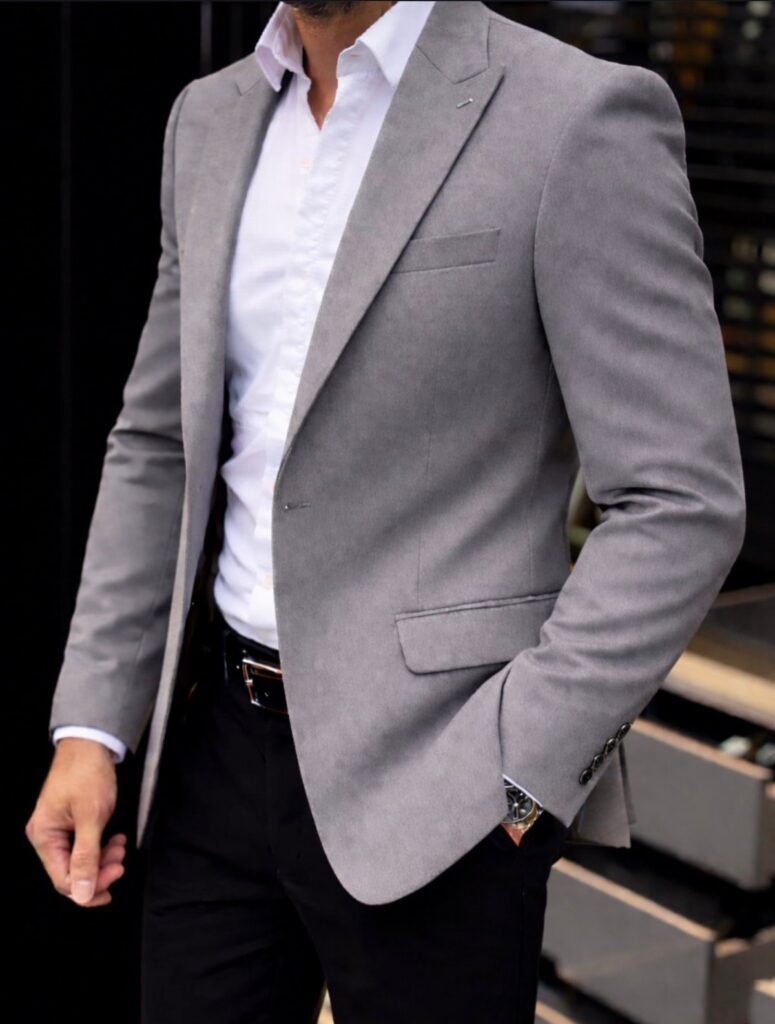
The picks range from a herringbone sport coat and a tweed blazer for cold weather to a light blue or beige textured jacket that suits warmer days.
1. Best Everyday Slim-Fit Blazer
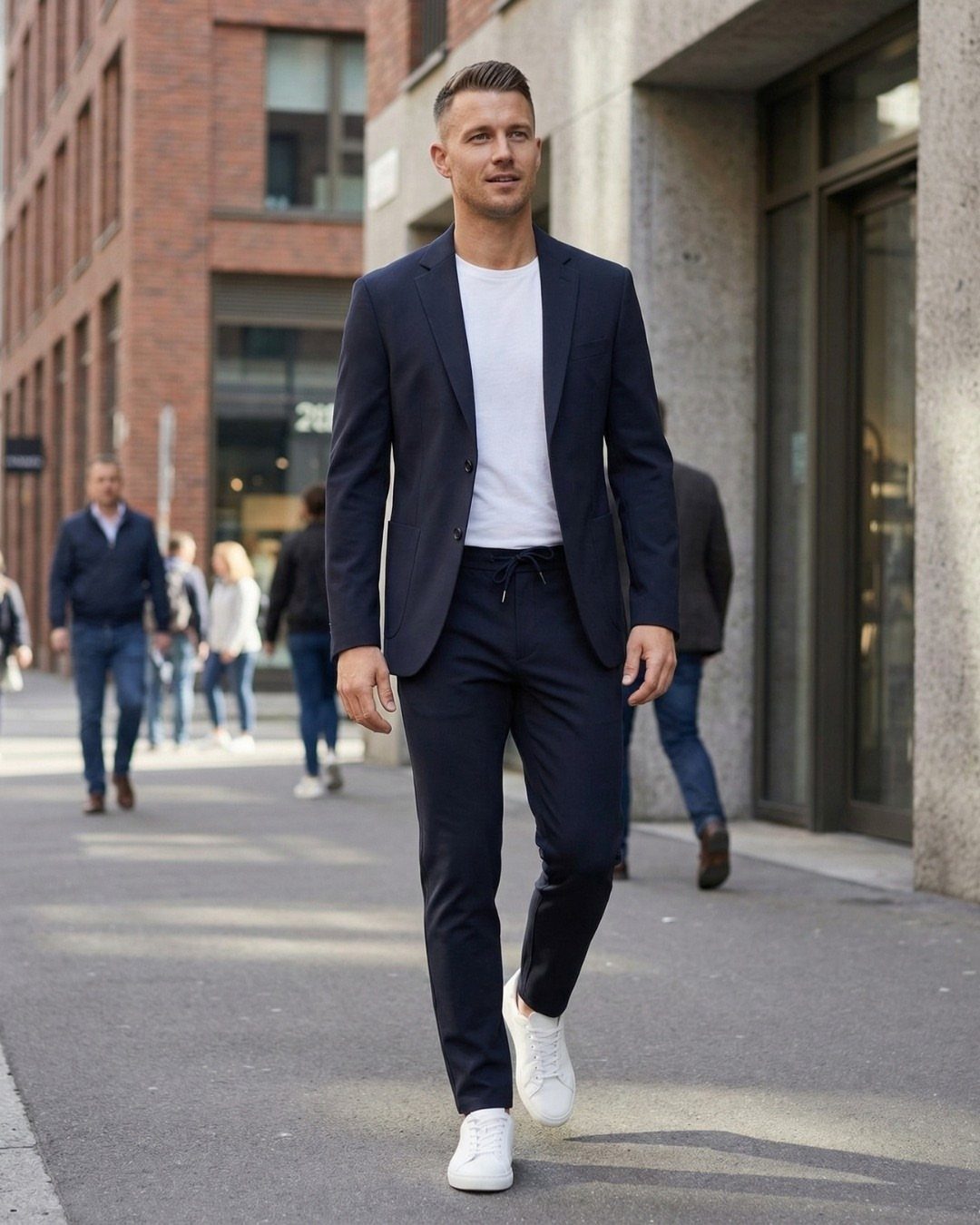
Navy is the blazer I’d buy first, and a slim cut keeps it from looking like a hand-me-down.
Worn open over a plain white tee, with matching navy trousers and white sneakers, it reads as a relaxed suit rather than an office uniform.
Split the pieces and the jacket works with jeans, chinos and gray flannels. That’s where the cost per wear drops fast.
Keep the tee fitted at the chest, since a baggy one under a slim jacket looks sloppy.
2. Best Sleek Slim-Fit Blazer
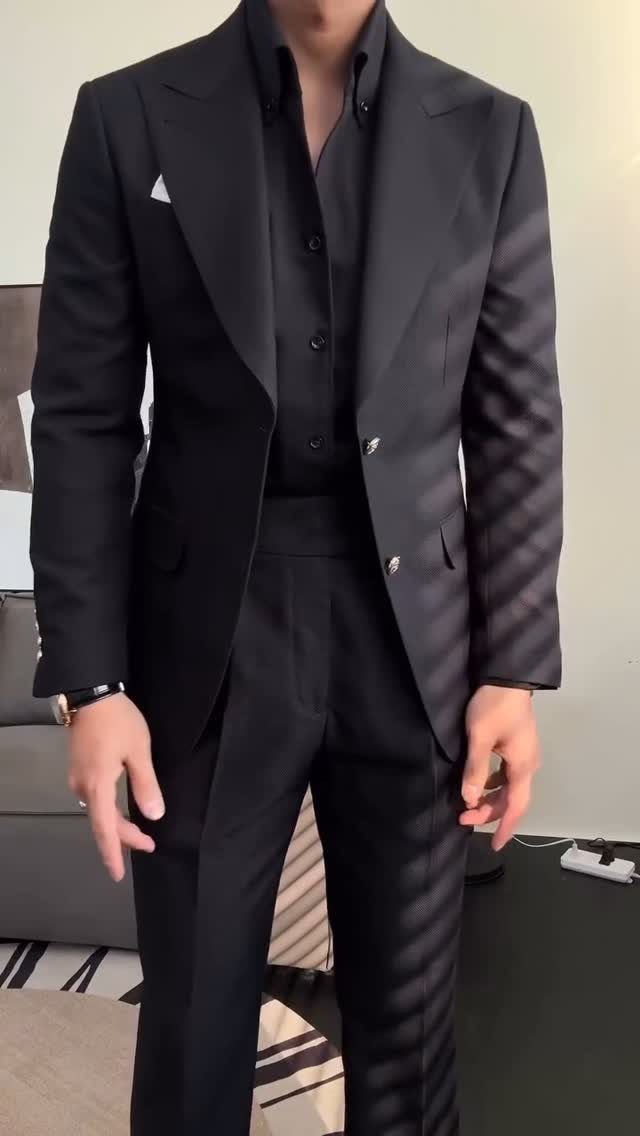
Black wool is the classic here, and a slim cut sharpens it. Wool or a wool blend is the usual fabric, and it drapes cleaner than polyester, which tends to shine under indoor lights.
Matching shirt and trousers in one tone give the eye a long, unbroken line, and a white pocket square is the single break in it, so keep it small and simply folded.
I’d keep the square simple: a plain white cotton or linen fold, nothing patterned.
Black suits the evening best. For a daytime office, I’d pick navy or charcoal.
3. Herringbone Sport Coat
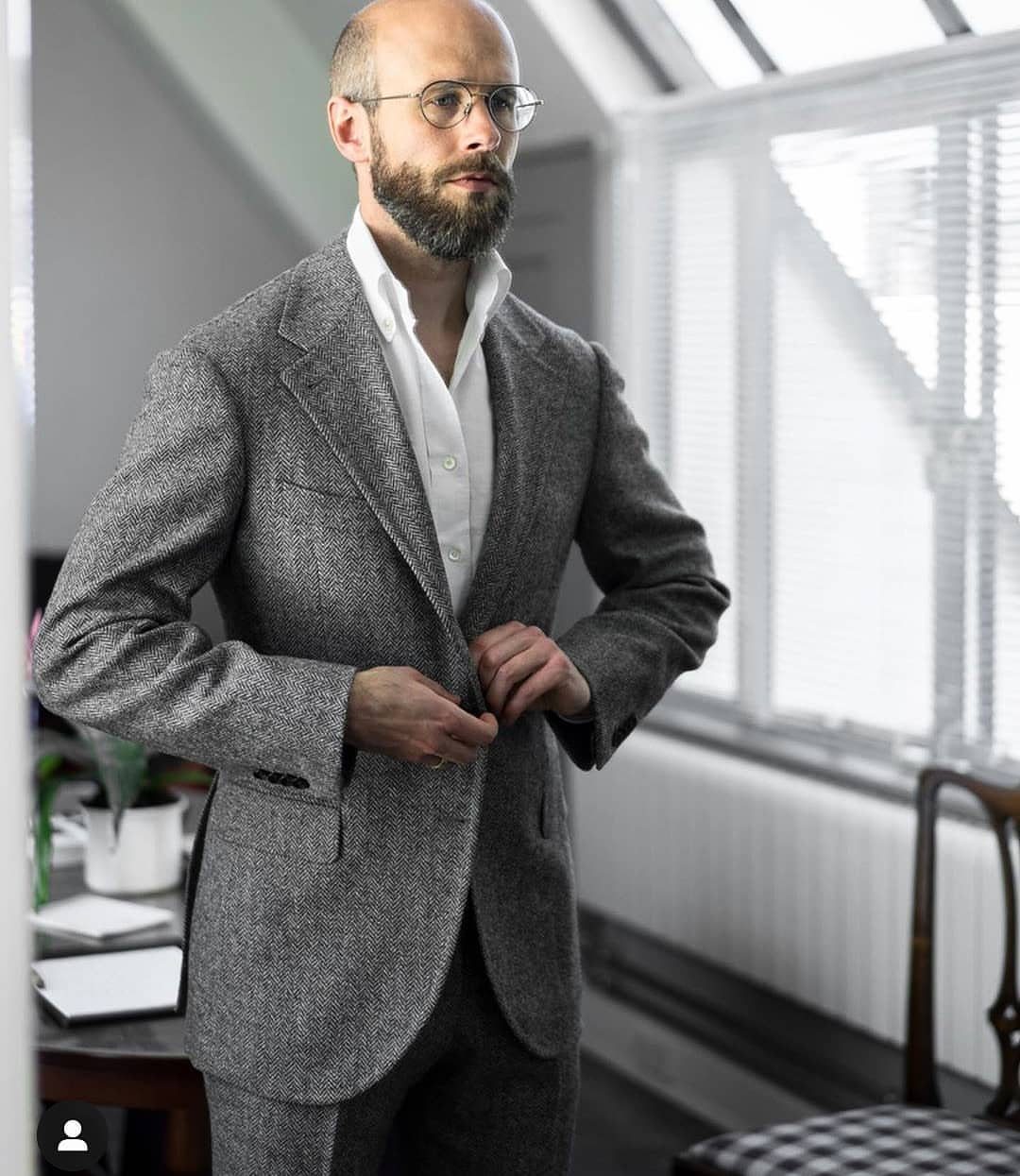
A grey herringbone coat adds texture without adding noise. The zigzag weave looks solid from a distance and shows its pattern only up close, so it pairs easily with a plain white shirt, open at the collar.
Matching trousers turn it into a suit, but I prefer breaking it up. Try dark denim or navy chinos on a weekend.
If a solid navy feels too safe, this is the swap I’d make.
4. Tweed Slim-Fit Blazer
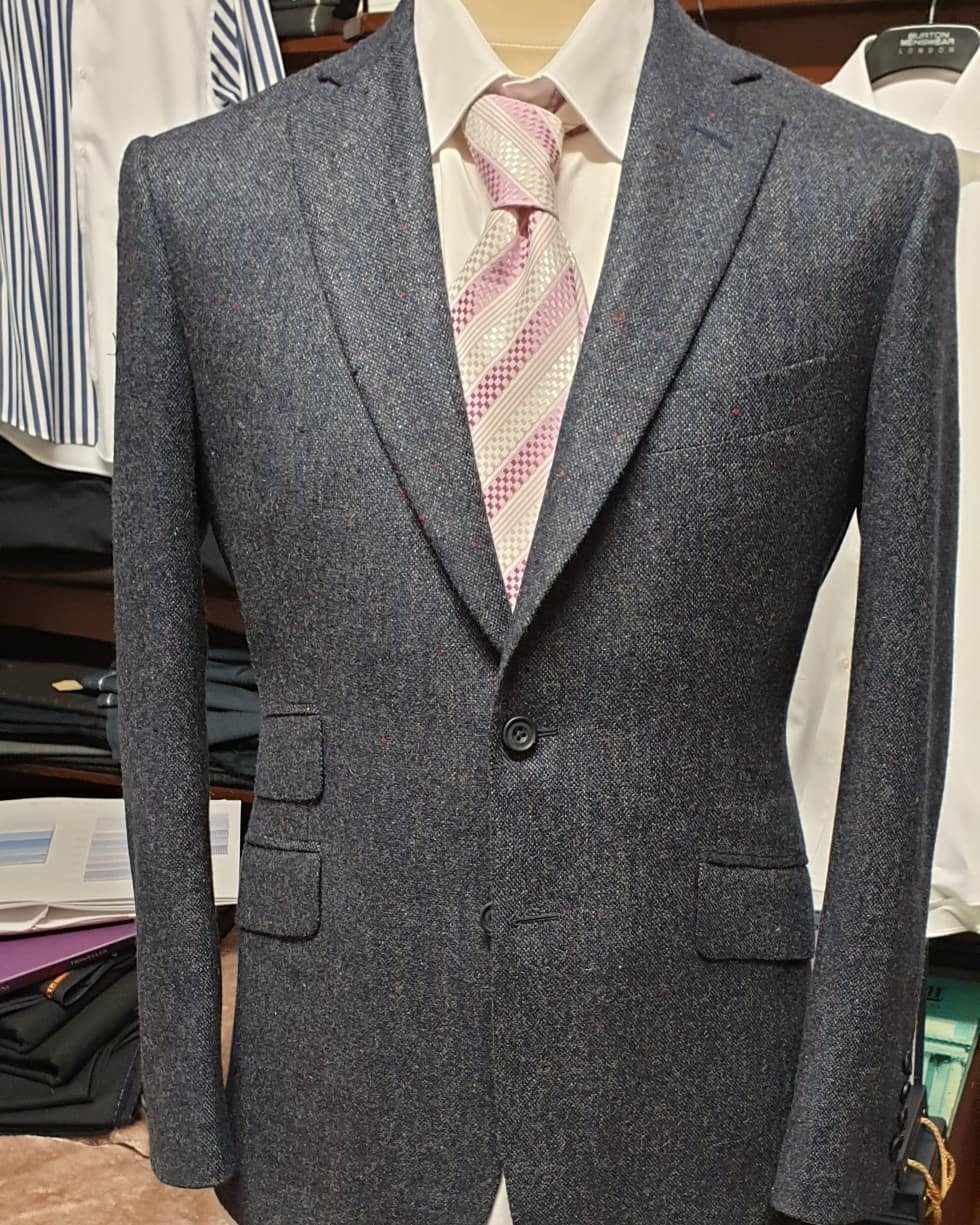
Tweed brings weight and character, which makes it the blazer for cooler months. A ticket pocket, the small extra pocket above the right hip pocket, adds a quiet tailored detail.
Charcoal tweed pairs easily with a white shirt, and a striped tie in pink or another soft color adds interest without fighting the texture of the cloth.
Keep the tie’s pattern wider than the tweed’s weave so the two don’t fight.
Slim fit matters more with tweed than with most fabrics, because thick cloth looks boxy fast. Tweed also runs warm, so skip it in summer.
5. Best Designer Slim-Fit Blazer
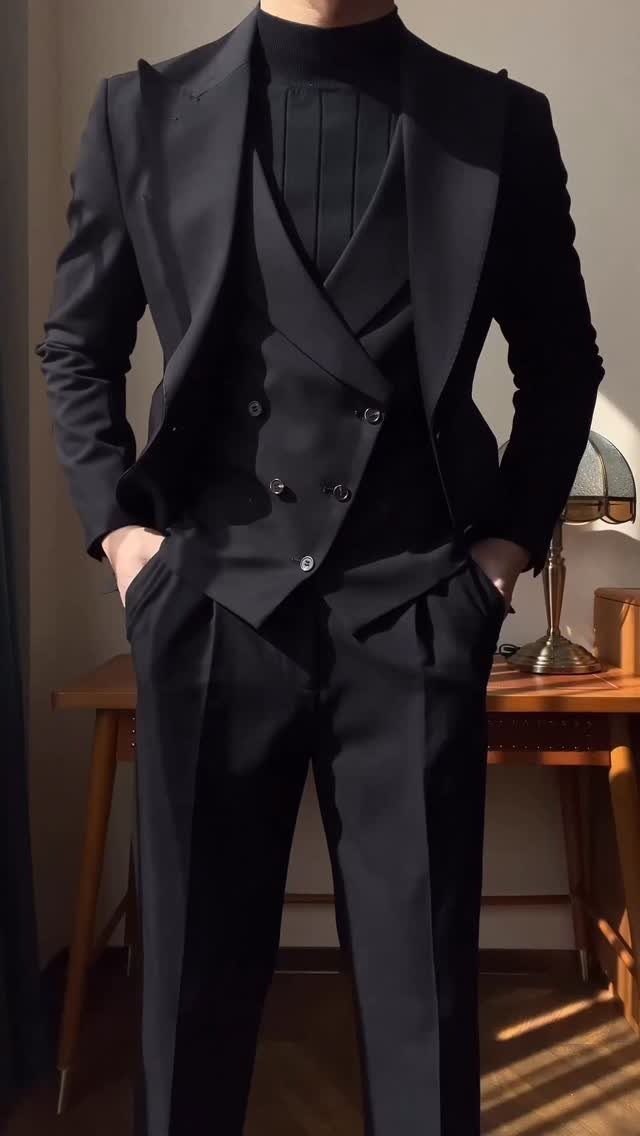
All black, cut slim, and worn as a three-piece: this is the version for a man who wants the room to notice.
A double-breasted vest under the jacket adds a layer most people skip, and a black turtleneck replaces the shirt and tie.
I like the turtleneck because it keeps the look modern instead of formal.
Designer pricing is steep, so spend it on fit first. Have a tailor adjust the sleeves and waist, since a black suit shows every pull and wrinkle.
6. Navy Slim-Fit Blazer with White Trousers
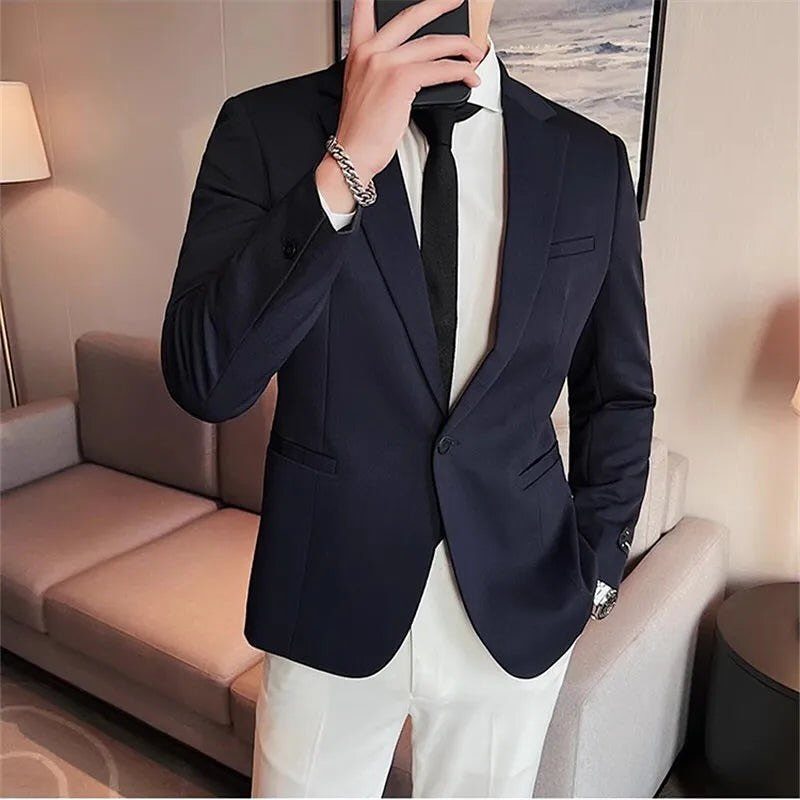
Navy against white is a high-contrast pairing, and it works because both colors are clean. A white dress shirt under the blazer, white trousers below, and a slim black tie give the outfit a sharp, graphic look.
White trousers show everything, so check that they aren’t see-through and wear skin-toned underwear. I’d save this for warm weather, or for events where you won’t be sitting on dirty benches.
Swap the black tie for navy if black feels severe.
7. Textured Olive Green Blazer
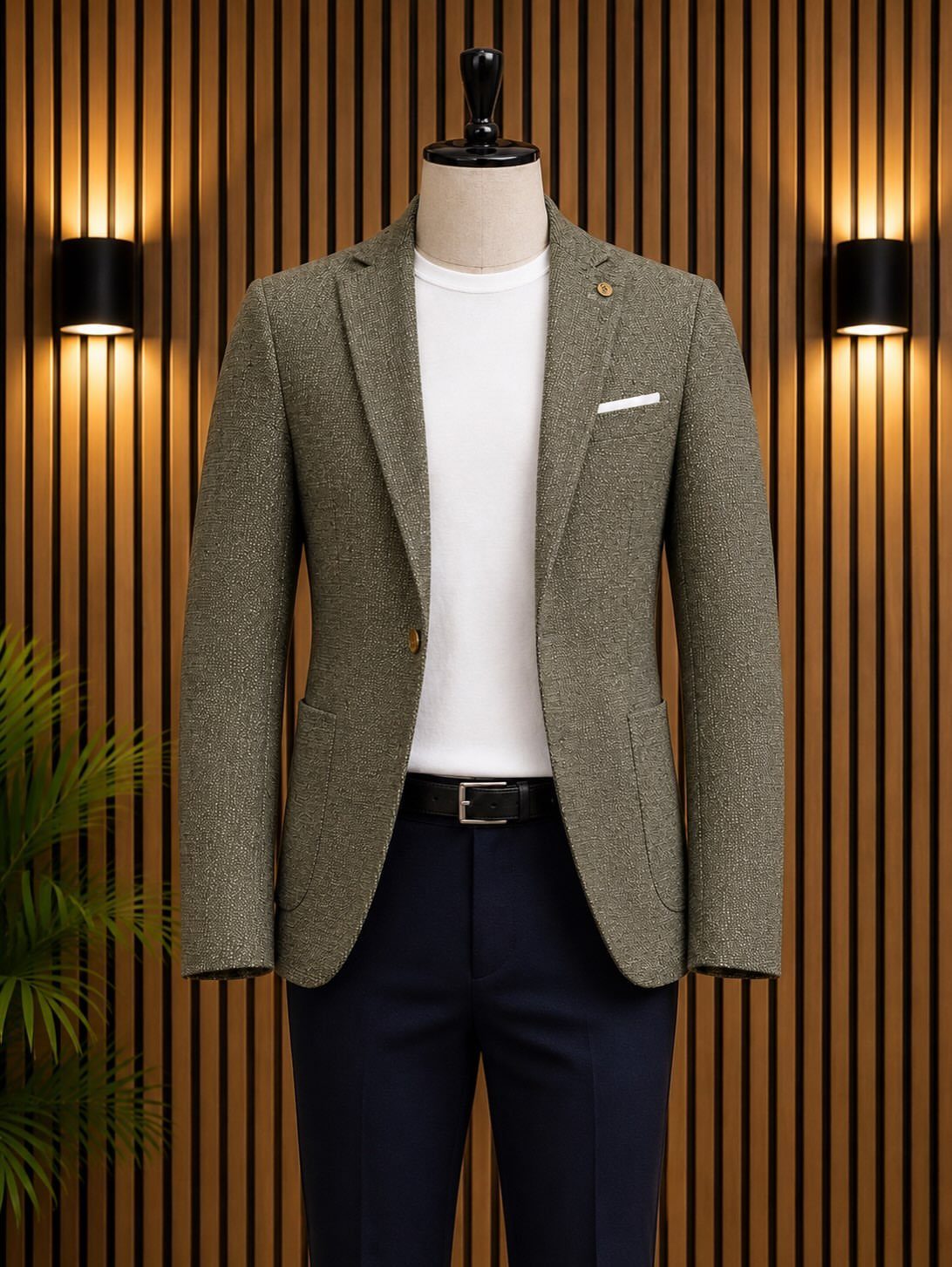
Olive is the blazer for a man who finds navy too expected. A textured weave gives the color depth, so the jacket looks interesting even with nothing but a white tee and navy trousers beneath it.
Olive and navy sit close in tone, which keeps the outfit calm. Keep the tee plain and fitted so the cloth does the talking.
For a dressier version, I’d swap the tee for a white shirt, open at the collar.
8. Beige Textured Slim-Fit Blazer
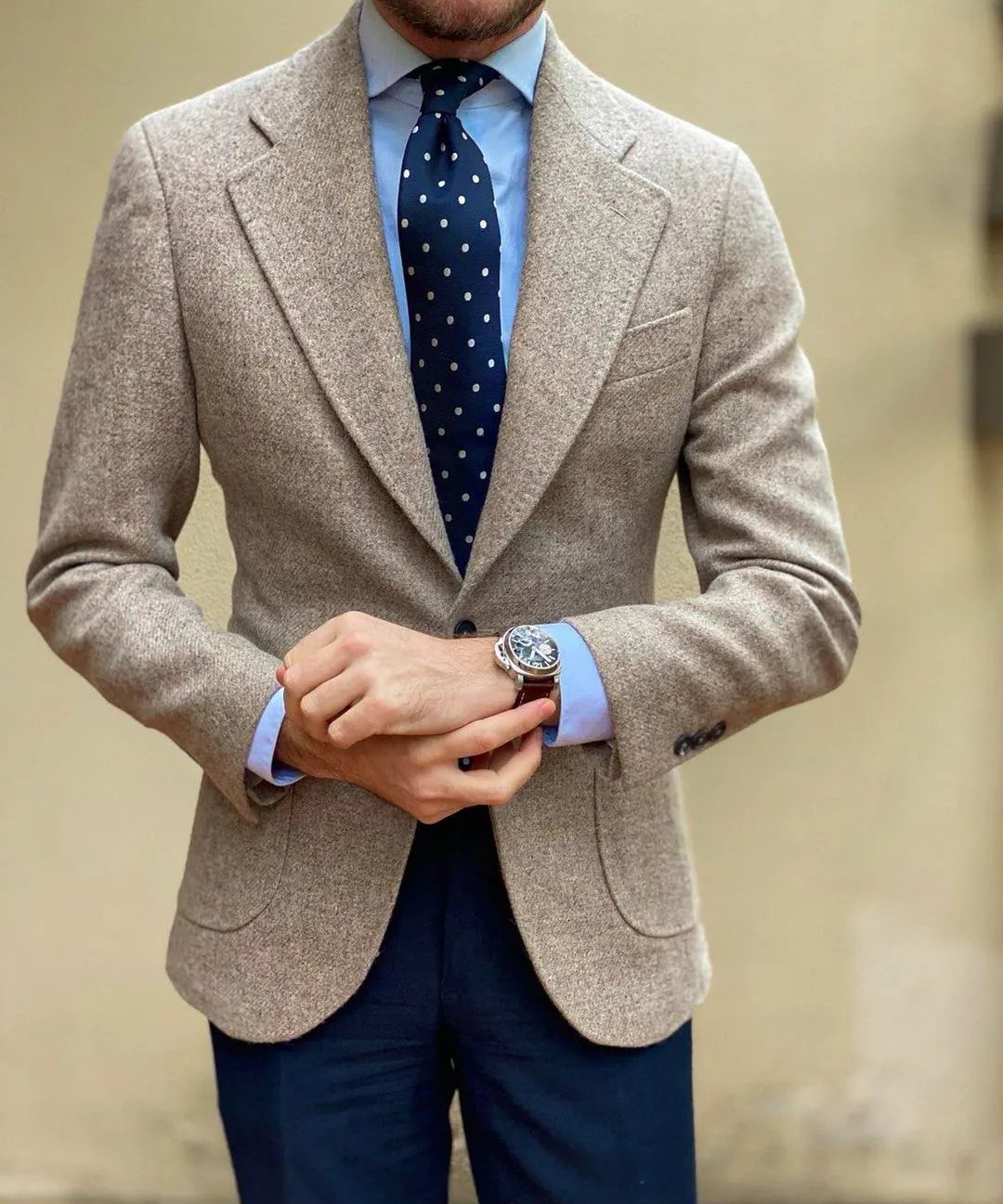
Beige in a textured cloth is softer than gray and warmer than white, and a light blue shirt is the easiest partner for it. The navy polka-dot tie adds a little pattern while staying inside the same cool palette.
Keep the dots small and the tie slim, so the jacket’s texture stays the main event. Navy trousers finish the look and give the pale jacket something to stand against.
Light jackets mark easily, so I’d check the lining and cuffs before buying.
9. Light Blue Slim-Fit Blazer

A light blue blazer is the boldest thing in this group, and it works best when everything else stays quiet. Dark trousers anchor it, and a light blue button-down underneath keeps the color in one family.
A patterned pocket square is where the fun goes. Pick one that repeats a shade from the jacket so it looks planned, not grabbed.
A light blue slim-fit blazer looks best worn open, with the jacket hanging straight and the lapels relaxed, which gives the outfit an easy, friendly feel that buttoned-up navy can’t match.
I’d choose this over navy when the room is casual and you want to be remembered.
Versatility of Slim-Fit Blazers
A slim blazer earns its place because few layers make a man look put together with so little effort. Throw it over a tee, a button-down or a knit, and the outfit gets a clear shape.
Fit decides everything, and the shoulders come first. Check the shoulder first: the seam where sleeve meets body has to land right at the edge of your shoulder bone, not past it and not short of it.
Too short and the cloth pulls and bites; too wide and it sags.
Broad through the shoulders? Go up a size, because a jacket that’s too tight there pulls into creases across the upper arm and around the armhole.
Check the armhole next. Under the arm, the fabric should lightly touch you without pinching, so you can reach forward and still feel the cloth stay put.
At the neck, the blazer collar should sit flush against your shirt collar with no space between them, and it should rest smoothly on the back of your neck instead of lifting away.
Slim does not mean tight. A good slim blazer fits your body without strain, and that’s what makes you look leaner.
Slim-fit blazers just look sharper, sleeker, and dressier than a looser fit.
— Esquire
Seasonal Considerations
Match the cloth to the weather before you worry about color. Linen and seersucker suit summer, and thicker materials suit winter.
For heat, a cotton-linen blend is a solid pick. One option is 72% cotton and 28% linen, unstructured, breathable and quick to dry if you sweat.
It holds up from spring through early fall, and it works for outdoor weddings in blazing heat. Unstructured jackets also work apart from matching trousers, so you get a casual blazer out of a suit.
A slim cut costs you warmth, since there’s little room to layer a thick sweater underneath. A light blend like that is not the best option for colder months, so don’t count on it past early fall.
If you can only buy one, pick by the season you dress up in most. Then add a second jacket in the opposite weight.
Frequently Asked Questions
How do you style a slim-fit blazer?
Start with navy and wear it open over a fitted white tee, with jeans, chinos or gray flannels, and white sneakers.
Over a button-down or a fine knit it looks right, and on a casual weekend a plain gray hoodie underneath still works.
A slim jacket gives any of these a clear shape with little effort. Keep whatever sits underneath fitted, because a baggy tee looks sloppy under a slim cut.
Does a slim-fit blazer have to be tight?
No. If you are broad through the shoulders, go up a size, since a jacket that is too tight there pulls into creases across the upper arm and around the armhole.
What fabric is best for a slim-fit blazer in summer?
Linen, seersucker or a cotton-linen blend.
I like a 72% cotton, 28% linen blend with no structure: it breathes, and it dries quickly when you sweat. Skip tweed and other heavy cloth in the heat.
What color slim-fit blazer should I buy first?
Navy. Jeans, chinos and gray flannels all pair with it, so the cost per wear falls quickly.
Add matching navy trousers and the jacket passes for a relaxed suit. Once navy starts to feel too safe, a gray herringbone or a textured olive jacket is where I’d go next.