Dress code sets the range here: a sweater layered over a collared shirt suits a cold Friday, while a grey three-piece suit suits client days and interviews.
1. Quality Dress Shirts
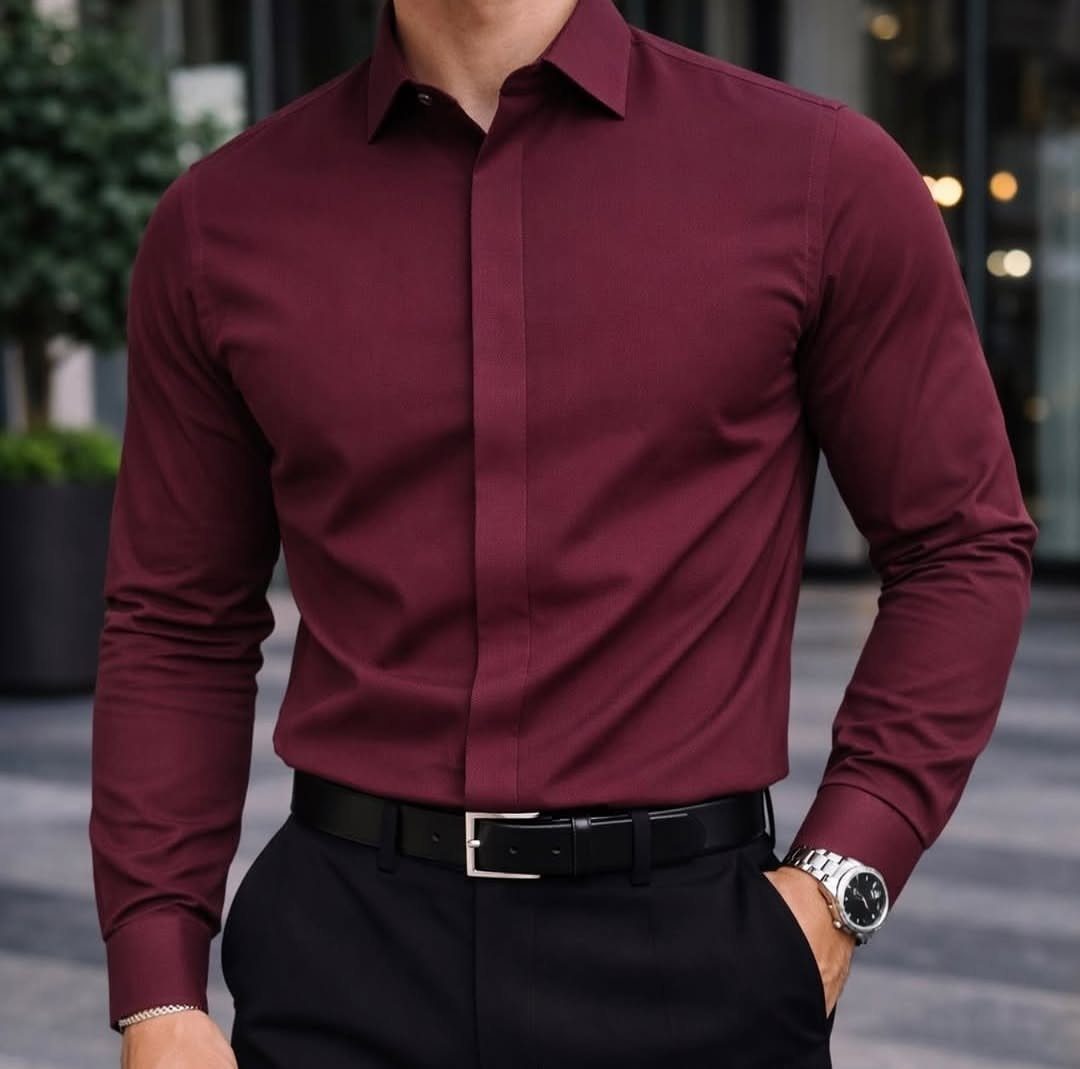
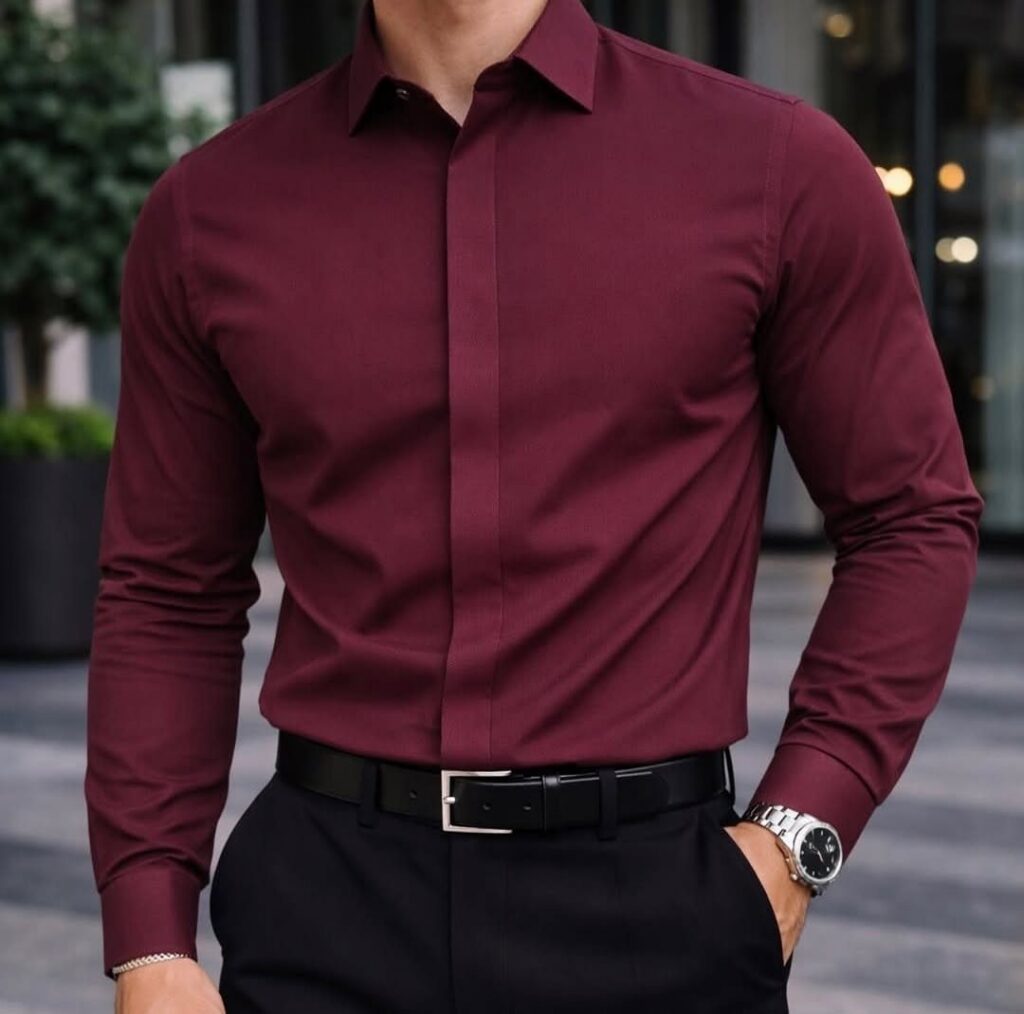
A burgundy dress shirt tucked into black trousers is a stronger office move than another white one. The color reads as deliberate, and it still sits comfortably with a belt and a simple silver watch.
Fit decides whether a shirt looks expensive.
The collar should close without pinching, and the shoulder seam should land at the edge of your shoulder. Tuck it in cleanly and keep the sleeves long enough to just clear the watch.
2. Belts, Watches, and Ties

A brown leather belt with a charcoal suit is a pairing I like more than the default black. It warms up the grey without making it casual.
Keep the tie and tie bar quiet.
A maroon tie with a small pattern against a white shirt works because only one piece is doing the talking. Put the bar roughly between the third and fourth buttons, and let the watch be plain metal.
3. Leather Loafers and Chelsea Boots
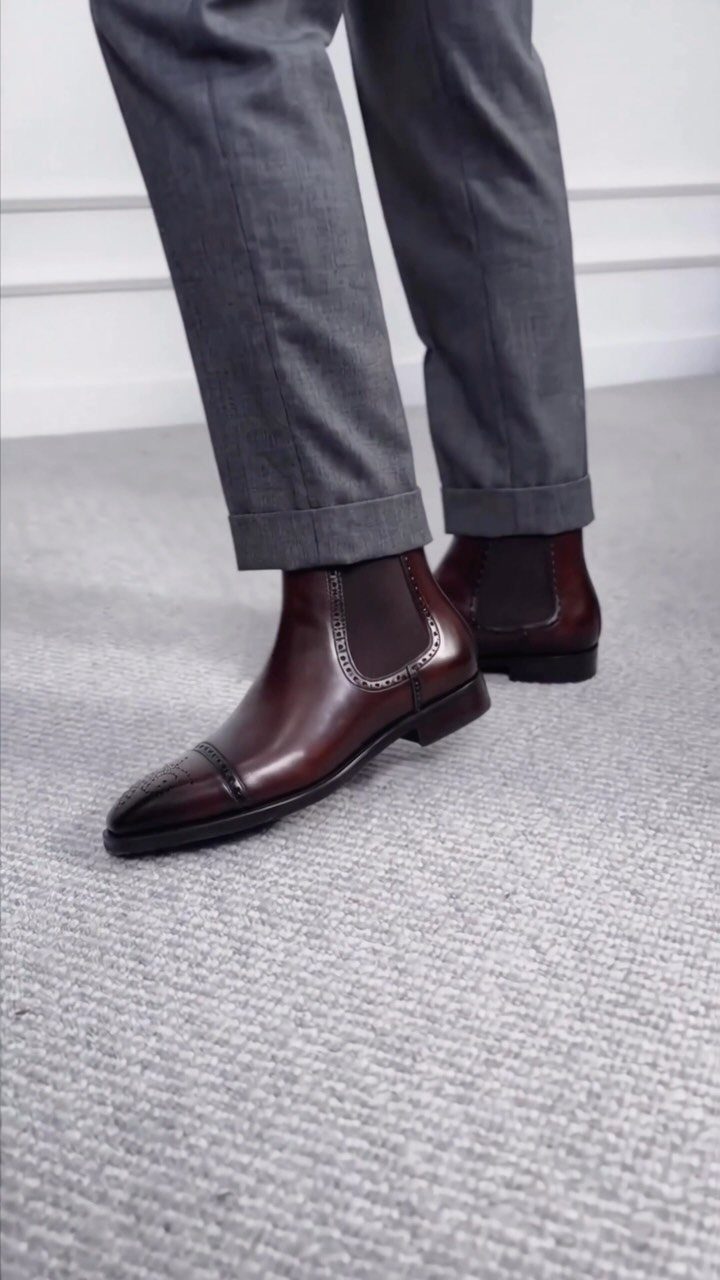
Reddish-brown Chelsea boots with brogue detailing and grey trousers is the combination to copy. Brogues add texture, the elastic sides keep the boot sleek, and the brown reads richer than black against grey wool.
Trousers with a cuffed hem show off the boot’s ankle line, so keep the break minimal. If the dress code is stricter, loafers in dark brown are the easier swap.
4. Embrace Hybrid Dressing

Pleated beige trousers paired with a light blue button-down work at a desk and hold up just as well on a walk across town, which is the whole idea of hybrid dressing.
Nothing in it needs a jacket to look finished.
Loafers and a black belt keep it tidy, and a simple bag carries the laptop. Choose a shirt that holds up untucked or tucked so one outfit covers an office day and a home-office day.
5. Colors
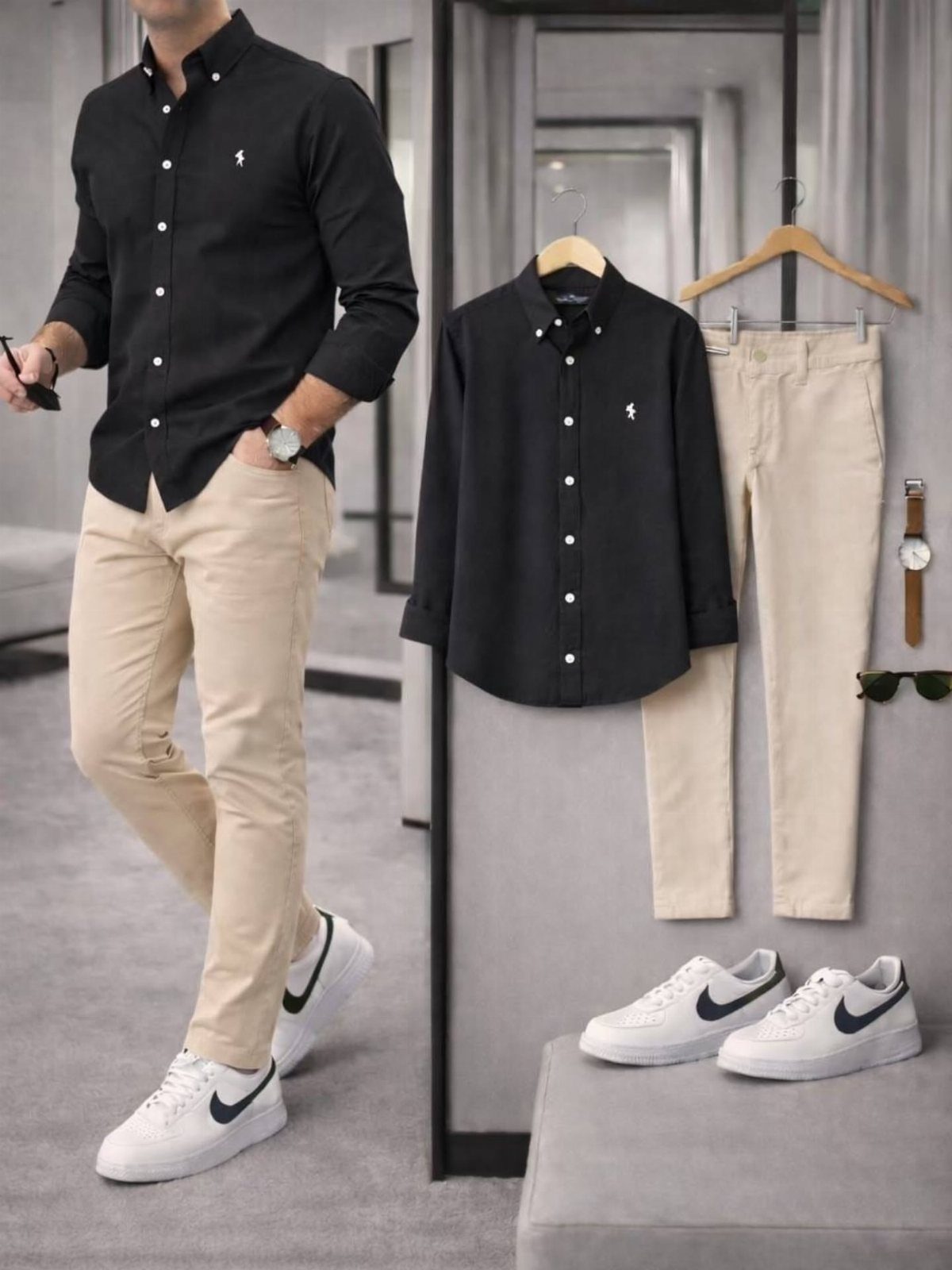
Build most of your closet from a few core neutrals like navy, gray, beige, and white, and nearly everything you own will go together.
Buy neutrals first, then add one accent at a time. Because every piece pairs with every other, getting dressed takes less thought, and that is worth more than a drawer full of statement shirts.
6. Classic Navy Business Suit

A dark navy suit with a white dress shirt and a patterned tie is the most dependable thing you can wear to work. Faint pinstripes add a little life without turning it into a boardroom cliché.
A patterned tie does the talking here, so choose a plain white or light blue dress shirt and the two won’t fight each other. If you own one suit, I would make it this one.
7. Grey Three-piece Suit

Grey flannel or worsted, a white shirt and a striped tie make up the formal end of office dressing, and the vest is what sets the whole outfit apart.
It fills the gap between shirt and jacket, so the whole outfit looks finished even when the jacket comes off at your desk.
A plain white shirt lets the tie carry the stripe, so leave the pattern to the neckwear.
The vest should sit snug at the waist and cover the trouser waistband. Leave the bottom button undone.
I’d save this for client days and interviews. On a casual Friday it can feel like too much.
8. Sweater Layered Over Collared Shirt

Over a light blue collared shirt, a navy crewneck sweater gives you a layered look with no jacket involved. Only the collar and cuffs show, so the shirt has to be crisp and the sweater clean.
Choose a fine-gauge knit that lies flat, because a bulky one bunches the collar. Dark trousers keep the look sharp enough for most offices.
It’s warmer than a shirt alone and easier than a blazer. I’d pick this on days when the office runs cold and nobody is expecting a suit.
9. Grey Pinstripe Suit

Grey pinstripe asks for a quiet shirt, and a white one is right. The stripes already supply the pattern, so a plain base lets a bold tie like orange stand out without a fight.
Matching the socks to the tie is a small move that looks planned rather than matched by accident. Keep the tie the only bright piece, and leave the pocket square plain or skip it.
The cut matters more than the cloth: tailored through the shoulders and waist, pinstripes look sharp, while a loose fit turns them into a costume.
Navigating Dress Codes
"Smart casual" is the hardest code to pin down, and the short answer is that you know it when you see it.
For the office, lean toward the smart side. A birthday dinner at a good restaurant can take a louder color or a pattern, but the same shirt at the office usually draws looks.
Business casual is just as slippery. What it means shifts with the company, the industry, and sometimes whether it’s a Monday or a Friday.
Fewer offices demand a suit every day now, yet that freedom has made dressing well for work harder to get right, because nobody hands you the rules.
Before your first week, look at what people one level above you wear, and match that.
If you can’t tell, dress one notch sharper on day one. Adjusting down is easy; recovering from a weak first impression is not.
Color Coordination
A simple split keeps a closet balanced: 50% core colors, 40% tonal colors, 10% accents and patterns.
Core colors are the neutrals: black, navy, white, and gray. Tonal colors are variations on those, such as baby blue, a soft beige, or a deep olive.
Accents are the cherries on top, so keep them the smallest share. They add personality without running the outfit.
Old color rules, like no white after Labor Day, are outdated. Aim for outfits that look polished and intentional, and stop worrying about arbitrary guidelines.
Monochrome is another option if you want some fun. Wear several shades of one color head to toe, and let texture do the work that contrast usually does.
Investing in Quality
Spend on the best quality your budget allows; a well-made piece lasts for years, and you skip the cost of buying it twice. One good item worn 100 times beats three cheap ones that fall apart.
Fit comes before everything else. Clothes that fit badly are among the most common things people throw out, so I’d pass on anything that doesn’t fit, even at 50% off.
Skip trends and logos. Pick styles that have been worn for generations; they don’t date, and they flatter nearly every build.
Check the fabric label too. Natural fibers like wool and cotton are the better long-term bet, and more buyers are moving away from synthetics and fast fashion toward pieces meant to be kept for years.
Frequently Asked Questions
What is business casual attire?
Business casual sits a step below a suit and tie. Business casual usually means chinos or wool trousers, an oxford shirt or a knit polo that fits well, and a sport coat on days with meetings.
Ties and jackets are optional, and distressed denim, t-shirts and athletic sneakers are out. Neutral or muted colors and clean, tailored pieces keep it looking put together.
How do I build a smart casual wardrobe?
Start with a few neutral pieces that mix freely: navy, gray, beige and white. Add tailoring such as a suit or two and a few blazers, then shirts, a mix of dressy and casual trousers, and fine-gauge sweaters.
When every piece works with the rest, you stop standing in front of the closet trying to make a decision. Add one accent color at a time.
Should I wear a tie to the office?
In most offices a tie is optional day to day. Wear one for interviews, client meetings and other important days.
Keep the tie calm: a small repeat pattern over a white or light blue shirt works, because nothing on the shirt competes with it. Keeping a plain tie in your desk drawer covers surprises.
What color combinations work best for office outfits?
Most of the outfit should come from navy, gray, white and black. I like a rough split of 50% core colors, 40% softer tones such as beige or olive, and 10% for accents and pattern.
Accents get the smallest share on purpose; a little goes a long way, and too much starts to run the outfit.