The ideas here run from tailored suits and leather dress shoes down to chinos with a button-down and no tie, and the dress code at your office decides where you land.
A first client meeting calls for a tailored suit, a tie and leather dress shoes with a matching belt; a casual office can stop at chinos and a button-down.
Across the whole range, fit does the most work, which is why a lapel of 2.75–3.5 inches and a hem cut to your leg matter more than the price tag.
1. Belts Match Shoes
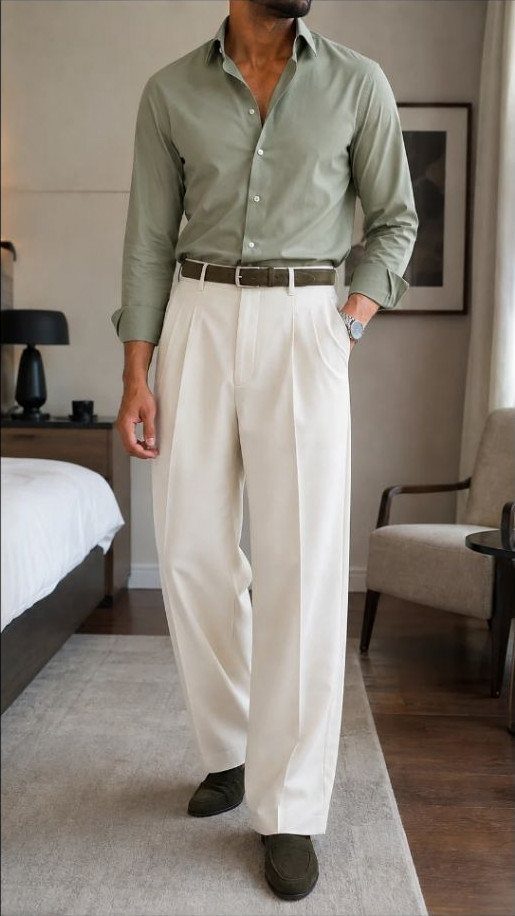
Olive suede on the belt and olive suede on the loafers is the clearest way to make a belt and shoes read as one decision. Matching texture does as much as matching color.
An exact match isn’t required.
The belt and shoes should sit close in tone, texture and formality, which is the rule the creator of this look stated for their own outfit. A black leather belt with brown suede loafers looks like 2 different outfits.
If you own only one pair of suede shoes, buy the belt to follow them.
2. Leather Dress Shoes
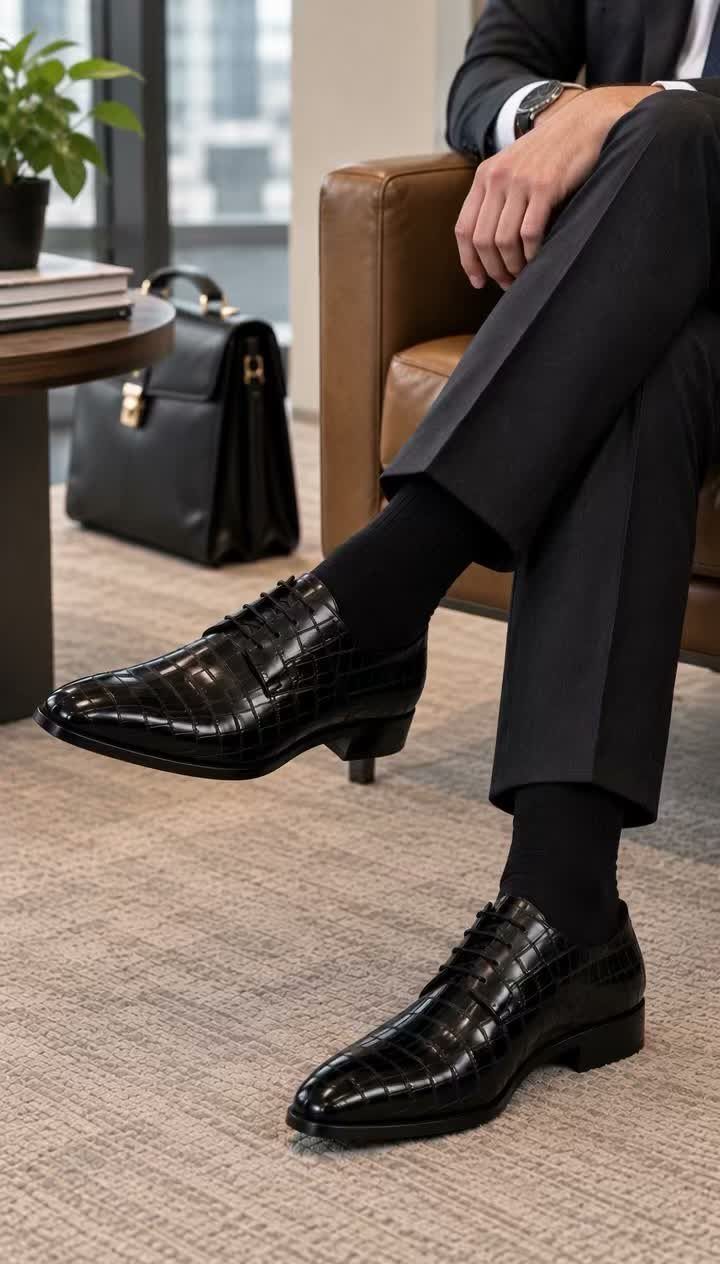
Black leather dress shoes with a dark suit are the safest footwear call for an office, and I’d keep them polished.
For most men, black oxfords or derbies with black socks do more work across more days. Save the patterned leather for when you want the shoes noticed.
3. Ties
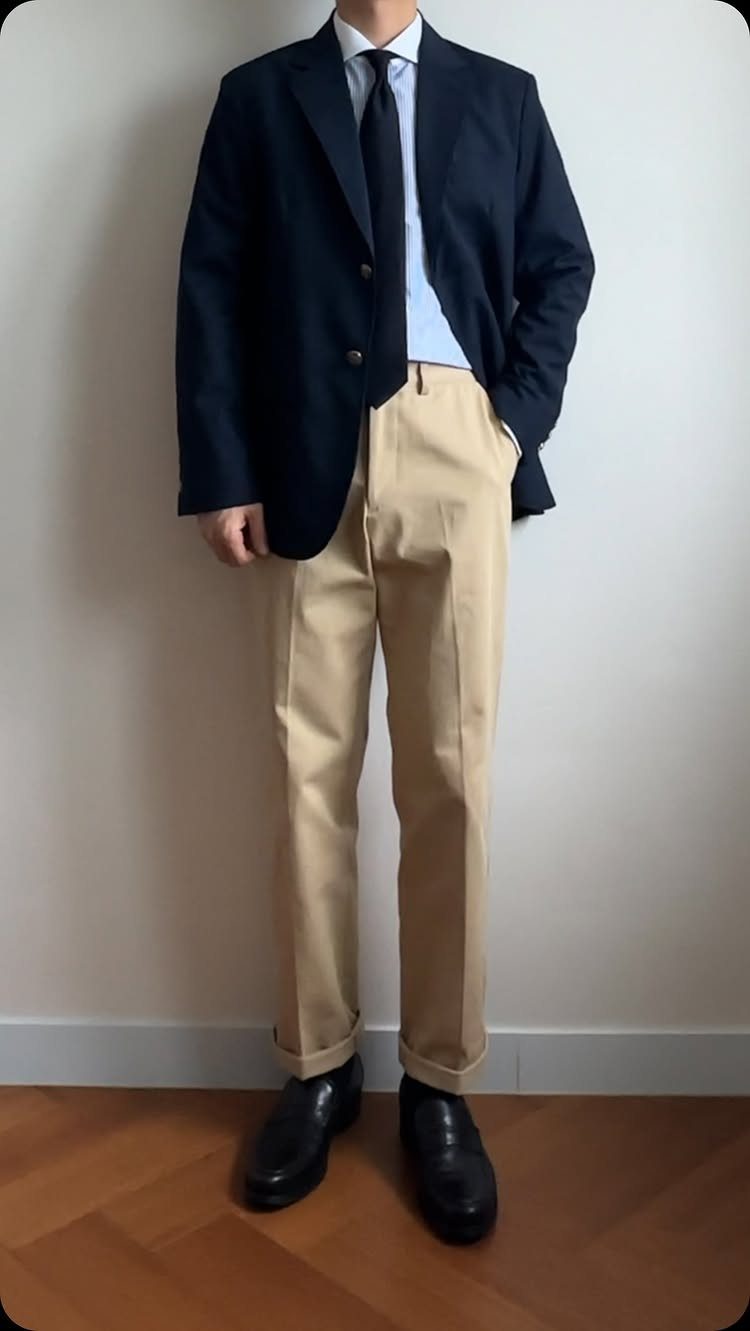
A good tie finishes a blazer and trousers outfit, and a dark one is the easiest to wear. Against a navy blazer and a striped shirt, a dark tie keeps the pattern from competing with itself.
Spend a little more here than you think you should.
A well-made tie holds its knot and hangs straight, while a cheap one twists and wrinkles. Two or three dark ties in different textures will cover most workweeks.
4. Tailored Suits
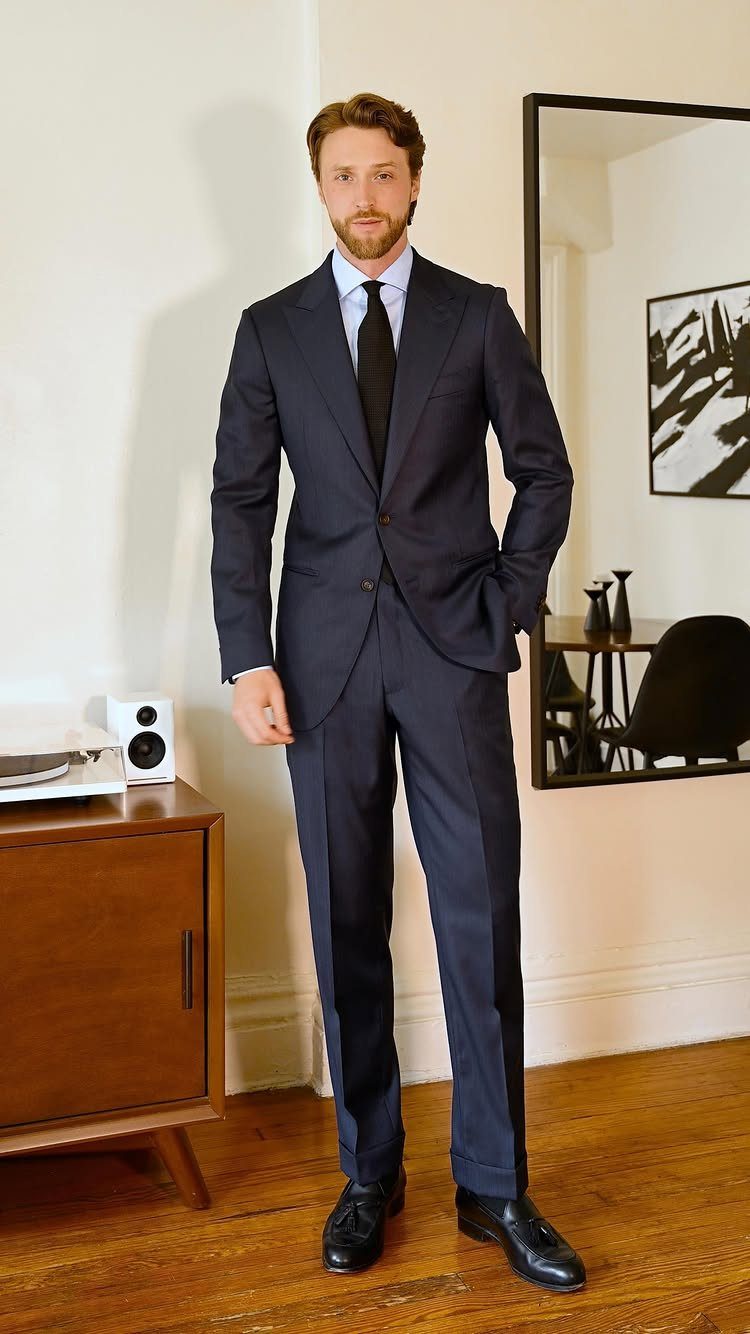
Fit is what makes a suit look tailored, and a navy suit is the right color to start with. Paired with a light blue shirt and a dark tie, it works for interviews, client meetings and most offices.
Budget for alterations before you buy.
A modest suit that fits through the shoulders and sleeves looks sharper than an expensive one that doesn’t. Choose the suit that fits your shoulders, then have the tailor adjust everything else.
5. Chinos and Tailored Trousers

Business casual lives in the trousers, and a textured pair in blue or gray gives a sweater something to work against.
A quarter-zip in navy with tailored trousers and black dress shoes looks like an office outfit without a jacket or tie.
Chinos are the easier, cheaper pick for daily wear. Tailored trousers look more polished and suit the more formal offices.
Whichever you choose, get the hem and waist right. That is where most of the difference shows.
Which means where to buy work clothes is equally as important as where to email that spreadsheet—heck, at GQ, it could be the difference between landing a promotion and landing yourself a sit-down with HR.
— GQ
6. Outfit 1
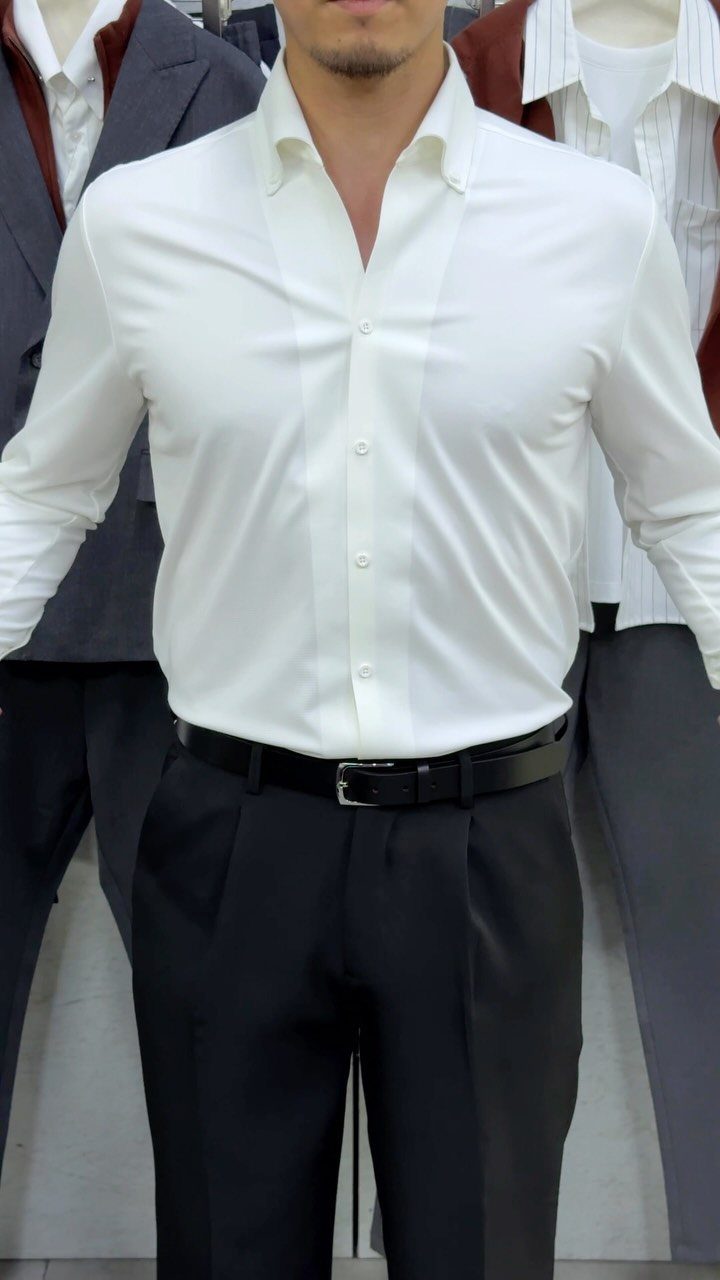
Matching the belt to the trousers keeps the middle of the outfit one unbroken line.
Pleated trousers add room through the hips and thighs, which many men will find more comfortable at a desk. Wear the collar open for a relaxed day, or add a tie when the meeting calls for one.
7. Button-Down Shirt with Contrast Trousers
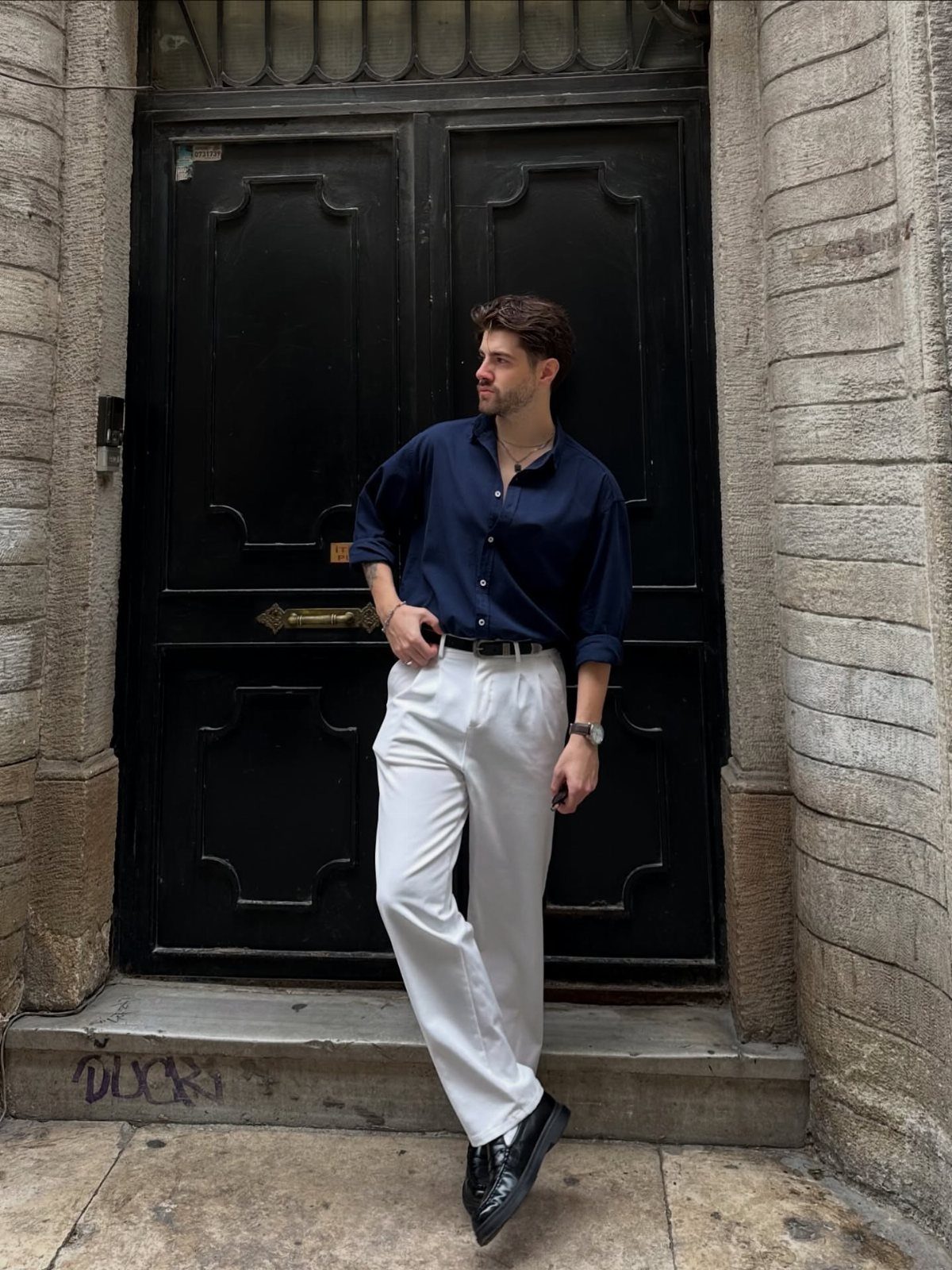
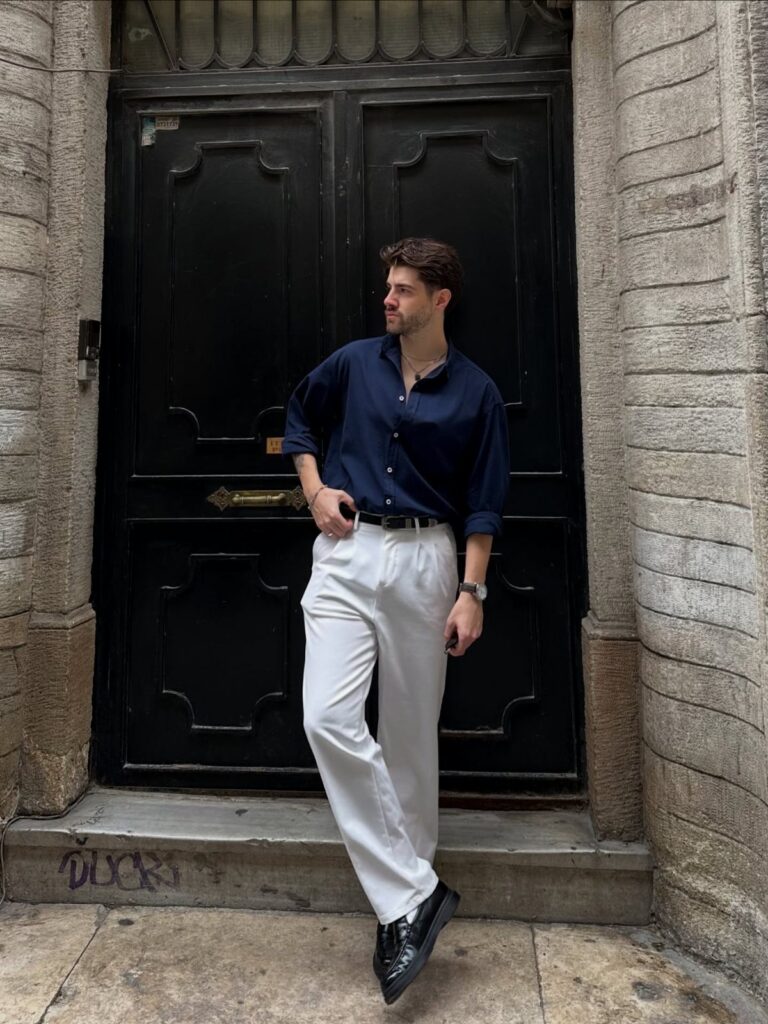
Dark shirt, light trousers: a navy button-down over white pleated trousers splits the outfit at the waist, and that contrast is the whole look. Black dress shoes anchor the bottom so the white doesn’t float.
Tuck the shirt in.
Left untucked, the contrast breaks up and the trousers lose their line. A long-sleeved button-down works best here, buttoned to the collar for the office and open one button on a lighter day.
White trousers show every mark, so I’d save them for days when you won’t be sitting through a long commute. Cream or light gray gives the same contrast with less upkeep.
Importance of First Impressions
Before you say a word, your clothes have already told the room how seriously you take it.
People read the suit, the shoes and the grooming within seconds, and they read them as a sign of how much you respect the occasion and the people in it.
If you’re unsure how formal a meeting will be, dress up. Overdressing by a notch is a smaller mistake than underdressing by one, and a boardroom or a first client meeting is where business professional attire is the safest standard.
Tailoring and Fit
A skilled tailor is the best money you can spend after the clothes themselves. Sleeve and pant length rarely come right off the rack, and a tailor can also take in the waist and the chest.
When you shop for a jacket, look for half-canvas construction, which breathes better and holds its shape.
Most suits do fine at 240–300 GSM, though I’d go toward the light end on the West Coast and the heavy end in the Northeast, or if you wear one all year.
Lapel width of 2.75–3.5 inches suits most men. Go wider if you have a broad chest.
Stiff, shiny cloth makes a jacket look like a rental. One that’s too slack looks accidental.
Color and Pattern Choices
In a business setting, keep color quiet.
Navy, gray and brown are the base, and white shirts belong in every work wardrobe. Navy reads softer than black, and it works with nearly every skin tone.
Black is harsh in daylight, so save it for formal evenings or pair it with lighter pieces.
A tie in a shade that sits next to the suit on the color wheel will also work. Stick with muted shirt colors like pale blue, white, and soft gray, and skip anything loud.
A white or muted pocket square suits a dark suit, as long as it stays a small detail. If you want to try more color, start small, with one accessory.
Frequently Asked Questions
What is business casual attire?
Business casual is a relaxed but professional dress code, built on pieces like polos, khakis and button-down shirts.
A jacket and tie aren’t required, but I’d put both on for a meeting that carries weight. How dressy to go depends on the industry, with finance leaning closer to a suit and tech or creative fields leaning more casual.
What should I avoid wearing to a business setting?
Leave out the casual pieces, meaning graphic tees, ripped jeans, sneakers and loud accessories.
How can I adapt my business wardrobe for different seasons?
Go lightweight in summer and layer in winter. Cotton and linen keep you cooler in warm months, while a sweater or pullover under a tailored blazer adds warmth in cold ones.
What color suit should a man wear to the office?
Navy is the right place to start. Worn with a light blue shirt and a dark tie, it works for interviews, client meetings and most offices.
Should my belt match my shoes?
Yes, but the match doesn’t have to be exact. Aim for similar shade, finish and level of dress, because a matching texture matters as much as a matching color.
Should I wear chinos or tailored trousers to work?
Chinos are the easier, cheaper choice for daily wear, while tailored trousers look more polished and fit more formal offices. Either way, the hem and waist need to be right, because that is where most of the difference shows.
How should a business suit fit?
The shoulders matter most. A well-fitted modest suit beats a pricey one that hangs wrong, so set aside part of the budget for a tailor from the start.