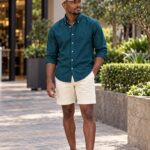
"Business casual" has no fixed meaning, so your own office sets the rules, and the distance between a relaxed workplace and a corporate one can be large.
Looks in this list start with tan suede loafers and a plain tee over white sneakers, then climb to a full beige linen suit with a white button-down.
1. Polo Shirts
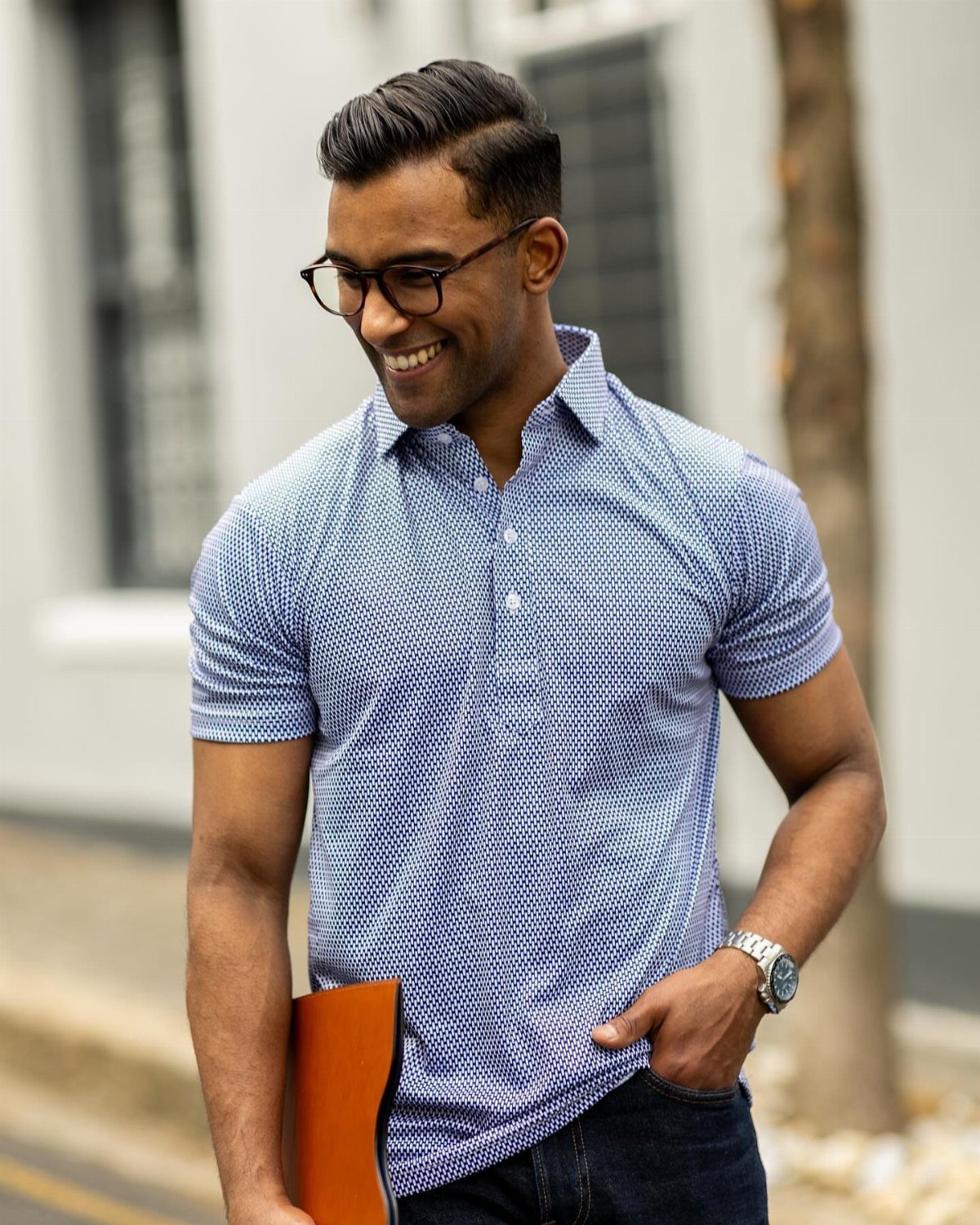
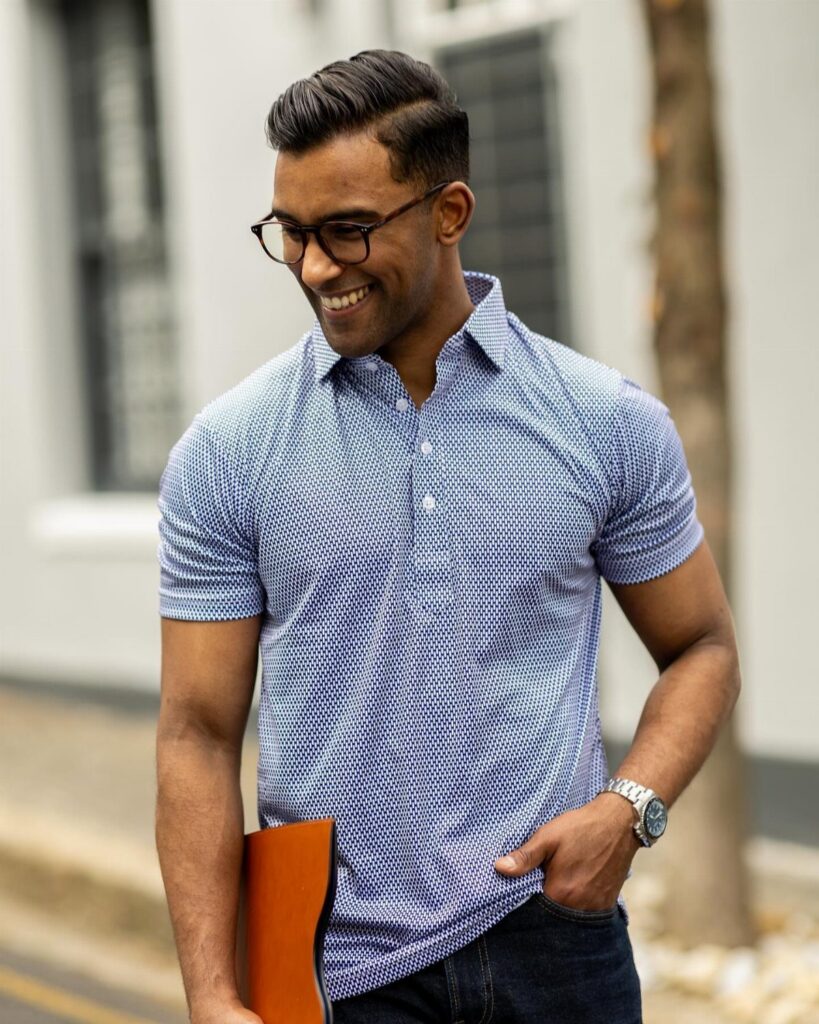
A polo sits right between a T-shirt and a dress shirt, which is why it works for summer offices that skip the tie.
Pick a knit or piqué in a muted blue or a small pattern, and keep the collar soft so it lies flat without a jacket.
Fit decides everything.
The sleeves should hug the upper arm without pinching, and the hem should land around mid-zipper so you can leave it untucked. Chinos are all a polo needs underneath it, and the outfit is finished.
2. Loafers
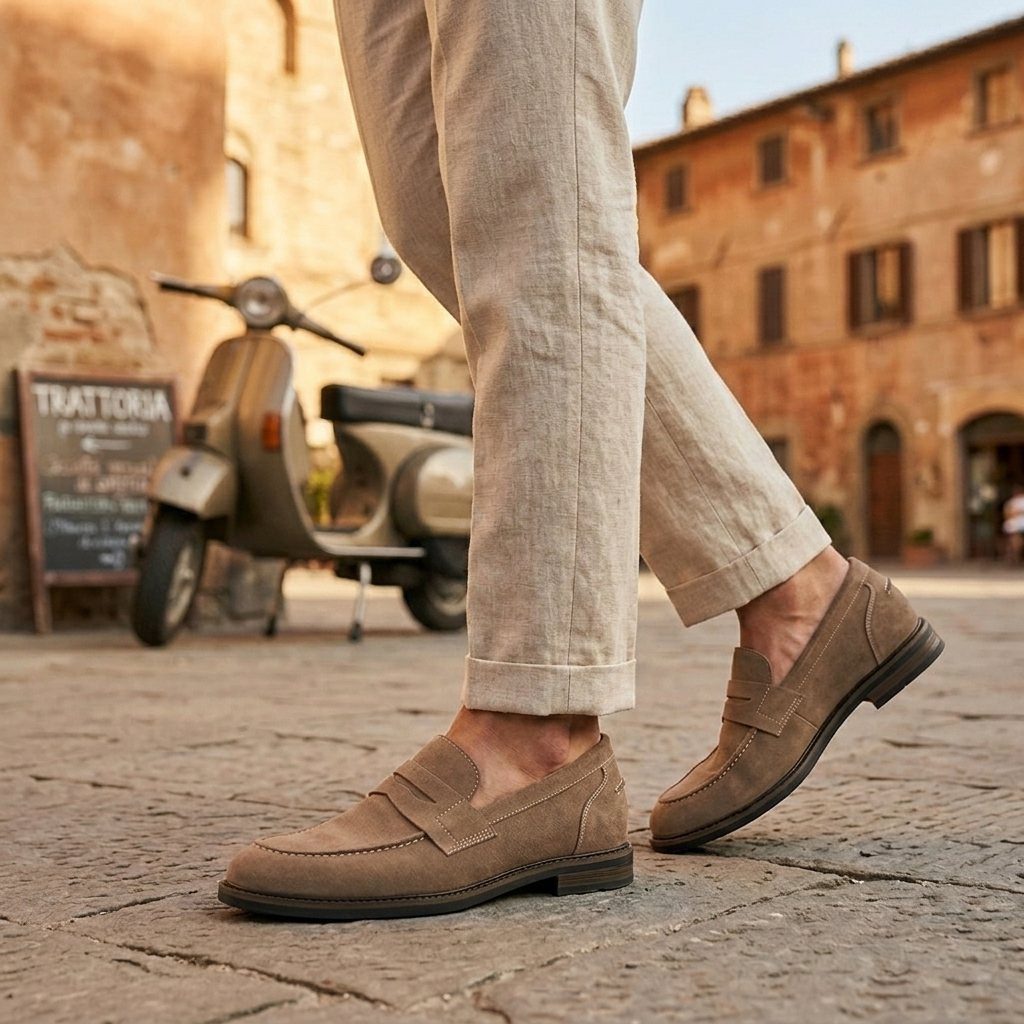
Tan suede loafers are the easiest summer shoe to wear with office clothes. They look dressier than sneakers, and they are lighter on the foot than lace-ups.
I would wear them with cuffed linen trousers and no socks, or with thin no-show liners if your feet run warm.
Suede marks easily, so a brush and a protective spray are worth the few dollars. Skip them on rainy days; dark brown leather handles a wet commute better.
3. Unlined Jackets
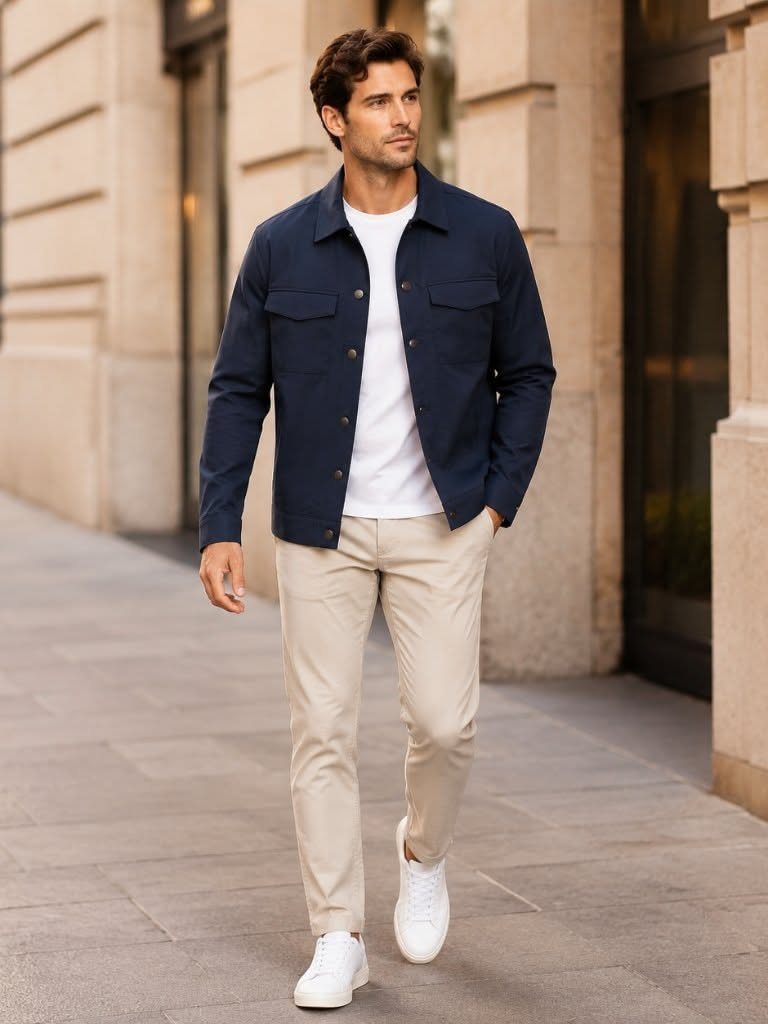
Lining is what makes a jacket hot. Strip it out and a navy jacket turns into something you can wear on a walk to the office without sweating through your shirt.
Buy navy first: it works over a dress shirt, a T-shirt or a knit, and it goes with nearly every pair of trousers you own.
Check the shoulders: with less structure, a bad fit shows more. Unlined jackets also wrinkle and crush more easily, so hang one up the moment you get in.
4. Roomy Fit
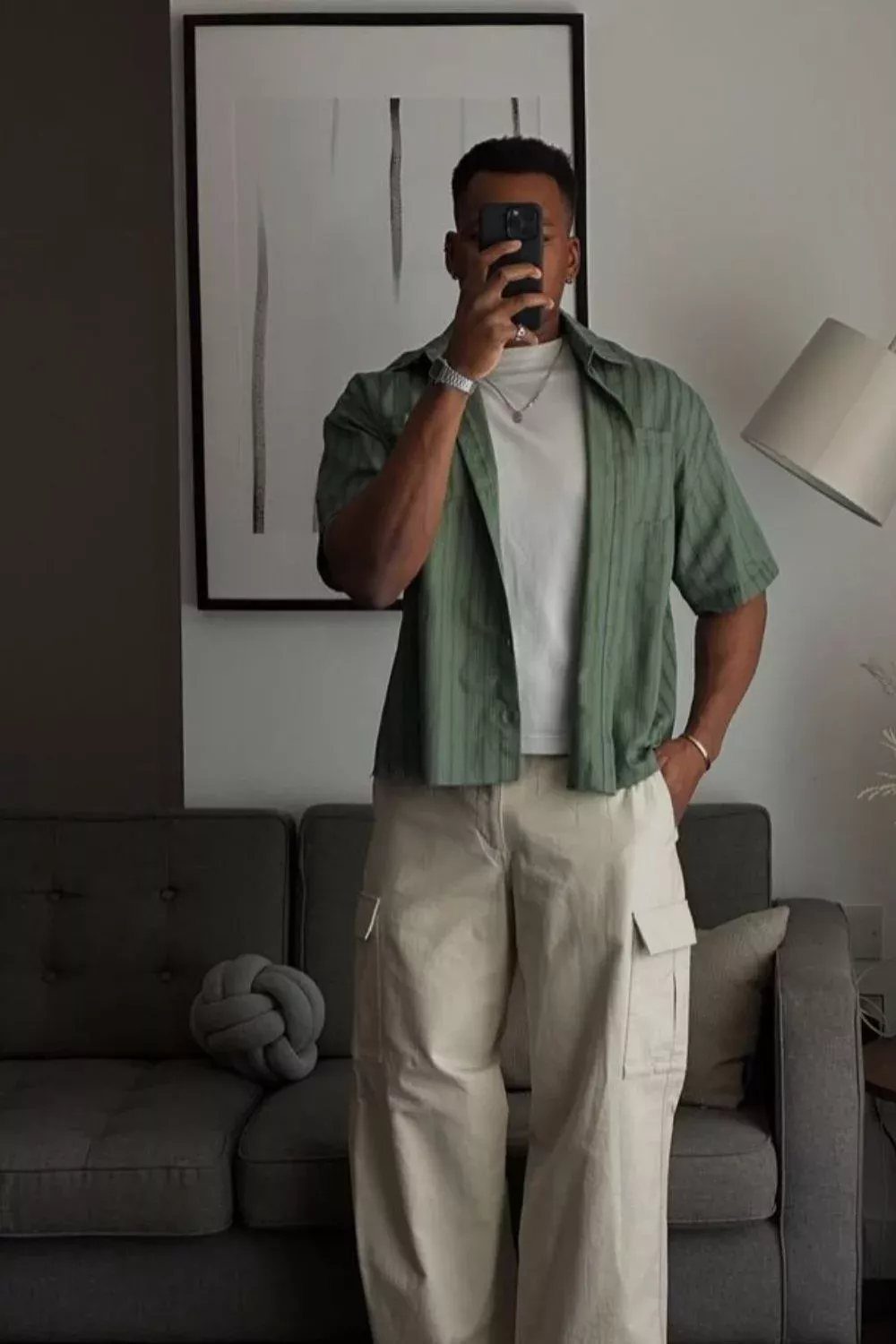
A little extra room does more for summer comfort than any fabric. Loose cream cargo pants and an open short-sleeve shirt let air move around your body instead of trapping heat against it.
Balance is the rule. With wide trousers, keep the top half quiet: a solid tee in white or cream under the shirt layer is plenty.
Looser does not mean oversized: shoulders should still sit at your shoulder bone. Offices with a strict dress code may find this too relaxed, so save it for casual Fridays.
5. Linen Suits
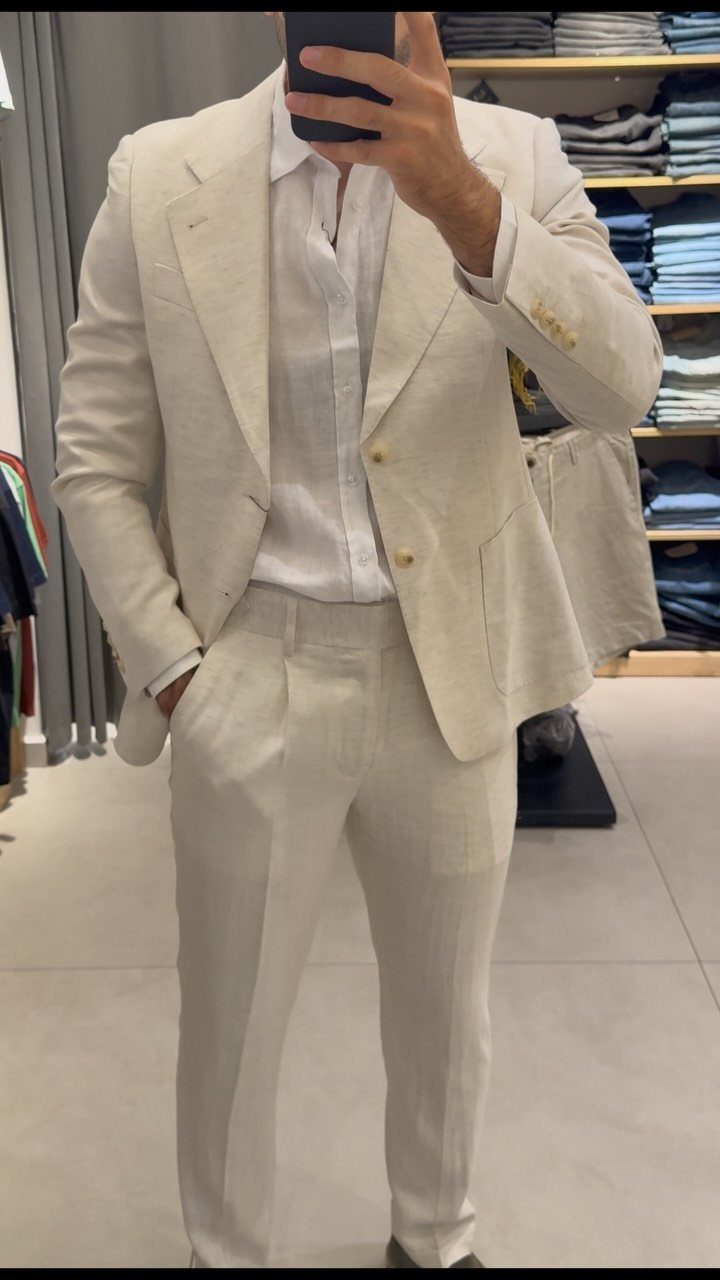
A beige linen suit is the one suit I would trust in July heat. Worn with a white button-down, it reads as dressed up for a business event without the weight of wool.
Linen wrinkles, and that is part of the look, so do not fight it too hard.
A quick steam before you leave is enough. You can also split the suit and wear the jacket and trousers separately with other pieces, which gets you more outfits from one purchase.
6. Trousers
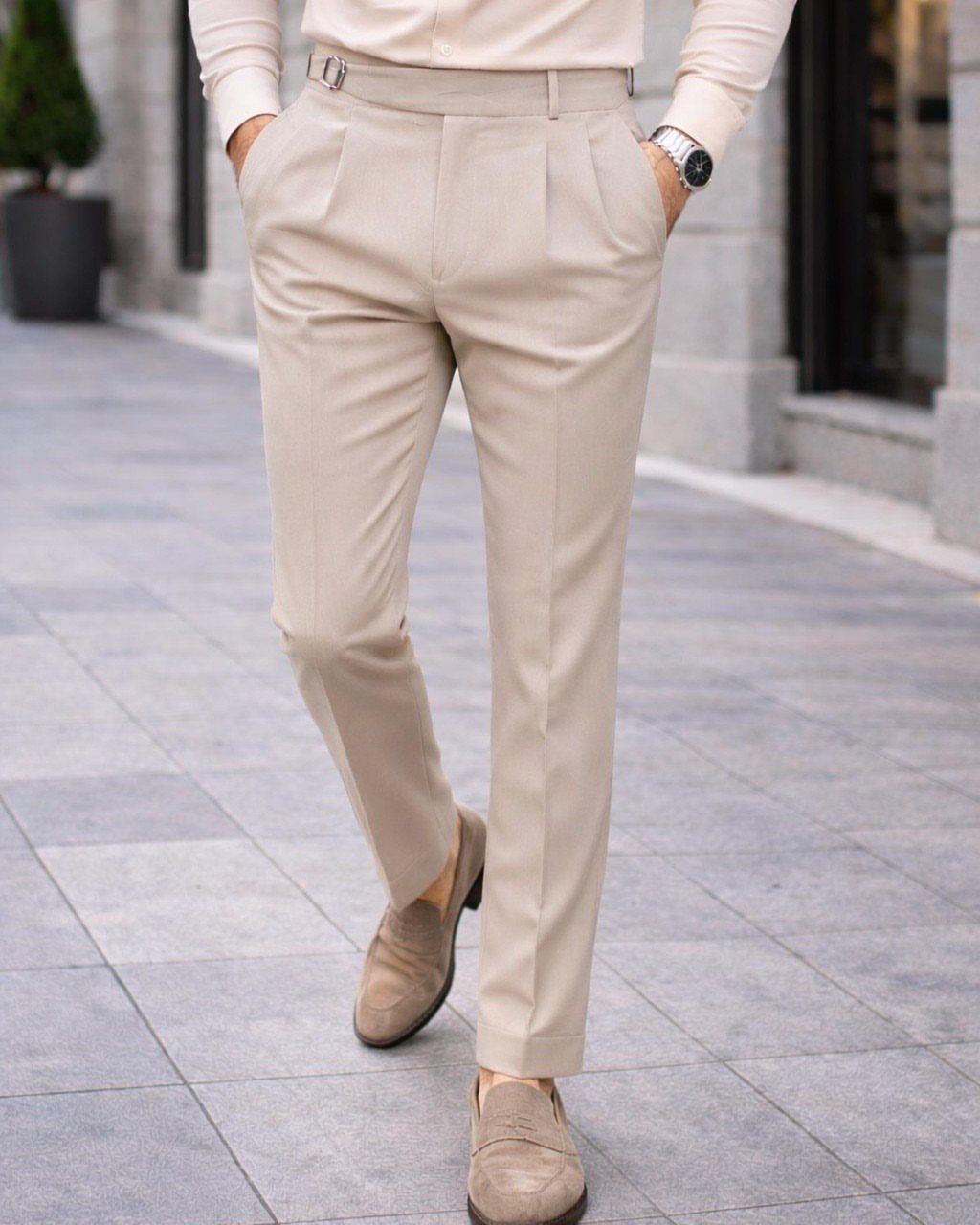
Pleated beige trousers in a loose weave are the quiet center of a summer work outfit. They look tailored, yet they move like something you would wear off the clock.
Pleats add room through the thigh, which helps men with bigger legs or athletic builds sit comfortably.
Match them with a cream long-sleeve shirt and tan suede loafers for a tonal look. Hem them to just touch the top of the shoe so the line stays clean.
7. Summer Business Casual Accessories
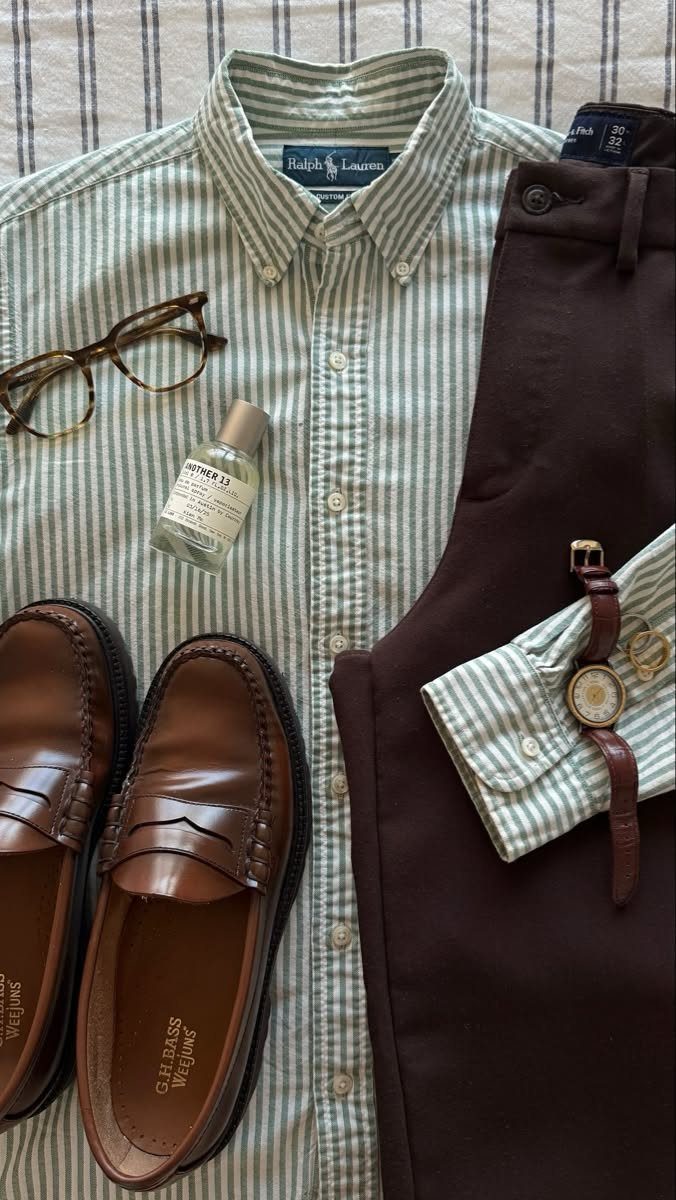
Small pieces carry more weight than they look like they should. Tortoiseshell glasses, brown leather loafers and a plain wristwatch all sit in the same warm brown family as the trousers, so the outfit reads as planned rather than assembled.
I would pick a watch with a simple face and a leather strap that matches the shoes. Keep perfume light in summer heat, one spray is plenty.
8. Long-Sleeved Shirt
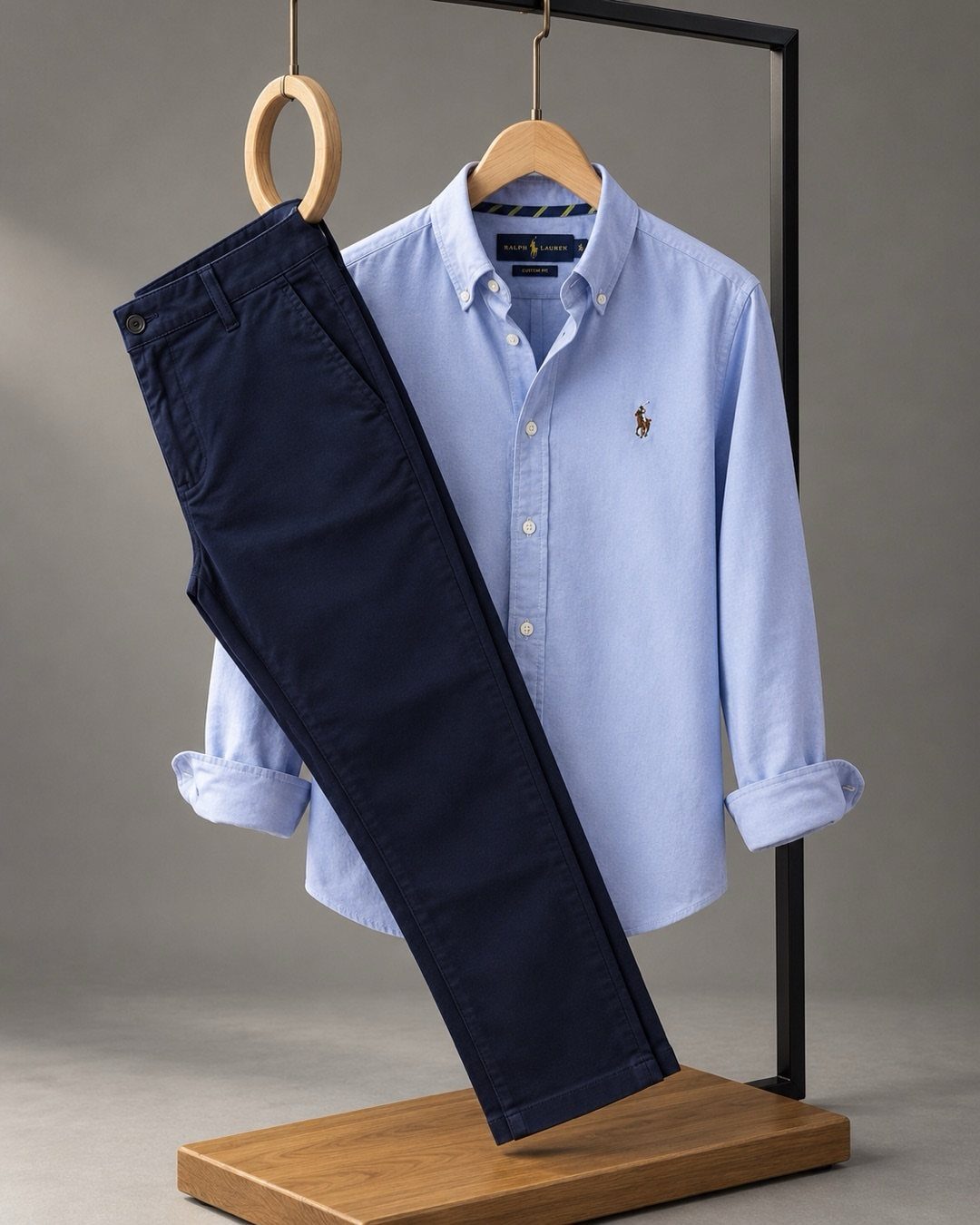
Navy trousers and a light blue long-sleeved shirt are about as safe as office clothes get, and that is exactly why they work.
The 2 colors sit close together, so nothing clashes and the outfit looks pulled together before you add anything.
For meetings I would keep the sleeves down and buttoned at the wrist.
On a hot commute, roll them to the forearm and button them back down at your desk. A small logo is fine, but keep it small.
9. Basic T-shirt
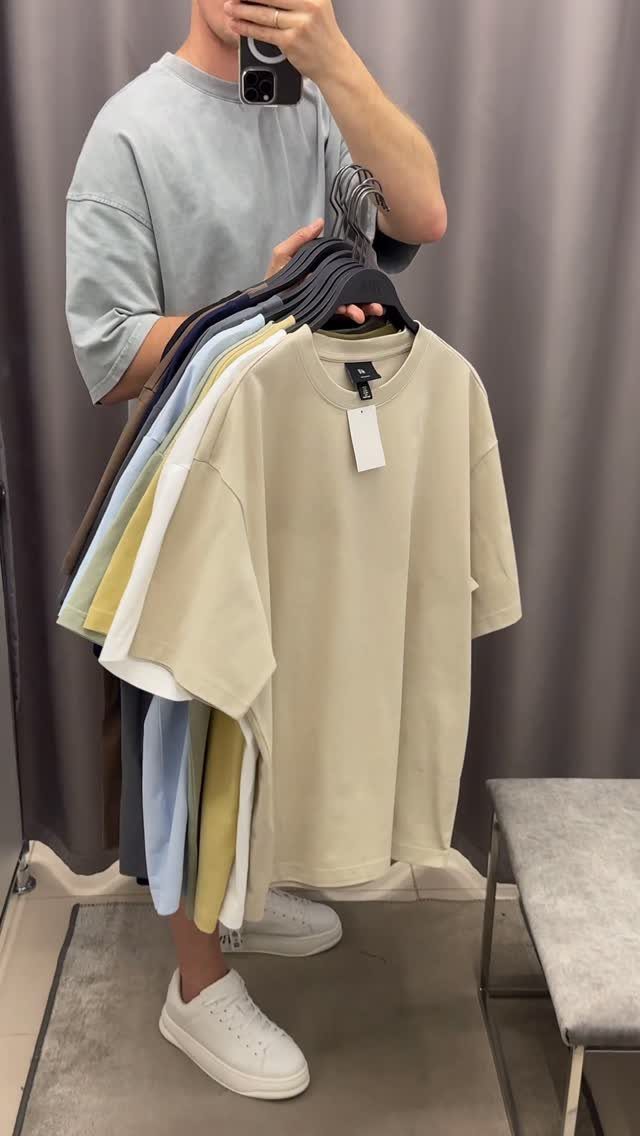
A plain tee works when the fabric looks clean and the cut is deliberate. Oversized shapes in beige, white or blue are easy to wear with white sneakers, and a light grey one is a good place to start.
Stay with solid colors, and check that the collar lies flat and the shoulder seam sits near your shoulder bone.
Understanding Dress Codes
"Business casual" has no fixed definition, and the gap between offices is wide.
At a laid-back office, casual can simply mean whatever feels good to you. A corporate floor is another story, and shorts with a T-shirt won’t get past anyone.
In a typical smart casual office you still need to look put together, though there’s some give: the tie can go, the collar can open, and the colors and fabrics can get a bit more interesting.
Going sockless is the item most likely to be refused once the temperature climbs.
Spend a hot day or two watching what your boss and coworkers wear before you buy a single piece.
If you’re still unsure, ask HR or your manager directly. Asking a coworker or HR costs you far less than showing up in the wrong outfit.
Choosing the Right Fabrics
Cotton, linen and chambray let air circulate, so they are the safest base for hot days. Lightweight wool also breathes well, and it looks less casual than the others, which helps in a stricter office.
Color matters as much as cloth. Pastels and neutrals reflect sunlight, so beige, gray, cream and baby blue keep you cooler than darker shades.
Avoid heavy fabrics that trap heat. A linen blazer is the one I would pick first: it gives you a mix of formal and casual that few other summer pieces can match.
Fit and Tailoring
A shirt that fits, even an inexpensive one, beats a pricey one that hangs off your shoulders. Anything too loose or too tight reads as sloppy, and a strict dress code makes that even more obvious.
Get measured, be honest about your build, and buy clothes cut for the body you actually have.
Then find a good tailor. A good tailor can do far more than fix a suit; most of what’s in your closet can be made to fit better.
If your budget is limited, spend on alterations before you spend on a pricier label.
Frequently Asked Questions
What should men wear for business casual attire?
A collared shirt sets the base, a polo or a button-down, and chinos or trousers with a clean taper finish it.
A tie and jacket are optional. In summer I would lean on cotton, linen or chambray, since they let air move and keep the outfit looking pulled together.
Can men wear jeans in business casual offices?
Usually yes, but the office has to allow it. Pick a dark wash with no rips, fading or whiskering, and put it under a button-down or a polo so the whole outfit still reads as work.
What fabrics are best for summer business casual?
Cotton, linen and chambray are the safest base because they let air circulate on hot days. Pale shades such as beige, gray, cream and light blue bounce sunlight back, so they run cooler than navy or charcoal.
Can you wear a linen suit to a business casual office?
A beige linen suit works well for a business event in July heat, worn with a white button-down.
It is much lighter than wool. Wrinkles come with linen and are part of its charm; a quick pass with a steamer before you head out is plenty.