Which of these 9 ideas fits depends on how strict your office is: a client meeting or interview calls for a classic dress shirt and a suit, while a relaxed floor allows cotton twill chinos, a knit polo or clean leather sneakers.
The list runs from a fitted navy pinstripe suit to a beige blazer, linen shirt or popover, and the same outfit can shift between them with one swap, like dropping the tie from a sport coat.
Even the fabric has a range, from wool to a blend with 2–3% elastane.
1. Well-Fitted Clothing
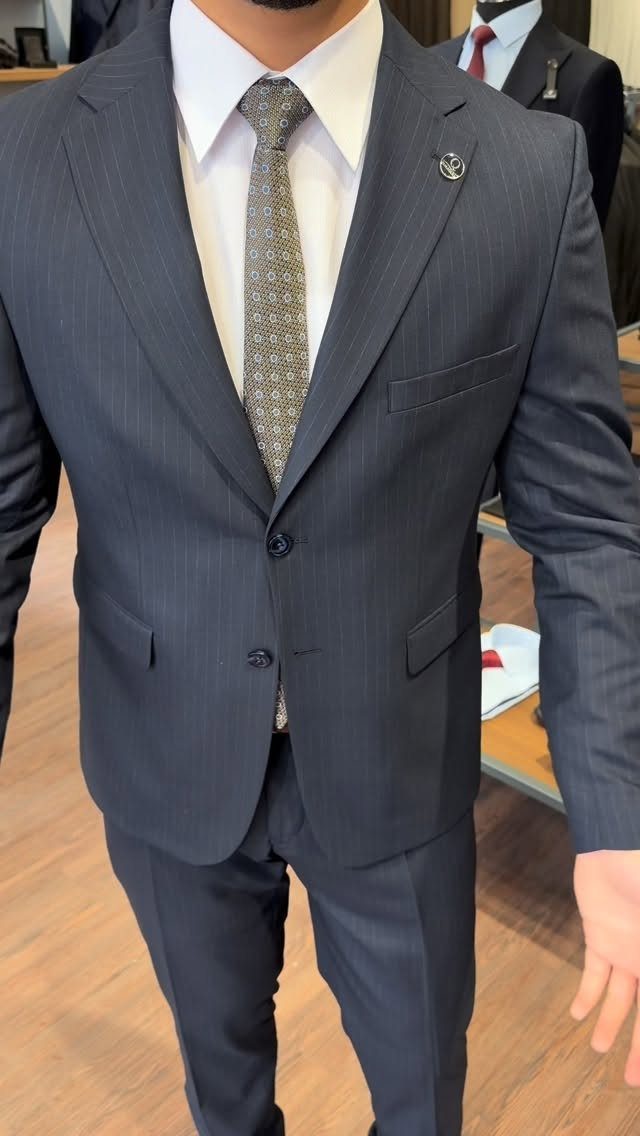
A navy pinstripe suit only reads as sharp when the shoulders sit flat and the sleeves stop where they should. Fit does more for a business formal outfit than fabric or price.
Check 3 spots before anything else: the shoulder seam should land at the edge of your shoulder, the jacket should close without pulling at the button, and a little shirt cuff should show past the sleeve.
A tailor can fix sleeve length and trouser hem cheaply. Shoulders are a much harder alteration, so buy for those first.
A suit that fits and costs less beats an expensive one that hangs loose.
2. Tailored Blazers and Sport Coats
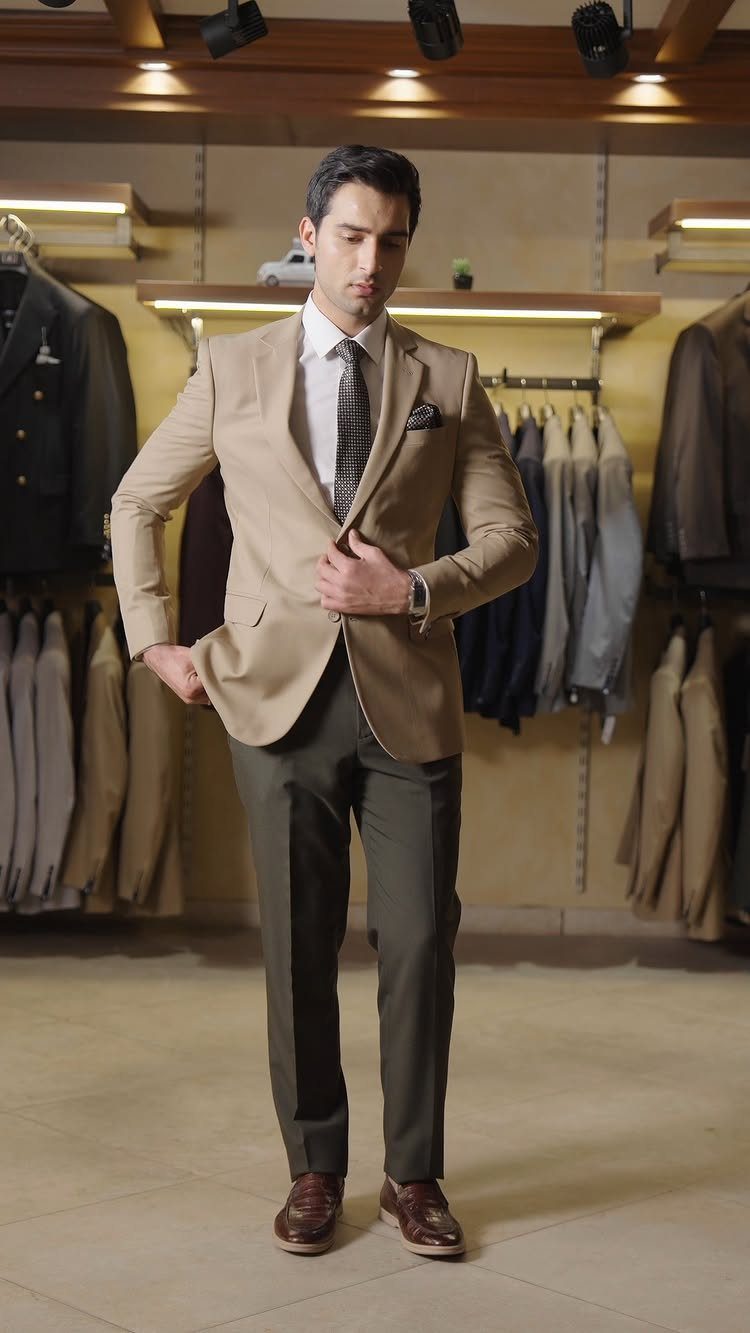
Beige works as a blazer color because it keeps a business outfit from going stiff. Pair it with a white shirt and dark olive trousers, and the jacket looks like a deliberate choice, not a leftover from a suit.
For the office, I would pick a tailored cut with a clean, unpadded look through the chest. A tie and pocket square push it toward formal; drop both and the same jacket works for a casual Friday.
Brown loafers suit this jacket better than black shoes. The one limit: light jackets show wear faster than navy or charcoal, so expect more trips to the cleaner.
3. Navy, Gray, and White Outfit
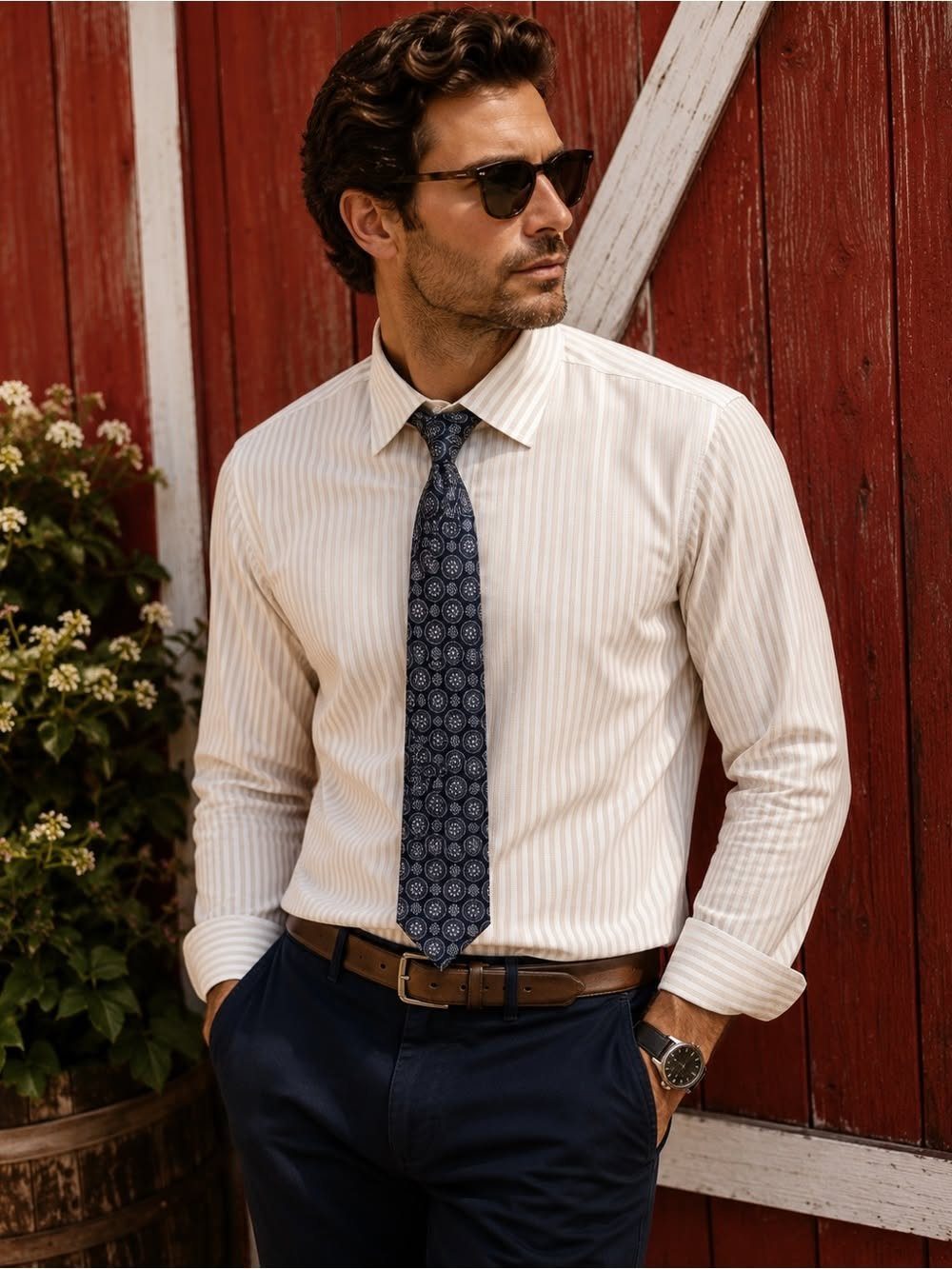
Navy, gray, and white is the easiest palette I know for a man who wants to get dressed without thinking. Every piece agrees with the others, so nothing needs testing.
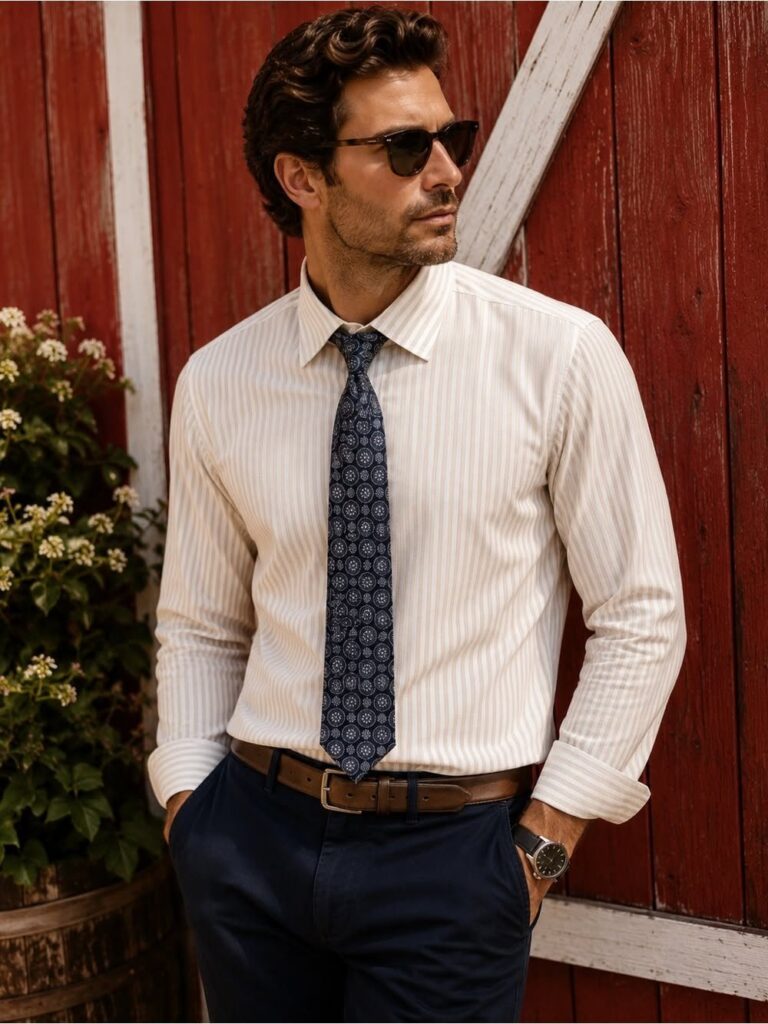
Start with navy trousers and a white shirt, then let the tie carry the pattern.
A white striped shirt with a navy patterned tie works because the stripe stays quiet beside the tie’s pattern. Keep the pattern scale different between the two, or they will compete.
A brown belt warms the whole look without breaking the palette. Swap in gray trousers on days you want something softer.
4. Polished Dress Shirt Alternatives

Not every formal day needs a stiff button-down with a collar stay. A light blue long-sleeved shirt in a softer fabric, such as linen, looks polished with gray trousers and still feels easier to sit in.
Linen wrinkles, and I think that is part of its charm, but it will look rumpled by afternoon if the office is strict. Keep the shirt tucked, add a brown belt, and match it to brown leather shoes.
Choose light blue over white when you want a gentler look. For a client meeting or an interview, stay with a classic dress shirt.
5. Ties
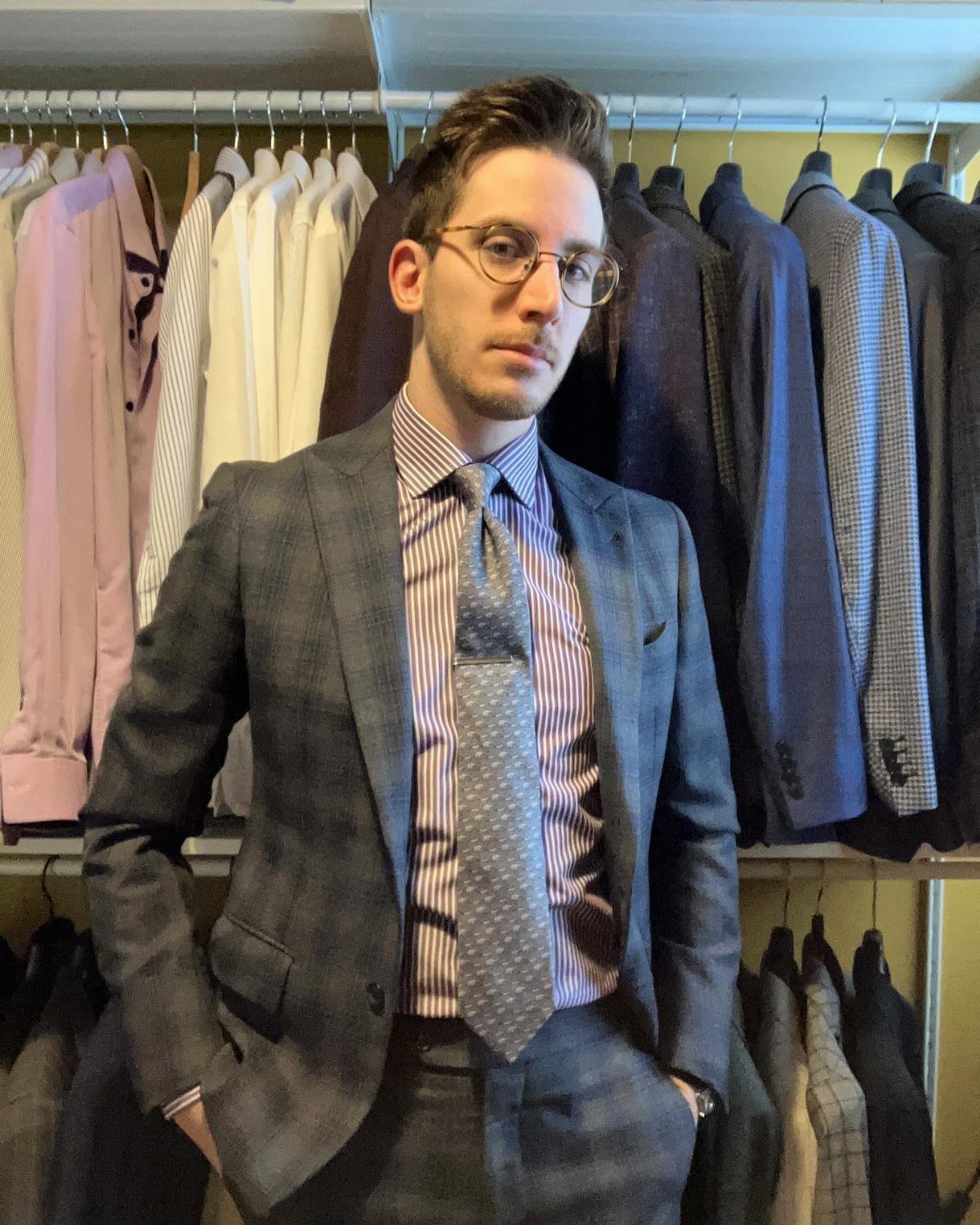
A tie is the fastest way to make a plain outfit look intentional. Patterns can mix freely, a gray tie over a striped shirt under a patterned suit, as long as every color stays in one family.
Keep the tie narrower than your lapel or about equal to it, and pick a pattern smaller or larger than the one on your shirt. A tie clip keeps it from swinging loose when you lean over a desk.
Ties also work in business casual. Wear one with a sport coat and no matching suit, and the look stays relaxed but professional.
6. Loafers, Brogues
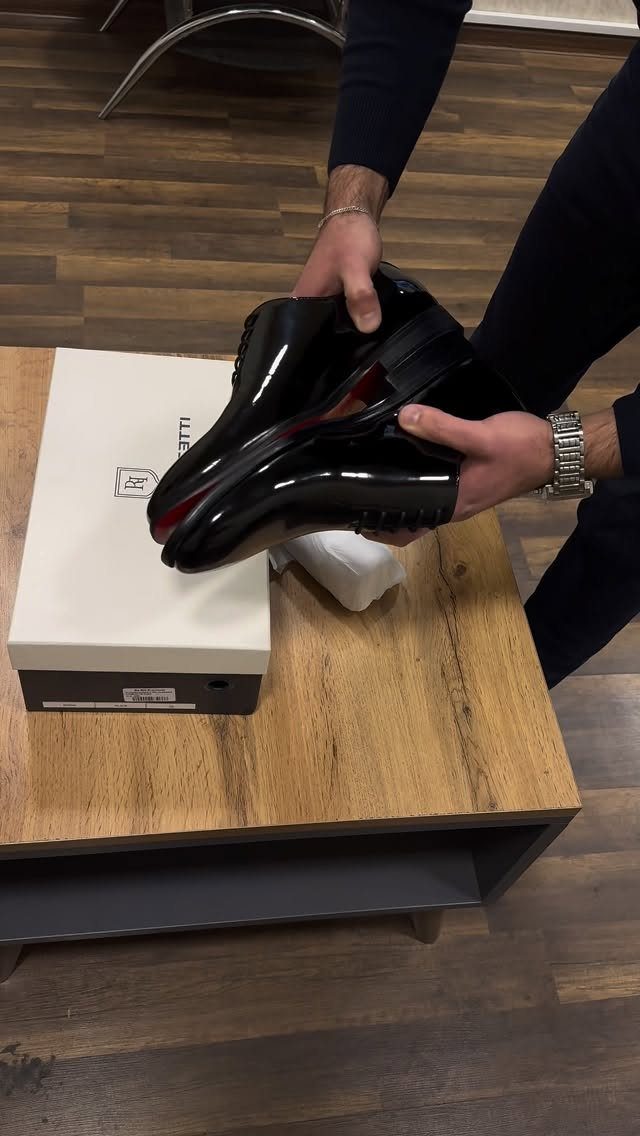
Black polished loafers are the quickest route to a dressier shoe without lacing anything. Patent leather shines hard, so I would save it for evening events, not a normal office day.
For daily work, choose matte or calf leather in black or dark brown. Brogues, with their perforated detailing, sit a notch more casual than a plain-toe shoe, and they pair well with sport coats.
Keep a shoe tree inside each pair. It holds the shape of the leather and cuts down on creasing.
7. Dress Socks
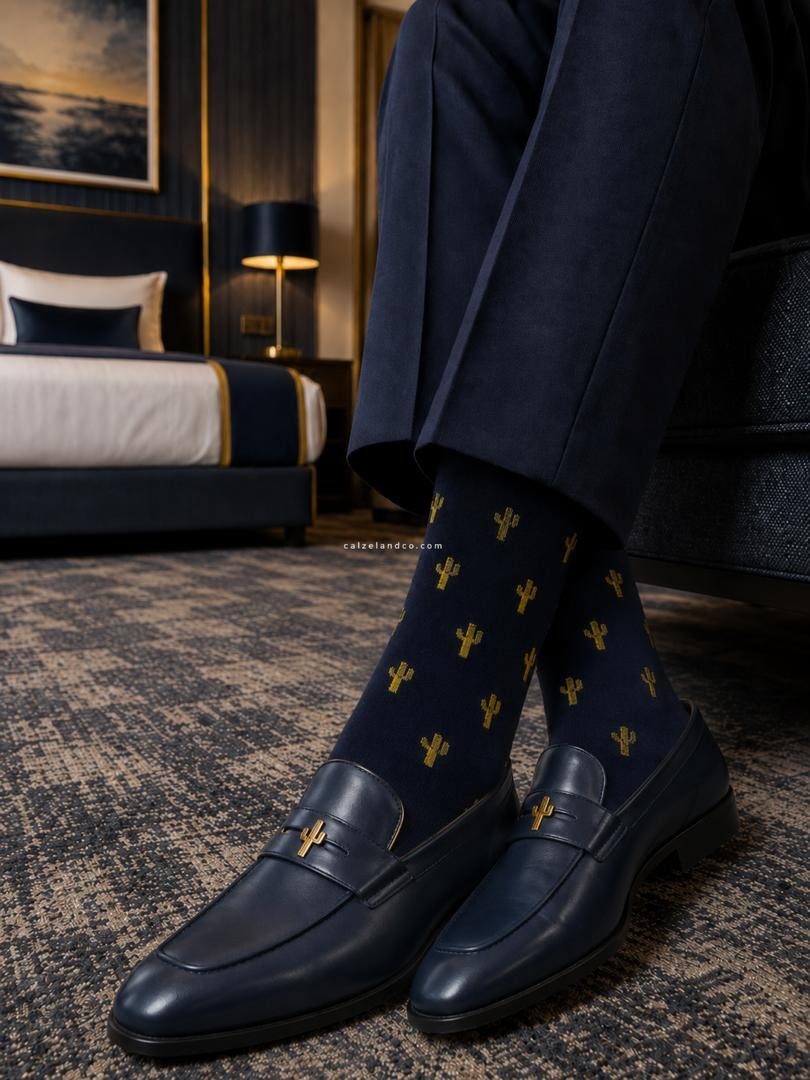
Socks are the one place a business formal outfit can show some personality without breaking a rule.
Navy trousers, navy loafers and navy socks with a small cactus pattern stay in one color family, so the pattern reads as a detail and not a statement.
Match the sock to the trouser or the shoe, and keep the pattern small. A bold pattern on a dark base works in most offices; a loud one on a white base will pull the eye straight to your ankle.
Choose a sock long enough that no bare skin shows when you sit down. I would skip the no-show style with a suit, since it leaves the ankle exposed once the trouser rides up.
8. Chinos and Dress Trousers
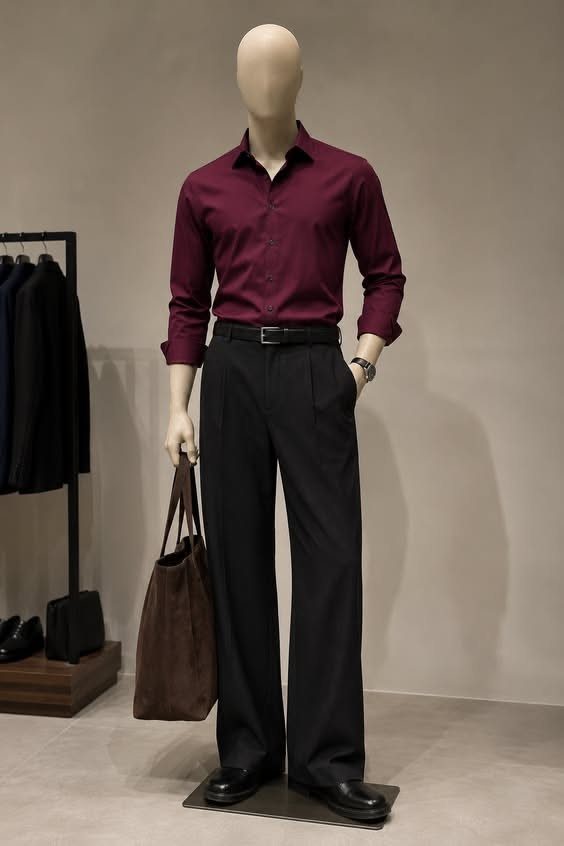
Dress trousers give you the crease and the drape of a suit without the jacket, which makes them the easier, more comfortable choice on a normal workday.
If you wear black trousers, match the belt and shoes to them, and the outfit holds together with almost no effort.
Match the belt to the shoes, and keep the shirt tucked so the waistline stays clean. A solid, deep shirt color like maroon gives the black some life without adding a pattern to manage.
Cotton twill chinos read more relaxed than wool dress trousers, so save them for offices that don’t expect a suit. I would wear them on a relaxed day and save the dress trousers for meetings.
9. Clean Hair and Well-Groomed Facial Hair
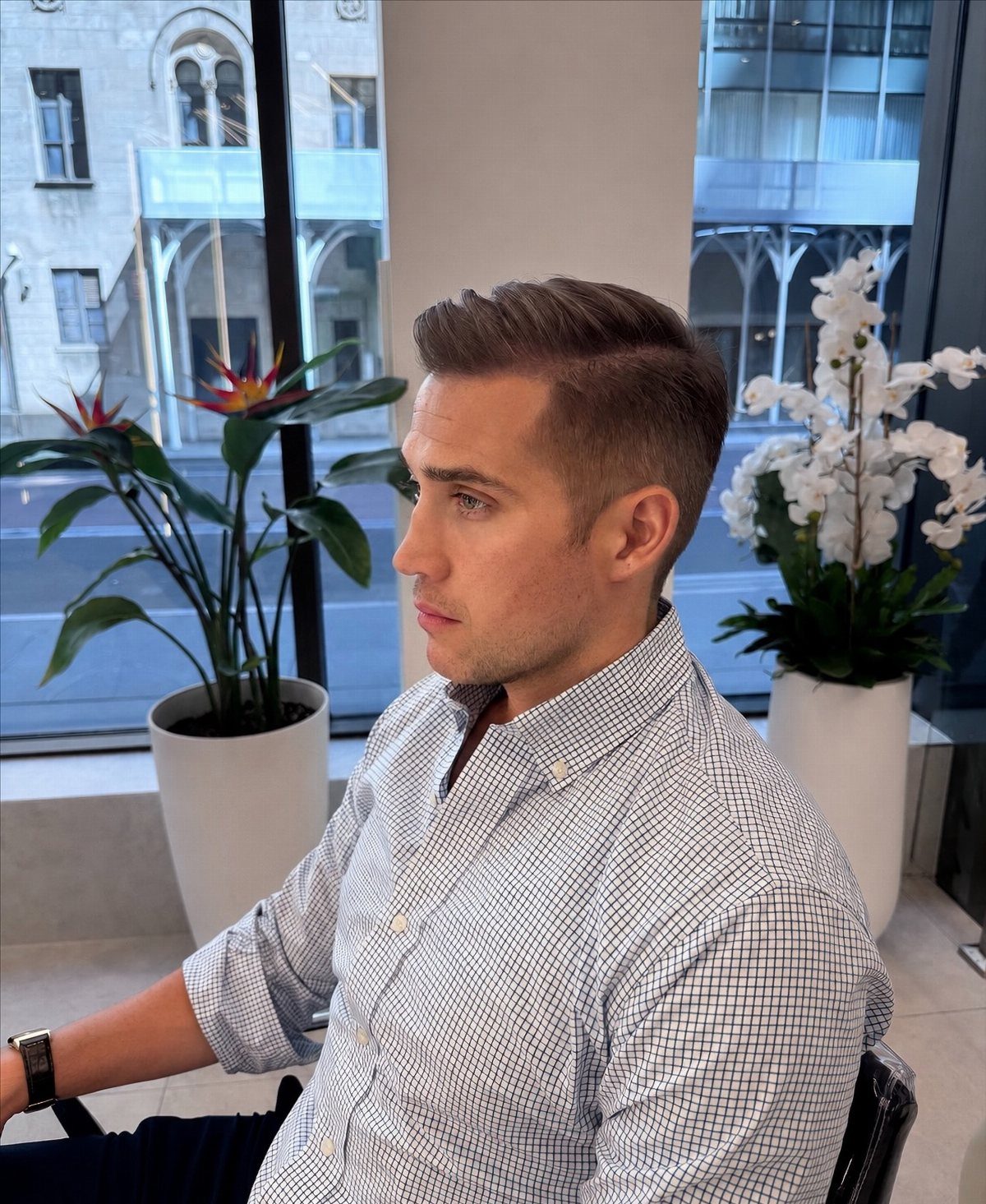
A neat side part and light, even stubble show that you take care of yourself before anyone looks at the clothes.
A checkered button-down looks sharper against hair that is clean and styled than against hair left to fall however it likes.
Keep stubble trimmed to one length and clean up the neckline and cheek lines. Stray hairs below the jaw are what make a beard look unkempt.
Get a haircut before a big event, not the morning of it. If you wear a part, comb it while the hair is damp so it sets in place.
Comfortable Work Attire
Breathable fabric and a cut that lets you move do more for comfort than any single piece.
Wool has been the default suit cloth for a long time, and for good reasons: it wears for years, breathes well, and drapes cleanly.
Trousers and chinos with some stretch in the fabric are worth seeking out, since they give you all-day ease without looking slack. Long-sleeve knit polos sit between a dress shirt and a casual one, and they breathe well.
If your office allows sneakers, pick clean, minimal leather or suede pairs in white, black or brown. A lightweight, unstructured sport coat adds some formality and moves far better than a stiff suit jacket.
Pair one relaxed piece with one formal piece.
Stretch trousers with a crisp shirt works. Stretch trousers, a knit polo and sneakers together start to look like weekend wear.
Modernizing the Office Suit
A modern suit follows your body’s lines without clinging. Slim and tailored is the goal, not skin-tight, and the better fit also moves more easily.
A wool blend with 2–3% elastane gives a bit of give at the elbows and knees, and the suit snaps back after a long day of sitting. For warm months, tropical wool or a linen blend keeps you cooler.
Navy and charcoal stay safe, and a subtle check or pinstripe adds interest without shouting.
You can also change how the suit is worn. In cooler months, a turtleneck under the jacket looks sleek and removes the tie.
When it’s hot out, I’d reach for a popover in crisp cotton or poplin; it reads easier than a standard dress shirt and still looks pulled together.
Wear the jacket and trousers separately and the suit becomes two or three outfits instead of one.
Seasonal Considerations
Climate matters as much as the calendar. What suits New York in winter will wilt in Atlanta.
Cold days call for layers you can shed: a dress shirt or thin knit first, then the jacket, with an overcoat on top.
Choose wool suits and thick knits in navy or charcoal. Scarves and gloves keep you warm and add some personality, and Chelsea or dress boots handle the weather better than thin-soled shoes.
For heat, use lightweight wool, cotton and linen blends.
Light colors reflect sun, so pick light gray over charcoal and khaki over navy. Beige works too.
A short-sleeve button-down that fits well can work, but only in an office where casual is the norm. Loafers or low-profile sneakers keep your feet cooler than lace-up boots.
Frequently Asked Questions
Does formal attire require a suit?
Yes. At the business formal level, the outfit is a suit with a dress shirt, a tie and leather lace-ups, and I wouldn’t drop any of the four.
Navy and charcoal are the colors I’d buy first, and a quiet check or thin pinstripe works if you want some texture.
If your office allows a more relaxed day, dress trousers with a sport coat and a tie still read as professional.
What does business attire mean for men?
It generally means a suit, dress shirt, tie, solid dress socks and leather dress shoes.
A good fit beats a high price tag: the shoulder seam should end where your shoulder does, and the jacket should button without the fabric pulling into an X. Subtle patterns on a suit, tie or socks are usually fine if the colors stay in one family.
How should a man dress for a corporate office?
A navy or charcoal suit that fits well, a crisp dress shirt and polished leather shoes will carry you through any corporate office.
About a half inch of cuff should peek out past the jacket sleeve, and the belt should be close to the shoes in color and finish.
Tailoring does more than fabric or price ever will, and shortening sleeves or hemming trousers usually costs $15–$30 a piece.
What is the 3-3-3 rule for men?
I don’t have a rule by that name to give you, and none of the guidance here relies on one.
The closest simple method is a restrained palette: navy, gray and white pieces all agree with each other, so you can dress quickly without testing combinations.
Give the shirt and tie patterns different scales, say a fine check shirt with a wider stripe tie, so neither one fights the other.