The outfits here run from a white merino quarter-zip over plain blue jeans to tailored grey trousers under an overshirt, and the gap between them is mostly how much structure your office tolerates.
That is the rule that picks one: the people you sit next to set the dress code, and the best move is to land one step more formal than they do.
Match the room, then step one notch up: in an office of tees and jeans, a collared shirt with chinos is plenty, while in one full of sport coats I’d reach for an overshirt and tailored trousers.
1. Business Casual Definition
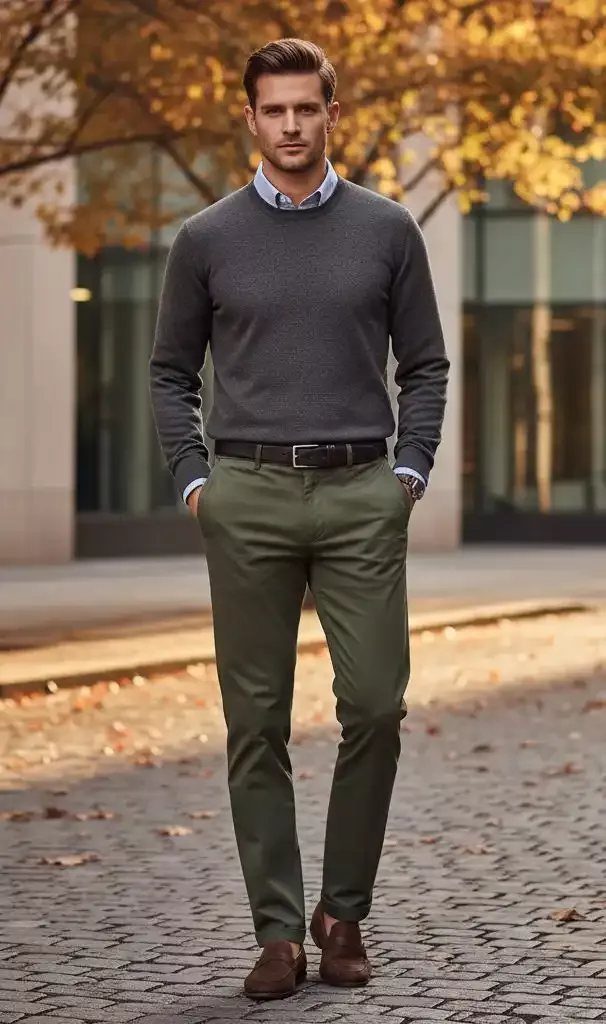
Business casual works as 3 simple layers: a knit over a collared shirt, olive chinos, and brown loafers. The dress code sits between a suit and weekend clothes, so nothing needs a tie, but everything should look pressed and chosen.
Keep the palette quiet, with one neutral on top and one earth tone below. Wrinkled or shapeless pieces break the look faster than any missing item.
2. Robust Merino Wool Zip-Up Sweater
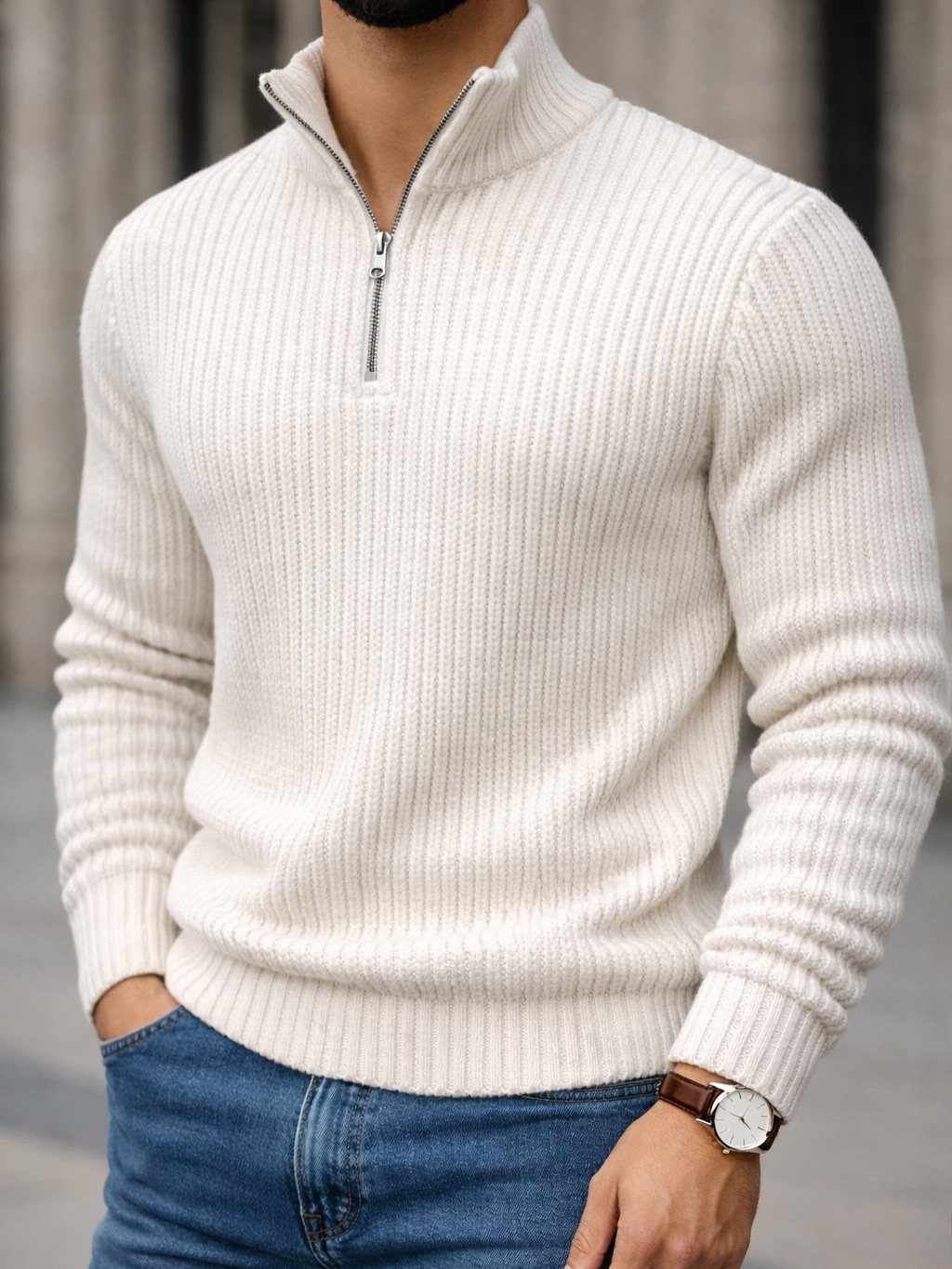
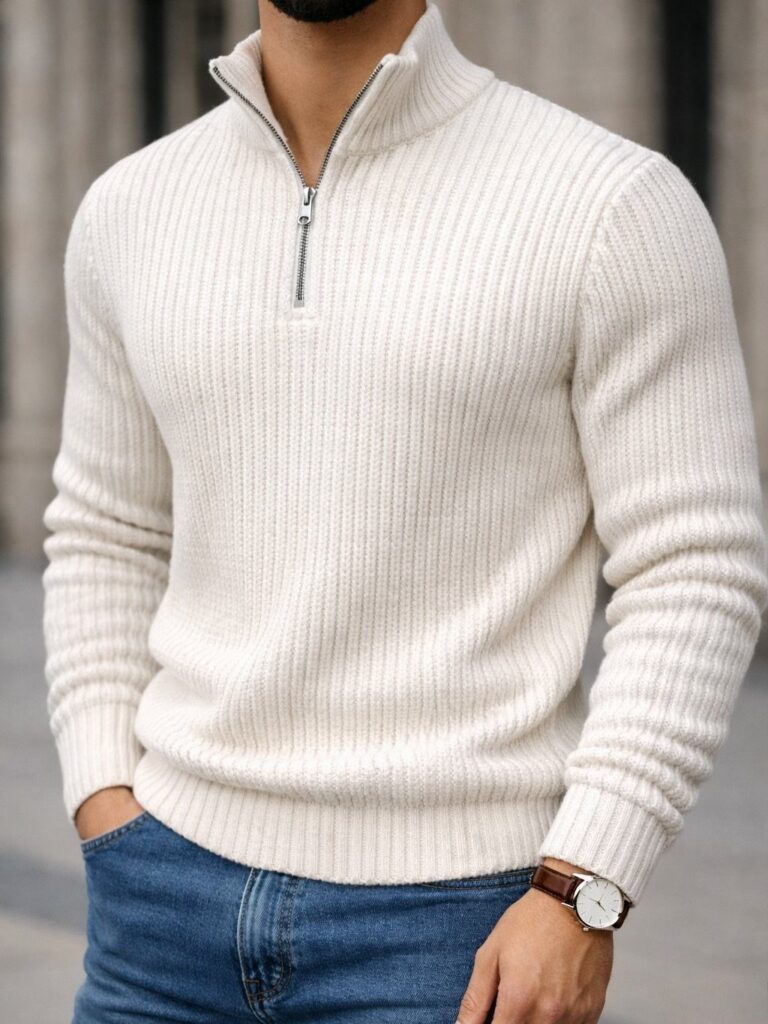
A white ribbed quarter-zip in merino wool does the work of a dress shirt and a sweater at once, and it looks best with plain blue jeans.
I like the zip because it opens at the neck when the office runs warm and sits flat when it is closed.
Merino is the material to choose here: it is fine and soft, so it layers under a jacket without bulk. Pick a fit that follows the shoulders and stops at the belt line, not below it.
Light colors show wear, so budget for careful washing.
3. Accessories
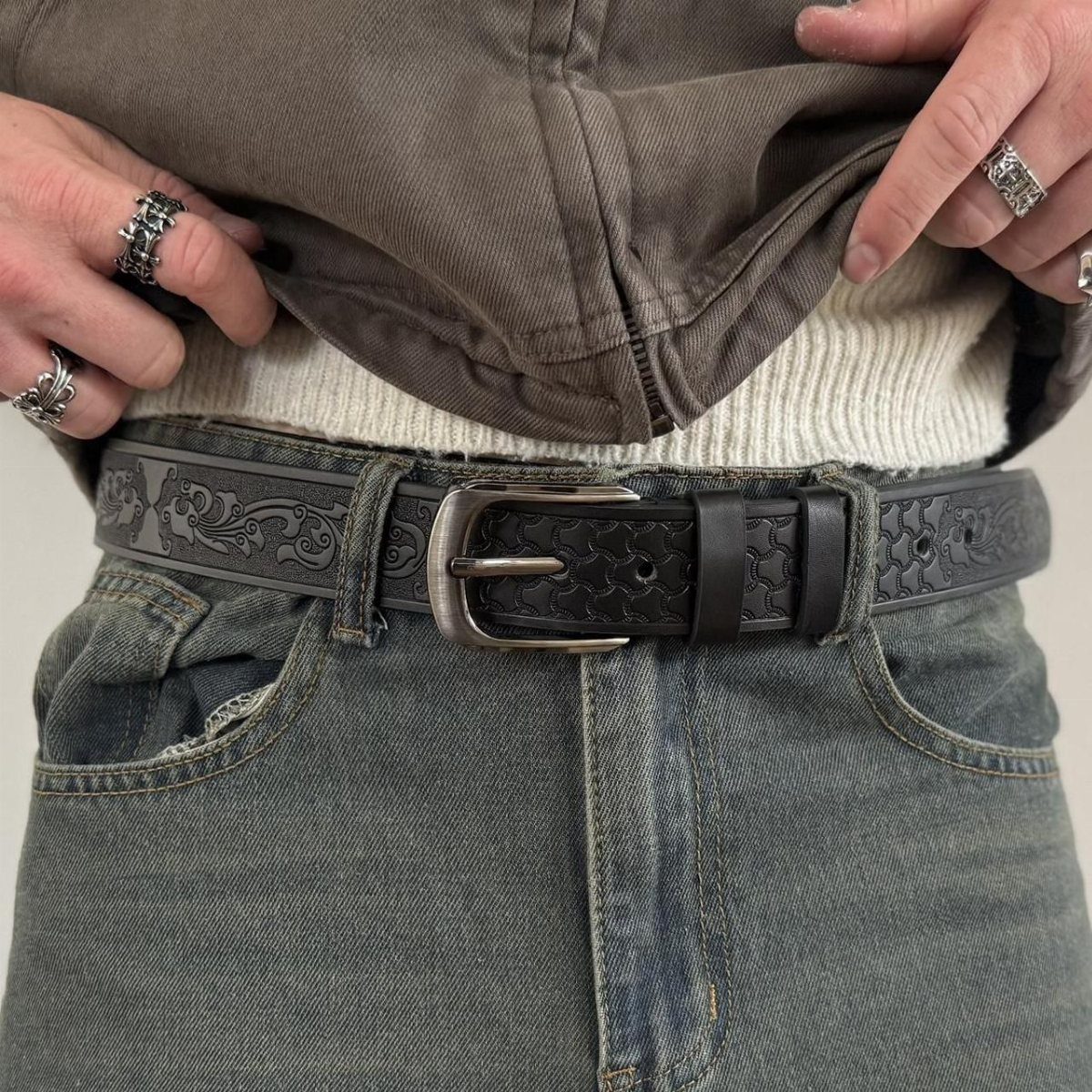
Briefcases once had the work-bag job to themselves, and the belt was the only accessory most men considered. Now a good belt carries more of the outfit than people expect.
A dark leather belt with some texture and a silver buckle lifts plain grey jeans and a white sweater without adding a single new garment.
Match the leather to your shoes when you can. Keep rings simple and few, since the belt is already the detail.
Skip the oversized buckle; at a desk, quiet reads sharper.
4. THE POLO
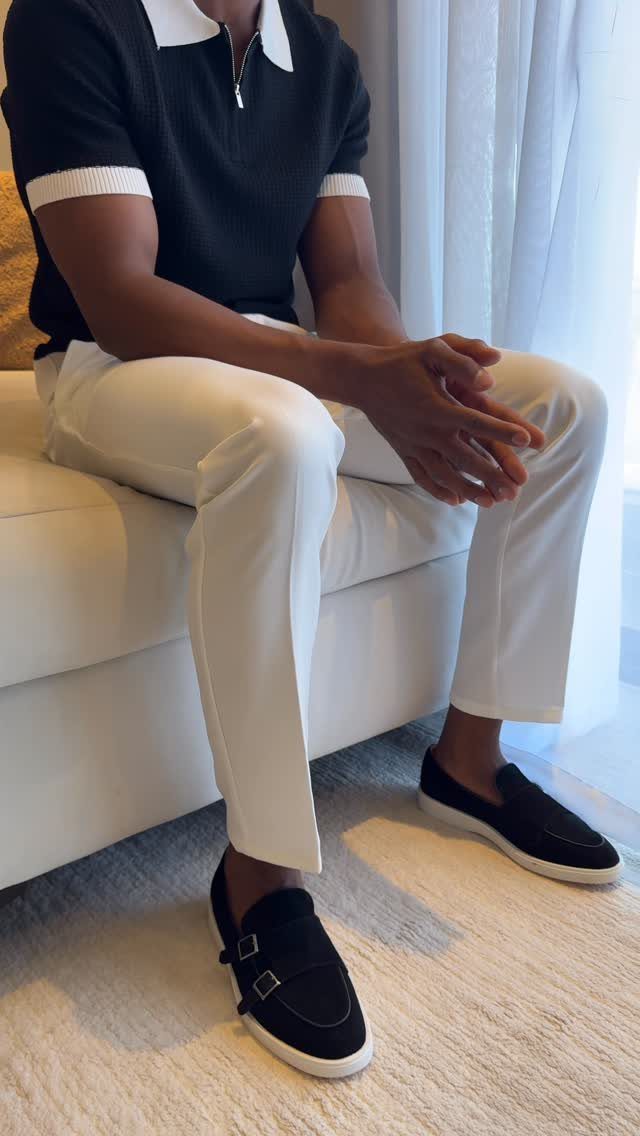
I would pick a polo with a collar that holds its shape, because a floppy one looks like a gym shirt.
The zip adds a modern touch, though it is less traditional than buttons, so it suits relaxed offices better than formal ones.
Dark polo, light trousers, and one pair of dark shoes is an easy formula to repeat.
5. Essential Smart Casual Pieces
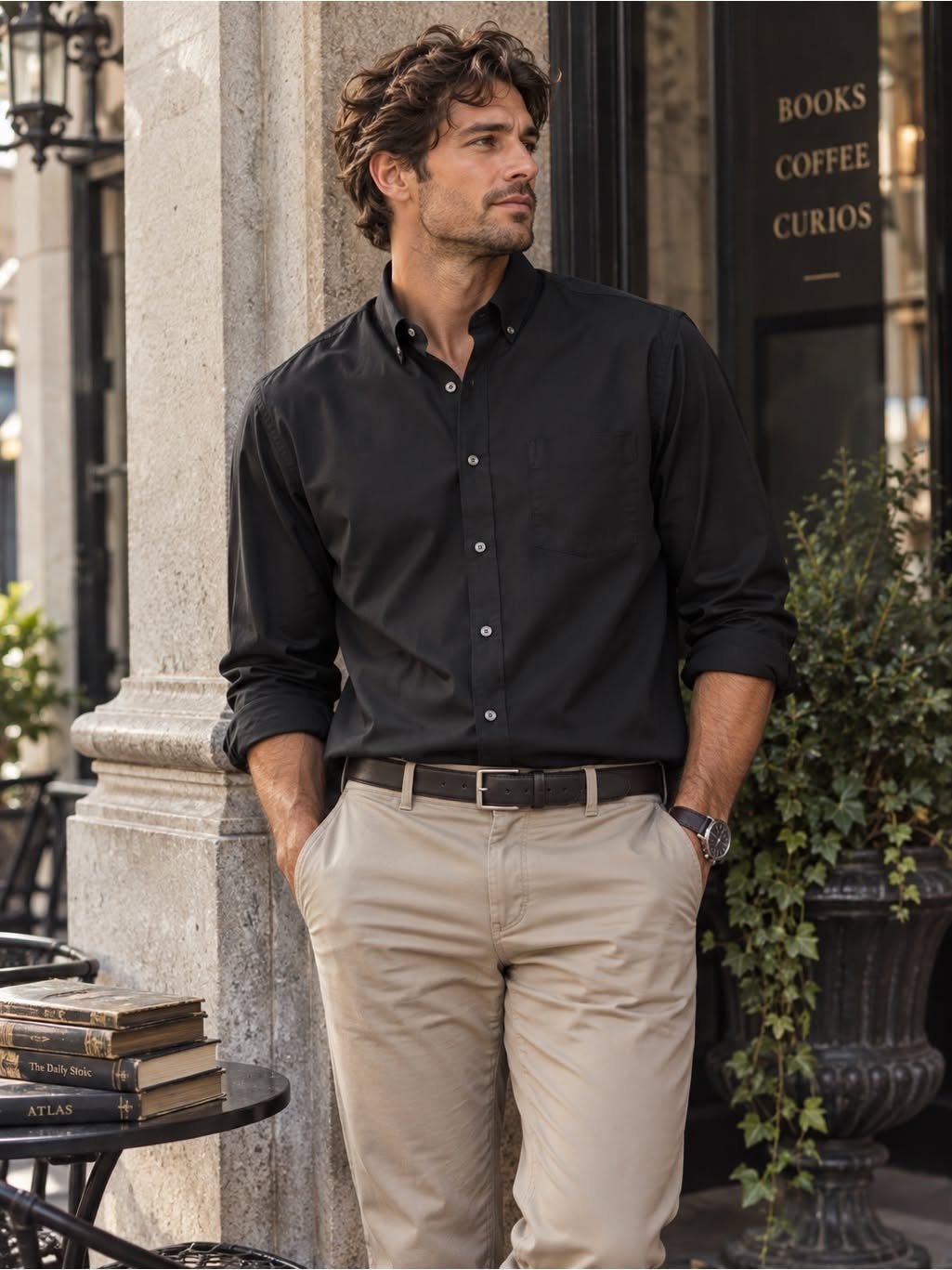
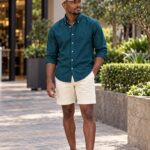
Summer office dressing comes down to light fabrics and fewer layers. A dark belt matters here because it finishes the waist, and it turns plain chinos and a button-down into a complete outfit.
Wear the shirt tucked, or untucked only if the hem is short enough to look deliberate. Black absorbs heat, so I would choose a thin cotton weave over anything heavy.
Khaki and beige trousers pair with nearly every shirt color, so one pair covers many days. Add brown shoes and you are done.
6. Smart Casual Suit Jacket Alternatives
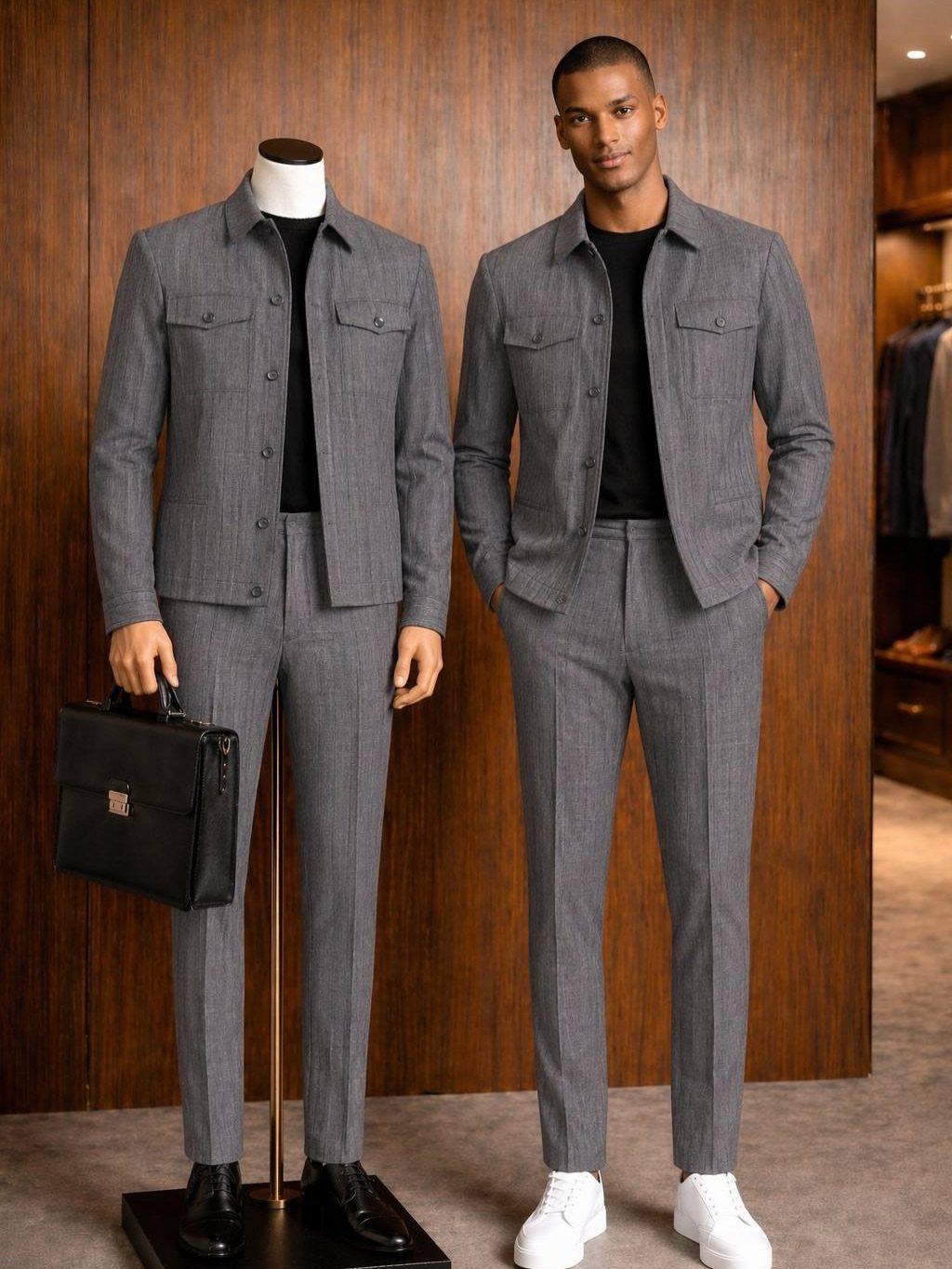
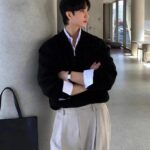
An overshirt in grey is the easiest swap for a blazer: it keeps the structure but loses the stiffness. Worn with tailored grey trousers and a black t-shirt, the outfit reads as one tone and looks pulled together.
Comfort and fit come first.
Check that the shoulders sit square and that you can raise your arms without the hem lifting far. Matching the trousers to the overshirt makes a casual suit effect, while mixing 2 greys gives a looser look.
Tailored trousers carry the outfit; a baggy pair would spoil it.
7. Bottoms for Business Casual
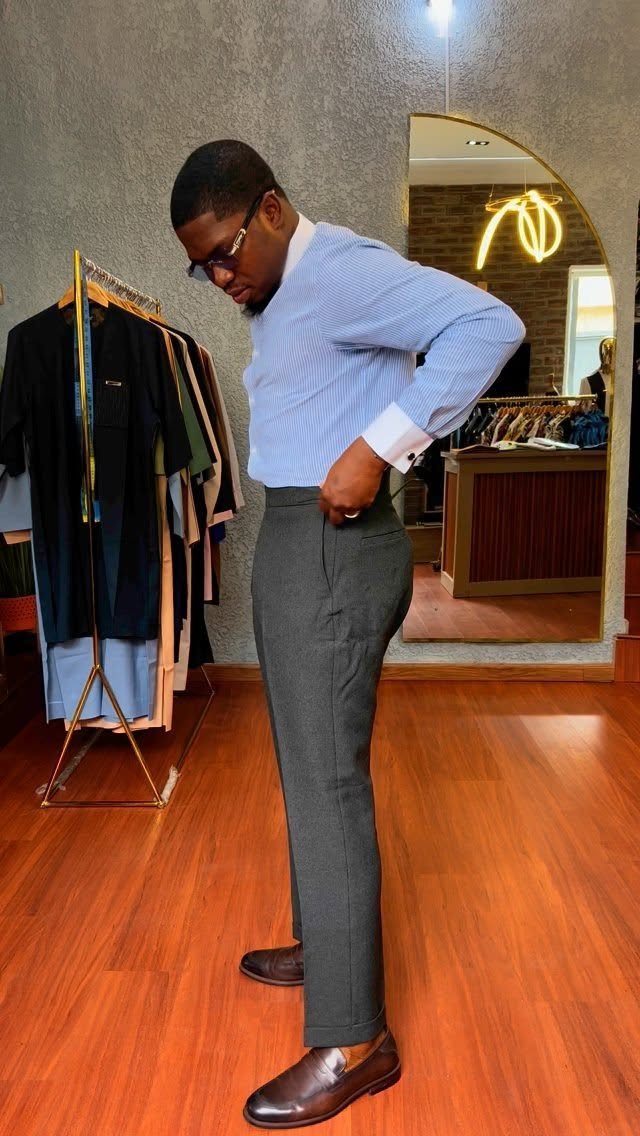
Tailored grey trousers do more for a business casual outfit than any shirt you pair with them. A high rise and a clean line from hip to hem make a plain blue striped shirt look intentional.
Chinos are the easier option and tailored trousers the sharper one. I would choose tailored for days with meetings and chinos for the rest.
Dark grey also pairs with brown leather shoes, so one pair covers a lot of ground.
8. Loafers, Derbies
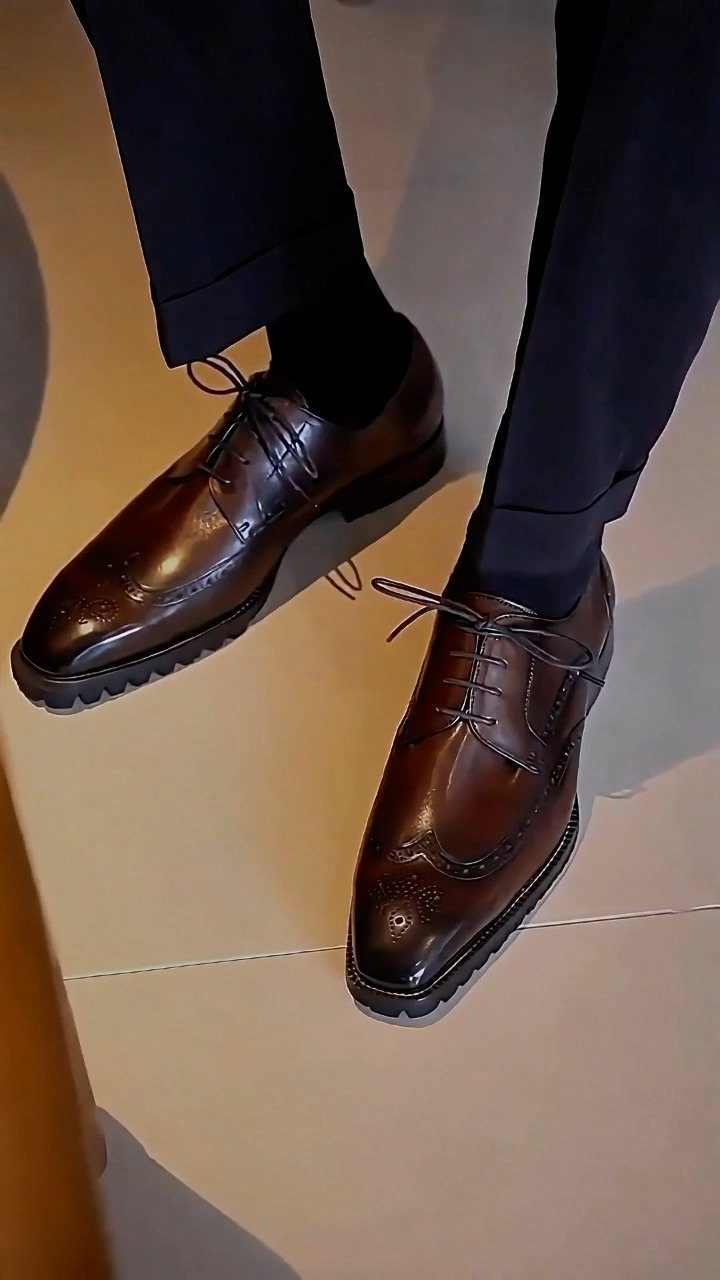
Brown leather derbies with brogue detailing are the pair I would buy first, because the open lacing and light texture sit comfortably between chinos and a sport coat in a way a sleek oxford can’t.
They sit between dress shoes and sneakers, which is where business casual lives, and they work with navy trousers as easily as with grey.
Polish them. Scuffed leather undoes a good outfit faster than a plain shirt does.
Loafers are the slip-on choice, and clean minimalist sneakers suit the most relaxed offices. Dark socks keep the line from ankle to shoe unbroken.
Understanding Office Culture
Business casual changes meaning from one industry to the next. Tech offices tend to allow far more freedom, while academia and finance often stop one notch short of a matched suit and tie.
Start by looking around and getting an average. If most people wear sport coats and button-up shirts, the office leans toward business.
If you see a lot of jeans, boots, and sweaters, it leans casual. Don’t take your cue from the owner, who may wear a t-shirt while holding everyone else to ties, or the other way around.
Then ask HR, if your company has a department for it, for what is appropriate. A short email works fine.
Asking a manager is even better.
Say you are updating your wardrobe to better represent the company, and I expect they will appreciate it. Ask what is absolutely off limits, since that answer is the most useful one you will get.
Dressing for Your Role
Aim to land slightly more formal than the people you sit next to. If your coworkers wear t-shirts and jeans, a collared shirt and chinos will stand out in a good way.
This matters most in a junior role, where your clothes are often read before your work is. A small step up signals that you take the job seriously, and it costs nothing in comfort.
Keep it to one step, though. Walking in wearing a suit and tie when everyone else has on sweaters looks like you misread the room.
Importance of Fit
Fit matters more than price. A modest shirt that sits right on the shoulders looks better than an expensive one that hangs loose.
I would budget for a tailor. Taking in a waist or hemming trousers is usually cheap next to what the piece cost, and it makes ordinary clothes look chosen for you.
Think head to toe, too. Every piece tells people how well you balance polished and relaxed, so one sloppy item can drag down the rest.
Also, don’t copy your coworkers exactly.
Frequently Asked Questions
What is the 3-3-3 rule for business casual?
The rule calls for three tops, three bottoms, and three pairs of shoes, so a small set of pieces can be mixed into many outfits.
A quiet palette keeps this rule easy: one neutral up top, like gray or navy, and one earth tone below, like khaki or olive.
What is business casual for men?
Business casual is a modern dress code that sits between a suit and weekend clothes. Skip the tie, but make sure every piece is pressed and looks like you picked it on purpose.
What not to wear for business casual?
Skip hoodies, sweatpants, and anything that reads as streetwear, along with anything ripped or torn.
Wrinkled, baggy clothes and scuffed shoes undo the whole outfit fast. Oversized belt buckles and baggy trousers work against a sharp outfit too.
How formal should I dress compared to my coworkers?
Dress one notch above whoever sits near you, and no more.
Collared shirt and chinos stand out well among t-shirts and jeans. Push past that, with a suit and tie in an office full of sweaters, and it reads as a misjudged room.