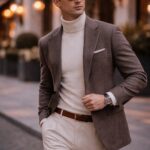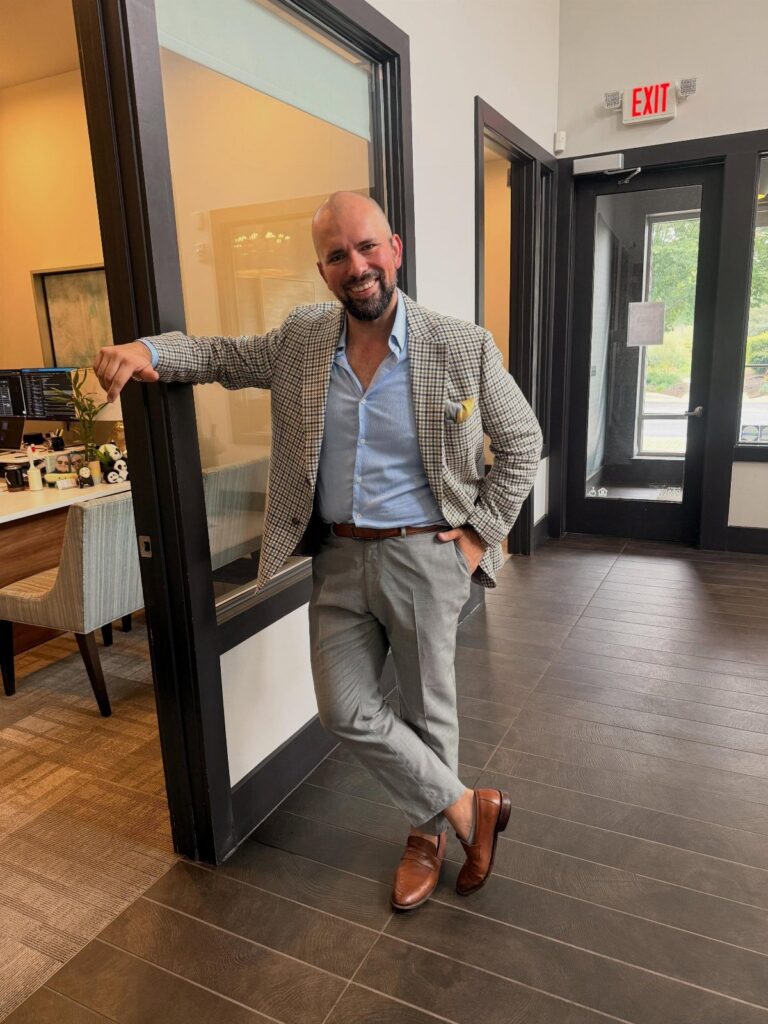
Strictness of the room decides it: a gray crewneck over a collared shirt suits a conservative office, and a black blazer over a tee suits a loose one.
Fit at the shoulders matters most, since without a tie that is where people look first, along with the chest and lapels.
1. Layering Options
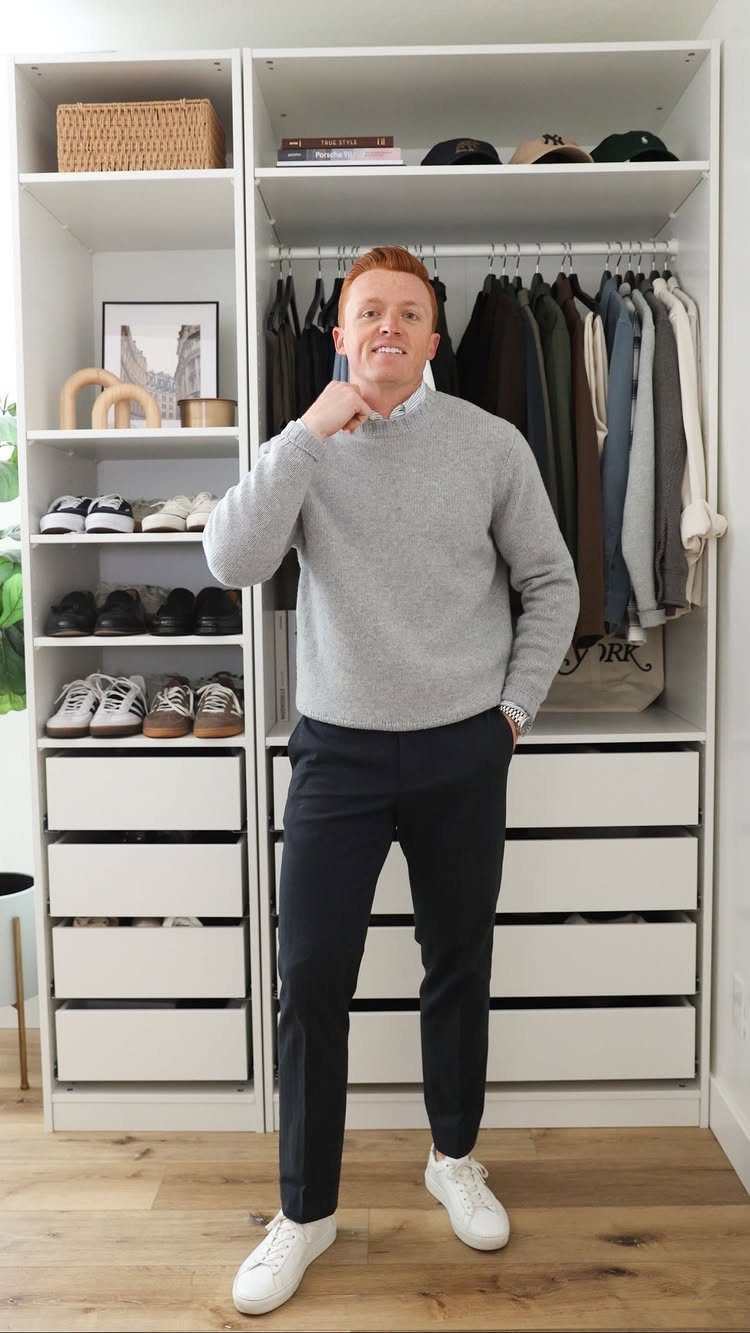
On a cold morning that turns into a warm 4PM, a grey crewneck over a collared shirt handles both without any fuss. The sweater comes off when the office heats up, and the shirt underneath still looks finished.
Keep the collar flat and visible at the neckline, and choose a sweater that sits close to the body so the shirt hem doesn’t bunch below it.
A vest does the same job for a man who would rather skip sleeves.
Grey goes with navy trousers and almost everything else, so one sweater covers a lot of days.
2. Oxford Cloth Button Down Shirts (OCBD) – Everyday
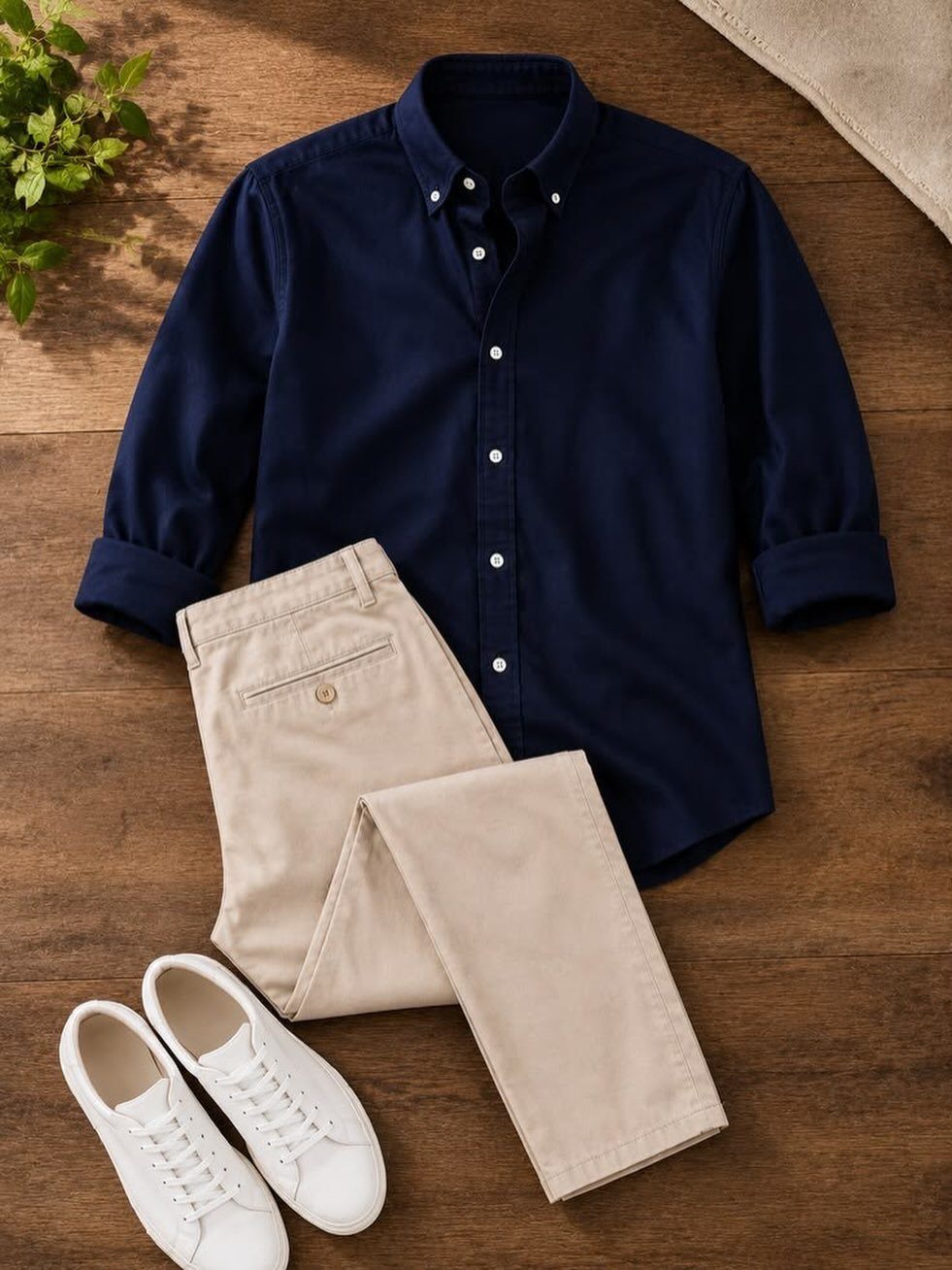
Navy is a smart color for an oxford cloth button-down worn without a tie. The weave has some texture, so the shirt looks deliberate rather than plain, and the collar stays put when it’s open.
I’d wear it with beige chinos and clean white leather sneakers, as the flat-lay shows. Leave it untucked only if the hem is short and straight.
One shirt like this does the work of several.
3. Footwear Choices
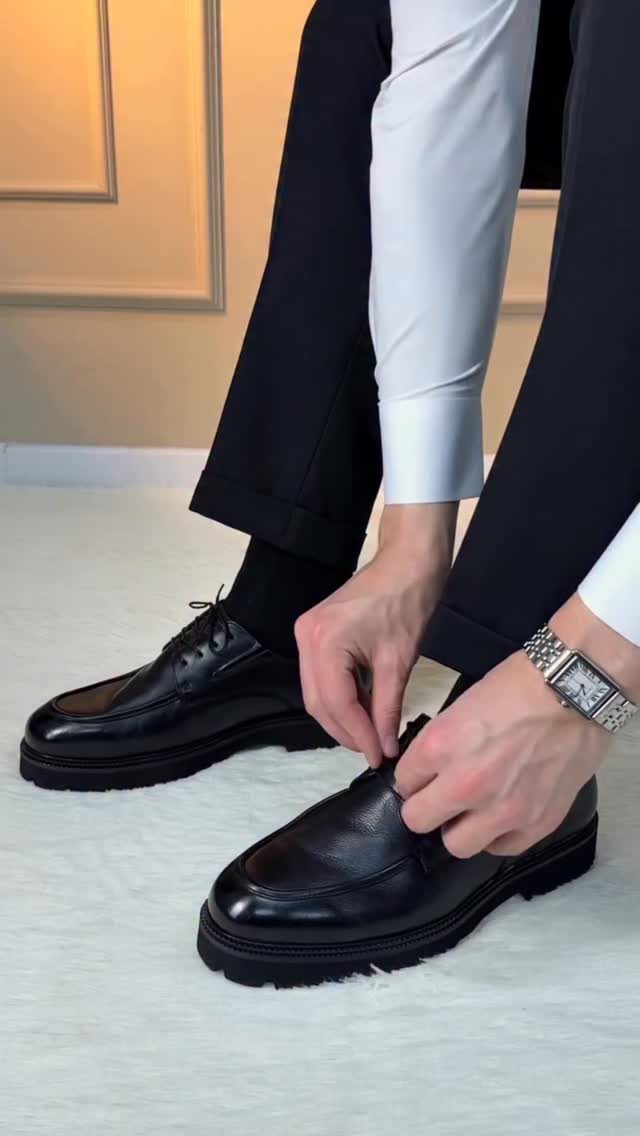
Chunky black leather derbies are what I’d pick when the shoes need to look polished but not stiff. The thick sole keeps them relaxed, and the leather keeps them tidy.
Black trousers with black socks let the shoe read as one unbroken line, and that makes them the simplest way to wear black shoes. Wipe them down now and then; scuffed black leather undoes the effect fast.
Loafers with a similar sole are the alternative if you dislike laces.
4. Blazer with Open-Collar Shirt
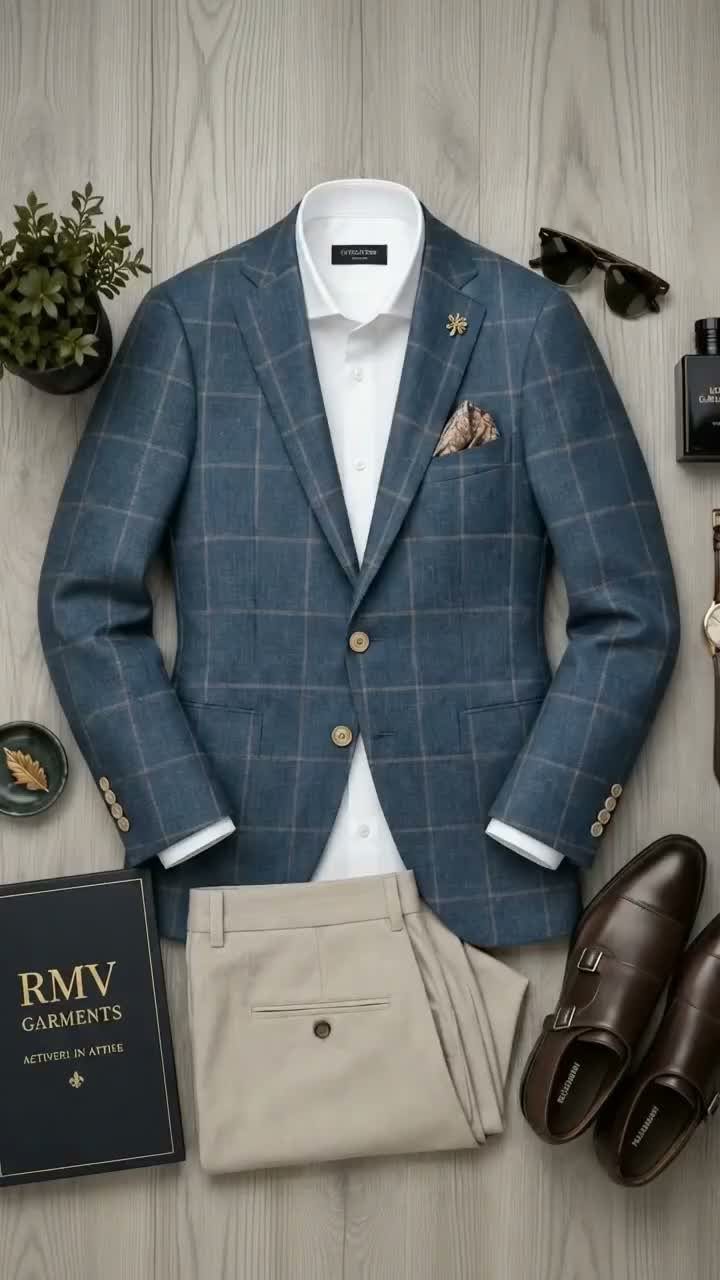
A plaid blazer over a white open-collar shirt gives you pattern on top and quiet everywhere else. Tan trousers and brown monk straps keep the palette tight, so the jacket is the only loud piece.
I like the monk strap here because it’s dressier than a sneaker but doesn’t need a tie to make sense. A crisp collar on the shirt makes the open neck look chosen, not forgotten.
Skip a second pattern; the jacket already has one.
5. Blazer with a T-Shirt
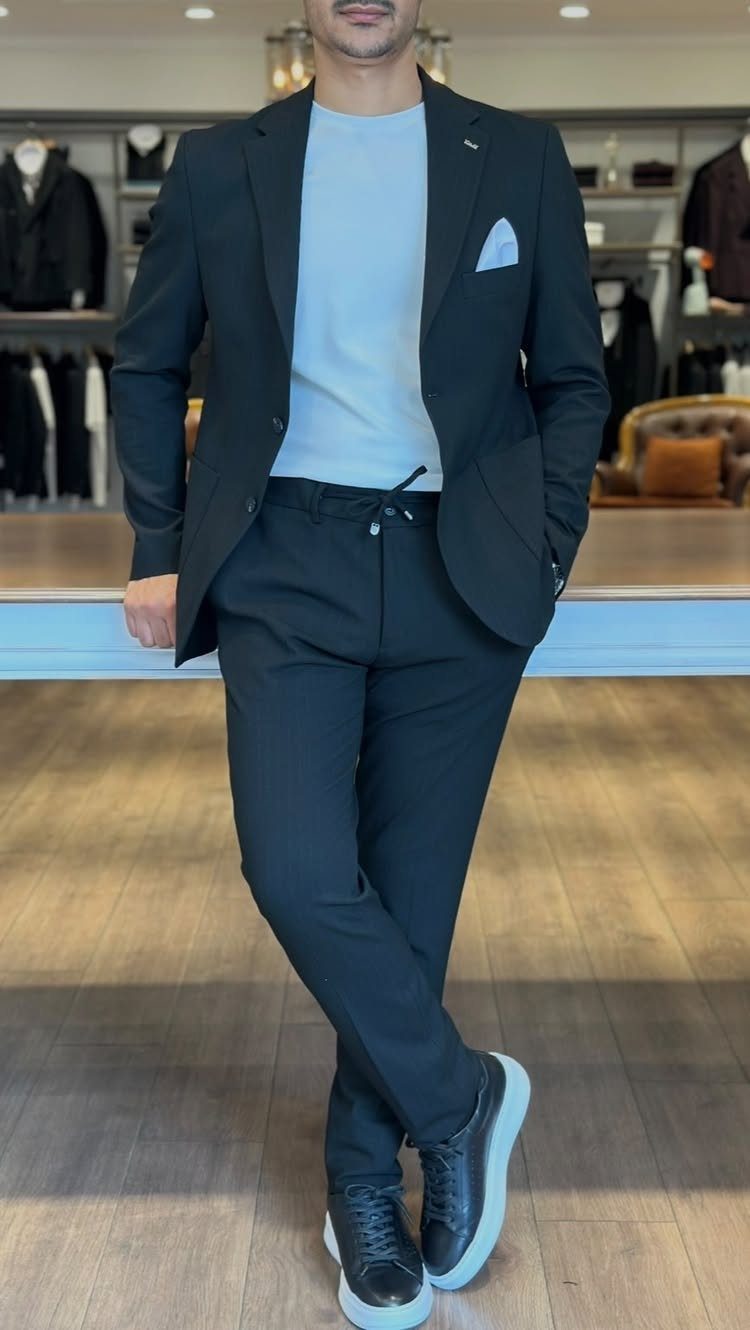
A tailored black blazer over a light blue crewneck t-shirt is the most casual version of no-tie dressing, and it only works if the jacket fits well. Sharp shoulders do the heavy lifting.
Choose a tee in a plain, solid color with a neckline that sits flat, and skip anything baggy. Black trousers and black sneakers with white soles give the outfit a clean finish.
I’d save this for relaxed offices. In a stricter one, a collared shirt is safer.
Casual business attire is pretty ambiguous, but generally means slacks, khakis, or a skirt with a dress shirt, blouse or polo.
When to Skip the Tie
Context decides this one.
Smart casual offices, cocktail parties, gallery openings, nice dinners, business travel and first dates all work without a tie. So do casual weddings, as long as the invitation doesn’t say black tie.
Read the invitation closely. Garden parties, destination weddings and daytime ceremonies usually welcome an open collar, while black tie and formal evening weddings still expect traditional neckwear.
Any event labeled "formal" gets one too.
If you’re unsure, bring a tie in your bag. Putting it on takes 30 seconds, and taking the tie out of the outfit later is always easier than adding one you didn’t pack.
Fit and Tailoring Importance
Without a tie, the eye goes to the shoulders, chest and lapels. Shoulder seams should stop right where your shoulder does; if they hang past it, the jacket is too big.
Through the chest there should be enough slack to move, with no bunching or pulling, and the lapels need to rest flat on the shirt instead of gapping open.
Check the sleeves next.
Jacket length matters too.
Trousers should stay up at the waist on their own, with a belt used only as a finishing touch and not to gather loose fabric.
Hem length is a matter of taste, anywhere from a slight fold at the shoe to a clean cut with no break at all. I’d go with less break for dressier days.
Common Mistakes
The first mistake is a dark, formal suit with a vest, worn with an open collar and nothing at the neck.
The outfit was built for a tie, and without one it looks lopsided. If you go tieless, pick a two-piece suit with a softer feel.
The second is sneakers with a dressy suit in stiff fabric, where the shoe looks like an afterthought. Both choices relax the outfit at once, and the mix of signals makes you look less professional, not more relaxed.
Change one thing at a time. If the tie goes, keep the shoes polished, and if the shoes go casual, keep the collar and jacket sharp.
Frequently Asked Questions
Is business casual without a tie?
Yes, in most modern offices a tie is optional. A collared shirt, a sweater over it, or a fitted blazer all read as dressed without one.
A full suit minus the tie is a different matter: it leans business professional or smart casual, so it can feel too formal for a typical business casual day.
What is not acceptable for business casual?
Skip anything that looks unfinished or too relaxed for the office: baggy tees, shorts and overly casual footwear.
A tee is the one gray area, and I’d only wear a plain, flat-necked one under a well-fitted blazer in a relaxed office.
Where the dress code runs stricter, a shirt with a real collar is the safer call over a knit crew or anything collarless.