Business casual spans a wide range in this list, from short-sleeved button-downs and pleated trousers to unstructured blazers and leather loafers, and how formal your office runs decides where on that range you land.
Watch what people a level or two above you wear, then pick the idea that matches.
1. Lightweight Sweaters Over Collared Shirts
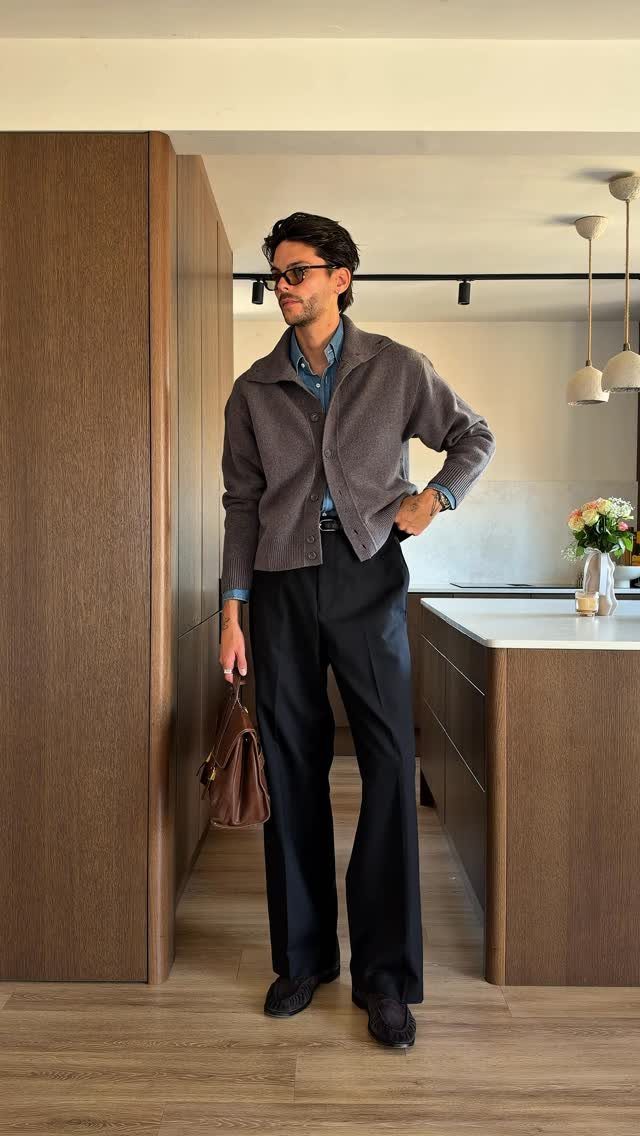
A cardigan with a collar sits between a sweater and a jacket, and that is why it works at the office. A blue button-down underneath stays sharp, and the open front of the sweater lets the shirt collar show.
Choose a thin knit in gray or navy so it layers without bulk. Wide-leg black trousers and dark shoes keep the whole outfit quiet, which suits a long day at a desk.
2. Well-Fitted Tailored Business Casual
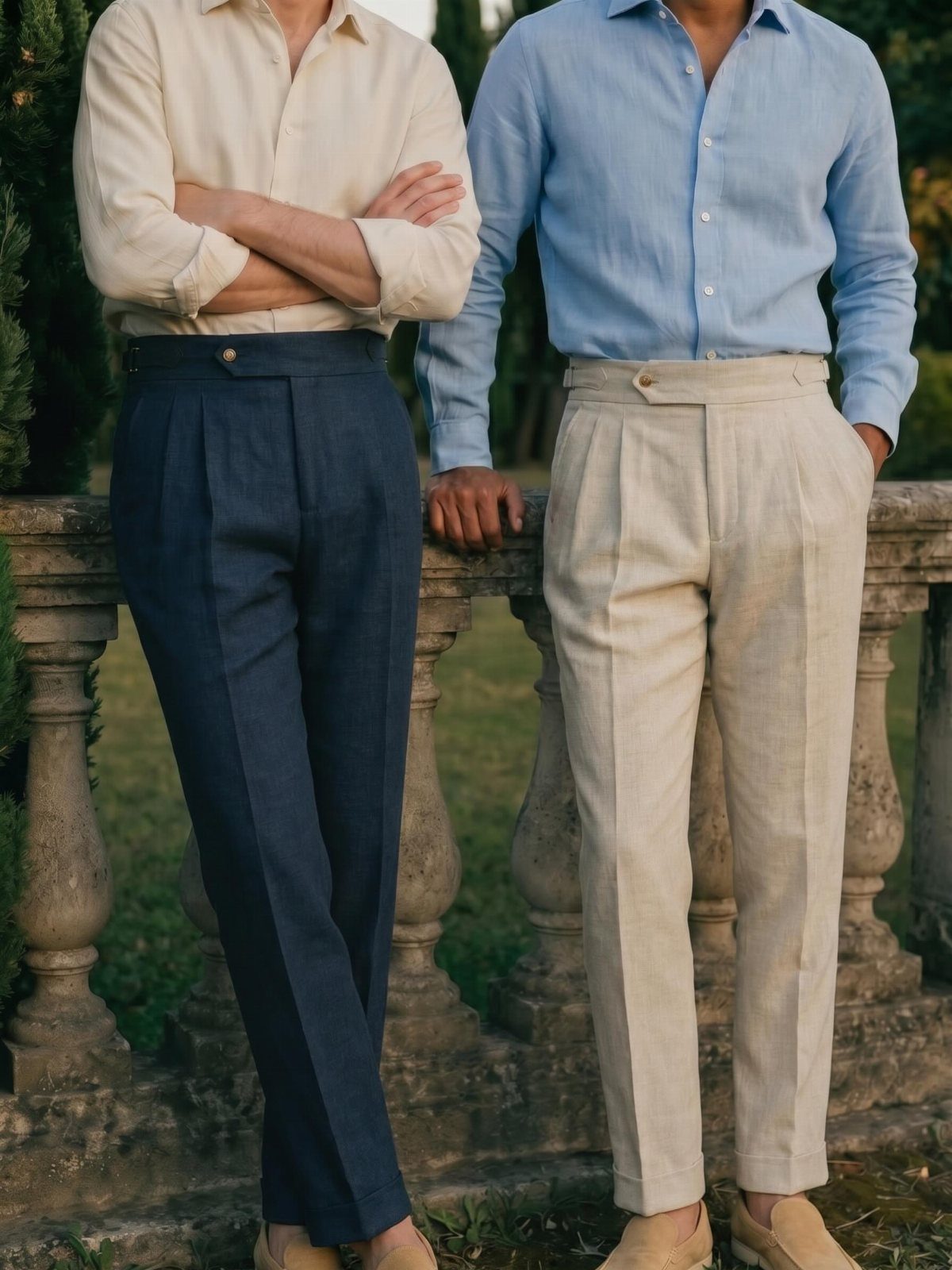
Pleats and a high waist do most of the work here. Trousers that sit at the natural waist make the legs look longer and let a tucked button-up lie flat, with no bunching at the belt line.
Suede loafers read relaxed without losing any polish. Spend your tailoring money on the hem and the waist; those 2 adjustments change how cheap trousers look more than any label does.
3. Trousers
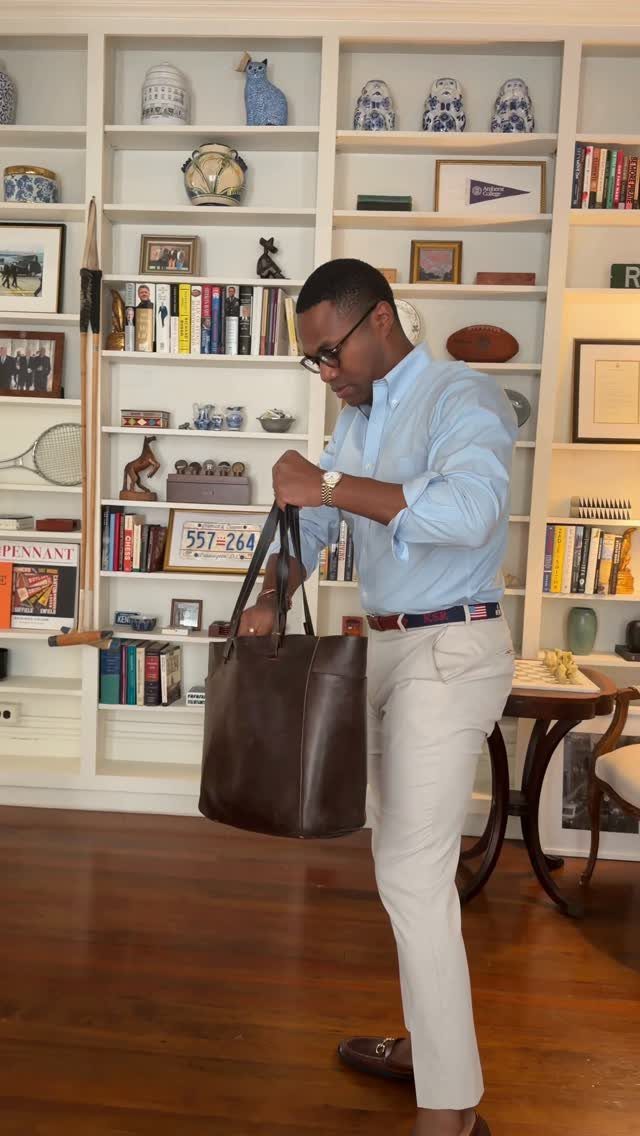
Chinos are my pick for business casual, and off-white or beige pairs worn with a light blue shirt are the easiest version to get right. They look finished but never stiff, and they take loafers well.
Light colors show every stain, so keep a pair of darker khaki or navy chinos in rotation too. A simple tote or leather bag will carry a laptop and still match the outfit.
4. Unstructured Blazers
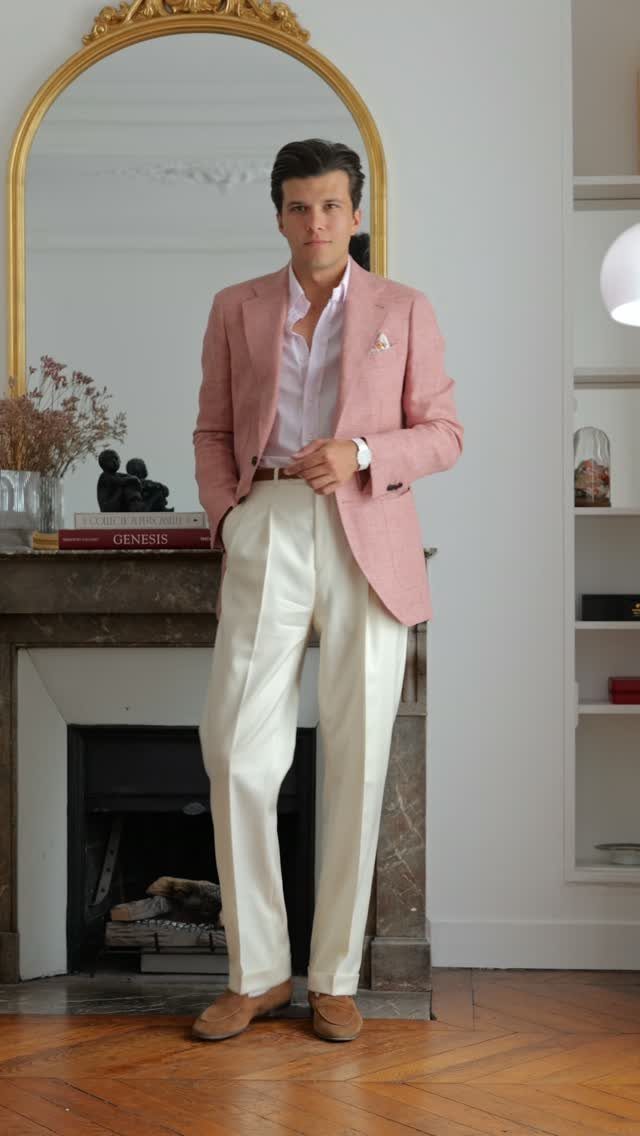
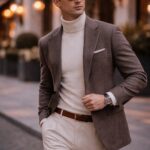
Soft shoulders and little padding make an unstructured blazer easier to wear than a suit jacket. Texture does the talking, so a pink or other muted color reads as relaxed instead of loud.
Cream pleated trousers and suede loafers make a warm pairing, or go darker with navy trousers for a quieter office. Wear the shirt buttoned to the collar for work; the open neck is a weekend move.
5. Leather Loafers, Brogues
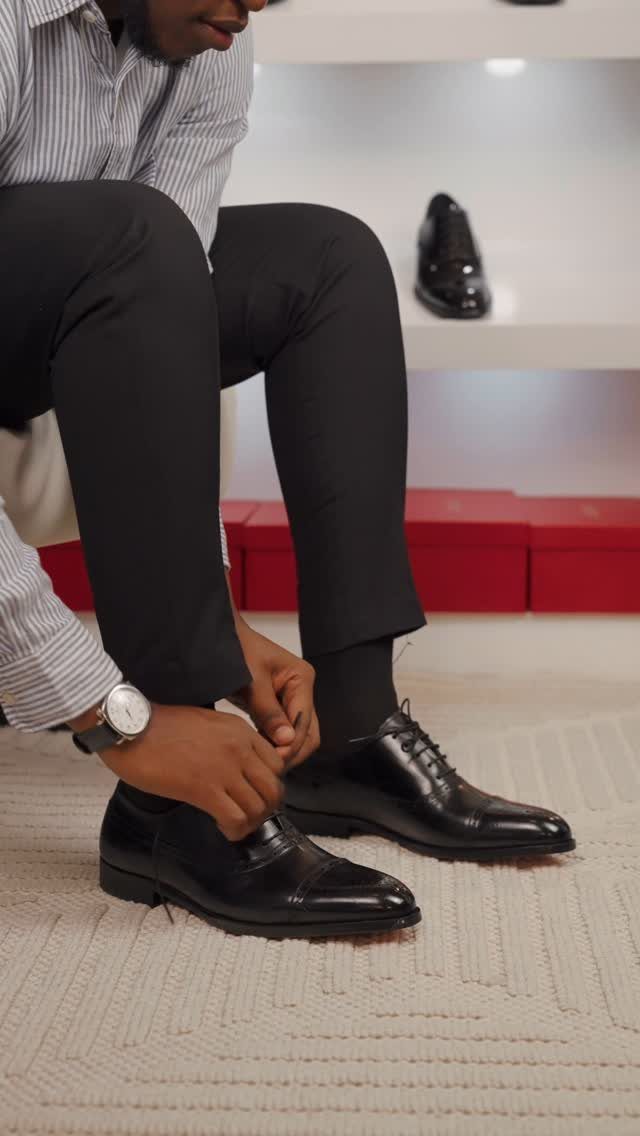
Black brogues are the dressier end of business casual shoes, and the perforated detailing keeps them from looking stiff. Loafers are the easier pick for long days since there are no laces to tie.
Match your shoes to your trousers: black brogues suit black or charcoal, while brown loafers handle most everything else. Keep the leather polished, because scuffed shoes undo a good outfit fast.
6. Fitted Polos in Solid Colors
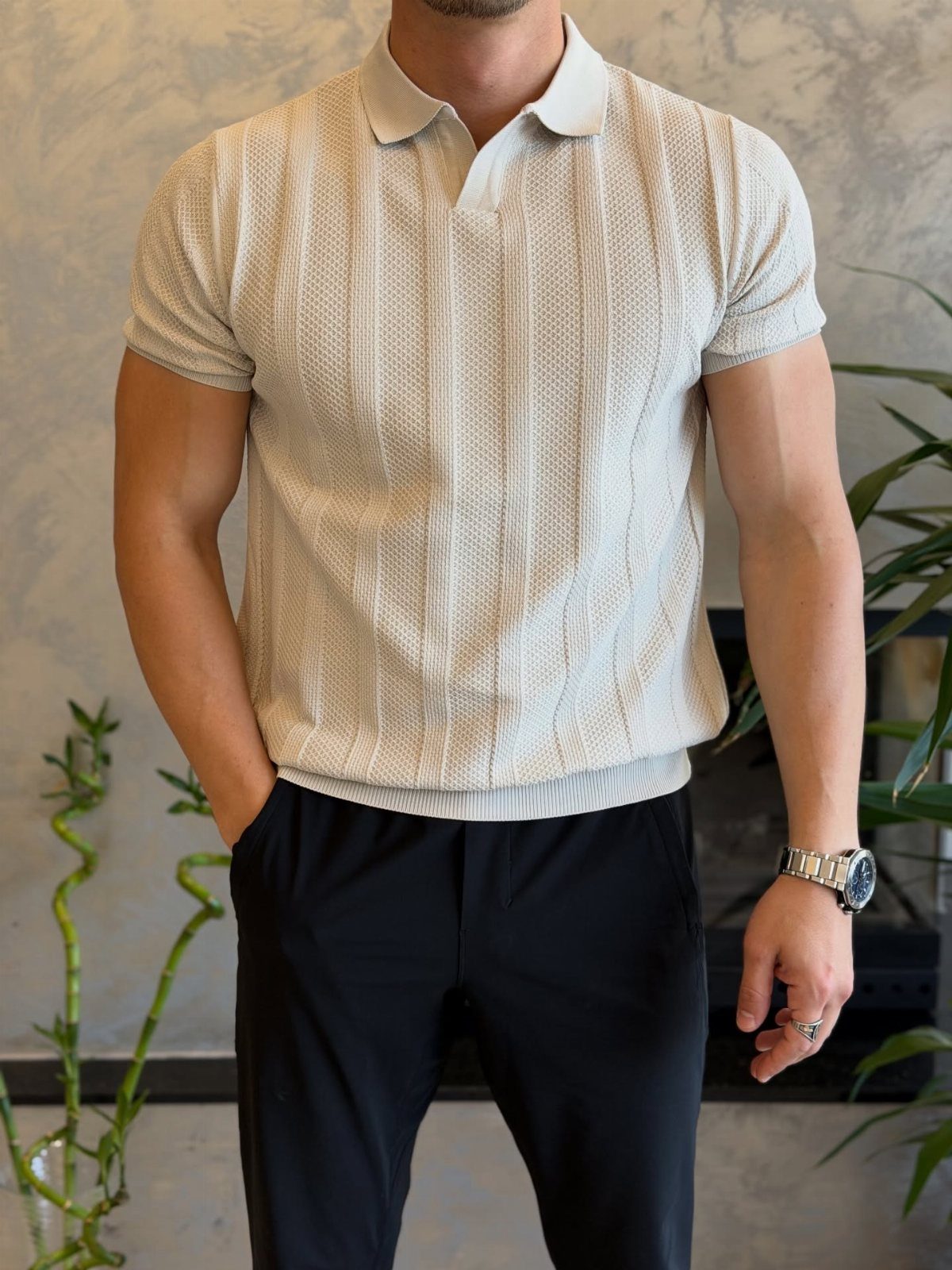
Choose a polo over a button-down when you want fewer pieces to manage and less to iron. A solid cream one in a textured knit looks more considered than a flat cotton piqué.
Fit decides everything: the shoulder seams should sit at the edge of your shoulders and the hem should land near the belt.
7. Business Travel
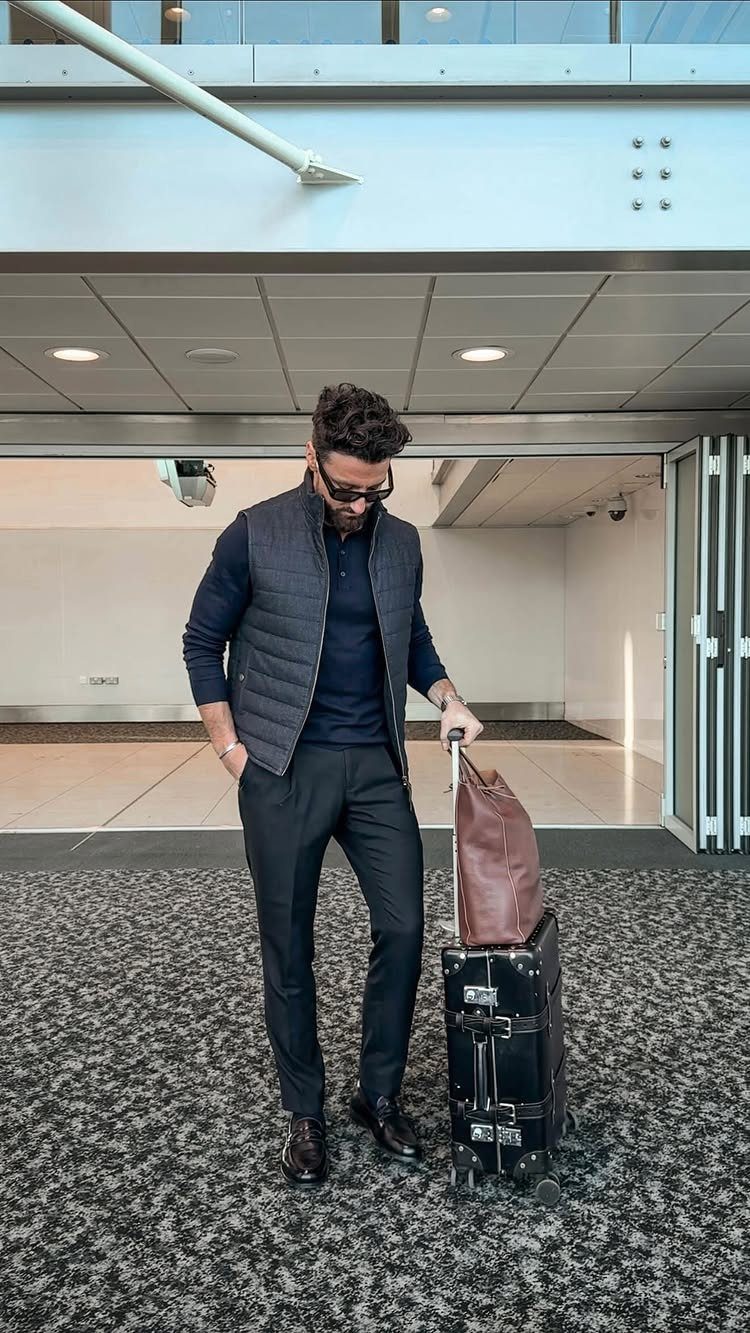
A polo under a quilted vest is a smart travel layer: the vest adds warmth on a cold plane without the bulk of a jacket. Trousers and dress shoes keep it office-ready if a meeting follows the landing.
A rolling suitcase with a leather bag set on top keeps your hands free at the gate, and the outfit arrives in better shape than it would from a stuffed duffel.
Choose shoes you can slip off at security, and skip anything that wrinkles badly.
8. Classic Leather Belts
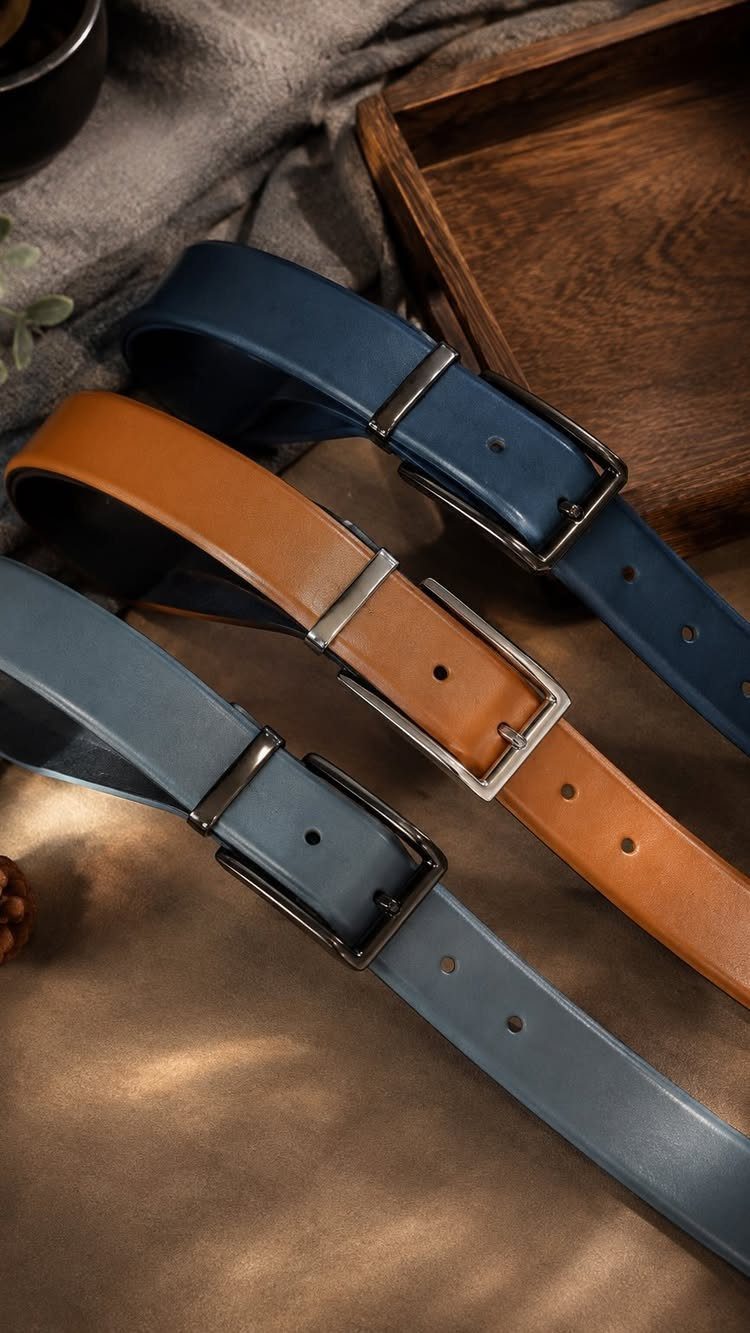
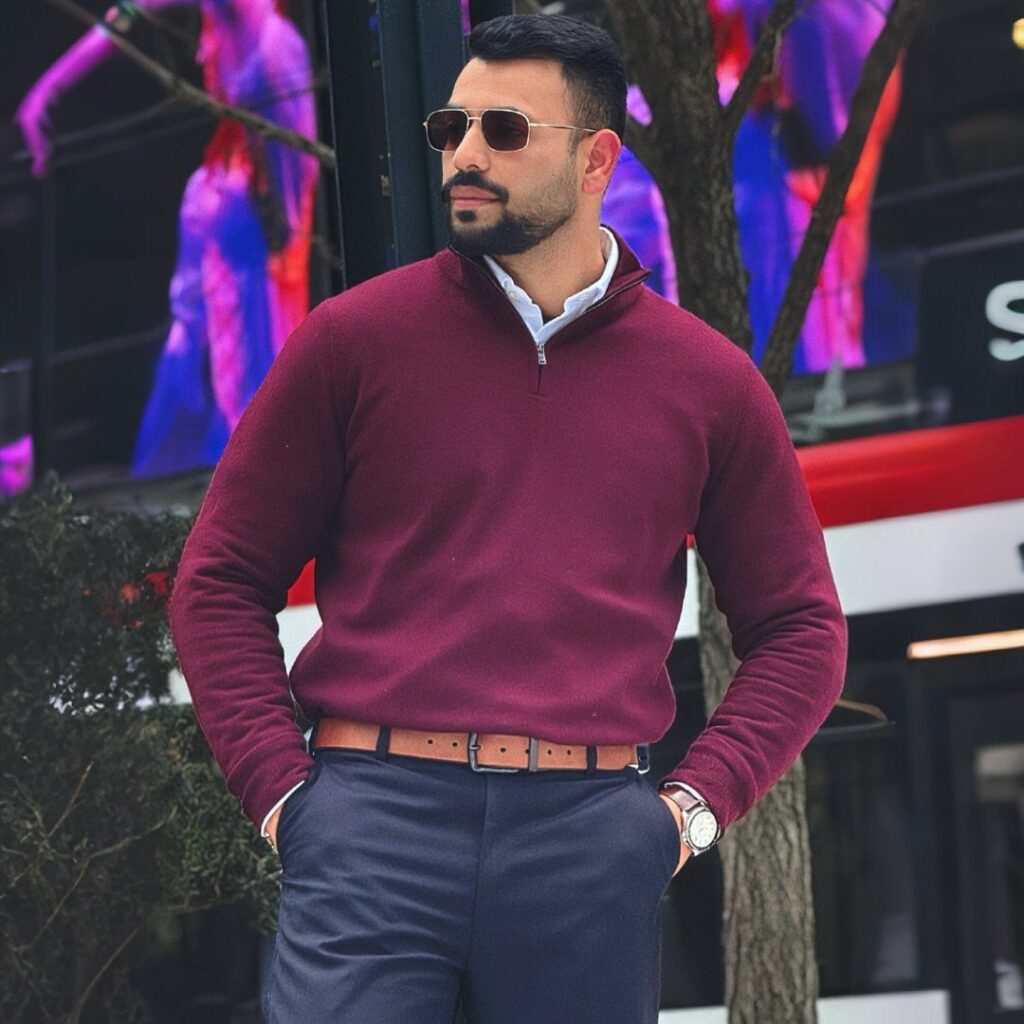
Navy, tan, and slate grey cover nearly every trouser you own, and a silver buckle ties them to a watch or a pair of glasses. A rectangular buckle looks cleaner than a big ornate one.
Buy the grey first if you wear a lot of charcoal and navy, or the tan if your wardrobe leans khaki.
Leather ages well, so it is worth paying a little more for one good belt than three cheap ones. Match the belt to your shoes: brown with brown, black with black, and keep the leather finish close too.
9. Short-Sleeved Button-Down Shirts
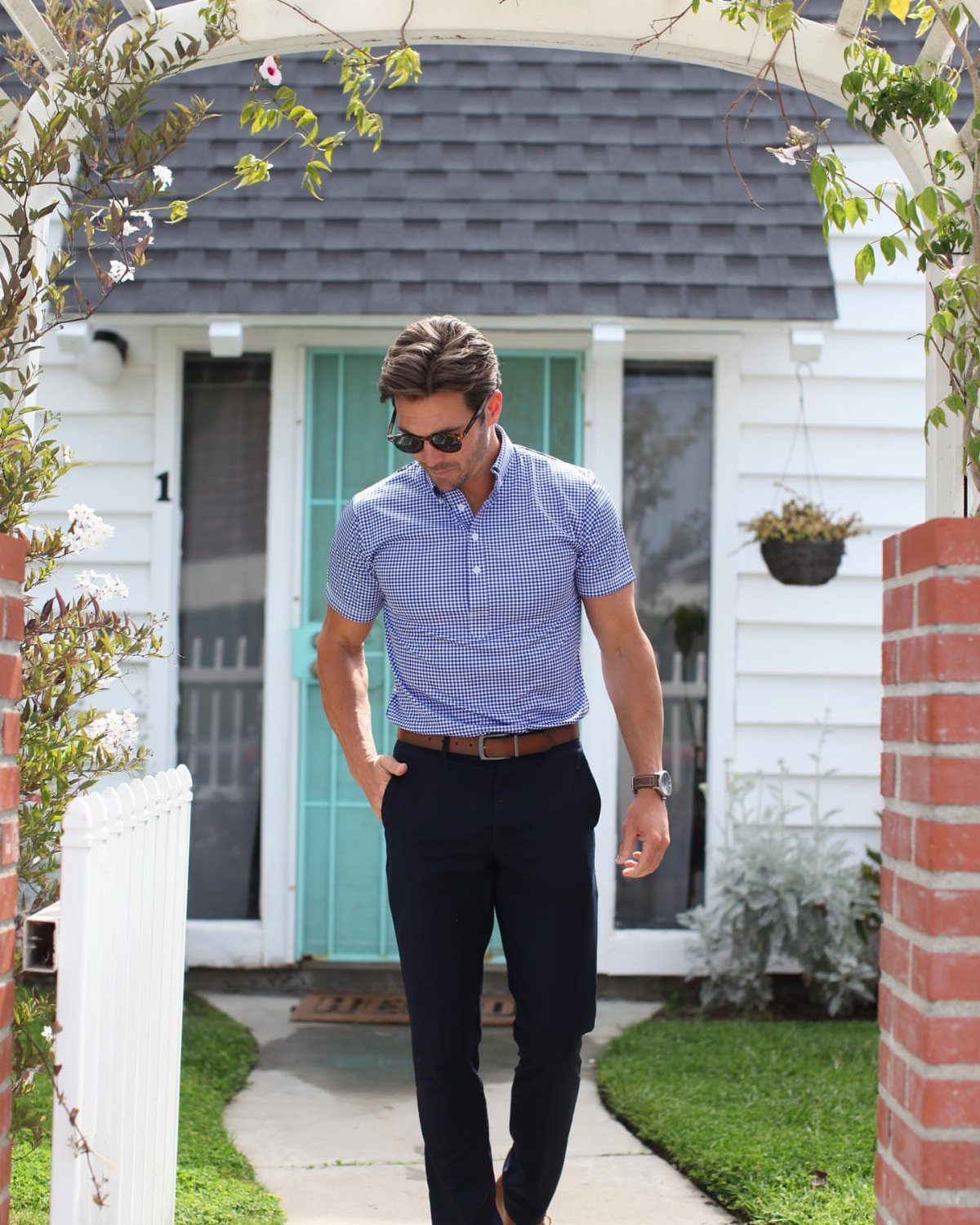
Short sleeves can look sharp at work if the shirt is a crisp cotton with a real collar, like this blue gingham. Tuck it in, add a brown belt, and keep the trousers dark and tailored; navy does the job.
Gingham reads casual, so let the trousers, shoes and belt stay plain and solid.
Check the sleeve hem: it should end mid-bicep and sit snug, not flap. Loose short sleeves look sloppy fast, and a tailor can fix that cheaply.
10. Button-Down Shirt and Pleated Trousers
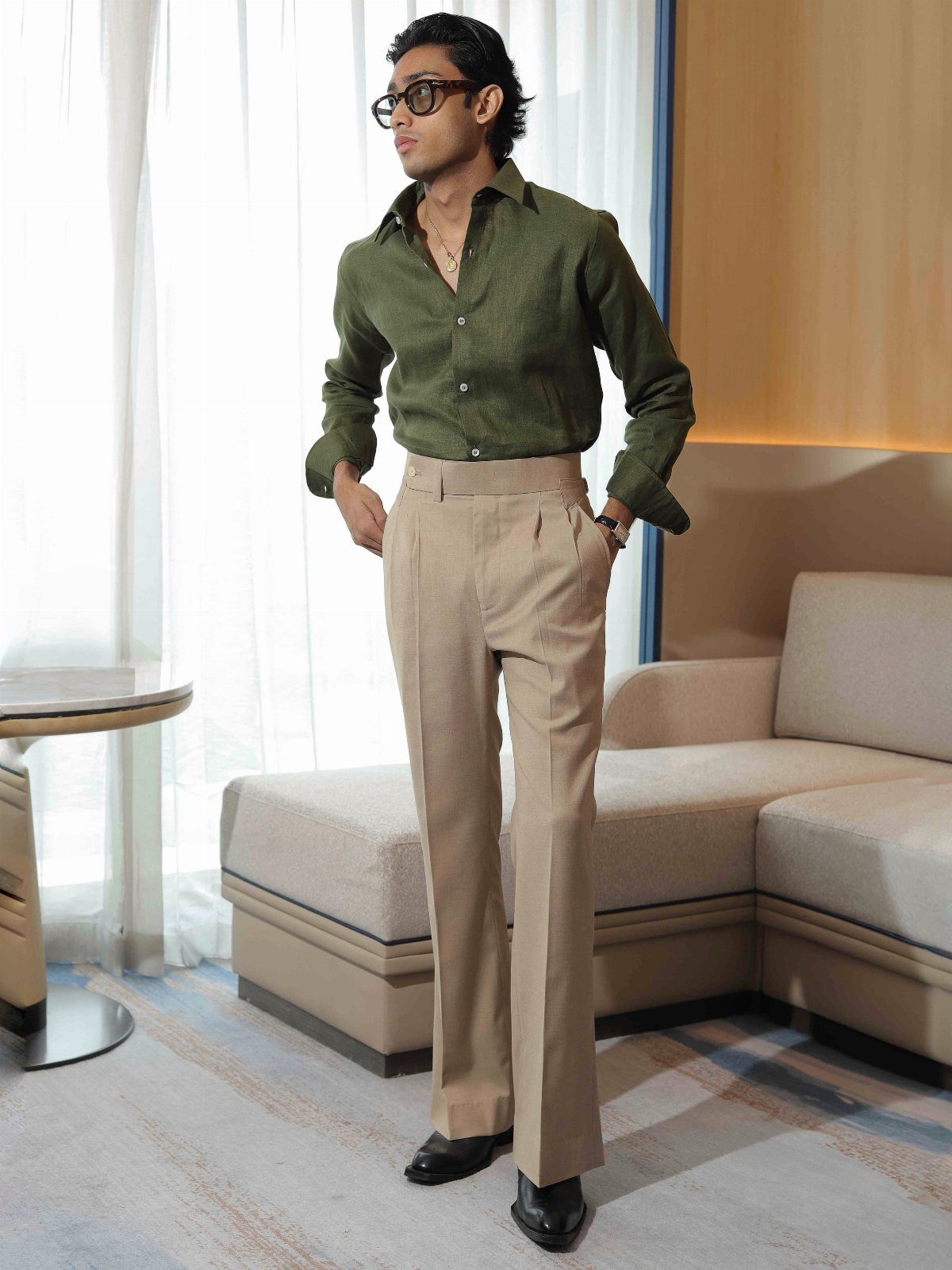
An olive shirt with beige pleated trousers is an earthy pair that looks calm without trying hard. The high waist lets you tuck the shirt cleanly, and pleats give the legs room when you sit down all day.
Dress shoes finish it, and brown ones are my pick here.
Keep the collar crisp and the shirt buttoned for work. If olive feels bold, a white or light blue shirt works with the same trousers.
Understanding Business Casual
Business casual has no single definition, and the right dose of "business" depends on where you work.
A client-facing job or a prestigious firm pushes you toward the formal end. A smaller, more relaxed office lets you lean casual.
The safest way to calibrate is to watch what the people around you wear, especially the ones a level or two above you. Dress to match them on your first week and adjust from there.
Both extremes cost you. Show up in Crocs and a graphic tee, and the message is that you couldn’t be bothered, about yourself or about the place that employs you.
The baseline is a collared shirt, chinos or dress trousers, and leather shoes, with a blazer as an option. No tie is required.
Importance of Fit
Fit is the first thing people read about an outfit, and it overrides everything else. No price tag can save a shirt that billows at the waist or trousers that stack up over your shoes.
If something almost fits, factor a tailor into the price, because alterations usually beat a perfect label on the wrong frame.
Keep the formality level consistent across the outfit too.
Pair a structured, formal blazer with beat-up casual jeans and the outfit splits in two, because neither piece agrees on how dressed up the day is. Pick one level and match every piece to it.
Frequently Asked Questions
What is business casual for men?
Think of business casual as the middle ground at work: sharper than jeans and a tee, looser than a suit, and no tie required.
Your office sets the dial. Client meetings or a conservative firm call for the dressier side, and a relaxed team gives you room to ease off.
What is the 3-3-3 rule for clothing?
It means picking 3 tops, 3 bottoms, and 3 pairs of shoes that all mix with each other, so a small set of pieces makes plenty of outfits.
Business casual works well this way, for example a light blue shirt, beige chinos, and brown loafers.
With fewer pieces, it’s simpler to keep every item at the same level of dress, so nothing looks too stiff or too sloppy next to its neighbor.
What socks to wear with business casual?
Wear socks that match your trousers or your shoes, and skip flashy patterns. That keeps the eye on the outfit as a whole instead of the ankle.