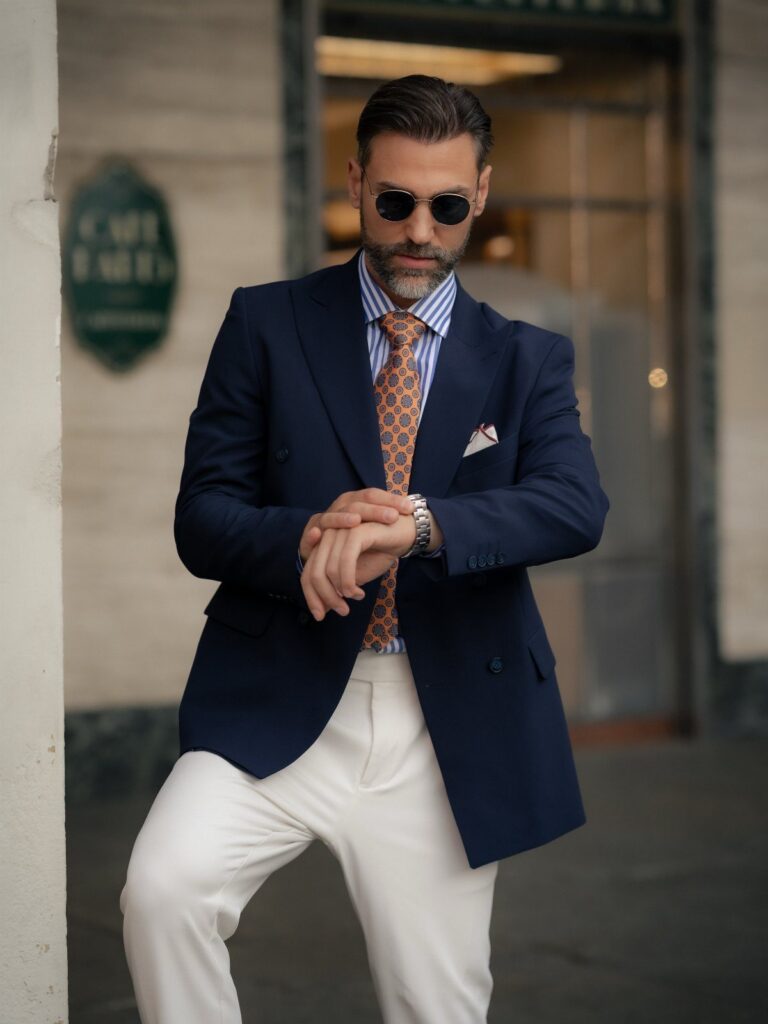
How formal your office is decides most of this, and that is set by the workplace, so check it before you shop for ties, blazers or shoes.
The list covers a lot of ground, from a cardigan over a tie for ordinary desk days to a tailored suit for the mornings you meet clients.
1. Ties
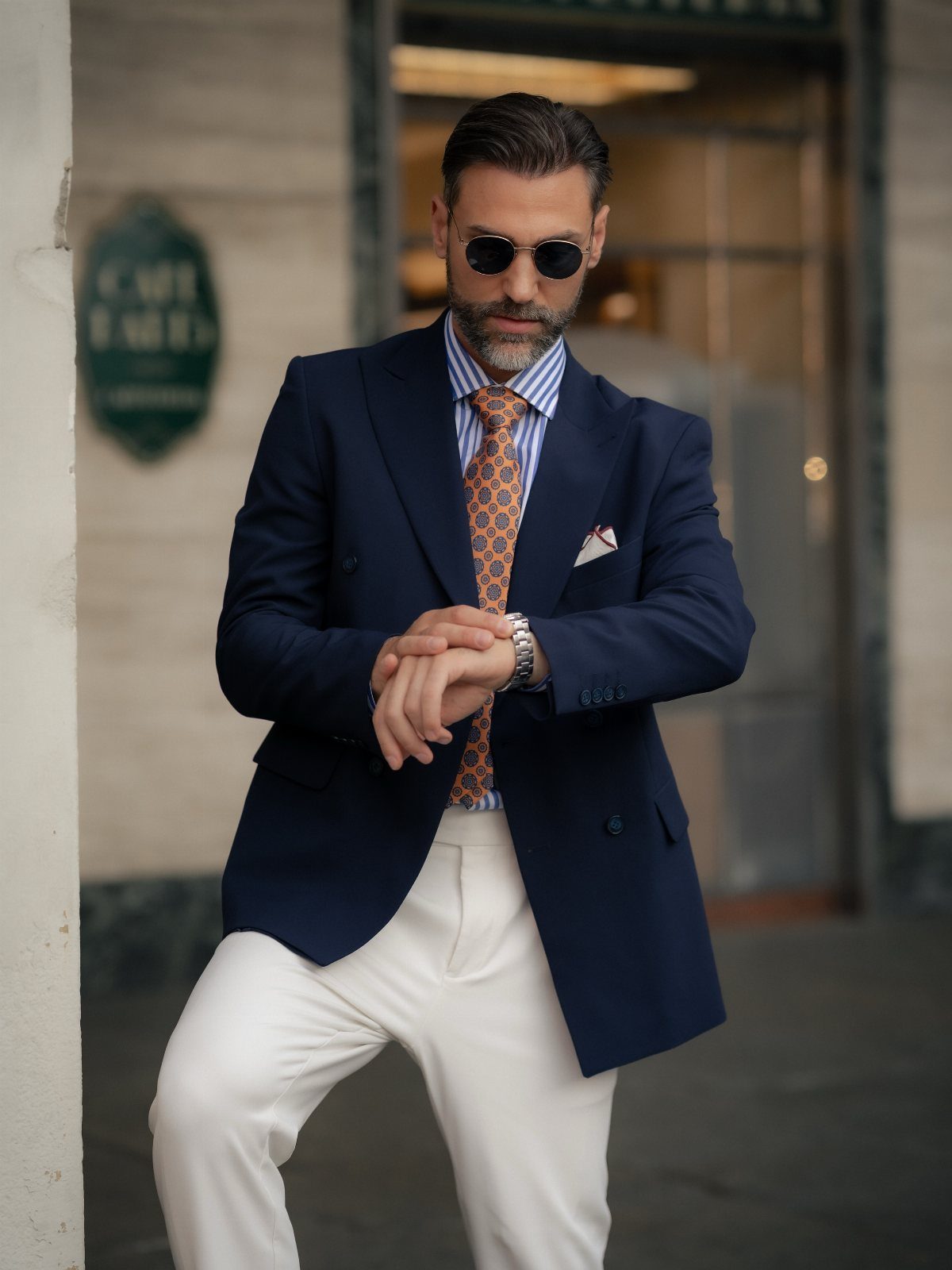
A tie is optional in business casual, and the orange pattern here shows why it earns a place when you do wear one.
Over a navy blazer and a striped shirt, one bold tie becomes the focal point, so everything else you wear can stay quiet.
Pick a tie in a single warm color and keep the shirt stripe fine.
If the shirt is already busy, go with a solid tie. On days with no meetings, skipping it is fine.
2. Crisp Dress Shirts
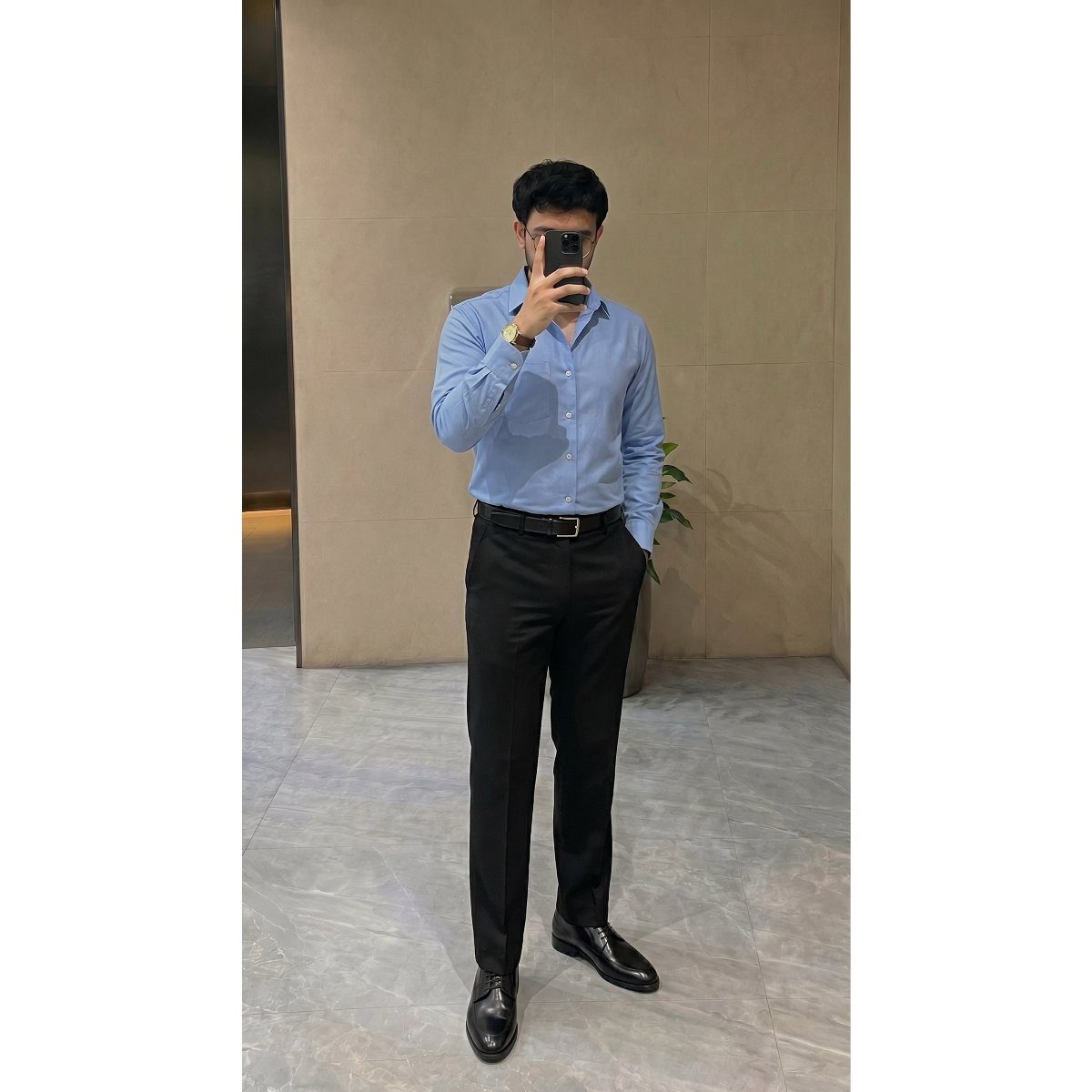
Light blue is the shirt I would buy first. It reads clean under a jacket, works alone with dark trousers, and hides the small wrinkles of a long day better than white does.
Buy one in a fabric that holds its shape after washing, and tuck it so the front stays smooth over a black belt.
Roll the sleeves for a relaxed day, or add a tie when the meeting calls for it. It’s a cheap way to get a lot of outfits from one piece.
3. Blazers and Sport Coats
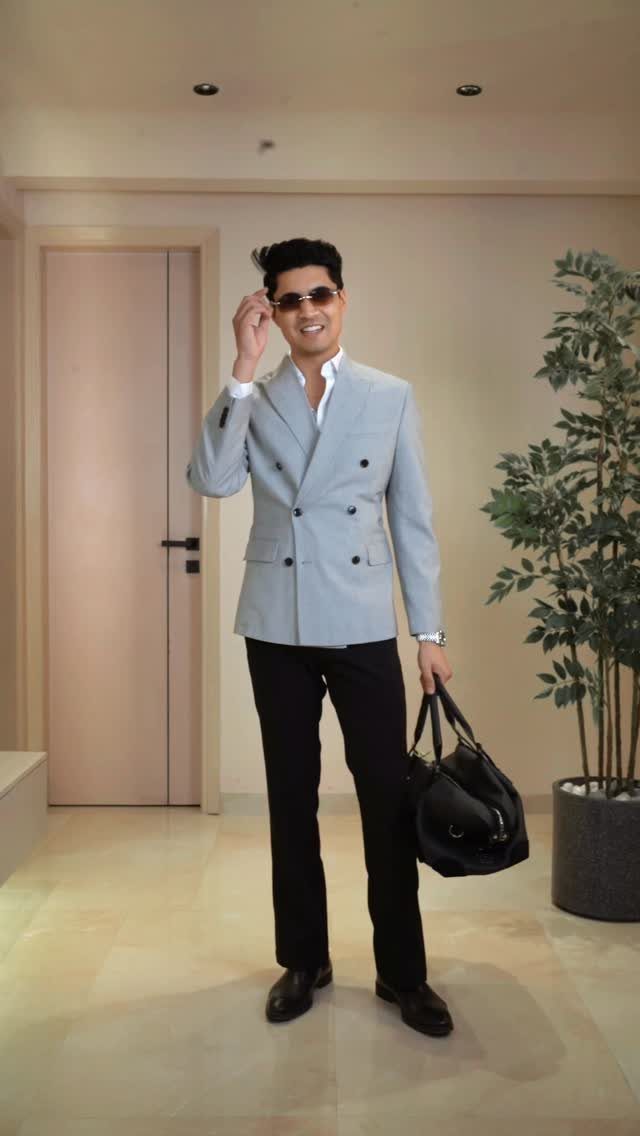
A double-breasted blazer is a stronger statement than a single-breasted jacket, so keep everything under it simple.
Keep the jacket buttoned when standing and check that the shoulders sit flat.
If the budget allows only one jacket, a single-breasted navy is the safer buy. I’d still choose the grey for variety, since it pairs with dark trousers and light shirts alike.
4. Footwear Choices
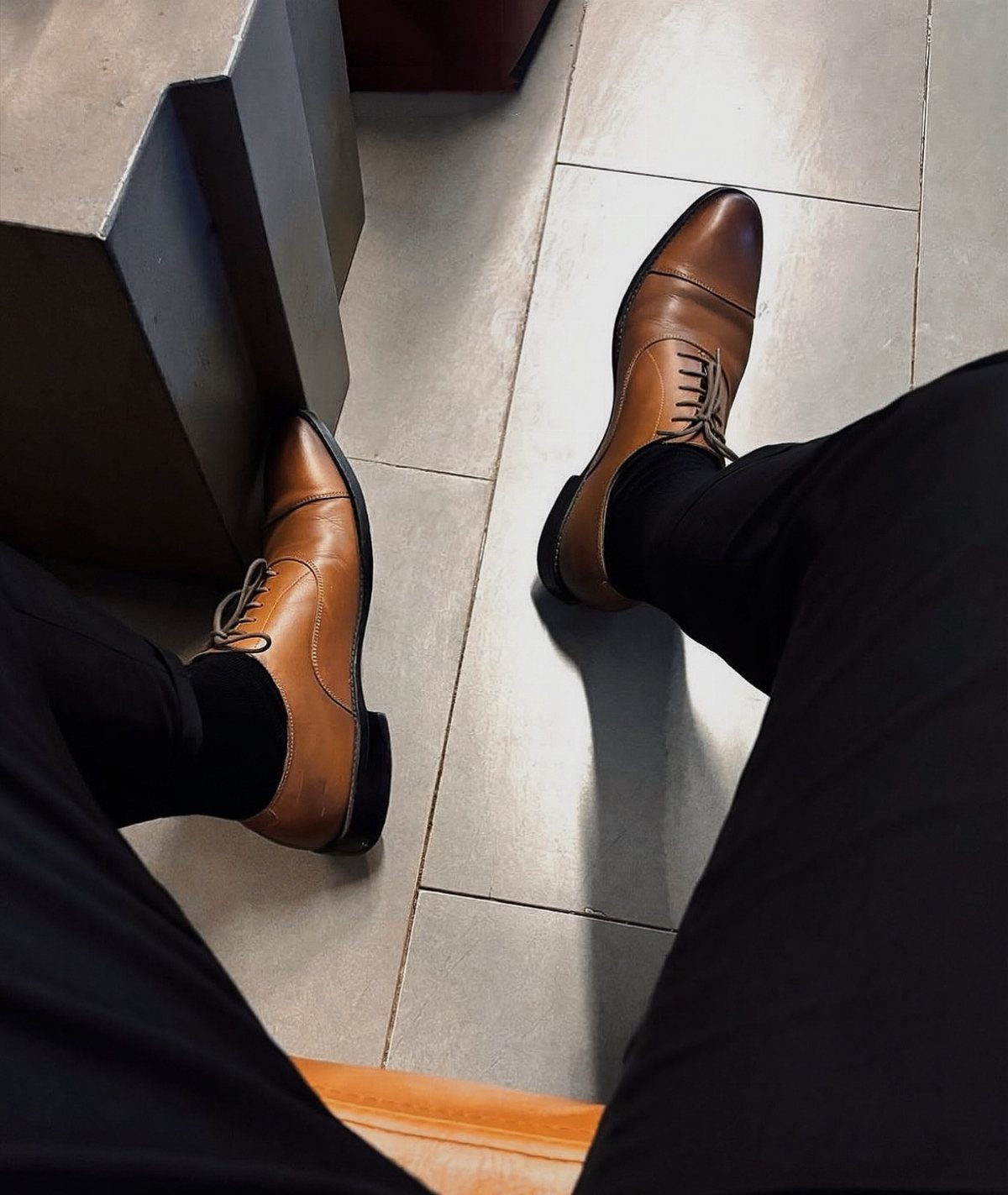
Tan cap-toe shoes are the louder choice with black trousers, and I like them for that reason. Polish is what makes them look professional, so a brush and a tin of cream are worth the few minutes each week.
Black socks keep the line from ankle to shoe unbroken.
Tan is harder to match than dark brown, though, and it clashes with many belts. Wear a brown belt with it, or choose dark brown if you own only one pair.
5. Tailored Suits
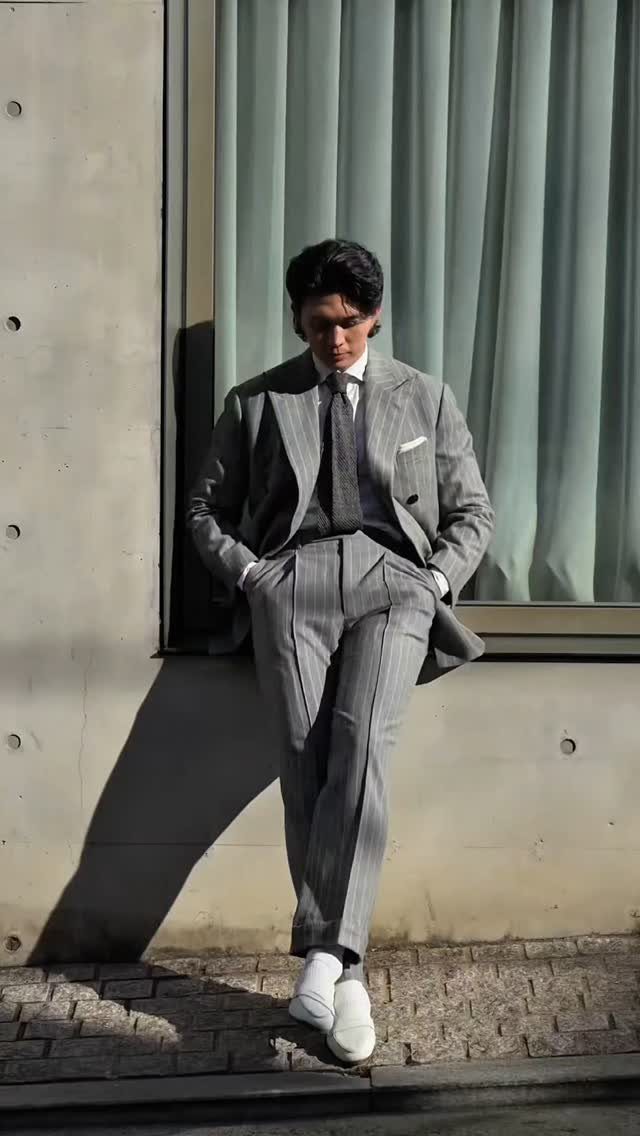
A grey pinstripe suit carries authority before you say a word. Keep the stripe narrow and the shirt plain white, so the pattern does the talking.
Fit matters more than price here: a mid-priced suit with the sleeves and trouser hem adjusted looks better than an expensive one left off the rack.
Budget for a tailor. A dark tie suits the suit best, and I’d choose dark leather shoes over the white pair, which are a bolder call and suit casual offices only.
6. Cardigan Layered Over Tie

A black cardigan buttoned over a white shirt and patterned tie is a smart way to stay warm in a cold office without giving up the tie.
Choose a thin knit so it sits flat under the collar and doesn’t bunch at the waist.
Keep the tie dark and let a small pattern show at the chest. It’s less formal than a jacket, so it fits desk days better than client meetings.
Understanding Dress Codes
At the business professional level, the outfit is a suit cut from one cloth, a collared dress shirt, a tie, and polished lace-up leather shoes.
Business casual drops the matching suit; chinos or dress trousers take its place, worn with an oxford shirt or a knit sweater on top.
Your workplace sets the line, so match what people actually wear there before you buy anything. If you can’t tell, dress one step above the office norm for the first week.
In a business casual office, loafers or dress shoes both work, as long as they’re well kept. Colors and patterns are fine in the shirt; keep them understated.
Boxy suits that recall ‘90s designs matched with striped shirts and topcoats made of deadstock materials are par for the course here. It’s a subtle subversion of the office dress code that HR won’t even realize is happening.
— GQ
Importance of Fit
Fit is what makes an outfit look deliberate. A shirt that pulls across the chest or a pair of trousers that pools at the ankle will undercut anything else you wear.
Baggy clothes make you look smaller and sloppier. Overly tight ones look like you grew out of them, and they pull and wrinkle when you sit.
Test it by moving. Reach forward, sit down, raise your arms.
If the fabric strains or bunches, the size is wrong. Clothes that let you move without fuss are the ones you’ll feel confident in all day.
Color Coordination
Build the base from navy, charcoal, gray and beige. Those four go together almost without effort, so you can mix pieces without second-guessing.
White and light blue shirts work with every one of them, which makes them the easiest choice on a rushed morning.
Add color in one place only, such as a sweater or a tie, and keep it subtle. Keep any patterns understated so the outfit reads as one look instead of several competing ones.
Frequently Asked Questions
What is the business formal dress code for men?
It means a matched suit, a collared dress shirt, a tie, and polished lace-up leather shoes.
Dark solid colors or a narrow pinstripe are the safest, paired with a white shirt and a conservative tie. The suit has to be cut from one cloth, which is what separates it from business casual.
What socks to wear with business casual?
Pick socks that echo your trousers or your shoes, and the eye reads one smooth line from hem to shoe with no flash of skin or odd color.
Black socks do this well with black trousers and dark shoes. A matching sock looks cohesive and keeps attention on the outfit instead of your ankles.
What should I include in a capsule wardrobe for work?
Build it from pieces that mix easily: a navy blazer, a gray jacket, a light blue shirt, a white shirt, dark trousers, and a pair of dark brown shoes.
Stay with navy, charcoal, gray, and beige so everything goes together without second-guessing. A single splash of color, whether a tie or a sweater, lets 4 or 5 neutral pieces turn into a week of different outfits.
What is smart casual for men?
Smart casual pairs a polished piece, usually a blazer, with relaxed ones like chinos. A navy blazer over a light blue shirt and gray or khaki trousers is the classic version.
Start with the blazer: a jacket worn over a tee or knit looks relaxed in seconds, while a plain shirt alone rarely looks sharp enough to pass.